Christopher Rush
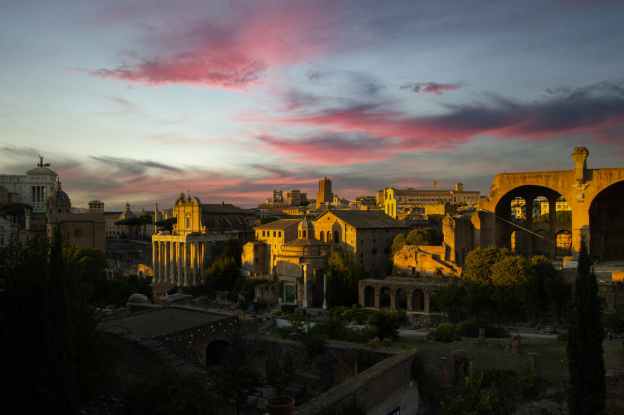
I got a new job. I wasn’t looking for a new job, mind. It just sort of … happened. You know how God works sometimes, in mysterious ways. Literally while I and the 2018 seniors were trekking to and through the Roman Forum (the one in Rome, Italy), which is a mighty long but worthwhile day on the Europe Trip, God was orchestrating the next phase of my family’s life. Technically I did not get a new job while I was on the way to the Forum, but as I said, the plan was in motion, and I couldn’t resist the linguistic opportunity. In any event, that’s not the point of this brief article, and had I known Ms. Grant was going to write such a great article on her Europe experience, I might not have written this one, but I did want to share a few thoughts with you about my last visit to the Old World (at least, most likely, with Summit students).
This was my fourth senior trip, and while all have been memorable in many positive ways, this one was markedly distinct. The first three, in 2005, 2006, and 2009, were all fairly similar as far as the basic sites and itinerary were concerned, with the sporadic difference in hotel or other small detail. But even in their general similarities, they each had enjoyable distinctions. My wife was able to come with us in 2005, so of course that was a great experience to be able to share with her seeing all those sites with her for the first time. Because the itinerary for the 2006 was so similar to 2005, having seen most of the sites already enabled me to be a better chaperone, since I didn’t feel as touristy. That class meant a good deal to me, and it was also my first trip with Debbie Rodriguez, Grand Poohbah of Journeys of Faith (and, as Ms. Grant said, a tireless worker who really advocates for the best trip students can get, even if they don’t appreciate it at the time — grownups are like that, sometimes). I was the only official SCA chaperone on that trip, sort of in charge, which is rarely a good idea, but it all went fairly well, give or take some mad dashes to trains in Pisa and the occasional game of “where is Mrs. Kilpatrick?”
2009 was (and still is) a very special class to me as well, and that trip was on the whole a very enjoyable one. It started off very poorly, with one of the worst days of my life, standing around the Norfolk Airport, trying to negotiate among Debbie, the airline, accommodations in Rome, God, and the weather, all thanks to rain in New York and terror in the hearts of pilots along the Eastern Seaboard. It was a rotten day. The consolation prize for a delayed start to our trip was a few extra days in Paris, which is about as consoling as a free year’s supply of yoghurt for a lactose-intolerant person. Additionally, I know the trip had some low moments, not the least of which was the loss of Bryan Earwood’s grandmother back home, requiring Bryan to leave the trip early, and the early pernicious onset of Hope Bane’s dysautonomia, but on the whole it was a positive experience and a trip I still remember fondly. I got to take those seniors to some of my favorite parts of the tour, including Keats’s grave in the Non-Catholic Cemetery in Rome and Santa Croce in Florence, two experiences that made it such a good experience for me, at least.
And then there was the 2018 trip. Nine years is a fairly long gap between trips, especially for someone who teaches the class upon which the field trip is based (but let’s not quibble). Sure, there were other classes with whom I would have loved to go to Europe, and they know who they are so I need not mention them here, but for divers reasons, I did not go again until 2018. The person I really have to thank is Mrs. Miers, who, and I don’t say this lightly but gratefully, listened closely to God’s direction and withdrew from the trip, enabling me to go with this group, a group with whom I know she would have really enjoyed going (and who would likely rather have had her along than me, but I don’t blame them, since having Mrs. Miers on the Europe Trip would have been fantastic).
Ms. Grant’s article addressed the most important aspect of this trip: God’s manifest providence throughout the entire enterprise. Allow me to astound you with even more examples of how God was clearly and directly intervening on our behalf. Before we even left the parking lot, God was making His presence felt. We were under the impression not everyone was going to be able to fit on the bus on the ride up to D.C., requiring someone to drive at least one person to the airport, but when the bus arrived, it had enough seats for everyone, eliminating an entire unnecessary six-hour drive. During the trip, we had a very early flight from Florence to Paris (I’m talking “we had to leave the hotel at 3am” early). After we got through check-in, depositing most of our luggage, we found out the flight was delayed a couple of hours. Now, the normal and fairly understandable human reaction at around 5am would be to get rather upset by this turn of events, especially when tired and hungry and grumpy. And so we were. But here’s where God’s providence interrupted: because of the delay, the Florence airport staff offered all of us a rather large breakfast array (for free). Even if we had known about the flight change before leaving the hotel, we would have gotten the same amount of sleep (since most of the students slept during the unexpected delay just fine), but we still wouldn’t have gotten breakfast, since we still would have needed to leave the hotel before it served breakfast. So the flight delay got us more sleep, a large, free breakfast, and less time in Paris — a big win all around, in my book. Those are just two more examples of the dozens of times God was protecting and supporting us throughout the trip. It wasn’t perfect, of course: we had rain in Normandy, a fair amount of sicknesses and injuries, a few brushes with miscommunication and strained relationships, some less-than-desirable meals, a few lost articles — but nothing serious, nothing terminal, nothing irreparable or irreplaceable.
As I said before, the basic itinerary in the first three trips was roughly the same, though with a few differences in country order. The first was the most different, in that we went to Mainz to see the Gutenberg printing press and some nearby Reformation sites. I wish we kept that on the tour. Pisa was on the first few trips, but it was off by 2009, and that’s likely for the best. As neat as it is to see the tower lean in person, what else is there to do there? You could see the baptistery, which is nice, but it’s a lot of travel for not much reward, and it was, on the whole, a good choice to take it off the trip. Go see it on your own time. The other fairly major change in recent years has been the on-again/off-again nature of Venice. I understand a lot of it has to do with flight costs, availability of the better tour guides, and availability of the better hotels (this is one of the reasons why going through Journeys of Faith is completely worth the cost, all the planning and details that are arranged for you), but for me, Venice is great to see, especially the Doge’s Palace. It, too, is a bit out of the way, and to make the most of it you have to take the time to see Burano and Murano (not an unworthwhile thing to do in your life), so I fully understand why it has dropped off the typical itinerary probably for good, but if you get the chance, check it out, especially at night with the dueling chamber orchestras in Piazza San Marco (just don’t sit down or you’ll have to buy something quite expensive).
I’ve been saying for a while now, for the sake of money and time, it might be time to consider dropping Paris from the trip and focusing on Renaissance Italy and Reformation Germany. This would relieve a significant amount of the cost, eliminate an entire nighttime travel or early flight like this year, and remove a tremendous amount of basic trip stress off of the students and chaperones. I understand how easy it is for me to say this, having been to the Louvre four times, but for years I’ve thought it might be the solution we need to combat not only increasing safety concerns but the more palpable cost worries. That is, however, until this year, when I got to see the recently-added Normandy sites.
I enjoyed the Bayeux Tapestry quite a bit, more so than the students, but that’s mainly because I’m a grown-up adult and they were children, and grown-ups often can appreciate important things better than children (can). I’m pretty sure if I were seeing it at the end of a long day in a bit of a rainy haze as a teenager, I’d be sub-thrilled like most of them were. But for me, the D-Day sites of Normandy were very special. Clearly a great deal of my enthusiasm had to do with the simulation games my father and I have played over the years about D-Day and the Ardennes battles after it, and seeing the places where real history happened is a special thing. It was memorable and important to see where so many sacrificed so much simply because it was the right thing to do. I’m very glad this has been added to the trip, and I hope it stays for a long time, regardless of the transportation challenges involved.
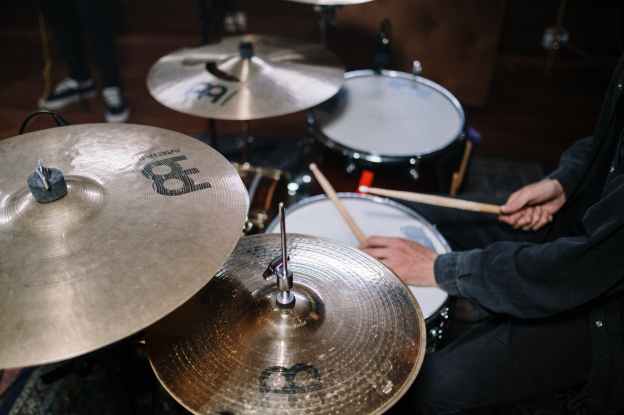
The free days in Sienna and Rothenburg were pretty much perfect days. The weather was great, for the most part, the prices were decent, the attitudes were good (for the most part), and the moments with various students and chaperones were the perfect moments of what, for me, are often the highlights of the trip: the quiet, special moments with people you care about, seeing new things on the other side of the world, experiencing places God has been working in for centuries before you and your country were born. And I bought a cymbal. You should hear it some time; it’s beautiful.
I didn’t get to do a lot of the things I was secretly hoping to do on this trip. I had touted it as my Farewell Tour (even before becoming aware of what Jehovah Slyboots was doing behind my scenes), as I sort of suspected it would be the last chance to go, possibly forever, until maybe with one of my children in another decade, if the trip and/or Europe still existed at that point. I had wanted to see Keats again, but the closest we got was a quick drive by the outside of the cemetery on the tour bus. I had wanted to take the Class of 2018 to Santa Croce in Florence, but we had the least amount of free time in Florence of any of the trips I’d been on, and certainly not enough time to get across town (without maps), inside, and back to the dinner meeting spot. To a lesser extent, I used to enjoy the Virgin Megastore in Paris, but apparently that shut down permanently a few years ago. Nobody buys compact discs anymore except me, I suppose. These were disappointments, but, at the risk of sounding disingenuous, I sloughed them off rather easily, thanks to the new and meaningful aspects of the trip. The good far outweighed the momentary bad of the trip. In closing, let me share with you just a few examples why.
I was able to experience the Class of 2018 seeing the Sistine Chapel ceiling for the first time. That was very special. I got to see some rather spot-on impersonations of quite a few people. I got to see Pierre (not his real name) work like the dickens to find the right giraffe in a French McDonald’s. (At least, I think it was France. The trip tends to blur together after a while.) I got to see Omaha Beach in Normandy. I got to see the Piazza del Campo in Sienna. I got to sit around Rothenburg with people I love getting some of the best, most challenging, most godly advice I’ve ever gotten in my life at a very perplexing time. I got to go on a crazy taxi ride that made the French Connection seem tame, thanks to Doug Leake and our commando run to the game store, for which I am and will be forever grateful. I got to talk with and get to know Ms. Grant better in two weeks than in the ten years of knowing her before this trip, as she said, which was a definite highlight. I got to spend countless enjoyable moments with the Class of 2018 on what may likely be the best Europe Trip SCA has ever had. What more could I have asked for?
Well, friends, I guess this is it. I did not think twenty-eight was going to be our last issue, but as we’ve always said, He moves in mysterious ways. Looking back at the last “next issue” previews in this light, however, you can see God was already making that path straight. Funny ol’ thing, life. My “summertime in the reflection pool” will now be reflecting on where God is taking us next (and whether we really need all this stuff we’ve accumulated in fifteen years here). I’m truly excited about it all: being able to play wargames with my father face to face, quality family time with my mother, and perhaps even some gaming conventions with my brother (and teaching at Emmaus, indeed). But, of course, I am also rather sad about leaving the journal, all students past and present, and, not least, you, our faithful readers, behind. At least we went out in style: 200 pages for our slam-bang finish!
We do have a lot of work ahead of us, getting the house ready and all that, but in the rare quiet moments I will try to read a few things, maybe play a few games with my family, perhaps prepare for the new classes I’ll be teaching in the fall. I’ve been on a bit of a “modern classic” sci-fi kick lately, finally reading many of the books I probably should have read twenty years ago. I suspect the advent of my high school twentieth reunion has spurred on that nostalgic shift in my reading habits of late. I’ve now finally read Dirk Gently’s Holistic Detecgtive Agency and The Long Dark Teat-time of the Soul by Douglas Adams, Starship Titanic by Terry Jones (based on Douglas Adams’s computer game script), Good Omens by Terry Pratchett and Neil Gaiman, and Neverwhere by Neil Gaiman. I didn’t enjoy them all quite as much as I thought I would, but perhaps if I had read them back in the day they would have been better for me in that part of my life. Not that I’ve outgrown them, of course, and I’m sure if you read them you’ll probably enjoy them quite a bit yourself. If so, I’d love to read your review on Goodreads. Maybe we can be social media buddies on that site, keep up with what each of us is reading. I’d enjoy that very much.
Currently I’m reading Orson Scott Card’s Pastwatch, and from there I’ll likely continue with Robert Jordan’s The Wheel of Time series (Path of Daggers is up next) and then, depending on how the summer is going, tackle the next Malazan Book of the Fallen by Stephen Erikson, Deadhouse Gates. Not the most inviting titles, but that happens sometimes. I’m also really enjoying these interactive fiction books by Dave Morris and Michael J. Ward. I’ll continue with those as time permits, especially if I get more for my birthday.
Well. We’ve stalled our final farewells long enough, I suppose.
Redeeming Pandora has always been about hope (and faith and love, but mostly hope). These last few years have not always been easy, but knowing we had these opportunities to get together and talk about what is important (more or less) has been a very enjoyable part of my life, and I thank you very deeply for sharing in it.
I want to thank all our contributors for this final issue as well as all the students and others over the years who have made this house organ play so smoothly. We even finally got my dad in here, at last. I wish I had time to thank you all, but you know who you are and how much you mean to me, so there’s no need to go into all that here. Suffice it to say, in the words of Lou Grant, “I treasure you people.”
And who knows … we came back once. Perhaps we can do it again!
In the meanwhile, stop by any time and visit us! Come take some books (and some Palor Toffs, please). You’ll always be in our hearts. Goodbye, friends!
And remember: just because you put syrup on something don’t make it pancakes.
So, what are you still doing here? We’ve all got a great life to live given to us by a great God. Let’s get out there and make the most of it, and, soon enough, as Brother Steve put it, “we’ll drink and dance with one hand free and have the world so easily, you know we’ll be a sight to see back in the high life again.” I’ll see you again in a place where no shadows fall. Farewell, my friends! Excelsior!

 Redeeming Pandora