
Monthly Archives: October 2023

The Wise Quotations of Mr. Christopher Rush

Compiled by the Class of 2010

Apparently, a long time ago, I said a few things some students have found, shall we say, clever.  Most of the clever things I’ve said in my lifetime are from other sources, which I have admitted and cited (most of the time).  For mostly sentimental reasons, I have shared a few of the sayings written down by students over the years, though mostly in the first half of my Summit career.  This was taken from an old document from students long graduated out of college, let alone high school.  Even so, it is a small testament to some of the students I’m grateful to have taught over the years.  Thanks to Mrs. Spaulding for rediscovering this old file and passing it along.

“There comes a time where we have to put on our man pants and for the ladies to put on their woman’s slacks; or, if you are Ricky Thompson, either.” — Passing the Torch Address at the Class of ’09 Graduation

“Life is not all beer and skittles.”

“…or is it…”

“Buttons aren’t toys.” [The Hitchhiker’s Guide to the Galaxy movie]

“Your lives would be much better if you people ate more McDonald’s.”

“An essay is like a river…you can’t lead people safely into it unless you know what it’s about.”

“Out of love, God created us.”

“Don’t think of eternity while you are driving.”

“Where there is smoke, there are matches.”

“There is no Saudi Arabian Version of the Qur’an.”

“Human beings are simple.”

“Tomorrow we will be playing everyone’s favorite game, What Does Chaucer Think?

“Boys with no belts should have no lunch.”

“You like cheeseburgers because someone gave you a cheeseburger.”

“Sometimes you are tired of the people you know.”

“The five paragraph essay got us through the days of short pants and dodgeball.”

“There are no timeouts in war.”

“Your lives have been shallow and useless.”

“Remember in the future, your ignorance didn’t come from Summit Christian Academy…we gave you the keys, it’s you that didn’t take them.”

“‘I wonder if we do something with a match’ is not a hypothesis.”

“A hyperthesis is a ‘Is it…’”

“Everybody’s second favorite game, Up or Down (Bradley’s favorite)!”

“I’m not on the thesis judging board because I have heard your arguments so many times and I am sick of them.”

“October through December go by slowly, then February, March a little longer. Then in April … ‘Oh my gosh, the Eiffel Tower;’ then thesis, then in May, you will be like … ‘I’m out of school.’”

“Language has meaning if we give it meaning.”

“We’re all scrunched together on these sardine couches.” (The reason why we couldn’t take many tests 2009-2010)

“I can’t tell you to go out and read good books; ‘Does good mean popular? then I’ll go read books about teenage vampires.’”

“When playing basketball, one side doesn’t go first, then the other; there will be no way to determine the winner. Same thing in war; you don’t want one side to go then the next…except in Strategic Gaming.” (Talking about Stasis Theory)

“Research isn’t done while on Geopages and watching cartoons.”

“We don’t live with Socrates where he can ‘search’…therefore, you have to research yourself.”

“What if the earth decided to spin twice as fast tomorrow, just for fun?”

“In a beheading contest, you really want to go first.”

“No one wants the ‘Best Of’ something. Who wants three of their favorite episodes in  a 60-minute “Best Of’ video?”

“Well, if we were at the grammar school, we could call it repetition, but since we’re not, we call it refrain.”

“Is there a period in there?”

“Stupid is never a valid category; never was, never will be.”

“We’re not guessing and we’re not liking.”

“What I do everyday, is come to school, try to make your lives better…trying to cause as few emotional problems as possible.”

“How many ounces of smokeless tobacco were spat out in the 1977 World Series dugouts? … no one needs to know.”

“Weapon of Minor Distraction…(WMD).”

“You are seniors: if you want a diploma from me, then you are gonna have to earn it.”

“We start out with our thesis, ‘The world is flat,’ then your antithesis, ‘No-o it’s not, the world is round,’ (*pow*pow*pow*) then you have a synthesis, ‘Look, we are in India.’ Then start with that as your thesis, then your antithesis, ‘No it’s not, it’s America,’ and then your synthesis, ‘We are in Cabotia.’”

“It’s not torture when it’s scientific investigation.”

(Question: How does Marxism exist?) “Communism has a lot of big guns.”

“Don’t worry, I’ll find a way to lower your grade.”

“Your dam is broke, it’s your problem not mine…that’s what you get when you live in a lake…you didn’t help me with my problems so why should I give you money to help your problems?”

“You are young adults…not kids.”

“Someone thought it was a good idea to put teachers and parents together to discuss your problems.”

“I’d hate to be a postmodernist running through traffic.”

“Due to the evil schemes of the Devil, tonight we will have two times as much homework to counteract the Devil.”

“Believe it or not, but younger children have a lesser attention span than you.”

“Be fun and exciting when you speak…like me.”

“I have a license to do this stuff.”

“Time flies when it is wasted.”

“We need to stop polluting the air waves about recycling.”

“I see Carlsons all FRAKING day.”

“Living things, nonliving things, other…is too broad of a topic.”

“If you have a bloody shirt, then you are the murderer…or you just have lots of nosebleeds.”

“If God doesn’t care for us, then the animals might eat us, and the rocks would be too busy doing their own thing instead of helping.”

“C…for safety.”

“Defy the Devil’s schemes…”

“Ahh…the fossil record; that dreary old thing.”

“You can’t think without knowing that you are thinking, except when you are taking test.”

“The universe is getting lazier, says Newton.”

“Maybe you will break out of your baby bubble.”

“If tomorrow the gravity is going to be different than today, then don’t get on a plane tomorrow.”

“If you start eating people, then your ethos is gonna go down, because others don’t eat people.”

“I’m  going to the bathroom for the whole chapel.”

“The single exclamation mark (!) does not travel in packs (!!!). If you find the need to increase the number of exclamation marks, then increase your vocabulary so it would have more power.”

“If you are a visual learner, you can take the time and sketch each picture…but for  now you have to keep up the pace.”

“What you do in secret, God knows.”

“Pack up your stuff and go away.”

“We actually live in the United States of Cabotia.”

“Martin Luther nailed each thesis on the church door one at a time, using 190 nails.  It took over six and a half hours.”

“You wouldn’t have the Globe Theater if the world was flat.  It would be rectangular if it weren’t for the Age of Exploration.”

“Remember when you all came into the 10th grade, young and pimply, and thought the Iliad was stupid, but after reading it, you liked it?  This will be the same for Shakespeare.”

“Things can go wrong when you get a group of people angry, bearing knives.”

“I am not bothered by your ignorant ways.”

“Genetically mutated chickens gone awry.”

“I am masterful of my emotional responses.”

“Pretty soon, there will be X-men amongst us.”

“A tree without its trunk is inefficient.”

“Let’s get through this quickly; I’ve got to harvest my squash.”

“We are gonna keep this on the DL.”

“If you are a genius, school had no purpose for you.”

“We don’t win competitions but we are pure at heart.”

“I like seeing how smart everyone is becoming.”

“Descending order of easiness.”

“I’m not worried, I am sad…a lot.”

“Explain life and everything it means….  Explain unreality.”

“There is a big pile of Twinkies that I am going to jump into.”

“This week is the most awesomest week you will ever have.”

“Whenever you get down, just remember about getting through your Senior Thesis.”

“Wow, these pretzels are making me thirsty.”

“The basic question of life is not, ‘Mom, what’s for dinner?’”

“The outside is so over-rated.”

“Thank you for your diligence…it’s not like you were going to go out and play anyways.”

“God is.  God needs nothing…if God needs anything, then He lacks something; He doesn’t need followers, He doesn’t need worship.”

“A yoke contains two oxen, an older one who knows the way and the path it takes, and a younger, inexperienced ox, that will learn the way of the older ox, so it will become the older experienced ox when the older one is lifted into the sky.”

“They didn’t have the wheel back then…the wheel was still young.”

“What was the Renaissance, and why shouldn’t I go to Burger King for lunch? Or McDonald’s?” (Essential Question on the board)

“It’s written right here (pointing at the whiteboard) in small white ink.”

“The Internet is like a three-dollar courtesan…you may get what you want, but the quality is always suspect.”

“These days, lions don’t lie down with lambs unless they are dead.”

“I have to forgive you?!…whoa, whoa, let’s rethink that.”

“I’d rather grade 95 pages of confirmation next weekend than 34 … just don’t worry about me.”

“That’s where you want to aim, in the eye of that poor bull.”

“Discharging weapons is not a good way to get people’s attention.”

“Speak what you feel, not what you ought to say.” [King Lear]

“Even though I use 3 red pens a week, you are actually getting better.”

“Follow me and I’ll take you to the Pearly Gates…until I give you that eight-and-a-half-inch sheet of paper that tells you to go away and never come back…unless you have a #1 meal from Chick-fil-a, no pickles, sweet tea.  Or a Double Quarter Pounder meal from McDonald’s, Coke, no ice.”

“Nothing good ever comes from Texas.” (One of Mr. Rush’s life mottos, said after Gordon broke up with his girlfriend.)

“…and why should I do that?”

“This is my serious face…looks like my joking face.”

“No one better say on the test upside-down triangle for inductive reasoning.” (With especial apologies to the Class of 2018)

“Annie…short for Annie.”

“I can only fix so many problems.”

“It’s not like and not basically.”

“Language is only commutative.  I cry about it from time to time…on the inside.”

“If you use this (rhetoric), no one will touch you, literally (literature).”

“Hold on Pierre, calm yourself down…go eat your crumpets and croissants.”

“Commingling with the youth by sharing his essence with partakers of his ilk.” (On Oscar Wilde)

“Dude, you learned nothing.”

“Not exactly…”

“Consider it an endearment.”

“‘Ahh, you sunk my battleship. I’m not playing again.’”

“Not too shabby.”

“Today is (in)Hospitality Day, but I have two 10th grade classes.” (Eats a whole meal from McDonald’s throughout the whole class period to discuss a lesson from the Odyssey.)

“Don’t let those Honor Society people boss you around.”

“You know how I say things, and hear things…differently.”

“You need to get into the habit of writing high quality papers…if you all took 30 minutes to proofread your papers, then it will be better.”

“Exciting Quarter O’ Shakespeare.”

“‘Well, that’s not fair’.  I know, that’s why I like it.” (Quiz being 40% of our grade.)

“Tragedy is when I cut my finger; comedy is when you fall through an open manhole cover and die.” [Mel Brooks]

“Throwing a pie at me isn’t farce, but it will be when you have one thrown in your face.”

“An essay is like…a river. An introduction will lead you into the river and the conclusion will lead you out. Make your paper persuasive for them to get into the river and they will jump right in.”

Zach: “I am not indecisive, I am just…”

Mr. Rush: “Weak.”

“Rhetoric is a power of the mind, not the Pythagorean Theorem of the mind.”

“No one cares what you have to say, you are youths; your parents make you think that people care.”

“Jimmy was eating Jujubes; one of the Jujubes went down the wrong tube. Jimmy now has iron lungs.  Where will Jimmy be without his respiratory implants?” (Teaching us an attention-getting introduction.)

“Anyone who doesn’t enjoy Shakespeare, doesn’t enjoy life.”

“Oooooooo…” (’09 Passing the Torch Address)

“If you have low self-esteem issues, go eat at Golden Corral.”

“Don’t feel bad you didn’t create the world.”

“Who we are is what we think is true.”

“‘Oh, it’s the Coliseum’; or, if you want to be accurate, ‘Oh, it’s the Flavian Amphitheatre.’”

“To be or not to be, that is the question…the answer is to be.”

~ Mr. Christopher Rush
The Importance of Music

Noah Eskew

Humans are blessed with five senses that elicit responses and connect the external world with the soul. Sight, taste, touch, smell, and sound are the ways by which we can interact with the world around us. When a person taps in to any of these senses, various reactions will occur with endorphins inside the brain. Sound, however, regularly causes a visible physical stream of responses. Rare is it to see a painting that inspires a flash mob, or a candle that brings you to tears, but that’s part of the magical spiritual force music does. That’s why I’d like to talk about the importance of music. Music has the immense power to incite a fire within an individual, a group, a nation, or the world. Music is utilized alongside other senses to generate greater responses. It can completely change a person. All these things together make music one of the most powerful and important aspects of the universe.

This thesis and subject matter is interesting due to its distinct nature. This assertion has the potential to last long after my time. Arguments surrounding music have distinguished themselves beyond those of science and numbers because of their inherent subjectivity. Because of this, this thesis will be addressing a bit of a “Cold War.” Not too many people are adamantly vocal against the importance of music. However, not enough people are vocalizing positivity for music. Instead, each side expresses their stance through their actions and attitude. The historical background involved with this subject played a major role in my choosing to address this topic. For years, the arts have been looked upon as just another piece of culture often left for the weaker members of society to experiment with (take the times of Shakespeare for instance). Now, all over the country, many adults have forgotten the major role music can play in a child’s life. This forgetfulness appears in various forms: a neighbor complaining a drummer in the neighborhood is too much of a nuisance or overly strict noise ordinances put upon neighborhoods. In a letter to a city council about absurd noise regulations, Dave Grohl, award-winning musician, had this to say:

Music is not only a healthy pastime, it is a wonderful, creative outlet for kids, and fosters a sense of community necessary to the emotional and social development of any child…. It is crucial that children have a place to explore their creativity and establish a sense of self through song. The preservation of such is paramount to the future of art and music. Without them, where would we be?

My goal with dissecting this subject is to further display the power of music and to discover what good things can come from properly harnessing said power. Through this I plan to replace the negative attitude toward the power of music some still harbor, with a highly appreciative attitude toward the art form and the heavy experimentation, patience, and practice it entails. I plan to make clear valuing musical things should not be dismissed as frivolous or “just a hobby,” but, instead, are meaningful things with unmatched purposefulness and possibilities. Lastly, one of the primary reasons why I chose such a topic was to cease the view music’s influence is inherently bad; secular music doesn’t have to dishonor God.

I would like to define three terms. First, “music” is the organization of melody, harmony, and rhythm in the name of human expression. Second, “influence” is music’s ability to create changes, and its absence is obvious. Third, “participation” in music and the arts means to enjoy, practice, or to have a thorough respect for the importance of such.

This thesis should be important to you because you may be missing out on one of the most beautiful parts of creation. Your lives, your children’s lives, and your communities’ lives will be enhanced if these beliefs are put into practice.

In order to prove music is one of the most powerful and important aspects of life, I will confirm six arguments: 1) Music has displayed power through shaping history. 2) Music is powerful because of its widespread dominion. 3) Music is a powerful social force, which encourages communication beyond words. 4) Music clearly shapes people’s attitudes, appearances, philosophies, and being. 5) Music is important because of its therapeutic benefits. 6) Music is vital to a child’s development. In order to further prove my thesis, I will refute four counterarguments: 1) Music only affects those who actively participate in it. 2) Due to improvements in technology, music is being taken for granted. 3) music’s influence on society is mostly negative. 4) Music is only important because of its benevolent side effects.

My first argument is music has demonstrated its power through shaping and developing the stories of history. Music has been around since God made it. And once bestowed to the human race, music has been stirring the cultural pot, promoting ideas, telling stories, providing encouragement, etc. For the sake of time, I will begin by addressing some ways music shaped things within the 1800s. A good chunk of this century, and seemingly most of history, is spent during times of war. And in war, there isn’t a lot of time or room for arts and the appreciation of them, yet music found a way to fit in and shake things up. This quotation from civilwar.org nicely sums up the ways music was used in wartime:

Music was played on the march, in camp, even in battle; armies marched to the heroic rhythms of drums and often of brass bands. The fear and tedium of sieges was eased by nightly band concerts, which often featured requests shouted from both sides of the lines. Around camp there was usually a fiddler or guitarist or banjo player at work, and voices to sing the favorite songs of the era. In fact, Confederate General Robert E. Lee once remarked, “I don’t believe we can have an army without music.”

It’s interesting to note how the ways a soldier might have used music, such as to psych himself up for battle, are similar to a modern-day athlete listening to a pre-game playlist. But, in the context of the Civil War, both the Union and the Confederacy had songs that demonstrated their loyalty and pride such as “May God Save The Union” and “Dixie.”

During that time, and still today, songs have been used to promote political campaigns. For instance, the song “One Hundred Years Hence,” written by Civil War-era actor Tony Pastor, expresses a feeling of readiness toward Lincoln’s departure from the presidency. The song expresses a belief Lincoln was forgettable and how his political opponent, George McClellan, would outlast Abe in terms of historical relevancy. In a more modern example, Joan Baez, a 1960s folk singer, advocated for civil rights, most notably in the song “We Shall Overcome.” Rage Against the Machine is another example of musicians with a clear goal of spreading their ideologies through melody. Tom Morello, the band’s guitarist, said in an interview with MTV, “I think that one of the important things about Rage [Against the Machine] is that we are able to seduce some people in with the music, who then are introduced to a different political message. That’s kind of why we play music.” The band knew they could begin to influence people’s thoughts if they could first draw attention with their sound.

My second argument is music is so powerful because of its widespread dominion. People can use music in their lives to manipulate their moods, alleviate the boredom of tedious tasks, and create environments appropriate for particular social events. Due to advances in technology, just about every kind of music out there is available to a great portion of the world at any time. This gives society even more exposure to music, and when humans have this kind of exposure to anything, it is bound to affect their way of life. Human exposure to music is at an all-time high, and the numbers show no signs of letting up. Forbes magazine did a study on human interaction with music and concluded,

On average, Americans now spend just slightly more than 32 hours a week listening to music. That’s an incredible figure, and it shows significant growth from even just the past two years. In 2016, Americans listened to an average of 26.6 hours of music per week, while the year prior, it was just 23.5 hours.

The trend shows massive gains from year to year, with the average expanding by several hours every 12 months. While some interactions with forms of media are measured in minutes, Americans now listen to almost a day and a half of music every week, which shows that they have songs, albums and playlists streaming throughout the day, and that they now incorporate music in many different parts of their life. 

Americans, on average, are listening to 32 hours of music per week. Now, the average American sleeps for about seven hours a night. This means we sleep through about 48 of 168 total hours in a week, and are left with 120 active hours. The 32 hours of music we partake in now account for 27% of our life. That means almost a third of the week involves some sort of music! Think of all the things people count on music to get them through: yardwork, schoolwork, driving, hosting a party, religious services, and more. One thing particularly interesting that sets music apart from other art forms is the number of things within society that rely on music to keep them relevant. And that quotation from General Lee, used in my first argument, makes me think of what sporting events would be without music. Just imagine: you’re at the ballpark, no organ, no walk-up music, no fun. The crowd would be less involved in between plays. The teams would storm on the field to silence. The quality of the sporting event experience as a whole would just seem incomplete. Many times, movies count on a riveting score or soundtrack to draw lasting interest. What’s Gilligan’s Island without the opening verse, “Just sit right back and you’ll hear a tale,” or Seinfeld without the famous “sitcom bass”? What is Dirty Dancing without the song “The Time of My Life,” or even movies like the Star Wars prequels, which are shunned by some of the series’ true fans, still included an amazing score of music. Restaurants will even play music to soothe the impatience of waiting for a table or food, and hopefully put consumers in a nice mood suitable for spending. Because of its widespread dominion, music can change things ranging from major events or Joe Random’s Thursday morning.

In the past, music has appeared so powerful it has been mistaken for a plot of world domination. Hitler suspected the growing popularity of jazz in the 1940s was being fueled by a conjoined effort of blacks and Jews to infiltrate society with their promiscuous ideas. He realized the music began to soften the tension between different races, and immediately banned “negro” music from the airwaves. Says Chris Trueman, “Jazz music was banned as it was considered to be ‘black music’ with origins from the southern states of America. The Nazis associated jazz music with Black Americans and as a result it was labeled ‘degenerate.’” Hitler recognized the people like the black and Jewish music from America enough to where he could probably benefit for making Nazi-friendly counterparts. Joseph Goebbels assembled the group “Charlie and His Orchestra” in order to begin spreading anti-Allied propaganda.

There is even a conspiracy theory which holds all of the Beatles discography was too good to just be rock ‘n’ roll. Instead, it must be some kind of Marxist plot against America. The music was too compelling, it had to be using some sort of mind control in order to spread propaganda. Joseph Noebel wrote a book Communism, Hypnotism, and the Beatles to promote the idea. In many ways, this is the ultimate praise for a musical group. These aren’t necessarily the prettiest conclusions to draw from history, but its history. Music has been through a lot of pressure, but its impact lives on. This just goes to show, when humans interact with the force of music, the influence is undeniable.

My third argument is music is a powerful social force, which encourages and inspires communication beyond words and causes emotional reactions and supports the development of group identity. Music can communicate with words but also avoid words entirely and still evoke an emotional response. First, you must understand two listeners can experience two separate emotions from the same piece. As Dave Grohl explains, “That’s one of the great things about music. You can sing a song to 85,000 people and they’ll sing it back for 85,000 different reasons.” So, in a sense, the audience is never wrong in drawing a particular emotion from a song. But, in many cases an artist will communicate specific feelings to the audience. For example, the opening to “Ride of the Valkyries” conveys the feeling of an army entering an epic battle, or at least something very similar to that sentiment. Or in a song such as “Landslide” by Fleetwood Mac, where there is a clear theme of remorseful melancholic feelings within the chords alone. In other words, you don’t have to speak French to understand the feelings represented in a Debussy piece.

My fourth argument is music displays its power through the impact it has on an individual’s physiological, movement, mood, emotional, cognitive and behavioral responses. Playwright William Congreve wrote, “Music has the charm to soothe the savage breast, to soften rocks, or to bend a knotted oak.” Music makes people physically move. Neuroscientist Daniel Levitin suspects this about the interactions between music and the brain:

Music stimulates the cerebellum, a region of the brain crucial to motor control. Connections between the cerebellum and the limbic system (which is associated with emotion), may explain why movement, emotion, and music are tied together. Music is more than entertainment: It is a regulating force for our moods. Because of its strong ties to our emotions, we rely on music to wake us up, calm us down, entertain us, and motivate us — something a balanced checkbook can’t quite match.

Music has different effects on different individuals. It can make some people’s cognitive processes improve, but it may cause others to stop everything and listen. In fact, while compiling this paper, some days were spent writing while listening. But other days the music would have me too enthralled to buckle down and work. The brain’s multiple processing of music makes it difficult to predict the particular effect of any piece of music on any individual.

My fifth argument is listening and playing music have powerful therapeutic effects. Music can promote relaxation, alleviate anxiety and pain, and enhance the quality of life of those beyond medical help. One fascinating example of such uses for music is through the journey of pregnancy. Therapist Dr. Ginger Garner analyzed the findings of researchers on this theory and noted,

Music can be an effective means for managing both pain and stress during labor. A study showed that using music during childbirth has a significant effect on mother’s perception of pain. Another second study in 2000 revealed perinatal physicians, nurses, and caregivers became more relaxed, slowed their activities, and demonstrated increased respect for laboring mothers when music was used. Music was also found in a study, when combined with progressive relaxation, to be more effective in inducing relaxation in laboring mothers.

This is yet another way music is at your service. It’s amazing that such a powerful thing in its own right has these other positive “side effects.”

My sixth argument is music can play an important part in enhancing human development in the early years. Active involvement in music making in children may increase self-esteem and promote the development of a range of social and transferable skills. I have experienced this benefit of music full well. When I was about six years old, my cousin Sarah came to live with us as a foster child. She began attending Summit. She was a handful. Sarah was too much of a disturbance to our house and to our school. Along with her aunt, we decided to enroll her into piano lessons, which yielded great results. Rather quickly, she became quite good at the instrument, and the skills of patience and grace she had learned from piano became paralleled in other aspects of her life.

The first counterargument against my thesis is music only affects the lives of those who actively participate in it. The biggest problem with this argument lies within overlooking the effects of music on culture. In history, events happen on a cause and effect basis. Take, for example, the Boston Tea Party: George III raised the taxes until the colonists got fed up. But, in terms more related to our argument, the cultural changes that occurred in the 1960s weren’t just coincidences. For instance, as mentioned earlier, the groups of the British Invasion came over and immediately influenced fashion and especially hair. However, The Beatles managed to change far more than style. After the Beatles played on the Ed Sullivan Show, an initiative of starting a band swept across the youth of the nation. The Beatles soon became the first real celebrities to be asked about political and social issues. Their presence in popular culture was a boon to the Civil Rights movement in the ’60s. In the thick of American society, they had their fair share of interactions with segregation. In their tours, if a venue was segregated between colored and white, the Beatles would only agree to play if the rule was done away with. This excerpt from the BBC’s Web site outlines the band’s feelings on segregation: “The Beatles showed their support for the U.S. civil rights movement by refusing to play in front of segregated audiences, a contact shows. Signed by manager Brian Epstein, it specifies that The Beatles ‘not be required to perform in front of a segregated audience.’” These big statements by the Beatles got the music business behind racial equality. Without the support of pop culture to this degree, who knows how long of a delay the movement would have lasted. These moral decisions groups and artists like the Beatles made affected the world as a whole, not just the music industry.

The second counterargument against my thesis is due to improvements in technology, music is being taken for granted. This can lead to neglect in considering how the infrastructure supporting music and musicians is resourced, maintained, and developed. Some fear the process behind the making of popular music is becoming too factory produced, robotic, and digital. They think if all music becomes computerized it will all begin to sound alike and there will be no emotional attachment without the human element. It is true: we are currently in an era of music where “perfection” in the sense of sound and image are glorified. Anybody can make a hit record with the help of computer software. This is why parents and teachers must not suppress their child/pupil’s interest into learning an instrument. This world needs real musicians playing and dedicating themselves to real instruments through which they can distinguish their sound from everyone else’s.

The third counterargument against my thesis is music’s influence on society is mostly negative. First, like most things, we tend to focus on the negatives in society. If the positive things music accomplishes everyday were to go missing, we might begin to understand its true value to society. Is some music out there providing incorrect moral standards? Yes. This tells us if music has the ability to influence for bad, it also has the inverse ability. We’ve seen in the past with music for charities, churches, and other things have influenced culture for the better. Music’s influence on society can be good. For evidence of this, I will look to an unlikely example: Punk Rock. In the ’80s, punk rock band Minor Threat started a movement called “straight-edge.” Dictionay.com defines straight-edge as “advocating abstinence from alcohol, cigarettes, drugs, and sex.” Minor Threat became incredibly influential to the punk music scene, and many of their fans followed suit with the anti-drug, anti-alcohol lifestyle. In-fact, there are still people who cling to the straight-edge lifestyle.

Finally, the fourth argument against my thesis is music is only important because of its benevolent side effects. Peter Greene explains why music education is important due to music’s inherent importance,

Music is universal. It’s a gabillion dollar industry, and it is omnipresent. How many hours in a row do you ever go without listening to music? Everywhere you go, everything you watch — music. Always music. We are surrounded in it, bathe in it, soak in it. Why would we not want to know more about something constantly present in our lives? Would you want to live in a world without music? Then why would you want to have a school without music?

One of the biggest issues I wanted to conquer with this thesis was music being important because it helps with other things. Music is so heavily involved in our everyday lives that studying it, participating in its production, and listening to music are worthwhile causes of their own. Don’t get me wrong, all of the benefits mentioned in this paper are incredible bonuses included in the enjoyment of music. However, that is what they are: bonuses. There’s no need to wait around for a scientific study to prove music improves SAT scores before you listen to it.

After hearing more about the subject, there are a number of ways to utilize the new information. First, know the pursuit of musical excellence is not a dead end journey, but instead leads to a purposeful life. Encourage the next generation to value music, and to choose what they listen to carefully because it will have a big impact on who they become. Finally, do not rule different styles of music out of your life based on prejudices. Experiment with new sounds; chances are that something is out there, and you’re missing it. Don’t let this gift from God pass you by!

Bibliography

Bierle, Sarah K. “1860’s Politics: Songs For The Campaign Trail.” Emerging Civil War, 11 Nov. 2016, emergingcivilwar.com/2016/11/11/1860s-politics-songs-for-the-campaign-trail/.

Bowman, John S, and Stephen Currie. “Music of the 1860’s.” Civil War Trust, Civil War Trust, http://www.civilwar.org/learn/articles/music-1860s.

Collins, Michael. “The Benefits of Listening to Rock Music.” Google, Google, 16 May 2016, http://www.google.com/amp/www.theodysseyonline.com/benefits-listening-rock-music.amp.

Daugherty, Kevin. “Rock Music vs Classical Music.” Violinist.com, 4 Mar. 2004, http://www.violinist.com/discussion/archive/3641/.

Garner, Ginger. “Secrets for Easing Labor Pain.” Modern Mom, 4 Mar. 2016, http://www.modernmom.com/f3e7cc90-3b3d-11e3-be8a-bc764e04a41e.html.

 Greene, Peter. “Stop ‘Defending’ Music Education.” The Huffington Post, TheHuffingtonPost.com, 11 June 2015, http://www.huffingtonpost.com/peter-greene/stop-defending-music-education-_b_7564550.html.

Grohl, Virginia. From Cradle to Stage. Coronet Books, 2017.

Hallam, Susan. “The Powerful Ride of Music in Society.” Google.com, WordPress.com, 10 July 2008, http://www.google.com//amps/s/musicmagic.wordpress.com/2008/07/10music-in-society/amp/.

https://phys.org/news/2015-09-restaurants-music.html

https://takelessons.com/blog/health-benefits-of-playing-an-instrument-z15

McIntyre, Hugh. “Americans Are Spending More Time Listening To Music Than Ever Before.” Forbes, Forbes Magazine, 9 Nov. 2017, http://www.forbes.com/sites/hughmcintyre/2017/11/09/americans-are-spending-more-time-listening-to-music-than-ever-before/#129fe41a2f7f.

Oppenheimer, Mark. “Stop Forcing Your Kids to Learn a Musical Instrument.” New Republic, 16 Sept. 2013, newrepublic.com/article/114733/stop-forcing-your-kids-learning-musical-instrument.

Pearlman, Catherine. “You Can’t Always Shelter Your Children and You Shouldn’t Try.” The Huffington Post, TheHuffingtonPost.com, 16 Oct. 2015, http://www.huffingtonpost.com

Resler, Seth, et al. “5 Reasons Why It’s Important to Teach Popular Music History.” Jacobs Media Strategies, 28 July 2017, jacobsmedia.com/5-reasons-why-its-important-to-teach-popular-music-history/.

Trueman, C.N. “Music in Nazi Germany.” History Learning Site, Apr. 2012, http://www.historylearningsite.co.uk/nazi-germany/music-in-nazi-germany/.

“Why Study World Music and Culture?” World Musics & Cultures at Union College, http://www.muse.union.edu/wmc/archives/why-study-world-music-and-culture/.

Yusko, Alan, and Ed Prior. “RELIGIOUS ROCK…” RELIGIOUS ROCK… The Music of Devils in the CHURCH!!!, http://www.biblebelievers.com/rock1.html.

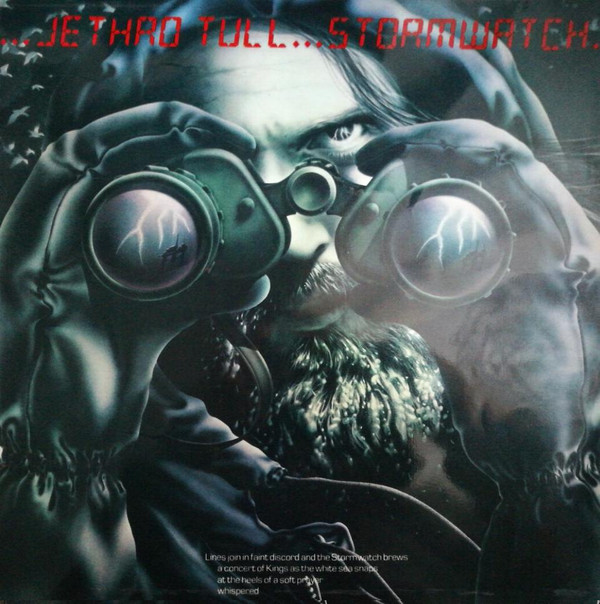
Tull Trilogy, pt. 3: Stormwatch

Theodore Aloysius

And From the Farm to the Sea

Hello, friends.  As my excitable young penguin friend said just a bit ago, I am here to talk about the finale of the Tull Trilogy, Stormwatch.  It makes a good deal of sense for me to talk about this album being a polar bear and all.  What’s that?  Oh.  There’s a polar bear on the back cover of this album, don’t you know.  And since I’m a polar bear, well, it just stands to reason.  In fact, that polar bear was a college friend of my father’s, so this album has been special to me and mine for a while now.  He’s much nicer in real life than he looks on the cover, besides — he’s just doing that for publicity.  You know polar bears of that generation.

Admittedly, Stormwatch is noticeably rougher, tone- and lyric-wise, though it’s not overtly pessimistic.  With the failing health and eventual death of bassist John Glascock, what many fans consider the “golden era” of Tull came to a painful and sad end.  The band shortly frayed apart, but I don’t want to misrepresent what happened.  You can look that up on your modern human research machines, if you must.  It’s not a pleasant story.  Yet while the album that marks an ending and a new beginning for Tull has a sorrowful background and an occasional bitter edge to it, it’s a testament to a great band providing great music, giving us a bit of hope we, too, can overcome difficult circumstances and make a fresh start when we need to.  Odd how that became the theme of this final issue without any of us knowing it a few months ago.  He moves in mysterious ways, indeed.

“I flew for Heaven’s sake and let the angels take me home”

Unlike its predecessors in the trilogy (and, please keep in mind, only we, the audience, call it a “trilogy” – Ian Anderson likely doesn’t call it that, since he’s expressed his displeasure at the epithet “folk” many a time, but he has linked Songs and Horses before … I haven’t read much about it, since I’m a polar bear), Stormwatch does not appear to have an overarching introductory song such as “Songs from the Wood” or “Acres Wild.”  Instead, the album opens with “North Sea Oil,” which, perhaps you could say transitions us from the cover to the music itself, since my dad’s friend Wallace (the polar bear on the cover) is pictured as stomping on a nuclear power plant.  It’s a touch cynical, sure, the forthcoming devastation you humans are bringing to this world as you syphon all the oil out of the ground and then destroy the soil with nuclear waste, but the song isn’t really angry about it.  And neither am I.  We animals know these things are under control, even if you humans are doing your best to destroy all life on the planet without asking us if that’s okay, so we can enjoy the somewhat dark humor of this song.  “North Sea Oil” sets the mood well, and upon further reflection, it does introduce the main theme for the entire album: storms are on the horizon.  Here, these storms are avoidable, especially, if we listen to friend of the journal Hannah Elliott and her thesis, as you can read earlier in this very issue.

One might also surmise Stormwatch is mainly about the ocean, with the arctic cover and an opening song literally about the open sea followed by a song about the stars — and who better to use the stars than sailors?  But “Orion” is not really about navigating by the stars physically, even though it has the line “come guard the open spaces from the black horizon to the pillow where I lie.”  It’s about navigating the loneliness of life in the darkness of night, but we can possibly find some hope under (by?) the light of the stars.  This is an oddity for Jethro Tull (which, I admit, does not mean much, considering how diverse their musical output was over the years), in that the lyrics are rather hopeful for the first half of the song, especially in the chorus, but the music is bizarrely oppressive.  Perhaps it’s the steady march-like beat of the chorus.  The lyrics become increasingly despondent as the song progresses (and a bit saucy), but that’s Ian Anderson for you.  He pulled no punches, as you humans say.  The storms of life do not have to overwhelm us if we can keep looking up.  That may sound trite, but the song is anything but trite; it is hopeful in a dark and stormy world.

“Home” should certainly dispel notions Stormwatch is a thoroughly dark and bitter album.  It is grimmer than the first two entries in this trilogy, as we’ve all said a couple dozen times by now, but it still resounds at times with love and warmth and hope, and “Home” is one of those bright moments. It does recall our mind to the nautical theme (I was about to say “undercurrent”), with the idea of taking “a jumbo ride over seas grey, deep and wide,” and it does overtly speak to the storms of life (“All elements agree in sweet and stormy blend — midwife to winds that send me home”).  If we can weather those storms, there’s no place like home, as you kids say.  Even if you’ve been away for fifteen years, the call of home is a powerful thing.  It’s a most lovely (and appropriate) song.

Which is not to say “Dark Ages” is not a lovely song … but “lovely” is not the word for it.  It’s Tull, so it’s great, and reminiscent of the mini-epics of Heavy Horses, but it is more akin to “Minstrel in the Gallery.”  This is likely where this album gets its reputation: the “dark ages” of the title are not what we often call the medieval period but rather the dreary, inhuman way you humans treat each other.  Sure, sometimes we polar bears have trouble with seals and the occasional walrus (we tend to stay away from them), but you people really have problems with each other,  As is typical of Tull’s atypical songs, the outright gloomy lyrics are carried along by a hopeful march, akin to “Orion” but distinct enough, mainly because of the odd pairing of the melodic & rhythmic line and the lyrics.  The words “dark ages” are a challenge to say, let alone sing, mainly because of the “ar” in “dark,” which takes a long time to get out of your mouth for only one syllable.  Protracting that over a steady rhythm is something only Ian Anderson would think of doing.  It’s a cynical, angry song that takes the occasional jab at religion, which is what Anderson does at times, but the musicianship of the band elevates it past the gloom.

And to what enjoyable heights the band takes us!  “Warm Sporran” sounds like we are about to go watch a great football match (I suppose you Americans would call it “soccer,” though).  It has that military tattoo atmosphere as well, once it gets past the wholly-surprising funk groove at the beginning.  You may need to re-examine the band name on the album cover (surely you aren’t just streaming these songs without a physical copy of the album, cover, and liner notes? though, come to think of it, that would help cut down on landfill fodder … but, wait, no one would ever dispose of a Jethro Tull album) — you may doubt this song is by Jethro Tull for a few moments.  It may not be as lovely as “Home,” but it is a delightful, paw-tapping instrumental, the inverse of the ending to come on side two.

“So come all you lovers of the good life”

Side two opens with a rocking song about … chess? the speed of life? the inevitability of change? inexorable winter weather? all of these and more?  With Ian Anderson, it’s best to lean toward “all and more.”  He may be the closest thing to T.S. Eliot the musical world has gotten, and that’s saying something.  I do look forward to the 40th anniversary liner notes next year (as of this writing) — perhaps then we can understand just what this song is about.  But, knowing Ian Anderson, he’ll probably feign ignorance or forgetfulness or ambiguous “it is what you make of it” sort of piffle.  The chorus leads me to suppose underneath all the poetic rigmarole (I don’t say that critically) is a song about the storms of winter coming to drive away our happiness and such, and the cavalier narrator wants to keep living a carefree life in a sunnier, warmer clime.  This is completely understandable.  Winter has such a nasty habit of stopping activity … believe me, I should know.  I live with winter twelve months out of the year.

I wonder if Ian Anderson was listening to a lot of marches during the creative process of this album.  “Old Ghosts” is yet another march-like rhythm on the album, yet true to form, Tull upends our expectations for a march with Anderson’s almost languorous singing.  “Languorous” is not the word I want, but I can’t think of a word that encapsulates “dreamy,” “nostalgic,” and “hopeful” all together.  Perhaps it’s just my remastered version, but Anderson’s voice seems a gnat’s wing behind the instruments throughout the song, yet it works perfectly to evoke such a mystical experiences.  Maybe “hypothermic”?  Is this what hypothermia sounds like?  I wouldn’t know myself, being built for the cold, but I don’t want you to try and find out yourself through experience.  It’s another “sad lyrics/happy melody” Tull song, but as always the “warm mesh of sunlight sifting now from a cloudless sky” works its way through the general despondency to shine hope into the world of painful memories and failures, a world where efforts and loves don’t always prove futile.  That is what this journal has been about, after all.

I haven’t spent much time in the ancient hills and forts and mounts and mounds of the United Kingdom or the Republic of Ireland, though Christopher has), but Dun Ringill is certainly one of them, on the Isle of Skye in Scotland (haven’t played the game, yet, either — Isle of Skye, I mean, I don’t think there’s a Dun Ringill game).  This is a neat little song, with a mysterious musical part to evoke the ancient, powerful energies surrounding Dun Ringill and the ley lines of the isles, another common theme throughout these three albums (“We’ll wait in stone circles ’til the force comes through / lines joint in faint discord”), but the forces are a bit off kilter, since “the stormwatch brews.”  It is brewing “a concert of kings,” but the kings are the old gods of an old world: Poseidon, Zeus, Finn MacCool, and the storm kelpies (sadly, a great song “Kelpie” did not make it onto the album, but it has recently resurfaced in bonus track form), and more.  This is the strongest song on the album for the theme of the power of the mythic past, more so than “Old Ghosts” and the final song with lyrics, “Flying Dutchman.”

“Flying Dutchman” is the last epic of the Golden Era of Tull (for many fans — but, hey, some of their ’80s and ’90s work is really great, too, so don’t discount it outright), and true to form it’s a mix of many things: diverse but evocative musical lines, contrasting lyrics both melancholic and uplifting rife with Andersonian ironies and paradoxes, a showpiece for the musicianship of the band, and a plea to fans for making good choices with their lives, especially considering its brevity.  This perplexing song takes an almost universally negative symbol, the Flying Dutchman, and somehow makes us think it’s not so bad after all.  In fact, Anderson makes the Dutchman sound like the White Ships sailing out of the Grey Havens.  I’ve seen plenty of ships in my day: sailing ships, leisure ships, whale spotting ships (don’t ask), military craft, trawlers, junks, catamarans, surfaced submarines, and more, but I’ve never seen the Dutchman, and even with how appealing Anderson makes it sound here, I don’t want to.  The happy sounding chorus, the one enjoining us to embark on the Dutchman, reminds us life is short (as if we needed that reminder).  It’s even shorter for us polar bears, mind you, but we don’t complain nearly as much as you humans.  Remember this: the “good life” is not just about having food to eat (“on your supermarket run”) or having fun times (“your children playing in the sun”) — it’s more than material and temporary things.  “Life is real, life is earnest, / And the grave is not its goal,” said Tennyson.  And so, too, does Ian Anderson.  And me.  And Pandora.

Elegy for All

This underrated album ends with the beautiful but sorrowful “Elegy,” written by David Palmer about his recently deceased father.  It was not too long before the song also represented the loss of bassist John Glascock, who died shortly after the album was released during the accompanying tour.  For the fans, it also represents the end of ’70s Tull, a remarkable musical enterprise.  As I said before, with the death of Glascock, combined with other reasons, vastly underrated (but not by Anderson or Tull fans) drummer Barrie Barlow left the group, soon followed by the two keyboardists (seriously, what other band has been intelligent enough to feature two masterful keyboardists?) John Evans and David Palmer.  In its way, however, this ending, like all endings, was also a beginning, a new beginning for those who left and a new beginning for those who stayed and were joined by new musicians who took Jethro Tull in a new direction.

As George Harrison said, all things must pass, but in the meantime, live.  It’s a strange but beautiful thing, life.  Don’t forget to make the most of it.  Farewell, friends.