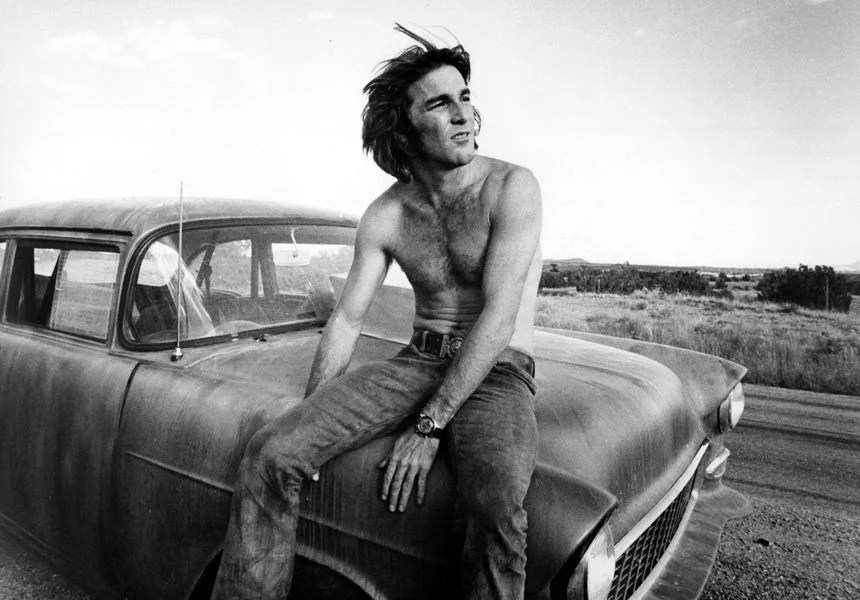
Dennis Wilson was a famous American musician, who co-founded the Beach Boys with his brothers Brian and Carl along with their cousin Mike Love and friend Al Jardine. Dennis, the second child, was born on December 4, 1944, in Inglewood, California to his parents Audree and Murry Wilson. Unfortunately, as children Dennis and his brothers experienced a great deal of abuse at the hands of their father. Dennis often described himself as the black sheep of the family and because of this he was subject to more abuse than his brothers. The Wilson family often had singalong sessions where they would gather and sing; although Dennis often refused to participate, these activities helped develop his love for music.
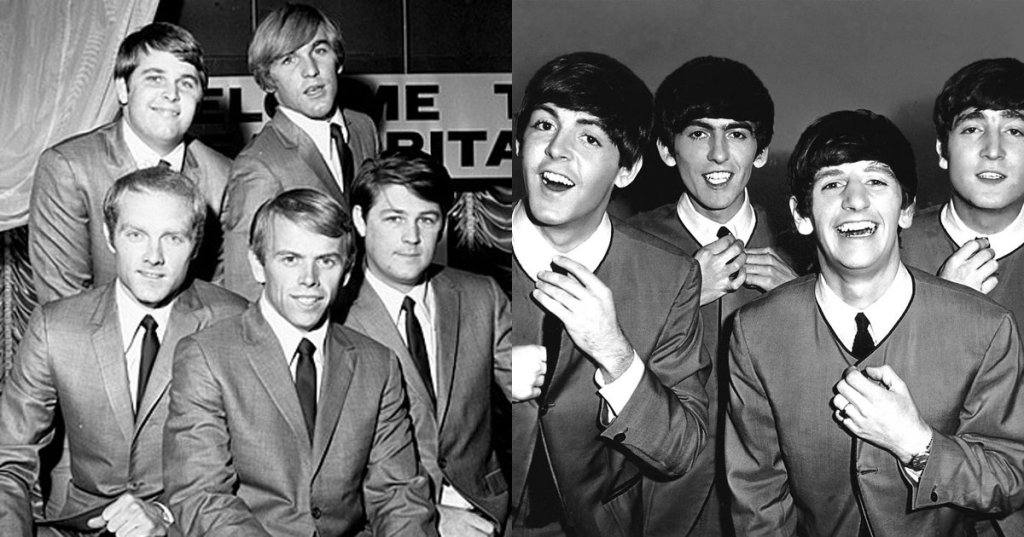
The Beach Boys were created in the 1960s. If it hadn’t been for Dennis’s mom forcing Brian to add Dennis to the band, he would have never joined. Dennis had a great deal of influence over the music. Most of their earlier songs were about surfing, even though he was the only surfer in the band at the time. The Beach Boys’ first single “Surfin’” released in 1961. Their first album is titled Surfin’ Safari.
In the late 1960s Brian struggled with drug abuse and psychological issues, which led him to withdraw from the group. Even when Dennis wasn’t in the band he was still writing music. Wilson also worked on non-Beach Boy projects. With Billy Preston, he co-wrote the popular song “You Are So Beautiful.” He released his own album in 1977 called Pacific Ocean Blue. It is a beautiful album with twelve songs. The run time is about 37 minutes long.
Dennis Wilson was married five times to three different women. He married his first wife, Carole Freedmen, in 1965. Together they had Jennifer, and Dennis also adopted Carole’s son, Scott. After just three short years of marriage, Dennis and Carole filed for divorce. Dennis started dating his next wife, Barbara Charren, a few months after divorcing Carole. After only one year together Dennis and Barbara decided to tie the knot on August 4th, 1970. Together Dennis and Barbara had two sons, whom they named Michael and Carl Wilson. It is thought some songs written by Dennis, such as “Sweet and Bitter” and “Out In the Country,” are about her. Just like his first, Dennis’s second marriage ended in divorce. On August 6, 1974, just over four years since their wedding, they separated.
For three years after his second marriage Dennis was a bachelor. The next woman legally bound to Dennis via holy matrimony was a lovely lady by the name of Karen Lamm. She and Dennis actually got married twice, the first wedding was on May 21st, 1976: this marriage lasted just over a year and ended on September 19th, 1977. Lamm and Wilson were separated for less than a year before getting remarried. Their second wedding date was July 28th, 1978 but unfortunately yet again, another one of Wilson’s marriages ended in divorce in June of 1980. Despite being married twice, Karen and Dennis did not have children together. The last person who ever married Wilson was Shawn Marie Love. Shawn Marie Love is the daughter of Mike Love, Dennis’s bandmate and cousin. When Dennis married Shawn he married his second cousin. If marrying a woman who was his bandmate’s daughter and his cousin wasn’t bad enough, she was also only seventeen at the time. There was a twenty-two year age difference between them. This marriage also caused tensions to rise greatly within the band. As you can imagine, Mike was not at all pleased with Dennis’s relationship with his daughter. Undeterred by the controversy sparked by their love, Dennis took Shawn as his wife on July 28th, 1983, the fifth anniversary of his second marriage with Lamm. Shawn and Dennis only got to spend exactly 5 months as husband and wife. On December 28th 1983, Dennis Wilson tragically drowned, leaving Shawn, his bride and cousin, as a widow.
One strange and little known controversy surrounding The Beach Boys is their connection with the cult leader and serial killer Charles Manson. The link between the two is Dennis Wilson. For a rather brief period of time in the summer of 1968, Charles Manson and Dennis Wilson were good friends. It all started on one summer afternoon as Dennis was driving down the streets of Hollywood. As he was cruising down the road he noticed two young ladies hitchhiking. He decided to pull over and give them a ride. Little did he know these two ladies were a part of the Manson “family” cult. On their car ride together, the females started up a conversation about their leader, which peaked Wilson’s interest. Dennis was so intrigued by what they were saying he decided to meet Manson. Dianne Lake, who was a member of Manson’s cult, writes about Dennis’s first encounter with Manson:
Dennis and Charlie hit it off right away, which is not surprising, given Charlie’s skills at ingratiating himself with strangers. Dennis, in no rush to leave, hung out for a while, smoked some pot with Charlie, and listened a bit to Charlie’s songs. It was obvious from the start that Dennis liked the girls and admired Charlie’s harem. We sat at Charlie’s feet and looked at him lovingly as he sang and played guitar. We made sure Dennis saw how much we idolized Charlie — we knew that was our job, without Charlie even having to tell us.
Dennis took such a liking to the “family” he even let them move into his house for a few weeks during that summer. At this point in his life, right after Dennis’s divorce, he needed a change, which was provided by the carefree lifestyle of the “family.” Dennis even brought Charlie, an aspiring musician, to the studio a few times. An early version of The Beach Boys song “Never Learn Not to Love” was written by Charles Manson. The original title was “Cease to Exist.” When the song was put on the Beach Boys album, the name was changed and credited only to Dennis; Manson was absolutely infuriated. He left a bullet on Dennis’s bed to scare him, and it worked. This put an end to the their friendship. Later in his life it is clear Dennis was not proud of having been friends with Manson. When Rolling Stone asked him about it in 1979, he said, “As long as I live, I’ll never talk about that.”
On that dreadful day of December 28, 1983, Dennis Wilson’s life came to a tragic end. Dennis for many decades had been abusing drugs and was an alcoholic. On the night of December 28, Wilson decided to go diving in the marina; after his jump into the water, nobody could find him. His friends tried to find his location but couldn’t succeed. They needed some professional help, so they raised the alarm. His body was found around 5:45am following that night. Tests discovered a very high level of alcohol in his dead body along with some dosage of cocaine. He was only 39 when he passed away. His body was cremated and scattered into the Pacific Ocean, one of the few non-naval officers to be awarded such a burial at sea.
Peter Runey, Dylan Fields, Noah Eskew, and Melissa Yeh
Peter Runey’s Critical Listening Top 10
1. “Nobody Loves You (When You’re Down and Out)” by John Lennon
2. “Come Together” by The Beatles
3. “A Hard Day’s Night” by The Beatles
4. “Get Back” (Live on the Rooftop) by The Beatles
5. “Don’t Let Me Down” by The Beatles
6. “Golden Slumbers/Carry That Weight” by The Beatles
7. “Good Vibrations” by the Beach Boys
8. “Band on the Run” by Paul McCartney(/Wings)
9. “The Long And Winding Road” by The Beatles
10. “Lucy In The Sky With Diamonds” by The Beatles
This was extremely difficult to boil down to the top ten, however these are my thought-through, most profound songs of the Critical Listening class this year. While many of these carry real-life meaning to me since they’re attached to a fond memory of mine, some of these I admire purely based on their musical and lyrical quality.
“Nobody Loves You (When You’re Down and Out)” — John Lennon creates one of the most uniquely-sounding songs I’ve heard from him, whether it be from his solo career or from the Beatles. He incorporates a string orchestra as well as trumpets/horns, all the while still retaining the same classic Lennon vibe from the Beatles so many loved. Lyrically, Lennon takes a creative approach to exposing the fact people tend to only show love when they want it in return (“I’ll scratch your back and you scratch mine”), as well as the fact often great people are only admired and recognized for their accomplishments when they’re “six feet in the ground.” Ironically, Lennon gained even more of a following of his ideas upon his assassination.
“Come Together” — Despite the fact Lennon is known to be involved with the use of psychedelics, few can say the Beatles’ music became any less unique when they began using. Lennon crafts an incredibly artistic song beginning with a deep bass masking whispers of “shoot me, shoot me,” most likely referring to heroine. At this point, John Lennon was becoming a figure in many a cultural and even political scene (as an influencer not a participant) and used the song as somewhat of an anthem for the freedom to use psychedelics. Despite its intentions, I find this song to be one of the most creative and catchy songs the Beatles ever produced.
“A Hard Day’s Night” — I could tell an incredibly long story of a memory attached to this song for me. Instead, I’ll just say this song became very relevant to me on one special night in the Shenandoah mountains.
“Get Back” (live on the rooftop)— This song mostly holds its meaning to me since it was the final song to be performed live by the Beatles. I found it amusing that their desire was to be dragged off the venue by police since the concert was considered to be an unannounced public interruption, however the concert ended with a mere “pull of the plug,” so to speak, from the local authorities. It’s not just a special song but also a special performance since it was the last time the four ever played together in public.
“Don’t Let Me Down” — There are a few reasons why I love this song. The first of these is this was also played at the final rooftop concert. Another reason is Paul and John both harmonize beautifully in this song, which makes John’s raw, heartfelt message of love to Yoko Ono that much more special.
“Golden Slumbers/Carry That Weight” — While these are technically two separate songs, the track was ordered so “Golden Slumbers” could carry seamlessly into “Carry That Weight” as part of a 6-part climactic medley in Abbey Road. I love “Golden Slumbers” because it begins simply with Paul and a piano playing a sheet of music he found on his grandfather’s piano with his own words put to it.
“Good Vibrations” — While this is the only Beach Boys song that made the list, it’s definitely one of the most enjoyable listens of the years. I appreciate the upbeat rhythm and lighthearted melody. The Beach Boys have mastered the art of crafting songs perfect for driving in a car with the windows down on a summer day, and this is certainly one of those.
“Band On The Run” — Paul branched out with this song. He begins to step out of his shell of his creativity since he no longer experiences the same pressures of being in the Beatles now that he was in control of his own solo career. On this track, Paul, in a way, mixes three songs into one, making a roller coaster of a song, but not to the point where it’s distracting to the listener. Paul’s musical brilliance really shines when somehow he pulls off a silky-smooth transition from the magnificent blare of brass and electric guitar instruments into an acoustic guitar/drum combination for the rest of the track.
“The Long And Winding Road” — This is easily one of the most emotional song from the Beatles, aside from maybe “Blackbird.” Paul takes the listener on a journey down a long and winding road with this song but leaves the listener with little conclusion or sense of achievement. It’s inferred that the end can’t be reached, and it’s unattainable. Obviously, this is how Paul must’ve felt at some point in his life, and he depicts this season of life very effectively and eloquently.
“Lucy In The Sky With Diamonds” — This song is believed to be a reference to a drug known as LSD, which was likely being used by at least one of the band at the time. One thing I do appreciate about the times when the Beatles were under the effects of drug usage is their creative thinking tended to be much more outside the box, which resulted in unique tracks like “Lucy In the Sky.” The song doesn’t make much sense, lyrically, but to me it doesn’t have to in order to appreciate its special sound.
Dylan Fields’s Critical Listening Top 10
1. “A Hard Day’s Night” — Beatles
2. “Come Together” — Beatles
3. “Little Deuce Coupe” — Beach Boys
4. “Don’t Let Me Down” — Beatles
5. “Maybe I’m Amazed” — Paul McCartney
6. “Wouldn’t It Be Nice” — Beach Boys
7. “All Things Must Pass” — George Harrison
8. “Help Me Rhonda” — Beach Boys
9. “Pease Please Me” — Beatles
10. “The Monster Mash” (Live) — Beach Boys
This list was a whole lot harder to make than I anticipated it being. Many of these songs may not be my favorite for their musical aspects but the stories behind them. I will be explaining why each song is special to me throughout the course of this paper.
“A Hard Day’s Night” — This is the epitome of Critical Listening music for me. It may not be my favorite critical song musically but the story behind it makes it what it is to me. In the beginning of the year when Critical Listening was just starting, we had just heard this song and Pete and I were jamming to it non-stop. We literally had this album on repeat every time we were in the car. That being said one day I had the bright idea to go on a road trip/camping trip to the Shenandoah mountains with Pete and Pedro. The trip started off great: we were having a ton of fun and everything was going great. We arrived in the mountains and that’s where things started going wrong. There was a police car involved and we had to stay in an overpriced dirty motel instead of camping out. We got to camp out the second night and it was decently fine from then on out. So fast forward to the ride home, Pete throws on this song and it just made sense. That trip was “A Hard Day’s Night.” So every time I hear this song I think about this trip, the bad parts but mostly the good.
“Come Together” — This song has been one of my favorite Beatles songs since the start of the class. I love the intro of this song. I think the crazy thing about the beginning and throughout the song is John is saying “shoot me” and ends up getting shot and killed; he obviously want talking about guns in the song but it is still ironic. I am going to say this for a lot of these songs and I could probably say this for all of them but this was a song me and Pete loved to jam to in the car.
“Little Deuce Coupe” — I really don’t like this song musically, but the story behind it is what makes it one of my favorite Critical Listening songs. One of the first times we were listening to this song in first semester I think it was Pete that started singing the chorus obnoxiously at a super high pitch, then I would sing low, then Noah would go high with Pete. This turned into a thing we did. We would just sing “Little Deuce Coupe” as obnoxiously as we could. We did it everywhere, in the classroom, in the halls, in the parking lot, everywhere.
“Don’t Let Me Down” — My first memory of this song was the video of them playing on the roof around the time they were breaking up and all the people come out of their houses to watch. After we watched that in class I had it stuck in my head and I was jamming to it non-stop and apparently Pete did too because I was texting him one night and I said I was jamming out to the Beatles and he said he was, too, and I texted him “Don’t Let Me Down” was a banger and as I hit the send button I got a text from him saying basically the same thing. We always kinda joked about that.
“Maybe I’m Amazed” — My words while listing to this song for the first time were “Dang, I like this song … Oh, dang, I really like this song!” This song was one of those rare cases of love at first hearing of a song; most songs take me a couple times to listen to them to really like them. This one was not the case; I had this song stuck in my head for about a whole month after I listened to it one time. I remember jamming to this with Pete while going from thrift shop to thrift shop looking for pianos to cure our addiction to music.
“Wouldn’t it Be Nice” — Every time I hear this song I see Joanna and Sarah on stage at the Battle Cry talent show. This song makes me think of my class and all the memories we shared together. It’s crazy how music will do that to you.
“All Things Must Pass” — This has been my theme song for the past couple of weeks with so much changing. I am going from one huge part of my life to the rest of my life. This is the end of the beginning for me and I can really relate to this song right now. I loved high school and made so many memories here but like everything in life all things must pass, good things or bad they all will pass.
“Help Me Rhonda” — I don’t really have a story behind why I like this song, but this could easily be my favorite Beach Boys song. It’s just so free spirited and groovy and I dig that. This is in my top ten in any genre for jam out sessions in the car.
“Please Please Me” — This was my first song in Critical Listening I really liked. I listened to this song and the entire album a whole lot at the beginning of the class. I still really like this song and it brings me back to Noah, Pete, and me dancing all around room 103 all first semester.
“The Monster Mash” (Live) — I don’t like this song for its musical sense unless it’s around Halloween, but this song was a classic in the first semester of Critical Listening. Noah and I would sing this obnoxiously all the time and it was so much fun. I remember sitting in our second period study all just doing our math homework and singing “He did the mash … He did the monster mash! … It was a graveyard smash.” That song was just a lot of fun to me.
In conclusion, I loved this class and I’ve said it before but I’ll go ahead and put in in writing, this was my favorite and most beneficial class I ever took at Summit. Not to take anything away from the other classes or teachers, but this class had such an impact not only in my taste for music but it really did impact my life. It brought Noah, Pete, and me closer, and they are some of my best friends I have. It also made me open my eyes to music: I discovered so much more music and even made me want to get in the realm of creating music, which I was not successful in at all. It also played a huge roll in choosing my thesis topic because music was constantly on my mind during that time. Mr. Rush, thank you for offering this class and putting up with us even when I was rolling around on the cart or playing with the music stand; I truly appreciated this class.
Noah Eskew’s Favorite Five, yea Six Beatles Albums
What are the top 5 Beatles records? I would put that question in a top 5 list of unanswerable questions. However, I have determined my 6 favorite Beatles records based on the ratio of songs that left a memorable and positive impression on me over the total number of tracks on the LP. The one fault to this method is it doesn’t account for how much I enjoy a specific track; it instead simplifies it to: Did I like it? For example, I thoroughly appreciate the songs “I’ve Got a Feeling,” “For You Blue,” “Across the Universe,” and “Get Back,” which are all featured on Let It Be, but the rest of the album leaves much to be desired. The outcome of this process slightly surprised me (in regards to the resulting order), even though my previous general idea was almost precise.
#5 A Hard Day’s Night
With this album I found seven of the thirteen songs appealed to me. The title track begins with a special strum of a chord. To this day, few can identify what note is exactly being played. The lyrics are highly relatable to anybody who’s been hard at work. Plus, the guitar solo is swung in a manner that’ll make the guitar player and the average listener happy. In this song, the Beatles prove within the context of pop sensibility they can remain true to their musicianship. “I Should Have Known Better,” “If I Fell,” and “I’m Happy Just to Dance with You” also add to what is truly a solid start to this album. “Can’t Buy Me Love” is practically a Beatles staple. With a catchy chorus, and rather true lyrics in the verse, this hit did not disappoint. Lastly, my favorite song of the entire work is without question “You Can’t Do That.” With a jangly guitar intro, John’s impeccable attitude-filled vocals, and Ringo’s driving drum and cowbell groove, this song has placed itself among my favorites.
#4 Magical Mystery Tour
There are seven songs of the twelve on this compilation of which I am fond. The title track kicks off the record with a catchy repeatable chorus, and in between choruses we get a glimpse of the mysteriousness to be experienced in the following minutes of the LP. “Your Mother Should Know” is yet another classic involving Paul and the piano. The piano riff bounces along lightheartedly, while the lyrics are a fun alternative to some of the other strange styles during this period. The hits that have emerged from this compilation included such smashes as “Hello, Goodbye,” “I Am the Walrus,” “Strawberry Fields Forever,” and “All You Need is Love.” Part of the genius behind the Beatles’ discography is their ability to churn out the hits with fun and catchy choruses, but simultaneously the ability to entertain with more eerie sounding progressions as well.
#3 The Beatles (The White Album)
Out of the 30 tracks produced on this double album, I like listening to 18 of them. If I always had the time required, I would not skip any of the first 12 tracks (except maybe “Wild Honey Pie”). The first dozen on disc 1 could be an album by themselves. This, above all the other albums, shows the individual musical personality of each of the four Beatles. This is probably due to the fact the group did not spend much time together in the studio compared to previous sessions. Paul thrives on “Back in the USSR” (the driving rock ‘n’ roll tune), “Ob-La-Di, Ob-La-Da” (the happy and hopeful pop song), “Martha My Dear,” “Birthday,” and “Helter Skelter.” George offers some of my favorite Beatles numbers of all time such as “Savoy Truffle,” “While My Guitar Gently Weeps,” and “Piggies.” John ventures into interesting lyrical processes by incorporating the stories of other Beatle songs into the phrases of “Glass Onion.”
#2 Sgt. Pepper’s Lonely Hearts Club Band
Many magazines and other award-givers rank this work as the greatest album of all time. Combining the sounds of the psychedelic rock movement with those magical Beatle melodies, the Fab Four did indeed produce one of the most revolutionary records ever. Eight of the songs stick with me years after hearing them. Tracks one through five have the flow of a live performance. “Fixing a Hole,” “Getting Better,” and the reprise of the title tracks remain my favorites for their interesting lyrics, simple but solid guitar parts, and energy that really speaks to me.
#1 Tie Between: Revolver & Rubber Soul
Within these two records begins the change of the Beatles’ career. They move from the lovable mop-tops into the genius musicians that have pulled themselves out of live performances in order to further their art. They begin to incorporate eastern influences into their songs, but yet again don’t shy away from their rock ‘n’ roll identity. Each of these albums included 14 tracks, and each of the albums included 9 tracks that I love. “Nowhere Man,” “Think For Yourself,” “What Goes On,” and “I’m Looking Through You” are my favorites from Rubber Soul. “Taxman,” “I’m Only Sleeping,” “She Said She Said,” “Good Day Sunshine,” and “Got to Get You Into My Life” are my favorites from Revolver.
Melissa Yeh on “Band on the Run”
With the Wings album, Paul McCartney released “Band on the Run” in 1973. The song has different interpretations based on history and listeners agree it is well composed and one of his most memorable. The most popular and speculated-on theory from this song concerns the reflections and aftermath of the breakup the Beatles underwent from Paul McCartney’s perspective. He confirms in an interview the song was influenced by one of the many long meetings where George Harrison remarks on the regrets of the events going on at the time. “If I ever get out of here, thought of giving it all away, to a registered charity.” For this phrase especially, he wishes they could have spent more time on the music, focusing on the good, and the wealth was not worth that happiness; instead it should have been devoted to charities. The song then develops his freedom from the tension of the break-up and his ability to pursue what he wants to without being burdened by the obligations the band held over him. When asked about if the song was in association to the break-up, Paul McCartney responds, “Sort of, yeah. I think most bands are on the run.” In another comment, one listener feels the song is not as much about the break-up as people think the song is. In fact, it’s completely absurd and almost obsessive to relate everything back to the Beatles. In another part of the song, articles and listeners have alluded to the line “and the jailer man and sailor Sam were searching everyone,” being connected to the incident in Sweden in 1972. Paul McCartney and all of group Wings were arrested on drug charges. Thus, the police were searching them at the time. Later comments express McCartney’s plead for focus away from these types of charges and on what matters most, the music. Overall, the song is about a prison escape and the shift from captivity to freedom. “Stuck inside these four walls, sent inside forever,” describe the jailed prisoner, cut off from the outside world. Again the prison is referred to in “if I ever get out of here.” The explosion symbolizes the escape and again the band is running from police, “in the town they’re searching for us everywhere, but we never will be found.”
When talking about the instrumental in working with the theme of that escaped prisoner, the composition itself embodies the mood of the song. Paul McCartney has been noted for his ability to combine multiple songs into one; here there are three distinct melodies. The first transitions into the second from verse one to two, beginning at, “if I ever get out of here.” The tempo speeds up slightly and moves into a minor key through an instrumental break. This represents a sense of sadness and regret in the tone of the song. The third begins after the dramatic instrumental charge into the verse, “Well, the rain exploded with a mighty crash as we fell into the sun.” The song modulates from A minor into C major, now with a new and happier tone from what it was before. The movement of the song captures that feeling of relief and freedom.
What moved me to choose this song followed from the moment where as I was sitting in class, I heard the first chord and immediately decided I like this song. Don’t get me wrong, I enjoyed the music in class, but none of the songs had caught my attention as quickly as this one. While in the bus in Germany passing through the countryside, I remember going through a tunnel or under a bridge and right as the song changed from the second part into the third, the bus flew into the open again into the light with long fields surrounding us. That moment McCartney creates of an explosion into freedom was more than what I can describe in words. With that, this song will always tie me back to the memory with our class, driving past landscapes in Europe.
Bonus Track: Mr. Rush’s 5 Mandatory Beach Boys Non-canonical Albums for Real Fans
1967: Sunshine Tomorrow — Wild Honey is one of my favorite BB albums, and this 2017 release of many WH outtakes, alternate versions, and unreleased live cuts, including the entire Lei’d in Hawaii album, make this essential. As if that wasn’t enough, it has Smiley Smile outtakes and a beautiful a cappella version of my favorite BB song, “Surfer Girl.” Don’t miss this.
Endless Harmony Soundtrack — This collection of rare cuts accompanying the biopic is a monumental gift. You’ll get a fresh look at a band you think you know, a fresh look that will only reinforce your love for them.
Hawthorne, CA — Thanks to the success of Endless Harmony, Capitol Records continued to open the vaults of rare cuts, radio spots, demos, and more. Just when you thought you heard it all, you learn you haven’t heard anything yet. It’s disjointed at times, but it is more BB tracks, which is what we want.
Made in California 1962-2012 — This 6-cd panoply of the band’s career is pricey but worth it. It has a lot of rare live tracks, alternate versions, and much forgotten work from Carl and Dennis. If you’re a real fan, you need this mega-set.
Ultimate Christmas — Not only does this have the entire original Christmas Album, it collects all the tracks for the unreleased second Christmas album plus all the rare promos, singles, and other Christmas goodies. It’s a must-have.
*2023 Editor Note: Be sure to get the original version of Ultimate Christmas! The recent streaming versions delete the best song on the collection, “Christmastime is Here Again.”
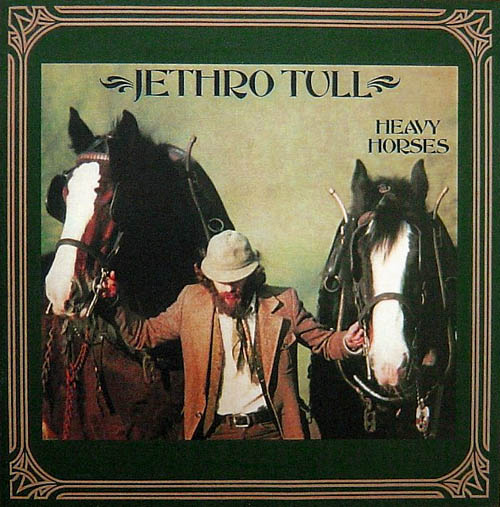
Hello! I finally get to write my own article for the journal after all this time, and I’m really excited to talk to you about a fantastic album from Jethro Tull, Heavy Horses. This is the second in the “folk rock trilogy” from Tull, as some have called it, but unlike most sequels, it does not suffer any let-down or disappointment. In fact, many like it more than Songs from the Wood, which is a remarkable thing to say. I’m not sure I like it more, but it is definitely growing on me, thanks to listening to it so much lately. In this outing, Ian Anderson shifts his gaze from the mystical forests of bygone England to the hardworking farmers and their steads, along with the animals who, frankly, do most of the work. Even though I’m a penguin, I can appreciate the skill and sacrifice of my fellow animals as they have made the world a better place, especially when working in conjunction with you humans.
Where the dance of ages is playing still
This first song gives me some shivers, which is difficult to do for a penguin. I don’t spend a lot of time around cats, not too many of them where I live most of the time, but cats can be scary. “…And the Mouse Police Never Sleeps” is also a bit scary because of the odd ending, but that’s mostly just Ian Anderson having some fun, and he knows better than most when he’s having fun and that he’s having fun and laughs at himself when he’s having fun (which is why it ends with his self-aware coughing). It’s sort of an odd opener to this album, especially in contrast to Songs from the Wood, which gave a nice opener to the theme of that album. I suppose “Mouse Police” sets the musical tone for the album, and it does get us out of the woods and into the farmhouse, but the metaphor distracts us initially until we have time to reflect on where this album is going.
While it may not be fair to continue the Songs from the Wood comparison going, it’s rather unavoidable, and thus “Acres Wild” seems to me like it would make a better opener for Heavy Horses, since it declaims the setting of this rural/hamlet/agricultural album much better than “Mouse Police” (you didn’t think penguins knew words like “declaims,” did you?). It’s a very optimistic song, which is important, since this Tull Trilogy gets progressively pessimistic. Songs is almost wholly optimistic, as we saw last issue. Heavy Horses is rougher, grittier (certainly not musically, as it may be even more impressive musically, in many cases), and at times harder. Perhaps more melancholic than pessimistic, since many of these songs are rather ebullient, but there is a general tenor of regret for days gone by and the lost lifestyle of the hardworking agricola (though the animals do most of the work). “Acres Wild” is a jaunty number full of zeal for living a full life, enjoining us to come “where the dance of ages is playing still / through far marches of acres wild,” but it also reminds us the world around us, before those far marches, is decaying and crumbling and a dim memory of what it once was.
Leave it to Ian Anderson to write a song about not singing a lullaby to his newborn son, but leave it to Ian Anderson to justify it because he has no desire to rear his son on false hopes and delusions about how life really is. He wants to protect his son as much as possible (“There’s a lock on the window; there’s a chain on the door; / A big dog in the hall”), but he’s also open about the dangers of the world. This is part of that growing edge in this Tull Trilogy of which we’ve been speaking, The dangers of the world require skills and preparation, but if know that, and treat each other with love, it’s possible to put your kids down for bed at night “safe and sound.” Musically, this is the first of two mini-suites on the album, with multiple musical motifs. Penguins like alliteration, what can I say.
“Moths” is another almost typical Tull juxtaposition of beautiful music and a warning of the brevity of life. It ends optimistically, in its way, but it also presents the joy of life akin to a burning candle, and a too long life can be a bad thing. That’s a strange thought, isn’t it? Hard to trust lemmings and moths, I suppose. Still, a beautiful song. “Journeyman,” too, is a precise, hard-rocking song, bemoaning the difficult life of the hardworking city man. Probably should be out living in nature, as the rest of the album enjoins us to do. Be warned by this number, human people: city life is bad for your health; live in nature (but don’t mess it up for us while you do so). Otherwise, you’ll be lonely and cold and sick and tired and hungry. But I understand if the crisp, funky groove of the number overshadows the dire warning. It’s hard not to smile and tap your toes to it and ignore the message. Well, being a penguin myself, I don’t typically tap my toes, since I just waddle and rock back and forth. I’m a bit like Ian Anderson that way.
And every day we’ll turn another page
The “B”-side of this album is possibly the third greatest B-side of all time, behind Foxtrot and Magical Mystery Tour. These four better-than-solid songs are great listening. “Rover” kicks it off with another solid musical gem. Tull really was firing on all instrumental cylinders during this lineup, as delineated in the previous issue. The diverse rhythms and crispness of the different instruments makes “Rover” a fun song, but the melody during “So slip the chain and I’m off again” elevates it to pretty great. On one level it’s about a dog, right? And I admit I don’t know much about dogs, since, again, I’m a penguin, but the later verses don’t sound completely like they’re about dogs to me (the last one may be about Gonzo), but it’s still rather jaunty and optimistic. Maybe I was wrong about this album being more edgy than Songs from the Wood.
“Own Brown Mouse” could be the best song on this album, though sometimes the eponymous track wins out on that one. But let’s not quibble: it’s not a competition – let’s just enjoy the fact we have multiple great songs on this album. Here we have another Tullian juxtaposition of musical brilliance and a wistful song. This wistfulness, though, is not dark or edgy. It has a bit of sorrow to it, as the narrator and the brown mouse may be in a contest over who is the one in the real cage, but as always the uplifting music and Ian Anderson’s delivery comfort us more than concern us. The only flaw of this song is it’s not longer.
The grand masterpiece of this album is truly sublime. Reminiscent of the madrigal, which is perfect for the apex of a trilogy memorializing Merry Ol’ England, “Heavy Horses” is a multi-layered, multi-sectioned opera about the farm and the horses and the way things used to be. A lot of animals featured in this album. That’s only part of why it’s so good. This tribute to the horses that have literally moved the earth of England makes us all yearn for a simple life of honest toil, living off the land, at one with nature. I’m part of nature myself, and I tend to live off the ocean, but this song makes the rural life appealing even to me. Part of that is surely the exquisite choral sections and musical brilliance, and the diverse sections keep our interest sustained throughout almost eight minutes of a song about horses and furrows. Ian warns us the technological-driven world will soon disappoint us, and those of us with refulgent souls will soon yearn for the kind of life we have collectively abandoned. (I’m not sure if I have a soul, being a penguin, but let’s stay focused here.) So get back to the land, plant and harvest real food, become one with nature again.
In contradistinction to Songs from the Wood, this album ends not with the nighttime at the end of a hard day’s forestry but with the dawn of a new day. “Weathercock” signals the kind of weather we’ll have as we start a new day working the land, or at least from what direction the wind is coming today, signaling as well the changing of the seasons. The passage of time is a steady undercurrent of this album, as Ian Anderson bemoans the loss of anthropological-agricultural unity, but concurrently he reminds us each new day is a new opportunity for good: “Point the way to better days we can share with you,” ends the album.
So Heavy Horses is not so melancholy or cynical after all, as is often declaimed. It is very aware of the brevity and ephemerality of life, much more so than Songs from the Wood, but that does not make it darker or edgier. Perhaps it makes the album more Realistic, whereas Songs is more Romantic. Nothing wrong with either. They each have their season. The winds of change that redirect the weathercock were certainly signaling changes for Jethro Tull as well, but that is a subject fit more for the finale of this trilogy, so I will leave that to my good buddy Theodore Aloysius to discuss in his exploration of Stormwatch. Thanks for reading my analysis of Heavy Horses, everyone. If you haven’t heard it lately (or at all), do yourself a tremendous boon and get it into your soul. If the five-disc fortieth anniversary box set is a bit daunting, start with the regular album and work your way up to the goodie-filled, bonus-packed deluxe version. You’ll be glad you did. So long!
Beethoven. Bach. What if these legendary musicians were put into today’s era? Would they be better? Would they be worse? I would argue they would be better at what they do today than they were in their day. They might not be as popular today simply because orchestral music is not popular today, but they would have more tools and more feedback than they had in their day. With the amount of technology they would be able to access today, the quality of sound these musical geniuses would be able to create would be absolutely incredible. Being able to write your music down and hear it as soon as you write it is a tool we have today. If these composers had this tool at their fingertips, they could produce more music and better music as they could fix any and every flaw. With this we would now have more music to enjoy from these great composers today.
Music has been changing for centuries: for better or worse is the issue. Before I explain my thesis I need to define a key term. The phrase “musical experience” means anything directly pertaining to music, such as buying and selling, listening, and the making of it. Music started all the way back in Bible times as we can see from King David being a skilled harp player. Now with more recent advances of music such as the birth of iTunes in April of 2003, we play music out of a speaker. Music has developed into a predominately but not exclusively electronic base as opposed to the acoustic installments that have been used for centuries before us. This change is important because it is going to change the way music will be made and how we will listen to music for years to come.
My thesis states the experience of music is at its all-time high. I will confirm three reasons why this is true: listening to music has never been easier, music is more diverse than ever; and the recording process is better than ever. I will also refute two counterarguments: first, digital music has decreased revenue for musicians, and, second, music is too perfect.
My first argument to prove the musical experience is at an all-time high is listening to music has never been easier. In the 1950s if you wanted to listen to a certain song you would have to buy the entire album on vinyl, unless of course it was a single. In order to listen to the song you want to hear, you would have to look for and change the record to what you wanted to hear next. Now let’s say after you listened to the song you wanted to hear, you want to listen to a song from a completely different album. You would need to take that record off, put it into its case or sleeve, and then put the other record onto the record player. You would start it and find the right song. The whole music listening experience was just a hassle compared to nowadays, when I can have ten songs from ten different albums on one playlist and not have a single second of downtime in-between each song. Now, all we have to do is click what song we want to listen to and our phones, laptops, iPods or mp3s will play the song for us. We can create playlists with songs from any album from any band or artist we choose and can listen to the songs as many times as we want without having to touch the vinyl player at all. For example, if I was doing my homework, and I wanted a compilation of my favorite Rolling Stones and Beatles hits, then I would have to frequently stop my homework and change the song. This is not as convenient as if I could make a playlist or even just click a button and change it in a matter of a couple of seconds.
Another reason listening to music has improved is the means by which we actually listen to it. The first pair of headphones were released in 1881, long before Sony Walkmans or iPods. Although they were revolutionary for their time, they weighed over ten pounds. That is ten times the weight of Dr. Dre’s Beats headphones today,as some editions of beats weigh less than a pound. Another invention that changed how we listen to music today is the wireless power of Bluetooth. Bluetooth gives us the ability to listen to music not only without cords hanging out of headphones but away from the source of the music. I had used headphones with cords my whole life until recently. My first iPod cracked because I forgot it was hooked into my headphones, and I walked away from it, pulling the iPod and sending it crashing to the ground. Bluetooth eliminates that threat altogether, because we all make careless mistakes like that. Also, I can stand all the way across a room and be playing my music on a speaker or headphones on the other side of the room. For example, when I am working out, I use my Beats headphones that are Bluetooth. I set my phone down on the table across the room and have my headphones on. Working out with a cord hanging out of your pocket is extremely difficult because many times you will get caught on the cord and your phone will rip out of your pocket or your headphones will fall off your head. Another example is when I am training for baseball. I can hit in a batting cage with my phone twenty feet away from me while I have my headphones on. Hitting a baseball with headphones with a cord connecting to a phone would be nearly impossible. This is why Bluetooth is so great. This Bluetooth feature also comes in handy when your device needs to be charged. You can charge your device on one side of the room while wearing your headphones on the other side of the room, or even in a completely different room.
Listening to CDs and radios in cars were both huge steps in the past, but now the next big step is listening to our phone, iPod, or mp3 on Bluetooth or an auxiliary cord. This is better for multiple reasons. Now we can go from what we were listening to before we got into our cars, plug our phone or mp3 in, and continue listening. In addition, we do not have to keep a thousand different CDs in our cars. This feature also gives us the ability to listen to whatever we want while in the car, even beyond music with things like podcasts or sermons. For example, in my morning routine I listen to music all morning. When I’m ready to leave my house, I get into my car and, with the Bluetooth system I have installed, my music automatically goes from playing on my phone to playing on the speaker system in my car.
My second argument is music is more diverse than it has ever been before. There are more types of music, more genres, and more branches of each genres. For example, country in American music was created in the late 1920s. It was more of an Appalachian folk-type music or blues, which featured instruments much more string-based such as the banjo, American fiddle, fretted dulcimer, and guitar. Today’s country music still includes the original Appalachian folk music, but now bands such as Florida Georgia Line or Sam Hunt are the top-selling country artists today. They incorporate a type of hip hop or pop element into their country music. We see this hip hop element in songs including artists in the hip hop genre such a Nelly or The Chainsmokers. This is noteworthy because this new movement of combining genres has been so successful it has become a new genre altogether. Nelly even went on tour with Florida Georgia Line as their opener on their Smooth World Tour. So now there is traditional country music and modernized country music. This sort of change of genres is nothing new, though. We have seen this in the past and it was successful as it created the types of music we listen to now. Rap has changed from Tupac Shakur’s era to big rappers like Lil Pump who recently signed a record deal with Warner Bros. for eight million dollars. The classic elements to rap are the theme of the lyrics, the rhythm, and the rhyming, as well as the bass in most rap songs. We have seen rap change. It really started with artists like Lil Wayne who changed the flow of rap introducing a that no-one had seen before, sometimes slowing it down and mixing up the beat in a unique way. Rap has split its genre so much that now they have gospel rap. Artists such as Lecrae, KB, Andy Mineo, and NF have made their marks in the rap genre from this unique branch of music.
Another aspect of music that has broken music into different genres is the lyrical sense of the songs. Staying with country music, let’s take two artists: Jimmy Buffet and Brantley Gilbert. Jimmy Buffet is known for many of his songs, such as his song with Alan Jackson called “It’s Five O’clock Somewhere,” which spent eight weeks on the top of Billboard’s Hot Country Song list. This song’s lyrics are about not wanting to work anymore, leaving work early, and getting drunk at the bar. Brantley Gilbert’s music is more of a country rock, as one of his top selling songs, “Take It Outside,” talks about “the good ole days,” where if someone had a problem with someone else they could just go outside and fight to settle things. Both artists are technically in the county genre but have completely different styles of music. Brantley Gilbert’s style is more of the “get your hands dirty” type of country music. Jimmy Buffet’s lyrics are quite the opposite, as his are more about resting and partying. These two completely different country artists represent different branches of country music.
In addition to the branches of each genre, there have been new genres created recently that have changed music, such as indie pop, alternative rock, air pop, and EDM. These genres have had huge successes and have been controlling the Billboard charts. Most of these types of music have sounds such as synthetic and computer-based sounds that have never been used as much in music as ever before due to the advanced recording and creation of music that will be discussed later.
My third argument is recording music is easier and has better sound quality than ever before. There are four eras of recording to look at: the acoustic era, the electrical era, the magnetic era, and the digital era. The acoustic era lasted from 1877-1925. During the acoustic era, people recording typically used a large conical horn to collect and focus the physical air pressure of the sound waves produced by the human voice or musical instruments. A membrane or diaphragm, located at the top of the cone, was connected to a scriber or stylus, and as the changing air pressure moved the diaphragm back and forth, the stylus scratched or incised analogue of the sound waves onto a moving recording medium, such as a roll of coated paper, or a cylinder or disc coated with a soft material such as wax or a soft metal. The next era of recording was the electrical era when they used a system of electrical microphones, electronic signal amplifiers, and electromechanical recorders, which was adopted by many music publishers in 1925. Sound could now be captured, amplified, filtered and balanced electronically. This means when you record a sound, you are able to alter the volume, pitch, or frequency of the music. This was a monumental move in the line of music at the time, but something simple enough today. We can do it better now on an iPhone, as the microphone on an iPhone is better quality than anything that had been made in the ’40s. The third era of recording music was the magnetic era, introducing features such as multi-track tape recording (MTR), when different sounds are recorded on different sessions and put together to make a cohesive whole. This was also the introduction of the disc as the primary mastering medium for sound. Fast forward to the digital age, the era in which we are living today. This is the era when digital encoding surpasses all previous recording technologies. Unlike all previous eras of recording, which captured a continuous analogue of the sounds being recorded, the digital era captures very dense and rapid and discrete samples of the sounds, which makes the sounds more crisp, taking out static or background fuzz.
Making music has never been so easy; anyone on any level of musical education can make music. All you need to make music nowadays is a laptop and a music editing application such as Logic Pro X. A few of my friends and I have been making music as a hobby, and we have more capability to record and edit the music than big name music artists had in the ’40s or ’50s. This does not mean the music we make is better than those that have come before us, but if we worked hard enough and developed our talents and abilities, we could make some quality music.
The first counterargument I will refute says the current technology trends in the industry have led to music artists not making as much money as previous artists used to make. The music industry’s profits have dropped a shocking sixty percent in the last decade as we see in charts from RIAA U.S. sales database. This is due to the loss of buying and selling of music. Music used to be put on files of polyvinyl chloride, also known as vinyl. When music was made on vinyl, it was hard to pirate or steal. As soon as it could be turned into a file, many previous listeners didn’t choose to pay for it anymore. Another factor is about a century ago it was more popular than it is now to buy and listen to entire albums. Today iTunes, the largest music store in the country, sells individual tracks listeners can mix and match in personal audio-collages.
Music has suffered a loss in revenue over the past decade and ever since the beginning of the digital era in general, but lately it has been on the climb. The RIAA (the U.S. sales database) announced sales of recorded music in the U.S. generated $7.7 billion in revenue in 2016, its highest sales figure since 2009. The growth also represents an 11.4 percent increase from the previous year, the best percentage gain since 1998. These gains, the RIAA said, are largely due to an increase in on-demand streams from services like Apple Music, TIDAL, and Spotify’s paid tier, which accounted for $2.5 billion in revenue, more than double from the previous year. Together, on-demand and free streams accounted for $3.9 million in revenue. Although music sales are not what they were in the late ’90s, we may see it there again shortly if music sales follow the 2016 trends we see on the RIAA sales charts.
The second counterargument to refute claims music today is too perfect. There is no room for error in today’s world when it comes to the element of recording music. Editing music today has to be done with almost surgical precision. They remove the types of things that often made music of the past more interesting such as idiosyncrasies, nuances, and inexactitudes. For example, compare two songs, “Louie Louie” from the Kingsmen and “Fancy” from Iggy Azalea. “Louie Louie” was recorded in one take while Iggy Azalea’s song “Fancy” was most certainly not. Another interesting thing is in one part of the Kingsmen’s song, the drummer drops his stick and exclaims a profane word I will not repeat. But nowadays there is no way that would be put into the final cut. It would be edited out so the song would sound more perfect.
Music being too perfect is not a problem to most listeners as we can see by their digitally-edited music sales. This type of digital edited music is pop music as we know it today. Music cannot be too perfect. As humans we should strive for perfection in everything we do; this includes music. If there is a flaw in the music, edit it out or try it again. Any artist in the digital era that doesn’t perfect every note or cord won’t be as successful as an artist that does. This is due to the fact this generation has grown up in the digital era and have grown used to the “perfect” music, while the older generations have grown up listening to flawed music and appreciate that aspect of the music.
Music has only developed for the better. The progression of technology has led to the progression of music, which we see through the different eras of music and time. The music recording process and distribution is easier and better than ever before. The music industry is bringing in revenue and looking to come back to where they once were. The experience of music is at its peak, and this is something to be excited about.
Quirky. “Great Inventions: History and Evolution of the Headphone.” Quirky, shop.quirky.com/blogs/news/great-inventions-history-of-headphone.
Rabade, Parag. “Bluetooth – A Path Towards an IT Revolution.” Bluetooth – A Path Towards an IT Revolution, tech.af/post/papers/bluetooth-a-path-towards-an-it-revolution/details.
Voice. “History of the Record Industry, 1920- 1950s – A Voice. – Medium.” Medium, Medium, 8 June 2014, medium.com/@Vinylmint/history-of-the-record-industry-1920-1950s-6d491d7cb606.


 Redeeming Pandora