
Christopher Rush
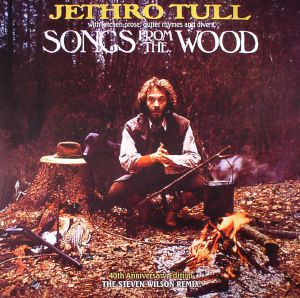
I have been waiting for this literally all year. On January 1st, 2018, thanks to the generosity of a few dear friends of mine, I was finally able to order the 40th anniversary edition of Songs from the Wood, one of my favorite Jethro Tull albums (not that I’ve heard them all yet, so let’s say “thus far”). It’s distinct among Tull albums, especially in what we could call the 2nd phase of the band, what some would likely call the “classic” Tull era (from Aqualung in 1971 to Stormwatch in 1979), in that it is mostly optimistic and upbeat. Ian Anderson has never struggled with finding satirical and almost cynical approaches to the various realms of life upon which his gaze and talents alight, but Songs from the Wood is both a musical shift and a lyrical shift toward invitation, reflection, and downright delight. Since it is Ian Anderson, a few songs have a, shall we say, piquant bite to them, but it wouldn’t be Jethro Tull without a little spice.
As I said, I have been literally waiting all year for this edition to arrive. And waiting. Twice, our friends at the Mega-On-Line Shopping Site (you know which one I mean), sent me e-mails telling me in effect “we can’t find it, we’ll send it soon,” turning my 2-day shipping experience into a 10-week experience. Now, before I sound (more) like a horribly self-centered 1st-world donkey, I’ll press on to say the delay was most likely Providential, forcing me to focus on the great deal of work I had to do for my recent Master’s License renewal course as well as all the annual excitement and commitment that goes into Thesis Season. Sure enough, as I should have expected, the very afternoon I finished my final project for my on-line course, this magisterial 3-cd/2-dvd package arrived, unannounced and unexpected. So now I have time to enjoy it, but not enough time for me to review the album as well I had wanted. Ah well. Let’s just get to it.
Side One
It’s not “folk rock,” let’s get that straight from the beginning. That’s Bob Dylan with an electric harmonica. This is Jethro Tull looking back at the diverse and mythical history of England and delighting in what it found in the nooks and crannies of rural ol’ England. “Songs from the Wood” is such a cheerful, welcoming, medieval jester-like song, as is pretty clear from the harmonies, the intelligent and graceful lyrics (in the literal sense), and the diverse musical sounds. Even when it picks up and starts rocking, reminding us this is a superlative group of talented musicians, we are well on our way to feeling much better, thanks to this album.
“Jack-in-the-Green” is basically Tom Bombadil. There’s no way around it. It is a complete Ian Anderson number, as he wrote the words (as usual) and he plays all the instruments on this song (it is known). It starts out very fairy-in-the-woods-like, as most of them do on this album, but pretty soon the critical mind of Anderson turns from magical romp to contemporary critique: “will these changing times, motorways, powerlines” prevent humans from enjoying Nature how you want us to? he asks. But before the potential despair can take root, so to speak, Anderson rejects it outright: “Well, I don’t think so. I saw some grass grow through the pavements today.” There is still hope for the restorative power of nature.
“Cup of Wonder” would likely be my favorite song on the album were it not for the final track of this side, to be addressed soon. I don’t want to keep saying “it’s a tribute to the mystical heritage of rural English beliefs,” but it is, though tinged with a bit of Anderson’s slightly erroneous beliefs on Christian usurpation of pagan holidays. For me, the music and, as is almost always the case with Tull, the vocal timbre of Anderson’s voice make a lyrically intelligent song a total aesthetic experience to be enjoyed again and again. (Even if about ancient pagan holidays.)
We noted before this album, while mostly free of the harsh cynicism of early classic Tull like Aqualung and Passion Play, still has its piquant moments, and “Hunting Girl” is certainly spicy, being about an impromptu amorous romp between a noble lady and a regular common guy who knows he could get in a lot more trouble for their spontaneity than she ever could. Still, the greatness of this song comes in the sheer greatness of the musicians in the band during this era: Martin Barre’s guitar brilliance, John Glascock’s bass, the dual keyboards of John Evans and David Palmer, and the vastly underrated drumming virtuosity of Barrie Barlow. It was a golden lineup, and this album makes the most of it.
The first side of the album ends with my favorite of the album, “Ring Out, Solstice Bells” — it’s not a Christmas song, being about the winter solstice, and in fact, if Ian Anderson is to be believed, it’s sort of an anti-Christmas song, returning to that earlier notion of Anderson mistakenly thinking early Christianity foisted itself on a lot of pagan traditions and holidays, since “if you can’t beat them, join them,” as he says in the 40th edition liner notes. Well, I disagree, and it’s such a musically wonderful song, I’ll just keep enjoying it, even if for the “wrong” reasons.
Side Two
Side two opens with another great Tull mini-opera, with sundry sections and atmospheres and evocations and beauty and fun and wonder. It’s basically about the joys of an old-fashioned garden fête, such as the one a young Paul met a slightly less young John and the world was changed for the better. Great things can happen when you stroll through a British park festival. It does have a smidge of that “Hunting Green” sauciness, okay more than a smidge, but the musical motifs override the lyrical eyebrow-raising suggestions. It’s a complex, impressive number.
“The Whistler” could also vie for my favorite of the album were it not for “Cup of Wonder” and “Solstice Bells.” It starts out for mystical and menacing, but the chorus dives into as energetic and enthusiastic a rouser as one could ever ask for. It will probably make you think of Gandalf if he were a bard, coming through town all mysterious and shady, then suddenly he spins around and smiles and a few fireworks shoot off and we’re all clapping and dancing and singing along. Jolly good fun, this.
The only really sad song on this album, “Pibroch (Cap in Hand)” tells the tale of a man who has been far away from home, off doing his duty, only to find upon his return a strange man’s boots in the hallway. He has returned, humble (cap in hand), ready to make amends to his wife, but she’s no longer his, apparently, and so he leaves without even seeing her. But, as is often the case during this season of Tull, the musical length and diversity of the number, coupled with the aforementioned greatness of the musicians’ abilities, easily distract us from the sorrow of the lyrics. Thanks to some mid-’70s mixing board magic, Martin Barre’s guitar somehow sounds like wailing bagpipes, and suddenly we are off on another mini-opera, whose hardness and strength perhaps give our poor fellow hope for a new day.
But that’s another story. This collection of songs from the wood, having been brought to us by some dispenser of “kitchen prose and gutter rhymes” is ready to call it a day with “Fire at Midnight,” a quiet, encouraging tune that reminds us our love will be waiting for us when we return from a good day’s work. We can sit by the fire, enjoy the comfort of a home filled with warmth and love, but we (as men, especially) must remember we still have an active role to play in creating an atmosphere of selfless and expressed love, expressed through words and actions in all rooms of the house, not just in the room where we find our slippers and pillow.
And so, Songs from the Wood draws to a gentle, cozy conclusion. It’s Jethro Tull, so it has its edgy moments, but here they are brief and winking. It’s a positive, enjoyable album from a great band in its prime. Get a copy, whether the expansive 40th anniversary edition or not, and enjoy it. It will make you feel much better.
 Redeeming Pandora