
Monthly Archives: August 2022

The 1970s: A Brief Overview

Emma Kenney

The 1970s were a completely unique and overwhelming decade, full of eccentric people, exciting inventions, and standard-changing events. Familiar names such as Richard Nixon and Michael Jackson came into light, as well as many other iconic people and things. The 1970s were an interesting and important decade.

Possibly the biggest achievement and event of the early 1970s was the Title IX. According to TitleIX.info, which is the officially Web site for this Act, “Title IX is a law passed in 1972 that requires gender equality for boys and girls in every educational program that receives federal funding.” A vast number of people have no idea Title IX even exists or that it applies to things other than sports. In reality, Title IX addresses 10 different subjects: Access to Higher Education, Career Education, Education for Pregnant and Parenting Students, Student Employment, Learning Environment, Math and Science, Sexual Harassment, Athletics, and Standardized Testing and Technology. Before Title IX, girls were unable to participate in the majority of team sports, having only cheerleading and dance as options. Title IX requires if there is no team for girls, girls must be given a fair chance to try out for the boys team while receiving no prejudice based upon their gender. Title IX also opened up doors for any woman who wished to become involved in the fields of math, science, or law. Before Title IX, girls could be denied admission to a college simply because they were girls. Oftentimes, even when a female application had better grades and credentials she was denied admission so the opening she deserved could be given to a male student instead. Title IX changed this drastically. Before Title IX was passed, there was great discrimination against girls, but even more so against girls who were pregnant. Schools were able to expell students who became pregnant, especially if they refused to abort the baby, even if it was due to rape. Title IX ensures if schools have special programs for pregnant students, they are not mandatory and their content is just as good as that which non-pregnant students receive. As seen in these points as discussed by TitleIX.info, Title IX completely changed things for girls everywhere, giving them their first fair chance at many things that had been seen as only for boys for many years.

Richard Nixon, who was elected as the 37th President of the United States (1969-1974), was born in Yorba Linda, California on January 9, 1913 to a grocer and his wife, named Francis and Hannah Nixon. Seeing how discontent his parents were with their circumstances, Nixon became increasingly ambitious and inspired. Nixon graduated from Whittier College in 1934 after having been elected as president of the student body and discovering he had apt skills in the field of debate. He married Thelma Catherine “Pat” Ryan, whom he knew from his local theatre group, in 1940, and together they had two daughters named Patricia and Julie. Richard served in the United States Navy during World War II from 1939-1945. After this, Nixon began pursuing his political career. The man represented his district of California in the House of Representatives. In 1950, Richard gained a position in the U.S. Senate. Nixon served as vice president to General Dwight Eisenhower for two consecutive terms, starting in 1952. Nixon ran for president in 1960, but was beaten by John F. Kennedy in what was one of the closest presidential elections in American history. Many assumed his political career was over when he then lost an election for Governor in California merely two years after he lost to Kennedy. However, Richard Nixon ran again for president in 1968. He won the election and began his term. The Vietnam War had caused much controversy among American citizens, so Nixon developed a strategy to achieve what he referred to as “peace with honor,” commonly known as Vietnamization. This trained the army of South Vietnam how to fight for themselves while slowly withdrawing American troops from Vietnam. A peace agreement with the communist area of North Vietnam was reached in January of 1973 by Nixon and his administration officials.

In 1972, when Nixon was running for reelection, the Democratic National Committee at the Watergate Hotel in Washington D.C. was broken into and burgled by operatives associated with his campaign. Nixon firmly denied any knowledge or involvement in this theft, but many members of his administration had knowledge of it, and later secret White House videos confirmed he was indeed involved and had only attempted to cover that fact up. Nixon, rather than being impeached by Congress, resigned from office on August 9, 1974, making him the only United States President to resign from office. On April 22, 1994, Nixon had a stroke and died in New York City.

The 1970s can claim many interesting inventions as well. The Post-It Note was invented in the 1970s by Art Fry and Dr. Spencer Silver. Art Fry, a member of his church’s choir, grew increasingly frustrated as week after week his bookmarks fell out of his hymnal. The man began searching for a bookmark that wouldn’t fall out but also wouldn’t damage his book. That was when he observed his colleague, Dr. Spencer Silver, had developed a strong adhesive that left no residue and could be continuously repositioned. Art applied this to the edge of a piece of paper, creating the first Post-It Note. Arthur and Spencer watched as their colleagues quickly gained interest in their invention. Here was a new and unique way of both communicating and organizing. When shown to test-markets in 1977, no interest in the product was shown, and for the time being, Post-It Notes had failed. However, the product production exploded in 1979 when a massive consumer sampling strategy took place. Post-It Notes continued to gain popularity as time progresses.

Another interesting invention of the 1970s is the floppy disk. The floppy disk was created by Yoshiro Nakamatsu, a Japanese inventor. He claims to have created it as early as 1950 but was not commercially introduced until 1971. The floppy disk is, according to Webster’s Dictionary, “a flexible removable magnetic disk, typically encased in hard plastic, used for storing data.” It forever changed computing as for the first time, large amounts of data could be easily stored for continuous use. Not only that, but floppy disks were removable and could be transported to a different location, unlike any sort of data device seen before this was invented.

Popular musicians of the 1970s included Elvis Presley and the Jackson 5. Elvis Presley was born on January 8, 1935 in Tupelo, Mississippi. The boy began his musical career in 1954 when he began a recording contract with Sun Records, and he was an international sensation by 1956. In 1970 he was named one of the Ten Outstanding Young Men of the Nation by the United States Jaycees. During this he served in the United States Army. Elvis wrote many popular songs before his death in 1977, including “Falling in Love With You” and “Blue Suede Shoes,” which were both popular in the 1970s. The Jackson 5 is another example of a popular music group from the 1970s. They produced a number of hits, including “I Want You Back” and “ABC.”

The 1970s can take credit for many great movies, some which are still popular today. A few examples of timeless 1970s films are Star Wars, which came out in 1977, and Jaws, which came out in 1975. Popular children’s movies from the 1970s include films such as Robin Hood, which came out in 1973, and the Aristocats, which came out in 1970. Popular television shows included M*A*S*H, Charlie’s Angels, and The Brady Bunch. Children could watch shows such as Sesame Street, Mister Rogers’ Neighborhood, and Scooby-Doo Where Are You?. The 1970s saw actors and actresses such as Goldie Hawn and Peter Strauss.

The 1970s saw a menu similar to that of today. Fondue and Jell-o were incredibly popular during this decade. Watergate salad and Watergate cake were popular in the later 1970s after two cookbooks poking fun at the Watergate incident of the early 1970s were published. One of these, The Watergate Cookbook, the Committee to Write the Cookbook, contained recipes such as Nixon’s Perfectly Clear Consommé and Cox’s In-Peach Chicken. Many popular foods were invented in the 1970s as well. In 1970, Hamburger Helper was created, followed by Starbucks in 1975, Pop Rocks in 1976, and Ben and Jerry’s Homemade Ice Cream in 1978.

Clothing in the 1970s was very similar to that of the 1960s; no initial fashion revolution occurred during this decade. Many of what people consider to be the best elements of the ’60s drifted into the ’70s, but blended together the styles of mods and hippies. The majority of the 1970s sported the famous wide-legged bell-bottoms, but by the end of the decade, they had almost entirely been replaced by much thinner legged pants. Dresses and tunics were popular for the ladies, but at the same time this was first decade in which women could wear pants for basically every aspect of their lives and have it be seen as proper and acceptable. Sandals or platform shoes were the shoes of choice. While the beginning of the 1970s saw many vibrant colors and intriguing patterns, by the end of the decade they had almost completely disappeared and been replaced by earth tones, grey, and black, as if the people grew tired of the exciting colors they had spent decades enjoying.

During the beginning of the 1970s, abortion was still illegal, and many woman were getting them in secret, usually unsafely as well as for a decent amount of money. Many people, mainly those within the Christian church, still sided with the belief abortion was completely wrong and undeniably sinful. The only exception to the laws against abortion was if a woman had been a victim of a rape that was proven to have happened in court. This exception was almost completely new to the ’70s. So many woman were found to be having dangerous illegal abortions that finally, in 1973, the  Roe v. Wade case caused the  legalization of  abortion in the United States. While people within the church weren’t thrilled by this at all, many active rights groups and more radical groups of people were thrilled. For the first time abortions were being safely conducted in large quantities, and no mothers died. The firm conservation Christian beliefs of past decades were being transformed into new ideas. Homosexuals started to be more open about their sexuality, though gay marriage was still entirely illegal. Lastly, many people began desiring a larger government with more control than had been seen in the past.

In conclusion, the 1970s were lively and progressive years. Much progress was made in ensuring equal opportunities and rights for both females and males. Useful inventions such as the Post-It Note were introduced and media were full of timeless artists and movies such as Elvis Presley and Star Wars. Well-known foods, such as Starbucks and Ben and Jerry’s, were created. Clothing slowly transformed from being vibrant and wild to being more reserved in both color and style.  The meaningful years of 1970-1979 will not be forgotten anytime soon.

Resources

Title IX: TitleIX.info

President Nixon: History Channel. Richard M. Nixon. May 20, 2015. Web. The Sun. “Nixon Resigns.” August 9, 1974. Print. The New York Times. “Nixon Resigns.” August 9, 1974. Print.

Post-It Notes: Post-It.com. “History Timeline.” May 20, 2015. Web.

Floppy Disks: History-Computer.com. “Floppy Disk.” May 20, 2015. Web.

Musicians: 1970s Music Billboards

Movies: Most Popular Feature Films Released from 1970 to 1979. May 20, 2015. Web.

Foods: Foodtimeline.org. “1970s Food.” May 20, 2015. Web.

Clothing: Retrowaste.com. “Clothes in the 1970s.” May 20, 2015. Web.

Social Issues: Karen Thomas. Phone Interview. May 20, 2015.
Creation: Frankenstein versus The Bible

Shannon Glock

Understanding creation is one of the most important and fascinating things Christians can attempt to do, and understanding literature is one of the greatest things a student can strive to do. God’s creation, specifically Adam, is a beautiful thing, while Victor Frankenstein’s creation, the monster, in Mary Shelley’s novel Frankenstein might not be considered so beautiful. In fact, Frankenstein’s monster is seen as ugly and disgusting. While there are some similar aspects of God’s creation and Frankenstein’s creation, the majority are quite different. There are four major categories to consider in each of these creations: natures of the creations and creators, reason for creation, reactions of the creators to creations as well as creations to the creators, and reason for a spouse.

The first category to contrast between the two accounts of creation is the natures of both the creators and their creations. This is the first and possibly most important factor to analyze because their natures determine their reasoning for everything else. To better understand the other three categories, it is important to understand why they react the way they do or why they reason the way they do. Just like understanding why human beings do evil things is easier after understanding human nature is sinful. Matthew 15:19 says, “For out of the heart come evil thoughts, murders, adulteries, fornications, thefts, false witness, slanders.” This Bible verse shows the nature of mankind (the heart) is the reason for what he does.

Victor Frankenstein, a young and immensely intelligent scientist, was human, therefore, he was subject to human nature. Because of the sinfulness inside of his heart, he was at times selfish and evil. He was also greatly influenced by his obsession with material possessions. He dedicates himself to scientific exploration and experimentation. He is incredibly fascinated with the idea of creating life, and, after discovering the secret to life, he brings his own creation to life. He also becomes obsessed with revenge. When his creation spirals out of control, it kills his brother, best friend, and wife. This of course provokes intense anger in Victor, which causes him to chase after the monster in attempt to take his revenge on him. This anger is a result of Victor Frankenstein’s sinful nature. The human, sinful nature of his heart determines his reason for everything he does.

This is a complete opposite to the nature of God. As the Bible states in several places, God is perfect and sinless. He never experiences unrighteous anger and is completely without flaw. Micah 7:18 says, “Who is a God like you, pardoning iniquity and passing over transgression for the remnant of his inheritance? He does not retain his anger forever, because he delights in steadfast love.” God acts out of love, not out of selfish desire or need. He will not seek revenge but will extend his mercy and grace.

One huge difference between the nature of Victor Frankenstein and the nature of God is their knowledge. God is omniscient, while Frankenstein’s knowledge is limited to what he can learn through his studies and experimentation. God knows all things of the world, as well as all things supernatural. Victor Frankenstein does not have the knowledge to understand things outside of this world. Because of this, Frankenstein does not know the consequences of creating life. He has no way of knowing what his monster will do. God, however, knows every single detail of Adam’s life before he ever begins to make him.

Another contrast between the two creators is their ability or inability to make mistakes. Because of Frankenstein’s sinful nature, he is going to make mistakes no matter what. Nothing he could make would ever be perfect. On the other hand, God is perfect and pure. He cannot sin, therefore, he cannot make mistakes. His creation was perfect until Adam disobeyed him. Frankenstein’s monster was never perfect because his creator was never perfect.

It is also important to understand the difference in their character and integrity. Frankenstein has very little integrity, even for a human being. He does not keep his promise to the monster. He promised to make a female creation so the monster may experience companionship, but he does not follow through with this. He begins to make her, but destroys her after seeing how disgusting she is. God, however, will never break his promises. He has perfect integrity because of his flawless character. Romans 4:21 states, “and being fully assured that what God had promised, He was able also to perform.”

Understanding the natures of the creations is just as important as understanding the natures of their creators. Frankenstein’s monster was created clueless and had to learn everything on his own. He did not know how to communicate with others, but he was absolutely determined to learn. He desired to be a part of society, but society did not accept him because of his grotesque physical appearance. He was born, or reborn, innocent and did not have the same evil heart as his creator. He was kind and desired relationships. However, after being rejected by his own creator, he develops the anger and desire for revenge that lived inside of Frankenstein. This is the reason he kills Victor’s family.

Adam is also created innocent, as he is created in the image of God his creator. Genesis 1:27 reads, “So God created mankind in his own image, in the image of God he created them; male and female he created them.” Adam was sinless until he disobeyed God. He ate from the forbidden tree causing the fall of mankind. Because he did not listen to God, he acquired a sinful nature and a life full of pain and suffering that would otherwise not exist. The reason the monster and Adam are different is mainly the natures of their creators. God made Adam out of love; Frankenstein made the monster out of human desire.

Understanding the natures of the creators helps in understanding their reasons for creation. Knowing that Victor Frankenstein acts out of selfishness and worldly obsessions, it is clear he created the monster to benefit himself, not for the sake of the monster. He wanted to prove those who said he could not create life wrong. He wanted to conquer the limits of the material world. He wanted to conquer the inevitable end of life, death. All the challenges he faced motivated him to find the secret of life and do what had never been done.

God’s reason for creation is utterly different. He was not acting out of need or selfish desire, but out of love. He created man to worship Him and give glory to Him. Because God is absolutely perfect, he does not need anything. He never relies on man for anything. He creates man in order to love him and develop a deep relationship with him. He also created man to rule over other things he had created. Man was to be ruler over animals and a steward of the earth. This is very different from Frankenstein’s reason for creation because the monster was created merely to better Victor himself who had no consideration for the monster. He did not love the monster or want a relationship with him. He needed to create the monster in order to validate himself and prove others wrong.

Another thing to consider when contrasting Biblical creation and the creation in Frankenstein is the initial reactions of the creators to creations and the reactions of the creations to the creators. While Victor Frankenstein was excited to have created life, the moment he saw the monster he had created he was appalled. He was so disgusted he passed out and became very ill for a long time. He did not desire to get to know his creation or teach his creation anything. He also did not want to take responsibility for the consequences of his creation. Once the monster had killed his family and caused the deaths of other innocent people, he did not want to admit the monster was his fault. He felt guilt and anger.

God’s initial reaction to his creation was the complete opposite of Frankenstein’s. His very first reaction was that what He had made was very good. Genesis 1:31a says, “God saw all that he had made, and it was very good,” God blessed Adam and told him to be fruitful and multiply. He told him to fill the earth and gave him dominion over all the animals and plants (Genesis 1:28-30). God also immediately began to form a relationship with his creation, unlike Frankenstein who ran away from his monster. He communicated with Adam and loved him.

The reactions of the creations to their creators depends greatly on how their creators reacted to them. Frankenstein’s monster yearned for a relationship with his creator and when he was rejected, he was sad, alone, and angry. He wanted revenge. He felt betrayed by his own creator. All he wanted was to experience love and he did not receive it. This is very different from how Adam reacted to God. Adam initially reacted positively to God, because God had provided him with love. He worshipped God and desired a relationship with Him. He wanted to obey God and live happily with Him. It wasn’t until he was tempted that he disobeyed and feared God.

After spending some time as the only creation, both the monster and Adam desired a spouse. The monster desired love and companionship and did not want to be alone any longer. He had been rejected by all people he had interacted with and wanted someone as gross and ugly as he was so she might accept him and develop a relationship with him. Adam wanted a spouse because he did not have a suitable helper or mate. He was called by God to rule over the animals and plants but had not been given anyone to help him with that task. He was also blessed by God to multiply and fill the earth, but in order to do so he needed a woman. The monster needed a spouse to fulfill his need for a relationship, while Adam’s was fulfilled by God. Adam did not feel alone because he had God who loved him, talked to him, and was with him.

Victor Frankenstein promised he would create a female companion for the monster, but he destroyed her before she was finished. He started to make this companion for the monster in order to get rid of the monster’s loneliness and to placate the monster. The monster’s anger had caused him to kill Victor’s family and if Victor had made him a companion to love, it would have eased his anger. God made woman because he knew it was not good for man to be alone. Man needed a human companion to be a helper and a mate. Unlike Frankenstein, God created woman solely for man’s benefit and not selfish reasons. God also completed his female creation, but Victor did not. God did it out of love, and Frankenstein planned to do it out of need to placate the monster.

The creators’ reasons for creation, the reaction of the creators to their creations and the creations to their creators, and the reasons for a spouse are all determined by the nature of the creators and creations. Ultimately, Frankenstein’s reasoning and reaction are selfish due to his sinful nature, while God’s are perfect and loving because of his flawless nature. The monster’s reasoning and reaction are innocent due to his newborn-like innocent nature, however he does grow to experience anger and desire for revenge. His strongest influence, however, is his desire for a relationship. Adam’s reasoning and reaction are initially innocent, loving, and glorifying to God, but once he is faced with temptation, he is disobedient and full of fear. Analyzing these four categories and contrasting the four figures makes understanding Biblical creation as well as worldly literature easier and more significant.

Should America Enforce Conscription?

Destiny Phillips Coats

As of 2015, 321.42 million people inhabit the United States of America. Of those 321.42 million, about 2.3 million people are active duty military, national guard, or reserves as of 2010. This means less than 1% of America’s population makes up its military. The United States of America has the third largest population in the world following China in first and India in second. America is the number 1 global military power out of 126 militaries in the world but is second in active duty population to China. Fifty-five percent of China’s population is actively serving their military. Why is there such a huge difference between two of the top military and global world leaders in the ratio between population and active military? The one-word answer is conscription. Conscription, according to Oxford Dictionaries, is “compulsory enlistment for state service, typically into the armed forces.” Data from 2011 lists 64 countries who are under mandatory conscription, 13 under emergency conscription, and 88 not under any form of conscription. China does indeed require all of their citizens, age 18-24, to serve 2 years in the military. The United States does not require their citizens to serve in the military; however, within 30 days of males’ 18th birthdays they are required to register for selective service in the military. This means under national emergency, all men are subject to draft into active duty military service. Thus, America falls under the category of emergency conscription. This paper will uncover some pros and cons to required conscription and it will also entertain the question of America operating under the construct of required conscription.

“This we’ll defend” and “Army Strong” are both very popular military slogans known nationally in America. “This we’ll defend” is the official motto of the United States Army and the latter, “Army Strong,” is the official recruiting slogan of the Army. These two phrases suggest key aspects of the army branch of the military that also flow over into the other military branches, reserves, and guards. If things like unity, strength, and protection are all implied by these two slogans alone, what does the military actually say about itself and what it stands for? According to the Web site for the United States Army their motto states, “The U.S. Army’s mission is to fight and win our nation’s wars by providing prompt, sustained land dominance across the full range of military operations and spectrum of conflict in support of combatant commanders.” This is the purpose of our army. To protect our nation, the military is purposed to teach certain skills necessary to be learned so those in the military can protect in the best way possible. Amongst learning how to protect the nation at home and abroad, the military teaches values and skills that will never be learned in the same way anywhere else. By requiring all men to serve the military for a 2-year term, we could strengthen our military, increase jobs, teach survival skills, and core values like honor, respect, and discipline on a mass scale like never before.

Probably the most obvious effect of required conscription is an increase in military size. The number of men turning 18 every year is 4.2 million. In just 5 years, the size of the military could potentially increase by 15%. By requiring conscription there would no longer be a need to advertise for people to join the military; it would be a requirement. Each military branch could then save thousands of dollars yearly spent on advertising and spend that money other places where it is needed. Increasing the size of the military also broadens the variety of people to choose from for certain military positions. By having more people to choose from, the best possible candidates can be chosen to perform certain duties. In the military there is a place for everyone, and an increase in the pool of candidates can thus strengthen weaker areas of the military due to possibly a lack of interest to pursue a military career for that field.

By increasing the number of people in the military, job opportunities would then open for people who might not have had plans before. The military has 12 branches including 5 active duty branches, and seven part-time duty of 5 reserves and 2 guard branches. The military offers numerous jobs from medicine to language translation, teaching to combat training. The military’s jobs are differentiated by branch, active or part-time reserves, then by specific trades/skills. People entering the military have many opportunities to learn valuable life skills, how to stay fit, and choose from a variety of jobs available to them based on their skills. The military also offers many training programs to help skilled tradesman learn a desired craft that might not necessarily pursue a college degree, but through that military training can seek and obtain employment in a specific field due to their training acquired while in service to the military. The branches of the United States military do not merely just make jobs available to people in the service, but they also train and equip those who will leave the service and pursue careers in other organizations through great military training.

A real world example of someone who obtained a job solely through their specific military training is my dad. Like millions of teens upon graduation, my father did not know what he wanted to do with his life. He decided to join the Navy branch of the military. While in the military, he showed skills in areas of mathematics. He received special nuclear science training during his six-year service in the Navy. A little while after exiting the military, he landed a job at Dominion Power and has worked his way up to being a Senior Nuclear Reactor Operator, working alongside or over people who went to universities and obtained engineering degrees, amongst other things, and spent thousands of dollars on that educational training. Now, is my father better or less than those who went to universities because he instead got free training from the military and has obtained a position of equal or more authority? No, but it does mean my dad is a prime example of how the military’s specific training in a certain field can equip men and women to obtain good jobs within and outside the service.

Basic Military Training, or BMT, is another way the military equips people for life by strengthening people physically, mentally, and emotionally.

Sandwiched between enlistment processing and technical training, Basic Military Training is an intense training program designed to prepare you for those times when national requirements place duty ahead of self. Getting the most out of basic training demands your highest level of personal focus, effort and teamwork. You’ll hear us calling it BMT, “summer camp,” and a few other things depending on company. Whatever you call it, get ready for eight and a half weeks that will turn you, at the very least, into a well trained and ready Airman. By graduation, you’ll meet the fitness requirements that make airmen physically durable in almost any situation. Basic Military Training is designed to teach you the critical importance of discipline, teamwork and foundational knowledge you’ll need to succeed as an airman. It will also prepare you physically as a warrior in the profession of arms. Successful completion earns you the privilege of proudly wearing the blue uniform of the most powerful Air Force in the world. Prior to reporting for duty, you should begin your training at home. Following a recommended workout schedule, 3-5 times per week for at least the six weeks before you attend BMT will help you get ready for the challenges you’ll face in basic training and beyond. Basic Military Training will challenge you physically and mentally. You’ll learn to follow instructions, help others and work as a team. You will grow with each success, and you’ll gain confidence in your ability to achieve all of your dreams and goals.

This is a description of BMT from the United States Airforce. It emphasizes teaching values like honor, confidence, personal focus, teamwork, and more. It explains how the trainee will be in great physical shape allowing him to be successful in almost any situation an airman could face while in the service. These character traits gained in training and the physical demand of the 8-week BMT period in the Airforce are very similar to the attributes and physical shape attained after the training in the other BMTs of the other branches of military. A similar focus by all branches of the military just from the first 6-8 weeks upon entrance into the service shows the dedication and the great purpose of the military as a whole along with great intent of the individual branches. If these are all the many great things those in the service will learn right off the bat, how much more will they learn if they stick in the service? Intense training aimed at obtaining honor, trust, teamwork, and dedication will stick with a person throughout the remainder of his life. By requiring all men to join the service for at least a two-year period, these qualities can be potentially instilled in every American male life. These positive characteristics would only benefit the individuals, and because individuals make up a society, they would then benefit American society as a whole.

If conscription were in place in America, all men would come from a similar background. All men would be knowledgeable about national crisis procedures, have elite training in survival, combat, or even a specific skill/trade. It also develops valued characteristics like honor, discipline, teamwork, hard-work, trust, and focus among many other emotional and physical skills. Conscription would increase jobs and strengthen/grow our military. It would give men an opportunity to develop a skill or trade they did not know they had or never considered as a possible career path. Required conscription also helps men with no direction after high school, giving them an opportunity to see where they could possibly fit into society.

All of these are the positive side of conscription, but what are the cons to required conscription? The two most dominant cons to mandatory military service (in my opinion) are it interferes with other forms of education and it could greatly weaken the quality of the nation’s military. A less dominant con (in my opinion) to conscription is it takes away free will.

From about age 5 to 18, children are required by law to attend school. During those developmental years, young people are deciding what it is they would like to do with their lives. After secondary education, young adults are presented with a multitude of opportunities: continue their education at a junior college or university, join the military, go straight into the work force, stay home and do nothing, or be homeless. This is a wide range of options for an 18-year-old to consider. For about 14 years of the majority’s life, a person is in required schooling. The big word here is “required.” For roughly 13 years of peoples’ lives they are required by law to attend school. Graduating from high school and deciding the course of one’s life is the first real opportunity a person has to decide what will occur throughout his life. That is a huge deal. America prides itself on being a free nation comprised of a free people who can choose the course of their lives. Mandatory Military Service takes away this free choice after the transition from child to adult, when the full ability to exercise all rights comes into play — including freedom of choice. Those in opposition of this con would say two years in the grand scheme of things is not a lot of time. Also, required conscription can just be looked at as another two years of required schooling for men.

One of the more pressing cons is the interference with other means of education. Mentioned earlier was the process of thinking/determining what one will do with their life all through their required schooling and especially during one’s high school years. Men who desire to make careers in medicine or specific science fields among other things, are hindered in that process to start on that specific education by conscription. Colleges would then be predominantly female for post-secondary education. Men would also have a late start on jumping straight into the industrial/economic system after high school. The counter argument in favor of conscription would be again, two years in the grand scheme of things is not that much time off. Also in the military, skills training and classes offered for certain jobs can be used as transfer credits dependent upon the program offered within the service. Also, by being a part of the military a person could potentially enjoy the service and consider it as a career path he never otherwise would have thought about.

The last con of mandatory military service is it weakens the quality of military service. Because the military is strictly volunteer based, the mass majority of those who enlist are making their own conscious decision to endure the physical and mental hardships that come with the sacrifice of military service. The majority of these volunteers understand the choice they are making to serve and also have a desire/drive to serve their country. This as a result makes the attitude of most people in the service to be determined to serve in the best way they can for the country. By requiring people to serve in the military, the service could potentially lose the mass majority hard-working attitude typically consistent through all of its trainees. Just like in school, some students do not want to be there, but they have to be there. Many students do not participate whole heartedly, and it is shown through their grades and their behavior at school. Requiring those with a resilient attitude toward conscription/military service could potentially cause a rise in military unproductivity and poor quality of certain troops/regimes/branches etc. The counter to this argument is that similarly to school, a set standard must be obtained while in the military during the required conscription. If that standard is not upheld, that person can be dishonorably discharged from the military, similar to being expelled from school.  Similar to the negative repercussions of an expulsion on a transcript, there would definitely be negative repercussions to being dishonorably discharged from the service. This would give incentive to those in the service to at least perform well for that required conscription period out of fear of negative repercussions on their record.

Lots of pros and a few important cons have been laid out to better understand conscription and its benefits to a society. It opens opportunity to learn, develop skills and character traits, build unity within a nation, but it also is a big sacrifice. It takes away two years of a young man’s pursuit of his personal career to serve his country and potentially risk his life. That is a hard thing to come to grips with voluntarily and would be immensely harder to understand involuntarily. This is a situation where a decision can only be made by seeing whether the benefits outweigh the drawbacks, and that is for the American people to decide.

Web Sites Utilized

Fiction, Myth, or History?: The Role of Fantasy in the Mythos of Historical Science and the Collective Mind, as seen in Behn and Raleigh’s “New World”

Alice Minium

“If there be any thing that seems Romantick, I beseech your Lordship to consider, these Countries do, in all things, so far differ from ours, that they produce unconceivable Wonders…. What I have mention’d I have taken care shou’d be Truth, let the Critical Reader judge as he pleases….This is a true Story.” ~ Aphra Behn

Where does history end and myth begin? In the “New World” of Aphra Behn’s Oroonoko and Sir Walter Raleigh’s “The Discovery of Guinea,” both 16th– and 17th-century works, the lines between fact and fiction seem to blur. To the modern mind, the distinction is clear — a tale begins to break the laws of science, impossible events occur, human emotion colors the plot. To the ancient mind, however, the lines begin to blur. For where, but in myth, can man infuse the magic of history? How, but in prose, can one portray the turmoil of a battle, or the fervor of a victory, or the complicated stream of fluctuating experience that is human life, out of which all our social and historical constructs are formed? And, if history serves the role of documenting the past, would it not be inaccurate to portray that past as soulless, void, reductionist fact? Does not fact require a little bit of fiction to actually imitate life? Is life not always a constant intermingling of both, and through their profusion emerges experience, civilization, wars, passion, and art?

Every literary work is a history. Each account, every creation of an author’s mind, is a snapshot into her world — a very real world she experienced firsthand through the lens of socially constructed beliefs, values, and ideals about the world. Readers may drink in the nectar of literature’s structural and linguistic beauty, as these are also intrinsic goods in and of themselves, but within these constructions we may deduce and define an underlying framework of mind one might call the lens of the author. The lens of the author is the lens through which they write, interpret, create, and understand. The lens of the author is also a microcosm of the lens of society. Every work is a portrait of self. Every work is also a portrait of society — a miniature universe, a self-contained world.

The self, both ancient and modern, is full of dreams. Every mind construes sensory data in the context of ideological illusions and underlying meaning. Imagination is the web through which we connect seemingly meaningless dates, numbers, and images; imagination is how we infuse them with meaning, draw conclusions, and create constructs of reality. Without imagination, constructs of reality fall apart, for where, exactly, does one stop and the other begin? What of “Alice” is real, and what is imagined? What of “The New World” is real, and what is imagined? What of God is real, and what is imagined? What of “slavery” is real, and what is imagined? What of “gold” is real, and what is imagined?

In fact, from our modern perspective, much of Behn’s and Raleigh’s descriptions of the “New World” sound downright fictional. In Behn’s words, on page 52 of Oroonoko, “For ‘tis the nature of that Country to Rust and Eat up Iron, or any Metals, but Gold and Silver.”

Obviously the North American continents are not possessing of some absurd environmental conditions wherein all metals except those directly commodifiable to Europeans magically are rendered inert. Instead, perhaps, “Gold” is more of a concept than a truth — what Behn is saying is the nature of this land is rich, alien, and unlike any of the brute metals that have formed our past civilizations of old. Perhaps what this land possesses is entirely new, and the metals forging ancient wars and societies of Europe now stand as inferior to a newfound tool with which man may forge civilization — the “Gold” of a New World where feudalism did not apply, where social rules could experimentally be broken across the globe quite quietly, where new societies could be created both mythic and dystopian in theme. If the “New World” was anything, it was rich fodder for the imagination. If its soil had any magical properties, it was a fertile bed for every seed of the Enlightenment’s dreams.

These dreams are recurringly embodied in “Gold,” which implies both the lust for capital and commodity as well as the lust for ideological actualization. Every bidder of every schema saw the New World and wanted to cast their bet; every one of them saw their own “Gold.”

The Gold was extravagant, imaginative, and quite literally unbelievable. We know now that, when Raleigh describes tales of the land of El Dorado, he is describing a mythical world that most certainly did not exist, but to Raleigh, or to his reader, this world was as real as Washington, D.C.

His language is extravagant and his description mythical as he writes of it in pages 6-7 of his 1595 account to Queen Elizabeth, entitled “The Discovery of Guinea”:

All the vessels of his house, table, and kitchen, were of gold and silver, and the meanest of silver and copper for strength and hardness of metal. He had in his wardrobe hollow statues of gold which seemed giants, and the figures in proportion and bigness of all the beasts, birds, trees, and herbs, that the earth bringeth forth; and of all the fishes that the sea or waters of his kingdom breedeth. He had also ropes, budgets, chests, and troughs of gold and silver, heaps of billets of gold, that seemed wood marked out to burn. Finally, there was nothing in his country whereof he had not the counterfeit in gold. Yea, and they say, the Ingas had a garden of pleasure in an island near Puna,  which had all kinds of garden-herbs, flowers, and trees of gold and silver; an invention and magnificence till then never seen.

Raleigh’s “Gold” was everywhere. His description is enticing, idyllic, almost Eden-like. The New World was, to Behn, Raleigh, and in many ways the collective European mind in and of itself, the New Eden — it was a chance to start again. It was rich with visions and myth, and these were as formative to the societies thus created as were facts and figures, if not more so.

In fact, it is “Gold,” it is imagination, it is fiction, which fuels everything, which settled the New World, which inspired its authors, which defined its religions, which articulated its dreams. Without imagination, there would be no growth. Without myths and dreams, there could be no history. Without fiction, mankind stands mute, armed with dumb tools of logic and fact. Mythical thinking is not optional. It is older than old for a reason: because it contains the collective consciousness of man, within it are embedded our secrets, our desires, our dreams, our framework for knowing, our placement of self, our sexes, our governments, histories, and gods. Myth is the oldest kind of history, because only in imagination can be fully contained all that which is known to man.

Therefore, of course the New World does not cause bronze to rust, and there are no trees of gold that grow, but does it matter? The “New World” was not a geographical continent or series of islands these European authors describe. The “New World” was also a continent of the mind, an alien world of imagination, a creation of fiction itself and a means for projecting and understanding our desired dreams.

The New World was not this soil, but it was very much real. Stories may incarnate as fiction, but that does not mean they are not fact. History is not dead, and it is mute without imagination. Fact is inert without fiction; the soul of mankind is not contained in flesh and bone. Magic cannot be reduced to data. Art is the mother, not the servant of, her daughter, Science.

History and myth are inexplicably intertwined, for such is the nature of human experience — such is the wonderful mind of man to produce all the art in the world. We could argue for centuries about what it is “real,” whether this is fiction and that is fact. Such a question is cruel, dismissive, and sells the soul short of its birthright. Perhaps a better question is, does it matter? There is no “fact” or “fiction” alone. If we are to be human, we must have both.

Works Cited

 Brehn, Aphra. Oroonoko. New York: W.W. Norton & Company, 1997.Originally published 1688.

 Raleigh, Walter. “The Discovery of Guinea.” 1595.

Are We Citizens of the World?

Tim Seaton

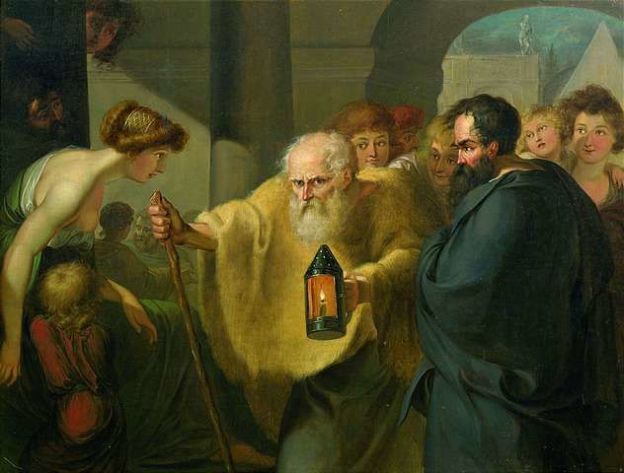
Diogenes was a famous but controversial Greek philosopher who supposedly lived an unconventional life. Amongst other things, he is known for his witty sayings, including one that is particularly well known: “I am not an Athenian or a Greek, but a citizen of the world.” What did he mean by this? Did he mean the world should all be united under one rule, or he just didn’t want to be classified with a specific cultural group? Did he think he was “worldly,” in the sense he knew and understood the ways of the whole world? Is this a quotation those of us are living now, in our current world, can identify with in the same way as Diogenes meant? How should followers of Christ respond to this idea of being a citizen of the world?

The stories of Diogenes’ life and history are colorful, though it is hard to differentiate between what is true and what are exaggerated tales. Diogenes originally lived in Sinope, Turkey until he was exiled for a scandal involving the state currency. He then ran away to Athens, Greece with a slave named Manes. Shortly after arriving, Manes left him, and he said, “If Manes can live without Diogenes, why not Diogenes without Manes?” He became a philosopher and decided he wanted to study under an acclaimed philosopher named Antisthenes. Despite Antisthenes’ lack of willingness to take on a student, Diogenes was relentless in his pursuit and the older philosopher tolerated, if not welcomed, the uninvited student. Here in Athens, he debated with Plato about what a man was. “A featherless biped” was Plato’s definition. Diogenes went out, plucked a chicken, came back and told Plato, “Behold, I have brought you a man.” Shortly after this, he started living in a barrel on the street with just a few possessions. He sometimes wandered the streets with his lantern looking for an honest man, but all he said he found were beggars and liars. On a fateful journey while taking a ship to Aegina, his transportation was captured by pirates. He was taken to Corinth where he was sold as a slave to a man named Xeniades. Xeniades began to know Diogenes better, and he was impressed with how smart he was, so he assigned Diogenes the task of being a tutor for his sons. He stayed there for a long time as a tutor and helper. When he was released from bondage, he started pursuing philosophy again. It was during these days Diogenes established himself as a formidable philosopher. Diogenes died in Corinth, some say at the age of 89. Supposedly he died either by suffocating himself, eating a raw octopus that gave him a deadly disease, or a dog bite that became infected: all colorful and imaginative ends, which may or may not be true, for a humorous but self-centered character.

Diogenes helped to establish the Cynic Philosophy. This is the inclination to believe people are motivated purely by self-interest, and reasoning and natural things should be the bases for decisions. Cynics were similar to Stoics in they led a simple life with few possessions. However, this was not because they felt anything was inherently bad about having things, but because they didn’t want to be held to a particular culture’s standards of how to live. They didn’t want to be tied to a specific religion or cultural group. The name “cynic” comes from the Greek word κυνικός (kynikos),which means “doglike.” Cynics believed in living out their beliefs in their everyday lives, rather than just talking about them. Diogenes was a poor man by choice, since Cynics believed in a simple life in order to be free of the expectations of culture. His only possessions were a barrel to live in, a clock, a lantern, and a bowl. In fact, he smashed his only bowl when he saw a little boy drink with his hands and realized a bowl wasn’t really necessary or needed.

When Diogenes was alive, Greece was not at war with other countries. It raises the question as to whether Diogenes would have still proclaimed to be a citizen of the world rather than of Athens or Greece if it had been in a time of war. Perhaps if they had been at war, he wouldn’t have been so eager to separate himself from the bonds of his culture because the Greeks would have been fighting against other countries. A war might have increased his loyalty to the place he lived and made him more willing to conform or be part of the culture he lived in. But without a war to unite him with the culture around him, perhaps he had no reason to want to adjust to the surrounding culture’s standards.

Since Diogenes was a slave in Greece, one might find it likely he would believe in the Greek gods and goddesses. Instead, he scorned people who believed in gods because he thought reason should be the ultimate method for making every decision. This may be one of the reasons he called himself a citizen of the world, because he did not want to be confined by the conventions and unreasonable beliefs of any culture.

Being poor could have affected his lifestyle and worldview. Diogenes thought many belongings were unnecessary to have in life. Some of these were riches that bought someone more than was really needed. One didn’t need a big house, or even a house at all. He demonstrated this by living in a barrel. Lots of fancy clothes also weren’t needed as long as you had some. He believed an unreasonable culture demanded life be cluttered with these signs of prosperity and status.

Diogenes disdained cultural conventions and scorned those who followed them. He thought you should instead follow your own reasoning and base your decisions off of that. He also believed in the idea of shamelessness, declaring if one can do something in private without shame, then it should be without shame in public as well. He thought if eating in the house was okay, why not eating in public at a market, even though it was culturally inappropriate in his day. He thought if going to the bathroom in private facilities was acceptable, then wouldn’t it be okay to go in public places as well? To prove his point, he actually did these things, demonstrating the Cynic belief you should “live” what you believe and not just talk about it. When Diogenes felt like doing something, he did not care what people thought of him or if they were comfortable with it or not. He was not concerned with respecting or honoring others.

A “citizen of the world” could be defined as a person who is at home in any country, not confined by the conventions of a specific culture. Is this what Diogenes was proclaiming? One could argue this because Diogenes did not want to conform to whatever the standards of the culture would try to require. He wanted to be able to go anywhere and do anything at any time. When Diogenes was alive, the broader world was inaccessible to him and his peers. What could be known and explored was limited in a sense. He couldn’t have timely knowledge of things happening elsewhere in the world. The true disparity of far-flung cultures couldn’t be completely discovered and explored. Because of this, the world and its differences weren’t fully able to be grasped or understood.

The world as we know it is in stark contrast to that of Diogenes’. The known world is larger, but at the same time it is far more accessible. Advances in technology have dramatically transformed our world. Today, we can receive news from the opposite side of the world. We can hypothesize the weather anywhere in the world for days ahead. We can see the results of terrorist attacks anywhere they happen. We can instantly find out about natural disasters and see how much devastation they cause. We can find out when major political characters die in different countries or governments oppress their people. We can learn about space exploration programs that have started or will be starting soon. We can use the Internet to look up how kids in Africa or anywhere else in the world live. We have phones from which we can send texts and call someone across the world. We have computers from which we can send and receive e-mails from anyone instantly. We have planes, cars, and motorized boats we can use to get places faster and farther. Now the only problem with electronics is they can distract us from the real world.

If a modern-day teenager were to declare he is a citizen of the world, he may mean he has traveled extensively or he wants to travel around the world to see things firsthand. This is a realistic possibility, which it wasn’t in Diogenes’ day. This is a little different than Diogenes being a citizen of the world. Diogenes is referring to not being in a specific culture and conforming to it. A teen is just talking about how someone is able to travel all the way across the world in a few hours.

This statement could also have another meaning to someone from our time in history. It could also mean people are so in touch with everything they feel deeply impacted by it. They are impacted by it because they can get news anytime, and they know about the different circumstances, unlike Diogenes who was only in touch with the surrounding areas. We are not limited to only knowing about what is happening in our city and state or even country, but we can know about everything, everywhere, right away. We are a citizen of the world because can know about everything.

This statement could also mean one feels a responsibility to address the things happening in the world. When something goes wrong, a person could personally feel responsible for it even though he might not be able to stop it or change what would happen. Modern governments are trying to help stop ISIS and aren’t concerned only with their own countries. If there is a natural disaster, individuals may help out by collecting money or going to help. Maybe they donate money to charities helping people around the world in need of help. They could join the Peace Corps or conservation groups or become a missionary. Being a citizen of the world nowadays might mean actually doing things that could have an impact all across the world.

When Diogenes proclaimed himself a citizen of the world, it seems he only thought of himself and what would make him happy, not of others or what they would want. He thought only of his own self-interests. Now, rather than this thought excluding the rest of the world and focusing on selfish views, people might have a much broader view due to the fact the rest of the world can be known in a much more real way. Being a citizen of the world might mean knowing, doing, or even going there.

The Bible says we should think of others before ourselves. Take Philippians 2:34. It reads, “Do nothing out of selfish ambition or vain conceit. Rather, in humility, value others above yourselves, not looking to your own interests but each of you to the interests of others.” This is directly opposite to what Diogenes and his fellow Cynics believed. Cynic philosophy was all about being motivated by self interest, not wanting to help or consider others. As Christians, we must be able to recognize and view ourselves with humility and consider others first. Whereas Diogenes believed being a citizen of the world meant being free from the responsibility to consider the desires of others, Christians should view it as an opportunity to live in service to others whom we value more highly than ourselves.

Bibliography

“Diogenes of Sinope.” Wikipedia. Wikimedia Foundation, 21 Aug. 2016. https://en.wikipedia.org/wiki/Diogenes_of_Sinope. 7 Sept. 2016.

“Diogenes the Cynic.” Diogenes the Cynic. University of Chicago, n.d. http://penelope.uchicago.edu/~grout/encyclopaedia_romana/greece/hetairai/diogenes.html. 7 Sept. 2016.

Mark, Joshua J. “Diogenes of Sinope.” Ancient History Encyclopedia. Ancient History Encyclopedia, 02 Aug. 2014. http://www.ancient.eu/Diogenes_of_Sinope/. 7 Sept. 2016.

Piering, Julie. “Diogenes of Sinope.” Internet Encyclopedia of Philosophy. University of Arkansas at Little Rock, n.d. http://www.iep.utm.edu/diogsino/#H1. 7 Sept. 2016.