
Christopher Rush
Welcome to part 1 of a non-committally “multi-part” series exploring a few television-related topics. As we all know, in today’s break-neck-speed world of ratings, advertisements, and politically-correct-only viewpoints, sometimes shows get axed before they get a chance to shine. Sometimes, this is a good thing. I don’t watch a lot of contemporary programming, but I’ve seen a few halftime advertisements for programs that have made me (and surely us all) reflect “that won’t last,” and rightfully it doesn’t. The other times, though, the decisions of powerful, nameless, soulless executives are just plain wrong: shows with great premises and engaging potential are ripped from our bosoms too soon and dashed upon the rocks of Impatience and Pecuniary Gluttony before our tear-sodden eyes. I would like to reflect now upon a few of these shows that left us far too prematurely, either during their first season or only after one season (in mostly no particular order).
Honorable Mention: Firefly
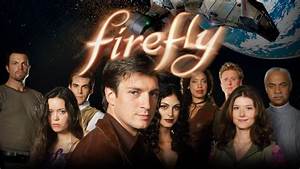
I know, I know. “Only honorable mention?!” you say. “That’s the worst and/or best example of this problem!” you say. Such have the people been saying for 15 years, including the other 75% of my birth family. To be honest with you, loyal readers, I never watched Firefly until a few months ago, fifteen years “late.” My family had even purchased the digital video discs of the series when it came out, which I have been carrying around for over a decade across three changes of address. Finally, though, I popped them in and watched the series. You know, it’s not too shabby after all. It is a very rich universe with a great deal of potential, interesting conflicts and backstory, and a ragtag crew of disparate desperados, all led by the least-likable character on the show, Malcolm Reynolds, played by the least likable actor on the show, Nathan Fillion. That his character is openly antagonistic toward religion is only icing on the cake. I could never watch Castle, either. I’m just not a Fillion-atic. It breaks my heart he is portraying one of my favorite Marvel characters, Simon Williams (a.k.a. Wonder Man) in the upcoming Guardian of the Galaxy sequel (though, since they aren’t the real Guardians of the Galaxy, and the Ultimates Universe is mostly shash, it doesn’t matter). Anyway, the series and the universe, despite Malcolm Reynolds, are intriguing. The “everyone speaks Chinese” thing seemed farfetched for the not-too-distant future, but I suppose if some catastrophic event results in the West and China uniting, I could see it happening, sure. The thing that bothered me the most about the show is the best character, Kaylee, is treated horribly by practically everyone, including the writers/producers. No one appreciated or talked to her appropriately, and the backstory and occasional dialogue by and from her from the lesser-skilled writers was really a low point. On the other hand, as I said, the interesting universe and its many layers of conflicts, especially the absence of aliens, the sci-fi/Western milieu, the odd mix of moral codes in the crew and universe as a whole, plus the “who are they really?” about most of the crew all indeed make for a good time and an experience that should have lasted much longer than it did. I agree. It’s not the bee’s knees, but it is a good idea. It certainly could be easily expanded by books and cartoons and comics and a whole slew of things, but if mastermind Joss Whedon wants to keep it all locked up in his secret vault where only he can take it out and pet it and hug and kiss it, so be it.
12. Ellery Queen
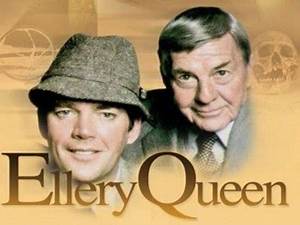
This may be the least-painful entry on the list, not because it is first but because the safety net is indeed the largest: even though the fantastic 1975-1976 television show Ellery Queen lasted for only one season, the only entry on this list I wasn’t alive to see the first time around, the entire Ellery Queen Universe consists of, what, a couple of radio series, a couple of television series, some films, comics, a magazine that’s been going on since World War 2, and a whole lot of novels and short stories. This may be of small comfort (as it is with the heart-breakingly-too-soon-cancelled Nero Wolfe series), if your main attraction to the Ellery Queen series is the performance of Timothy Hutton’s dad Jim Hutton and David Wayne as Ellery Queen’s father Richard Queen. Much like the interplay of Timothy Hutton and Maury Chaykin in Nero Wolfe, the highlight of the show is the two leads acting with each other. The mysteries are usually interesting, sure, and the semi-regular guest appearance of John Hillerman as Simon Brimmer (created just for this incarnation of Ellery Queen) is marvelous (especially as it adds to this series’ more comical-but-not-slapstick interpretation of Ellery Queen), and the “hey, it’s that one used-to-be-famous guy and gal!” seven times over per episode guest cast (like Murder, She Wrote used a decade later) is delightful for fans of television-radio-movie history. But the real treat, as I said, was the chemistry between Jim Hutton and David Wayne, and we, frankly, deserved several more seasons of it than just one. The stories already existed. The Used-To-Be Actors and Actresses were aplenty. It could have lasted.
11. 13 Ghosts of Scooby-Doo
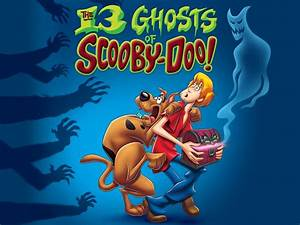
Surely, several one-season-only fine cartoon shows could qualify for consideration here, especially if made by Hanna-Barbera: Herculoids, Hong Kong Phooey, Hair Bear Bunch (and others that doesn’t start with “h”). Pirates of Dark Water, for example, was the impetus for this article, but since it technically is more than one season, it ironically does not qualify (and deserves its own article for its sheer greatness anyway — stay tuned). 13 Ghosts of Scooby-Doo only qualifies for this list because, while it may have been complete as a one-season show, it did not get its chance to finish the story, which is horrible. As you know, I’m not a huge fan of scary things, but this show, a few notches above the usual dark mystery of Scooby-Doo shows that almost always say “supernatural dangers have naturalistic explanations,” is distinctly in the vein of “supernatural dangers are supernatural indeed” and works very well, even though it should be a prime example of everything we harangued against a few issues ago (sixteen ago, to be precise). With Vincent Price along, Scooby and Shaggy and Velma and some kid named Flim Flam put right what once went wrong (you can probably guess who’s to blame) in the harried nether realms of the Himalayas. All we needed was a few more episodes and it would have been all finished — why cancel a show three or four (or possibly even only 2 very full) episodes before it could finish telling its story?
10. Push, Nevada
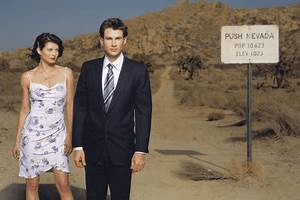
This rather bizarre gimmick of a show mixed iceberg-like mystery (there’s much more under the surface) with play-at-home game show. This one’s definitely not for kids: it’s possible the inhabitants of Twin Peaks, Washington would feel uneased in this goofy ol’ town. A mysterious fax (I think that’s Old Tongue for “printed out e-mail”?) shows up in mild-mannered IRS Agent Jim Prufrock’s office and right away you’re thinking “hey, that’s a name from that poem” and suddenly things get weird. But not only is it a show about a mystery and bizarre things going on in Push, Nevada (things of Modernist Poetry and Classical Greek Drama subject matter, which can never be good for anyone involved), it is also a play-along-at-home follow-the-clues adventure. This gimmick (and I don’t use that pejoratively here) was pretty clever — not original, not unique, but clever. The show had a self-determined end point: it had a whole mystery to uncover and reveal, an end and purpose, but that was apparently not good enough for the impetuous Decision Makers and Plug Pullers of 2002. Oh, sure, they revealed the rest of the clues for the play-at-home game show, and some eagle-eyed viewer won a thousand bajillion dollars, but for me that was not the point of the show. I wanted to know where the show was going, and I didn’t care too much about the prize money. Apparently, I was alone. Not even co-creator Ben Affleck seems to have anything to say about the show part, such as where the mystery was going. Pity, that. I still want to know what was supposed to happen.
9. Police Squad!
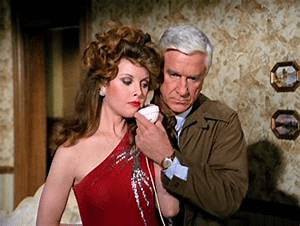
I admit this is the one show on the list for which I was alive but not old enough to watch when it first came out, which is partly why the list is limited in its way, but having seen the episodes multiple times, I still cannot fathom why this series is only six episodes long. Sure, it has running gags, but those running gags do not prevent anyone from understanding 99.9% of that particular episode. Surely its appeal to me is its alignment with the kind of verbal, intelligent humor I prefer, but its admixture of nonsensical visual gags is somehow over-the-top without being too much or too obvious. It is a sort of intelligent slapstick that does not resort to the painful Three’s Company-type “humor” (no offense to Three’s Company fans). It must be the only series to be longer (total minutes-wise) in its motion picture incarnation than in its episodic television incarnation. As Barney Miller proved, a humorous cop show has great potential and longevity — and Barney Miller almost never left the squad room in eight seasons! This series had so many positive things going for it. It was just too smart for its time, apparently. For those who have trouble associating “smart” with Naked Gun, go back to the original Police Squad! and see what comedy gold was there from the beginning.
8. Space Rangers
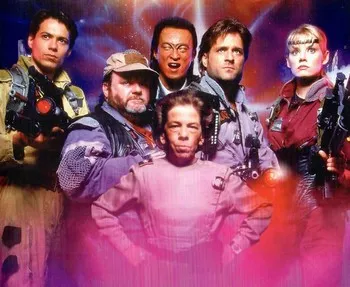
Another but six-episode series, this science-fiction romp likewise had great potential. It has not aged nearly as well as Police Squad!, that is true, even though it is a decade younger, and it has clearly been surpassed by others of its ilk (obviously Deep Space Nine and Babylon 5), but Space Rangers had a certain I-don’t-know-what. Perhaps it tried too hard: the production demands with a technology that wasn’t quite there yet, the terminology of the universe, the outfits … but still. Its main cast is a veritable “hey, it’s that one guy/gal!” collection. It’s about the space station and dangers of the frontier and enemies close to home, but it’s also a world that isn’t nearly so refined as either the Star Trek or even Babylon 5 universes, and that ruggedness had a wide-open field for storytelling and character development. This show should either never have been made or allowed to go for many seasons.
7. Covington Cross
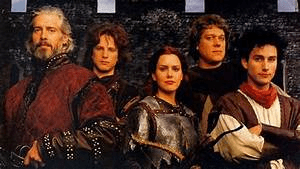
The 1992-’93 television season was an interesting time. Some excellent shows began then: Batman: The Animated Series, X-Men, Highlander: The Series, Goof Troop, among others. Some not great shows began then (let’s not mention any). And there was #8 on our list as well as #7, Covington Cross. Speaking of “hey, it’s that one guy/gal!” shows, this is Britain’s version, with famous British people, starring the great Nigel Terry. With the freedom of Generic Medieval Setting, Covington Cross had no historical boundaries or chronological limitations requiring it do this or not do that other than Be Medieval. With Nigel Terry. Unlike all the Serious Time Dramas with Some Comedy, Covington Cross did not have a set story it had to tell: it could just be something fun and different and clever, and boy was it clever. Go read the plot description of the pilot episode and most of you will think “oh, that’s like that other popular medieval drama that’s all the rage these days,” but then you’ll see the date and realize, “oh, that’s four years before the first book came out!” Like Police Squad!, Covington Cross was just ahead of its time — too good, too clever, too expensive. Ironically, the thing that seemed to irk Thomas Paine so much, about England ruining America (or whatever he called it) because England was running America from afar seems to be the inverse of this show: America ruining England’s Covington Cross because American ran England’s Covington Cross from afar. This was a good show, and if I could understand that before my teens, surely other people could have understood that as well. Did I mention it had Nigel Terry?
6. Dark Skies
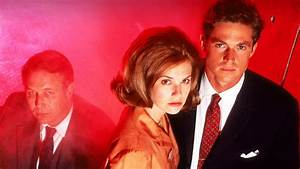
Similar to and unlike what we just said, Dark Skies took on the challenge of telling the story of modern America from a different perspective: the right one, in which so many of the major events of modern America happened because of … aliens. I’m not a huge fan of alternative history, but Dark Skies was a good mix of history and revision and scary alien menace. Perhaps you think I’m describing some X-Files knock-off. No, you’re thinking of X-Files seasons 9 and 10. But seriously folks, Dark Skies should not be remembered as an X-Files knock-off. It had some similar ideas, sure, but unlike X-Files, which was all some secret malarkey that changed every couple of seasons and our heroes were never to know about it, in Dark Skies our heroes get on the inside track from the very first episode and spend the whole time trying to learn more about it and get better prepared to actually fight it. It’s like a sensible fan’s response to what we wanted to see in X-Files: the good guys actually being allowed to fight the future. If this got cancelled because it was “too much like X-Files,” whoever made that decision clearly did not understand either X-Files or Dark Skies. Recently, I saw a soupçon of the five-year plan for this show: twenty years after the show came and went too soon, I was re-angered by the idiocy of the Decision Makers who cancelled this show, knowing as they did what was in store for this show and what incredibly intelligent places it was going (significantly different from how it began in season one). It was going to grow and change and re-invent itself and do all the things J.J. Abrams’s shows get credit for inventing a half a decade before Felicity. Dark Skies took one of the clever-but-not-even-original ideas X-Files presented in a horribly frustrating way and did it in a more engaging and rewarding way, took what Falling Skies was going to do 15 years later and did it 15 years before, and a whole lot more. It was going to be five seasons; it knew where it was going; it knew the story it had to tell. What went wrong? Where was the faith? Where was the love?
5. Crusade
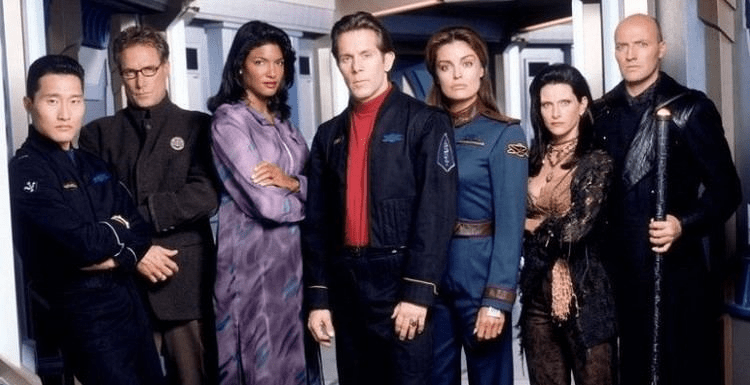
Speaking of 5-year plans, we should know by now if a show has a solid five-year plan and is allowed to work it to its fruition, we end up with something magical and exquisite. Clearly, as always, I’m speaking of Babylon 5. Farscape may or may not have had a five-year plan, but it needed its fifth season to finish telling its story fully, but, sadly, it didn’t get it. NewsRadio as well. Battlestar Galactica may or may not have had a plan, but it got to finish telling the story it wanted to tell, and those of us who are intelligent appreciated and enjoyed the conclusion to the story. And then: sequel. And/or: prequel.
I haven’t seen Caprica. I probably won’t. Ah, but Crusade! Why was this cancelled? If you are a sequel to the greatest show of all time, which, as we all know, Babylon 5 is, why would Decision Makers not give the Creative Team the benefit of the should-not-even-have-existed doubts and say “you just made us forever rich and famous and happy by giving us the best show ever, and since you want to continue the story/universe in a new and fresh way and actually know what you want to do and where you want to go, full speed ahead!” and instead say “you just et cetera et cetera et cetera too slow, I change my mind, it’s over before we can get to know everyone”? Why would you (the third of the three different unnamed antecedents of “you” in the previous sentence) do such a ludicrous thing? Have you (I’m talking to you, now, faithful reader) seen the cast list for this show? This show discovered everyone! (You’re probably thinking that argument will be used again soon in this list.) I don’t understand. No, Crusade is not Farscape — but even the first couple of post-pilot episodes of Farscape are “not Farscape” just yet anyway. Even that show had to find its identity. And after Babylon 5, come on. Crusade knew where it was going, and the Creative Team already proved it knew what it was doing. This is possibly the most irksome entry on the list for me, since I know deeply it could have become something great given the opportunity, even with the monumental task of being a sequel of sorts to the greatest show of all time.
4. Mr. and Mrs. Murder
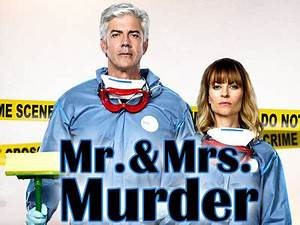
This is the most recently enjoyed series by me on the list, one my parents introduced to my wife and me earlier this year. Coming to us from Australia, reminding you we at Redeeming Pandora are truly international, Mr. and Mrs. Murder was and is and always will be a very clever character-driven mystery show about a loving husband and wife couple (rather rare on television these days) who clean up crime scenes for a living. Not like the CSI clean up teams, mind you, the actual cleaning up cleaning up people: the ones with mops, vacuums, wet wipes, and lots and lots of gloves. Like most good mystery shows, the characters are very smart (another rare thing on television these days), well-read, well-rounded, somewhat flawed, quirky, very much in love, and very fun to watch. Because the show comes to us from Australia, none of the American Television Company mantras and flaws are there (whether traditional or contemporary), and so even though it seems from afar to be overly-familiar-television-mystery fare, it uses those traditional mystery show tropes in fresh and clever ways. It’s quite good. Making the pain of its premature non-renewal even more painful, aside from how clever and enjoyable the show was right from its first episode, by the end of the season it had potentially given us a nemesis for our hero, Charlie (the “Mr.” of the title — the loving couple of cleaners-turned-amateur-sleuths). And while shows like Bones and NCIS have proven the “nemesis of the season” idea can get tedious rather quickly, at least they had the opportunity to work it through. This is a quintessential example of the “not enough viewers gets even very clever shows cancelled” heartbreaking disease so prominent today. This show could have and should have gone on for quite some time. Come on, Australia — what happened here?
3. Earth 2
For some inexplicable reason, Television Executives, those unimaginative soulless fiends to which we’ve been referring throughout this journey, continue to “green light” (as they say in the “biz”) science-fiction programs, even though these same Decision Makers apparently hate them passionately. Travel back with me to the Golden Age of TV Sci-Fi, the late ’80s to the early ’00s, a time that gave us really great shows like TNG, DS9, Babylon 5, Farscape, Lexx, Quantum Leap, Stargate SG-1, and others. We also had this overlooked gem. Before Voyager, Lost, Terra Nova, and all the other more recent series that copied some of this potential great show (that, admittedly, borrowed from Battlestar Galactica, which is just the Aeneid in space anyway), Earth 2 gave us a diverse, intelligent show that fell prey to the Low Ratings Disease. Shame on you, audiences: we had something potentially great in our hands and you (not me, since I watched it all) let it slip away. This show had a little bit of just about everything you need for a good science fiction show: a ragtag crew far from home, religious conflicts, misunderstood aliens, cyborgs, disasters, internal strife, children as the last hope for humanity, and so much more. Sure, when I put it like that it may sound like a hodgepodge of every science fiction show, but somehow it came across (to me, and not just because I was young) as something different, something that could have lasted much longer than one season. There was great potential for so much, not just on the new planet but also back home — this could have given us many seasons of intrigue, mystery, action, adventure, romance, science, ecology, anti-colonialism, and so much more. I guarantee if this show got rebooted intelligently today (by which I mean not in a heavy-handed “social issues are more important than people of faith” sort of way), it could work very well and perhaps tell its whole story, which surely would be an enjoyable story indeed.
2. The Good Guys
Clearly we live in a day in Television Land in which “fresh, clever, morally upright ideas” are anathema, and “shoddily-rehashed superhero ideas” and “viscerally-appealing basest aspects of humanity are ‘good’” shows are praised and “green-lighted.” Again. And again. And again. It’s an odd mix, perhaps trying to tell us “normal people are bad but hey, that’s okay,” so “only supernatural beings are good, and since the supernatural is a hollow lie, no good exists for real.” Inexplicably to intelligent people, the other people in this world tell us shows like Breaking Bad, Damages, Guilt, Scandal, Revenge, Dirt, Dexter, The Sopranos, Desperate Housewives, and a whole slew of other shows focusing on protagonists doing horribly evil things are “great” and “groundbreaking” and other sorts of positive superlatives, and these same people then ask in all sincerity, “why are human beings so bad and hateful and angry and selfish all the time?” These are the same people, mind you, who tell us “people are cosmic accidents from dust and monkeys with no purpose or hope” and then, still in all sincerity wonder “why do people kill and hate and lie and steal and destroy?” Then they usually mention the calendar year, as if that has some bearing on the argument.
Enter (six years ago at the time of this writing), a very fresh and entertaining (if somewhat saucy at times) relief from such a world: a show in which the heroes care about doing good, making the world a better place, and keeping us safe from people who want us to be unsafe. The show was a frenetic mix of a lot of different things: you’ve got the beloved ’80s mismatched cop duo idea (one cop is stuck in the ’70s days of shoot first, massage the evidence, drive fast, smoke and drink and be foxy, and, if time, ask questions if it’s not too late but since your intuition is usually right you don’t need to ask questions anyway sort of cop, combined with the young, up-and-coming technology savvy, politically astute, by-the-book cop), an ethnic lady of ethnicity in charge of the police force that should have appeased the group that needs appeasing by that sort of thing, heroes with lots of flaws and moral ambiguity, a quirky cast of characters beyond the quirky heroes, and the villains! My heavens, the villains are possibly the second most enjoyable part of the show, in that week after week the villains are, well, sort of the opposite of stereotypical villains: they are intelligent, funny, and come very close to being the stars of the episode (sort of reminiscent of Barney Miller), yet we don’t end up rooting for them in any way (except for villain-turned-ally Julius). Bradley Whitford as Dan Stark, the out-of-time cop who, like me, distrusts technology and proper procedure (after all, didn’t we learn from thousands of episodes of Law and Order and CSI and Psych warrants usually are just for sissies after all?) is so unlike every other role we’ve ever seen him in, the sheer zest and enjoyment of watching him be funny and free and wild and reckless should have been enough of a reason to keep this show around for several seasons. Plus it’s got wit (akin to Police Squad!, in a way), Colin Hanks, romance, special effects, and I honestly don’t know why this show stopped … oh, wait, yes I do. It was good.
1. The Adventures of Brisco County, Jr.
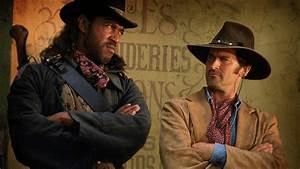
Here we are, full circle. You know who made Lost the good show it was? Nope, not J.J. Abrams — Carlton Cuse, that’s who. Where did he get his training? Brisco County, Jr., that’s where. I think it was Benjamin Franklin who said, and I quote, “The Adventures of Brisco County, Jr. may not be a perfect show, but it’s as close to a perfect show as imperfect people can make,” unquote. Before Firefly came along with its Western Sci-Fi Comedy Adventure (that at times takes itself a bit too seriously), there was the great Brisco County, Jr.: a Western Sci-Fi Comedy Adventure that never took itself too seriously. Before Nathan Fillion came along being pseudo-manly and pseudo-complicated heroic, there was … Bruce Campbell. Manly. Heroic. And manly. I don’t want to get all libelous and whatnot, but Bruce Campbell, for me, is the antithesis of Nathan Fillion, mainly in the “I want to watch a show with him as the star” category.
Let’s talk briefly about how many fantastic things this show had going for it: I believe we have already mentioned Bruce Campbell as the eponymous Brisco County, Jr., Harvard educated son of the West’s most famous and successful lawman (Brisco County, Sr.) bounty hunter (who, MacGyver-like, almost never uses violence) extraordinaire. Do you want more? We have already mentioned Western Sci-Fi Comedy Adventure. How about the late great Julius Carry as Brisco’s rival-bounty-hunter-turned-best-friend Lord Bowler? Christian Clemenson as Socrates Poole, lawyer and confidante. Kelly Rutherford as Dixie Cousins, gangster moll/sort of love interest for Brisco. Comet the Wonder Horse as himself. Every episode lovingly recalls us to those halcyon days of serials, much like the Indiana Jones movies, in which plots moved quickly from crisis to crisis, but BCJ allowed for plenty of character, humor, intrigue, romance, heart, intelligence, and more good things. Let’s not forget John Astin as Professor Wickwire, the knowingly anachronistic scientist always encouraging Brisco (and us, the science-loving audience) to be on the lookout for The Next Big Thing. (Before you think it’s just some Wild Wild West rip-off, trust me when I say “it isn’t.”) And the villains! Billy Drago as main antagonist John Bly (no one does villain like Billy Drago). M.C. Gainey as Big Smith (a diabolical Little John). Oh, and you know that rousing theme you hear all the time during the Olympics, not the fanfare but the other rousing get-up-and-go-with-gusto music? Yeah, that’s actually the theme music to Brisco County, Jr.
Having established this show has practically everything you need for success (i.e., Bruce Campbell with bonus elements), let’s talk a little about its premise, especially if you think John Astin’s inventor-scientist character is the sum total of the Sci-Fi in Western Sci-Fi. U.S. Marshall Brisco County, Sr. has just successfully rounded up all 12 of the notorious John Bly gang, but for some reason the Robber Barons and Government Decision Makers have put them all on the same train together, and somehow the bad guys escape, kill Brisco County, Sr., and flee in all directions. The Robber Barons hire his bounty hunter son Brisco County, Jr. (and a few others, such as Lord Bowler), to track them down and restore order to the West. And that’s just the opening credits of the pilot. Then comes … The Orb. I don’t want to spoil it for you, but The Orb is one of the most intelligent pieces of television history I’ve ever seen. Brisco County, Jr. showed me television series can be intelligent — I had already known that from Star Trek and Mr. Roger’s Neighborhood and a few other things, of course, but BCJ showed me television shows, if handled by intelligent people such as Carlton Cuse, can plan ahead, come up with engaging story arcs and intentional character development, and quality episodes that not only entertain but also demand an intellectual response as well. Brisco County, Jr. did not just come up with neat ideas and change directions to make the story bigger and better, oh no: BCJ worked out ideas and directions in advance and started heading on that cohesive path from the beginning — just like all writers are supposed to do anyway. As you know by now, that’s one of the key factors in why Babylon 5 is the best show of all time (and my favorite), and it’s one of the key factors in why The Adventures of Brisco County, Jr. is the most heartbreakingly early-cancelled show of all time. It could have gone in several engaging directions, and from what I’ve learned about the plans Mr. Cuse and Co. had for where the show could have gone, beyond just “nabbing the Bly Gang” and understanding The Orb, it had as much possibility as The Ol’ West itself — and that’s a vista of great and wondrous and plentiful possibilities indeed. So I’m going to file my claim for The Adventures of Brisco County, Jr. as the most regrettably-prematurely cancelled show of all time (real fans saw what I did there).
But Let’s Not Wallow in Regrets
In one sense, this has become a self-perpetuating problem. As mentioned throughout, we, the mindful viewers, having caught on to the wiles and dastardly habits of this abominable practice are reticent to even watch new programs until after a season or two is safely on some streaming service so we don’t get our hopes and hearts attached to some new cast of characters only to have them teleported into the Nether Realms of Cancellation all too soon. And because of this reticence, shows get low viewership, unsatisfactory ratings, and cancelled. It’s a terrible cycle.
Another facet of the problem is the mind-blowingly nonsensical decision by the Creative Teams and their Advertising Buddies not to let us know “hey, there’s actually a cohesive story here you’ll want to dig into from the beginning.” That’s one of the reasons I didn’t start watching Lost until a few seasons into it: the show looked interesting, but all the initial commercials made it seem like Gilligan’s Island: The Drama. Now, had I known there was going to be a very interesting story arc to the whole thing, I may have started watching it from the beginning. Thankfully, this is one of the few shows that had a faithful following enough to allow it to tell its complete story (and yes, most of you are still wrong about its ending and the point of the whole show). But some shows are not so fortunate: take Pan Am, for example. All the advertisement for it was just “here’s a period piece drama about aeroplanes!” Now, if they had said, even briefly and quietly, “but wait, there’s more: there’s an ongoing story of espionage and conflict,” I might have given it a look — and so, likely, would have thousands of others. I’m not saying you have to spoil all the surprises, but don’t expect me to watch a show just hoping to be pleasantly surprised there’s more to it than what all the millions of advertising budget monies have made it out to be. I did that with Brisco County, Jr., and Fox Executives broke my heart.
“But wait!” you shout. “What about Freaks and Geeks and The Prisoner and My So-Called Life, and all the other great cancelled-too-soon shows you haven’t seen yet?” Whoops. Let the cat out of the bag at the end there. No, I have never seen Freaks and Geeks, and since I’m not in any way impressed with the output of these stars today, the thought of watching a show with them before they were stars does not grip me. I remain ungripped (also because I staunchly refute the eponymous appellations, a subject for another time). I do want to see The Prisoner, definitely, and I surely should, but since they sort of knew it was going to be cancelled, it had the chance to wrap up its story albeit hastily, I’m told (this is somewhat similar to BCJ, at least, in that it does come to a nice conclusion, but it could have gone on for so much longer). And godspeed trying to get me to watch My So-Called Life.
Maybe this was just a subconscious yearning to return to the halcyon days of the early ’90s, when life seemed simple, and quality science-fiction shows were coming at us left and right, video games were done in glorious 8- and 16-bit majick, Comic World was on 16th and Central, Mystery Science Theater 3000 was still being made, the sky was blue, birds were singing, and people seemed to laugh more, then. Well, maybe. But that’s a topic for another time. Let’s not wallow in regrets or the past. Life is mighty good today, in its own way.
Today we live in a fantastic-in-its-own-right age of excellent board games and Vanilla Coke and honey wheat braided pretzels and hula hoops and fax machines, an age in which we can revisit these prematurely ended shows of yesteryear and so many more, thanks to the advent of digital video discs, streaming services, and The Next Big Thing. The joys and potential joys of these series live on in our hearts and minds and collections and clouds.
So there’s that. And that’s my list. What’s yours?
 Redeeming Pandora