
Christopher Rush
Oh, hello again. So nice to see you. Here we are, back as a class for the first time in donkey’s ears. I dunno, it’s a saying, I heard. Anywho, it’s great to be back for another season of Redeeming Pandora. We’ve got some fresh voices, some familiar faces, and another season of tricks and treats just waiting to be explored. As is sometimes our wont, we close our season opener with a brief history of some of the books I’ve read over the summer (including some late spring entries, just for giggles). This smattering of reviews is a bit shorter than usual for two main reasons: I read mostly very long books, and I spent a preponderance of the summer playing Final Fantasy XII (while drinking too much Oberweis sweet tea and eating too many miniature pretzels), to be explored next time. For now, sit back and perhaps get motivated to read a few of the works reviewed for your enjoyment.
The Inimitable Jeeves (Jeeves & Wooster #2), P.G. Wodehouse ⭐⭐⭐⭐
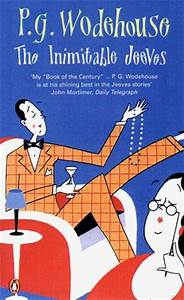
In a strange way, picking up a novel-length Jeeves and Wooster story is a bit intimidating: the humor seems best in compact, focused installments such as short stories — why try to expand it to a whole novel? However, Mr. Wodehouse encourages us immediately: this novel, while loosely connected, is mostly a series of vignettes, as efficiently compact and contained as one can hope. What periodic imbrication occurs brings more humor, not prolonged suspense or boredom. Fans of the Fry and Laurie adaptation will recognize a good number of the episodes from this book, as many of the early episodes of the series are taken from the chapters within. It’s difficult to go wrong with a Wodehouse book about Jeeves and Wooster: read this one and find out why.
Airborne Carpet: Operation Market Garden, (Battle Book #9) Anthony Farrar-Hockley ⭐⭐⭐

Another engaging Ballantine Illustrated volume, this brief overview of Operation Market Garden provides a limited eagle-eye view of both sides of the conflict (though mostly the Allies). Having somewhat recently read It Never Snows, wholly from the German perspective of the battle, this Allied-heavy perspective is a helpful counterpart. Farrar-Hockley has certainly read a diverse number of primary sources, quoting frequently from first-hand accounts and diaries of those whose experiences don’t regularly get presented in the grand versions of this engagement. The Polish soldiers and many of the British troops with significant roles are mentioned here, even those who do not get mentioned in other accounts, so Farrar-Hockley’s coverage is widespread (if also somewhat terse, considering the limitations of the picture-dominant format). It’s a good survey of this battle, especially of the Allied leader conflicts in planning and executing the massive endeavor. Ballantine’s Illustrated History of the Violent Century was a great series of series that should not be out of print. Bring it back! (Or, buy every copy you find wherever you go and give them to me.)
On Conan Doyle, Michael Dirda ⭐⭐⭐
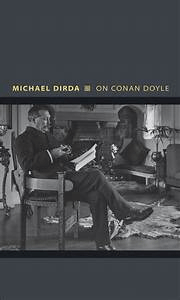
Though the title page tells us the subtitle is “The Whole Art of Storytelling,” the real subtitle of this should probably have been “But Mostly On Dirda’s Experience with Doyle’s Works,” instead of its purported subtitle, which is only addressed briefly toward the end. This is not a criticism, mind, simply information for you, the unsuspecting future reader: a good deal of this is a personal reflection of Dirda’s reading youth, his early experiences with Doyle and other mystery/sci-fi/fantasy/pulp adventures in those halcyon days of dime-store magazines and the freedom of youth to travel their hometowns without worry or danger, as well as his later-life experiences with the Baker Street Irregulars, and how he has lead the best life possible (as usually comes across in his collections of book reviews) without sounding too snobby about it.
As usual, Mr. Dirda suffuses his commentary with lists of authors and works you’ll want to track down, which is not always as facile as one might suspect in the Digital Age. You’ll likely want a pen and paper (or word processor) close by to enumerate the suggested readings throughout in addition to the recommended works at the end of his reflections.
The only other flaw (if you might consider Dirda’s personal histories an intrusive flaw) is Dirda’s awkward inability to balance his general enthusiasm for Sir Conan Doyle with his (ACD’s) flaws as Dirda sees them, especially Doyle’s Spiritualism. Toward the end, Dirda attempts to say he respects Doyle’s religious/spiritual beliefs and his willingness to write and act on them so much, but since he (Dirda) clearly disagrees with it, his respect is tepid and nominal at best. He is clearly embarrassed by Doyle’s belief in fairies and even goes so far as to encourage us not to read some of Doyle’s work in certain areas.
The rest, however, comes off as an energetic, enthusiastic appeal to us to delight in more of Conan Doyle’s oeuvre than just Sherlock Holmes (though he clearly wants us to read those works again and again as well). He does mention Jeremy Brett briefly, with mild approbation, perhaps not as much or effusively as some of us may prefer, especially as it is only in passing with Robert Downey, Jr. and that newer BBC modern version. He discusses Basil Rathbone’s movies, too, but his delight is hampered by Nigel Bruce’s Watson (or, at least, the writers’ treatment of the character). On the whole, Dirda is dissatisfied with the history of Sherlock Holmes on radio and screen, which is why he continues to enjoin us to use our imagination with the real stories themselves (along with a few other adaptations he recommends), and especially increase our awareness of the wide range of Conan Doyle works as well: the autobiographies (not the fairy ones), the Challenger stories, Gerard, the historical adventures, the White Company, the horror short stories, and more. But not the fairy works.
Rough patches and all, this is a fast-paced read that does its job well: it motivates us to go read a lot of diverse Sir Arthur Conan Doyle works.
 Redeeming Pandora