
Monthly Archives: July 2022

The Benefits of Reading

Katie Kenney

Reading is one of the best things a person can do, in my opinion. You can immerse yourself in a different world with every single book you read. It shows you different ways of thinking. It exposes you to opinions that aren’t yours, that aren’t the most common thought process and explains it is good to understand what other people think. Reading can give you valuable information on different cultures, people groups, and what other people’s lives are like in different parts of the world. Books are able to improve your mental state and give you more confidence. So, if books are so beneficial then why don’t more people read? It is quite strange because reading can help you in more ways than the common man knows.

Reading helps you exercise your mind. People exercise their bodies when they do sports or go to the gym and similarly, reading is the way to get your mind in shape. It stimulates your mind which keeps it healthy. Studies have shown a stimulated mind can delay the effects of Alzheimer’s and dementia. This happens because when your mind is active it fights off things it can’t when it is doing nothing. If you are trying to figure out the meaning of a word you don’t understand, your brain is working harder than it would be when just staring at an electronic screen of some sort, which has support saying it can be harmful to certain parts of your brain by researchers and their experiments.

When you learn about different worlds where extravagant things happen and where there is almost always a hero, your imagination expands. If you talk to anyone who prides themselves with how many books they have read you can tell their mind has multiple roads their thoughts walk. They can make up uniquely weird things you can’t help but be intrigued by. This doesn’t mean every reader is like this though. Readers who like fiction are exposed to new characters, a new plot line, and a new adventure every time they open a book. Then we have the people who don’t necessarily prefer fiction, but like nonfiction or historical pieces better. They still get shown new things like people and events. Just because they don’t like the utopian universes doesn’t mean they don’t have an active imagination. People who prefer nonfiction can imagine different things for themselves. They have to get their own creative juices flowing without a big kick-start, unlike most fiction readers who get their imagination going by getting ideas from some prominent idea made by an author.

An array of words is what you’ll find in all kinds of novels. You can be exposed to words you don’t the meaning of or how to pronounce them. When you spend time looking at the pages of a book and learn new words, your vocabulary is enlarged by a great sum. When you keep seeing different words and continue to try to comprehend their meaning, you get a better knowledge of what other words are.

In almost every single book that exists, different opinions are expressed. Many books have some sort of conflict, and it most often comes from opposing thoughts that lead to argumentation. When you read about the opposing opinion you are being shown different view points. This helps you accept other people’s beliefs and how they see the world without being judgmental. It can help you be more acceptant and kind to what they say. In current times, if you don’t agree with someone or at least acknowledge their opinion is valid then you get eaten alive by those who are watching. But when people see you understand or at least accept their thoughts when most others don’t, they back off and leave you alone instead of trying to make you completely agree with what they have to say.

Studies have been conducted and evidence shows people who read are most often better in daily conversation. They use larger words, but not too large as to make the person they are talking to confused. They pay attention to the person they are talking to and don’t drift off or look closely at other things like many people find themselves doing in conversation. They may find it easier to hold a conversation because they’ve seen and read about a variety of them. The variation of communications assists the learning and social skills of the reader in growing. It teaches people different ways to hold a conversation because of this.

People who read often have a better attention to detail. They notice things the common man does not see. They are better at understanding certain social cues in a conversation. They look for how people react to what they are seeing because they read about main characters who do the same thing. When characters in a book miss details crucial to a positive outcome, even though they didn’t know how big of a deal it was earlier, the importance of paying attention is enforced. No one wants to make the same mistake someone else did that led to a disaster in her life. This causes them to be more attentive to their surroundings and what words are said in friendly, everyday conversations.

Everyone gets stressed, some more often than others. Reading can help alleviate the stress put on by outside sources. When you read, you are sucked into a world not your own. You don’t have to worry about that math test tomorrow, or the job application you think you messed up, or what someone said about you behind your back. You get so focused on the characters’ lives and everything that happens in their world you forget about your own. It distracts you from the constant daily stress everyone is plagued with. However, if you keep avoiding the source of stress, reading to get rid of it will only cause you to miss what is happening in the book and think about the responsibilities you are ignoring.

Reading can build up one’s self-esteem. Main characters are often praised for their faults. They are seen as still being good people beside the fact they have many flaws. Their flaws are what makes them real to us. When you see the person whose life you have been following has some of the same problems you do it makes you feel better about yourself. You feel like you can relate to someone even though he may not be real, depending on what genre you are reading. You get comfort from knowing someone out there understands, to a certain extent, how it feels to have specific faults because the author who wrote about it has either experience or knowledge in the realm of what you are feeling. Most people want to have some similarities to others so when they find someone they can relate to, that person greatly influences them because they see themselves in the person.

If you see someone who is similar to you or someone you look up to stand up for something they believe then it encourages you to stand up for your beliefs. In books, even if the person is nothing like you, although the reader almost always seems to find something to relate themselves to the main character or a supporting character, anyone who stands up and fights for what they think is right influences you. Seeing all sorts of people who are vastly different with different lives in different worlds all speak passionately about things important to them makes you want to do the same. It gives you a feeling of confidence; a confidence in which you want to talk about things that greatly matter to you and what you do in and with your life.

When you read an entire book you have to have a somewhat good memory to remember the characters and everything that has happened so far. When you meet new people or learn about a new subject it can be hard to recall certain things like names and important conversations. If you don’t know these things it can hinder you later on. That’s why people who read books tend to have a better memory. It can be annoying to go back to the beginning of your novel to freshen your memory on something you weren’t able to comprehend enough to know what is happening where you actually are in your book. If you are continually tested on the abilities of your memory then you are able to recall things easier. It’s like studying for a test. Typically, the more you study the better you will be able to retain the knowledge you were going through, which will help you on tests, quizzes, and classwork. If you don’t study at all and you can’t remember what was said during class when the information was given, then it will be terribly hard to perform well on a test. However, if you do remember most of what was said in class then there is the possibility of you doing well when tested. This is the same for books: if you can’t remember what was said prior to the scene you are currently reading then there is likely no way you can understand what is happening without the context clues.

People who read can be more in touch with their emotions and what they feel than the average person. In every fictional book are characters with deep, complex minds who have emotions they sometimes can’t understand and other emotions they know like the back of their hands. If a 10-year-old boy reads his book and sees the hero isn’t always happy and can be sad or angry, then he understands it is okay to have feelings no matter what other people say to him. If you grow up reading books in which the people don’t always have everything going how they want it to then you are better equipped to deal with situations in which it feels like nothing is going right. If you see how other people, even though they could be purely fictional, get through tough situations, then it is almost like getting advice from an outside source who is wiser than you and has had experience in the position you are in.

All characters in books have an ultimate goal. They work toward meeting it every chance they get all throughout the story being told. If they find an obstacle in their path, then they do every little thing they can in their limited power to overcome it. Unfortunately, an abundance of people mill through their lives with no real goal or purpose in mind. Often people just go through the motions and let what happens happen, without lifting a single finger of effort to change. Sometimes, people don’t know what they want to do. They could be completely lost and incapable of deciding what they want to do for the rest of their lives. However, when they see others with an initiative do something they want to with passion, then it makes them want to do the same. If some are doing something that makes them happy then you obviously want to find something of your own that brings you joy.

It always seems to be that whenever you pull out a book someone desperately needs to talk to you or has some sort of important story to fill you in on. If you read in public then you know the pain of people talking unnecessarily loudly. Focusing on your book can be hard sometimes. Over time, you get used to all of the noise and it becomes a background to the story you are immersed in. You get better at focusing on what is important: your book. This skill of focusing can be taken into other places of your life like your job or school. The work that you do will normally be better if you aren’t interrupted or distracted every five seconds. Your ability to ignore outside problems while reading helps you ignore the noise while doing other things. This is not purely pertaining to words. If you can focus on a novel’s plot line, then you can focus on doing tasks like chores or drills during a sport practice.

Reading can be cheaper than other forms of entertainment. Movies are expensive nowadays, being around ten dollars for one adult ticket. Most paperback books are about ten dollars as well and hard covers are about twelve dollars. However, you don’t have to buy every single book you want to read. There are these convenient things much nicer to your wallet and have all sorts of books in them, from fiction to informative books. These wonderful, magical places are called libraries. They are truly amazing. You don’t have to pay for the books you want to read and you can get as many as you want, as long as you return them. Now some people just want to have all of the books they could possibly have. They like to fill up all of the bookshelves they have and then make more room when all of the empty spaces are filled up. Now this definitely makes your wallet cry a little bit, but those people think it is worth the pain. The great thing is you don’t have to buy every book you want to read. With movies, you have to buy the movie if you want to have it. Even if you are renting a movie, like from a Redbox, then you have to pay a fee. If you want to go watch a movie in a movie theater then you have to pay for tickets. There are no legal ways to see a movie without paying some sort of money unless you are borrowing it from someone. So reading is definitely a better form of entertainment and education in this case, so you can add that to the list of reasons why reading is superior to movies.

There are many advantages too many people are missing out on. Picking a book up, opening its pages, and letting what is inside of it make an influence can benefit you in more ways than one. Books can help you emotionally, mentally, and even physically. Some novels are found boring by people, but there is a book for everyone and when they find one interesting to them, it will positively change their lives. There is a plethora of books in the world, all with the intention to change you in some way. If you go through life only reading books you are made to, then all of the positive possibilities are thrown out of the window. Pick up a book. Let it change you. Let it benefit you.

Bibliography

Gelman, Lauren. “Benefits of Reading: Getting Smart, Thin, Healthy, Happy.” Reader’s Digest. Trusted Media Brands, Inc. Web. 6 September 2016. www.rd.com/health/wellness/benefits-of-reading/

Winter-Hérbert, Lana. “10 Benefits of Reading: Why You Should Read Every Day.” Life Hack. Life Hack. Web. 6 September 2016. www.lifehack.org/articles/lifestyle/10-benefits-reading-why-you-should-read-everyday.html
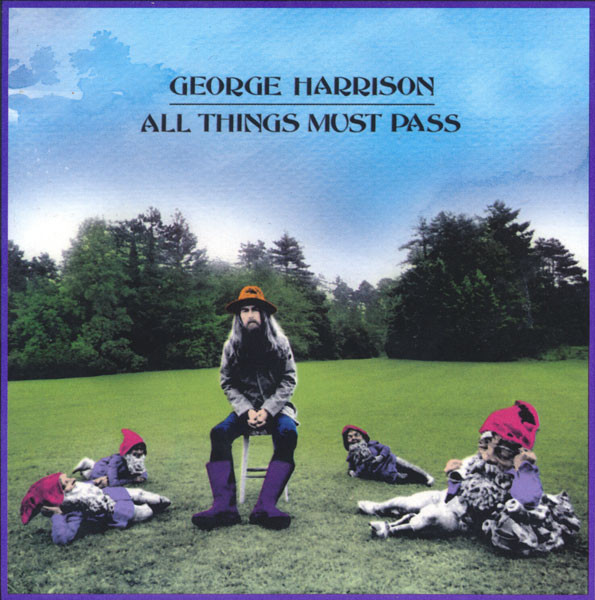

Forgotten Gems: All Things Must Pass

Christopher Rush

I have been spending a good deal of time lately listening to the Beach Boys and post-Beatles solo albums, partly in preparation for a forthcoming elective, but mainly for the pleasure of listening to quality music.  My wife even got tickets for us to see Brian Wilson, Al Jardine, Blondie Chaplin and Co. last August for the 50th Anniversary Tour of Pet Sounds.  I admit I hadn’t listened to that album too much in comparison to the other Beach Boys’ albums, but we did prepare for the concert by listening to it a few times (I was able to snag a copy for myself at a family reunion in July).  Additionally, my father leant me a number of his albums he wasn’t planning on listening to soon, and he even got me my own copy of George Harrison’s debut lyrical album All Things Must Pass.  I have been listening to this one quite a bit, because it is very good.  I don’t think it is fair to compare it to Pet Sounds, but I would be willing to say it is better than any Beatles album.  That’s a very bold statement, I admit, but if you listen to All Things Must Pass, with or without the 30th anniversary bonus tracks, you may at least have to reexamine your view of the Beatles: if John Lennon and Paul McCartney knew they had George Harrison in their band, why was he allowed only a few songs on their albums, especially by the end? especially when so much of All Things Must Pass is far superior to so much of the entire Beatles canon?  But don’t take my word for it (I’m sure you won’t).  Let the work convince you.  For simplicity’s sake, I will touch upon only a few of my favorite highlights, in the hopes you will experience the work in its entirety soon and frequently.

Disc 1

The album begins very relaxed and tranquil, with “I’d Have You Anytime,” a lovely patient song co-composed with Lucky Wilbury (better known as Bob Dylan).  It may seem like an atypical choice for an opener to a rather liberating mega-album, especially considering how many other peppy/rocky songs are included in this opus, but further reflection draws us to the complete propriety of this track as the opening.  “Herein is something wholly unlike what you are used to from the Beatles,” says this opening number.  “I am free.  Time for something new.”  I’m certainly not accusing the Beatles of being insincere, mind you (I’m sure they were, and at the moment of this writing I haven’t seen Ron Howard’s Eight Days a Week, which will likely shed light on their depths), but this opening number, in its almost laconic beauty, subtly yet forcefully presents a fresh sincerity sorely needed not only in those likely painful mid- to post-break-up times (plus all the other crazy things going on in the late ’60s) but certainly as much today.

My favorite songs on disc 1 are “Wah-Wah,” “Isn’t it a Pity,” and “Let it Down.”  Let’s toss “Run of the Mill” in there as well.  That’s not to say “What is Life,” “My Sweet Lord,” “If Not for You,” or “Behind that Locked Door” are bad songs.  Truly, this mega-album does not have any bad songs.  I’m just telling you the ones I like the most.  “If Not for You” and “Behind that Locked Door” are very enjoyable slower, quieter numbers.  So is “I Live for You,” a bonus track from the anniversary edition.  The balance and diversity are quite enjoyable throughout, especially as it is not just the typical slow-fast-slow-fast or fast-fast-slow-fast-fast-slow sort of song lineup.  It’s possible “slow” songs dominate the album, but some of them are tenuously “slow” at best – but none of that matters, since it’s such a great album.  Why are these my favorite of the disc?  “Wah-Wah” I like because of the “wall of sound,” thanks to Mr. Phil Spector.  The musical interludes are especially enjoyable.  Admittedly it’s not the most lyrically profound song, but its jubilant nature and instrumentation make it very fun.

“Isn’t it a Pity” is close to a perfect song in most respects: lyrically it is, if not profound, challenging and thought-provoking; musically, the build-up to the “Hey Jude”-like conclusion is very satisfying, coupled with its extreme patience rhythmically.  “Let it Down” is perhaps more complex lyrically, and its patience is similarly an enjoyable part of this song.  Initially, the “pacing” may seem like the typical “quiet verse”/“loud chorus” contrast, which is not a “pacing” issue at all, really, but the impressive pacing for me is seen better in the spread of syllables throughout the verses, the stark contrast between the slow rhythm of the music and the multiple syllables George is singing on top of the melodic line.  It’s the near-talking relaxed nature of it all that is so distinct for the song, especially when combined with the dramatic, heavily-punctuated (musically) terseness of the chorus (lyrically).

The title of “Run of the Mill” initially gives us the impression it will be about something basic, almost banal, and it almost is: it is your choice how you will live your life, what you will find important, what you will find offensive, how you will lose friendships.  I suspect it may have some additional layers about being in charge, as if we all own our own mills (or the mill is metonymic for life itself) and we have the “run” of it – and while that sort of sounds clever I haven’t fully followed it through (but again I suspect Mr. Harrison had that and more in mind when coming up with this faceted ironic title).  Another reason I like it, in addition to the generally peaceful musical accompaniment, is its similarity to Babylon 5, my favorite show (and also the best of all time, coincidentally enough).  Both the show and this song boil life down to very important, basic truths: it’s your life, stop blaming other people, take responsibility for your choices, remember your choices have significant consequences, and live correctly.

Disc 2

As with disc 1 (or record 1, if you prefer), if I mention a few selections as my favorites that’s only a sign I have accomplished something very difficult, like identifying which bites I enjoyed most from a favorite pizza pie.  All these songs are very good.  It’s possible disc 2 is superior to disc 1, but that’s not something worth investigating seriously.  “Beware of Darkness,” “All Things Must Pass,” “I Dig Love,” and “Hear Me Lord” are among my favorites (assuming I don’t need to reiterate my enthusiasm for “Isn’t It a Pity” version two) of this disc.  “Beware of Darkness” is another nearly-perfect musical experience.  Setting aside for now (as we covertly have done thus far) the Eastern mystical connections of the song, the philosophical truths of this song should not be ignored: watch out for dangerous aspects of life, especially the mental dangers that so easily entangle, disrupt, and damage us.  Illusions (“Maya”), false views of reality, should be avoided whenever possible.  I can’t find anything Biblically wrong with these premises.  Yes, the Bible says it is better to go to a house of mourning than a house of joy, but the Bible also says sorrow lasts for a night yet joy comes in the morning (Psalm 30:5b), also the Man of Sorrows came to give life, and in His presence are joys forevermore and an absence of tears (“but in Thy presence Joy entire” says Milton in Paradise Lost, book 3, line 265).  So, just as Shakespeare says in Twelfth Night, sorrow has its proper time and season but should not move in forever, when George Harrison says “[t]hat is not what you are here for,” it’s hard to disagree with him when he aligns with Milton, Shakespeare, and the Bible.  Additionally, the use of internal rhyme as well as end-line rhyme propels the song along quite rhythmically conjoined with the fine, soothing musical elements of the song.

Remember what I just said about “Beware of Darkness” being near-perfect and its lyrics aligning pretty much with the Bible and all that and the music being very soothing?  I think it was about fifteen seconds ago.  Pretend I just said it all again for “All Things Must Pass” without the “near-” and “pretty much” parts, and you’ve got how I feel about the eponymous track on this mega-album.  It’s likely my favorite of the bunch (perhaps tied with “Isn’t it a Pity”).  It’s a perfect song for when you are feeling down; it’s a perfect song for when you are feeling good (memento mori, everyone, memento mori).

“I Dig Love” is a fun, lighthearted, the-clever-side-of-George-Harrison, unserious groove that adds to the diversity of the mega-album’s musical offerings.  Mr. Harrison has proved irrefragably he can pen moving, intellectually profound songs.  No one should be thinking he is doing that here.  Even so, hidden among the humorous litany of love sources (some of which may be inappropriate but only if interpreted as such), Mr. Harrison slides in a wholly-Biblical “And try to live love, come on, that’s where you should be.”  I don’t think we can argue against that.

“Hear Me Lord” … well, let’s get into it, then, shall we?  We’ve been putting it off all album long.  What should we, as thinking-listening Christians, do in response to George Harrison’s 30-some-year foray into Hindu mysticism and Hare Krishna spirituality?  I’d say … nothing.  Don’t do a thing about it.  Now, I’m not saying YHWH and Krishna are the same Being.  I’m not saying there are many paths to salvation.  I agree with Milton when he has God say “As many as are restor’d, without Thee none” (Paradise Lost iii.289, emphasis added), that no one will return to Paradise apart from the salvific work of Christ.  Surely you know I believe that by now.  But did anyone get around to telling that to George Harrison?  He surely sounds like one wholly receptive to the possibility for humankind’s restoration to Heavenly peace.  Perhaps no one got around to telling him something other than Hinduism.  Would it do any good to excoriate the album now?  No.  Should we tell everyone to stop watching The Muppet Movie?  No.  Should we listen attentively and respectfully, with the ability to, shall we say, cull the wheat from the chaff?  Yes, I think so.  Do I like “My Sweet Lord”?  Sort of.  I think it would be a perfectly true song if you change a few words here and there, but I still think it would be valid to sing most of it directed toward a different audience than what Mr. Harrison intended – and I don’t think that would be “disrespectful” in any way to Mr. Harrison or his art.  Why would redirecting something made in all sincerity “according to one’s lights” as the kids say toward its proper destination be “disrespectful” or other recriminatory words some of you could likely conjure up?  I don’t think it is.  Similarly, I sing “Hear Me Lord” toward YHWH, and perhaps Mr. Harrison did in his way as well.  (One could likely say the same for much of his final album, Brainwashed, which we may explore together soon as well.)  As the final song on this album, not including the Apple Jam EP, we cannot just dismiss the intensity with which Mr. Harrison implores the divine: help me, Lord; forgive me, Lord; hear me, Lord.  It sounds very sincere to me, and I don’t think he is calling upon Rama, or Vishnu, or Brahma, or Shiva, or even Krishna (though I could certainly be mistaken about that).  It sounds very much like a song King David would sing, and so can you, and so can I.  (Those mmmms at the beginning, especially, are fantastic.)

Not much needs be said about Apple Jam: it’s a pretty fun and impressive collection of mostly instrumental numbers, made all the more impressive when you find out who the musicians are playing these riffs.  “Thanks for the Pepperoni” may be my favorite, but that’s not saying much of anything: they are all very enjoyable (though “It’s Johnny’s Birthday” understandably has the least replayability of the bunch, to no one’s discredit).  Sure, there is some general similarity among the tracks, but closer attention can dissect their differences, if you feel up for it.  If not, that’s okay, too: enjoy the riffs from an all-star collection of musicians.

So In Conclusion To Sum Up

All Things Must Pass is a very good mega-album.  Some tracks are better than others, but there aren’t any genuinely “weak” tracks on it.  The more you listen to it, the better it gets, which seems like an unnecessary thing to say about a very good mega-album (sort of obvious, that).  My only complaint is it is on two discs so I have to keep switching them (not a problem for you kids with your digital versions and your hula hoops and your fax machines).  As we have discussed, one does not need to feel bad about listening to George Harrison sing “Hare Krishna”; instead, be reminded of the genuine need so many people have for communion with the divine, then go out and share about the hope you have within you with gentleness and respect.  Then delight in the great diversity of musical and lyrical brilliance of All Things Must Pass.  You will be forever glad you did.

I don’t want to sound hyperbolic (who, me?), but listening to All Things Must Pass, especially attentively for the first time, feels akin to getting back the use of an organ or limb for the first time in a long while.  It’s that good, that useful, and that beautiful.

The Indestructible Human Spirit: Poetry as Survival in Stalinist Terror

Alice Minium

The following from alumna and Redeeming Pandora founding contributor Alice Minium (Class of 2011) is an essay on Journey Into the Whirlwind by Eugenia Ginzburg.

The trait which marked Ginzburg for persecution and the trait which allowed her the resilience to endure it were ultimately the same quality. In a state of total terror, where no one is safe from scrutiny or unfounded punishment, everyone is in danger — but none more so than intellectuals. Terror is inherently a mechanism of absolute unilateral control, not just of government, but of even the individual’s worldview. Nothing has the ability to construct belief systems or alter perception more than literature and art. Ginzburg was a prominent figure in the intellectual and artistic community, and she carried that power. It was that which would ultimately make her dangerous in the eyes of Stalin, and that which would ultimately give her strength enough to survive.

Stalin understood economic control and political control were the same. He strove tirelessly to institute the powerful, unquestionable, complete implementation of socialism. This meant not only in government and economy, but even in the very words we speak to each other and the books we read. Only through conquering the mind and fully allowing socialism to permeate one’s worldview and underlying preconceptions could the true socialist society be born. The most critical battle was fought not with laws but with ideas. Anyone wielding the power to elucidate ideas was, in Stalin’s eyes, the most dangerous soldier of all.

Suspicion against the intelligentsia predates Stalin’s terror, though he most definitely extrapolated from these preconceptions and integrated them into his framework for how to best implement his objective of total control. In The Cultural Front, Sheila Fitzpatrick describes the Old Bolshevik distrust of the academic and artistic community. In those times, things were seen almost entirely through the archetypes of oppressor and oppressed, conspirator and ally, bourgeois and proletariat. Fitzpatrick describes this thinking as one of “binary opposition,” and she quotes Lenin’s famous question, “Kto kogo?” which translates as, “Who will beat who?” Such was the lens through which all social problems and political relationships were seen.

The Old Bolsheviks were suspicious of the intelligentsia because they considered them to be too elite and reminiscent of old bourgeois ways to be in favor of the people. Intellectuals, artists, writers, and thinkers were primary political players during this time, and they overthrew norms and set the framework for new ways of life. These people were, fundamentally, free-minded and unpredictable. Ultimately, as Fitzpatrick puts it, “The Bolshevik Party and the intelligentsia shared an idea of culture as something that (like revolution) an enlightened minority brought to the masses in order to uplift them.” Culture was where wars were won and lost. Culture was the axis upon which the fragile vane of power would shift.

Stalin understood this better than anyone, and the regulation of ideas and art was equally if not more important than his regulation of the economy. Not only must he reconstruct the system, he must recreate the man. He must recreate the very identity of self.

He set about to do so with the same rapid ferocity with which he laid down economic quotas and stringent laws so inflexible efficiency was the primary goal. It was always about the most effective way to totally and completely transform, produce, or control. He illustrated this ruthlessness with his implementation of collectivization, rapid industry-building, impossibly strict regulations, and zero tolerance for economic deviance. He fiercely worked toward realizing socialism by the reconstruction and rebuilding of the systems within Soviet Russia, striving to eliminate anything left of the “old ways,” or anything that might get in the way of absolutely realizing that goal.

Since all things economic are also political, and political weight is the locus for economic power, in order to truly regulate Russia into a socialist utopia once and for all, he had to regulate the political too. Thus, with that same iron fist of efficiency, he began to zealously eradicate the most dangerous of players in the political and social game — the thinkers.

Like tsarist rituals were ruthlessly exterminated, so were those who bore capacity to express and create original notions. The ability to produce new ideas was, to Stalin, also a relic of the oppressive past, and a danger to social order, for what new ideas need there be when we have already found the ultimate idea of socialism? We have no need for ideological critique anymore — that is a relic of times past.

The idea of culture as the tool of an enlightened minority was one Stalin shared with the Old Bolsheviks and intelligentsia, yet he interpreted this idea into policy in an entirely different way. Culture was where ideas were born, and since socialism was the one and only true idea, all of culture should be mandated and consolidated into the Stalinist sphere — all ideas must come through it, and they must not be born elsewhere. In order to embody the socialist goal of Stalinism, humans must operate as appendages of the state, or as elements belonging to and defined by the greater entity of the state, functioning and thinking and producing only for its benefit. There was no place for independent ideas here. Even if a citizen was driven by true party loyalty, and expressed ideas in alignment with the goals of the party, these people were inherently dangerous because of their ability to produce ideas at all. To erase the old ways, we must erase the very idea of the intellectual. Ginzburg, a poet and respected academic, had the misfortune of being exactly that.

The overzealousness of the Great Purges was not born out of cruelty, but out of an importance on efficiency. Everyone, especially high-ranking Party officials and members of the intelligentsia, were condemned without trial or even legitimate cause and thrust into horrifically inhumane conditions. Ginzburg herself was a prominently loyal Party member who was arrested for her former association with a man who wrote a book in accordance with socialist policy at the time, but then later, when policy changed, became treasonous taboo. She was accused of belonging to a terrorist organization that never even existed, and she was tortured, deprived of sleep and food, made to suffer inhumane sanitary conditions, and threatened with her very life if she did not sign her confession to the falsified charges. Ginzburg was outraged, insisting there must be some mistake. Her every human right was being violated, and what they were doing was illegal. This was a reaction shared by many — that such an absurd norm must be some dystopian dream, because it could not possibly make sense. What changed was the law was no longer an external entity of inflexible precepts for maintaining social order — the law was Stalin, and his law was carved out in fear. The cult-like worship of Stalin’s image and the concept of total and absolute control manifested through his Terror bore ironic similarity to the monarchies of old that based absolute authority in the divine right of kings. It had ironically become that which it had sought to replace.

In a 1990 essay in “The Soviet Mind,” Isaiah Berlin writes of the incredible survival of the Russian intelligentsia against all odds. Though his essay refers to the fall of the U.S.S.R., the beautiful truth of that survival remains the same whether it is 1991 or 1939. There is a resilience to the thinker, and an indestructible fluidity to the consciousness of the artist. To be a thinker, an artist, or a scientist, one is always observing, learning, perceiving each sensory experience to its absolute fullest. To an artist, your art is only refined by suffering, and your consciousness is only expanded. Ginzburg never stopped writing, speaking, or thinking in poetry, not ever. She made no universal assumptions about her purpose being defined by circumstance — since her hope is drawn from an internal fount, not an external one, she cannot be deprived of it, and she emerges not only with her identity intact, but also far stronger than she ever was before. Ginzburg survived because of the nature of who she was. As an intellectual, her animus was fueled by suffering. It was food for her art. Her intrinsic gift of perception and a creative mind, which she never ceased to use to their fullest, enabled her to continue living even in a world of the half-death. Even this suffering was food for her soul and enrichment of her experience, and they did not impair but empowered her gift of poetry. She never ceased doing what she did best, not for a minute, because she was an artist, and artists are by nature indestructible for the nature of their craft is lovingly shattering destruction and then intimately, meaningfully weaving each experience back together in a new way, to dissect an organism and carefully reconstruct it as mosaic so it is fundamentally the same yet utterly new, and we know it so much better in an entirely new way. It is not a skill. It is a way of experiencing life. Suffering creates artists. It does not kill them.

The thread of lifeblood to which Ginzburg clings consistently throughout the book is poetry. In times of peril it calms her, in times of despair it inspires her, and in times of bliss it exalts with her. Through everything she witnesses, poetry is her life’s ever-present companion. She reflects at one point her son had once asked her: “‘Mother, what’s the fiercest of all animals?’ Fool that I was!” she cries. “Why didn’t I tell him the ‘fiercest’ was man — of all animals the one to beware the most.”

Ginzburg becomes intimately acquainted with the cruelest, fiercest most profane side of animalistic man. Yet despite our bloodthirsty animal nature, Ginzburg herself exemplifies how very much we stand apart, and humans possess something brute beasts do not. We possess poetry. We possess spirit. Ginzburg, amidst moment of utter terror and suffering, reflects upon and shares with us a story by Saint-Exupery, quoting the words spoken by a pilot lost in a wild storm at sea: “I swear that no animal could have endured what I did.”

No animal did, and no animal ever could. It is easy to look at Stalinist Terror and see the brutish error of our ways and conclude we are animals in nature, but I feel like Journey proves the opposite. You can erase regimes. You can destroy literature. You can censor every word, laugh, movement, and thought. You can strip a human of food, of safety, of family, of dignity, of pleasure for pleasure’s sake, of even her very name itself. You can erase the idea of an intellectual. You can erase the creations of an artist. You can erase the entire memory of a people.

You cannot erase their soul.

Works Cited

Berlin, Isaiah. The Soviet Mind. Harrisonburg: Brookings, 1949. 115-131.

Fitzpatrick, Sheila. The Cultural Front: Power and Culture in Revolutionary Russia. New York: Cornell University, 1992. 1-4.

Ginzburg, Eugenia. Journey into the Whirlwind. Harcourt: Milan, 1967. 118, 358-9.

Shukman, Harold. Redefining Stalinism (Totalitarianism Movements and Political Religions). London: Routledge, 2003. 19-39.

Gender Roles: Why Do They Still Exist?

Katie Kenney

All around the world, people are told to act a certain way and do certain things just because of their gender. Boys are told to like sports from a very young age. Little girls are only given dolls to play with. In middle school and high school, if you don’t live up to what your gender is supposed to be you get bullied and made fun of. If girls are “too involved” in sports, sometimes they aren’t let into certain social groups. If a boy wears a pink shirt to school, he is ridiculed for his choice of fashion. As people get to adulthood, the roles placed on them increase in responsibilities. Men are shamed if they are stay-at-home dads and don’t bring in the main income. Women are treated differently if they can’t cook well for their family.

This greatly affects how many see themselves. People can get hurt emotionally, even physically, because of the roles associated with their sex. For some, it comes to hurting themselves and even suicide because they feel like they don’t fit in. This obviously isn’t a good thing. However, many people don’t see how this hurts anyone. They don’t understand how it can’t be a good thing to have standards to live up to. Well, there are many reasons why.

First, gender roles influence everything a person does almost immediately from birth. If a couple is told they are going to have a baby boy they most likely will incorporate the color blue somewhere, whether it be the clothes, the crib sheets, or the walls. If a couple is told they are going to have a baby girl, then they most likely will incorporate the color pink in the baby’s life. What do colors have to do with a person’s life that makes them so important? Why are they gendered? The only time colors should have genders is in foreign languages we learn, and that’s just so we know how to put them into sentences.

Now as children grow up, gender roles can cause them to act certain ways. If every girl grows up playing with dolls and is told to not get rough with her brother just because she’s a girl, she will think she can’t be rough and loud but has to be gentle and quiet. Girls will grow up thinking they have to stay silent all of the time, because if they get loud or fight for what they think is right they will be unladylike. If they play multiple sports and get really physical then they will be equated to a man for the sole reason she played rough. Women should be able to play rough or play hard without being told those things are characteristics of men.

If a boy grows up and is told to not play with a baby doll because it’s a girl’s toy, then he will live in fear of being associated with typically female things. What is so bad about a little boy, who may be a father in the future, to play with a baby doll and take care of it? There shouldn’t be anything wrong with being kind and caring, yet many men are shamed if they show those signs because those characteristics are typically associated with women. Men are told not to cry because it makes them “less of a man.” They should not have to be scared to show their emotions, yet most men are.

Because gender roles still exist, it can be hard for women to have jobs known as important and big. Not a single woman has ever been president even though forty-three people have sworn into office, six of them with the name “James,” four of them with the name “John,” and four of them with the name “William.” No rule or law says a woman can’t be president. However, being president is almost always seen as a male’s job. Now Hillary Clinton seems to be trying to change that, but I don’t think it will change anytime soon. It has been imprinted in our minds the president is supposed to be a man, just like a person who runs a big company is supposed to be a man.

In the world of business, more men named “John” own and run big companies than all women; all of them. Also, more men with the name “David” run big companies than all women. If there isn’t something wrong with that then I don’t know what else could be. A woman should be able to run a business just as easily as a man can. Women should be seen as capable of being in a big-time work position instead of the secretary standing in the background looking pretty.

A big problem with gender roles is how people see themselves. There are many standards for men and women to live up to. People mainly see the standards of women because they seem to be shown more in our society through magazines, billboards, and other advertisements on TV and other places. There are still standards men feel like they need to live up to, but they are subtler than women’s. On every magazine cover, there are pictures of shirtless men, who are insanely in shape, used to entice women daily. The people who take these pictures and put them everywhere are giving every man the idea he needs to look like that to get a woman to like him. They are shown these pictures of men with six-pack abs and freakishly muscular arms with captions that say something along the lines of women wanting them and pictures of men who don’t work out every day, all day with captions of people being disgusted by the way they look. No one should be ashamed of how they look and publishing companies are completely ignoring that and blowing the egos of fit men up and lowering the self-esteem of the men who aren’t necessarily in shape. Also, because men supposedly are not allowed to talk about how they feel, especially if they feel inadequate, almost every man and boy stays silent in their struggles with seeing their worth.

Now as I said before, women also have standards they feel they need to meet. A lot of magazines today show pictures of women wearing revealing clothing with completely flat stomachs and beautifully clear faces. As women and young girls see these covers everywhere, from stands in a clothing store to the racks in an aisle at the grocery store check-out, they just assume everyone is supposed to look like that and are discouraged when they look in a mirror and realize they don’t. Young girls don’t know the girl on the cover has been photoshopped to an unbelievable extent, they think the woman really looks flawless. They don’t understand almost no one goes through life without at least one pimple and uneven skin. They don’t understand it isn’t completely healthy to aim for and obtain a perfectly flat stomach.

There are many misconceptions with how the “perfect body” looks. Let me tell you something: there is no such thing as a perfect body. What?! Yeah, no such thing can be obtained. People are all made differently with different body types, different looks, and different thinking processes. Nobody is the same so there is no way everyone can look the same, but our society has put it inside our minds we can and should look exactly alike. Every girl wants to have the perfect body that is fit and beautiful. But, we have been trained only to see beauty in what is perfect in societal terms and that leaves out every human being who hasn’t been altered by a computer tool. No one seems to get that anymore. The people we see in magazines aren’t us, and we can’t live up to them. We shouldn’t have to. Women should not feel like they need to look a certain way to be desirable and wanted. Women shouldn’t have to feel like they need to wear makeup to look pretty and buy expensive clothes to look cute, yet many women feel like they do need to. They feel like need to look a certain way to be accepted by others.

Going along with the societal standards of everyone’s bodies, people feel like they need to dress a certain way. Often girls feel like they can’t wear baggy sweatpants and large t-shirts because it isn’t feminine enough for everyone else. Sometimes boys feel like they can’t wear pink or certain shades of purple because they are too girly and not masculine enough for them to be accepted. Girls are told to show off what they got because people need to know they have a nice figure. Boys are told to wear tight shirts that show off their abs if they are fit and to just generally not wear clothes that make you think of women. This just shows men are told not to be like women, not to show characteristics typically feminine. This also shows women are told not to be seen as masculine because it means they aren’t acting the way they are told to. There is so much fear of the opposite sexes being somewhat similar to the other, and I don’t understand why. We were both created by God with the same purpose: to glorify Him and preach His word, so there should be no trouble in being a little bit like the opposite gender.

There are always problems when diagnosing someone with a mental disorder. There are multiple questions you need to answer before you can know what is wrong with them, and sometimes some questions are answered incorrectly, looked over, or misunderstood. It is hard to fully understand what is going on in another person’s mind, but people have done enough research and experiments to understand a part of the human brain and the emotions it makes people feel. However, many people live their lives with mental disorders because no one was able to understand what was going on with them inside their heads.

Many people are not diagnosed with certain disorders because they are acting the way society says they should be based on their gender. ADHD can go undetected in men because some symptoms of it are aggression, impulsive actions, lack of restraint, and many other things associated with how the typical male acts. It is not new for autism to go unnoticed in women because some symptoms are poor eye contact, inappropriate social interaction, and a repetition of speech that all seem like things people who feel like they need to act certain way do. Women are often told to look and act a certain way in social situations so they often are nervous and act similarly to the symptoms of autism. It is unspeakably awful someone is denied the knowledge of having a disorder and the help she needs just because she seems the stereotypical version of her gender. Some boy can go through his entire life overwhelmed by his constant anger and his inability to focus and never know he could’ve gotten help.

Sixty-four years: that’s how long it took for white women to vote after all white men were enabled to. That doesn’t even account for all women of color who had to wait for a longer time to vote, some longer than others. Other rights have been withheld from women even though men were allowed to have them. Women had, and still have, an entirely different set of rules to follow than men. They are often seen as less than men. Women’s opinions can be seen as unimportant or useless just because they are made by women. They are told what they are saying shouldn’t be taken seriously because the emotions they have are clouding their thoughts and making them say things they don’t really mean. Therefore, their voices were unwanted and ignored completely for an exceptionally long time.

Women go through life being told their emotions are invalid. They are told what they’re feeling isn’t real and it is all an illusion they made up in their pretty little head for some attention. Either that, or they are told their raging hormones made them believe what they are feeling is real when it is all just a figment of their imaginations. Many women stop talking about how they feel because of this. Telling themselves they are making everything up, girls think nothing they feel is real. When no one accepts what you think, speak, or feel, what are you supposed to do? How can you continue to be happy in conversations where everyone grinds your opinions to a fine dust? It’s hard to do that, no matter who you are, and it shouldn’t be a normal thing that happens every day to people all the time.

I dealt with how men can be scared to share their emotions earlier and I will again. Men are told to stay emotionless. They are told to have a hard façade and to not let anyone into their minds. Men bottle up all of their emotions because they are so often bullied and shamed for showing some feeling every once in a while. If they are in a rough patch of their lives, they feel like they can’t go to anyone and talk about it. Everyone should be able to talk to someone about the hurt they are feeling and other emotions they have. People should be able to talk to people if they don’t know what is happening inside their minds. But a lot of people don’t. And that is all because of the stereotypes given to them.

Frequently gender roles are forgotten and overlooked. Other times they are neglected because if they were paid attention to, then whatever the person was saying or doing would not seem proficient. At certain times, I guess it is okay, but when it makes people, who want to be themselves and not care about what the social norm is, feel bad, it is obviously not good. When people are scared to share how they feel it is not beneficial. These gender roles aren’t helping anyone. They aren’t making people joyous. They are trying to confine people in boxes that are uncomfortable and impossible to be cheerful in. They try to make people act a certain way because it’s what they believe is right. But they don’t care about all of the self-esteems they have caused to fall so low they will never be lifted all the way back up again or the people who feel like they don’t and never will fit in somewhere. They don’t care and don’t seem to matter, but they absolutely do.

Bibliography

Christina, Greta. “5 Stupid, Unfair, and Sexist Things Expected of Men.” AlterNet, 24 July 2010. Web. 29 August 2016.

“Victims of Sexual Violence: Statistics.” Rainn, 2016. Web. 25 August 2016.

Wolfers, Justin. “Fewer Women Run Big Companies Than Men Named John.” New York Times Company, 02 March 2015. Web. 29 August 2016.

My Parents Hate Me

Tim Seaton

My parents hate me. No, really — they do! They always tell me actions speak louder than words. Their actions are speaking pretty loudly right now! Need a computer for school? Buy it yourself. Got a problem with a teacher? Go talk to her. Want to go on the senior trip to Europe? Start saving now because that is a lot of money. Need a ride to practice? Go get a ride or you’re going to run laps for missing practice. Need a lunch because you forgot yours? Sorry, but it looks like you are going to be really hungry today.

Don’t they care about me? I am their only son after all. I’m supposed to be carrying on their legacy, but how can I do that when it seems like they are really trying to make things harder for me? I thought parents were supposed to be helpful, caring, and compassionate, protecting and providing for their kids. All the other parents are being nice and buying their kids iPhones, iPads, and computers. Why can’t they get me one? Obviously, it is hard being me.

I lost my jacket. It could’ve happened to anyone, but of course it happened to me. Actually, this was the 6th or 7th time this had happened. It was never lost for good until the last time. My parents left me jacketless for the whole winter. They said I could have a jacket when I bought a new one with my own money, which I eventually did. I finally got it when there was a big end of winter sale. Then there was that computer I needed for two classes at school. This wasn’t for gaming, it was for school. Needed. For school. It seemed reasonable to me they would buy me this computer. After all, this was mandatory for those classes. I’ll give you one guess about who bought that computer. With his own money. Me. Not my parents.

My parents have decided to make me pay for things other parents may not make their kids pay for. They are using words like “money management” and “stewardship.” Basically, stewardship is taking care of the resources we have. It is also using our money wisely. I guess it makes sense I would have to make money and spend it to learn about stewardship.  This is important to them because they have known people who have not spent their money wisely or taken care of their things. Therefore, they have not had money in times of need. They don’t want that to happen to me.  It will also help down the road when I am in my twenties and thirties. Some people don’t know how to manage their money, so they are not prepared to live independently. They have had to live with parents or friends. They should have experience saving and spending, so they can decide what to buy and what not to buy and understand how much things cost and how quickly money is used up.

To my parents, and yes, to me as well, this is related to stewardship. Stewardship is also important to God. The Bible shows stewardship in Genesis 2:15. “Then the Lord God took the man and put him in the Garden of Eden to work it and keep it.” Man had to manage the garden’s resources just like we have to do now with our resources. Stewardship is shown in this verse because man is having to grow food in the garden to live and so they are having to manage their resources.

Then there was my retainer. I broke it. It was only out of its case for four hours, but that was long enough. Snap went my retainer. I had to pay for this one as well, and let me tell you, it was expensive. $220 worth of expensive. Did I know it should always be in its case, especially when I was at work with a backpack full of heavy books?  Well … yes. Was I a little careless and irresponsible? Yes.

Turns out, everything has consequences. Sometimes they are small and sometimes they are big, but they are always there. My parents gave me a talk about responsibility. Part of responsibility is showing care over things and accepting consequences as they come. The consequences in this case were pretty obvious. Of course, not all consequences are financial. Sometimes it could be the loss of screen time or the ability to hang out with friends. The bigger goal is to help avoid the potential dramatic life changing consequences from poor decisions made later in life by helping me recognize consequences and learn to be responsible now.

My parents say responsibility is important, and I guess I can see it. Turns out, God agrees with my parents. He shows us He does in Romans 6:23. “For the wages of sin is death, but the gift of God is eternal life in Christ Jesus our Lord.” Sin has consequences for which we have to take responsibility. Thank goodness God stepped in for us and took the consequences of our sin on Himself.

Now, they are going to make me pay for my senior trip to Europe. It takes a long time to save up that much money! I started in sixth grade. My sister did too. She had to pay for all of her trip, so I know my parents are serious about me having to pay for all of mine. I love to see how much money I have earned over a pay period, but I already know it is earmarked for something else. Ugh.

Why would they make my sister and I do this? I guess they are just trying to help us learn how to plan ahead, organize, and work toward a goal. Later in life, I will have to know how to plan ahead. For example, if I want to take a nice vacation, I will need to have some money saved up to be able to take it. If a car breaks down unexpectedly or a relative dies, I need to be able to cover the expenses. When we are not aware of long term possibilities and haven’t planned for both known and unexpected needs, we won’t be prepared for them.

My parents also want us to set long term goals and practice working towards them. I’ve had odd jobs for several years, but this summer I had to get a real job to start earning toward the trip. This meant I had to take time to fill out an application, complete forms for underage labor and safety, and take almost all of my paychecks directly to the bank.

God must think my parents are right because He talks specifically about planning ahead. He says in Luke 14:28, “For which of you, desiring to build a tower, does not first sit down and count the cost, whether he has enough or not.” God must want us to be wise and be able to know how to plan ahead. Otherwise he wouldn’t give us this parable teaching us to plan ahead.

I really want a phone. All my friends have one, so why not me? I have promised to take care of it and offered to pay for it. I have begged for years to get a phone, but every time the answer is “no. You can get one when you get your driver’s license.”

Why can’t I get a phone? I know I don’t absolutely need one, but it sure would be convenient to have one! They just tell me I have to be patient. Instant gratification isn’t all that important and it isn’t really healthy either, because it gives an unrealistic view of real life. Patience is the opposite of demanding instant gratification and is the capacity to accept delay without anger. My parents seem to think having patience and waiting for good things will help me understand the real value of things. And so I wait.

God must really enjoy proving my parents right because he gave us Proverbs 14:29. The first part of this verse reads, “Whoever is patient has great understanding.” When we are patient, we will grow in understanding of the important things in life.

I worked hard this summer, sitting outdoors and sweating in the hot sun for a long time. I had to deal with grumpy people who didn’t care about the pool rules I was supposed to be enforcing. I didn’t get to do a lot of fun things with my friends. A lot of days, I didn’t even get to hang out with them because I was working. I didn’t get to go fishing with them. They got to have all the fun while I was working at a lousy pool. Why was I doing this? I have to pay for my senior trip. To do that, I have to have a job.

My parents insist I will enjoy it more if I pay for it. Unfortunately, I think they might be right. Many people think we value things more we earn ourselves or spend our own time to attain, rather than it just being given to us. Appreciation of the true value of things is important.

Appreciation has been described as the recognition and enjoyment of the good qualities. One verse I relate to this is Psalm 110:4. “Enter His gates with thanksgiving and His courts with praise. Give thanks to Him, bless His name.” Our appreciation for Him should grow daily as we see what new things He has in store for us. We should also be appreciative of what our parents do for us, even if we don’t think it was helpful at all.

So my mom didn’t bug me about writing this article. She reminded me a couple times, but that was it. Of course, this means tonight, the night before it is due, I have to stay up very, very late. Tomorrow, I will be really tired and probably grumpy. I have done this multiple times. I have neglected projects so my work hasn’t been my best. I haven’t studied for tests because I figured I already knew the information … but my grades said I didn’t. And my mom just sat by and let me fall flat on my face like this!

My parents think it’s a great idea to let me do my work … or not … and get the grade I earn. They are OK with teachers giving me a bad grade if that’s what I earned! They expect me to work with excellence, so when I get a bad grade and haven’t worked up to my potential, there are always unpleasant consequences.  They talk about learning from my mistakes. I should make a mistake once and hopefully never make it again.

God must really approve of my parents because He gave us another verse that agrees with them. Colossians 3:23 says, “Whatever you do, work at it with all your heart, as working for the Lord, not for human masters.” No matter what we do, we should try our best and do it for God’s glory, not our own. When we do excellent work, we are showing God we are going to do our best for Him.  When we don’t, the natural consequences are great learning tools.

Guess what happened when my teacher marked me as tardy but I didn’t think I was? I had to go talk to him on my own after school. And that time I didn’t get the grade I thought I deserved? I had to take it up with the teacher on my own.  And then there was the time I didn’t get to play in a game. They sent me off to go talk to my coach by myself.

My parents are making me take up my own problems with others. I always dread this and it feels incredibly hard to do. As I do it more and more, it gets easier and easier every time. My parents tell me this is building my independence. In real life, I will have difficult situations I have to deal with, so I should start practicing and learning now when my parents can still back me up.

One verse that points to practicing things is Philippians 4:9. “What you have learned and received and heard and seen in me — practice these things, and the God of peace will be with you.” This points out practicing things is good preparation for real life. My parents would say it is even better to practice when you have someone to back you up. Once again, God and my parents are in agreement.

So maybe my parents don’t hate me after all. Now I realize the reason my parents have been seemingly being mean to me was because they love me. What’s more important to them than an easy life and having the things I want is building a strong character that will prepare me for life and make me into a man who lives the way God wants me to live. It’s hard being me, but I wouldn’t have it any other way.

Music and the Brain

Emma Kenney

Music has been an important part of society for centuries. From the earliest human civilizations to today, music has been used to express emotion and keep record of both historical events and the way of life of a certain people or era. It is hard to deny music has an impact on human culture, but what impact does music have on the human brain?

Research conducted by the Massachusetts Institute of Technology answers the long posed question, “Does music impact its own section of the brain, or does it simply affect the portion of the brain involving speaking and responding to the speech of others?” Their studies shows while music causes multiple areas to react, it specifically causes one to react only associated with music, not with speech or other sounds within one’s environment. A report written by Anne Trafton on the matter explains:

The finding was enabled by a new method designed to identify neural populations from functional magnetic resonance imaging (fMRI) data. Using this method, the researchers identified six neural populations with different functions, including the music-selective population and another set of neurons that responds selectively to speech.

“The music result is notable because people had not been able to clearly see highly selective responses to music before,” says Sam Norman-Haignere, a postdoc at MIT’s McGovern Institute for Brain Research.

“Our findings are hard to reconcile with the idea that music piggybacks entirely on neural machinery that is optimized for other functions, because the neural responses we see are highly specific to music,” says Nancy Kanwisher, the Walter A. Rosenblith Professor of Cognitive Neuroscience at MIT and a member of MIT’s McGovern Institute for Brain Research.

According to an article published by the National Institute of Health, music can actually provide relief to those in physical pain: “Several well-controlled studies have found that listening to music can alleviate pain or reduce the need for pain medications. Other research suggests that music can benefit heart disease patients by reducing their blood pressure, heart rate and anxiety.” This can be partially linked to the calming effect music is able to produce.

This can be seen when you examine students who listen to classical music before tests. Studies have shown this specific type of music causes the brain to release neurons that encourage the human body to relax and the mind to combat anxiety and stress. Professional bassoon player Lawrence O’Donnell wrote an essay explaining the effects of this. His essay also describes how music is tied to recall. Students who listened to the same genre of music while studying and taking a test received higher marks than those who listened to one genre of music while studying and a different genre while taking the test. He goes on to explain this is tied mainly to the impact of music tempo, not to the style of music itself. O’Donnell states:

One simple way students can improve test scores is by listening to certain types of music such as Mozart’s Sonata for Two Pianos in D Major before taking a test. This type of music releases neurons in the brain which help the body to relax. The effectiveness of Mozart’s sonatas can be seen by the results from an IQ test performed on three groups of college students. The first group listened to a Mozart sonata before taking the test. The second group listened to a relaxation tape before their test. The third group did not listen to anything before the test. The first group had the highest score with an average of 119.

The second group ended up with an average of 111, and the third group had the lowest score with an average of 110.

William Balach, Kelly Bowman, and Lauri Mohler, all from Pennsylvania State University, studied the effects of music genre and tempo on memory retention. They had four groups learn vocabulary words using one of four instrumental pieces — slow classical, slow jazz, fast classical, and fast jazz. Each of the four groups was divided into smaller groups for the recall test. These sub groups used either the same (i.e., slow classical, slow classical) or different (i.e., slow jazz, fast classical) pieces when taking the recall test. The results did show a dependency on the music. Recall was better when the music was the same during learning and testing. These same researchers did another test which [sic] restricted the changes in the music to just tempo (i.e., slow to fast jazz) or just genre (i.e., slow jazz to slow classical). Surprisingly, the results showed that changing the genre had no effect on recall but changing the tempo decreased recall.

The effects of music on the brain as a whole become increasingly more complex and impressive when you take a closer look at how it works. It is common knowledge that when music, like sound, enters the brain it is processed by certain nerves; however, it is only recently we have stated to see how that process works for music specifically. The National Institute of Health states:

Scientists have long known that when music and other sounds enter the ear, they’re converted to electrical signals. The signals travel up the auditory nerve to the brain’s auditory cortex, which processes sound. From there, the brain’s responses to music become much more complex.

Over the past decade, new brain imaging techniques have shown that music activates many unexpected brain regions. It can turn on areas involved in emotion and memory. It can also activate the brain’s motor regions, which prepare for and coordinate physical movement.

Studies conducted by Dr. Petr Janata, a neuroscientist from the University of California Davis, show music especially has an impact on a portion of the brain called the medial prefrontal cortex. This portion of the brain has a role in both decision making and retaining memories. Dr. Janata used a process called functional magnetic resonance imaging, or fMRI, to examine the brain activity of certain individuals when they listened to music. Dr. Janata’s studies essentially showed the medial prefrontal cortex is capable of linking familiar music to the memories of an individual, especially those the individual finds important. In Dr. Janata’s words:

Dorsal regions of the MPFC (Brodmann area 8/9) were shown to respond parametrically to the degree of autobiographical salience experienced over the course of individual 30 s excerpts. Moreover, the dorsal MPFC also responded on a second, faster timescale corresponding to the signature movements of the musical excerpts through tonal space. These results suggest that the dorsal MPFC associates music and memories when we experience emotionally salient episodic memories that are triggered by familiar songs from our personal past. MPFC acted in concert with lateral prefrontal and posterior cortices both in terms of tonality tracking and overall responsiveness to familiar and autobiographically salient songs.

The effects of music on the medial prefrontal cortex can explain why those with Alzheimer’s are able to recognize music from their past even after other memories have been lost. Dr. Janata’s studies have shown this portion of the brain is one of the last to deteriorate, meaning the memories associated with this region, those revolving around music, will remain even after others have been forgotten.

Music has an even greater impact on the brains of those who play instruments. Dr. Gottfried Schlaug conducted research with Dr. Christian Gaser that shows the brains of professional musicians not only have thicker bundles of nerves connecting the right and left sides but have more grey matter as well. This is significant when one takes into account that the grey matter of the brain is responsible for muscle control and sensory perception; that is, it is responsible for functions such as self-control, speech, and decision making. Dr. Schlaug states:

In comparing these three groups (professional musicians, amateur musicians, and non-musicians), areas with a significant positive correlation between musician status and increase in gray matter volume were found in perirolandic regions including primary motor and somatosensory areas, premotor areas, anterior superior parietal areas, and in the inferior temporal gyrus bilaterally. A positive correlation means that the gray matter volume is highest in professional musicians, intermediate in amateur musicians, and lowest in non-musicians.

Dr. Schlaug has also researched whether music has an effect on the brains of children. His studies show music has as much of an effect on children as it does on adults. Children who took 15 months of music lessons experienced changes to the portion of the brain responsible for motor control and human rhythm. This tie between music and the brain could be key to improving the motor skills of those with conditions relating to a loss of movement. The children who took music lessons also had a greater ability to execute and control finger movement and multi-task. Dr. Schlaug states:

As part of an ongoing longitudinal study of the effects of music training on brain, behavioral, and cognitive development in young children — here we investigated structural brain changes in relation to behavioral changes in young children who received 15 months of instrumental musical training relative to a group of children who did not…. As predicted, Instrumental children showed greater behavioral improvements over the 15 months on the finger motor task and the melody/rhythmic tasks, but not on the nonmusical tasks. In addition, Instrumental children showed areas of greater relative voxel size change over the 15 months as compared to Controls in motor brain areas, such as the right precentral gyrus (motor hand area), and the corpus callosum (4th and 5th segment/midbody), as well as in a right primary auditory region (Heschl’s gyrus). These brain deformation differences are consistent with structural brain differences found between adult musicians and non-musicians in the precentral gyri, the corpus callosum, and auditory cortex…. These results are important from a functional perspective since these brain regions are known to be of critical importance in instrumental music performance and auditory processing. For example, the primary motor area plays a critical role in motor planning, execution, and control of bimanual sequential finger movements as well as motor learning.

A similar study was conducted by the Journal of Neuroscience. Their research shows on top of helping children with motor skills, playing an instrument can actually help improve a child’s ability to process information. This study followed at risk children as they participated in a music program. The behavior of these children improved greatly as they continued to be allowed to play music. This music program, called the Harmony Project, partnered with Dr. Nina Kraus to study the effects of music on the brains of the kids and whether learning an instrument actually helped with the ability to process and therefor understand human speech.

An NPR article written by Cory Turner describes the experiment of the two as follows:

Harmony Project is the brainchild of Margaret Martin, whose life path includes parenting two kids while homeless before earning a doctorate in public health. A few years ago, she noticed something remarkable about the kids who had gone through her program.

In other research, Kraus had noticed something about the brains of kids who come from poverty, like many in the Harmony Project. These children often hear fewer words by age 5 than other kids do.

“And that’s a problem,” Kraus says, because “in the absence of stimulation, the nervous system … hungry for stimulation … will make things up. So, in the absence of sound, what we saw is that there was just more random background activity, which you might think of as static.”

In addition to that “neural noise,” as Kraus calls it, ability to process sound — like telling the difference between someone saying ba and ga — requires microsecond precision in the brain. And many kids raised in poverty, Kraus says, simply have a harder time doing it; individual sounds can seem “blurry” to the brain.

Working with Harmony Project, Kraus randomly assigned several dozen kids from the program’s waitlist into two groups: those who would be studied after one year of music lessons and those who would be studied after two years.

And what she found was that in the two-year kids, the static didn’t go away. But their brains got better — more precise — at processing sound. In short: less blur.

It goes back to pitch, timing and timbre. Kraus argues that learning music improves the brain’s ability to process all three, which helps kids pick up language, too. Consonants and vowels become clearer, and the brain can make sense of them more quickly.

Studies conducted by John Hopkins Medicine show listening to music or playing an instrument has the same effect on the brain as working out has on the body. It can be extremely useful in delaying the aging process of the brain. JHM states:

If you want to firm up your body, head to the gym. If you want to exercise your brain, listen to music.

“There are few things that stimulate the brain the way music does,” says one Johns Hopkins otolaryngologist. “If you want to keep your brain engaged throughout the aging process, listening to or playing music is a great tool. It provides a total brain workout.”

“Music is structural, mathematical and architectural. It’s based on relationships between one note and the next. You may not be aware of it, but your brain has to do a lot of computing to make sense of it,” notes one otolaryngologist.

Listen to what your kids or grandkids listen to, experts suggest. Often we continue to listen to the same songs and genre of music that we did during our teens and 20s, and we generally avoid hearing anything that’s not from that era.

New music challenges the brain in a way that old music doesn’t. It might not feel pleasurable at first, but that unfamiliarity forces the brain to struggle to understand the new sound.

It is easy to see music has a large impact on the brain. It helps with things ranging from muscle control to memory retention to improved speech and self control. As scientists continue to make new discoveries involving music and the brain, we might one day unlock a whole new way of life revolving around the vast effects of music on the human brain.

Bibliography

Euston, David R., Aaron J. Gruber, and Bruce L. McNaughton. “The Role of Medial Prefrontal Cortex in Memory and Decision Making.” Neuron. Cell, 20 Dec. 2012. Web. 1 Sept. 2016.

Gaser, Christian, and Gottfried Schlaug. “Brain Structures Differ between Musicians and Non-Musicians.” JNeurosci. Society for Neuroscience, 08 Oct. 2003. Web. 1 Sept. 2016.

Hyde, Krista L., Jason Lerch, Andrea Norton, Marie Forgeard, Ellen Winner, Alan C. Evans, and Gottfried Schlaug. “The Effects of Musical Training on Structural Brain Development.” Annals of the New York Academy of Sciences 1169.1 (2009): 182-86. Web.

National Institute of Health. “Music Matters for Body and Mind — News in Health, January 2010.” U.S National Library of Medicine. U.S. National Library of Medicine, n.d. Web. 01 Sept. 2016.

O’Donnell, Laurence. “Music and the Brain.” Music and the Brain. N.p., n.d. Web. 01 Sept. 2016.

Petr Janata. “The Neural Architecture of Music-Evoked Autobiographical Memories.” Oxford Journals. Oxford, 24 Feb. 2009. Web. 01 Sept. 2016.

Robertson, Sally. “What Is Grey Matter?” News-Medical.net. N.p., 01 Nov. 2010. Web. 01 Sept. 2016.

Trafton, Anne. “Music in the Brain.” MIT News. Massachusetts Institute of Technology, 16 Dec. 2015. Web. 01 Sept. 2016.

Study Hard and Study Well

Destiny Phillips Coats

How many people would honestly say they are always excited to study? From my experience, I do not think many would say they are. For most people, studying is a pain, a hassle, and a boring-but-necessary  activity. If one desires to do well in school, or in a discipline, she must study. Numerous study tips and tricks have been developed over the years to make studying more enjoyable and easier for students. Schools find study tips and tricks so important most schools have implemented in their curricula a “Study Skills” class, purposed to teach students the proper and most helpful ways to study. As a student who has gone through this type of class, studying while listening to music was never proposed to me. Am I the inventor of this crazy study phenomenon? — no, probably not. However, I would love to share my personal experience and research with you, to possibly make future students’ study sessions a little more enjoyable.

Growing up in a home with four other very loud people, it is sometimes very hard to find a quiet place where I can dive into my books. Come do your chores! Where’s my shirt?! MOM! Stop that Tim! All these things and more are screamed outside my door at the most inconvenient of times — when I am studying. Times have definitely changed since I was in elementary with the constant advancement of technology. At 10 years old, all I could think about was getting a CD player for Christmas. Now seven-year-olds are begging their parents for phones, iPods, tablets, and computers. All this is to say, music is readily available to children of all ages through different formats. My favorite type of music growing up, surprisingly, was classical. I was a competitive dancer as a child who listened to classical music constantly in dance class. I eventually learned to love it! Classical music made hard dance classes more bearable because of the soothing tones of classical music. It took me a while to realize this genre of music could soothe and calm my mind during study sessions. Probably due to anger and frustration, I would close my door during my study sessions because of the crazy amounts of noise in my house. I would then turn on my radio to my favorite classical music station. When I studied, I found myself doing this on a regular basis. Pretty soon, I found it difficult to study without music. The music did three things for me: 1) calmed my mind to focus, 2) drowned out noise in the background, and 3) made studying more enjoyable.

In multiple ways people become distracted while doing a task. I like to classify distractions into three categories: auditory, verbal, and thought distractions.  From my own personal experience, I desire a quiet environment to eliminate auditory and thought distractions and a still environment to eliminate visual distractions. As I have talked and observed others’ productivity in different study environments, I have seen this to be true for them as well. Who desires a noisy or distracting background while they are studying? No one does. It has been scientifically proven we as humans are capable of multitasking, but no matter how hard we try, our full attention cannot be placed on more than one thing at a time. Our mind processes everything we hear and see no matter if we want it to or not. It is a natural involuntary brain function; therefore, in a study session it is important to keep the mind focused on as few things as possible. A way to drown out background noise like talking or the clicking of a keyboard is to play soft music through headphones.

Auditory distractions take our attention/focus away from a task because we hear things that do not pertain to what we are doing. I truly believe auditory distractions are the hardest distractions to cope with during a study session. Studying is a voluntary action. We as students must choose to study. Hearing, on the contrary, is an involuntary action. Humans do not have the ability to turn on and off the function of hearing. They can, however, put themselves in an environment where certain noises or verbiage is not used or encountered. Because hearing is something we cannot control, being in an environment where people are talking or making noise can cause students to lose focus during a session, causing them to waste huge amounts of time. For example, I have been in multiple situations where I was writing a paper and people were talking in the background. From their noise, I in turn lost my focus and typed words they were saying instead of my generated thoughts about my paper. In some cases, I have caught myself as this mistake occurred, but there have been times where I have not noticed until I was rereading my paper later. This is an example of how auditory distractions can be very detrimental in our productivity as students as we study, causing us to lose focus and waste time.

Because we are all different, we all are attracted to different things. Similarly, we all like different types of music. Studying to heavy metal probably will not get most people to their goal of memorizing 50 vocab words by the end of their two-hour study period. However, many genres of music could be great background to a productive study session. Within the many genres of music are tempos — fast and slow. Anyone’s favorite type of music can then become the background to a relaxing and enjoyable study session — but which one is the best?

Classical music can be basic in the number of instruments or very complex if played by a large orchestra. Listening to solo piano music relaxes the mind with its smooth rhythms and tones. Neither lyrics nor various sounding instruments are used, so it’s easy to focus on other things while hearing a soothing repetitive noise, like piano, in the background to a study session. This light music in the background would not be some students’ preferred silence, but for others it can be more soothing and easy to study to when their constantly-generated thoughts are the only things they can hear. In my personal experience, my mind constantly thinks about tons of random things no matter what topic I am trying to focus on. Classical music has helped me drown out my random thoughts and background noise, leaving me solely to focus my mind on what is in front of me. This version of a peaceful background has aided me in being the most productive during my study sessions. Some people might say classical is boring, it puts me to sleep, or I cannot sing along. These all might be true, but under different circumstances than purely listening to music, one can potentially find classical to be the most enjoyable and helpful while studying.

In the previous portions of this paper you have read about ways to minimize visual distractions by choosing a prime location to study in. Music as a study aid could be seen to contradict the entirety of my paper, but not if it is classical. Classical minimizes auditory and thought distractions by drowning out random noises around you, your thoughts, and the chatter of others near you.

Now to take a quick step outside the realm of music, the other component to calming the mind for a great study session is to have little-to-no movement surrounding the student. This is an example of limiting/expelling visual distractions. Unlike our ears, ours eyes give us two options: see or do not see. If your eyes are open, you will see everything within your sphere of vision. If your eyes are closed you see nothing. How many people study with their eyes closed? Not many, therefore the only option when studying is to keep them open. For me, kids walking or moving around a lot in a room is just as distracting as someone talking to her neighbor beside me in class or my mom on the phone at home. Like I mentioned earlier, the mind can only focus on one thing at a time completely. Movement is distracting, plain and simple. The question is why? Why is it so easy to be distracted while studying? Ultimately, I believe it is because studying at its core is boring. Studying is not something we want to do; it is something we have to (should) do. Anything outside of studying is distracting to us because it is what we would rather be doing. What can be done to avoid catching your attention on something else within your peripheral view? First things first, find a space that is typically slow in traffic. At school this is sometimes hard to do when you are typically assigned classes or pick a study hall open to other students. In a school environment or environment where people are around I recommend you sit in a seat in the front that faces a wall. Sitting behind other students puts them in your direct line of sight. If they finish their work, or have nothing to start with, them talking to their neighbor or fiddling with their things can be distracting to see as well as hear. Listening to music can drown out this noise and facing another direction where there will be little-to-no movement is the best way to avoid visual distractions.

What do you do if you are at home? A classic study area in most homes is the kitchen table. At my house my brothers and I all brought our homework to the kitchen table after school. Our mother would then join us to act as our stand-in teacher at home. This of course was great when her help was needed to complete a basic assignment. Now that I am older, listening to others get help from a teacher can be distracting while I am trying to work on my own materials. I have now graduated to studying in my room or wherever I choose. In my opinion you need to study in a room with the fewest possible distractions. For me this means I will study in my room, on the floor, with the door closed, facing the other side of my room. Why so specifically in that location, facing that direction? Once again, students need to minimize distraction. The best way to do this is to prepare for the worst. With a family of five who has no respect for personal space, I have learned to take many precautions when preparing to study. In my house, my room is the farthest away from a television. Growing up I was never allowed to watch TV in my room or during the school week. This tradition from my elementary years has stuck with me all the way to my last year of high school. It is extremely important not to study near a TV. If you are near a TV when you get frustrated or take little breaks, the temptation to turn on the TV is so close to you. Sometimes we tell ourselves we will take a five-minute break. If television gets involved, that five minutes turns into a 30-minute show or a two-hour movie we just could not turn away from. Do NOT tempt yourself. Put it as far away as possible and you will reap the benefits of that productive study session later.

I do not have the luxury of have a desk in my room to do work. This is primarily because my room is big enough for one small human like myself and that is about it. The next ideal location to study would be your bed, right? No! Because I am human and a student I love to sleep as much as possible. Throughout the school year I get about 7 hours of sleep per night. That is not enough; therefore, I am tired when I return home from an 8-hour school day. Going to my bed to study is just asking to be unproductive. All I can hear is my bed calling out to me asking me to sleep peacefully and get some rest. How do I avoid this temptation? I instead sit on the floor. Sitting on the floor gives me a lot of space to spread out my notes and textbooks while also keeping me awake. The floor is hard, similar to a chair and in direct opposition to a nice soft bed keeping my focus on the task at hand versus taking a nap.

As of this writing, I am now in my room, away from noise and on the floor, away from my bed. What else can I do to avoid visual distractions? Close the door and face the other direction! I of course would advise locking the door, but some parents do not allow locked doors, which is totally fine, so instead just face the other direction. By closing your door, you are establishing a closed area where it is solely you and your books. You will not be distracted visually by what is going on outside your door because you cannot see it! Stopping there is perfect for some. For me, however, I cannot look at the door. Looking at the door is another form of distraction and temptation. Looking at the door causes me to think about leaving and doing something else, thus I can be tempted to do just that — abandon my study session. So, I have to face the other way. This is a perfect example of calming your mind as best you can to get rid of as many visual distractions as possible to make for the most productive study session possible.

God’s intelligent design of man includes five senses: smell, taste, sight, touch, and hearing. Our senses allow us to interact with/experience things from the outside world. Because there are so many ways to interact outside of ourselves involuntarily visually and aurally, it is very easy to become distracted by things passing over our eyes and through our ears. Another way to be distracted is with our thoughts. God made us intellectual beings, giving us the ability to mentally walk through any situation. These abilities are dually a blessing and a curse when one is trying to study. Hearing random noises, seeing people having fun in front of you, or thinking about what we are doing later are all issues we come across as students trying to study. Do we wish all these distractions went away so we can accomplish our tasks? Of course, but we do not wish our sensory functions to disappear completely. Instead, we figure out ways to work around these distractions and best utilize our God-given abilities. By reading this paper, I hope you have possibly developed new ways to approach your study sessions to eliminate/minimize auditory, visual, and thought distraction as best you can so your future study sessions can be as best as humanly possible!