Monthly Archives: May 2022

Three -Isms “Lacking” in Christian Education

Amy Rush

Introduction

From the world’s perspective, “Christian education” is many things — none of them positive, if it is even considered genuine “education” at all!  Genuine education, according to worldly criteria, resembles essentially the opposite of what Christian educators present to their students on a daily basis, especially in primary areas of religious and philosophical thought, such as why are we here? what is the purpose of life? what are right and wrong? and such like that.  This paper identifies three major philosophical paradigms undergirded worldly, or secular, education today, three areas “lacking” in Christian education: secularism (in general), relativism, and modern pragmatism.  “Lacking” is used in an ironical sense, as the world would certainly deem Christian “education” as lacking these important areas … yet Christian education, conversely, replaces these with infinitely superior ideas and values, as shall be discussed below.

Lack of Secularism

Secularism, which in reality is atheistic, promotes the idea “the needs of man” are what are most important.  When man’s needs are made the chief concern in life, then science and technology are looked to as the source of what will save us from stagnation.  Since secularism claims there is no “sin” to be saved from, man focuses on saving himself, given enough education, time, and the elimination of transcendental notions (like Biblical morality).  Secularism looks at the existence of man as an accident with no great purpose beyond survival, though making the world a better place is often substituted, since most people don’t like to take the “logic” of secularism to its extreme yet necessary conclusions.  Since the human race looks to itself for all of the answers, it exhibits beliefs such as majority rules, whoever is most loudly offended is right, and truth is subordinate to political power and/or popular opinion.

Since secular schools are established and run by the government in a society that embraces, and even promotes secularism, it is not surprising these schools reflect the same philosophy.  Faust (2005) wrote, “Secularism does not accept many things as absolutes. Its principal objectives are pleasure and self-interest. Often, those who embrace secularism have a different look about them.”  Teaching evolution as truth, working hard to eliminate Biblical/Christian elements and influences from education, and making decisions based on the desire to “not offend” are all evidences of the embrace of secularism in schools.

At the opposite end of the spectrum is Christian education.  Christian schools should not only “lack” secularism, but also it should work hard to combat it as each student and faculty member struggles against it, battling to put off the old self and put on the new, since they were “created after the likeness of God in true righteousness and holiness.” (Eph. 4:22-24)  Unlike the man-centered focus of secularism, Christian education is completely God-centered.  Pazmino (2008) states, “Education at its best must be God-centered, seeing God as the source. Educators are called to integrate all areas of knowledge with God’s revelation” (p. 33).  Rather than seeking to gain happiness and doing whatever it takes to accomplish it, Christian education is about teaching students that glorifying God and living in obedience to and in relationship with Him are where true happiness and right living are found.  C.S. Lewis (1952/1996) wrote:

God made us:  invented us as a man invents an engine.  A car is made to run on gasoline, and it would not run properly on anything else.  Now God designed the human machine to run on Himself.  He Himself is the fuel our spirits were designed to burn, or the food our spirits were designed to feed on.  There is no other.  That is why it is just no good asking God to make us happy in our own way without bothering about religion.  God cannot give us a happiness and peace apart from Himself because it is not there.  There is no such thing (p. 54).

What does this look like in Christian education?  It should be much more than having Bible class or chapel.  Everything is to be taught in the framework of the Bible, the character of God, and the gospel.  Pazmino (2008) describes it like this, “…Christian education involves the effort to share biblical content, to grapple with its implications for life, and to suggest avenues for appropriate response” (p. 24).   Christian education replaces secularism with a God-centered focus for not only education as an enterprise but for the very existence of the students (and teachers) as people.  This significant difference is, as with the other areas evaluated later in this paper, not a “lack” at all, but a life-affirming, reality-conforming superior mode of education and philosophical attitude.

Lack of Relativism

Although our society increasingly embraces relativism, it should be missing in Christian education.  Relativism is the belief there is no absolute truth, no one “right” way to be a human (other than not hurting or offending people).  With this philosophy comes the idea people should unapologetically be themselves; it insists we have no right to impose our views on others and declares truth is determined by society at the time, based on its evolutionary progress.  In Wisdom and Eloquence, Littlejohn and Evans describe the current state of modern, secular education like this:

Modern education has replaced faith as a foundational element of certainty with skepticism.  It seems ironic, but the result of rationalism or anti-supernaturalism in education is a great deal of uncertainty about what is real.  Students in most schools these days are taught a confusing epistemology in which certainty, especially regarding anything outside of the sciences, is looked upon as a sign of intellectual arrogance.  Knowing and depending upon a cultural tradition equates with intellectual laziness (p. 25).

This presumed “arrogance” encourages students to view traditional sources of knowledge and authority with such skepticism, promoting their own ill-educated, un-experienced views and opinions on how life should be as equally valid if not superior to those with whom the students may disagree (especially if religious in origin or nature).

Why do so many young adults believe truth is relative, that “anything goes” so long as you are happy, and correction/accountability is considered almost criminal behavior?  Many of them were taught by parents and schools that embrace and promote such ways of thinking, and now their children will be taught the same, as long as it is present in our education system.  Discussing how relativism became dominant in public schools, Duke Pesta (2011) wrote:

It starts at the top, in the journal articles and published books that secure tenure and impose the ideological dictates determining the construction of curricula, the pedagogy taught in graduate programs, and the way we train teachers from kindergarten through high school and beyond. At the highest levels of academia, the tenured professoriate — and the professors, deans, provosts, chancellors, and university presidents who almost always arise from the privileged ranks of this tenured class — there exists a dangerously monolithic echo chamber, where relativistic, post-modern ideas about the world, culture, and truth have become calcified.

Ironically, relativism has become the accepted standard of intellectual conformity, especially in the post-secondary educational arena.   

Christian education, however, must lack relativism.  Christ as the center of Christian education results in the belief absolute truth exists.  Jesus Christ Himself declared He is “the way, the truth, and the life.” (John 14:6)  He called the Holy Spirit the Spirit of truth (John 16:12) and the Bible frequently instructs on the importance of doing what is right and speaking truth (e.g., Psalm 15:2).  Christian schools should operate according to the truth of God’s Word, and work to be consistent as they do.  God’s Word does not change: what is true and right and appropriate for human conduct and belief do not change simply because of adaptations in dress, transportation, technology, and leisure habits.  Discipleship with accountability among and between teachers and students can be effective in promoting Christ-like living and the understanding of the truths of Scripture.  Pazmino (2008) wrote,

Christian education is the deliberate, systematic, and sustained divine and human effort to share or appropriate the knowledge, values, attitudes, skills, sensitives, and behaviors that comprise or are consistent with the Christian faith.  It fosters the change, renewal, and reformation of persons, groups, and structures by the power of the Holy Spirit to conform to the revealed will of God as expressed in the Scriptures and preeminently in the person of Jesus Christ, as well as any outcomes of that effort (p. 91).

Truth-seeking and truth-living, not relativism, are what Christian schools are about.  Unashamedly, Christian education promotes conformity, not to one’s personal desires or cravings, but to the character of Christ Himself.  Such is the only way to live correctly, to view reality accurately, and love other people properly … and the only way to be truly educated.

Lack of Modern Pragmatism

The third thing “lacking” in Christian education is modern pragmatism.  This belief declares the purpose of education is the “here and now,” the acquisition of knowledge and skills for the work force and the benefit of the global economy.  It also supports the free model of education where students select what to learn along with an element of the focus being on students having fun for the learning to be considered worthwhile.  For example, schools should never bother teaching “dead” languages such as Latin – instead, only languages that will help them achieve international business or political success, such as Mandarin or Arabic, should be pursued.  Under this penumbra, the classical Liberal Arts are subservient to the Sciences … not for the sake of learning sciences primarily but for their economic/national competitive value.

Although gaining the knowledge and skills needed for a job are important, they are not the highest or sole purposes of obtaining an education.  Christian education says there is much more to an education.  Jacques Maritain in Education at the Crossroads (1943) wrote, “…the education of man, in order to be completely well grounded, must be based upon the Christian idea of man….” (p. 6).  Since the purpose of education is to better know God, His creation, and our own selves, which will lead us to better enjoy God and glorify Him, we can’t offer a genuine education focused solely on temporal worldly skills and measures of success.  Another view of the purpose Littlejohn and Evans (2006) describe states, “So, the purpose of Christian education is always twofold.  We want our students to grow spiritually, intellectually, and socially, and we want them to foster similar growth in society” (p. 18).  Christian education indeed values skills and life-relevance.  Yet, it does not solely aim for them.  In aiming for eternal values and ideas, Christian education garners in the “useful” educational achievements of life as well, while contextualizing those achievements, skills, and learning far better than a secular, pragmatic education can do, especially in that a Christian education is grounded in how reality is, why man exists, and what the purpose for his rational/emotional/kinesthetic skills are for as well.

Conclusion

Whereas secular education is focused on generating a productive workforce and a like-minded generation (like-minded with the secularistic, relativistic, and pragmatic views of the moment), Christian education is focused what Jesus did in his earthly ministry.  Jesus went about doing his Father’s will and taught people how to be in a right relationship with God and each other.  He also was an excellent example of how to impact the world so more would come to a saving knowledge of him. 

Christian education, properly considered, always includes the goal that students will use their schooling to impact the world around them.  Not only do we expect our graduates to exercise discernment over their own lives and lifestyles, but we also expect them to be able to persuasively articulate a better way of life to those around them” (Littlejohn & Evans, 2006, p. 18).

Christian education, then does not truly lack the underlying principles aimed at by secularism, relativism, and pragmatism.  Christian education does address how to live in the here and now, how to solve man’s problems, how to live in relationship with other nations and belief systems.  Christian education does believe the needs and skills of this life are important and must be resolved and are fit subject matter for educational experiences … but beyond the here and now only, Christian education transcends students back to God and His Word and His purposes, providing for students a glimpse of the realities and truths to which our present educational and life experiences are preparatory.  While “lacking” the narrow focus on this world only, Christian education supplements that “lack” with an education far more rich, far more fulfilling, and far more accurate than secularism, relativism, and pragmatism can ever hope to achieve.

Bibliography

Faust, J. E. (2005).  “The Light in their Eyes.” Retrieved from https://www.lds.org/general-conference/2005/10/the-light-in-their-eyes?lang=eng.

Lewis, C. S. (1996). Mere Christianity. New York, NY: Simon and Shuster.  (Original work published 1952).

Littlejohn, R. & Evans, C.T. (2006). Wisdom and Eloquence: A Christian Paradigm for Classical Learning. Wheaton, IL: Crossway Books.

Maritain, J. (1943). Education at the Crossroads. New Haven, CT: Yale University Press.

Pazmino, R. W. (2008). Foundational Issues in Christian Education: An Introduction in Evangelical Perspective (3rd ed.). Grand Rapids, MI: Baker Books.

Pesta, D. (2011).  “Moral Relativism and the Crisis in Contemporary Education.” Retrieved from: http://www.thenewamerican.com/culture/education/item/372-moral-relativism-and-the-crisis-of-contemporary-education

Arthurian Legends at their Finest: Contrasting Thomas Mallory’s Le Morte d’Arthur to BBC’s Merlin

Hannah Moonis

Throughout the medieval time period were many versions of Arthur and his knights of the Round Table circulating.  Whether Arthur truly existed is still heavily debated to this day, but if he did exist, he would have been alive between 400 AD and 600 AD.  The main early source that shaped the Arthurian Legends is Historia Regum Britanniae (History of the Kings of Britain) by Geoffrey of Monmouth.  In his book, he told Arthur’s whole story from his conception at Tintagel to his death and final appearance at Avalon.  Characters such as Sir Lancelot, Guinevere, and Merlin have their first appearance as well in Monmouth’s epic tale.  But perhaps the most famous tale of Arthur and his knights is Le Morte d’Arthur by Thomas Malory.  Malory’s version tells of how Arthur was the son of Uther Pendragon but was raised by another family and became king when he pulled Excalibur out of the stone.  Arthur is advised by the magician Merlin and marries Guinevere.  Morgan le Fey also plays a part in trying to betray her brother Arthur and take her rightful place as Queen of Camelot.  Many parts of the legend have been adapted in the modern age in tv shows and movies.  One of these such adaptations is the tv show Merlin.  This show relates the story of Arthur and Merlin in their early years.  There are many differences in Merlin from Malory’s original work.  Most significant are Arthur’s rise to becoming king, the role of Guinevere, and the role of Merlin.

As stated before, in Malory’s Le Morte d’Arthur, Arthur becomes king when he pulls Excalibur out of the stone.  In Merlin, the story is quite different.  Arthur is born and raised as the prince of Camelot in Merlin.  The role of Excalibur does not even come in until much later.  Merlin uses Excalibur to restore Arthur’s faith in himself.  After Morgana (Morgan le Fey) temporarily takes over Camelot, Arthur begins to doubt whether he is the rightful king of Camelot.  Merlin tricks Arthur into thinking only the true king could pull the sword out of the stone, when in reality, it was just Merlin using his magic to release it from the stone.  In Merlin, Arthur becomes king after his father, Uther Pendragon, is murdered.

As Merlin is the tale of Arthur and Merlin in their early days, it doesn’t show many of the stories in Le Morte d’Arthur, but it does address Guinevere’s role.  Guinevere, usually called Gwen in Merlin, is just a servant girl, not a noble or a princess.  She is the maidservant of Morgana and close friends with Merlin.  Even though Arthur and Gwen keep their relationship secret for a while, there is still tension with Lancelot, who is not a knight to begin with.  As opposed to Malory’s tale, Lancelot does not engage in an affair with Gwen, as he respects Arthur too much to hurt him.  After Lancelot dies in Merlin, Morgana, trying to destroy Arthur and his knights, creates a shade of Lancelot that uses magic to make Gwen fall in love with him again.  This cause a rift between Arthur and Gwen and he banishes her.  After seeing her again after Morgana takes over Camelot, Arthur allows her to come back and marries her, making her queen of Camelot (after Uther’s death).  In one episode, Arthur lets Uther’s spirit loose into the world where he wrecks havoc on the knights and tries to kill Gwen, saying Arthur was destroying Camelot by marrying a servant girl.  Needless to say, not everyone approves of Arthur and Gwen’s union.

The character of Merlin in Le Morte d’Arthur was quite different from the character in Merlin.  In Malory’s work, he is a wise, older magician who leads Arthur down the right, and sometimes wrong, path as king.  He can see the future but ultimately lets Arthur make his own decisions, like marrying Guinevere even though he knows it ends badly.  He meets his end when he falls in love with a sorceress named Nenyve, who then imprisons him in stone after learning magic from him.  However, in Merlin, Merlin is the same age as Arthur and becomes his manservant after saving his life.  Quite different from Malory’s tale, Arthur is somewhat arrogant and conceited when it comes to dealing with Merlin in the show.  As time progresses, you see the change as Arthur starts to trust Merlin and take his advice to heart.  Although he is still wise and advises Arthur as king, he cannot reveal his magic to him because magic is banned, unlike in the legends.  Uther banned magic before Arthur became king in what was called the Purge, as he rounded up many magicians and murdered them.  Because of this, Arthur is raised to believe magic was evil.  In one episode Merlin says (disguised as a woman), “There is no evil in sorcery, only in the hearts of men.”  Merlin finally reveals his magic in the last episode where Arthur rejects him at first and then slowly accepts Merlin for who he was and all he did for Camelot before dying.

One of the biggest parts of the legend is Arthur will be reborn one day, “when Albion’s need is greatest,” hence the phrase “Once and Future King.”  In Merlin, Merlin outlives Arthur and is shown in present day waiting for Arthur to return from Avalon.

The Arthurian Legends have so many different versions and stories of Arthur, Merlin, and Guinevere.  The contrasts between Le Morte d’Arthur and Merlin are apparent, even though many of the elements are the same.  The power of Excalibur is clear in both versions.  In Malory’s tale, it is put in the stone by Merlin to show who the true king of Camelot was.  In Merlin, Merlin also puts it in the stone but only to keep anyone else from using it besides Arthur and then to restore Arthur’s faith in himself as king of Camelot.  Guinevere’s role in Malory’s work is to be a light to the knights and part of the love triangle with Arthur and Lancelot.  In Merlin, Guinevere’s role is transformed to serve less of her affair with Lancelot and more with her love of Arthur and her love of Camelot.  Merlin’s character is probably the most evident of change as he is older and falls prey to Nenyve in Le Morte d’Arthur and more of a friend to Arthur instead of just a guide in Merlin.  Though modern adaptations have given their own twist to the story of King Arthur and his knights, the key elements and ideas stay the same.

Bibliography

“King Arthur in Literature.” King Arthur, the legend of the Knights of the Round Table. N.p., 2012. Web. 7 October 2015. <http://www.legendofkingarthur.co.uk/literature-king-arthur.htm&gt;.

“King Arthur’s Round Table Revealed.” HISTORY. AETN UK, 2014. Web. 7 October 2015. <http://www.history.co.uk/shows/king-arthurs-round-table-revealed/articles/the-real-king-arthur&gt;.

Le Morte d’Arthur: Book Summary.” CliffsNotes. Houghton Mifflin Harcourt , 2015. Web. 7 October 2015. <http://www.cliffsnotes.com/literature/l/le-morte-darthur/book-summary&gt;.

Malory, Thomas. Le Morte d’Arthur. N.p.: William Caxton, 1484. Web. 4 October 2015.

Morgan, Colin, Bradley James, Katie McGrath, and Anthony Head, Perf. Merlin . Dir. Julian Murphy and Johnny Capps. 2008. Web. 7 October 2013.

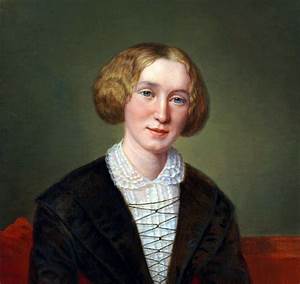
Not a Man, pt. 1: George Eliot

Elizabeth Knudsen

George Eliot was not a man.  She was one of many women who used a male pen name to ensure their works were taken seriously.  During this era, all that was expected of female writers was a lighthearted romance novel.  Throughout her career, Eliot wrote with a politically astute pen.  Eliot presented the cases of social outsiders and small-town persecution in many of her novels.  The roots of her realist philosophy can be found in her review of John Ruskin’s Modern Painters in Westminster Review in 1856.  As with any classic writer, this was influenced by her surroundings and her upbringing.

During the 19th century Britain was transformed by the Industrial Revolution.  At the time of the first census in 1801, only about 20% of the population lived in towns.  By 1851 this had risen to include over half the population.  By 1881 it had risen to over 66%.  Also in 1801, the majority of the population still worked in agriculture or related industries.  The majority of goods were made by hand, and many craftsmen worked on their own, with perhaps a laborer and an apprentice.  By the late 1800s factories were common and most goods were made by a machine.

The early 19th century was also an era of political and social unrest in Britain.  During this time a group of Evangelical Christians called the Clapham Sect were active in politics.  They campaigned for an end to slavery and cruel sports.  Then on May 11, 1812, a man named John Bellingham shot the Tory Prime Minister Spencer Perceval — the only British prime minister ever to be assassinated.  While Bellingham was a lone madman, in 1820 there was a plot to kill the entire cabinet.  However, the conspirators were caught and hanged.

Meanwhile in 1811-1816 textile workers in the Midlands and the north of England rioted and broke machines for fear they would cause unemployment.  These wreckers were called Luddites and if caught they were likely to be hanged.  In March 1817 textile workers from Manchester (called “blanketeers” due to the fact many carried blankets) attempted to march to London to petition the Prince Regent.  However, although the march was peaceful, the blanketeers were stopped by soldiers at Stockport.  Then on August 16, 1819, a crowd of almost 60,000 people gathered at St Peter’s Field in Manchester to hear a man named Henry Hunt.  Even though the crowd was unarmed and peaceful the authorities sent in soldiers.  11 people were killed and hundreds more were wounded.  People later called the event “The Peterloo Massacre” in a grim mockery of Waterloo.  In 1830 farm laborers in Kent and Sussex broke agricultural machinery because they thought it would take away jobs.  The riots were called the Swing Riots because a man supposedly named Captain Swing led them.  4 men from these riots were hanged and 52 were transported to Australia.  In 1834 six farm laborers in Tolpuddle, Dorset tried to form a trade union.  However they were prosecuted for making illegal oaths.  (Not for forming a union, which was legal.)  They were sentenced to transportation to Australia.  The case caused an outcry, and they returned to Britain in 1838.

As for political reform, a uniform system of town government was formed. In the middle of the 19th century Britain was the richest and most powerful nation in the world.  However, come the late 19th-century Britain’s power declined.  Such a decline was inevitable.  Britain was the first country to industrialize, and therefore had a head start over other nations, but soon the other countries in Europe began to catch up.  France, Germany, and USA industrialized.  By the end of the 19th century, Russia, Sweden, Northern Italy, and Japan were also industrializing, and Britain became relatively less important.

In the midst of all this upheaval, Mary Ann Evans was born in Nuneaton, Warwickshire, England.  She was the second child of Robert Evans and Christiana Evans, the daughter of a local mill owner.  She had several siblings, both full and from her father’s previous marriage.  In early 1820 the family moved to a house named Griff, between Nuneaton and Bedworth.  The young Evans was obviously intelligent and a voracious reader.  Because she was not considered physically beautiful, and thus not thought to have much chance of marriage, and because of her intelligence, her father invested in an education not often afforded women.

From ages five to nine, she boarded with her sister Chrissey at Miss Latham’s school in Attleborough, from ages nine to thirteen at Mrs. Wallington’s school in Nuneaton, and from ages thirteen to sixteen at Miss Franklin’s school in Coventry.  At Mrs. Wallington’s school, she was taught by the evangelical Maria Lewis — to whom her earliest surviving letters are addressed.  In the religious atmosphere of the Miss Franklin’s school, Evans was exposed to a quiet, disciplined belief opposed to evangelicalism.  After age sixteen, Evans had little formal education.  Thanks to her father’s important role on the estate, she was allowed access to the library of Arbury Hall, which greatly aided her self-education and breadth of learning.  Her classical education left its mark; drawing heavily on Greek literature and tragedies.  Her frequent visits to the estate also allowed her to contrast the wealth in which the local landowner lived with the lives of the often much poorer people on the estate, and different lives lived in parallel would reappear in many of her works.

The other important early influence in her life was religion.  She was brought up within a low church Anglican family, but at that time the Midlands was an area with a growing number of religious dissenters.  Eliot began contributing to the Westminster Review, a leading journal for philosophical radicals, in 1850 and later became the editor.  Through this she reached the center of a literary circle in which she met George Henry Lewes, with whom she lived until his death in 1878.  Lewes was married and their relationship caused a scandal, and because of this Eliot was shunned by friends and family.  Lewes encouraged Eliot to write.  In 1856, she began Scenes of Clerical Life, stories about the people of her native Warwickshire, which were published in Blackwood’s Magazine. Her first novel, Adam Bede, followed in 1859 and was a great success.

In the end, George Eliot’s novels were released to the public to enjoy.  The popularity of Eliot’s novels brought social acceptance, and Lewes and Eliot’s home became a meeting place for writers and intellectuals.  Now, luckily, it is not necessary for female writers to hide behind a male surname in order to get their books to sell.  Perhaps this gift could be traced back to Eliot and others like her.

Bibliography

BBC History. BBC. N.d. Web. 7 Oct. 2015. <http://www.bbc.co.uk/history/historic_figures/eliot_george.shtml&gt;.

Kingfisher Publications. The Kingfisher History Encyclopedia. 1999. 368-69. Print.

Lambert, Tim. Local Histories. N.p., 2012. Web. 7 Oct. 2015. <http://www.localhistories.org/19thcentengland.html&gt;.

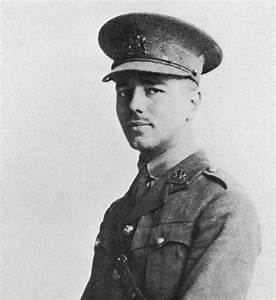
Wilfred Owen

Justin Benner

Wilfred Owen is recognized as the greatest English poet of the First World War.  Wilfred Owen from the age of 19 knew he wanted to be a poet and therefore immersed himself into authors like Keats and Shelley.  In late October 1915 he enlisted into the British Military being persuaded by propaganda.  He was deployed to France in 1916 and fought on the front lines.  He slept 70 yards away from a heavy gun that fired almost every minute.  Within a month he had officially seen the worst of the war, and it truly changed his perspective.  This rapid change of perspective led him to write war poetry.  In October 1918 he received the Military Cross but died only a month later near the village of Ors.  He wrote 46 war poems in all in his lifetime (warpoetry.co.uk).

One of his most famous poems is “Anthem for Doomed Youth.”  This short and rather gloomy poem talks about the horrors of trench warfare on the front lines.  Since he enlisted at 19, this poem almost has the ring of a warning poem, trying to keep other young men away from the battle.  The opening line says: “What passing bells for these who die as cattle?”  These passing bells are exactly what they sound like: they are bells rung after someone passes away.  He is comparing the trench warfare in France to the slaughterhouse for cows.  He is making a very vivid comparison.  “Only the monstrous anger of the guns.  Only the stuttering rifles’ rapid rattle can patter out their hasty orisons.”  He sets a very descriptive picture up here.  He is describing the sound of the battlefield with the anger of the guns and the stuttering rifles.  This clearly doesn’t mean rifles stutter, but rather there are simply so many guns on the field shooting at once it sounds like a few stuttering rifles.  Then he says only this extremely loud and unending noise silences their hasty orisons.  Or in other words, it’s so loud you can’t hear the soldiers’ hasty prayers.  “No mockeries now for them; no prayers nor bells; Nor any voice of mourning save the choirs, The shrill, dementedchoirs of wailing shells; and bugles calling for them from sad shires.”  Here he is trying to convey the idea there will be no funeral or mourning for those lost but rather just a loud chorus of bombshells falling.  There is such a bleak outlook on life presented in there lines.  It’s almost as if Wilfred Owen doubts he will make it home alive.

“What candles may be held to speed them all?  Not in the hands of boys, but in their eyes shall shine the holy glimmers of goodbyes.  The pallor of girls’ brows shall be their pall; their flowers the tenderness of patient minds, and each slow dusk a drawing-down of blinds.”  These last few lines really have to do with the effects the war has at home.  The candles refer to the candles one would see at a funeral.  He then switches from the physical candle to the light in a young boy’s eyes as they stare in disbelief at an empty casket.  He is really hitting close to home for a lot of people during this time.  Most if not all men were off fighting in the war, leaving mostly woman and younger men at home to deal with all the domestic problems.  The very last line “and each slow dusk a drawing-down of blinds” is Owen bringing the poem and the metaphorical day to a close.  On the battlefield the end of the day is symbolized by the sun setting whereas at home it’s symbolized by the blinds being closed.  This poem was one of the first he wrote almost immediately after enlisting.  His distaste for the war and the devastation it brought upon Europe is very apparent.

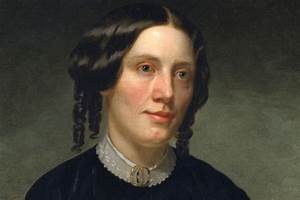
Harriet Beecher Stowe

Sydney Harris

In the struggles of feminists and those who simply love equality, women in American and worldwide history were subjected and depicted as needed only in the kitchen and the bedroom.  I believe the phrase in plain terms is “barefoot and pregnant.”  Although this was the norm and still is in some areas of the world, we as women and citizens of the United States have pressed and worked relentlessly to have the freedoms and rights we do today.

Numerous ways and vessels have been used to get us to the point we are at today.  One of the various methods by which we have expressed ourselves is through writing.  Writing is a medium of human communication that represents language and emotion through the inscription or recording of signs and symbols.  As females they were not able to successfully relay their thoughts through speaking, so writing was a breakthrough.  One of the earlier and most influential female writers through the generations was Harriet Beecher Stowe.  Stowe was the author of the beloved and well-known novel Uncle Tom’s Cabin.

Stowe was born June 14, 1811, in Litchfield, Connecticut.  Her father, Lyman Beecher, lived his life committed to social justice.  She was an author and philanthropists, Stowe was awarded with national fame when she released anti-slavery story Uncle Tom’s Cabin.  Her novel added to the heat of sectionalism before the Civil War.  She died in her home state in 1896.

She and her 12 siblings were raised by their father, a religious leader, and his wife, Roxanne Foote Beecher, who died when Harriet was a child.  Her 7 older brothers all became ministers, including famous leader Henry Ward Beecher.  One of her sisters, Catharine, was an author as well, shaping Harriet’s views.  Another, Isabella, was a leader in the fight for women’s rights.  She learned how to make logical arguments around the table from the boarders they housed from Tapping Reeve’s Law School.  She started her formal education at Sarah Pierce’s Academy, one of the earliest to push girls to study academics and not only the arts.  Stowe attended a school run by Catharine, run the same classical way of learning usually only provided to men.

At 21, she moved to Cincinnati, where her father was the head of the Lane Theological Seminary.  Lyman took a strong abolitionist stance against pro-slavery in 1836.  Stowe found friends with like beliefs in a local literary association called Semi-colon Club.  This is where she met fellow member and seminary teacher Calvin Ellis Stowe.  The two later married and together became a powerful couple in the fight for the abolition of slavery.

In 1850 Congress passed the Fugitive Slave Law, creating stress among abolitionists and free slaves in the North.  Stowe decided to express her feelings in the only way she knew, through a literary representation of slavery.  She attributed her book on the life of Josiah Henson and her own observations and beliefs.  The first part of Uncle Tom’s Cabin appeared in the National Era in 1851.  It was published as a story the next year and immediately became a best seller.  Her emotive depiction of the devastation slavery had brought upon families and kids caught the attention of the entire nation.  The book was accepted with open arms by the North but both Stowe and her novel provoked hostility in the South.

Her book was staged by fans in performances and the main characters of Tom, Eva, and Topsy achieved great iconic status.  She met Abraham Lincoln when she traveled to Washington D.C. during the Civil War.  Stories say he greeted her saying, “So you are the little woman who wrote the book that started this great war.”  She explains herself when asked why she wrote the book that, “I wrote what I did because as a woman, as a mother, I was oppressed and broken-hearted with the sorrows and injustice I saw, because as a Christian I felt the dishonor to Christianity — because as a lover of my county, I trembled at the coming day of wrath.”

So, she pressed on and wrote more books like The Mayflower: Sketches of Scenes and Characters among the Descendants of the Pilgrims in 1843.  “The Coral Ring,” the same year, was a short story that promoted temperance and an anti-slavery tract.  She also produced numerous articles, essays, and short stories regularly published in newspapers and journals.  She wrote for the rest of her life.  None of her later works compared to the reaction she received from Uncle Tom’s Cabin, but she remained well-known and respected in the North and in the communities of reformed minds.

She passed away in Hartford when she was 85.  She was buried at Phillips Academy in Massachusetts.  Her epitaph reads “Her Children Rise up and Call Her Blessed.”  There are many landmarks dedicated to all of her accomplishments, and her memory will last forever across the eastern United States and probably farther.  The Harriet Beecher Stowe House in Maine is where she lived and wrote her historical book.  Bowdoin College bought the house, and today it’s a museum with items of Stowe’s and a library.  Samuel Clemens, otherwise known as Mark Twain, is her neighbor and the houses are open to the public.

Her passion for writing in a time when women and their thoughts were not even acknowledged allowed her to speak in public and direct her thoughts and views when it was rare for females to hold their own voice.  She could also contribute to the Stowe family household income.  She said in a comical but true quotation, “If you see my name coming out everywhere — you may be sure of one thing, that I do it for the pay.” A female legend she was and will forever be.

Bibliography

“Harriet Beecher Stowe’s Life.” Harriet Beecher Stowe’s Life. Harriet Beecher Stowe Center, 2015. Web. 06 October 2015.

“Harriet Beecher Stowe.” Bio.com. A&E Networks Television, n.d. Web. 06 October 2015.

Alexander Fleming and the Importance of Penicillin

Mark Erichsen

Throughout American history have been various groundbreaking advances in medicinal technology and treatment, one of them being the discovery of a certain mold named Penicillin.  Alexander Fleming was the first in his field of Bacteriology to discover the potential benefits mold could have in fighting infections.  Through his constant research, Alexander Fleming changed the way of American life and inspired many scientists such as Howard Florey, Ernst Chain, and Norman Heatley to follow in his footsteps.

Alexander Fleming was born in the small town of Lochfield, in Ayrshire, Scotland on August 6th, 1881.  During his youth, he attended many different primary schools such as Louden Moor, Darvel Academy, and Kilmarnock Academy.  Before officially starting the brunt of his schooling and research at Saint Mary’s Medical School, he worked for four years at a small post office in London.  After finishing his schooling in 1906, he began his research in bacteria and its natural effects on the human body under Sir Almroth Wright.  Around the year 1914, he served as a Captain of the Medical Corps in the army during World War I.  He returned to Saint Mary’s Medical School in 1918 to resume his studies, and the rest is history.  Alexander Fleming passed away on March 11th, 1955 and was buried in Saint Paul’s Cathedral.

During Alexander Fleming’s work on the influenza virus and vaccine in 1928, he made an accidental discovery.  On a discarded petri dish of a bacteria called staphylococcus, he noticed a circle of mold forming; however, he could tell something was different about it.  Throughout Alexander Fleming’s work experience and research, he had always seen different colonies of bacteria and mold grow together.  So, when he saw a small green circle of mold with a bacteria-free circle around it, he realized he might have stumbled across something he could not take for granted.  He was then inspired by the experiment and started a continuous study on the mold he had found in his abandoned petri dish.  He soon discovered a concentrated mold culture of this “mystery organism” could withstand and kill bacteria such as staphylococcus even after being diluted up to eight hundred times.  After further research and study, he named this “mystery organism” Penicillin.  The reason why Penicillin killed other harmful bacteria was it released an antibacterial agent called Bellis.

Keeping Penicillin in mind, he continued older research on bacteria in the blood and tissue of animals and humans.  After testing Penicillin in animal tissues, he saw it was non-toxic and could possibly be used on human subjects.  After various theories and hypotheses, he turned the mold Penicillin into a wonder drug that could kill different types of disease carrying/causing bacteria in the human body.  In the year 1929, Alexander Fleming published his findings and said if produced in mass quantities, Penicillin could have the potential to save countless lives in the medical field.

As mentioned before, three scientists named Howard Florey, Ernst Chain, and Norman Heatley stepped onto the scene.  Almost ten years later, in 1938 at Oxford University in London, all three scientists began to study Alexander Fleming’s work in earnest.  The three of them began to expand on Fleming’s work.  They understood Penicillin in mass quantities had the potential to save millions of lives, so they began work on how to properly cultivate and grow mass colonies of the wonder drug.  The only problem was Penicillin was extremely costly to produce in mass quantities, and the three scientists had no way of acquiring factory resources in order to manufacture it.  This is where war stepped in.  By the time Florey, Chain, and Heatley’s research began to show real promising results, World War II had begun.  Because of World War II, much of England’s governmental and industrial resources were drained.  However, the devastation World War II caused also sparked an interest in the United States in the wonder drug Penicillin.

Scientists, along with generals in the Army and the United States Congress, finally saw the potential life-saving benefits Penicillin could procure.  No one wanted a repeat of World War I, where soldiers would survive their wounds but perish due to bacterial infection and illness such as Pneumonia.  In 1941, Florey, Chain, and Heatley’s research was moved to the United States for more funding and project flexibility.  The research continued, but the over-arching problem of inefficient production still loomed over the heads of the many scientists involved.

Florey, Chain, Heatley and their team of scientists were now in a race against time to efficiently produce the drug before more soldiers died on the battlefield.  Finally in late 1941, Florey, Chain, Heatley and their team were able to dramatically increase the production rate and yield of Penicillin.  In 1943, the clinical trials needed were finally able to be administered.  After the trials, Penicillin became the most effective anti-bacterial agent in history.  Production of Penicillin skyrocketed, and soon after enough Penicillin was produced to treat all the soldiers involved in D-Day.  At the end of the year, so much Penicillin was produced hospitals were able to treat over seven million patients per year, and the wonder drug was still being made.  It soon became so accessible and widely used the price per dosage of Penicillin went from twenty dollars down to only fifty-five cents.

Thanks to Alexander Fleming and his groundbreaking research and the accidental discovery of the wonder drug Penicillin, the field of medical treatment, and more importantly the world, changed for the better.  The impact of Penicillin was most greatly experienced during World War I and World War II.  In World War I, millions of soldiers died from infection and Pneumonia.  It was one of the greatest killers of the war, but after Penicillin’s administration, the death rate of soldiers from Pneumonia dropped from about eighteen percent down to below one percent.  Because of his research, Fleming was awarded the Nobel Prize in Physiology/Medicine in 1945.  His work greatly impacted American healthcare and changed the American way of life for the better.

Bibliography

Coffey, Alaina.  “20th Century Medical Advancements & American History.” Blogspot. Web. 03 October 2015.

Nobel Media. Nobelprize.org. 2015. Nobel Media. Web. 03 October 2015.

What is a Cowboy?

Destiny Phillips Coats

When one thinks of the Wild West, many different components come to mind like bison, Indians, farms, horses, whiskey and more.  Film after film and novel after novel have been made that try to capture the perfect idea of the West and what it brings to viewers and readers everywhere.  The most famous constituent of the Wild West is most definitely the cowboy.  In the hearts and minds of children everywhere, they see cowboys as strong handsome men who herd cattle, live on farms, and fight the Indians.  The question is, however, who were cowboys really and how have they influenced literature and film?

The cowboy was a term coined for the cattle herder in Texas during the era of the open range and great cattle drivers of 1886-1896.  Due to the scarcity of cattle up North, the Texans saw promise in the economic value of selling cattle.  In Texas of 1886, a steer worth 4 dollars was valued at 40 dollars in the North.  Cowboys began taking cattle up north to the train station in Sedalia, Missouri to send to their new business partners.

The adventurous and dangerous lifestyle of the cowboy came from the travelling aspect of their job.  With the migration of their cattle, the cowboy crossed over farm land and Indian Territory.  Confrontation indeed arose from the cattle trampling crops and the homelands of the Indians.  These conflicts were inspiration for the stories that portrayed cowboys as lawless and adventurous men who fought the Indians and lived freely in the Wild West.

Merriam Webster says the cowboy is “a man who rides a horse and whose job is to take care of cows or horses especially in the western U.S.”  This definition can seem boring in light of our connotation with a cowboy being much more dreamy and adventurous.  Where does the strong, handsome, courageous, and dreamy cowboy come from?  The answer to that question is literature.

The Virginian by Owen Wister, written in 1902, was the first novel that portrayed the cowboy as what we see him today.  This novel about a cowboy who falls in love with an eastern school teacher started a revolution in American literature about the cowboy and his adventures.  Owen Wister was from Philadelphia and graduated from Harvard College.  Experiencing the freedom of the West on a hunting trip inspired him to write The Virginian.  The way he portrays the beauty and free mind of the western citizen inspired others to create stories to take readers on an adventure of the cowboy in the “land of the free” and “home of the brave.”  Countless other books have been written that express the meaning of our connotation of the word “cowboy.”  They include Lonesome Dove, Riders of the Purple Sage, Hondo, All the Pretty Horses, and so many more.  As technology advanced and film making became a part of media, cowboys leaped off the pages onto the big screen.

Cowboys came onto the film scene in 1903 with the making of The Great Train Robbery by Edwin S. Porter.  Cowboys have taken on so many roles and influenced the hearts and minds of Americans for generations. TV shows like Bonanza; Walker, Texas Ranger; and Gunsmoke are just three examples of the numerous western TV series with main characters of cowboys.

The explanation of why cowboys are so amazing and great characters for literature and media is said perfectly in the following excerpt.

The men who worked the cattle in the treeless expanses of the West, at least one-fourth of them blacks, became known as cowboys.  The image of the courageous, spirited horseman living a dangerous life carried with it an appeal that refuses to disappear.  Driving a thousand to two thousand cattle hundreds of miles to market; facing lightning and cloudbursts and drought, stampedes, rattlesnakes, and outlaws; sleeping under the stars and catching chow at the chuckwagon — the cowboys dominated the American galaxy of folk heroes.

More than just the spirit of the cowboy influenced literature and film.  The cowboy’s distinct yet necessary dress has penetrated the realm of American fashion.  Each article of clothing had a purpose for the cowboy.  From the soles of his feet to the top of his head, the cowboy took every opportunity to make use of what he had on the vast plains of the Midwest.  The boots with thick heels and spurs made it easier to rest their feet in the stirrups on horseback and dig into the ground while catching a calf.  The flannel or wool shirt kept him warm during the cool days and nights on the western terrain.  The vest was worn for protection from cold nights in the vast plains of the west.  A bonus to the vest was the many pockets it had, which often carried tobacco.  The bandana often seen in western movies around their necks was used to cover their mouths and noses from dust that circulated in the flatlands.  The wide flexed rim of the hat blocked the hot sun, held water, and even worked as a pillow during a night’s rest on the flat surface of the Midwest earth.  Flannel shirts and cowboy boots have been a fashion trend since the time of the cowboy in 1886-1896.  With the strong influence the West has had on who Americans are and our heritage, cowboy fashion will never go out of style.

With all the portrayals of brave men who love and ride hard in novels, film, and fashion, how do we separate who they really are versus how we see them?  We can’t and we won’t.  The cowboy we love so much has become an American hero, and changing how we see them would be taking a part of our history away.  They are a symbol of American pride and adventure.  They are representative of the free spirit and beauty of the west.  They are inspiration for so many wonderful characters, from Woody in Toy Story to Walker in Walker, Texas Ranger.  Cowboys will never be forgotten.  They were important to society then, now, and forever.

So who is a cowboy?  He is an American hero.

Bibliography

“Cowboys.” History.com. A&E Television Networks, n.d. Web. 04 October 2015.

Merriam-Webster. Merriam-Webster, n.d. Web. 07 Oct. 2015.

“The Ways of the Cowboy.” Ushistory.org. Independence Hall Association, n.d. Web. 04 Oct. 2015.

Tom Sawyer and the Mississippi

Jocelyn Gunter

The Adventures of Tom Sawyer focuses on a young boy named Tom and his adventures in boyhood along the Mississippi River.  The Mississippi River plays a large part in the novel.  Mark Twain involves many real life aspects of growing up on the Mississippi River into his book.  One of these aspects is the motif of trading.  Trading plays a large part in Mississippi life and is an important part of the book.  The book has many themes of social structure and adulthood scaled down to a young child’s perspective and his journey through these social structures on his way to adulthood.

The Mississippi River was an important part of life in the U.S. during the 1800s.  It was mostly uncharted territory and was a part of the expansion westward.  The river was a main way of transportation.  The river transported goods from the North to the South and vice versâ.  It also transported people to and fro.  Another role it played was being an entrance to the Gulf of Mexico and therefore allowing people to bring goods into the middle of the country from all over the world, allowing America to transport her goods to the rest of the world.

 The Mississippi was booming during the 1800s, but her prosperity was short-lived.  This prosperity was due to the invention of the steamboat and its introduction on the river.  The steamboats allowed two-way transportation and increased her importance and prosperity.  By the 1900s, river transportation was decreasing due to the growth and influence of the railway system.  The Mississippi became important again after the Civil War when the river was deepened and widened, allowing heavier and bulkier freight to be carried on the river.  Despite this, the Mississippi was never the same as during the 1800s.  Yet, the Mississippi played a significant role in America’s history, in literature, and in Mark Twain’s writing.

Trading is a major part of life for any community and country.  Trading takes place at many different stages of life and in many different ways.  It is a basic part of any economy.  It is not only for adults, though.  Children create economies too, in a way, and trade toys, clothes, and other personal items in change for favors, other items, or money.  This mini trading is preparation for real world trading and economy.  You give something to gain something.  It is a basic principle of life. This basic principle of life is seen in The Adventures of Tom Sawyer.

Tom Sawyer and his friends have their own trading system.  Part of this system is Tom tricking his friends into doing or giving him things for nothing.  An example of this one-sided system is when Tom fakes enjoying whitewashing, although he hates it.  Tom is trying to escape a chore and being made fun of for having to do a chore on Saturday.  Tom convinces his friends whitewashing is so much fun, and all of the boys want to try it.  By him convincing his friends, all of his friends try whitewashing and complete his chore for him.  Tom is given a finished chore, and the boys are given nothing but tricks.  The boys do have a true trading system, but the one-sided system is seen multiple times in the book.  An example of their true trading system is when Tom trades his trinkets for tickets.  Tom wants the tickets because he wants a Bible from Sunday school.  Tom does not want the Bible for the fact of owning a Bible but for the glory that comes with receiving a Bible.  Only those who studied and learned their Bible verses received tickets and 1000 tickets could be traded for a Bible, but only the most diligent and smartest students received 1000 tickets and therefore a Bible.  Tom was not one of these bright and diligent students, so he had to trade his things for tickets to falsely earn the glory he so desperately wanted.

Many of the things the boys traded at the beginning of the book are small, worthless items, to adults at least.  To the boys, the items hold a lot of worth.  At the end of the book, the boys, on of their many adventures, find a treasure.  This treasure cost 12,000 dollars.  This a huge difference compared to the beginning of the book in terms of what the boys owned.  This money is saved for the boys, Tom and Huck, and both boys receive a hefty allowance.  This money helps slowly bring them into the adulthood trade life, giving them money to buy things, which is trade.  Their miniature economy grows to a great wealth, which allows their small-scale trade to grow in maturity and into adulthood, just like the boys were the story to continue.

Mark Twain, from growing up on the Mississippi River, knew how important trade was to living on the Mississippi River and incorporated this into his book The Adventures of Tom Sawyer and his other books, for example The Adventures of Huckleberry Finn.  Although the trade he shows is small-scale childhood trading, it is still part of the essence of life on the Mississippi.  Just like Tom, the trade system grows and matures with the book.  The trade system also shows a dirty part of real life trading.  Just like Tom tricked his friends into trading their free time to do his chores, people of the real world are scammed by companies around us.  It is a fallacy, very similar to information commercials.  Tom lies to his friends and convinces them he believes something is greater than it really is.  In the same way, commercials today trick viewers into buying their products, although they know they are not what they seem.  Mark Twain embodies this essence, even though televisions and commercials were not around yet when he was alive.  He knew lying and schemes go on in the adult world, not just childhood, and the same was true with trade and life in general. Mark Twain captured the essence of trading in childhood, adulthood, the 1800s, and even today.

Bibliography

Lee, Michele. “Mississippi River: Economic History.” (2010) http://web.mit.edu/12.000/www/m2010/finalwebsite/background/mississippiriver/mississippi-economic.html. Web. 10 October 2015.

Moore, Richard. “The History of Transportation of the Mississippi River.” Hamline University Graduate School of Education, (2001), 1-2. http://cgee.hamline.edu/rivers/Resources/Voices/transportation1.html. Web. 10 October 2015.

Twain, Mark. The Adventures of Tom Sawyer. Minneapolis: The American Publishing Company, 1876. Print.

The Weight of Words

Kasamira Wojcik

To quote people simply means to repeat their words.  It does not seem complicated, nor does it seem very important.  What is really important, though, is the meaning behind those words.  That is the whole reason why people take the time to repeat what another has said, because they recognize those words hold meaning behind them and they are worth repeating.  One of the things people tend to quote often is literature, such as the book A Farewell to Arms by Ernest Hemingway.  People quote lines from this book because they understand the meaning behind Hemingway’s words and desire to share it with others.

One quotation from this book is: “‘A coward dies a thousand deaths, the brave but one’….  [The man who first said that] was probably a coward….  He knew a great deal about cowards but nothing about the brave.  The brave dies perhaps two thousand deaths if he’s intelligent.  He simply doesn’t mention them.”  With this particular quotation, Hemingway is actually critiquing another quotation.  Most people have heard others say a coward dies a thousand deaths, but the brave only dies once.  Hemingway is saying he disagrees, and  the man who was the first to say that obviously did not know what it was like to be brave.  Hemingway is quite possibly speaking from experience, because he was in World War I as an ambulance driver for the Italians and was badly wounded while performing his duties.  So, it is very likely he knows what it means to be brave.

When saying the brave die perhaps two thousand times, Hemingway is implying those who are brave have faced death many times, and, because they are intelligent, they were able to come back alive.  The coward, on the other hand, only has to face the shame of his cowardice.  When saying the brave do not mention their “deaths,” he means the brave know coming back alive from facing those horrible things is not something to boast about, but instead it is something to be thankful for.

A second quote is: “No, that is the great fallacy: the wisdom of old men.  They do not grow wise.  They grow careful.”  People often consider older people to be wise because they have gone through life and its trials and survived.  As a result, they know more about how they should act or respond to different things and, because of that, they are considered wise.  Hemingway suggests a different point of view.  Rather than considering them as wise, he instead says they have grown careful.  The definition of wise is “having the ability to discern or judge what is true, right, or lasting.”  The definition of careful is “attentive to potential danger, error, or harm.”  Hemingway is basically saying rather than being better able to discern truth, older people are instead more attentive to danger and are, therefore, better able to avoid it.

One of the most well-known quotations from A Farewell to Arms is “If people bring so much courage to this world the world has to kill them to break them, so of course it kills them. The world breaks everyone and afterward many are strong at the broken places. But those that will not break it kills. It kills the very good and the very gentle and the very brave impartially. If you are none of these you can be sure it will kill you too but there will be no special hurry.”

Hemingway had a rather morbid point of view, and he was depressed.  This can be seen throughout his writing, especially in this quotation.  This can be broken up into two sections: “If people bring…those that will not break it kills,” and “It kills the very good…there will be no special hurry.”

The main thing Hemingway is saying in the first part is the world attempts to break everyone, no matter who you are, though it puts more effort into breaking than others.  For the ones it can break, they become stronger because of it, but for those it cannot, the world, instead, kills them.  Hemingway is implying the world is an unforgiving place and for those who will not go the way the world wants them to go, who have courage to stand firm against it, the world will kill them.  In the second part, Hemingway is saying no matter if you are “good,” “gentle,” or “brave,” the world will kill you just the same.  For those who are not any of those things, the world will still kill you, but there is not a big rush to do so.

When Hemingway says “the world,” he is referring to the circumstances and the situations people have to face.  For the ones who are exceptional, it stands to reason they would put themselves out into the world and experience situations the ordinary person would not.  Those situations they put themselves in will be more dangerous than if they had decided to do nothing.  So, it is really no surprise “the world” would “break” or “kill” them more quickly than the average person.  The ordinary person, though, will still eventually die because no one can escape death.

Another quotation is “I’m not brave any more darling.  I’m all broken.  They’ve broken me.”  This holds a lot of meaning, especially in light of the previous quotation analyzed.  The one who is saying this line is Catherine, the love of the main character, Henry.  She says this to him after she gives birth to their stillborn child and is dying from multiple hemorrhages.  Up until now, she has withstood many trials, not only by her own strength, but with Henry’s as well.  She was good, gentle, and brave, and the world had already tried to break her but could not.  So, it killed her.  In doing so, it broke her.  That is why she says she is no longer brave and is now broken.  When she says “they’ve broken me,” she is referring to the world and the situations she has faced.  It is finally too much for her.

There is so much one can do with words.  They could be used to weave a fanciful story to tell a child as she goes to sleep.  They could be used to express their deepest feelings to another.  They could be used to teach someone how the world works.  They could also be used to tell lies to someone or verbally abuse one.  Words can be a dangerous tool, and one never knows when something one says could end up being repeated by another.  Therefore, one must be careful with them.  Words and the meaning behind them are powerful, so use them wisely.

Transcendentalism

Christian Tullos

Man is a unique creation.  What separates him from every other creature on earth are his questions: Why am I here?  Where am I going?  What purpose do I have?  Is there a greater power?  Is there truth?  Through history man searched for answers to many deep questions.  Many religions, beliefs, and philosophies have been established in hope to answer man’s questions.  Transcendentalism is one of these philosophies.

The Transcendental movement sprouted in New England around 1836.  The leaders of the movement were Henry David Thoreau, Margaret Fuller, and Ralph Waldo Emerson.  The members and leaders of Transcendentalism met in the Boston home of George Ripley.  Though the members were loosely connected, they considered Emerson their leader.

Ralph Emerson: “What lies behind you, and what lies in front of you, pales in comparison to what lies inside of you?”  This lies at the heart of their philosophy.  Truth, spirituality, and peace can be found inside of a man; they just need to be unlocked.  Transcendentalism hinges on the belief man is naturally good.

The crux of Transcendentalism is the issue of the origin of truth.  Transcendentalism itself is a philosophy that says man’s knowledge of reality comes from an analysis of his own thought process.  In essence: truth comes from inside man.  Transcendentalism, being influenced by Romanticism, places emphasis on emotion and feeling as the sources of truth.  Transcendentalists attained their name because of their method of enrichment.  Stemming from the belief emotions are the key to unlocking the truth within, members try to transcend the distractions of the world to become one with themselves.

Similar to the Christian belief the Holy Spirit lives in people, Transcendentalists believe all men have a piece of the “Over-soul” living inside of them.  This belief contributes to the lack of a need for organized Church-like gatherings among them.  If all men contain the “Over-soul,” they are connected in spirit, which negates the need for shallower physical connections.

As the very nature of a Transcendentalist’s views on truth is relative and determined by the individual, Transcendentalists have a difficult time defining their core beliefs.  The lack of a unifying vision also hindered the cohesion of the movement.  Henry David Thoreau himself pointed out the difficulty of understanding Transcendentalism in his popular journal entry for March 5, 1853:

The secretary of the Association for the Advancement of Science requests me . . . to fill the blank against certain questions, among which the most important one was what branch of science I was specially interested in . . . I felt that it would be to make myself the laughing-stock of the scientific community to describe to them that branch of science which specially interests me, inasmuch as they do not believe in a science which deals with the higher law.  So I was obliged to speak to their condition and describe to them that poor part of me which alone they can understand.  The fact is I am a mystic, a transcendentalist, and a natural philosopher to boot.  Now that I think of it, I should have told them at once that I was a transcendentalist.  That would have been the shortest way of telling them that they would not understand my explanations.

Transcendentalism clearly eluded succinct definition in Thoreau’s time as much as it does in our own.

Even Emerson had difficulty explaining his beliefs.  Transcendentalism fractured into many beliefs and practices.  Some of the questions posed to Emerson regarded the purpose and outlook.  What was the goal they strove for in themselves and society?  In his 1842 lecture “The Transcendentalist,” Emerson suggested the goal of a purely transcendental outlook on life was impossible to attain in practice:

You will see by this sketch that there is no such thing as a transcendental party; that there is no pure transcendentalist; that we know of no one but prophets and heralds of such a philosophy; that all who by strong bias of nature have leaned to the spiritual side in doctrine, have stopped short of their goal.  We have had many harbingers and forerunners; but of a purely spiritual life, history has afforded no example.  I mean, we have yet no man who has leaned entirely on his character, and eaten angels’ food; who, trusting to his sentiments, found life made of miracles; who, working for universal aims, found himself fed, he knew not how; clothed, sheltered, and weaponed, he knew not how, and yet it was done by his own hands.…  Shall we say, then, that transcendentalism is the Saturnalia excess of Faith; the presentiment of a faith proper to man in his integrity, excessive only when his imperfect obedience hinders the satisfaction of his wish.

In some ways Emerson is running around the question.  He is stating no Transcendentalist has achieved perfection. that none has fully submitted to the truth within and have fallen short of his goals for which he strives.  Yet he fails to state the goal of Transcendentalism or define it specifically.

All actions come from beliefs.  Beliefs are formed out of philosophy and philosophy flows from what a person believes to be true.  As Luke 6:45b states: “Out of the overflow of the heart the mouth speaks.”  The truths a man stores in his heart are revealed in the way he acts.  Every religion, belief, or philosophy will influence a man’s outlook on life as well as his actions.  Transcendentalism lacks the basic principles of a moral and spiritual standard.  It attempts to provide clarity, a sense of truth, but cannot even provide the true definition of itself.  In its own confusion many people have taken an idea here or there and run with it.  Individuals use Transcendentalism as a basis for moral relativism.  This  tool allows individuals to become their own higher power, their own authority, they own “Over-soul.”

Emerson and the others in his party attempted to free the minds of men but achieved the opposite.  In searching for clarity, they kicked up a bunch of dust.  Even with all of Emerson’s intellect, he still failed to see what Isaiah 53:6 says: “Those who rely on their own intuition and ‘good sense’ to lead them to spiritual truth will find themselves being led astray.”  In trying to be wise, Emerson became the fool.

Bibliography

Goodman, Russel. Transcendentalism. http://plato.stanford.edu/entries/transcendentalism/. 3 October 2015.  Web.

Lewis, Jone. Transcendentalism. http://www.transcendentalists.com/what.htm 2 . 2 October 2015. Web,

Miller, Perry. The American Transcendentalists: Their Prose and Poetry. Garden City: Double Day Anchor Books, 1957.

U.S. History. 2008-2014. http://www.ushistory.org/us/26f.asp. 5 October 2015. Web.