Monthly Archives: May 2022

Not a Man, pt. 2: George Sand

Elizabeth Knudsen

One’s chief interest in the life of any great thinker is to determine those influences which seemed to have had the greatest impact on their life and work. Considering this, this paper will only touch briefly on those influences which left a deep and lasting mark on George Sand.

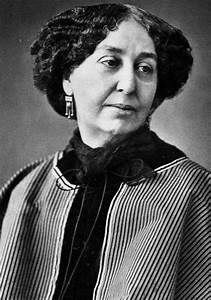
Sand was born Amantine-Lucile-Aurore Dupin on July 1, 1804 in Paris, France. Notorious for her bohemian lifestyle in life, she is now hailed as representing the epitome of French romantic idealism. She demanded the freedom of living that was commonplace for men of her time for herself and for those of her own gender. Called Aurore in her youth, she was brought up at Nohant, near La Châtre in Berry, the country home of her grandmother. There she gained the profound love and understanding of the countryside that later informed many of her works. In 1817 she was sent to a convent in Paris, where she acquired a mystical fervor that, though it soon abated, left its mark. For while within the strict environment, Sand turned to reading. The long hours of girlhood with little companionship were filled with entirely unguided literary exploration. She filled her imagination with Montesquieu, Locke, Aristotle, La Bruyère, Pope, Milton, Byron, Dante, Bacon, Virgil, Shakespeare — but above all these her influence was Pousseau, that patron saint quoted and followed through many years. During her adolescence, an ever-constant quarrel over her between the noble grandmother and by no means stupid mother played a great part in her confusion of social standards.

She married in 1822 to a man far older, unintellectual, and overall vastly her inferior. As Providence would have it, separation came ten years later. Aurore, now Madame Dudevant, started for Paris, leaving her two children, along with years of unhappiness and moral struggle, behind her. Her unhappiness was never suspected by those around her. It is the opinion of some Sand married passively, as she did in all outward acts of her life. She seemed to pour more intimate musings of herself into her novels than she did in relationships. The modern reader, however, reading the early novels so full of domestic unhappiness cannot but doubt whether any imagination, no matter how vivid, could have produced them by untrained bitterness.

George Sand was particularly susceptible to her environment, particularly the influence of men in her environment. This produced a writer of many sides and with many wide and deep sympathies. Through her novels one can see a shift in style here, or a change in tone there that was influenced by whatever great mind she was surrounded by at the time. She admitted herself too easily influenced later in life, saying she had tired herself out by chasing too many ideas. Throughout all of her works, though, her key themes remain: 1) the independence of women, 2) the sovereignty of the people, 3) a deep religious faith, and 4) a profound love for nature and real art. It is often noticeable in defending these beliefs she tried so hard to promote Sand often grew tired of the struggle, and at these moments she returned to her ever-constant solace — her constant appreciation of nature and its God.

 In January 1831 she left Nohant for Paris, where she found a good friend in Henri de Latouche, the director of the newspaper Le Figaro, who accepted some of the articles she wrote with Jules Sandeau under the pseudonym Jules Sand. In 1832 she adopted a new pseudonym, George Sand, for Indiana, a novel in which Sandeau had no part. That novel, which brought her immediate fame, is a passionate protest against the social conventions that bind a wife to her husband against her will and an apologia for a heroine who abandons an unhappy marriage and finds love. In Valentine (1832) and Lélia (1833) the ideal of free association is extended to the wider sphere of social and class relationships.

While her fame grew, so did the list of her lovers. It eventually included, among others, Prosper Mérimée, Alfred de Musset, and Frédéric Chopin. She remained unchanged by Musset’s skeptical views as well as Chopin’s aristocratic prejudices, while the man whose opinions she entirely agreed with, the philosopher Pierre Leroux, was never her lover. Despite these exceptions, however, most of her early works, including Lélia, Mauprat (1837), Spiridion (1839), and Les Sept Cordes de la lyre (1840), show the influence of one or another of the men with whom she associated.

Eventually, she found her true form in her rustic novels, which drew their chief inspiration from her lifelong love of the countryside and sympathy for the poor. In La Mare au diable (1846), François le Champi (1848), and La Petite Fadette (1849), the familiar theme of George Sand’s work — love transcending the obstacles of convention and class — in the familiar setting of the Berry countryside, regained pride of place. These are considered by some to be her finest works. Sand produced a series of novels and plays of impeccable morality and conservatism — ironic, considering her rather promiscuous early life. Among her later works are the autobiography Histoire de Ma Vie (1854–55; “Story of My Life”) and Contes d’une grand’mère (1873; “Tales of a Grandmother”), a collection of stories she wrote for her grandchildren.

George Sand’s novels portrayed a view that challenged the social norm of France. She believed women had just as much of a right to smoke and wear suits and have an opinion as men did. She believed there was much more to the women of the world than becoming a housewife and contenting themselves to be the wives of the world’s leaders and shakers instead of being the leaders and shakers themselves. This challenged the very Napoleonic Code in clause 213, which states “the husband is bound to protect the wife and the wife to obey the husband.” In 1800s France this didn’t mean the mild submission the popular view of complimentarianism promotes today. This meant subjection to the will of the husband in all things. Whatever dowry the wife brought was his. Whatever money the wife might earn was his. The French woman could hold no property, could not testify in a civil case, could not sign a legal document, had no chance at education except in convents, had no authority over the education of her children, and could obtain no divorce from her husband except on the grounds of extreme cruelty. In addition to these laws which established the legal inequality of women, there were also countless social boundaries and rules that also restricted her activity. Many literary and business endeavors were considered inappropriate for women, as well as many venues where they were unwelcome. And while women were not perceived as intelligent enough to pursue a career as a writer, men wrote about the fickleness of women all the time.

Ultimately, Aurore Dudevant wrote under the male pseudonym of George Sand for two reasons. The first, I believe, was because so many of the literary geniuses she surrounded herself with were men. Many of her treasured influences in her childhood as well as her adult life were men. It has been shown her literary style, as well, was influenced by her lover du jour. In some small part of her, she wanted to be like them, and being androgynous was one of the easiest ways for her to do so. The second reason was clearly because her views were so extremely controversial. Such blatant rejection of the established values would have never been accepted by society had she written under her female name. Politics were certainly not considered a women’s field, but Aurore clearly had the smarts to write about them. Today, she is considered not only an incredible novelist, but also as a key figure of the feminist movement. And now, a pseudonym such as hers is unnecessary for female novelists, perhaps in part thanks to her steps toward female equality in society.

Bibliography

Impromptu . Dir. James Lapine. Avante-Garde Cinema, 1991. Web. 15 Jun. 2011.

Jack, Belinda. “George Sand: A Woman’s Life Writ At Large.” The New York Times on the Web. The New York Times, 2000. Web. 9 Dec. 2015. <https://www.nytimes.com/books/first/j/jack-sand.html&gt;.

Wernick, Robert. “A Woman Writ Large In Our History and Hearts.” Smithsonian. December 1996, 122-137.

The Pivotal Role of Natives and Blacks in the Conquest

Nicole Moore Sanborn

The Eurocentric view of historians and Spaniards alike has turned the Conquest into a romanticized time period neglecting the importance of natives and Africans in battles and colonial establishment. The myth of the white man being the primary conquistadors is refuted through evidence of the Tlaxcalans, Huejotzincans, and Maya helpers as well as Juan Valiente and other unnamed blacks. The myth of the white man has been perpetuated for a variety of different reasons and served very specific purposes in colonial times. Reshaping our view of the Conquest and shifting away from a Eurocentric view of history is vital to developing a better understanding of the exchange.

The myth of the white man being the primary fighters and victors of the Conquest originated because the most widely read accounts of the conquest, especially the conquest of Mexico, create the visual of Europeans triumphing over natives, no matter the odds (Restall 45). The romantic image of a few Spanish conquistadors miraculously defeating many natives is imbedded into history through writings about the Capture of Atahuallpa, the Alamo, and other events (45). Restall also argues the myth of the white conquistador is “a corollary to the handful-of-adventurers image, and is thus equally central to the conquistadors’ own portrait of the Conquest” (45). The ideas perpetuated in widely read history books not only romanticize the Conquest as solely the fruits of the white conquistador, but also distort the truth.

Despite the overwhelming number of natives and blacks that aided the Spaniards, if their contributions are mentioned, it is in passing. Pedro de Cieza de Leon both ignored and revealed black roles in his writings (60). Spanish and native sources make references to the black presence in the Conquest (57). Alvarado only mentions native allies once in his two letters to Cortes during the 1524 invasion of Guatemala. The mention of five to six thousand “friendly Indians” is juxtaposed against the 250 Spaniards, thereby providing clear evidence against the idea of the Spaniards as the sole victors (45).

In the colonial period, the myth of the white conquistador served various roles for the Spaniards, specifically Eurocentric thinking, the goal of obtaining titles, and keeping natives and blacks in subordinate roles or as slaves. Restall mentions the Songs of the Aztecs, which spins the Conquest as a native civil war resulting in incomplete Spanish domination (46). Restall argues this view is not only an alternative to the “predictably hispanocentric perspective of the Spaniards,” but is also a view found frequently in native sources (46). The probanzas de merito the conquistadors wrote to the king were written with the goal of obtaining titles such as Admiral, and thus were focused specifically on the merits of the author. If authors had included anecdotes about the importance of the native and black allies, the king might become concerned about the lack of power and leverage the Spaniards had over the natives, and may even doubt a conquistador’s leadership, therefore not giving the desired titles. By nature, probanzas de merito were self-serving and Eurocentric, thereby ignoring key native allies. Third, Spaniards desired to keep natives and blacks as auxiliaries or slaves. Restall notes Spaniards “considered it great hardship to go without them [native or black auxiliaries]” (51). Black slaves of Spaniards functioned as domestic servants, assistants, and servants who were armed by necessity (54-55). Black slaves were also expected to fill marginal posts on the outskirts of the Spanish towns (62). As armed servants, blacks were expected to protect their masters. If forced to fight an onslaught of natives, black servants could earn their freedom through fighting and surviving (55). After earning freedom through fighting, these blacks were still expected to take on the aforementioned marginal posts on the outskirts of town. A majority of Africans brought to the Americas were brought as slaves, and as a result of both their subordinate status and the Eurocentric worldview of the Spaniards, their central role in the Conquest was consistently ignored (53).

While Tlaxcalans, Huejotzincans, and Maya allies were essential to Spanish victory, they simultaneously pursued interests of their own. Combined, these examples refute the myth of the white man and demonstrate the white man would have failed without these allies. Despite the expansion of the Aztec empire, a small city-state of Tlaxcala maintained independence and presented both a danger and opportunity for Cortes (46). If the Tlaxcalans had continued their initial hostilities toward Cortes, he would have been forced to retreat (46). Indeed, a small Tlaxcalan faction was in favor of developing an anti-Mexica alliance with Cortes, enabling the destruction of the Aztec empire and Tenochtitlan. The Tlaxcalans ensured vital native support for Cortes, while the achieving their goal of disabling the Aztec empire for freedom (46-47). The Huejotzincans, who assisted the Spaniards in the conquest, were not tools of Cortes’s strategy, but used the Spanish to pursue their own interests. Specifically, the Huejotzincans used Spanish presence to engage their rivals, the Aztecs and the Tlaxcalans by overthrowing the empire in power and obtaining leverage against a rival city-state (48). Two major yet distinct Maya groups in Guatemala, the Cakchiquel and Quiche, were in a brutal civil war in the 1520s. The Spaniards not only used these groups as their own “allies” at various points in this civil war, but also used the groups against each other and against smaller Maya groups through exploiting regional politics and attempting (though ultimately unsuccessfully) to obtain control over the whole region (48).

Juan Valiente is an example of a successful black conquistador, and is therefore proof Spaniards and white men were not the only victors in the Conquest. Juan Valiente convinced his owner in 1533 to allow him to pursue conquistador status for four years as long as he brought his earnings back. Valiente fought in Guatemala, Peru, and later in Chile. By 1550, he had become a captain, horseman, earned an estate outside of Santiago, was granted an encomienda, and married. Before reporting back to his owner, he was killed by the Araucanians in 1553 (53-54). Valiente achieved a status as high as the Spanish conquistadors, but kept fighting instead of enjoying his new way of life, and as a result was killed in battle.

Two other instances of unnamed blacks demonstrate their vital role in the Conquest and act as proof the Spanish would not have survived without them. An African discovered fresh water in the Ecuadorian interior for a company led by Diego (Alvarado’s cousin) and another African saved Almagro’s life (60). Without these key yet unnamed participants, Diego’s entire company may have died and Almagro would not have reached the fame and recognition he has today due to an untimely death. Lastly, Restall does not mention this directly, but since black servants would fight to protect their masters, many were killed. Servants sacrificed themselves to the Conquest and for Spanish glory without being acknowledged. 

The aforementioned examples are a few of the recorded examples of native and black assistance in the Conquest. Many more unnamed allies assisted the Spaniards in their endeavors. Disabling the myth of the white man matters because it further reveals Eurocentrism in history and demonstrates the Conquest as we know it today is not the whole picture. Evidence of native and black allies also refutes the myth “a few great men” overthrew well-established empires. Without allies, the small groups of Spaniards would not have successfully gained power and overthrown the Aztecs, despite advanced weaponry. While recent scholarship is starting to convey the pivotal role natives and blacks played in the Conquest, the myth of the white conquistador and belief of whitewashed history still reigns supreme in many students’ minds.

Lebensunwerten Lebens

Jared Emry

The Holocaust was a eugenics program that attempted to cleanse the Aryan race and society as a whole. Eugenics is the concept of breeding out traits considered to be inferior or the root of disease — societal, genetic, or otherwise. The use of eugenics through methods of sterilization and euthanasia became a solution to what was perceived by many to be a serious problem. Eugenics was incredibly popular in the world at the time. It was practiced throughout much of the western world in the form of sterilization. Hitler started the Nazi eugenics program only five months into the office of chancellor in 1933, and he began it as a sterilization campaign aimed at the mentally ill. The practice continued in some parts of the U.S. until at least the late ’60s. Starting with the mentally ill, the Holocaust spread to political dissidents, followed by certain races and homosexuals.  In this way, psychology was the primary tool used by the Nazis to justify and fuel the propaganda of the Holocaust.

The idea of Aryan domination first found a foothold in Alfred Ploetz’s The Efficiency of our Race and the Protection of the Weak. Ploetz originally argued the Jews were equal and indispensible, but revised his opinion after deciding Jews were too individualistic and lacked nationalism. Later, psychiatrist Alfred Hoche wrote Die Freigabe der Vernichtung Lebensunwerten Lebens, which spoke of euthanizing “life not worth living.” His idea was the mentally ill are merely shells of humans and they are massive burdens on society, financial and otherwise. Dr. Hoche even calculated the specific average financial cost of each mentally ill person’s burdens society per year (Cornwell 89). These calculation became central in Nazi propaganda. His work led to the euthanizing of mentally ill patients began, but the Nazis were forced to ban the practice because of public outrage. Despite the ban, most psychologists continued to kill their patients based on their beliefs in eugenics. Dr. Elizabeth Hecker was one such doctor who continued to kill her test subjects when she was through with them, she is even now still lauded as a pioneer of developmental psychology. Eventually, Alfred Hoche recanted after a close relative of his was disposed of.

The Holocaust started with the disposal of the mentally ill, but it moved past that. Prior to 1934, the Nazis had a neutral stance on homosexuality. Ernst Röhm, head of the SA, and many other officials were openly homosexual. Röhm was popular, became politically ambitious, and started to grow his own paramilitaries. Hitler and Himmler responded by filling the newspapers with rumors Röhm was working to stage a coup backed with planted evidence and used those rumors as a justification for a party purge. Himmler feared a conspiracy and thus the Holocaust grew to include the homosexuals (Oosterhuis 195). Despite that, homosexuals did not face the same severity of persecution as Nazi psychologists thought and proved homosexuals could be quarantined and rehabilitated. Again, the Nazis turned to the psychologists for justification. Mental illness is functionally definable as any culturally unacceptable deviancy or idiosyncrasy, and so with homosexuality considered to be a mental illness and also life not worth living. In this sense, the Holocaust never did move past the disposal of the mentally ill.

The Jews were next in 1935 and the justification was a little harder to reach. The breakthrough came when, “Erich Jaensch began organizing his biopsychological typology work around a notion of a superior ‘Northern integration type’ (the ‘J’ type), whose attributes he contrasted with an inferior ‘Jewish-liberal dissolution type’ (the ‘S’ type). The ‘S’ type — which he increasingly called the Gegentyp (‘anti-type’) — was described as intellectually rigid and abstract, yet with a tendency to become easily fragmented” (Harrington).

These results which purposefully aligned with the preexisting anti-Semitic ideology of the Nazi party were used as a justification and a source for anti-Semitic propaganda and the wholescale persecution of the Jews at the national level.

The corruption of science didn’t end with psychiatry.  The biologist Adolf Meyer-Abich gave a guest presentation at John Hopkins in 1933, where he showed a film depicting the Fuhrer principle in bacteria colonies. He failed to comprehend why the American scientists did not take the documentary seriously (Harrington 357). However, psychology fundamentally uses the culturally normative ideology as its basis for inquiry into both society and individual persons (Strous 8). Psychology, unlike the hard science, adopts an ideology and then builds evidence in support of that ideology rather than attempting an objective observation with analysis appropriate to the evidence. The field adopted the Nazi ideology as naturally as it adopts any ideology. In fact, it was in the Third Reich where psychology was first treated seriously by a governing authority and by a people as a whole with the Vordiplom Prüfung. The Vordiplom Prüfung, or the Diploma Examination Regulations, became the first professional qualification exam for psychology in 1940 making psychology a legitimate profession as it remains today. Even the modern qualification exams are nothing more than updates of Vordiplom Prüfung (Geuter 199).

The majority of psychologists intimately involved with the Holocaust would never see a second within the walls of a prison. Whether they had directly been involved with the killing or if they had merely claimed to have empirically proven scientific justification for the killing, they were given the most leniencies at the Nuremburg Trials. More psychologists and psychiatrists were prosecuted than any other group of professionals, but they were absolved of guilt because the courts believed the sterilization and euthanasia was legal. The majority of psychologists intimately involved simply chose to ignore their past, pretend nothing had happened, and repress their history (Oosterhuis). Dr. Elizabeth Hecker, who had maintained the first adolescent psychiatric clinic that tested and killed any children deemed delinquent or abnormal after being studied or experimented on, was never punished for her crimes. Instead, Dr. Hecker was elected an honorary member of the German Association of Child and Adolescent Psychiatry. Many others continue to be cited and quoted in modern medical articles without mention of the highly unethical and torturous nature of their studies (Langsdorff).

The evolution of psychology as a profession under the rule of the Third Reich and the aid it provided to the Third Reich is clearly demonstrated historically.  Psychologists provided Nazi Germany as a standard by which they could justify their worst atrocities, including the holocaust. The Nazis were given a position by which they could claim their opposition was both anti-science and a form of social disease requiring extermination. Any group they disliked could, and were, written off as antisocial and destroyed. But did this tendency to facilitate and organize the destruction of individuals with twisted scientific rationale end with the Third Reich?

Works Cited

Cornwell, John. Hitler’s Scientists: Science, War and the Devil’s Pact. New York: Viking, 2003.

Geuter, Ulfried. The Professionalization of Psychology in Nazi Germany. Cambridge: CUP.

Harrington, Anne. “Metaphoric Connections: Holistic Science in the Shadow of the Third Reich.” Social Research, 1995-07. 62:2.

Langsdorff, Maja. Die Geheimnisse um J. H. Schultz, Die Rolle des Autogenen Trainings und seines Begründers im Nationalsozialismus.

Oosterhuis, Harry. “Medicine, Male Bonding and Homosexuality in Nazi Germany.” Journal of Contemporary History, 1997-04. 32:2, p. 187-205.

Strous, R.D., “Psychiatry during the Nazi era: ethical lessons for the modern professional.” Annals of General Psychiatry, 2007-02-27.

Overlooked Gems: Holland & Mount Vernon and Fairway (A Fairy Tale)

Christopher Rush

Intro: Packing Up and Moving On

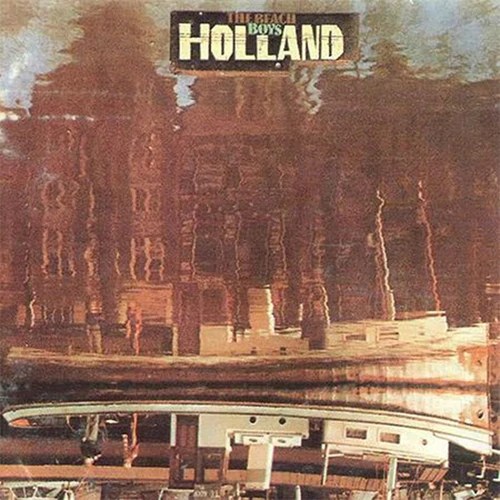
With the creative freedom seemingly to do whatever they want, the Beach Boys in 1972 do something pretty unusual: pack up an entire recording studio and ship it to the Netherlands to make a new album in a new and familiar setting, giving us what feels almost like an ode to 19th-century Western America: Holland.  The album has nothing to do with its eponymous country, as far as I can tell, other than the time on the other side of the Atlantic moved many of the Boys to write about the land they left behind and other feelings of uncertainty and loss in this unusual time.  On one hand their creativity was unleashed; on the other hand, many old familiar faces were not around, especially Bruce Johnston and Brian Wilson.  Still, Holland is a remarkable album capturing the dynamism of the Beach Boys during an unusual era.

Holland Side One

Much has been said in several places about “Sail On, Sailor”: how it was originally not submitted to be on the album, how the production company rejected the album without a potential “hit” song (10 years into the Beach Boys’ career the studio still has control over their albums!), the resurrection and lyrical reworking of the song, et cetera.  It’s easy to imagine what the album would be like without this song — just start the album from track two.  Still, the song fits very well with the entire vibe of the album, and its connectivity to the album is so strong it feels strange thinking the album was intended to exist without it.  It sets the dominant mood of the album very well, making a nice up-tempo(ish) bookend with “Funky Pretty.”  “This is a mellow album with a lot of heart,” says this album.  “We’re on an adventure of mildly languorous enthusiasm.  An adventure of reflection.”  They are sailing, but this isn’t the Sloop John B.  They are all Huckleberry Finns rafting down the river.

“Steamboat” continues that aura perfectly well.  Instead of a raft, though, the medium of the languorous journey of reflection is now a steamboat chugging along at a moderate pace.  Instead of considering it too slow, as some apparently do, it’s better to embrace it as a call to patience, a call to slow your life down and enjoy what is happening in your life — and if you can’t enjoy what is happening in your life now, do what you can to fix that and get to a more enjoyable place of peace and tranquility.  This is a bit ironic, then, considering for Mark Twain the steamboat was an exciting symbol of maturity, progress, and change.  It was the opposite of Huck’s raft, yet here the Beach Boys equate them.

“California Saga” is an impressive, wistful look back at the land the Beach Boys have physically departed during this time.  “Big Sur” feels like the raft and/or steamboat has docked, and we are relaxing on the beach for a while, which makes sense, since Big Sur is a magnificent coastal site in California.  “The Beaks of Eagles” is a very evocative product of its time: this song definitely matches the way the Beach Boys look in the studio, especially Mike Love, whose spoken word voice is rather powerful in its sincerity and quietude.  It reminds me very much of the beginning of Centennial.  “California” is a sharp turn toward what could easily be mistaken for a goofy romp, with the almost honky-tonk sounds and unusual lyric.  Yet, it is a very intelligent tribute to California the way only someone who knows it and loves it could be — it’s like an inside joke but one that invites strangers to take part and learn about what is so wonderful about the subject matter.

Holland Side Two

Continuing this remarkable atmosphere of smooth sailing down the river, Carl Wilson’s fantastic “The Trader” is both a politically-driven artifact of its time and a transcendent piece of beautiful music enjoining us to get to a peaceful place and relax and listen to it and the world around us.  The first half of the song is very much a diatribe against Imperialism, possibly a diatribe against Columbus Day, but it, too, is very evocating of Centennial — that must be part of the reason I enjoyed listening to this album so much (to be taken both ways) this summer.  I should really watch Centennial again.  The second half is definitely one of my favorite parts of the album.  The quality of Carl Wilson’s voice around the “Eyes that see beyond tomorrow / Through to the time without hours / Passing the Eden of flowers / Reason to live” section is fantastic, both vocally and lyrically.  We are far away from the Beach Boys of the ’60s.  Getting to a quiet place where you can listen to this son is definitely a “reason to live.”

“Leaving This Town” shifts the mood again to a somber, sorrowful song about leaving more than just a town: “Sometimes it’s hard to make it through the day / Sometimes it’s hard to find my way / Sometimes it’s hard to notice the changing days / When your friends have all gone / Leaving this town for another one.”  It reminds me of both the end of summer before all of us going off to college for the first time, some leaving early, some of us not leaving at all.  Then, too, it reminds me of that bizarre last day of a college year: nothing feels quite so strange as walking around campus a few hours after graduation, when all your friends have packed up and driven off and all the halls and rooms of laughter and memories and shared moments are still and silent and empty.  This is a very powerful song, but despite its potential for melancholia the music, especially the near-funky bridge, refrains from succumbing to despair.  There is still optimism undergirding this song.  Perhaps we will all return to this town again someday, together — or, better yet, we will all be together again somewhere else better, sooner.  Additionally, this song is a great demonstration of the new life and musical talent Blondie Chaplin and Ricky Fataar brought to the band for a little while.

Dennis Wilson’s second contribution to the album, along with “Steamboat,” is another beautifully quiet song “Only with You.”  It easily recalls “Make it Good” and “Cuddle Up” from Carl and the Passions — “So Tough,” but it’s possibly even better than those.  Dennis’s songs weren’t necessarily the most lyrically complicated, but genuine love and passion don’t need floridity and profundity.  The simplicity of these lyrics, the powerful yet restrained way Carl sings these words, and the sweet musical accompaniment make this a very enjoyable contribution to this album.  It is yet another variegated emotion on an excellent album that has been too often dismissed and neglected.

The album wraps up with Brian’s only new contribution, a laid back groove called “Funky Pretty” that mingles a bit of their Transcendental Meditation experiences with the album’s motif of lost love.  Neither an up-tempo rocking conclusion (which would, after all, feel out of place on this album), nor a slow ballad typically ending most generic pop-rock albums, “Funky Pretty” is its own groove, an unhurried ditty with unabashed humor, astrological linguistic rigmarole, and a sprinkling of wistful missing love.  Sometimes, if you don’t have enough words to make it to the end of the musical line, you just got to let the music carry you through.  The ending of the number is a treat, as many layers of vocals and voices imbricate in a positive, carousing manner.  It’s easy to imagine the Boys standing around the studio singing their different lyrics into their microphones, smiling and laughing while memories of “Barbara Ann” shenanigans flit about a much older, wiser, sadder, hairier group of top-notch musicians.

Mount Vernon and Fairway (A Fairy Tale)

This is an experience, that’s for sure.  It’s best to do what Brian says and listen to it in the dark.  Thanks to modern technology, we can listen to it in its entirety without having to flip over the record and break the mood halfway through.  It’s a remarkable version of how the Beach Boys came to be, as if told from a children’s fairy tale, and that’s the only thing I can say about it directly without spoiling any of it for you.  I can appreciate why the other Boys didn’t want to include this on Holland originally, especially as they were supposedly about moving forward and doing new things, finding new sounds (even if their subject matter was about the past and land they left, too), and Mount Vernon is wholly unlike where the rest of the band was going and what it was doing, but Carl made a good decision in including it as an EP, even if it furthered the rift between the Boys and Brian for a few more years.  Brian Wilson had a gift, and though it was damaged and delayed and possibly thwarted at times, he still managed to share a great deal of beauty with us in a comparatively short amount of time.  This is a gift from a genius to us all.

Outro: Maturing Beach Boys in the Tumultuous ’70s

This was a strange, exciting time for the Beach Boys collectively (not to ignore or belittle Brian’s issues at the time).  Carl is starting to come into his own, Dennis is blossoming as a real musician (if you don’t necessarily like his voice or the simplicity of his lyrics), Al is contributing even more intelligent numbers and growing as a lyricist, and the contributions of Blondie Chaplin and Ricky Fataar prove the Beach Boys were not just a flash-in-the-pan ’60s-only one-trick-pony group.  Oh, yes: and Mike Love is still being Mike Love.  They could adapt to the times, grow as musicians, and be relevant and creative and worthwhile as ever.  In a time of change and uncertainty, the early ’70s-era Beach Boys responded with fresh, enjoyable music.  Go get a copy of Holland & Mount Vernon and Fairway (A Fairy Tale) today and enjoy them.

1984‘s Dark Future

Alex Touchet

Published in 1949, George Orwell’s 1984 describes the futuristic and dystopian society of Oceania where the government maintains a totalitarian grip over the populous by way of omnipresent propaganda, ubiquitous surveillance, and a restrictive chokehold on any form of individualism.  The novel was published four years after the end of World War II, and was undeniably beyond its time.  Orwell comes across as practically prescient through his chilling depiction of totalitarian states that overwhelm the citizens who live within them.  It is logical to assume Orwell was, in the least, inspired by political and economic events taking place in and around Britain during the ’40s.

Thankfully, readers of Orwell do not have to rely upon conjecture to inform them of his novel’s original purpose; in fact, a letter Orwell sent in 1944 to a certain Noel Willmett detailed his personal stance on world politics at the time.  He focused specifically on his fear totalitarianism and “Fuhrer-worship” were consistently becoming more frequent throughout the world.  He also explained how he worried this rise of “emotional nationalism” and leader-worship could inevitably lead to major historical revisions.  He elaborated that “Hitler can say that the Jews started the war, and if he survives that will become official history.”  This theme is exemplified through 1984’s “Ministry of Truth,” the institution that essentially rewrites history so it accommodates whatever the government wishes to tell its naïve civilian population.  Orwell drove his point further with a numeric example he later utilized in his novel: “[Hitler] can’t say that two and two are five, because for the purposes of, say, ballistics they have to make four. But if the sort of world that I am afraid of arrives, a world of two or three great superstates which are unable to conquer one another, two and two could become five if the Fuhrer wished it.”  This serves as a more personalized precursor to 1984’s analysis of individuality oppression.

Orwell also explained how he believed society was already on a downward slope toward a more totalitarian outlook.  He detailed two major reasons for this decline in the general interest in democratic principles in British society.  The first reason he gave was based upon the growing tendency toward indifference for political individualism in the younger generation of his time.  “Do you realise, for instance, that no one in England under 26 now has a vote and that so far as one can see the great mass of people of that age don’t give a d*mn for this?”  He followed by saying a further problem with Britain’s social situation was how most of the intellectual community tended toward totalitarianism over individualistic values.  They would take Stalin, for example, over Hitler, disregarding the potential issues that would arise from such a decision.  “Most of them are perfectly ready for dictatorial methods, secret police, systematic falsification of history etc. so long as they feel that it is on ‘our’ side.”  Orwell connected this general disregard for the necessity for political protection of individuality with the argument Britain and the United States have not experienced totalitarianism yet, and therefore do not understand its ramifications.  It would be much easier to ignore the potential evils of policies such as public surveillance, Gestapo-like police, and the rewriting of history when they are all proposed in the name of homeland-defense or emotional nationalism.

An article by John Bennet describes how Orwell’s involvement in both the BBC and the Spanish Civil War shaped how he viewed the media.  The fact news reports of the war tended to bear little to no resemblance of the actual events to which they referred made Orwell very skeptical of the media’s overall validity.  Bennet also says Orwell partially based his “Ministry of Truth” off of BBC’s efforts during World War II.  “Orwell noted that the BBC put out false hate propaganda during World War II, and controlled history by censoring news about the genocidal Allied policy of leveling German cities by saturation bombing.”  This experience proved to be pivotal in how Orwell believed the control of the past to be integral to the control of the present and future.

Orwell’s many predictions were not restricted only to the 20th century; many of them are gradually becoming more obvious in modern society.  Even in the West, a fountainhead for individual political liberty, the things Orwell was so vigilant in warning the world about are becoming progressively more prevalent.  Bennet describes how even the seemingly far-reaching concept of what Orwell coined “newspeak” has already invaded western media.  “The corruption of language described in 1984 is widespread in the media today, with ‘newspeak’ terms such as democratic, socialist, fascist, war criminal, freedom fighter, racist and many other expressions being used in a deliberately deceptive, propagandistic way….”  Orwell understood the intrinsic reality of government and society so well his warnings apply in the modern day just as well as they did while Stalin was still alive.

George Orwell’s 1984 serves as a warning to all people concerned with the longevity of their individual rights and political freedom.  After over fifty years, his words still continue to impact how people view government and its potential evils.  His writings were undeniably affected by his own experiences in the fields of media and political conflict, and hold serious weight for people living in the modern world.  Certainly, George Orwell hoped people would heed his warnings and remain constantly aware of their social situation.  As Bennet said, “The price of liberty is eternal vigilance.”

Bibliography

Bennett, John. “Orwell’s 1984: Was Orwell Right?” The Journal for Historical Review 6.1 (1986). Web. 9 Dec. 2015. <www.ihr.org>.

Marshall, Colin. “George Orwell Explains in a Revealing 1944 Letter Why He’d Write 1984.” Open Culture. Ed. Dan Colman. 9 Jan. 2014. Web. 7 Dec. 2015.

Only Good on Paper

Jocelyn Gunter

In the pamphlet The Communist Manifesto, authors Karl Marx and Friedrich Engels spell out the beliefs, motives, and hopes of the Communist party. Communism, in its essence, is the abolition of social class, freedoms, and private property. The goal of the Communist party is to have the proletarians or the lower class overthrow the bourgeois or upper class. The Communists believe the lower class is oppressed by the upper class and it is time for the lower class to say no more and become free from the bourgeoisie.

Communists believe once the lower class is free, the proletarians will be in charge and rid societies of social structures and social classes that have plagued the world since Roman days and before. Communists want to equal the playing field by throwing away social classes. They want to control the flow of everything, including private property and inheritance. Communists believe private property should return to the government after a person passes on, instead of it being passed on to the heirs of the dead person. Communists want to do the same with inheritance. This way everyone has the same equal opportunity for everything and no one man is inheriting a huge amount of land or money. In Communism, not only is everything “equal” but also money is shared. Money is taken from the wealthy or hard working people and given to the poor. It’s like a large scale version of Robin Hood. It also gives no incentive to the people to work or try their best to accomplish something because they are spoon fed by the government and don’t have to try for anything. Communism is basically the opposite of the glorified American dream.

Communism not only wants to rid society of classes and freedom, it also wants to rid society of religion, family, education as it is currently, countries, nationality, eternal truths, and all morality. The want to abolish religion, family, eternal truths, and all morality should be a red flag right away to Christians and dissuade them from this type of social structure. Christians should be careful of Communism because it directly goes against what Christians believe. Christians believe religion is an important part of life, all morality and eternal truths are from God and are necessary in life to live like Christ, and family is a God-ordained thing created by Him and vital to our essence. Humans crave relationships, and family is the most important relationship after God. Communism wishes to destroy all of that, so Christians should strongly disagree with Communism. Communism takes away vital parts of human life, parts that make up who we are as humans.

Communism is a nice idea, but it only works on paper. First, the proletariat overthrow of the bourgeoisie does not end oppression. The proletarians may not be oppressed anymore, but they become the people they despised. They become the bourgeois. They become the oppressor. The bourgeois becomes the oppressed. This doesn’t end anything. The cycle of oppressed and oppressor only continues and only the roles have changed. Communism wants to throw off the past, but they are just continuing it. The lower class people of feudalism pushed their way into the bourgeois and became the bourgeois and another people group filled in the empty place and the cycle continued. In the same way, what the Communists wish to do is just continuing the cycle.

Second, something as large as every country switching class roles through revolutions would take much time and, in many cases, turn into chaos and anarchy. Revolutions can take many years to complete the goal. Economies would fail because of the turmoil and war and spending going into the revolutions. The whole world would be in chaos because of the failing economies, therefore the economic structure of the world would fail also. Countries would shut down, limiting the resources being exported and imported into the country, depriving the country’s people along with the rest of the world. Along with the world economy being shut down, countries could spin out of control amidst a revolution and go into anarchy. The lack of a leader and control in the country could really run a nation into the ground. Overthrowing another class through revolution may seem easy, but it is easier said than done. Then again, it seems Communism wishes to ruin the world through a worldwide social upheaval. Changing social structures and styles of government takes time and money, which a lot of countries do not have. Communism only seems to take place in countries with revolutions, which is why they want social upheavals to occur, so Communism can take root. John F. Kennedy said, concerning Communism, “Communism has never come into power in a country that was not disrupted by war, corruption, or both.” Communism is only a good theory, but it is has many, many faults. Any form of government has faults, but Communism is the faultiest because its beliefs and hopes only work in theory. Proof of this is countries like Russia, where the people are oppressed and controlled by the government. They have no freedom and, until recently, have been very behind the rest of the world economically and technologically.

Finally, Communism believes in equality among everyone. All wealth is shared among the people of the nation. Property will be socially or commonly owned, given, and shared by the government, not a private person. Production will not be privately owned, but socially shared. Everything would be shared and controlled by the government. The wealthy’s money would be shared with the poor. Hard working people would lose their money to those who are lazy and don’t work. The world and its people being equal is a nice idea, but the world would need to be a perfect place. The problem with this idea is the world is far from perfect, and because of sinful nature, there is no equality and people are constantly fighting for equality. Jesse Ventura said concerning the ideas of Communism, “The Communism of Karl Marx would probably be actually the best for everybody as a whole. But what he didn’t figure into was human nature, and that’s what corrupts it.” Sinful nature makes the idea of perfect equality and the world in harmony an impossible idea. Only when Christ returns with the New Jerusalem and sets up His thousand-year reign could something like the world being equal and perfect be possible. Sin nature means people make wrong choices, are imperfect, and struggle with being in harmony with one another. That is why there are wars and evil things and people, and why Communism just doesn’t work in the present age.

Communism sounds like a good idea, but that is as far as it goes. Communism doesn’t survive or work off the pages of this pamphlet. Communism destroys fundamental structures and beliefs. As Christians, we cannot accept Communism because it wishes to take away many things we hold dear and are vital to what we believe and hold as true. As the world, we cannot accept Communism now or ever because it is controlling, could put the world in more chaos than it is now, and it takes away rights we hold as true and God-given. Communism does not have a place in the present age or really in any age. Communism is very relevant and present today in the world, and the world needs to rebel against because it is not good for society, the economy, and the world as a whole. Christians and all people, in the United States or not, should listen to the words of Emanuel Celler: “Communism feeds on aggression, hatred, and the imprisonment of men’s minds and souls. This shall not take root in the United States.” Communism should not be allowed to take root and destroy our beliefs, rights, hopes, and dreams, because Communism is only good on paper.

Bibliography

“Quotes on Communism.” QuotesGram. Quotes Gram. Web. 12 Dec. 2015.

Only Good on Paper

Jocelyn Gunter

In the pamphlet The Communist Manifesto, authors Karl Marx and Friedrich Engels spell out the beliefs, motives, and hopes of the Communist party. Communism, in its essence, is the abolition of social class, freedoms, and private property. The goal of the Communist party is to have the proletarians or the lower class overthrow the bourgeois or upper class. The Communists believe the lower class is oppressed by the upper class and it is time for the lower class to say no more and become free from the bourgeoisie.

Communists believe once the lower class is free, the proletarians will be in charge and rid societies of social structures and social classes that have plagued the world since Roman days and before. Communists want to equal the playing field by throwing away social classes. They want to control the flow of everything, including private property and inheritance. Communists believe private property should return to the government after a person passes on, instead of it being passed on to the heirs of the dead person. Communists want to do the same with inheritance. This way everyone has the same equal opportunity for everything and no one man is inheriting a huge amount of land or money. In Communism, not only is everything “equal” but also money is shared. Money is taken from the wealthy or hard working people and given to the poor. It’s like a large scale version of Robin Hood. It also gives no incentive to the people to work or try their best to accomplish something because they are spoon fed by the government and don’t have to try for anything. Communism is basically the opposite of the glorified American dream.

Communism not only wants to rid society of classes and freedom, it also wants to rid society of religion, family, education as it is currently, countries, nationality, eternal truths, and all morality. The want to abolish religion, family, eternal truths, and all morality should be a red flag right away to Christians and dissuade them from this type of social structure. Christians should be careful of Communism because it directly goes against what Christians believe. Christians believe religion is an important part of life, all morality and eternal truths are from God and are necessary in life to live like Christ, and family is a God-ordained thing created by Him and vital to our essence. Humans crave relationships, and family is the most important relationship after God. Communism wishes to destroy all of that, so Christians should strongly disagree with Communism. Communism takes away vital parts of human life, parts that make up who we are as humans.

Communism is a nice idea, but it only works on paper. First, the proletariat overthrow of the bourgeoisie does not end oppression. The proletarians may not be oppressed anymore, but they become the people they despised. They become the bourgeois. They become the oppressor. The bourgeois becomes the oppressed. This doesn’t end anything. The cycle of oppressed and oppressor only continues and only the roles have changed. Communism wants to throw off the past, but they are just continuing it. The lower class people of feudalism pushed their way into the bourgeois and became the bourgeois and another people group filled in the empty place and the cycle continued. In the same way, what the Communists wish to do is just continuing the cycle.

Second, something as large as every country switching class roles through revolutions would take much time and, in many cases, turn into chaos and anarchy. Revolutions can take many years to complete the goal. Economies would fail because of the turmoil and war and spending going into the revolutions. The whole world would be in chaos because of the failing economies, therefore the economic structure of the world would fail also. Countries would shut down, limiting the resources being exported and imported into the country, depriving the country’s people along with the rest of the world. Along with the world economy being shut down, countries could spin out of control amidst a revolution and go into anarchy. The lack of a leader and control in the country could really run a nation into the ground. Overthrowing another class through revolution may seem easy, but it is easier said than done. Then again, it seems Communism wishes to ruin the world through a worldwide social upheaval. Changing social structures and styles of government takes time and money, which a lot of countries do not have. Communism only seems to take place in countries with revolutions, which is why they want social upheavals to occur, so Communism can take root. John F. Kennedy said, concerning Communism, “Communism has never come into power in a country that was not disrupted by war, corruption, or both.” Communism is only a good theory, but it is has many, many faults. Any form of government has faults, but Communism is the faultiest because its beliefs and hopes only work in theory. Proof of this is countries like Russia, where the people are oppressed and controlled by the government. They have no freedom and, until recently, have been very behind the rest of the world economically and technologically.

Finally, Communism believes in equality among everyone. All wealth is shared among the people of the nation. Property will be socially or commonly owned, given, and shared by the government, not a private person. Production will not be privately owned, but socially shared. Everything would be shared and controlled by the government. The wealthy’s money would be shared with the poor. Hard working people would lose their money to those who are lazy and don’t work. The world and its people being equal is a nice idea, but the world would need to be a perfect place. The problem with this idea is the world is far from perfect, and because of sinful nature, there is no equality and people are constantly fighting for equality. Jesse Ventura said concerning the ideas of Communism, “The Communism of Karl Marx would probably be actually the best for everybody as a whole. But what he didn’t figure into was human nature, and that’s what corrupts it.” Sinful nature makes the idea of perfect equality and the world in harmony an impossible idea. Only when Christ returns with the New Jerusalem and sets up His thousand-year reign could something like the world being equal and perfect be possible. Sin nature means people make wrong choices, are imperfect, and struggle with being in harmony with one another. That is why there are wars and evil things and people, and why Communism just doesn’t work in the present age.

Communism sounds like a good idea, but that is as far as it goes. Communism doesn’t survive or work off the pages of this pamphlet. Communism destroys fundamental structures and beliefs. As Christians, we cannot accept Communism because it wishes to take away many things we hold dear and are vital to what we believe and hold as true. As the world, we cannot accept Communism now or ever because it is controlling, could put the world in more chaos than it is now, and it takes away rights we hold as true and God-given. Communism does not have a place in the present age or really in any age. Communism is very relevant and present today in the world, and the world needs to rebel against because it is not good for society, the economy, and the world as a whole. Christians and all people, in the United States or not, should listen to the words of Emanuel Celler: “Communism feeds on aggression, hatred, and the imprisonment of men’s minds and souls. This shall not take root in the United States.” Communism should not be allowed to take root and destroy our beliefs, rights, hopes, and dreams, because Communism is only good on paper.

Bibliography

“Quotes on Communism.” QuotesGram. Quotes Gram. Web. 12 Dec. 2015.

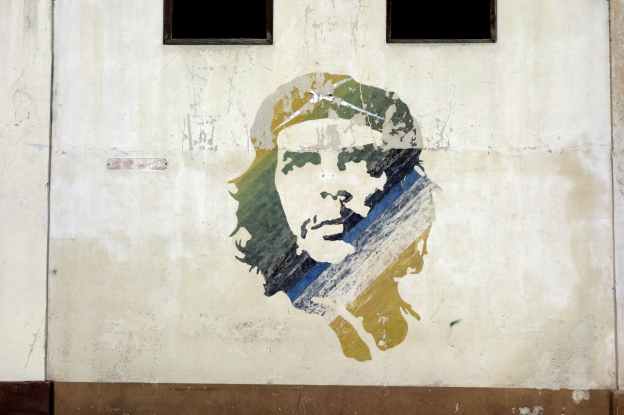
Che Guevara’s Travels and Writings: Inequality, Power Transitions, Revolutions, and Ideals

Nicole Moore Sanborn

Ernesto “Che” Guevara transitioned from a medical student to a world-renowned guerilla leader and socialist. His journey through Latin America changed him and shaped his ideas. The film Motorcycle Diaries, analyzed in conjunction with Guevara’s writings, “Guerilla Warfare: A Method” and “Man and Socialism” provide insight into Che’s transition. The people Che met along his journey in Motorcycle Diaries, specifically the men trying to find work at the mining company, experiences with the leper colony in Peru, encounters with Incan culture and society in Peru, and works he read over his journey were key encounters that shaped Guevara’s thoughts on inequality, exploitation, capitalism, and imperialism, thoughts that echo in his writings.

An underlying concern of Guevara’s is the inequality he sees along his journey. His writings reflect the goal to remove inequality and elevate the poor masses. In Motorcycle Diaries, Guevara became angry with the mining company for not taking all of the men for work and not giving them water when they were thirsty and in the desert. Another instance of inequality that influences Che is inequality in the leper colony. The nuns, nurses, and doctors all wear gloves when interacting with the lepers, despite the fact leprosy cannot be spread by contact. The glove rule combined with the nuns refusing dinner to those who do not attend mass anger Guevara. The separation between religious and non-religious, the natural separation of the leper colony from the “clean” by the Amazon river, and the message wearing gloves sends to the patients, spark realization of inequality throughout Latin America.

Guevara becomes a man of the people during his journey. In “Guerilla Warfare: A Method,” Guevara references the Second Declaration of Havana and declares the rural population is the majority of the population of Latin America and that it lives under horrible conditions of oppression and exploitation (144). Guevara argues guerilla warfare is a means to the end goal of the seizure of power (142), necessary to level inequality. Directly referencing the Second Declaration of Havana, Guevara supports the claim revolution is inevitable and argues the necessity of a revolution is determined by conditions of exploitation in the nation he saw present (145). Guevara also fights inequality in his writing “Man and Socialism.” Che believes in a capitalist society, man is tied to society as a whole and one can win only at the cost of others (370-371). Specifically, Che references the capitalistic United States’ elevation of Rockefeller. Guevara sees Rockefeller not as an example of the success of capitalism, but as a prime example of inequality. He poignantly reminds readers few mention or give thought to the depravity, suffering of others, and poverty Rockefeller caused and required to acquire his fortune (371). Capitalism, then, is a root cause of inequality and must be replaced by socialism.

Imperialism, also evil in Guevara’s eyes, rears its ugly head in the film and both of Guevara’s writings. Motorcycle Diaries depicts a scene where Guevara is sitting in Machu Picchu and comparing it to Lima. He notes the Incas had math and science and built an empire and beautiful Machu Picchu, now a ruin for the ages. The Spanish defeated the Incas because they had gunpowder and built Lima, living out their exploitatively imperialist ways and building a much less beautiful city. Guevara also talks to an indigenous woman who tells her story of working with livestock, not being able to attend school, and only knowing Quechua, the language of the Incas. Because she does not know the Spanish language and is indigenous by blood, she is not able to either attain the same resources of an education or earn the same amount of money as Spaniards. Drawing from his experiences, in “Guerilla Warfare: A Method,” Che discusses how in an agrarian feudal system and society, guerilla warfare may develop to destroy imperialism (143). Che mentions the “worldwide crisis of imperialism” (145) and states his observation of a “reactionary alliance between the bourgeoisie and the landowning class of each country which has a greater or lesser preponderance of feudalism” (146). The dictatorship oppresses the proletariat (146) and is therefore imperialistic in nature. Most importantly, Che provides reasons for the masses to agree with the necessity of guerilla action to win their struggle. His second reason of three in favor of guerilla warfare is the struggle of the poor masses is fighting an “alliance between local and foreign exploiters” (151).

In conjunction with Guevara’s belief in an alliance of exploiters, in “Guerilla Warfare: A Method,” Che later states the national bourgeoisie has united with North American imperialism, which inevitably leads to the clash of the exploited and the exploiters though guerilla warfare fighting traditional warfare (157). North American imperialism appears to be a specific reference to the United States, which entertains his writings in “Man and Socialism” of the dangers of a capitalist (in his mind, also imperialist) economic system. “Man and Socialism” says, “the commodity is the economic cell of capitalist society” (371). Guevara’s “new man” has transitioned from being a slave of capitalism. Man as a commodity ceases to exist in Guevara’s ideal. In Che’s new society, man acquires a new status where he is not working as a commodity, but works for the fulfillment of his social duty (372). “Man and Socialism” also states “man truly reaches his full human condition when he produces without being compelled by physical necessity to sell himself as a commodity” (373). In his writings, he fights against the feudal system rampant with exploitation, feudalism, and imperialism. Imperialism, feudal systems (wealth of landowners and therefore exploitation of rural masses), and capitalism must cease to exist. Guerilla warfare will transition societies from feudal, capitalist, and imperialistic to one of proletariat dictatorship (Guerilla Warfare 145), equality, and working not as a commodity but for the good of society and of the masses.

Motorcycle Diaries shows Guevara reading Marx and Marti. Subtle, yet significant, Che’s readings on his journey ultimately influence his writings. Guevara read works written by Marti, Marx, and Lenin, all arguing for a new socialist society. Guevara connects the ideas he reads with the stories of the people he encounters, thereby justifying (in his mind) a call to arms in the form of guerilla warfare. In his writings, he references and quotes these men. “Guerilla Warfare: A Method” quotes Lenin and Marti. Guevara quotes Lenin saying class antagonisms are irreconcilable and immediately argues for a complete and total revolution and the total elimination of bourgeois legality, otherwise the nation will once again be enslaved (146-147). Che also quotes Marti discussing when to wage war in a country. Guevara uses this to further fuel his argument violence and revolution in the form of guerilla warfare ought to be used when the moment arrives, and that moment is now (147). Marxist-Leninism influences his thoughts in “Man and Socialism” when Che discusses the Marxist ideal of man reaching his human potential when he ceases to sell himself as a commodity.

Che Guevara was a man who had to reconcile his seemingly compassionate nature with his ideological belief in the need for guerilla warfare and violence in revolution. His compassion is evident in his interactions with and listening to the stories of the people he encounters. Che has compassion on the sick in Motorcycle Diaries, despite the fact they are dying. The medical side of him shows his innate desire to cure humanity. Guevara’s ruthlessness, however, is evident in his writings, especially in “Guerilla Warfare: A Method.” Che’s innate desire to cure humanity, his inspiration by Marti, Marx, and Lenin, and his alignment of ideological views with those writers causes him to desire a violent overthrowing of the current state. Guerilla warfare is a necessary means to an end. The oppressive landholders, feudalism, imperialism, capitalism, and inequality must be reversed and overthrown. Che’s ultimate ideological shift remains rooted in his innate desire to cure, and though he clearly prescribes a violent revolution, he sincerely believes it is the only means to an end he believes will cure his continent.

The Rise of the Proletariat

Jared Emry

Due to the irrational and deadly nature of the first great world war, the Russian proletariat was more than dissatisfied with their current governance; this and the cultural and aesthetic status previously existing allowed the Bolsheviks to rise to power. The British Ministry of Information successfully frothed the British into an anti-German frenzy with propaganda detailing mostly fictional German atrocities, thus demonstrating for the billionth time the undeniable and empirical correlation between empathy and violence (as empathy is easily weaponized and the empathetic are more like to endorse and be violent against that which they perceive to violate their culturally dictated moral norms without any evidence of violation), as all good propaganda does. British protestors, such as Rosa Luxemburg, Bertrand Russell, and Eugene Debs, were jailed for questioning and silenced. (Chomsky 69). Nicholas II of Russia and the subsequent administrations of state failed to have such effective propaganda and failed to imprison the Russian equivalents of the dissidents previously mentioned. The Bolshevik’s propaganda was supplemented by leaked documents that seemed to show a continued dedication to the war, and the war in itself provided the Bolshevik’s ladder to power.

The primary rigor to be endured in interpreting the events of the Russian Revolution is to know the political climate and the ideologies that drive it. The first and foremost significantly pertinent ideology appeared in the mid-19th century and it was called Nihilism. Russian Nihilism isn’t quite the same as the Nihilism Kierkegaard, Nietzsche, and other existentialist philosophers spoke of. The nihilism the existentialists talked of is an abstract condition of tension between what we desire to value and what reality demands — a trait of the modern age. It is a process of levelling in which the individual is made to conform to society (that social phenomena including, but not limited to, both higher and lower education, state religion, psychiatry, and other such phenomena, that abstractly facilitate and organize the destruction of the individual for the sake of social stability) and the individual is left meaningless in a stillness worse than the death (Kierkegaard 51–53). The existentialist philosopher asks how return the value of our own life — the intent here is to avoid nihilism at all costs. The Russian Nihilists appeared as Kierkegaard first spoke of levelling but are radically different in some significant aspects. Russian Nihilism was an ideologically-driven movement driven by a desire to annihilate the social order that imposed the abstract levelling. Russian Nihilism railed against the repressions of the Tsar. The seemingly contradictory value system, “Let us therefore trust the eternal Spirit which destroys and annihilates only because it is the unfathomable and eternal source of all life. The passion for destruction is a creative passion, too!” became fairly popular amongst a certain kind of people in Russia (Bukanin, Die Reaktion). The Nihilists formed secret societies, such as The Organization, and conducted themselves with tactics that could be called terrorism (although you could say the same about John Brown; it seems things are only terroristic if the right people like the outcomes) (Edie et al.). Russian Nihilism viewed the society as having positivists and negativists or those who conform to and support the status quo and those who don’t. The tenants of socialism were already present in Russian Nihilism with Nikolay Chernyshevsky, who formed the idea of a struggle between bourgeoisie and the proletariat long before Marx’s words reached Russia (Chernyshevsky).

The second major pertinent philosophy is Marxism. Marxism is an economic ideology that believes economic need begins with the populous base and a system must be constructed onto the base that will provide for those needs. Interestingly enough, the Nihilists were incredibly hostile to Marxism as they believed such a top-down approach is authoritarian and calls for a strong hand (a dictator) to guide the construction. The Nihilist believed a dictator called for by the Marxists could only be corrupted by self-perpetuation at the cost of universal slavery. This conflict is probably best seen in the debates between Marx and Bakunin, both of whom were major philosophers between the two distinct ideologies. However, the Russian Government cracked down on the Nihilists decades prior to the revolution and left a vacuum for Marxism. The Nihilists were exiled to Siberia for even the most minor infractions, but the aesthetic sensibilities and value system were left behind for the Marxism of the Bolsheviks.

Bolshevik Propaganda did not require much to levy the support of the people. Underground support had simply drifted from the Nihilists to the Marxists; the change was only in what might be considered to be insignificant details and so the aesthetic needed not to change for the people. One such Russian Marxist was Vladimir Lenin, whose writings formed the foundation of the October Revolution and the foundations of the Soviet Union. 100,000 copies of Pravda were printed daily and more than 350,000 leaflets were distributed by the Bolsheviks around St. Petersburg to promote Bolshevik ideals. As far as election results go, the Bolshevik Party gained two-thirds of the votes in only three months. The shift toward the Bolsheviks was both quick and popular, thanks partially to the significant and pre-existing Nihilist aesthetic (Lenin). Their propaganda, among other things, portrayed Lenin or Leon Trotsky as a St. George, a knight that slays the foul beast. This also hit to another core of Russian culture, that of the Russian Orthodox Church that has always held St. George to a particular esteem set apart a little further than other saints. St. George was and continues to be a very popular subject on Russian iconography.  Coinciding with the Bolshevik propaganda, the movements of western nations that supported the anti-Bolsheviks fed right into the propaganda and seemed to validate Bolshevik claims concerning the legitimacy of their current government and the evils of Western imperialism (Carmichael).

Through the use of propaganda the Marxist Bolsheviks managed to gain power via the hijacking of Russian Nihilism; however, they failed to realize the state is antithetical to the people, and where the people still exists, it hates the state and cannot understand it. The Nihilist fear of the Marxist leader would be realized with rise of Stalin. The authoritarian came down as a Saint, almost like that of a false prophet, and lead the revolution, but the ideals set out to be achieved were not and possibly could not be achieved. 

Bibliography

Bakunin, Mikhail Aleksandrovich. God and the State. New York: Dover Publications, 1970. Print.

—. Die Reaktion in Deutschland. Thesis. Deutsche Jahrbucher Fur Wissenchaft, 1842. N.p.: n.d. Print.

Carmichael, Joel. A Short History of the Russian Revolution. London: Nelson, 1966. Print.

Chernyshevsky, Nikolay. A Criticism of Philosophical Prejudices Against the Obshchina. N.p.: 1858. Print.

Chomsky, Noam. 9-11. New York: Seven Stories, 2001. Print.

Cohen, Stephen F. Bukharin and the Bolshevik Revolution: A Political Biography. Pretoria: Van Schaik, 1980. Print.

Edie, James M., James P. Scanlan, and Mary-Barbara Zeldin. Russian Philosophy: The Nihilists, The Populists, Critics of Religion and Culture. Vol. II. Knoxville, TN: U of Tennessee, 1994. Print.

Kierkegaard, Søren. The Present Age: And Of the Difference between a Genius and an Apostle. New York: Harper & Row, 1962. Print.

Lenin, Vladimir Ilʹich. The State and Revolution: The Marxist Teaching on the State and the Tasks of the Proletariat in the Revolution. Peking: Foreign Languages, 1976. Print.

Prawdin, Michael. The Unmentionable Nechaev: A Key to Bolshevism. London: Allen and Unwin, 1961. Print.

Report of the Petrograd Okhrana to the Special Department of the Department of the Police. N.p.: October 1916. Print.

Ullman, Richard H. Intervention and the War. Princeton, NJ: Princeton UP, 1961. Print.

Wildman, Allan K. The End of the Russian Imperial Army. Princeton, NJ: Princeton UP, 1980. Print.

Civil Disobedience

Christian Tullos

Throughout the course of history, mankind has possessed a unique need. Faced with turmoil, instability, and injustice, man has searched persistently for the cure. A tool men have turned to through the ages has been government. Men seek to find structure, order, and stability in its confines. Government has been interwoven into the fabric of society. Government is a constant in the world of man. The only inconsistency remains the constant inconsistency of the form the government takes.

Many sages, philosophers, and thinkers have proposed forms of government hoping to find the proper balance of power, freedom, and security. The balance has been elusive and many great ideas for government have not withstood the strain of society. The governments of past and present have proved corrupt, failures, and warped. Yet many men have perpetually struggled, and still do, making vigorous effort to provide a solution to the problems government and societies have. Henry Thoreau proved to be one of these men.

A Transcendentalist, Thoreau espoused many radical ideas for his time. Outspoken, logical, and insightful into the nature of man, he attempted to rectify what government is, into what it should eventually become. His ideas for and about government are captured in his work, “Civil Disobedience.”

Immediately opening his work he erects his core pillars: “I heartily accept the motto, ‘That government is best which governs least’; and I should like to see it acted up to more rapidly and systematically. Carried out, it finally amounts to this, which also I believe — ‘That government is best which governs not at all’; and when men are prepared for it, that will be the kind of government which they will have.” Diving headlong into the fray, Thoreau opens with excessively strong words. He believes the best form of government is a detached one; one that doesn’t interfere with man and his relations.

Following up this statement Thoreau states, “Government is at best but an expedient; but most governments are usually, and all governments are sometimes, inexpedient.” In plain language, he is saying government is a tool, a means to a certain end. Government ought to better society easing the lives of men, but it failed drastically. Government now hinders their lives. Governments, according to Thoreau, have defeated their own purpose.

Next he says, “The government itself, which is only the mode which the people have chosen to execute their will, is equally liable to be abused and perverted before the people can act through it. Witness the present Mexican war, the work of comparatively a few individuals using the standing government as their tool; for, in the outset, the people would not have consented to this measure.” Government being composed of the people should be controlled by the people, not a select few in authority. Thoreau leads one to believe in order for government to be good it must be controlled by the good people.

Thoreau then lays out his thoughts on the American Government. He addresses his countrymen stating their country is corroding. It started out well but is regressing into the trends of the Old World. He points out the accomplishments of the people saying they didn’t need the government to achieve great things, and, in fact, the government hindered their progress in many ways with their rules, regulations, and delegations.

He then challenges the reader: “But, to speak practically and as a citizen, unlike those who call themselves no-government men, I ask for, not at once no government, but at once a better government. Let every man make known what kind of government would command his respect, and that will be one step toward obtaining it.” Thoreau isn’t saying immediately abolish government but immediately strive to make it better. In many ways, the hardest part of change is starting the change, so he gives men a starting block. He wishes for people to make their opinions known.

Consistent with his Transcendentalist views, Thoreau believes men should be self-reliant. Men should not tie themselves to a certain group, state, or government as it could limit their potential to become truly great. He believes a good and wise man is one who is independent, who has transcended the restraining structure of society. Man should seek to ascend the impediments and constraints of society and government.

“A wise man will only be useful as a man, and will not submit to be ‘clay,’ and ‘stop a hole to keep the wind away,’ but leave that office to his dust at least.”  Man should be careful to attach to any form of government as it will seek to use and mold him into what it desires or needs. If he desires freedom, he will seek it outside of the confines of government, Thoreau concludes.

Through his writing he cites the mistakes of the government. He sees error in their morals, their views, and their actions. He disagrees with the war, slavery, and legislation government has engaged in. In some ways Thoreau blames the government for the state of turmoil he believes the nation to be in. He sees government as oppressive to minorities and the general population as well. He sees it as a corrupt system passing corrupt law, evil begetting evil.

If the injustice is part of the necessary friction of the machine of government, let it go, let it go: perchance it will wear smooth — certainly the machine will wear out. If the injustice has a spring, or a pulley, or a rope, or a crank, exclusively for itself, then perhaps you may consider whether the remedy will not be worse than the evil; but if it is of such a nature that it requires you to be the agent of injustice to another, then, I say, break the law. Let your life be a counter-friction to stop the machine. What I have to do is to see, at any rate, that I do not lend myself to the wrong which I condemn.

Here Thoreau condemns government commanding those who will not stand for it to not vainly follow, but to stand against it. He wishes to change man’s disposition: that all men would see the evil he believes it has caused and to strive to amend the wrongs it has done.

Throughout Thoreau’s work, he has some keen insights. The government is not perfect nor has any form of government under any kingdom or civilization been perfect. It has been used for evil, it has been a platform for injustice, and it has been oppressive; yet Thoreau forgets a key point. Government is not intrinsically good or evil. The government is only a tool — a tool that can be used for good or ill. It is a powerful tool and, if put to its proper purpose, can accomplish great things. The reason governments fail is because of the people who lead them. What Thoreau and many other philosophers have failed to realize is mankind is a fallen being. He is sinful, fallen, and prone to temptation. It is because man doesn’t have a tendency toward good that governments become corrupt and do unjust things.

The fact man is fallen also negates his proposed solution. As men are not innately good, they will not create a better society with the absence of government. Power, lust, greed, would consume people. Government is made to restrain the very thing Thoreau is proposing to loose. In a perfect world where man is good, there would not be a need for government, and man could live in peace without restrictions. However, man will not have that privilege on this side of the grave. Thus, governments should primarily be used to protect the God-given rights and liberties with which every man is endowed, the liberties that need protecting from men who chose to abuse their own.

Ultimately, Thoreau’s idea of each man acting autonomously and free from government rests on a faulty and dangerous premise. His recipe, rather than promoting prosperity and peace, would lead to anarchy and chaos. As Thoreau states, there may be a time for civil disobedience, but not for the reasons Thoreau indicates. When a government oppresses citizens in a way that compromises their God-given freedoms, people have the liberty, and even the duty, to disobey a government out of loyalty to their higher authority.