
Christopher Rush
Intro: Packing Up and Moving On
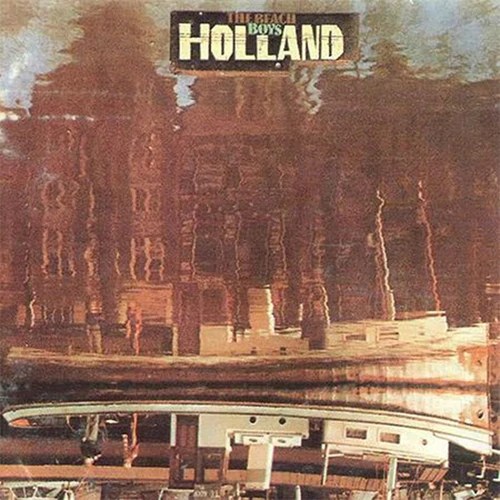
With the creative freedom seemingly to do whatever they want, the Beach Boys in 1972 do something pretty unusual: pack up an entire recording studio and ship it to the Netherlands to make a new album in a new and familiar setting, giving us what feels almost like an ode to 19th-century Western America: Holland. The album has nothing to do with its eponymous country, as far as I can tell, other than the time on the other side of the Atlantic moved many of the Boys to write about the land they left behind and other feelings of uncertainty and loss in this unusual time. On one hand their creativity was unleashed; on the other hand, many old familiar faces were not around, especially Bruce Johnston and Brian Wilson. Still, Holland is a remarkable album capturing the dynamism of the Beach Boys during an unusual era.
Holland Side One
Much has been said in several places about “Sail On, Sailor”: how it was originally not submitted to be on the album, how the production company rejected the album without a potential “hit” song (10 years into the Beach Boys’ career the studio still has control over their albums!), the resurrection and lyrical reworking of the song, et cetera. It’s easy to imagine what the album would be like without this song — just start the album from track two. Still, the song fits very well with the entire vibe of the album, and its connectivity to the album is so strong it feels strange thinking the album was intended to exist without it. It sets the dominant mood of the album very well, making a nice up-tempo(ish) bookend with “Funky Pretty.” “This is a mellow album with a lot of heart,” says this album. “We’re on an adventure of mildly languorous enthusiasm. An adventure of reflection.” They are sailing, but this isn’t the Sloop John B. They are all Huckleberry Finns rafting down the river.
“Steamboat” continues that aura perfectly well. Instead of a raft, though, the medium of the languorous journey of reflection is now a steamboat chugging along at a moderate pace. Instead of considering it too slow, as some apparently do, it’s better to embrace it as a call to patience, a call to slow your life down and enjoy what is happening in your life — and if you can’t enjoy what is happening in your life now, do what you can to fix that and get to a more enjoyable place of peace and tranquility. This is a bit ironic, then, considering for Mark Twain the steamboat was an exciting symbol of maturity, progress, and change. It was the opposite of Huck’s raft, yet here the Beach Boys equate them.
“California Saga” is an impressive, wistful look back at the land the Beach Boys have physically departed during this time. “Big Sur” feels like the raft and/or steamboat has docked, and we are relaxing on the beach for a while, which makes sense, since Big Sur is a magnificent coastal site in California. “The Beaks of Eagles” is a very evocative product of its time: this song definitely matches the way the Beach Boys look in the studio, especially Mike Love, whose spoken word voice is rather powerful in its sincerity and quietude. It reminds me very much of the beginning of Centennial. “California” is a sharp turn toward what could easily be mistaken for a goofy romp, with the almost honky-tonk sounds and unusual lyric. Yet, it is a very intelligent tribute to California the way only someone who knows it and loves it could be — it’s like an inside joke but one that invites strangers to take part and learn about what is so wonderful about the subject matter.
Holland Side Two
Continuing this remarkable atmosphere of smooth sailing down the river, Carl Wilson’s fantastic “The Trader” is both a politically-driven artifact of its time and a transcendent piece of beautiful music enjoining us to get to a peaceful place and relax and listen to it and the world around us. The first half of the song is very much a diatribe against Imperialism, possibly a diatribe against Columbus Day, but it, too, is very evocating of Centennial — that must be part of the reason I enjoyed listening to this album so much (to be taken both ways) this summer. I should really watch Centennial again. The second half is definitely one of my favorite parts of the album. The quality of Carl Wilson’s voice around the “Eyes that see beyond tomorrow / Through to the time without hours / Passing the Eden of flowers / Reason to live” section is fantastic, both vocally and lyrically. We are far away from the Beach Boys of the ’60s. Getting to a quiet place where you can listen to this son is definitely a “reason to live.”
“Leaving This Town” shifts the mood again to a somber, sorrowful song about leaving more than just a town: “Sometimes it’s hard to make it through the day / Sometimes it’s hard to find my way / Sometimes it’s hard to notice the changing days / When your friends have all gone / Leaving this town for another one.” It reminds me of both the end of summer before all of us going off to college for the first time, some leaving early, some of us not leaving at all. Then, too, it reminds me of that bizarre last day of a college year: nothing feels quite so strange as walking around campus a few hours after graduation, when all your friends have packed up and driven off and all the halls and rooms of laughter and memories and shared moments are still and silent and empty. This is a very powerful song, but despite its potential for melancholia the music, especially the near-funky bridge, refrains from succumbing to despair. There is still optimism undergirding this song. Perhaps we will all return to this town again someday, together — or, better yet, we will all be together again somewhere else better, sooner. Additionally, this song is a great demonstration of the new life and musical talent Blondie Chaplin and Ricky Fataar brought to the band for a little while.
Dennis Wilson’s second contribution to the album, along with “Steamboat,” is another beautifully quiet song “Only with You.” It easily recalls “Make it Good” and “Cuddle Up” from Carl and the Passions — “So Tough,” but it’s possibly even better than those. Dennis’s songs weren’t necessarily the most lyrically complicated, but genuine love and passion don’t need floridity and profundity. The simplicity of these lyrics, the powerful yet restrained way Carl sings these words, and the sweet musical accompaniment make this a very enjoyable contribution to this album. It is yet another variegated emotion on an excellent album that has been too often dismissed and neglected.
The album wraps up with Brian’s only new contribution, a laid back groove called “Funky Pretty” that mingles a bit of their Transcendental Meditation experiences with the album’s motif of lost love. Neither an up-tempo rocking conclusion (which would, after all, feel out of place on this album), nor a slow ballad typically ending most generic pop-rock albums, “Funky Pretty” is its own groove, an unhurried ditty with unabashed humor, astrological linguistic rigmarole, and a sprinkling of wistful missing love. Sometimes, if you don’t have enough words to make it to the end of the musical line, you just got to let the music carry you through. The ending of the number is a treat, as many layers of vocals and voices imbricate in a positive, carousing manner. It’s easy to imagine the Boys standing around the studio singing their different lyrics into their microphones, smiling and laughing while memories of “Barbara Ann” shenanigans flit about a much older, wiser, sadder, hairier group of top-notch musicians.
Mount Vernon and Fairway (A Fairy Tale)
This is an experience, that’s for sure. It’s best to do what Brian says and listen to it in the dark. Thanks to modern technology, we can listen to it in its entirety without having to flip over the record and break the mood halfway through. It’s a remarkable version of how the Beach Boys came to be, as if told from a children’s fairy tale, and that’s the only thing I can say about it directly without spoiling any of it for you. I can appreciate why the other Boys didn’t want to include this on Holland originally, especially as they were supposedly about moving forward and doing new things, finding new sounds (even if their subject matter was about the past and land they left, too), and Mount Vernon is wholly unlike where the rest of the band was going and what it was doing, but Carl made a good decision in including it as an EP, even if it furthered the rift between the Boys and Brian for a few more years. Brian Wilson had a gift, and though it was damaged and delayed and possibly thwarted at times, he still managed to share a great deal of beauty with us in a comparatively short amount of time. This is a gift from a genius to us all.
Outro: Maturing Beach Boys in the Tumultuous ’70s
This was a strange, exciting time for the Beach Boys collectively (not to ignore or belittle Brian’s issues at the time). Carl is starting to come into his own, Dennis is blossoming as a real musician (if you don’t necessarily like his voice or the simplicity of his lyrics), Al is contributing even more intelligent numbers and growing as a lyricist, and the contributions of Blondie Chaplin and Ricky Fataar prove the Beach Boys were not just a flash-in-the-pan ’60s-only one-trick-pony group. Oh, yes: and Mike Love is still being Mike Love. They could adapt to the times, grow as musicians, and be relevant and creative and worthwhile as ever. In a time of change and uncertainty, the early ’70s-era Beach Boys responded with fresh, enjoyable music. Go get a copy of Holland & Mount Vernon and Fairway (A Fairy Tale) today and enjoy them.
 Redeeming Pandora