
Christopher Rush
Merry Christmas, friends! Instead of our usual panoply, we are going to focus on something a little different this year. One of the most important aspects of Christmastime is the quality togetherness with loved ones. And near the top of enjoyable, high-quality family-and-friends experiences is enjoying fun boardgames together. Recently, we went through an informal Hot 12 games countdown, inspired in part because many of you seem to still be living in the First Golden Ag of Boardgaming. While that is fine in its way, and if games such as Monopoly, Chess, Scrabble, Uno, Sorry!, and Risk still bring you a modicum of happiness, that’s swell, really — but you are likely unaware an entirely new, fresh universe of boardgames has exploded within the last couple of decades. We are currently in what has been aptly called The Second Golden Age of Boardgaming. One of the positive aspects of the global interconnectedness of recent decades (spurred on, no doubt, in part by the Information Superhighway) is the migration of European-style games (often called “Eurogames”) to the United States. Starting, by many accounts, with The Settlers of Catan, a new wave of game designs, game designers, and outright fun (the primary purpose of playing games, right?) has grown exponentially in our lifetime. Hundreds of new boardgames are being made and published each year, some huge (Twilight Imperium III, for example), some tiny (such as Sushi Go!), some for two players (Fields of Arle), some for dozens of players simultaneously (Ultimate Werewolf). Because it is a time for giving, we here at Redeeming Pandora humbly give you a small selection of the recent kinds of games that quite possibly surpass the original classic games. (Feel free to buy these for your family as presents.)
Don’t get me wrong: I grew up on the old games as well. We had many an enjoyable evening of Careers, Clue, Dutch Blitz variants, Trivial Pursuit, and many more. With all due respect to those games, this new generation of games is mind-bogglingly superior in almost every way. And, while we at Redeeming Pandora are often in favor of the classic instead of the recent (in virtually every other category of human experience, in fact), we are also in favor of being aware of the times, aware of what good things are happening in our own day, and boardgaming is certainly where it’s at today.
This list is partly inspired by the fellows over at The Dice Tower, an online forum for contemporary board game discussion. Tom Vasel, a fellow Christian and former mathematics teacher, started his online game reviews over a decade ago, and it has since blossomed into a significant news/reviews/and more avenue for, especially, new and forthcoming board games. While I don’t always agree with what they say over there (especially when they start talking nonsense about wargames), many times they provide helpful and enjoyable insights onto games, designers, and exciting new games on the horizon. The Dice Tower fellows did a Top 10 list about a year and a half ago about “better” games than the classics. Some of our suggestions are similar to theirs, some are rather different. Richard Ham, former videogame designer, of Rahdo Runs Through, another online game reviewer, is very enjoyable and intelligent in his reviews and is highly recommended, also.
Remember: this is not meant to shame you for enjoying other things. As I said, I’ve played and had some fun with these myself in the past. Consider this more of an opportunity to learn about things you will likely enjoy even more than what you are doing now (or remember doing in your own childhood). It’s time to move beyond Candy Land and Mouse Trap and enter the Realms of Gold of modern boardgaming.
Caveat: many of the games mentioned here will naturally overlap many of these categories. For example, Marvel Dicemasters is clearly a dice game, a heavily thematic game, and can be played in teams cooperatively. I have chosen (arbitrarily, as always) to list games, then, under the category that is more immediately identifiable for the game (according to my personal whim and fancy).
Cooperative Games
You probably didn’t know this kind of game existed, did you? If you are one of those people who would like to play games but don’t like the competitive nature of them (perhaps because you have had bad experiences with poor winners, “rules lawyers,” and other unfortunate gaming situations), there is good news! A lot of very enjoyable games in the last decade or so have been created called “cooperative games,” in which you and your fellow players are trying to work together to beat the game itself. These may be the games for you.
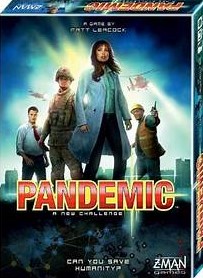
For many, the most enjoyable cooperative game out there today is Pandemic. You and your fellow players are a team trying to cure four diseases trying to take over the world. You have to work together to get the job done because if you don’t, the diseases will get out of control. This game has a good amount of variability, which enables a good deal of replay value, which is definitely a plus for games as investments. With different character roles and different setups each game, each time you play it is a new experience. Even so, Pandemic has a number of expansions available to change the game in different ways.
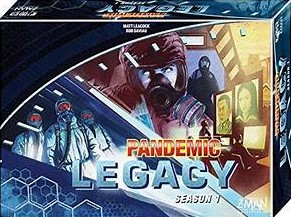
If you like grand stories, as I’m sure you do, once you have played a good deal of Pandemic, give Pandemic Legacy a try. I’m told it tells an epic story over a number of games, in which the playing surface and the game itself change from gaming session to gaming session.
A very enjoyable cooperative game that also is a very good “gateway”
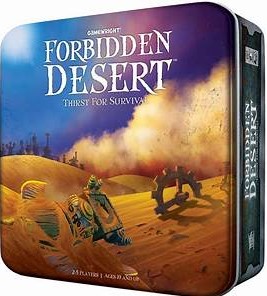
game (a good game to introduce people to boardgaming, especially if they aren’t familiar with modern boardgames) is Forbidden Desert. You and your fellow players are a team of explorers (also with different roles/abilities like Pandemic, adding to the variability and replayability) trying to find pieces of Leonardo’s flying machine (sort of) before the desert swallows you up or you run out of water. The difficulty can be adjusted for new, intermediate, or advanced players. It’s also a short game, and while there is some tension in trying to “beat the clock” together, it’s a fun game providing a good deal of player interaction in a positive way, since you are all working together. Because of this, it’s also a great game to play with kids (my six-year-old Julia can play pretty well as her own character).
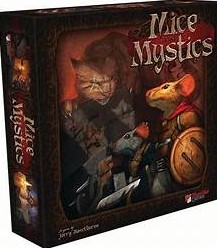
Another good cooperative game even more suited to a family gaming experience is Mice and Mystics. This is a storytelling fantasy game in which the players are loyal heroes-turned-mice adventuring their way through the castle in an attempt to overcome the villains and bring peace back to the troubled realm. It is a role-playing game fit for the whole family, with several expansions available to keep the fun and family togetherness going for a long time.
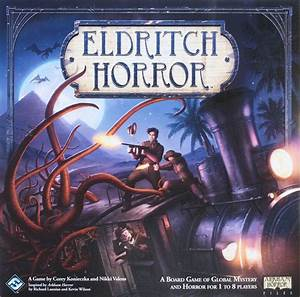
In stark contrast to Mice and Mystics is a definitely older-audience themed game, still with a great deal of story-telling fun: Eldritch Horror. Based on the macabre works and worlds of H.P. Lovecraft, Eldritch Horror is a story-telling, mystery-solving, globe-trotting adventure. It works well as a solo game; it works well with up to 8 players. As has been discussed here and elsewhere, I am no fan of horror. I am quite sure I will never read any stories by H.P. Lovecraft. However, I do enjoy this game. The horror element is there in part, but it’s a minor part and can be easily glossed over. It’s a dark mystery storytelling adventure. This, too, has a number of expansions, so it has a tremendous amount of replayability. You can be different characters each time, encounter different monsters each time, and investigate different supernatural mysteries and clues each game. As many of you know, it’s a bit of a streamlining of an older, similar game Arkham Horror, which is another fine cooperative dark mystery in the Cthulhu universe. I enjoy it, too, but it is longer and a bit scarier (it’s much closer in one town instead of traveling the world, so the menace is more palpable).
One of the most recent games on this list is also a cooperative storytelling adventure T.I.M.E. Stories. I haven’t played it, but I’ve seen videos about it, and it’s like a grown-up cooperative “choose your own adventure” system. The game system comes with one module called “The Asylum.” Once you’ve played it, you know it all and probably won’t want to play it again. But, more modules are out and more are on the way, so consider T.I.M.E. Stories more like a gaming system (like a Super Nintendo) and the modules are new game cartridges. The modules out now are fairly dark like Eldritch Horror, but the ones scheduled to be released soon seem lighter. It’s an intriguing system about managing time, solving mysteries, gathering clues, going back in time … it looks like Quantum Leap meets Groundhog Day meets Goosebumps.
Semi-cooperative Games
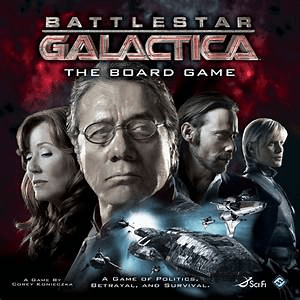
Now that you know about the exciting world of cooperative games (and, like this entire article, we’re only scratching the surface), for those who like an extra challenge, try a semi-cooperative game. Often, games of this ilk have one or two of the players secretly working against the rest of the group — possibly for personal victory objectives or possibly because that person is working for the villains the rest of you are trying to avoid/conquer. For me, the best among this group (not that I’ve played them all) is Battlestar Galactica. As a fan of the show, the theme of this game is mostly what makes it such a fun game. Even if you aren’t a fan of the show, the tenseness and rollercoaster nature of the game will give you a tremendously enjoyable gaming experience. Part of the wildness of the game comes from the possibility one or two of the players may switch sides halfway in the game, whether they want to or not — and while that may sound frustrating, since you know that’s a possibility before you start, it’s simply another element of strategy you have to add to the game. It’s good, tense fun. It also has expansions to make replayability and playing through the whole series a possibility.

On the fantasy side, Shadows over Camelot is another semi-coop game in which most of you are loyal knights trying to salvage Camelot from the inexorable forces of darkness (Mordred, traitorous Lancelot, invading Picts, and more) … yet it’s possible one of those “loyal” knights is a dirty traitor, but if he or she is playing wisely, you may not know it until it’s too late. It’s possible, certainly, to play without the traitor element: it’s a challenging enough game without that, so if you want to play a fun coop game set in Camelot with or without traitor tension, this is a very enjoyable, fast-paced game.

One game I’ll likely never play (in part because I don’t really like the theme) is the beloved and acclaimed Dead of Winter. I’m told if you like The Walking Dead or other zombie-themed things (I don’t know why you would), you will enjoy this game. It’s noted for its “crossroads” system, in which decisions are made and situations occur completely unique to every gaming experience that make each play different. With different character roles, variable missions, and random personal goals each time, it’s got a lot of replay value.
Deckbuilding
One of the more interesting innovations in games lately is the “deckbuilding” game mechanism. Hearkening back, in a way, to those CCGs of the ’90s, instead of building a whole deck and hoping you get the right cards eventually, deckbuilding games have you start out with a few basic cards and you get to decide what cards to add to the deck and build it yourself during the game. For many of you, Dominion is the popular choice for this genre of games, and that’s fine. It was among the first to make this newish mechanism popular and has been a beloved game for several years now, with many expansions and whatnot, but here are some that you may like as well (or more).
Paperback is especially interesting for those who like Scrabble. It is a word-building game, but you are also using letters (as cards in your hand and in your deck) to make words that will allow you to get more letters in your deck to make longer, more interesting words and perhaps special words that will give you bonuses and such. There is a competitive aspect to the game, like Scrabble, but unlike Scrabble you’ll never be stuck with a ZXCEEQF and nowhere to put it on the board. If you don’t like the competitive aspect, Paperback comes with a cooperative element, in which you and your fellow players are trying to make words to beat the built-in time mechanism (in a sort of reverse Klondike fashion). This is a great game.
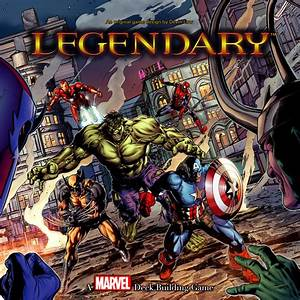
For fans of the Marvel universe, a very enjoyable deckbuilding (and also cooperative) game is Marvel Legendary. You are SHIELD agents coordinating with powerful Marvel heroes to tackle the main villain and his henchmen. It takes strategy, cooperation, and a smidgeon of luck, but it is a fun game. The series has a large number of supplemental releases, so there’s a good chance many of your favorite Marvel heroes/villains are available or soon will be (though, they are slanted toward newer storylines and characters, so I’m a bit concerned some of my favorites from back in the day won’t get released, but that’s okay). If you would prefer to play as the villains against the heroes, check out Marvel Legendary: Villains.
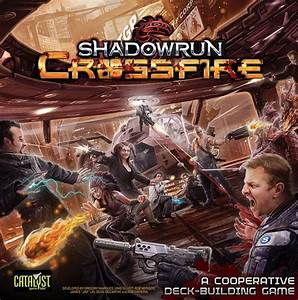
On the flipside, a much more difficult game that may even be more enjoyable as a single-player game (since it gets more difficult the more people who play), is Shadowrun: Crossfire. This game is hard to win, but when you do, it’s a great feeling. Better than that, though, is the game grows the more you play. Unlike Dominion or Legendary, as fun as they are to play, once they’re over, they’re over. You start from the beginning every time. Shadowrun: Crossfire is like an RPG (which makes sense, since it’s based on an RPG universe), by this I mean if you win (or get a partial victory), your characters get experience points, and the more experience points you get you can add new abilities to your characters to change the game, often to make it easier. This allows you to play more difficult missions and makes the game more enjoyable and more challenging. I’m not usually a huge fan of challenging games, but I really enjoy this one. It, too, is also a cooperative game. Expansions are on the way for this one, too.
Dice Games
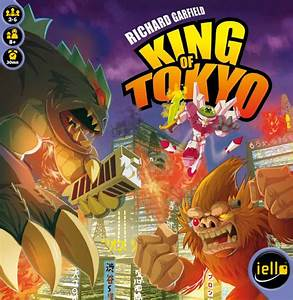
So you like rolling dice, huh? Miss those ol’ days of Yahtzee and 10,000 and other dice rolling games? If you like chucking dice, you may really enjoy King of Tokyo. It is a fast game that plays up to 6 people, so it’s a great game for many reasons. Each player takes the role of a classic/generic movie monster, each trying to become the King of Tokyo, either by being the most famous or, perhaps more enjoyably, the last monster standing. Like Yahtzee, it’s a dice rolling game about matching dice combinations, but it also adds cards for variety that makes its replayability level rather high. The Power Up expansion gives the different characters unique abilities, making it an even more enjoyable game again and again. (There’s a King of New York and other expansions as well.)
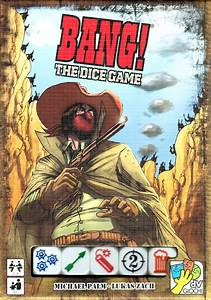
Another fun, fast dice game with a decent amount of theme tossed in is Bang!: The Dice Game. Like King of Tokyo, you roll the dice a few times to decide which actions you are going to take that turn, balancing helping yourself with attacking the other players, all in the Ol’ West. It’s an inexpensive, fast game that also has a good deal of replayability. I’m told it works great with 5 players, so get the whole family together.
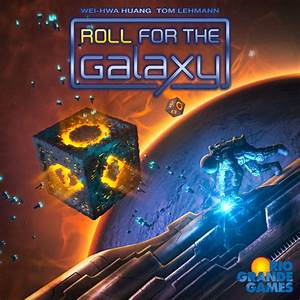
Roll for the Galaxy is a different kind of dice-rolling game. Similar to some of the Civilization-building games discussed later, this game uses your dice to colonize worlds, ship goods, and develop technologies to advance your space-faring civilization. Like Bang!: TDG, this is a reimplementation of a card game you may also enjoy if you prefer card games to dice games (called Race for the Galaxy).
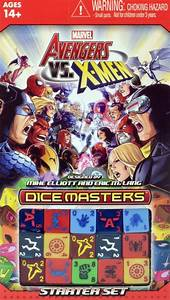
As with all the other games in this section, Marvel Dicemasters uses customized dice to simulate your favorite Marvel heroes battling against your favorite Marvel villains (and also other Marvel heroes, as is their wont). This game is customizable, has a number of sets (all of which are fully compatible with the others), and also gives you the exciting fun of collecting. The fun of CCGs back in the day, opening packs and hoping to get the cards you need, is here at a much cheaper level. The starter sets are inexpensive and complete games by themselves, but the additional fun of getting new cards, new dice, and new characters is also available fairly inexpensively. It’s a quick game, easy to learn, and great for Marvel fans who like rolling dice. Also, the designing team have a DC line if you prefer DC characters, a Dungeons & Dragons line, and a Yu-Gi-Oh! line. Something for (almost) everyone.
Party Games
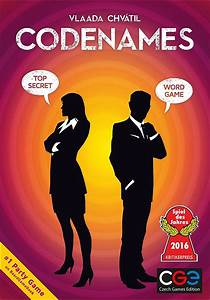
Don’t get me wrong: Apples to Apples is nice and still is holding on, and we even use it ourselves once in a while. But it’s time on the whole to move on. When you have a group over and want to play a game, give the new Codenames a try. From the Web site CoolStuffInc.com (a good site from which to order these games, sometimes cheaper than Amazon): “The two rival spymasters know the secret identities of 25 agents. Their teammates know the agents only by their Codenames. The teams compete to see who can make contact with all of their agents first. Spymasters give one-word clues that can point to multiple words on the board. Their teammates try to guess words of the right color while avoiding those that belong to the opposing team. And everyone wants to avoid the assassin.”
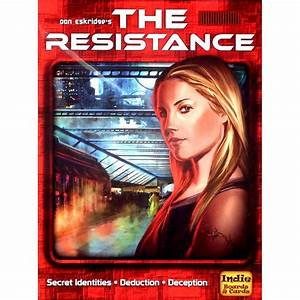
Another kind of team vs. team party game is The Resistance. Whereas in Codenames you know who is on which side, you aren’t sure who is on your side in The Resistance. Through deduction and guessing and luck, you attempt to find out on which team the other players are and who is not being as forthright as you. A fun bluffing game with expansions available to make the game even more diverse and replayable.
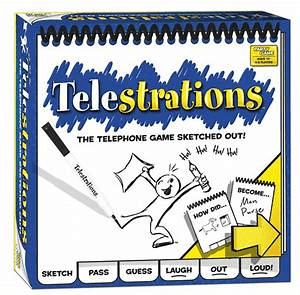
If you miss the fun of Pictionary and the like, perhaps you should give Telestrations a try. It’s a bit like Pictionary mixed with Telephone, and a whole lot of fun and laughter throughout. If you were frustrated by Pictionary and others of its ilk, give this a try, especially if you enjoy having fun with fun people.
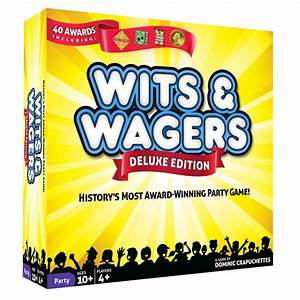
If you like trivia games such as Trivial Pursuit, or at least want to like them but always seem to end up getting the ridiculously hard questions and the people you know you are far smarter than end up getting questions like “Are you on the Earth or the moon?” you will probably enjoy playing Wits & Wagers, especially the Family Edition. You aren’t really supposed to know the answer, but if you think someone playing does have it (or is closer, since it’s basically guessing numbers and closest wins without going over, like The Price is Right), you can wager on that person’s guess and possibly get points for yourself. It’s good fun for the family and/or group, doesn’t frustrate you nearly as much as other trivia games, and is not nearly as long as those as well.
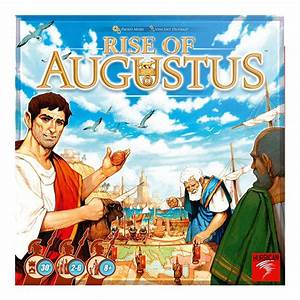
Another party game that works well as a family game is Rise of Augustus. It’s basically Bingo, but it has just enough strategy sprinkled on top of it to make it fun for adults as well. With teams, you can play this with a decent number of people, but for smaller groups it works even better. It’s another fast game you’ll probably want to play more than once in a night.
Filler Games
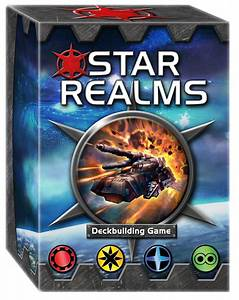
If you want to play a fun game and only have a few minutes, here are a few simple card games that will give you some fast fun. Star Realms is a very popular deckbuilding game that, unlike the cooperative deckbuilders above, is just about blowing up the other player’s spacefleet. It is very simple to learn, simple to play, but its simplicity is part of its streamlined fun. It’s a whole lot of fun for under $15.
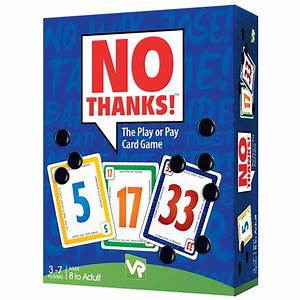
No Thanks! is a clever sort of hand-eliminating game (think Uno but with strategy and fun). You don’t want cards because you get points for having cards and the lowest score wins. Instead of taking cards you can spend a chip to pass … but soon you’ll run out of chips and you’ll possibly have to take cards worse than the ones you didn’t want earlier. All of this clever strategy and hand management and such takes places in about twenty minutes.

Biblios is an interesting themed game about competing medieval librarians trying to construct the most influential library of rare and sundry tomes. You have to manage your gold and workforce well to dominate different categories that give different points — whoever has the most points wins, but you will all win because you’ve played a fun game in a short amount of time. And then you’ll want to read The Name of the Rose, and then your life will be even more rich and full.
Civilization Games
The other end of the spectrum from filler games are epic civilization games, one of my favorite kind of game (being a fan, as you know, of epic poems and epic TV series). Here are two faster-paced, simpler Civilization building games very accessible to new gamers – and two incredibly lengthy games that tells a grandiose story over one full day of gaming (one of which happens to be my favorite board game).
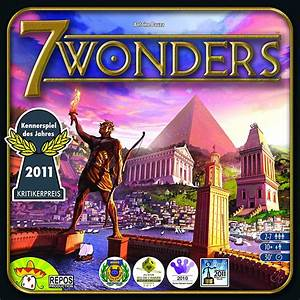
7 Wonders is a fast card drafting game (you decide which card you want to take, but you also have to ponder whether you want your opponents to get the cards you may pass on, too) in which you develop a civilization, build ancient Wonders of the world, and dominate. It’s a great “gateway” game, plus it has a number of expansions that add replayability and freshness. Even if you think the game is too simple, the Babel expansion will give it new life for you.
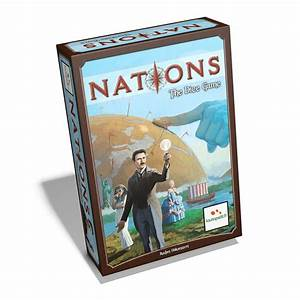
Nations the Dice Game is all about rolling dice to make your nation the dominant culture in the world from the ancient past to the modern day. Similar to deckbuilders, you are using your simple initial dice to acquire better dice, which enable you to increase the strength of your military, increase your food production, increase your cultural-literary output, and build helpful wonders and recruit helpful leaders. It’s actually much less complicated than I have made it sound, and it is a very fast game to understand and play. You’ll likely have difficulty playing it only once.

For the space-civilization conquering itch, perhaps Twilight Imperium IV will suit you. It’s a beloved game of interstellar conquest, exploration, diplomacy, and civilization building that certainly takes a decent amount of time to play, but the grand sweep of the gaming experience certainly pays off the time investment, especially if you like grand “space opera” tales (more on Star Wars later).
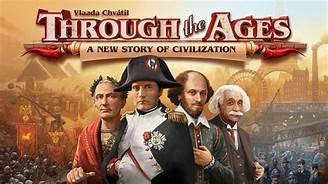
My favorite boardgame currently, possibly of all time (we’ll see) is undoubtedly Through the Ages. It’s a beast of a game, not difficult to play but as I said you have to carve out a day of your life to play it (unless you want to play the Basic game, which would only take a couple hours, but why would you want to deprive yourself of such a wonderful experience?). This game takes you on such an exciting, wonderful journey from Ancient times up to the Modern Age. It’s a card game at heart, but it’s easy to forget that since the immersion in Civilization building is so rich. You have to keep your people happy (an easy way to do that is through religion, which is a nice change from most Civ. games that treat religion as “mystical nonsense” only for underdeveloped simpletons), you have to feed your people, you have to develop science and art and culture … and it’s a total blast. Like with all of these games, you have leaders that help you, Wonders to build, possibly a military to expand (but becoming an overly dominant military power brings you more problems than benefits), colonies to explore, treaties to make, calamities to avoid, all the while creating a deep, satisfying story of your empire, a story you will remember for a long time. A 2nd edition is undergoing refinement while we speak, which is intriguing and also means the original is becoming more affordable by the minute.
“I Win!” Games (Racing and Area Control)
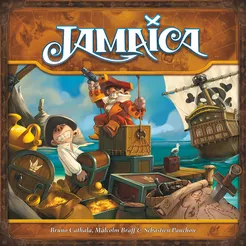
If you like the old race-around-the-board type games like Sorry! or Parcheesi and almost any other roll-and-move game from days gone by, perhaps a more enjoyable modern version you’d like even more is Jamaica. A pirate-themed racing game, Jamaica gives you more choices than simple roll-and-move games, but your choices are limited somewhat so you have to think both short-term needs and long-term strategy (though “long term” is likely only about thirty minutes). Once everyone knows what they are doing, it’s a fairly rapid game, which is thematically more enjoyable for a racing game. It has a few layers of strategy even with your limited choices, but it is still accessible for kids, once they get the hang of it.

Camel Up is a recent award-winning game about racing camels. Stay with me, now. You are trying to guess which camel will win the race and place your wagers accordingly (normally we at Redeeming Pandora would not enjoin our audience to gamble, but this is only a game, so have some vicarious fun). As with all races, sometimes the camels will run the way you want them to, then suddenly a camel will sneak under it and jump into the lead and it’s suddenly anyone’s race.
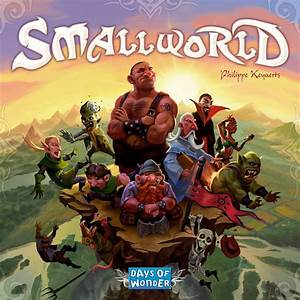
If you grew up on Risk and the first question that springs to your mind when someone mentions a board game is “So it’s like Risk?” (or “So it’s like Monopoly?”), the next three games may bring you back to those halcyon days of conquering the world, but now you might be able to have that sort of fun a tad bit faster. And actually have fun this time. Small World is a much-beloved goofy fantasy game basically all about area control (taking over spots on the board, which is effectively what Risk and Diplomacy were all about, when they weren’t busy destroying friendships and ruining families). Your fantasy race starts somewhere on the board, tries to dominate as much territory as possible, then gets replaced by your next race of world conquerors — but watch your back, since that’s what everyone else is trying to do.
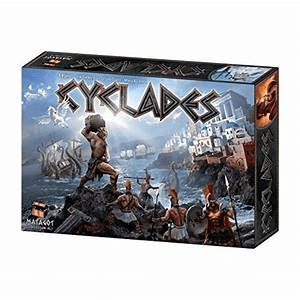
If you like ancient world games, Cyclades may be right up your alley. You have to appease different Greek gods to do different actions (Ares for war, Poseidon for movement, Athena for wisdom/schooling, Apollo for wealth, etc. — most of it makes a fair amount of thematic sense), but you are competing with the other players for the god’s favor. Add the Titans expansion if you really want an Ancient-world Risk-like feel.
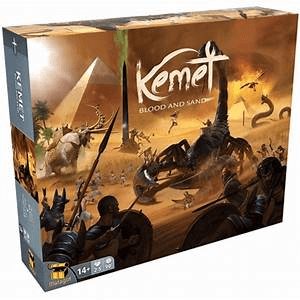
If Egypt is more to your liking than Greece, Kemet is probably the smash-em-up world-domination game for you. This is initially a more straightforward Risk-in-Egypt game (but fast and fun), but it has enough other strategic layers to make it more than just a mindless crush-your-enemies game. If you want to mix-and-match your Egyptian and Greek monsters for a mga-brawl, check out the C3K expansion that allows you to do just that.
Strategy Games
In one sense, most of these games are “strategic” (and hopefully by now you can see why games with strategy are more fun and more rewarding than purely deterministic games that dictate what you can do each turn and give you no real decisions or options), but I needed a generic category just to talk about some really fun games that don’t have much else in common other than being thought-provoking games of fun.
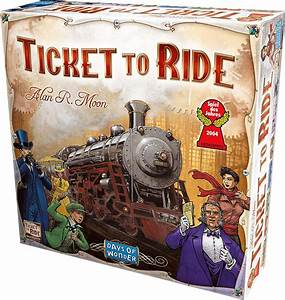
Ticket to Ride in its many incarnations are great “gateway” strategy games for you. If you haven’t played any boardgames since Risk or Monopoly and you are a bit hesitant to try one of the deeper games, Ticket to Ride or Forbidden Desert or 7 Wonders or King of Tokyo would be excellent places to start. Ticket to Ride is a simple set collection game in which you are collecting similar-colored train cards in order to turn them into railroad routes from one city to another. Completed rail routes get you points. It’s even simpler and more enjoyable than I’ve made it sound. The basic Ticket to Ride features the USA, and the other incarnations feature the country in their title, so plenty of options, plenty of variety, plenty of replay value, and plenty of good times.
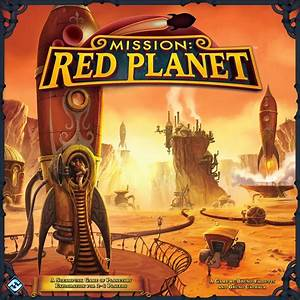
A sort of medium-weight strategy game, Mission: Red Planet combines a lot of different kinds of game mechanisms such as area control and hand management, so it’s a good introduction to other ways to play games beyond rolling a die and moving around a board. You are racing the other players to Mars, but you need to do more than get there: sometimes you need to focus on stopping your opponents from sending their explorers. It gives you lots of easily comprehensible options and is a fast, rich game.

Have you ever wanted to play Star Wars? Here it is: Star Wars in a box … Imperial Assault. One of you gets to play as the Alliance, one of you gets to play as the Empire. True, one potential drawback to this is its modular nature, in that it doesn’t come with all your favorite characters and weapons and settings in the initial box. You have to buy the Han Solo pack, the Chewbacca pack, the Boba Fett pack, et cetera, but you could always ask for them for Christmas as great stocking stuffers along with more packs of Dice Masters, so that takes care of that problem. This is the highly accessible strategy game for Star Wars fans.
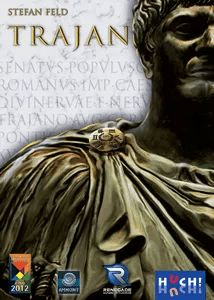
Deeper strategy is required for a very enjoyable game, Trajan. You and your fellow players are competing consuls, vying for Emperor Trajan’s approval by improving various aspects of Rome: rebuilding the infrastructure, hobnobbing with senators, shipping goods to allies, leading armies in conquest of new territories, and more. Using the centuries-old Mancala mechanism determines the actions you can take, but you also have the opportunity to create a string of bonus actions to get victory points all over the place. It’s not really as complicated as I’ve made it out to be, but it is a deep, rich strategic game with many paths to victory and fun you’ll want to play it again and again.
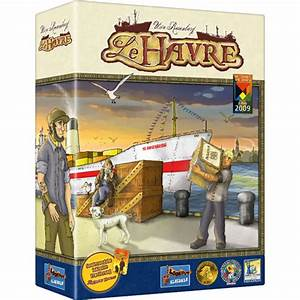
Le Havre is another deep strategic game about creating the most prosperous harbor by building ships, gathering goods, constructing special buildings, and, as always with designer Uwe Rosenberg’s games, feeding your people. A good deal of its depth consists in the fact you can only do one thing per turn. You have one choice: acquire resources or use a special building. And that’s what you do. Sometimes you’ll have enough money to buy a building, too, but not often. It’s an incredible brain-burning game that really helps you develop those strategic thinking skills you’ve wanted to develop.

Another unusual strategy game with an interesting theme is Rococo, in which players are competing dressmakers trying to get your gowns and suits on the most Parisian nobles attending Louis XV’s grand ball at the end of the game. You have to manage your action cards very well to get the resources you need, make the dresses, put the dresses on the right people in the right places, and string together bonus points and bonus actions as much as you can. It’s another enjoyable brain-burner (in a good way).
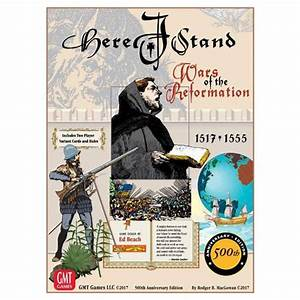
When you and your family is ready for something big, and you feel like getting into real historical simulations (I promised myself I wouldn’t put any wargames on this list), go all out with Here I Stand. One player is Luther trying to get the Reformation going; another is Pope Leo trying to squelch the Reformation. Another player is Henry VIII taking care of England (and trying to get a male heir); another is France, a fifth is Suleiman and the Ottomans, and a sixth player controls Charles V and the Habsburgs. It’s a card-driven game, in that you have a hand of cards that could either be events for the board or points for actions, depending on which nationality you are. It’s a big game, but it provides a great deal of historical immersion and tremendously fun gameplay. Once you’ve mastered this (!), check out the sequel, The Virgin Queen, about, you guessed her, Elizabeth I.
Worker Placement Games
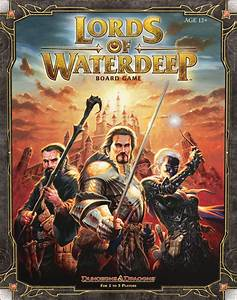
Another innovative game design of late is “worker placement” games. Instead of moving lineally around a board, worker placement games have players place a certain number of workers (or rolled dice or what have you) on select portions of the game board that activate different game effects, such as gathering resources, advancing along information tracks, transporting goods from one place to another, or other game elements depending on what kind of game it is. One very enjoyable “gateway” worker placement game is Lords of Waterdeep. Don’t be fooled by the Dungeons & Dragons veneer, especially if you don’t like D&D: you are not really fighting monsters or casting spells. Instead, you are competing councilmembers or lords of the town hiring different heroes to go on quests that make your city a better place. You place your workers to hire different kinds of heroes, get money to hire them, get different quests that give you points (which translate into how well you have improved the town for the people), raise influence in the town, build new buildings that give you more options and faster/better resources, and much more. Even people who don’t like D&D/fantasy will have a very good time playing this. Once you’ve mastered it, get the expansion Scoundrels of Skullport to add more quests, more resources, more options, and more fun.

Another brain-burning strategic worker placement game from Uwe Rosenberg is Caverna, a fun, challenging game about Dwarf cave farmers conquering the wilderness and making their home a better place for their burgeoning family. You have to feed your family as always, but you have many options of how to pursue victory: you can cut down the forest and make spaces for sheep pens, pig pens, and horse pastures, or, perhaps, farmland to feed your family. Additionally, you can mine your cave for rubies or transform your cave into beautiful, useful rooms — many different kinds of rooms give different bonuses, different abilities, different reasons to play again and again. It’s a big, heavy box, but it comes with a whole lot of game that plays well for 2-7 players.
Finally, another diverse kind of worker placement game is the unique Keyflower. This clever game simulates a small city building game and a worker placement idea with a twist: if you send your workers to another person’s spot, you’ll get those resources but effectively your worker is moving to their town and you just lost a worker. You’ll get others later, but it’s an interesting variation. On top of that, you also have to use your potential workforce as auction currency, deciding if you want new tiles to add to your city (which you’ll need to do to gain points to win) or immediate resource benefits or long-term worker options. It’s a very clever game that doesn’t take a whole lot of time and does things differently but intuitively to combine for a unique, enjoyable thought-provoking package.
Whew. Was that too much? Go big and go home, that’s my motto. I’m not telling you you have to go out and buy all these games (I don’t own nearly all of them myself) — remember, the point of this was to tell you there is another kind of revolution going on in our lifetime: a boardgaming revolution. We are in what may be but the nascence of the 2nd Golden Age of Boardgaming. And, believe me, this was not the tip of the iceberg. This was the tip of the tip of the iceberg. This barely scratches the surface of the hundreds and hundreds and hundreds of great games made in the last couple of decades. If you like rolling dice, we’ve got fun dice games for you. If you like card games, card games have been taken to a whole new level of fun. Family games are no longer just silly, thoughtless roll-and-move games with no brains or strategy. Games based on beloved books, television shows, or movies are no longer just the cheap, bland, superficial tenuous tie-in games of yesteryear. This is an exciting time to be alive, especially if you enjoy having fun.
If you are reading this before Christmas, clearly any of these games would be an ideal present for one or more members of your family or friend-family. If you are reading this after Christmas, here are some ideas for those gift cards you got in your stocking, or ideas to start the New Year off right: quality experiences with people you love.
Do you want to salvage Family Time? Do you want something intelligent, social, interactive, inexpensive, sustaining, and worthwhile you can do together as a family or as friends (other than high-quality Bible studies)? Of course you do. Now that you and I have extirpated cynicism from our lives, it’s time to fill that hole with open-hearted generosity and heart-warming memories (and love, joy, peace, patience, kindness, goodness, faithfulness, gentleness, and self-control, of course).
Get one of these boardgames and salvage Christmastime and Family Time.
Unplug.
Declutter.
Relax.
Play.
Enjoy.
Laugh.
Love.
Live.
Merry Christmas! See you in 2016!
2022 Editor’s Note
A few of these games are out of print and very hard to get, sadly. Many of them are on new editions – for those of you playing along at home, I updated many of the pictures from the original article in 2015 with the new versions, new covers, and new editions (especially Twilight Imperium IV, which was only 3rd edition back in the day). I also have played more of these games since then, such as TIME Stories, in case you are wondering. Sure, a lot of good games have come out since then, and many games that are even better than some of these, but these are still enjoyable (if you can track them down).
 Redeeming Pandora