
Christopher Rush
As part of my quest in 2015 to read more enjoyable books, I finally returned to my favorite books of my youth, the Chronicles of Prydain by Lloyd Alexander. These were the books that got me into fantasy, sooner than Tolkien, and so they have a special place in my heart. These are probably still my favorite books of all time, and they are so good it would be insulting to say “they still hold up” – great art has nothing to do with temporal standards. These reviews, as usual, were initial reactions off the top of my head when I first re-read them, so they aren’t a cohesive analysis of the books, though it’s possible that may be forthcoming sooner or later in one of these issues. They are mostly spoiler free, though it’s hard not to mention a few important things here and there. Please don’t take my word for how good they are, though: go read them for yourself.
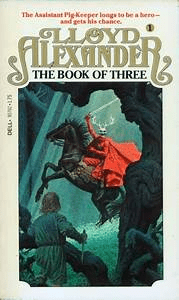
The Book of Three ⭐⭐⭐⭐
For an introduction to a series, this book serves all the appropriate functions. Some find the similarities between this and The Lord of the Rings as a strong mark against The Book of Three and all of the Chronicles of Prydain, but that is as nonsensical as anything could possibly be. Alexander, like Tolkien, is intentionally dealing with mythic elements, things so old and common to the history of literature, naturally Alexander’s use of archetypes will be familiar to people who have read things that utilize similar mythic archetypes. Alexander, though, is not merely paraphrasing Tolkien or Welsh mythology or anything. He combines meaningful elements with wit, humor, and a breadth not necessarily better than Tolkien but distinct enough to warrant this series standing on its own. Taran is no Frodo; Gwydion is certainly no Aragorn. We have no idea truly what The Book of Three is, and that mystery is a wonderful component of this story.
Alexander does a great job of introducing us to our young, impetuous, headstrong hero and thrusting him rapidly into a believable adventure that grows sensibly chapter by chapter. Coincidences abound, sure, but that happens in high quality fantasy, award-winning fiction, and real life. Taran is brash and makes mistakes, for which he is upbraided by the wise Gwydion and impetuous Eilonwy, creating a valid young hero-in-training for this series of adventures. Eilonwy is an interesting Princess, and Fflewdur is a clever addition to this rag-tag group of adventuring companions. Gurgi is a great character, and it is impressive Alexander has his relationship with Taran grow as it does. Doli is certainly an un-Tolkien character as well as the entire depiction of Fair Folk or Dwarves.
The amount of menacing villains may seem heavy, especially in an introductory book, but Alexander does a fine job balancing the significance of all of them, giving Achren a very menacing premiere, Arawn a mysterious-yet-palpable presence, and the Horned King a fine spotlight as the major enemy, occasional as his appearances may be. The resolution of this adventure may feel somewhat forced, but a closer examination of it shows how distinct it is. Instead of the young hero getting to use the mighty magic weapon and saving the day in all unlikelihood, the actual well-trained, knowledgeable hero saves the day, while the impetuous youth suffers appropriately for doing what he had no business doing.
Alexander makes this a believable fantasy world, with real consequences for good and evil actions. He shows the importance of pursuing good even if it costly, and even heroes-in-training need to be polite to princesses. Sometimes the desire for adventure proves a poor desire. Reading this, though, is always the right choice.
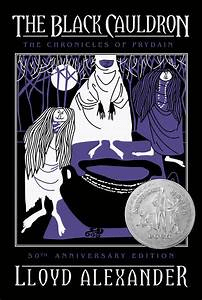
The Black Cauldron ⭐⭐⭐⭐⭐
Perhaps the most remarkable aspect of this book is Alexander’s way of taking characters we know and love from a book that had some serious moments plus a fair amount of goofy, lighthearted moments with an overall upbeat feeling and placing those characters in the same world yet wholly opposite circumstances. The Book of Three does indeed have many sorrowful and disheartening moments, especially while Taran believes Gwydion is dead, but it is mostly an optimistic book with Eilonwy and Fflewdur keeping it rather lighthearted and the ending’s relief-filled optimism assures us the world is safe. Almost immediately in The Black Cauldron, though, a heavy pall seems to spread over our characters and their world. Despite a fairly rambunctious gathering of old friends and new (especially Smoit’s enthusiasm), Gwydion makes it clear this is not a time of celebrations: it is a time, rather, of desperation and self-sacrificial heroism.
Throughout the book, things get worse and worse for these people we love, despite their best efforts and their most selfless sacrifices. Alexander introduces an impressive collection of new characters, only to take them to heart-wrenching places and destinies: it is a non-stop pathos-filled adventure. Also impressive is the fact so much of this melancholy tale is a series of quiet moments of painful decisions: there is very little action present; we only hear about the action second-hand. Even the dramatic conclusion in which new characters, especially, are driven to extremes of character (in wholly believable ways) is predominantly quiet, punctuated as it is by rapid flashes of action.
It is a remarkably somber book, yet its pacing and atmosphere are as riveting as any tale of swashbuckling high adventure. We can totally see everything that is coming from far away, yet every aspect of it is fresh and surprising when it arrives. Alexander does so much new with what we assume will be familiar we are astounded again and again.
The impressive pacing is seen especially in Taran’s character: at the end of The Book of Three, we basically think we know where Taran’s character is going to go and how he is going to get there, yet each new novel in The Chronicles of Prydain smashes our assumptions into embarrassing smithereens, especially in The Black Cauldron. For the first time, Taran faces very personal foes, up close. His decisions throughout are terribly painful and deep, yet everything he does and says is wholly believable considering where we left him in TBoT and where he is now and what they are doing. It is all so gradual and realistic it is, frankly, stupendous and devoid of the typical “fantasy hero superlatives” that would have sprung up in lesser writers. Even the lessons Gwydion emphasizes for Taran at the end are necessary for Taran to learn, as he needs this wisdom spelled out for him (as we all do when young) — Taran doesn’t just magically acquire wisdom and generosity of spirit without learning them through painful, poignant lessons — and, by golly, the lessons of The Black Cauldron are truly painful and poignant. And also beautiful. 5 stars, no question about it.
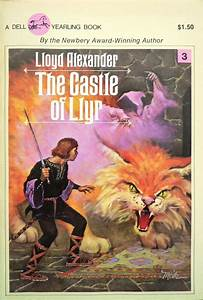
The Castle of Llyr ⭐⭐⭐⭐
As Alexander’s masterful pacing continues, the middle of the epic gives us some much-needed comic relief after the somber intensity of The Black Cauldron. Some more time has passed, and the gossamer-strong relationship between Taran and Eilonwy takes center stage, but in such a clever way only Lloyd Alexander can deliver. It is time for Eilonwy to learn how to be a lady and a princess, something not even Dallben can teach her. This is not a welcome thought for Taran, as it means Eilonwy no longer being around and is a palpable reminder she is noble and thus likely not going to marry a foundling assistant pig keeper. While this book could have been an engaging story centered around Eilonwy’s time learning how to be a princess and a lady (and possibly Taran’s comic misadventures either spying on her or bidding his time elsewhere), Alexander postpones that sort of thing by placing Eilonwy in danger (with the return of an old enemy) and Taran desperately seeking to come to her rescue. Old friends and new characters come along for the ride, which is full of humorous scenes as well as heartbreaking moments and deeply moving experiences as well.
Part of the brilliance of this book comes from how well the development of Taran’s character is demonstrated. We’ve said before how well Alexander paces Taran’s development, and here just how far he has come (and how far he still has to go) is displayed against the new character Prince Rhun, a kind of comedic-antagonist foil for Taran. Rhun is suddenly a rival for Eilonwy’s hand (and heart), but Taran can’t simply dislike him as he somehow is given charge over Rhun’s wellbeing. Making it more frustrating for Taran is how congenial and gracious Rhun is (and oblivious) throughout their time together (in stark contrast to Ellidyr in The Black Cauldron). Rhun seems very much like Taran from The Book of Three, giving us insight, as I said, to how Taran is no longer what he once was. He also learns through more painful experiences (despite this being “the comedic episode” of the series) how far he has to go to become a full, generous man, learning even from inexperienced, bumpkin Rhun key lessons of maturity (and from other surprising sources as well). It’s another great book.
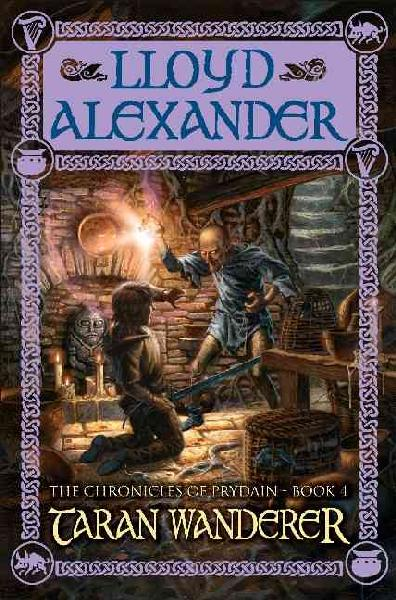
Taran Wanderer ⭐⭐⭐⭐⭐
This is a magisterial book. If it has any flaws, I certainly can’t find them, except that it ends. I would not mind if this book went on for another two or three hundred pages or so (but I like the Wheel of Time, so maybe it’s just me). I don’t want to spoil it too much here, but we should discuss a few of the unique aspects of this story. The choice of no Eilonwy in the book is an impressive one, even if we miss her a great deal. Her presence is always there, of course, since Taran is doing virtually everything he is doing in this book partly to become the kind of man of whom Eilonwy will approve. Meanwhile, Eilonwy is back in Mona learning how to be a proper lady and princess (and, presumably, a queen of some country some day) — so both of them need to do what they need to do. This reminds me a good deal of season 4 of Babylon 5, naturally, since it’s virtually identical to what happens there (except Delenn is far more in favor of these choices than Eilonwy). Clearly this is necessary for both characters, and the steady progression of Taran’s maturity is especially impressive (as it has been the entire series), more so because for the first time he is wholly on his own (no offense to loyal Gurgi, who is always by Taran’s side). Gwydion is also absent from this novel: Taran must make all his decisions alone; Gwydion is not here to rescue him this time.
Finally, though, Taran is ready for such a journey and such responsibilities. He is no longer motivated by seeking out adventure for its own sake: he must become a nobleman eligible for a princess’s hand in marriage. Unlike most quests of this ilk, in which the hero is not aware he is looking for himself, Alexander cuts out the frothy stuff and allows us to focus on the real intent of Taran’s quest: his heritage and his identity. Every episode of Taran’s quest is memorable in different ways. Even the ones that seem in hindsight obvious and stereotypical are worthwhile moments that shape Taran in important ways. More importantly, Alexander always directs us to relish in Taran’s intellectual and emotional growth through these experiences: some of them are positive, many of them are painful, and all of them are necessary. I’d love to tackle them all individually, but that will require too much time to do justice to them than allowed for here (and I don’t want to spoil any more than necessary).
Some old friends do return, though: Fflewddur and Llyan are back for a time, Kaw is back here and there, and even good ol’ Doli stops by for a brief adventure. We get to see King Smoit in a slightly happier venue for a time, which is nice, especially as he is one of the few noblemen Taran can learn from (in his quest to become/discover his nobility), even though Taran encounters difficulties wherever he goes. Even the witches of Morva are around for some telling scenes (though “telling” is the wrong word for them, certainly).
While these friends (and ever-present, ever-faithful Gurgi) are helpful for a time, the real heart of the story is Taran and his growth, and the new characters he meets. Again, to discuss them all here would be counter-productive and spoilery, but suffice it to say they are all great episodes (even the “obvious” ones). The closer Taran gets to his goal, the less he cares about it and starts to focus on the people of Prydain: there is more to this world than the adventures of a small band seemingly-single-grouped against Arawn Death-Lord — people are farming, weaving, smithing, and simply living. Another intriguing element is the pervasive element of roguishness: not everyone in Prydain is a “good” person. Just like we saw in book two, and Magg in book 3, some people in this world are just mean and selfish and don’t seem to care Arawn Death-Lord is out there trying to destroy everything and everyone — no, that’s just not enough; they need to steal, kill, and destroy (and spoil) as well. Oh well.
This is a great book, possibly the best of the series, but let’s not quibble over that — it’s best to think of the series as a whole, with each novel a necessary component of the entire saga. This one, though, with its many quiet, heartbreakingly wonderful moments, is a definite standout. We are all Taran in this one. He is showing us our lives, our joys, our heartaches. Don’t miss this series, especially this entry.

The High King ⭐⭐⭐⭐⭐
A masterful conclusion to a masterful series, all the naysayers who say this series is only for children and doesn’t stand up to grown-up readings and this and that should, in fact, be truly naysayers: say nothing, stop speaking, stop pretending they know about books and such. This holds up so well saying “it holds up” is an insult. It’s a good book. It begins rather close on the heels of Taran Wanderer, giving us the impression not much time has happened since Taran found the Mirror of Lunet, which is probably for the best. Time passes quickly in books four and five, so one has to pay attention while reading it (but that’s not a difficult chore). As with all the books in the series, the impetus for the plotline occurs almost immediately. Those of us who love our time in Prydain may wish for a slower beginning (but that’s what The Wheel of Time is for), time for Taran to acclimate to his new life of self-awareness, but that’s not how the series operates. It’s a possibility, and that’s what the characters have planned: a leisurely time of rejoicing while Eilonwy is visiting from Mona, with all the ol’ friends together again for a time. But, instead, we are immediately thrown into a dangerous turn of events: Arawn has wounded Gwydion and stolen Dyrnwyn, and if those weren’t bad enough, it’s only his opening gambit — Arawn is amassing all his vile armies for total destruction on the free peoples. It is time for the final battle. We knew it was going to happen (it often does in fantasy series like this), and the end is suddenly upon us.
Similar to other series, which is not a detraction, not all of our friends make it to the end: adding to the painful realism of this series, we have to say goodbye to characters we have come to know and love before the final pages, and while they are all sad and unexpected, and the last is the saddest of all, they are all far more meaningful and realistic than the losses in Deathly Hallows and The Hobbit and a lot of other books that just kill off characters to no purpose.
The pace is quick in this one, in stark contrast to the previous book, but all of that is intentional and well-plotted. The scope of this is likewise distinct from the last couple of books, ranging all over the world of Prydain even more than Taran Wanderer, especially in the rapidity with which we travel the world. It’s likely the pace of the story that makes it feel like a bigger scope than the others, in that while we don’t go to many new places (like we did for most of the middle three novels), we go to places we haven’t seen for several books, go to almost all the old familiar places quickly, gathering almost all our old friends together for a massive army to combat Arawn, and then it all explodes in our faces multiple times, brilliantly, painfully, and wonderfully. We do (finally) get to two new places: Caer Dathyl and Mount Doom. What our imaginations have filled in, especially from the first book (we assume Taran and Co. spent some time with Gwydion and High King Math after that book), has proven true: Taran and Co. have been to Caer Dathyl before, but now we finally get to see it ourselves in all its splendor. We also get to see Annuvin and meet Arawn himself in the slam-bang finish of the book.
Lloyd Alexander ties up effectively every thread, character, and idea from the entire series very well with this, the longest of the series (and I would have been just fine if it were even longer): even people and ideas from the first book we may have forgotten come back in a rich, satisfying conclusion. Even the idea of the long-lost arts of farming, smithing, and the magic treasures long-since plundered by Arawn is brought to a satisfying conclusion, far better than what we assumed or hoped would happen. I don’t want to spoil it any more here, except to reiterate how thoroughly and beautifully Mr. Alexander draws it all together. Not every single thing we’ve been wanting to know is answered, but even the manner of the “non-answer” is exactly the point (and this is true for multiple facets of the series and characters, and those who don’t get it are probably the same people who think this series doesn’t age well).
As heartbreakingly wonderful as the conclusion of the novel is, for multiple reasons, it’s quite possible Gwydion is wrong in his final words to Taran. Whether they get on one more ship like Sam years later or whatever it may be, I do not believe that was the last time the companions are together. We will all be together with them in the Summer Country for a long, long time.
Forever, in fact.
 Redeeming Pandora