
Elizabeth Knudsen
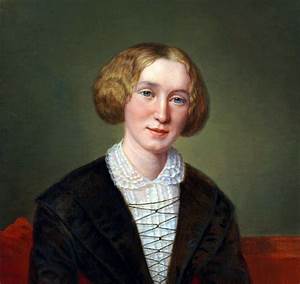
George Eliot was not a man. She was one of many women who used a male pen name to ensure their works were taken seriously. During this era, all that was expected of female writers was a lighthearted romance novel. Throughout her career, Eliot wrote with a politically astute pen. Eliot presented the cases of social outsiders and small-town persecution in many of her novels. The roots of her realist philosophy can be found in her review of John Ruskin’s Modern Painters in Westminster Review in 1856. As with any classic writer, this was influenced by her surroundings and her upbringing.
During the 19th century Britain was transformed by the Industrial Revolution. At the time of the first census in 1801, only about 20% of the population lived in towns. By 1851 this had risen to include over half the population. By 1881 it had risen to over 66%. Also in 1801, the majority of the population still worked in agriculture or related industries. The majority of goods were made by hand, and many craftsmen worked on their own, with perhaps a laborer and an apprentice. By the late 1800s factories were common and most goods were made by a machine.
The early 19th century was also an era of political and social unrest in Britain. During this time a group of Evangelical Christians called the Clapham Sect were active in politics. They campaigned for an end to slavery and cruel sports. Then on May 11, 1812, a man named John Bellingham shot the Tory Prime Minister Spencer Perceval — the only British prime minister ever to be assassinated. While Bellingham was a lone madman, in 1820 there was a plot to kill the entire cabinet. However, the conspirators were caught and hanged.
Meanwhile in 1811-1816 textile workers in the Midlands and the north of England rioted and broke machines for fear they would cause unemployment. These wreckers were called Luddites and if caught they were likely to be hanged. In March 1817 textile workers from Manchester (called “blanketeers” due to the fact many carried blankets) attempted to march to London to petition the Prince Regent. However, although the march was peaceful, the blanketeers were stopped by soldiers at Stockport. Then on August 16, 1819, a crowd of almost 60,000 people gathered at St Peter’s Field in Manchester to hear a man named Henry Hunt. Even though the crowd was unarmed and peaceful the authorities sent in soldiers. 11 people were killed and hundreds more were wounded. People later called the event “The Peterloo Massacre” in a grim mockery of Waterloo. In 1830 farm laborers in Kent and Sussex broke agricultural machinery because they thought it would take away jobs. The riots were called the Swing Riots because a man supposedly named Captain Swing led them. 4 men from these riots were hanged and 52 were transported to Australia. In 1834 six farm laborers in Tolpuddle, Dorset tried to form a trade union. However they were prosecuted for making illegal oaths. (Not for forming a union, which was legal.) They were sentenced to transportation to Australia. The case caused an outcry, and they returned to Britain in 1838.
As for political reform, a uniform system of town government was formed. In the middle of the 19th century Britain was the richest and most powerful nation in the world. However, come the late 19th-century Britain’s power declined. Such a decline was inevitable. Britain was the first country to industrialize, and therefore had a head start over other nations, but soon the other countries in Europe began to catch up. France, Germany, and USA industrialized. By the end of the 19th century, Russia, Sweden, Northern Italy, and Japan were also industrializing, and Britain became relatively less important.
In the midst of all this upheaval, Mary Ann Evans was born in Nuneaton, Warwickshire, England. She was the second child of Robert Evans and Christiana Evans, the daughter of a local mill owner. She had several siblings, both full and from her father’s previous marriage. In early 1820 the family moved to a house named Griff, between Nuneaton and Bedworth. The young Evans was obviously intelligent and a voracious reader. Because she was not considered physically beautiful, and thus not thought to have much chance of marriage, and because of her intelligence, her father invested in an education not often afforded women.
From ages five to nine, she boarded with her sister Chrissey at Miss Latham’s school in Attleborough, from ages nine to thirteen at Mrs. Wallington’s school in Nuneaton, and from ages thirteen to sixteen at Miss Franklin’s school in Coventry. At Mrs. Wallington’s school, she was taught by the evangelical Maria Lewis — to whom her earliest surviving letters are addressed. In the religious atmosphere of the Miss Franklin’s school, Evans was exposed to a quiet, disciplined belief opposed to evangelicalism. After age sixteen, Evans had little formal education. Thanks to her father’s important role on the estate, she was allowed access to the library of Arbury Hall, which greatly aided her self-education and breadth of learning. Her classical education left its mark; drawing heavily on Greek literature and tragedies. Her frequent visits to the estate also allowed her to contrast the wealth in which the local landowner lived with the lives of the often much poorer people on the estate, and different lives lived in parallel would reappear in many of her works.
The other important early influence in her life was religion. She was brought up within a low church Anglican family, but at that time the Midlands was an area with a growing number of religious dissenters. Eliot began contributing to the Westminster Review, a leading journal for philosophical radicals, in 1850 and later became the editor. Through this she reached the center of a literary circle in which she met George Henry Lewes, with whom she lived until his death in 1878. Lewes was married and their relationship caused a scandal, and because of this Eliot was shunned by friends and family. Lewes encouraged Eliot to write. In 1856, she began Scenes of Clerical Life, stories about the people of her native Warwickshire, which were published in Blackwood’s Magazine. Her first novel, Adam Bede, followed in 1859 and was a great success.
In the end, George Eliot’s novels were released to the public to enjoy. The popularity of Eliot’s novels brought social acceptance, and Lewes and Eliot’s home became a meeting place for writers and intellectuals. Now, luckily, it is not necessary for female writers to hide behind a male surname in order to get their books to sell. Perhaps this gift could be traced back to Eliot and others like her.
Bibliography
BBC History. BBC. N.d. Web. 7 Oct. 2015. <http://www.bbc.co.uk/history/historic_figures/eliot_george.shtml>.
Kingfisher Publications. The Kingfisher History Encyclopedia. 1999. 368-69. Print.
Lambert, Tim. Local Histories. N.p., 2012. Web. 7 Oct. 2015. <http://www.localhistories.org/19thcentengland.html>.
 Redeeming Pandora