
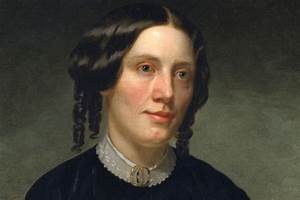
Sydney Harris
In the struggles of feminists and those who simply love equality, women in American and worldwide history were subjected and depicted as needed only in the kitchen and the bedroom. I believe the phrase in plain terms is “barefoot and pregnant.” Although this was the norm and still is in some areas of the world, we as women and citizens of the United States have pressed and worked relentlessly to have the freedoms and rights we do today.
Numerous ways and vessels have been used to get us to the point we are at today. One of the various methods by which we have expressed ourselves is through writing. Writing is a medium of human communication that represents language and emotion through the inscription or recording of signs and symbols. As females they were not able to successfully relay their thoughts through speaking, so writing was a breakthrough. One of the earlier and most influential female writers through the generations was Harriet Beecher Stowe. Stowe was the author of the beloved and well-known novel Uncle Tom’s Cabin.
Stowe was born June 14, 1811, in Litchfield, Connecticut. Her father, Lyman Beecher, lived his life committed to social justice. She was an author and philanthropists, Stowe was awarded with national fame when she released anti-slavery story Uncle Tom’s Cabin. Her novel added to the heat of sectionalism before the Civil War. She died in her home state in 1896.
She and her 12 siblings were raised by their father, a religious leader, and his wife, Roxanne Foote Beecher, who died when Harriet was a child. Her 7 older brothers all became ministers, including famous leader Henry Ward Beecher. One of her sisters, Catharine, was an author as well, shaping Harriet’s views. Another, Isabella, was a leader in the fight for women’s rights. She learned how to make logical arguments around the table from the boarders they housed from Tapping Reeve’s Law School. She started her formal education at Sarah Pierce’s Academy, one of the earliest to push girls to study academics and not only the arts. Stowe attended a school run by Catharine, run the same classical way of learning usually only provided to men.
At 21, she moved to Cincinnati, where her father was the head of the Lane Theological Seminary. Lyman took a strong abolitionist stance against pro-slavery in 1836. Stowe found friends with like beliefs in a local literary association called Semi-colon Club. This is where she met fellow member and seminary teacher Calvin Ellis Stowe. The two later married and together became a powerful couple in the fight for the abolition of slavery.
In 1850 Congress passed the Fugitive Slave Law, creating stress among abolitionists and free slaves in the North. Stowe decided to express her feelings in the only way she knew, through a literary representation of slavery. She attributed her book on the life of Josiah Henson and her own observations and beliefs. The first part of Uncle Tom’s Cabin appeared in the National Era in 1851. It was published as a story the next year and immediately became a best seller. Her emotive depiction of the devastation slavery had brought upon families and kids caught the attention of the entire nation. The book was accepted with open arms by the North but both Stowe and her novel provoked hostility in the South.
Her book was staged by fans in performances and the main characters of Tom, Eva, and Topsy achieved great iconic status. She met Abraham Lincoln when she traveled to Washington D.C. during the Civil War. Stories say he greeted her saying, “So you are the little woman who wrote the book that started this great war.” She explains herself when asked why she wrote the book that, “I wrote what I did because as a woman, as a mother, I was oppressed and broken-hearted with the sorrows and injustice I saw, because as a Christian I felt the dishonor to Christianity — because as a lover of my county, I trembled at the coming day of wrath.”
So, she pressed on and wrote more books like The Mayflower: Sketches of Scenes and Characters among the Descendants of the Pilgrims in 1843. “The Coral Ring,” the same year, was a short story that promoted temperance and an anti-slavery tract. She also produced numerous articles, essays, and short stories regularly published in newspapers and journals. She wrote for the rest of her life. None of her later works compared to the reaction she received from Uncle Tom’s Cabin, but she remained well-known and respected in the North and in the communities of reformed minds.
She passed away in Hartford when she was 85. She was buried at Phillips Academy in Massachusetts. Her epitaph reads “Her Children Rise up and Call Her Blessed.” There are many landmarks dedicated to all of her accomplishments, and her memory will last forever across the eastern United States and probably farther. The Harriet Beecher Stowe House in Maine is where she lived and wrote her historical book. Bowdoin College bought the house, and today it’s a museum with items of Stowe’s and a library. Samuel Clemens, otherwise known as Mark Twain, is her neighbor and the houses are open to the public.
Her passion for writing in a time when women and their thoughts were not even acknowledged allowed her to speak in public and direct her thoughts and views when it was rare for females to hold their own voice. She could also contribute to the Stowe family household income. She said in a comical but true quotation, “If you see my name coming out everywhere — you may be sure of one thing, that I do it for the pay.” A female legend she was and will forever be.
Bibliography
“Harriet Beecher Stowe’s Life.” Harriet Beecher Stowe’s Life. Harriet Beecher Stowe Center, 2015. Web. 06 October 2015.
“Harriet Beecher Stowe.” Bio.com. A&E Networks Television, n.d. Web. 06 October 2015.
 Redeeming Pandora