
Christopher Rush
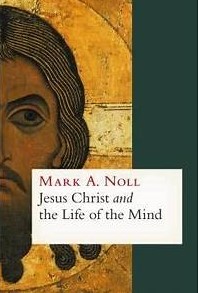
Jesus Christ and the Life of the Mind, Mark A. Noll ⭐⭐
This was supposed to be the year I focused on reading good books, books I knew I was going to enjoy, the high-quality books I haven’t gotten around to yet that would make my life much better. Yet here we are. This really isn’t that good of a book, no offense to Mr. Noll or his family or friends or publishing team. Diction-wise, I have no clue for what audience this is addressed: even for a book that’s supposed to be a tier or two above the usual common level, it’s such an ungainly use of language reading it is too difficult to either enjoy or be challenged by it. Most of the book feels like Mr. Noll is trying not to say “here are three books I’ve read recently, so I’m working my book reviews into a sort of analytical book” or something to that effect. It suffers from an absence of cohesion and unity, despite the purported attempt to apply “Christian-minded scholarly enthusiasm” (not his term) to various branches of human intellectual endeavor. In one section, we are led to believe the hero is classical Creeds and Confessions (nothing wrong with that), in another B.B. Warfield (nothing wrong with that, either), and in another the hero is Peter Enns (no one is sure why). Despite the generally fine subject matter upon which Noll treats, the absence of coherent and meaningful (and useful) interaction makes the work as a whole unhelpful and unnecessary. As usual, Noll refers us constantly to other things he has written, as if his oeuvre is the only one worth exploring. Yes, he has a decent suggested reading list at the end, but that only underscores the frustration of “why am I reading this book when I could be reading them instead?”
For no clear reason, Noll wants us to shove Theology over to make room for post-Darwinian evolutionary schema. He doesn’t want us to understand one in light of the other (though he pretends to say that sporadically) — no, we are to make sure Theology moves out of the way for whatever Science has to say, ensuring we interpret the Bible to accommodate science. Hmm. Likewise, especially almost 5 years later, we can quite easily dismiss his apologetic for Peter Enns (again, no offense to the Enns family and circle of friends) based on what all involved have done recently.
Finally, Noll rides his 1-trick pony of “the state of Evangelicalism” with a half-hearted attempt to show “well, you know, when I wrote that book 20 years ago I guess I didn’t do any significant research about what Evangelical schools, churches, magazines, or enterprises were actually doing, since most of my book was based on observations of people I met one Thursday night at a Bible study.” Again, that is not a direct quotation, but that is the impression we get from his epilogue (which was also not a wholly new creation for this book, but a twice- or thrice-warmed over reworking of an earlier article recycled every 5 or 10 years).
I don’t know what purpose this book serves for any portion of the Christian community. If any facet of contemporary Christianity still thinks “we shouldn’t think or use our brains for Jesus,” this book certainly won’t address that problem. Nor is it a helpful “here’s what to do next now that you’ve embraced thinking as an avocation.” Skip it.
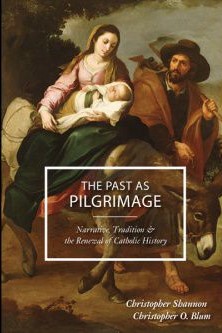
The Past as Pilgrimage: Narrative, Tradition, and the Renewal of Catholic History, Christopher Shannon and Christopher Blum ⭐⭐
I admit wholeheartedly from the beginning a significant percentage of my low rating may come from simply not being a member of the intended audience, which seems to consist mainly of fellow Catholic historians. The final paragraph in the conclusion attempts to include the rest of us as the audience, but it is insufficient and too late for a meaningful embrace of us non-Catholic historians. My disappointment with it, though, is not driven by not being a member of the target audience, but more so because the promises made on the book’s covers are not fulfilled by the pages within those covers. They don’t truly “argue for the compatibility of faith and reason in the study of the past.” That thought is mentioned a couple of times, yes, but it is not a major focus in a way to mention it on the cover. Likewise, we are told by the back cover “[t]heir argument seeks to foster a conversation about the ways in which Catholic historians can integrate their faith traditions into their professional work while still remaining open to and engaged with the best of contemporary, non-Catholic thinking and writing about history,” yet this, too, has percentage-wise little to do with the book. Yes, they do mention those ideas, indeed, but it is not a significant area of focus.
So what is the book about? The beginning is about lesser-known saints and their stories, which is fine, but no attempt is made to explain things about them for people whom the book purports to be outside of Catholic historians. We are not given enough reason to understand what is being said about these saints or why they should be principle characters in whatever this book is supposed to be about. Indeed, the diversity of topics and lack of coherency throughout the book is a significant deterrent to recommending, following, or even enjoying the book. From this we are led through a perplexing series of “here are some historians who may or many not be Catholic with whom we may or may not agree” sketches. One gets the impression Shannon and Blum are trying to reassure us they are knowledgeable about the field of historians, yet they communicate that knowledge in a way as to make their comments and intended message muddled and outright lost.
Further into the book, we are deluged with “members-only” terminology, distancing those of us who are neither Catholic nor post-graduate study card-carrying historians. Again, this would have been more acceptable if the book didn’t purport to be more inclusive than that. It turns out to be more like minutes of an invitation-only meeting: either you know what they are talking about (and whom) or not — no explanation or context are given. This is all the more bizarre, considering they seem at times to be arguing for the writing of history more accessible to the people as a whole, whether Catholic or not! This book may be a call for that sort of thing, but it certainly is not an exemplar of it.
Adding to the perplexity, the authors even specifically mention in a not-too-veiled derisive way their disapprobation for “popular” historians such as David McCullough. Which is it, fellows? Should history reach a wide audience or not? Can it cross religious “boundary” lines or not? I’m more bemused by this book than encouraged or refreshed, which is highly unlikely their purpose. Adding to the frustration, Shannon and Blum end up being all-too-typical “read all the other things we’ve written” authors, as the final two chapters of the book are redressed papers previously published (and thus as ill-fitting to the book in hand as the Thane of Cawdor’s robes on MacBeth) and many footnotes encourage us to read more about this diverse topics mostly out of works these two have published elsewhere. What purported to be something fresh and meaningful ends up being typical tenure-track recycled self-referential palaver, made all the more disheartening by their own claims of disapprobation against that very same practice.
The solution to all this, apparently, is for Catholic historians to return to guilds instead of endlessly churning out degree-ed, unemployable History majors. No insight is given as to how the guilds should function, where they should function, what their purposes should be (beyond the amorphous “make it all better” sort of idea). Even the cautions against unhelpful historical practices such as Postmodernism are diluted by notions such as “well, we can still learn something from their ideas, though” or some such conciliatory talk. On one hand, we are apparently to uphold fine examples such as Bossuet and possibly Cardinal Newman, but on the other we are to avoid “Victorian” models. Wasn’t Cardinal Newman in the Victorian era? It’s a confusing, muddled book that can’t decide what its purpose is or its audience is … and if it does, it certainly was not clear to me (and I read it). I very much wanted to enjoy it and be refreshed by it, but those didn’t happen. Feel free to respond differently to it.

Seeing Beauty and Saying Beautifully: The Power of Poetic Effect in the Work of George Herbert, George Whitefield, and C.S. Lewis, John Piper ⭐⭐
I have now read four John Piper books in my lifetime. If some country doesn’t make me their king soon I will have lost all faith in civilization. Perhaps you are wondering initially why the generous rating of 2 entire stars instead of the usual 1, or perhaps you are wondering why I even bothered to read yet another John Piper book when so many alternative life choices are available. Well, I’m an incredibly generous person, let’s get that straight, plus it was a gift more for the subject matter than the author, I’m sure. So I read it. I read it quickly and relatively effortlessly, but that’s to be expected from most of Mr. Piper’s oeuvre, I have come to believe. The second star: because he quotes so many outstanding poems by George Herbert, the book gets a second star — but it’s not a very good book, at least the parts generated by Mr. Piper. The quotations from Herbert, Whitefield, and Lewis are certainly top-notch, and the worthwhile portions of the book, but that’s about it.
Once again Mr. Piper confuses “sheer repetition” with “proving and supporting one’s point.” Though this is fortunately a comparatively short book, most of it is redundant. Piper quotes an author toward the beginning of the chapter, then a few pages later he quotes the same passage, acting as if it is new material we have never seen before. At times in the following chapters, the same earlier citations will briefly reappear often without warrant. Later, in the wholly unnecessary conclusion, the same passages are referenced yet again and the same observations about them rehashed. The conclusion of the book is of the same caliber as junior high book reports whose conclusions are copied-and-pasted from their introductions, yet lacking the trenchant insights often found in such material.
Early in the book Mr. Piper wants us to believe his main purpose is about “seeing and saying and savoring,” but he never explains what those mean in the book in any meaningful way, as is his wont. He says that slogan again and again, never supporting it, never cogently defining it, always effectively assuming we know what he means. Of course, we do, making the entire book unnecessary. Mr. Piper spends an inordinate amount of time talking about what he is not talking about, as if there is a single Christian alive today who could possibly be under the impressions “Saint Paul is not a fan of eloquent words, and the Bible hates poetry.” Where he gets the notion those need refuting is beyond me, but then again so is the reputation of Mr. Piper as a quality communicator of needed ideas. I don’t mean that as negatively as it likely sounds, but it’s been a strange day and I am rather perplexed by the people who think this is a good book. It isn’t.
Most of the chapters dedicated to the three not-silent Swans are biographical sketches. Mr. Piper spends comparatively little time drawing conclusions from the lives and works of these people. He does it a bit, to be fair, but most of the book is information that doesn’t really help whatever point he is purportedly making coupled with irritatingly-recycled snippets and quotations without apparent purpose (as, I freely admit, I have already indicated). Not terribly surprisingly, Mr. Piper defeats some of his own purpose by claiming the main thesis is “poetic effort,” but then he has to modify it with “well, George Whitefield wasn’t a poet, so his ‘poetic effort’ was more like ‘skilled sermonizing’” (or something to that effect). He can’t even generate a unifying device that binds the three subjects together without apologizing for it and transmogrifying it multiple times. I don’t get it. Read the poems of George Herbert. They truly are some of the best the world has ever been given. Read the sermons of George Whitefield, even if they are theatrical and emotionally-driven. Read the works of C.S. Lewis (your suspicions of Mr. Piper in choosing Lewis so he could rehash stuff he’s already said multiple times over the last forty-some years instead of drawing our attention to someone “new” we should know about are likely well-founded) — we all know we should do that. This book, however, will not tell you anything you need to know or can’t get from some other more coherent, enjoyable source.
 Redeeming Pandora
Pingback: Summer Reading 2015 | Redeeming Pandora