
Christopher Rush
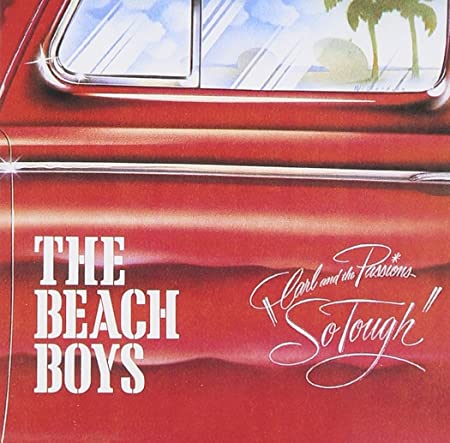
So Tough, Carl and the Passions
I recant my earlier declaration it may be satisfactory to simply get some Greatest Hits volumes of the Beach Boys. I spoke from a place of ignorance, as well as an overweening personal recent antagonism to “Fall Breaks and Back to Winter (W. Woodpecker Symphony),” so please ignore my earlier comments. You should get all the Beach Boys albums, especially this one. The two-album releases of the Beach Boys canon from a years ago are still fairly easy to track down, especially in the age of online shopping, so you can get this along with another impressive early-’70s release Holland (which may have been the Beach Boys’ version of what Songs of Innocence was for U2, especially when you add in Mt. Vernon and Fairway (A Fairy Tale)).
What makes this album so good, you ask? Your hesitation and trepidancy are understandable: this album is quite different from what we normally think of as “the Beach Boys,” especially since Brian Wilson is mostly absent, Bruce Johnston is gone, and two new band members, Blondie Chaplin and Ricky Fataar, bring new sounds and styles. Yet these differences (with all due respect to the personal and professional frustrations many in the band were experiencing at the time) bring a freshness and enthusiasm and strangely enough a freedom. This album doesn’t really sound like “a Beach Boys album” because the Beach Boys don’t seem to be trying to sound like themselves. I’m certainly not casting aspersions on anyone (especially since my working knowledge of the creative practices of the Beach Boys is not what it used to be), but this album sounds like a reinvigorated group of guys who are delighting in creating enjoyable, meaningful music free from any external constraints or internal restraints (though I admit I could be totally wrong about that).
“You Need a Mess of Help to Stand Alone” and “Here She Comes” are good openers for an album about new directions for the band. I didn’t look up the lyrics this time, though I have listened to the album a few times before writing this (as I usually do) and I read a bit of the liner notes from the 2000 re-release (as I usually don’t), so I don’t agree “Here She Comes” doesn’t fit on the album — it fits well considering this is an album of diverse sounds and styles. It’s an album in which the different guys get to show off and experiment.
“He Come Down” may frustrate some of you, since it does approach the realm of blasphemy in a way, but you don’t really have to think of it as blasphemous since it’s more about the guys experimenting and learning about world religions (nothing wrong with some of that). True, they do make Jesus, Maharishi, and Krishna seem equal and similar, but you can get over that easily because they’re wrong. Maybe they realize that now. At least they got 1/3 of the song correct. You can easily add one word (“don’t”) to the other choruses and make it an even better song.
Side one ends with “Marcella,” the most “classic Beach Boys”-sounding track on the album. For this it’s apparently considered the best of the bunch, though you can decide that for yourself. Side two opens with “Hold On Dear Brother,” which I am absolutely convinced is about Brian. The “traditional waltz” gets a clever Beach Boys twist, as the chorus drops a beat or two, making it difficult to dance to but impressive musically, in addition to the very heart-felt and moving lyrics. You can tell me this song was wholly the work of Fataar and Chaplin, the least Wilsony of the group of all time, but that won’t move me one iota away from the deep-seated conviction this song is a tribute and love song and plea to Brian Wilson.
Sandwiched between the two Dennis Wilson songs “Make it Good” and “Cuddle Up,” “All This is That” is another remarkably different-sounding entry on this album. It, too, “suffers” (though I’m not sure that is fair) from its Transcendental Meditation and Cosmic Humanism influences (or whatever they called it back in the day) — but even so, it’s a very nice, peaceful song. In their favor, the Beach Boys at least seem more authentic in their Eastern spiritualism than another group popular at the same time from a different country. No, I am not trying to excuse any of this or encouraging you to experiment with other religions, obviously. You can still enjoy good music when you hear it, though. The Dennis Wilson songs are equally impressive. They are very good pieces of music, even if you don’t enjoy the timbre of his voice. The orchestration adds to “Cuddle Up” very well, making it, indeed, a fitting end to a good album.
It may say Carl and the Passions on the cover, but this is a Beach Boys album. It’s not the “classic” era, which may or may not have zenithed with Pet Sounds, but it’s still the Beach Boys. A newer, fresher, freer Beach Boys. They had their troubles, undoubtedly, but this album is a testament to the ability of the boys from Holland, California to reinvent themselves not for the sake of cash flow but simply for the love of making music and expressing their artistic identities. So Tough is a very enjoyable album. Mr. Christgau didn’t like it, so you know it’s good. Don’t miss it.

War Child, Jethro Tull
Two-and-one-half years later, on the other side of the planet and in a wholly different musical universe, Jethro Tull released what many consider (inappropriately) an important “bounce-back” album, War Child. I disagree with its status as a “bounce-back” album, since A Passion Play is not nearly as bad as many people think it is. As with most things of its ilk, A Passion Play’s negative reception tells us far more about the listening world than about the album. Since War Child did achieve a decent amount of success upon its release, and since it did feature a couple of Tull’s greatest hits, perhaps it would be more accurate according to our rather arbitrary categorizations to label War Child a “forgotten” gem instead of an “overlooked” gem, but arbitrariness aside (at least, former arbitrariness in favor of present, new arbitrarinesses) War Child may have been overlooked as a whole more than forgotten, since those hit tracks are still with us. Perhaps it is counterintuitive to say “this album has been overlooked because it has a few greatest hits” on it, but how many casual Jethro Tull fans can name the albums from which the hits came?
Another potentiality for War Child being overlooked (or forgotten) is its tendency toward cynicism. Here we are, promoting our Death to Cynicism 2015 campaign, and I am promoting an album that suffers from cynicism. These things happen, I suppose. The entire album is not a pessimistic, cynical lambaste of its subject matter, at least (“Ladies,” even if it is satirical, is such a lovely song musically it’s difficult to be displeased with it in any way). At times, some of the numbers reveal Ian Anderson’s frustrations, perhaps in part because of the antagonistic reception Passion Play had fresh in his creative mind.
It’s possible a decent amount of the patina of cynicism can be burnished away by assessing it more as sly satire against those with the presented attitudes. “Sealion,” for instance, may be more humorously intended than outright contemptuous. “Skating Away on the Thin Ice of a New Day” and “Bungle in the Jungle,” certainly the breakaway hits of the album, ask us to consider them upbeat, jaunty tunes, even though the lyrical material isn’t quite so positive. The periodic anti-organized religion themes of Ian Anderson’s repertoire sneak in for a few moments in these hits, but it’s easy again to either overlook them or attribute them to Anderson’s general attitude of the time. Besides, he’s wrong, so don’t get silly about it.
The album is perhaps not as sublime as Thick as a Brick (but, hey, what else is?) or overtly cohesive as Aqualung (even if Mr. Anderson doesn’t think that is as cohesive as everyone else does), but it’s a much more solid album from beginning to end than it seems to be considered. It is a significant shift again in the Jethro Tull direction, again in part because of their reaction to the Passion Play reaction, but it’s a fine showcase of what Jethro Tull was capable of, even in their mildly frustrated early-mid career before their “grass roots self-revival” beginning with Songs from the Wood. The bonus tracks from the early ’00s release give us a further glimpse of the diverse musicality of the group, especially the orchestral directions spirited along by the potential movie of the album. Apparently the 40th anniversary 4-disc set has even more previously unreleased material, including more about the scrapped film project, but I don’t have that yet as of this printing. Some day.
In the meantime, go listen to War Child, especially in a situation in which you can listen attentively to all the sounds and lyrics. It’s much better than just “the album with ‘Skating Away’ and ‘Bungle’ on it.” Give it a try or three.
 Redeeming Pandora