
Christopher Rush
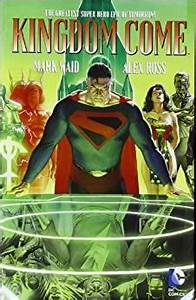
I give the whole thing a tepid 3 stars but 1 bonus star for the Aftermath alone. In stark contrast to the overly effusive introduction by Elliot S! Maggin (apparently it is really an exclamation mark, not a period, in his name), this is not the Iliad. It does not teach us any new life lessons or expose groundbreaking, introspective arcana about the human experience. Nor should we be in awe of its 20-year-oldness: let’s not be surprised in 2014 that comics before the turn of the century had some substance. And this does have some substance — I’m not saying it’s a bad story. It’s just not the Iliad.
It has some definite weaknesses: the mediocre treatment of Revelation, the whole Pastor-off-his-faith device (not really original — in fact, McCay really comes off underdeveloped and more of an ironic deus ex machina at the end, which is probably the point, but it wasn’t all that spectacularly delivered), the MLF (Mankind Liberation Front, or something like that, a great idea) goes nowhere, the UN Secretary-General’s name is Wyrmwood (honestly…), too many characters (new and old) don’t allow for much time with any of them beyond the Big Three, Batman is offended by The Gulag (apparently he forgot about Arkham?), and the entire antagonism between humans and metahumans is confusing: Superman can’t be a jerk for both going away and coming back. Regular humans are never called to the carpet for choosing Magog’s version of heroism: it’s always the fault of the metahumans for being antiheroes. Yes, there is all the “we have to get our destiny back” sort of talk here and there, but humanity doesn’t have to face responsibility for considering morality, truth, and justice “old hat,” nor is the decision to send a nuclear strike on the metahumans dealt with beyond our requisite sympathy for the burden on Wyrmwood’s shoulders for making such a decision.
Still. It’s a good series. Ross’s paintings are fantastic. Waid does a fine job with concocting a potential future for the heroes, even if we don’t like what happens to Batman or Wonder Woman (or anyone else). Waid shows a proper respect for the DC universe and its characters, even if the final battle (which does seem to drag on) ends unexpectedly for some characters (and channels its own revised “Did You See the Sunrise?” moments). Waid gives us some great moments, especially Bruce Wayne’s “so that’s how that feels” scene, and a nod to Victor Buono’s King Tut.
The aftermath, as a I said, is the real highlight of the story — I’m sorry for the fans that didn’t get it in the original issues. Some may think the final moments of it are corny and out of temper with the rest of the series, and it’s true — but that’s why it works so well: time has past; mourning has made way for rebuilding; humanity is back on its feet and back in the pews at church. We’re going to make it after all.
This isn’t The Dark Knight Returns or Watchmen (or V for Vendetta) — but it’s not really trying to be. What makes it so good is not that it tries to redefine truth or justice for the 21st century (as the first two series just mentioned sort of do) — it reminds us the ol’ fashioned definitions are worth re-embracing (even though it could have emphasized that a bit stronger). We need Superman, Batman, and Wonder Woman together in balance — in balance with regular humans putting on their manpants and doing their part, too. It could be better, it could treat religion with more respect, but it’s a good story. It’s no Iliad, but it’s a good story with an even better epilogue.
 Redeeming Pandora