
Christopher Rush
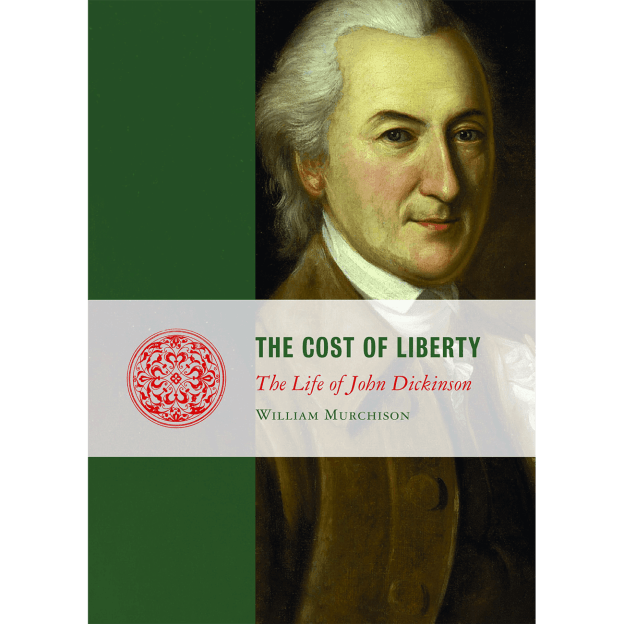
As much of a fan as I am of 1776, I was glad to learn somewhat recently that John Dickinson was a much better person in real life than he is portrayed in the movie, so when I also recently learned a new biography about him had come out, I finagled a copy (as well as the rest in this set from our friends at ISI Books). I would have been glad to give this another star or two, but ofttimes Murchison gets in the way of one’s enjoyment of the work. It’s not that his vocabulary is too erudite for us monolingual public school graduates, it’s more often his tone of amused-at-the-entire-goings-on. Clearly Murchison is lauding Dickinson, as well he should, but far too frequently Murchison detracts from the important work of explicating an unjustly forgotten Founding Father with a demeanor of blasé chuckling (as contradictory as that sounds, it’s the best I’ve been able to conjure for this strange component of an otherwise fine work). For me another slight deterrent is Murchison’s attitude to 1776 — true, the movie is inaccurate with some things, but Murchison is also somewhat unfair. By his accounts, the attitude of Dickinson and the Southern Colonies are more akin to their 1775 attitudes, so not the wholly inaccurate perspective Murchison accuses the movie of portraying. There is more truth to the movie as a representation of the attitudes and conflicts of the Continental Congress of its duration simply compacted into the span of the film than Murchison is willing to credit it, which is disappointing.
I have nothing with which to compare Murchison’s presentation of the other parts of Dickinson’s life beyond a public school education (and, thus, a total absence of knowledge of Dickinson outside of a lifetime of watching 1776), so I did appreciate reading and learning about his pre- and post-Declaration abstinence life, especially his oft ignored Articles of Confederation life (a period of time glossed over if not wholly ignored in most “U.S. History” courses). That Adams and Jefferson and others came to a calm “reconciliation” with Dickinson was good to learn. That he was welcome by most and befriended by others (Meade, Rodney, Rush) and useful to Delaware and Pennsylvania for the rest of his days was likewise a reassuring experience to read.
I recommend this book with only the slight misgivings of Murchison’s sometimes failed attempt at what he supposes to be humor — it is, on the whole, a worthwhile read, especially to repair our misunderstanding if not absent-understanding of a truly important historical figure and, more importantly, especially if the final chapter is to be believed, a humble God-fearing man who lived his life in the pursuit of liberty, justice, and truth for all. Read this book, flaws and all: you will gain for yourself a new hero.
 Redeeming Pandora