
Christopher Rush
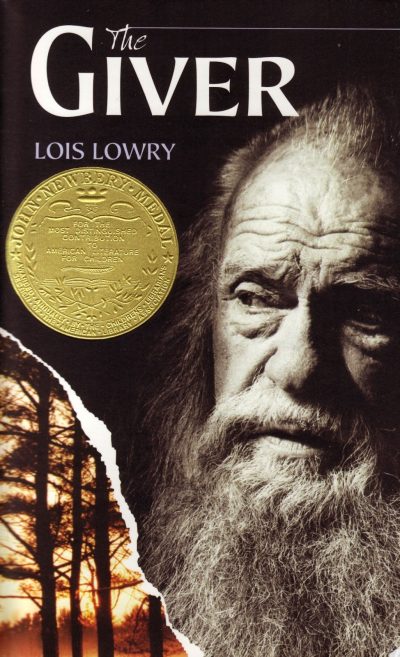
Umm … nah. To be fair, though, I suspect if I read it for the first time as an early teenager, without much reading experience (not that I have stellar experience now), and I only had, say, Bridge to Terebithia to compare to this, I would possibly have thought this a mighty fine story. Now, though, it reads like a slipshod, hastily slap-dashed ramshackle of a half-story. Lowry presents us with partially developed ideas — and many of them are worth engaging, definitely, but she doesn’t engage them, either through our “hero” or in commentary form. Where is the confrontation between Jonas and his father after seeing the “release” video? Where is the payoff for Jonas no longer taking his morning pills? And are we completely sure the “best” plan is “run away”? Have they truly thought out all the potential ways in which they can improve the society? especially since Jonas only has some of the memories and the Giver clearly still has a great deal of them. The entire “giver/receiver” process is rather suspect as well. Allowing for the otherwise-incredible notion the Giver is the repository of all human knowledge and memory of all time before the instatement of this society apparently the world over, which is a rather big allowance, that one Giver could majickally transfer a memory or portion of a memory to another and then wholly forget the memory (except in “wisps”) is rather a strain of credulity, even for this tale. Now the ending. If we could, as Dave Lister has suggested elsewhen, turn the dial to Reality FM for a moment? The ending is pure laziness on the part of Ms. Lowry. Ambiguity is one thing. Modernist Uncertainty/Subjectivity is another. The ending of The Giver, though, is sheer laziness. Nothing more needs be said.
This book has some fine ideas. While it begins to present them well, it feels like it gives up rather quickly (and honors the characters who have given up and run away, which seems like a poor trait to encourage in a teenage audience). I suspect the youth who enjoyed it “back in the day” might find on reading it again now it just does not hold up well, even to its most stalwart defender (likely based solely on 20-some-year-old nostalgia). On the other hand, if one wants to read a classic “children’s” book that definitely holds up well, re-read The Westing Game. That certainly stands the test of time (unlike The Giver).
 Redeeming Pandora