
Christopher Rush
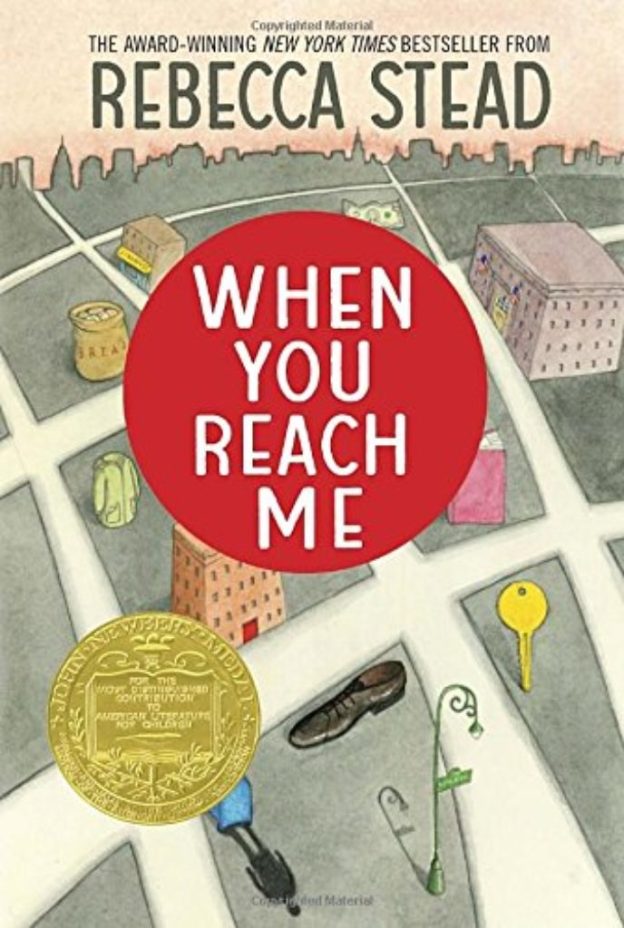
A 2.5-star book rounded up. It’s not that great of a book, if I may speak openly, primarily in the tone and style and (for me) feel of the reading experience. Admittedly, “feel” is highly subjective, but as I read the book I have the experience to discuss it. I don’t doubt Author Stead grew up in the ’70s, nor do I doubt she grew up loving the works of Madeleine L’Engle. Yet, this work feels like someone writing in the 2010s as if it were the 1970s — and it doesn’t work, no more so than any movie in the 2000s that tried to recreate an ’80s feel of a movie. Similarly, the 1st-person narratorship falls flat and irritates; this does not sound like it is narrated by a teenage girl (or however old Miranda is as a supposed 6th grader), just like one of the main failings of the supposedly-great-but-really-overrated Catcher in the Rye. I don’t doubt 6th graders 35 years ago were more intelligent, and I’m pretty sure I was more intelligent as a 6th grader than most 6th graders today, but the work comes off like it is trying too hard and instead drizzles with all the authenticity of Pat Boone covering AC/DC. Or each and every single reboot of ’70s and ’80s pop culture done today (though Stead’s work is better than these horrible movie deconstructions, since Stead maintains a love for L’Engle not an outright rejection of her).
If, as Stead claims, A Wrinkle in Time is not supposed to dominate the story, that, too, is a failure. The book is dominantly a love letter from Rebecca Stead to Madeleine L’Engle … and it would be fine if that was the intention: we certainly need more outright homages to important/quality works and authors of the past … but pretending it isn’t rings hollow and adds to the disappointing tenor of the work. I admit freely I haven’t read A Wrinkle in Time, nor do I apologize or feel like I somehow missed out on something important in my childhood. I was reading other important authors and having other important experiences, literary and otherwise. Would having read A Wrinkle in Time make reading When You Reach Me a more enjoyable experience? Perhaps, but it may also have made it more irritating. I suppose if I read a book written today about how The Westing Game dominated someone’s life and thought and was about some mystery with undertones of Westing Game-likeness, I could potentially be enthused, but I suspect I would more likely be disappointed, with reactions such as “it’s not like that!” or “that wasn’t the most important part!” dominating my experience. It’s a dangerous endeavor to share one’s childhood happinesses with others, especially later in life. I suppose I should applaud Stead’s willingness to do it, but since so many clearly already do and have (especially the Newberry people, who bizarrely claimed this is “wholly original,” despite it being so dominated by A Wrinkle in Time — though I suppose it is too much to ask that today’s Newberry committee have ever read L’Engle either), I will just let the accolades come from others.
It does have some mildly clever things about it, yes. The basic ideas are done well, and clearly Stead worked hard at making it a unified work with the foreshadowings and consistencies and little details here and there that probably wowed the people that really like this book. Does anyone else feel sorry for Annemarie? She really seems to get left out, both in the present and the distant dome-future. The treatment of the supporting characters is a major factor in my disappointment with the book. They come and go only to serve whatever temporary purposes Stead has in driving the main ideas in the book, though beyond time travel and I Love L’Engle, we aren’t really sure what the main ideas are, other than we applaud the commitment of that certain character to dedicate his life to right that wrong at such a high price (is that vague enough not to spoil anything for those who haven’t read it?). That realization Miranda has is probably what pleases most audience members, and that was certainly a high mark of the book, but for me the casual dismissal of the supporting characters and supporting stories frustrates and disappoints — that and the pretentious (perhaps too harsh a term) chapter titles and teeny chapter lengths.
I would like to give this a higher mark, and perhaps if I read it again I could appreciate it more, and perhaps if I read more (any) L’Engle I would love it more. I’m willing to do that … just not right now. Maybe some day.
 Redeeming Pandora