
Christopher Rush
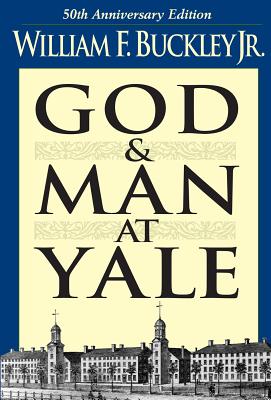
Even more frightening (and pertinent) that it is now more close to the 65th anniversary of this work, unsurprisingly Buckley’s book is necessary, enlightening, and apropos. Buckley’s introduction to the 25th anniversary reveals his growth as a critic, thinker, and writer (the writing is much better than the book itself, which should not be surprising, considering he doubled his life experience and honed his writing output in the meantime). It is more enjoyable to read than the book, but the book itself should be read, if for nothing more than the reminder, especially to collegians today, the only thing colleges want from their alumni is their money. What will perhaps come as an “I should have seen that coming” notice to us all is the litany of colleges, especially akin to the league of ivy-covered universities, during the ’50s that eschewed private enterprise and the free market in favor of government intervention and control (often called “socialism”) in economics courses. Thus, all the decision makers in government who went to college since the 1950s have been weaned on Keynesian economics — no wonder we are in the state we are in today: all of them think they are doing the right thing.
Buckley’s discussion on the inefficacy of religion on Yale’s campus is thoroughly disheartening, especially considering the Decision Makers’ decision to prevent Buckley from giving his cautionary speech to the alumni under the abused, hypocritical claim of “academic freedom.” Buckley’s trenchant discussion of both the passive (and sometimes overt) destruction of religion on campus, and the mythical trope “academic freedom” are likewise necessary reading, especially since the atmosphere at more colleges are even worse than they were when he first wrote this book. We certainly are in a bizarre academic world when ideas like Intelligent Design are blackballed from the very public schools that claim to espouse “academic freedom.”
I especially enjoyed Buckley’s refutation of the notion Yale (and thus all, especially private, educational enterprises) must present all ideas in an unbiased way to the students and thus allow the students to weigh and decide for themselves what is true (or worthwhile or pragmatic or whatever) — as if the classroom is suppose to be an intellectual buffet. Indeed, this is not the case: classrooms and teachers/professors, especially at private institutions, wholly have the obligation to stand for something — to proclaim what is true and encourage the students to believe what is true. Certainly this does not mean they should avoid the thinkers and ideas contrary to what they believe, nor must they only discuss them superficially or derogatorily, but such inferior ideas should be refuted in the classroom. Anything less is not an education. That Buckley and his friends are not popular today should be enough reason for you to read this book.
 Redeeming Pandora