
Christopher Rush
The Goal is El(ev)ation
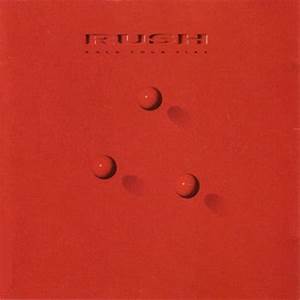
Thirteen years before the boys from Ireland refocused their attention and output back on the transcendent, the boys from Canada did the same thing on one of my favorite Rush albums, the oft-overlooked Hold Your Fire. It might be a bit of a stretch to call this a Forgotten Gem, since it is one of the poorest-selling albums of Rush’s career, and thus it strikes me as more accurate to use this solid album to kick of a new, though related, series, Overlooked Gems. In retrospect, some of the albums we examined under “Forgotten Gems” may have been similar stretches, but we are nothing at Redeeming Pandora if not flexible. Anyway, though I speculated last issue if we might bring Forgotten Gems back, this present moment is calling for something else (though I am not unwilling to return to that series should it strike my fancy), and thus we turn to Overlooked Gems.
Hold Your Fire was created in 1987, and while it is often ignored as a whole, it has given us at least two memorable hits: “Force Ten” and “Time Stand Still.” Like most people (other than the die-hard Rush fans), “Time Stand Still” was the main reason I acquired the album. I was pleasantly surprised at the rest of the album. The album is at a transitional period for the band for several reasons: notably it is the last of the “Mercury Era” albums, the beginning of a (short-lived) lighter lyrical output from Neil Peart (here and there), and the beginning of more electronic percussion sounds from Peart (and a new drum set). It is also a much more pop-rock sounding album than most Rush albums (especially in light of later ’90s releases such as Counterparts and Test for Echo, which are predominantly very heavy rock albums).
In his “making of” snapshot entitled “Fireworks,” Neil Peart highlights many of the changes just mentioned, framing them and more in the general impetus within the band to experiment, grow, and improve their musical and lyrical range. Sometimes growth and change work in a band’s favor (Achtung Baby), sometimes not (Concerto for Group and Orchestra). Here, it works far better than most were likely expecting. The optimistic turn of most of the songs, the pop/Asiatic/keyboard emphases, the gentler, softer feel for much of the album likely threw off much of the public. So while it is somewhat understandable the initial reaction was bemused disappointment, no such response is warranted yet today. For some of us, the leaning toward religious ecumenism and naturalistic lyrical underpinnings may detract from our enjoyment, but one never goes to Neil Peart for doctrinal verities. We can appreciate the journey, the questions, the musical brilliance any way, and take their questions and leanings to the fullest higher place with our Biblical worldview (and aesthetic sensibilities) intact.
“Tough Times Demand Tough Talk Demand Tough Hearts Demand Tough Songs Demand”
“Force Ten” was almost an “afterthought,” Peart says. Sometimes following those afterthoughts are choices of wisdom. This is a great song. It is also an ironic introduction to this album, as the lyrical impetus of the pre-chorus (whatever one calls the initial lines) does not presage an album of “tough talk.” It’s a fairly encouraging, open-hearted album, as intimated earlier. Additionally, though memory may mislead as sentimentality and nostalgia tag-team to override veracity at this moment, 1987 wasn’t all that tough a time, at least where I was living it. Perhaps it was more difficult in Canada, though it is doubtful things were all that difficult for a band with such success (and dosh) as they. Likely, then, it is not so ironic: as is their wont, Rush sings about timeless matters not kairotic hot topics. The fire we are to hold is an eternal flame (easy, Bangles fans). No matter our current circumstances, tough times do indeed demand tough talk, hearts, and songs.
The “tough talk” of the song is truly a litany of encouraging enjoinments. Whether we are owners of “too-tender hearts” or toughies with “skin as thick as thieves,” we can weather the storms of life. Life is not an unconquerable enemy, nor is it an unsolvable puzzle. We can “look the storm in the eye” and be hurricanes ourselves. The best way to do this is to be aware of life around us: “look in, look out, look around.” Don’t be so mindful of yourself and your problems: care about others and their life struggles as well.
Some may be turned off by the potential Whitman-like “anything is viable” bent of some lyrics. While Peart does say “be vain and smart, humble and dumb,” one forgets the helping verb from the beginning of the verse “can” — we can be these things, but that doesn’t mean we should be all those things. If we are looking out and around, we won’t be destructively vain or dumb. It is not a stretch to believe Peart prefers the “smart and humble” combination. Similarly, the “savage grace” line of verse two adds to the quality of the song without promoting relativism. Man is and likely will be noted for his “savage grace,” this side of eternity. Man is capable of many things, good and bad, which is exactly what this song portrays. But thoughts like wearing the “rose of romance” and embracing a joie de vivre likely lean toward living life fully and correctly, living a life of generosity and concern for others, even while the force-ten gales of life storm around us. Our lives are not just for ourselves.
“Children Growing Up — Old Friends Growing Older”
It’s fair to consider this, “Time Stands Still,” the best song of the album. Accurate, also. Like all great works of art, its truth does not change but our experience of its truth increases and improves. Another irony for this album, the desire to pause in a moment of time succeeds on one level, thanks to this artistic medium: we will be enjoying this song in some form (vinyl, tape, disc, digital, ?) for one hopes a long time (perhaps forever, if one’s desires for the way eternity shapes up come true). So the song succeeds on one level, though we know the passage of time has a pernicious way of swallowing up all our temporal victories.
Of course, this song means more to us as we live out its lyrics. When young, we are invincible, time seems to move so slowly, no one could possibly understand what we are going through … Heavens, but we are idiots. But Peart’s point here is not to reflect upon the past (better we don’t that often, anyway). Instead, knowing as we do now time is not nearly as lethargic as we want it to be, slow down and look around at now. Enjoy the moments as you are living them, stop valuing the moments yet to come (that may never happen, and certainly won’t happen the way we intend them to) more than the moments here now. Oddly, the call to stop and look around is likened to “some captain, / Whose ship runs aground.” One would think a ship running aground would be a bad thing worth avoiding, and so the comparison appears to stumble a bit — until we realize the actions are not being compared but simply the situations, the effects: the captain isn’t going anywhere, now, all he can do is think and wait. How much better for us it would be if we could get to the point of a life of contemplation without running the ship of our lives aground first. (For another fine example of this point, see the best episode of The Andy Griffith Show, “Man in a Hurry.”)
This is unquestionably the best song on the album and thus needs no further comment or explanation from me. Though, it certainly is a heck of a thing to think about my friends growing older. Glad that’s not happening to me.
“Time Will Do Its Healing / You’ve Got to Let It Go”
The theme of “time” continues in “Open Secrets,” another solid song many will easily dismiss. I say “easily,” only because many “fans” only like the songs the radio tells them to like (or whatever source of taste and popularity the independent thinking kids are hearkening to these days), not because it’s an album filler. Like with so many of the good, solid Rush songs, it’s the sound of their music. Peart’s lyrical talents are always a rollercoaster, but there is no doubting the musical supremacy of this power trio. The lyrics of this song are on one level inferior to the two tour-staple “greatest hits,” and the basic idea of paying attention to those with whom we are, their needs, their value is a regular occurrence in the post-Mercury years (especially coming up next on Presto) and thus nothing unusual in the band’s oeuvre … but then comes the bridge.
This album is partly about time, partly about searching for meaning. We have noted already the tendency toward ecumenism, but the bridge of this song is remarkable in its rejection of pure ratiocination: “I find no absolution / In my rational point of view.” Even if the thought is limited by its context of “mere” social interaction and willingness to open our hearts to others, casting aside our pain of past hurts and fears of further scorn, and even if the only response is not “seek divine revelation” but “maybe some things are instinctive,” we should take what we can get. That he is willing to acknowledge man’s reason alone will not solve all our problems is a good start. That is one way to start building quality relationships, the kind that risk pain and share secrets. It takes time. We all have things of which we have to let go. If we can, if we are willing, that is one way “You could try to understand me — I could try to understand you.”
“We Fight the Fire — While We’re Feeding the Flames”
You might be tempted to think this is the source of the album title, but it isn’t, not immediately. Certainly the fire imagery (or motif, perhaps) contributes to it, making this a much more unified album than the casual fans who only want digestible radio hits will see. “Second Nature” continues the potential for instinct begun in “Open Secrets,” but it is admittedly hampered by the threatening cynicism throughout the number. Certainly the narrator has much to be righteously antagonistic concerning, and while he does a mostly impressive job of avoiding bitterness and sarcastic anger, a tinge of vitriol may discolor the song as a whole for some. It depends what sort of mood I’m in, personally. That’s usually why I like to listen to this album when I’m already in a positive, optimistic mood. (See our “Death to Cynicism 2015” ad in this issue.) The music attempts to buoy the song up to more than just irritated political antagonism.
One wonders, though, what the actual source of antagonism is actually under scrutiny. Is it the absence of “voices” among the people? Surely that has been remedied to some extent with the advent of the Information Superhighway. Is it the “Too many captains / Keep on steering us wrong”? by which one suspects the leaders of the Free World making decisions one doesn’t like? Which direction is “wrong”? We aren’t precisely told. Perhaps that’s part of the point: pick your own source of antipathy and fill in the blanks with it. One tirade fits all. Though, musically, it is a delightful tirade.
The cynicism rears its head quite boldly in what may likely be considered the tail end of verse two (unless it is pre-chorus two): the rejection of perfection (though, if it were perfection achieved solely by Franklin-like Enlightenment rationality, we could applaud it), the willingness to compromise for the sake of general amity (making the decade-later “Resist” that much more impressive).
The two choruses, though, may likely prevent the song from being outright cynical in the end. We are “feeding the flames”; we are not “blameless.” We are culpable, even if we didn’t start the fire (you don’t mind, do you, Mr. Joel?). We may have inherited a messy world, but cynically complaining and laying blame while we walk around “without shame” belies our mistaken self-image. The guilt we see in the mirror does not mean we are looking in someone else’s mirror: we have some ’splainin’ to do as well. Being bitter makes the problem worse. Pessimism, says Chesterton, comes from being tired of truth, not falsehood. Slinging mud at mudslinging politicians doesn’t majickally make the world pristine. Perhaps it’s an “open letter” not so the “powers-that-be” will see it but so we, the real powers-that-could-be will wake up, slough off our comfortable blankies of blamelaying and start fighting the fire without feeding it. Fight it with compassion, understanding, humility. (Is it too much of a stretch to translate the “second nature” of the song as a Biblical “new nature”? That’s fine. I’m limber.)
“The Point of Departure is Not to Return”
This jaunty little number gives us an optimistic perspective on life flying in the face of pure materialism, a growing undercurrent of the album, and while it has its flaws (which shouldn’t surprise us), it provides a great song, first and foremost (as “great” as a song of its ilk can be, sure), and a great collection of lyrics about which to have meaningful conversations. Songs such as this boggle my mind — not of itself, of course, but that an album such as this could go mostly neglected and a band such as this could be denied entrance into a musical hall of fame for so long.
The opening of the song is as follows: “Basic elemental / instinct to survive / stirs the higher passions / thrill to be alive.” A seeming jumble of contrary ideas, the verse continues: “Alternating currents / in a tidewater surge / rational resistance / to an unwise urge.” We have seen already on this album both a call to rationality and a caution against uxorious devotion to reason. Here we now have a call to balance. The song is called “Prime Mover,” and while the opening lines intimate the eponymous mover is the Darwinian (and potentially Freudian) war against death, with forestalling death being the ultimate value and thus the “prime mover” of all humans do, the “thrill to be alive” sponsored by “the higher passions” surely cannot be a product of simply “trying not to die.” The “higher passions” bespeak a life far richer and meaningful than the base materialism of Darwinian (or Spencerian) existence. Admittedly, the “unwise urge” against which “rational resistance” fights could be a spiritual life — but if those “higher passions” are a good, and just being alive is not enough (and surely it isn’t, given not only the tenor of the entire album but Rush’s entire output), a “rational resistance” could not possibly be in favor of embracing solely materialism. What good would “higher passions” be then? Since, as the verses say, “anything can happen,” it would truly be “an unwise urge” to dismiss categorically the possibility of the miraculous, the supernatural, the divine.
Some may upbraid such an interpretation, especially in light of the chorus, which says, in part, “the point of the journey is not to arrive.” Surely this is saying the end goal of life is simply to have a good life, right? and that isn’t in any way a Christian message. Easy, now. I’m not trying to foist a Christian message upon this song (as far as I can tell, consciously). Even so, if the point of the Christian life were (using the subjunctive instead of the past tense; we are living in … never mind) — I say if the point of the Christian life were simply to “go to Heaven,” surely we would all be translated at the moment of justification anyway. The point of the Christian journey is not (just) to arrive, either. I don’t see a negative doctrinal frisson here.
Some may then chafe against the more overt deistic sentiments of the last verse. Well, you may have me there. Indeed, the song is called “Prime Mover,” not “The God Who is There.” This isn’t a Dr. Schaeffer work. Still, as with most of the album, it’s better than an outright rejection of spiritual things. We can work with this.
Anything can happen.
“It’s Not a Matter of Mercy — It’s Not a Matter of Laws”
Undoubtedly the darkest song on the album (and definitely a top ten all-time dark Rush songs), “Lock and Key” honestly examines the evil within all of us. The music, though, betrays the sinister elements of this song, being yet again another up-tempo, musically-pleasing number. Really the song discusses the fact people almost never want to discuss: the destructive, anti-social, downright evil side we all have. We would call it our “sin nature,” but Peart is not at that point here. Still, that he is talking about it as if it’s a fact and (perhaps mildly) upbraiding all of us for keeping our badness under “lock and key” instead of discussing it, acknowledging it, and seeking a remedy is noteworthy. Sure, we know the remedy, but it is difficult trying to share the remedy with people if they aren’t even willing to discuss or even acknowledge the existence of the disease.
I don’t think the line “Plenty of people will kill you / For some fanatical cause” needs to be taken as an assault against Christianity, especially since it is a true statement about so many “tolerant,” peaceful” groups of world denizens outside of Christianity. Besides, since Christianity is true, it’s not a “fanatical cause,” anyway.
“A Spirit with a Vision is a Dream with a Mission”
Finally we get to the most direct source of the album title with the opening lines of “Mission.” Underscoring Peart’s lyrical skill (which, yes, does at times fly afield), all this time we’ve likely been thinking “Hold Your Fire” is the typical “stop shooting bullets at those people” idea. And while that sentiment has certainly undergirded a good deal of the album, in its general “promote peace and unity” sort of way, it is far more clever than that: we each have a flame, a unique fire of spirit, identity, gifts, talents, what have you — don’t hide them under a bushel basket. No longer the consumptive devastating force, fire transforms into a transcendent symbol of optimistic hope. “Keep it burning bright / hold the flame / ’til the dream ignites. / A spirit with a vision / is a dream with a mission.” Truly an uplifting song, literally.
We are again cautioned against inactive, dreamless existing — another enjoyable current of the album advocating the “higher passions” instead of acquisitive materialism. Additionally, Peart gives us an intriguing possibility the life of a dreamer, the passionate hopeful life of meaning and delight in the Realms of Gold, is only given to those who will make the most of it, who will truly enjoy it. If such a vivid, vibrant imaginative life were given to the dullards, they would not be able to appreciate it or use it wisely — instead they would try to exchange it for the humdrum life of simply existing. An intriguing and almost disquieting notion. Don’t let this happen to you!
This may be the most musically diverse song on the album, which again highlights the importance of diversity and creativity — two ideas essential to a quality life for all of us and neither of which are antagonistic to unity or meaning. Pursuing the “higher passions,” the gospel, the “finer things” as Brother Steve puts it, does come with a cost: “We each pay a fabulous price / for our visions of Paradise” warns Peart, “but a spirit with a vision / is a dream with a mission.” No one ever said the quality life worth living would be safe and comfortable. But unity, meaning, and quality are worth pursuing and fighting for all the same.
“How Can Anybody be Enlightened? Truth Is After All So Poorly Lit”
Perhaps the album is so poorly received because the songs are quite similar. We have here again another straightforward song enjoining us not to disengage from the social life of caring about other people. Don’t hide behind excuses of “I have my own problems.” Don’t dismiss the detrimental behavior of those we love with “it’s just a stage.” Don’t excuse the popular voices of falsehood with “it’s just the age.” We have a role to play, a responsibility to care for others with genuine empathy. Don’t “turn the page” (the song’s title) and move on as if history and its forces are inexorable and individuals don’t matter. Certainly we do, but we live better in community. If life is indeed a powerful wind tunnel, we would certainly do better at surviving it together instead of alone. Sure, you could shake your head at the line about truth being “so poorly lit,” as if Peart is refuting the light of the gospel and all that … but we are seeing in a mirror darkly, after all, aren’t we? At least, again, he is not siding with the “light” of the Enlightenment and its outright rejection of divine revelation. I told you this was a good album — good, at least, as a conversation starter on important things that matter.
“Somewhere in My Instincts the Primitive Took Hold”
I don’t understand why Geddy Lee regrets putting this song, “Tai Shan,” on the album. It’s musically a lovely, calming song. Sure, it’s a tribute to China — what’s so bad about that? It does rebuff earlier songs on the album a smidge, advocating instinct … but, then again, most of the album has been about abjuring pure rationalism, so if there is a rebuff it’s against the willingness to give in to primal instincts, the instincts not of “Lock and Key” but of spirituality, the instincts of the imago dei, perhaps somewhat confused as it might be in this song in the thin air at the top of Mount Tai. The only thing really “wrong” with this song is it’s too short; we want to hear the unique musical strains more. Take this song for what it is, a good song about a positive spiritual experience. Turn it into something later, after you’ve enjoyed and appreciated it for what it actually is.
“In a Driving Rain of Redemption the Water Takes Me Home”
“High Water,” the final song of the album, does have a pervasive “we evolved out of the water” sort of notion (or does it?). Well, at least he’s not saying “we just came from apes.” Again, our purpose here is not to try to transmogrify Peart’s lyrics into proto-Christian talk (though much of the album does tend to allow us to lean in that direction, as we have seen), so instead of trying to remake the song into what we want it to be, we’ll just take it as it is (or appears to be).
Looking at this last jaunty tune on the album, it draws many of the ideas of the album together: time, transformation, memory, social community and responsibility, the value of the individual — all come together in an optimistic conclusion. The optimism again betrays its attempts to reconcile man’s supposed biological evolutionary history with the primal experience of “higher passions”: “We still feel that elation / when the water takes us home.” If we are truly biologically evolved, why would returning to our primordial watery roots give us a positive feeling? Surely Peart is not arguing for a sentimental homecoming feeling like returning to the home of our youth at Thanksgiving or Christmastime. Darwinian evolution (biological, psychological, and sociological) demands we look at our past with contempt: we should be grateful we have escaped the water or the trees or the whatever. Looking back at our earlier, lesser existence should not inspire elation. So the song can’t be simply a call to align with and magnify biological or social evolution.
The song praises the paradoxical notions of a) the courageous explorative breaking away from the ancestral watery home and b) the redemptive benefits of returning to said ancestral watery home. Water’s concomitancy with civilization is not a new concept, nor was it new when Langston Hughes wrote about it for his community almost a century ago. Peart relates the communal connection of memory and water quite well in only a few lines, yet the tension of that paradox still remains. All the lyrics about water itself breaking away from its locations, “springing from the weight of the mountains,” bursting from “the heart of the earth,” “flowing out from marble fountains,” on seashores or rainforest — every instance of water moving and escaping is positive, yet no mention of water returning to its source is mentioned, let alone praised. Thus, statistically, the song praises leaving one’s home/source far more than returning. So why is the refrain always about the greatness and elation of the water taking us home?
If the water is taking us home, the water is not, as initially seemed, itself our home. Fair enough. Throughout the song the water is lifting us up, the water rises (yes, it crashes and flows, too, but mostly it is moving up) and so does whatever is leaving the water. Up is the dominant direction — but never in a biological, psychological, or sociological sense: it’s never about growing complexity or evolution. If returning is up, then, away from the muck and mire of the earth, and it’s not the mountains, where else could “home” really be? If “driving rain” is “redemption,” redemption must come from above, and since even the driving rain takes us home, home must be where redemption comes from — and surely it is not just the clouds! Home is where redemption comes from. above and beyond Earth.
Well, what do you know. I told you this was a good album.
Welcome Home
Thus our first exploration of an Overlooked Gem draws to a very satisfactory conclusion, even if we have stretched it more than Lee, Lifeson, and especially Peart intended. Ever the optimistic band, Rush has given us a much more solid and enjoyable album than just “the one with ‘Force Ten’ and ‘Time Stand Still’ on it.” Considering all the changes going on in their professional lives at the time, that they gave us a calming, musically-uplifting, thought-provoking optimistic album that encourages us to seek spiritual truth and abjure pure materialistic rationalism as the solution to life’s challenges is truly remarkable and worthy of far more appreciation on our part than the album and the band has received. So go get your own copy and enjoy it, paradoxes and all.
 Redeeming Pandora