Monthly Archives: April 2022

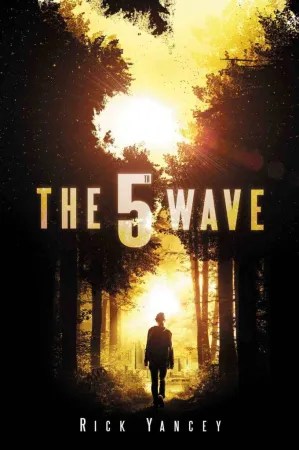
A Review of The Fifth Wave

Alex Touchet

An ominous alien craft appears over earth.  It assaults Earth with a series of four waves of destruction.  The first is in the form of an electromagnetic pulse that shuts down every electronic device on the planet.  This initial attack results in the deaths of around half a million people.  As technology becomes obsolete, the aliens drop a large metal rod onto a geographic fault line, creating a gargantuan tsunami that wipes out coastal cities on every continent.  This wave’s death count is over three billion.  The third assault is a plague called the “blood plague” or the “fourth horseman.”  Its mortality rate is nearly one hundred percent, and it decimates around ninety-seven percent of the remaining human population.  The fourth wave is the activation of an alien consciousness inside select human beings that were “infected” in the mental invasion of 1995.  These humans, called “silencers,” proceed to hunt down remaining survivors with cold precision.

The story follows two survivors: Cassie is a girl searching for her lost brother, and Ben is a survivor training in what is said to be a resistance-oriented military.  Their story is closely entwined with Evan, a silencer who narrowly spares Cassie’s life for sentimental reasons he himself does not entirely grasp.  This disparity between characters is one sign of Rick Yancey’s literary mastery.  He doesn’t fall victim to the trope of the “strong young female surviving a post-apocalyptic world,” such as Suzanne Collins (The Hunger Games) or Veronica Roth (Divergent).  Yancey gives multiple differing perspectives that have an individual voice and personality.  Ben often uses militaristic language while narrating, while Cassie exhibits a more feminine personality unique to her character.  This dual-perspective approach is a tactic many authors avoid.  One of the only other stories where I have seen it flawlessly executed is Worm (a completed Web serial) written by Wildbow.

Rick Yancey succeeds so well with this novel because he openly approaches a genre often marred with a painful multitude of stereotypes and clichés and circumvents them.  He foresees how the story might become predictable and tosses in a plot twist.  He writes his characters not as mirror images of the over-used stereotypes of dystopian fiction, but as real (and blatantly flawed) people.  Cassie had romantic feelings for Ben before the Waves decimated the planet, and so when her brother pops up in Ben’s squad of trainees, the reader expects a clichéd romance to occur.  While this setup inherently seems a little too unrealistic to make sense, Yancey does not take the expected route of playing matchmaker with two broken survivors connected by preexisting relationships.  He sets up a controversial connection between Cassie and Evan the alien-boy before Cassie ever even reunites with Ben and her brother.  This sort of “always one step ahead” approach destroys the sense of familiarity readers often feel toward predictable stories and demands their attention.

One of the most complicated characters in the story is Evan.  He is a walking contradiction.  Silencers are the epitome of efficient destruction, so it makes little initial sense when Evan falls for a member of the race he was programmed to kill.  Even though he has the brain of a hostile alien, there is something about Cassie (and humans in general) that forces him to rethink his priorities.  He has fallen in love, which may not be too unique as a plot point by itself, but is not an event created merely to inspire emotional connections around a love-interest.  Instead, it is a doorway that opens up new possibilities and questions concerning the silencers and their role in humanity’s extinction.  It also demands the question: “Why does Cassie fall for him as well?”  Normally, in stories where a character’s world and family has been destroyed by a hostile invader, the protagonist feels imperatively obligated to seek some form of vengeance.  Forgiveness is often rejected for the sake of “justice,” or more appropriately, revenge.  Jean Valjean is possibly one of the only protagonists I have ever observed to willingly forgive an antagonist, regardless of their wrongs and choices.

Yancey, once again, crosses out another typical cliché and instead gives Cassie the ability to look past Evan’s nature.  When she first discovers the real Evan, she is torn between her love for him and mistrust for his kind.  However, she finally decides he is worth the risk. She is not blinded by his mere connection to the aliens; she sees him for who he really is and how he treats her.  She understands the weight his betrayal of his own race holds and reciprocates when she falls in love with him.  This mutual romance demonstrates what is at the core of Yancey’s novel.  In a broken world where the enemy’s final attempt at annihilating humanity is to tear apart their ability to trust each other, two individuals reach across the divide and hold onto one another.  This is the most powerful element of the novel, because it exemplifies one of the characteristic traits of humanity: its search for community and its thirst for connection.

Yancey plays a long and deliberate game with his characters while making sure they don’t conform to typical cliché guidelines.  Every little detail of the plot has been designed to fit into a larger, much more complicated plan.  Ben and Cassie’s little brother have been trained along with the rest of their barracks by soldiers to “kill aliens.”  They have become cold-blooded and efficient.  Mr. Yancey allows readers to begin to discover early on the military camp is not as it seems.  It becomes increasingly obvious the soldiers may not be true human soldiers, but the characters themselves are unaware and continue to make decisions that force them into worse situations.  This forces the reader to arrive at conclusions before the characters themselves, adding a new element of conscious discovery not present in most novels.  When the soldiers are revealed to be alien agents training children to hunt down and kill their own species, readers are practically screaming at the until-then oblivious protagonists.

While The 5th Wave is definitely not a reinvention of the genre, Yancey succeeds in multiple aspects of the story usually overlooked by most other authors.  He changes the protagonists often enough to provide more variety than a book such as The Hunger Games could ever accomplish.  He takes obvious (and expected) clichés, and then turns them on their head.  His mastery of his individual characters is evident with how well he handles their separate, broken identities.  He even approaches the primary question that plagues almost every alien invasion story ever: “Why do they want us dead if they don’t need anything we have?”  This is probably the main reason I liked the book so much.  It approaches elements of science fiction other authors seem to take for granted.  This novel is not the best teen science-fiction ever written, but it is definitely a favorite worth picking up.

Reasons and Explanations (Of Why I Support Ranting)

Elizabeth Knudsen

So, why the decline of fiction?

The decline of fiction seems to be a very antagonistic topic; full of ranting and putting modern literature down. And it is, to some extent. But as with all things in life, there is indeed at least one reason behind it. In fact, there are three.

The first reason is perhaps the most obvious: fiction seems to be showing a gradual descent into sauciness and paranormal romantic nonsense. All too often it seems authors do not possess the originality to find a different plot line from others before them, or even perhaps the intellect to portray a classic plot in a new and interesting way. It has become rare for a remake of an old classic fairytale like Snow White to be released without some sarcastic twist; some deforming change that turns something beautiful into something more “fit for the times.” It is too rare for someone to walk into a movie (like the 2015 Cinderella by Sir Kenneth Branagh) and be blown away by its audacious purity. All too often, people walk into a remake of an old classic bracing themselves, like a high school geek walking into the locker room, expecting some sort of prank to be played on him. The world is moving away from the world of fairy tales and happy endings, toward more dark and twisted themes.

The second reason is it is a good thing to be able to pick apart a movie and criticize it constructively. Unless someone can defend why she likes a book or movie, one can argue she has not enjoyed that book or movie, because she can find no support as to why anyone should enjoy that book or movie. Also, the world is full of unspoken values just below the surface — if no one pays attention to these values, then they are watching or reading something for mindless entertainment, which is pointless. Everything is trying to present a worldview. Unless people are looking, they might miss it.

The third reason is a lot of people seem to be looking for mindless entertainment, especially in the high school generation. Teenagers “escape from reality” by plugging into their devices with a movie or a book or a video game. They shut off their brains in their free time, thinking a brain’s use is only in school. What this rising generation is missing is what the poet Mary Carr calls an “inner life.” They give no effort to developing an imagination or a world of dreams they can later pursue (beyond perhaps the dream of meeting a member of their favorite boyband to whom they run off and get married). They’re so caught up in the latest piece of pop culture trivia they lose sight of both the reality of where they are and where they’re headed. And modern teen literature does nothing to try to help dispel this illusion. Instead, more often books weave impossible tales of teenage beauty, sex, and heartbreak.

So, why decline of fiction? In a way, this topic has not been decline of fiction, so much as decline of culture. Let people hope beyond hope some literature will still pursue that audacity of purity and promote the building of an inner life.

Bibliography

Reynolds, Rebecca. “The Audacity of Cinderella.” The Rabbit Room . N.p., 15 Apr. 2015. Web. 29 Apr. 2015. <http://www.rabbitroom.com/2015/04/the-audacity-of-cinderella/&gt;.

Poverty of Charles Dickens in Bleak House

Michaela Seaton Romero

Charles Dickens was a victim of poverty. Growing up he first had an idyllic childhood, even going to school. But when his father was sent to debtor’s prison, he and his sister had to go to work at a shoe blacking factory until their father was freed. Even though he had a happy early childhood, the poverty he witnessed, the preying on the young, and the exploitation of the weak played heavy themes among his later novels. One such novel is Bleak House. Bleak House explores what greed can do to someone, and how poverty plays into it.

Jo is a character readers meet in Bleak House. A street urchin, he shows where the old captain’s grave was.  Jo represents a large multitude of different children Dickens could have met on the streets in his time. Esther, the narrator of Bleak House,  talks about Jo. How odd it must be to be Jo, to see people read and write, but for that to be a completely alien thing to him because he has never been to school, to see people go by without even caring. She seems to think lowly of him, wondering if he ever thinks, if he even can think. Esther talks about how people go to church, which must seem so foreign for Jo, the little lowly street urchin. When he is jostled and pushed out of the way, she wonders if he thinks he’s not really worth anything. In her view, Jo was overlooked until he became what he was, worth nothing more than cow or a dog. His whole life is totally foreign and Esther cannot understand it, she has a gawker mindset when talking about Jo.

It is very probable Dickens put into Esther’s commentary about Jo what he himself heard as a child among the poor people. In his society the poor were considered almost a blight upon the others. It makes me wonder if he was made to feel less than human and not worth anything, not even a kindly glance or for someone to take the time to give him a stale piece of bread. Jo was less than human.

Dickens is making an adept political statement about his society. The Chancery courts in Bleak House were examples of the courts in England, who did not actually care about the people or the law, only what would benefit the ones who could afford to exploit the system. As can be seen in Esther’s portrayal of Jo, Dickens also looks down upon the ill education of the poor and the neglect of them.

The fog is also symbolic of the oppression that permeates Victorian society. The Victorian world was governed by greed and money, of which the poor unfortunately were often victims. His descriptions of the streets, the urchins, and the overcrowded living quarters are all indicative of the conditions during Dickens’s time. It was a gloomy time with society rotting according to Dickens, and this shows through in his work. In one scene he details three children who talk with Esther and her guardian. They have a gawker mindset, completely baffled how the little girl in women’s clothes could be supporting the other two. It is sad, considering Dickens probably felt the same way when he had to support his family. It is horrible how the society ignores their own festering blisters of poverty and does nothing to help the poor children.

Dickens saw the dark side of England, the poverty, when he had to work for his family. What he saw and experienced he put into his books, nudging his political views on poverty into the minds of his readers. Bleak House shows this, as does The Christmas Carol and Great Expectations. Dickens made sure he always included people who suffer from others’ greed, and in doing so, established himself as one of the greatest authors of the Victorian Era.

The Music of Radiohead: A Contemporary Response to Postmodernism

Julian Rhodes

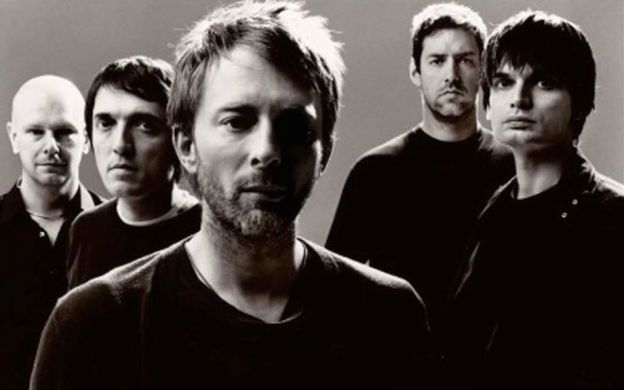
Any fan of British alternative/progressive rock, or at least rock in general, should have some measure of familiarity with Radiohead, which, along with bands like Oasis, Nirvana, The Smashing Pumpkins, and The Verve, has over time become one of the most successful and influential British rock bands of the late ’90s and beyond. Radiohead’s style has changed over the years, as they began with a rougher grunge feel with their debut album Pablo Honey and afterwards began a transition to a melodic unamplified feel with the seven albums that followed. Upon the release of their iconic and well-received album OK Computer, they began to incorporate electronic elements, thus creating a fusion of acoustic rock and mellow electronics that evolved into their trademark sound. Radiohead has sold more than 30 million albums worldwide, with the band’s work appreciated among critics and audiences alike, placing them as one of the greatest rock bands of all time.1

In this analysis I plan to focus on the stylistic traits of their music, with a large emphasis on the philosophy of the band through examination of their lyrics, particularly dwelling on the three albums they released between 1997 and 2001: OK Computer, Kid A, and Amnesiac. Radiohead’s music tends to capture a particular emotional mindset of teen angst and paranoia toward the advancements of the modern age, whilst borrowing ideas from philosophies such as spiritual existentialism, nihilism, and postmodernism. It is easy to mistake the band’s image as catering to the teen angst mindset, but upon further listening experiences and examination of their material, I have realized the popularity of their content has stretched far beyond that assumed target age group. If angst is their primary emotional channel, it is not a juvenile hormonal angst, but rather an existential angst that stretches beyond circumstantial situations and addresses the basic human fears and emotional trials that confront us on a daily basis. There is a great deal of maturity in both the ideas and craftsmanship: the music itself is beautiful, but most importantly, the poetry is well-written.

And it should indeed be called poetry — the important thing to remember with all art is it inevitably is laden with connection to all art that came before it, and the poetic medium undergoes rebirth through every century and every decade. I do not doubt the greatest poets of our day are hiding behind the masks of musicians. This is why it is important to examine their work because it has achieved that perfect balance of cultural recognition and artistic value. It is poetry popularized, and therefore gaining an understanding of the artistic statements the band presents will further an understanding of it has contributed to the shape of the music world today, and by extension, postmodernist culture, if indeed their music can be considered postmodernist.

The song that originally catapulted the band into fame, “Creep,” is still their most well-known song, despite the fact they have produced eight albums since the song’s 1992 release. The most down-tempo song on their debut album, Pablo Honey, gained popularity perhaps because of its simple but powerful description of the universal unrequited love theme. The song depicts a basic unrequited love scenario: the insecure and self-loathing dreamer is tongue-tied in the face of unapproachable beauty. In the song’s second verse (I don’t care if it hurts / I want to have control / I want a perfect body / I want a perfect soul) there is such a perfect rhythm of ubiquitous human desire, the nagging and ever-present feeling we are imperfect, followed by (I want you to notice / when I’m not around / I wish I was special / you’re so very special) — the same mistake we always make, in thinking we will find personal happiness and fulfillment in someone else’s validation of us. The scene crumbles beautifully as the second chorus fades into the bridge: (…she’s running out the door / she’s running out the… run, run, run, run…). The story ends here, in the same way it has ended for many of us lovers, at one point or another in our lives. Ironically, the album Pablo Honey has scarcely met with the same success as its hit single; it is often derided by true fans as Radiohead’s worst album, featuring generic and undeveloped tracks more referential to earlier styles of rock than anything else. Nonetheless, it has been named as one of the most influential albums of the decade by Classic Rock2 and one of the best rock debut albums of all time by the BBC.3

Their second album, The Bends, has met with even greater success, charting at #4 at the UK upon its initial release, reaching triple platinum status.4 The album is full of high points, beginning with the wobbly pianos of “Planet Telex” and ending with “Street Spirit (Fade Out)” and its beautiful closing line (Immerse your soul in love / immerse your soul in love), chilling when sung in context with the rest of the song. But the song that stands out to me more than any other on this album is Radiohead’s second celebrated hit single, “Fake Plastic Trees.” As can be inferred from the song’s title, the lyrics focus on the ways in which modern life has become superficial, hollow, and plastic. In the song, a woman owns a watering can rendered useless to her because all the trees in her house are fake, while her husband sits and muses on his former job as a plastic surgeon. Their relationship, like the plants they have surrounded themselves with, has grown plastic and devoid of emotion. They put up façades as they try to fulfill the wishes of those around them (…if I could be who you wanted / If I could be who you wanted / all the time…), yet the strain of constantly trying to maintain the artificial images they construct exhausts them (…and it wears her out / it wears her out…). The song, at its beginning, sounds just as tired as the feeling it is trying to convey- only an acoustic guitar and a soft organ, so our attention is drawn to the strained voice of the storyteller. Yet the song has an amazing buildup. As the couple’s emotions build, drawing nearer and nearer to a genuine and passionate love, the guitar changes from acoustic to electric, bringing to the song to its apex. To describe it further would be pointless; I will leave off here and say it is a song no one should go without hearing at least once.

Now to draw attention to the band’s most famous album: OK Computer, one of the greatest rock albums of the 1990s, and possibly the best example of postmodernism in pop music. I use the term postmodernism here in reference to not only the nihilist atmosphere produced by the album but also the chaotic electronic musique concrete elements that find their origins all the way back in the folds of the late Dada movement. The album even shares part of the purpose of the musique concrete genre itself — to use electronic sounds to create a kind of music that illustrates the presence of technology in modern life. The link is evident, and the theme was even more relevant at the time of OK Computers release. The end result, however, is far from chaos. It speaks madness, but there is method in it. The chaos is tied together with a strong beat, mellow guitars, and piercing lyrics. It is described as containing themes of “rampant consumerism, social alienation, emotional isolation, and political malaise.”5 Even lead vocalist Thom Yorke comments on the album’s fragmentation. “I’m just taking Polaroids of things around me moving, too.”6 He continues, “It’s like there was a secret camera in a room and it’s watching the character who walks in — a different character for each song.”7

I’ll begin by addressing a song often referred to as the “Bohemian Rhapsody” of the nineties: “Paranoid Android,” the second track on the album, is its masterpiece. It is also the most musically complex; a true classic of post-Britpop approximately six-and-a-half minutes in length dynamic in melody and tempo throughout while remaining coherent on the whole as a piece of music. The song begins with a gentle guitar riff and a feeling of discomfort — lyrics speaking unfulfilled desire for solitude amidst the buzz and confusion of noisy company (Could you please stop the noise? / I’m trying to get some rest / From all these unborn / chicken voices in my head…). The final social withdrawal is triggered when a random stranger begins to launch into an unsolicited tirade against him (Off with his head, man / off with his head, man / why don’t you remember my name?). It is helpful to know: this segment of the song was inspired by an unpleasant experience Thom Yorke had at a bar in L.A., as he watched a woman explode into a violent tantrum when someone accidentally spilled a drink on her. The tension in the song mounts with the buildup of the feedback, tearing down the mellow feel the song had constructed in the first verse, signaling the increasing hostility of the forces closing in on the song’s narrator. Then comes one of the most beautiful moments in any rock song, ever: the electric guitars cut out, the beat slows the pace of a heartbeat, and the acoustic guitar strums softly like rain on a roof, and voices in the background sing a capella as if in a choir. As this steady tempo is kept, the lead vocal sings repeatedly and desperately: (Rain down, rain down / Come on, rain down on me / From a great height / from a great height). The hero of this song is broken and opening himself. He is reaching out for communion with the Divine, longing for a religious experience, for God to rain down love and mercy upon him. Yet the divine moment is interrupted — as the connection is nearly made, the faint bond is severed as all the worries and cares of the world seep in like water seeping over the top of a dam, whispering in his ear: (That’s it sir, you’re leaving / the crackle of pigskin / the dust and the screaming / the yuppies networking / the panic, the vomit / the panic, the vomit / God loves his children / God loves his children). The last remark is made sarcastically, as the narrator believes God has abandoned him. The song then descends into a violent chaos of sound, treading backwards through all of the melodies from the beginning of the song, bringing things to a dramatic and explosive conclusion as the narrator loses himself in nihilism.

“Subterranean Homesick Alien” is simpler; it tells a story of a man who fantasizes excessively over UFO encounters. The imagery of the song is conjured up for us by a beautiful guitar intro accompanied by celestial synthetic vibes reminiscent of an old ’70s sci-fi film. The following song, though, “Exit Music (for a Film)” is not only one of my favorite Radiohead songs but is also in my top three songs of all time. It was written for the Baz Luhrmann film Romeo + Juliet and plays after the end credits, and the song was reportedly inspired by the chilling moment when Juliet kills herself at the end of Franco Zeffirelli’s 1968 Romeo and Juliet. No matter what version of Shakespeare’s play the song aligns itself with, the words and the melody remain the same, ready to attach themselves to any tragic tale of young star-crossed lovers choosing to die together rather than live in a society that forbids them to be together. Not that I’m a huge fan of this, absolutely not. It’s simply how the song tells the story. Recorded in an echoing hall with a stone staircase, the song begins with a sad guitar strumming borrowing a tune from Chopin’s Prelude No. 4, along with Yorke’s resonant vocals whispering the poetry into the mic. As the first chorus begins, a synth choir enters in the background, signaling the curtain of night falling over the elopement — but it is not until the chorus ends and the second verse begins when we first feel inescapability of fate. For in the second verse, played behind the vocals are noises that sound like the universe is literally caving in on the two of them — to create these sounds, Yorke went to a playground and taped small children playing on the equipment, and then reversed it in the studios. The stanza for this verse appropriately reads (sing us a song / a song to keep us warm / there’s such a chill / such a chill) for what happens next is truly chilling. The moment that next trembling note hits, there’s not a single time I’ve listened to it I haven’t gotten goosebumps. It’s rare a song is as immersive as this one is; few make you feel as Romeo and Juliet are passing through death’s doors you are passing through with them. As the vocals shout out the words (now we are one in everlasting peace) there’s a serene triumph and beauty to the story never there before, and in spite the two lovers mutter out to their families they hope they choke each other in the senseless feud. We forget so easily Romeo and Juliet never discovered the feud was resolved after their death — they died believing the fight would go on until the bitter end. In any event, the song is in a word: haunting. It deserves multiple listens.

To follow, “Karma Police,” one of the more successful singles on the album, is powered by a piano, acoustic, and drum lead for the verses and chorus, in which the song’s narrator, feeling irritated with other people, starts wishing they would get what they deserve, that the “karma police” would catch up to them eventually. What’s really beautiful about this song, though, is its spiteful tone makes a complete turnaround and the song redeems itself after the second chorus. After the vengeful (this is what you get / when you mess with us) the narrator immediately shifts into a joyful and melodic moment of (phew! For a minute there / I lost myself, I lost myself) a refrain that repeats until the end of the song. There’s a feeling of relief that is always welcome, that feeling when you’ve been doubting your own integrity and good nature because of negative feelings you’ve had toward yourself, toward other people, because of insecurity. That line (for a minute there / I lost myself) has always been extremely powerful for me because it’s in small epiphanies like this people find their identities; they say “No — wait. That’s not me. I’m a better person than this,” and then they pick themselves up and start making themselves something more like who they really see themselves as being, or who they really want to be.

Following the electronic decay of “Karma Police” are the abrupt computer generated words (Fitter / happier / more productive…) which begin the song “Fitter Happier,” if it can even be called a song. It’s really a monologue narrated by a computer that sounds like Stephen Hawking’s voice panel. It is perhaps the most depressing track on the album, but it is the most powerful because it says so much more than could be said with mere songs. The track consists of a series of disconnected sentences and slogans strung together in short succession. Halfway through, a soft yet ominous piano comes in and begins to grow louder in sound, building up along with other ambient noises only to fall out at the very end of the track to allow the listener to close in on the harrowing final statement. The lyrics are too good to not post here in their entirety: Fitter. Happier. More productive. Comfortable. Not drinking too much. Regular exercise at the gym, three days a week. Getting on better with your associate employee contemporaries. At ease. Eating well. No more microwave dinners and saturated fats. A patient better driver. A safer car. Baby smiling in back seat. Sleeping well. No bad dreams. No paranoia. Careful to all animals, never washing spiders down the plughole. Keep in contact with old friends. Enjoy a good drink now and then. Will frequently check credit at bank. Favors for favors. Fond, but not in love. Charity standing orders. On Sundays Ring Road Supermarket. No killing moths or putting boiling water on the ants. Car wash, also on Sundays. No longer afraid of the dark or midday shadows; nothing so ridiculously teenage and desperate. Nothing so childish. At a better pace; slower and more calculated. No chance of escape. Now self-employed. Concerned, but powerless. An empowered and informed member of society. Pragmatism, not idealism. Will not cry in public. Less chance of illness. Tires that grip in the wet. Shot of baby strapped in backseat. A good memory. Still cries at a good film. Still kisses with saliva, no longer empty and frantic like a cat tied to a stick driven into frozen winter s***. The ability to laugh at weakness. Calm. Fitter, healthier, and more productive. A pig in a cage on antibiotics.

Of course the album has its other small rarities — for example, “Electioneering,” a song about political compromise, (When I go forwards, you go backwards / And somewhere we will meet), or “Climbing up the Walls,” which was written based on the murmurings of mental patients Thom Yorke encountered while working in the asylum as an orderly. But the last jewel worth mentioning is the bittersweet lullaby “No Surprises,” the album’s ninth track. The lyrics tell of a depressed and lethargic life in its dying throes, yet it’s played with relaxing and nostalgic chimes and a sorrowful yet optimistic melody (A heart that’s full up like a landfill / a job that slowly kills you / bruises that won’t heal / You look so tired, unhappy / bring down the government / they don’t, they don’t speak for us / I’ll take a quiet life / a handshake of carbon monoxide / no alarms and no surprises, please). We feel there is both sadness and disappointment with the present world and happiness in the glimpse of a beautiful afterlife on the other side (Such a pretty house, such a pretty garden). Its melancholy poetry paired with the sleepy instrumentals bring for a very exquisite kind of sadness I have never seen achieved elsewhere, making “No Surprises” my favorite “sad song” and one of my ten favorite songs, ever.

The album opens and closes the same way, with a song about a car crash. The glitchy opening song “Airbag” uses the lyrics (…an airbag saved my life / in an interstellar burst / I am back to save the universe) to describe the feeling of wonder and empowerment one gets from realizing one has survived a near fatal car accident. To bring it back, the album’s closing song appears to narrate the thoughts of perhaps the same driver moments before the crash that happened prior to the beginning album, thus creating a cycle. The song’s soothing acoustics seem to narrate events in extreme slow motion, while the lyrics in contrast speak of going too fast (Hey man, slow down, slow down / Idiot, slow down, slow down). At a first glance, these may be the words that the man is shouting at the other driver — but perhaps it’s more likely the man is shouting at himself. Realizing he is on the brink of death, he sees he has not only been driving too fast, but he has also been going through his own life too fast. He’s been hurrying this way and that without stopping to take in the scenery, and now his short time on this earth may be over.

Kid A is an album I consider to be, in many ways, OK Computer’s close brother. The music and themes are similar, but Kid A has a darker, colder, and more bizarre feel to it — there’s not a song on the album with the kind of loud guitar choruses you hear in songs like “Electioneering.” The album creates a similar atmosphere of paranoia and reclusion, yet it bears a feeling different from the frantic buzz of the present; rather, it seems to reflect the emptiness of the digital cities and empty wastelands of a distant future. Yorke describes it as a speculation as to the possibilities of life after the modern age passes away, of a generation after the apocalypse. The title “Kid A” is a reference to the first cloned human. The sounds are experimental: primarily electronic, with a few soft guitars and often computerized vocals. If I mentioned OK Computer conveyed postmodernist ideas, Kid A illustrates this even further. The artwork for the album is bleak and abstract, the band’s style is in many places minimalist, and the lyrics for some songs like “Idioteque” were produced through what Tristan Tzara calls “dada poetry” — writing down phrases and pulling them out of a hat. What I find most interesting about the album, however, is its peculiar success. Kid A went platinum in its first week of release in the UK and became the first Radiohead release to top the charts in the United States. OK Computer was an album that demanded a worthy successor, and for one of the few times in rock history, a band has produced a follow-up just as good as, if not better than, the first. Rolling Stone, Pitchfork, and The Times all praised Kid A as the best album of the 2000s, and both Rolling Stone and TIME magazine name it as one of the 100 greatest albums of all time. Kid A introduced rock listeners to new styles of music previously unrecognized and changed the course of the band as it moved to the electronic ambient sounds it would use for the next decade and a half.

The album has a superlative opening: a beautiful C-minor chord on an electric keyboard, followed by a short succession of glitching vocals, then switching over to a major chord to begin the lyrics. The song “Everything in its Right Place,” and the main refrain, is nothing more than the words in the title itself: the song is a frenzy, detailing mankind’s incessant need to bring order to everything and simultaneously his incapability to do so. The music itself presents this wonderfully, as he sings for the need for everything to be in its right place, divided into black and white categories (There are two colors in my head / there are two colors in my head), the music slowly begins to spin out of control amidst the buzz of electric equipment — yet as the vocals dissolve and the cacophony takes over, there’s suddenly a uniting melody that wasn’t evident before, a final major chord rising up amidst the madness to show disorganization can be beautiful. The next song, “Kid A,” begins with the space age sound-effect of an electric whirr, something sounding remotely like a spaceship passing over head. It then changes to a pattern of notes played out on chimes, soon accompanied by deep low notes. All of the vocals on the song are computer distorted, and for a reason: Thom described the subject matter as “brutal and horrible,” within the softly spoken and easy to miss lyrics we find the words (We’ve got heads on sticks / you’ve got ventriloquists). The words no sooner arrive than they leave, and we are greeted with a sudden rush of instrumentals, as the gentle Congo drumbeat rises and the strings pour down like a waterfall. As the chimes from the beginning make a reappearance, we have one final phrase before the beat picks up and the piece falls apart: (rats and children follow me out of town / rats and children follow me out of town).

Several following songs bear interest: “Treefingers” and “Motion Picture Soundtrack” are both largely instrumentals-focused, and both “Optimistic” and “In Limbo” feature vocal echoes and rich acoustic guitar rhythms. “How to Disappear Completely” is the most sorrowful track on the album, something like “No Surprises,” but more straightforward, and more chilling (I’m not here / this isn’t happening), perfectly capturing the desire to simply leave your environment by dissolving into thin air. The frantic jazz riffs of “The National Anthem” along with the tense and eerie lyrics of “Morning Bell” (Where’d you park the car / where’d you park the car / Clothes are all alone with the furniture / Now I might as well / I Might as well / sleepy jack the fire drill / running around around around… / cut the kids in half / cut the kids in half) all serve to create a sense of building tension in the songs. Yet the most interesting and noteworthy track on Kid A would have to be “Idioteque,” which begins with a simple disco-reminiscent beat followed by a four-chord synth progression borrowed from electronic composer Paul Lansky’s experimental computer piece Mild und Leise. The postmodern style of songwriting affords the opportunity for a variety of interpretations, as the song as a whole is literally a collage of ideas. The song’s tone is slightly more ominous than some of the other tracks on the disc, the lyrics beginning as follows: (Who’s in the bunker / who’s in the bunker / women and children first / and children first / and children / I laugh until my head comes off / I swallow till I burst / until I burst / Until I…). As the chorus changes to a major key, we hear the words (Here I’m allowed / everything all of the time). Modern society aims to have no limits; the happier a society is, the easier it is to control. We forsake absolute values to allow minorities the rights they feel they deserve, as long as they’re consuming goods to grease the economic wheel. Meanwhile, factions scream for attention as they proclaim the existence of impending environmental disaster (Ice age coming / ice age coming / throw it in the fire / throw it in the fire / throw it in the / We’re not scaremongering / this is really happening / happening…). And yet we’re perfectly ready to ignore serious issues because we don’t want to be removed from our comfortable bubble of consumerism and gluttony. The album ends with the sad but beautiful lyrics of “Motion Picture Soundtrack,” which begins with a quiet organ but in its dying throes bursts forth into warm harp scales. This may be the song heard at the last remaining campfire in an ever-growing snowstorm. The album ends with the words (I will see you in the next life), closing off with a character declaring their belief in reincarnation, a concept that will be explored in the following album Amnesiac, possibly a “reincarnation” of Kid A.

Having gone on for so long, I don’t know how much I can say about Amnesiac. While Kid A is about the distant future, Amnesiac seems to point to the distant past, and as can be implied from its title, a past forgotten by the souls reincarnated. The album draws heavily on ancient mythology and historical themes: “Dollars and Cents” mentions “wandering the promised land,” “Like Spinning Plates” says (you feed me to the lions), “You and Whose Army” references the Holy Roman Empire, and “Pyramid Song” was inspired by an exhibition of Egyptian artwork Thom Yorke visited. In his comments on the album, Yorke compares London to the labyrinth of Minos, and on the cover of the album is the weeping minotaur. We are not Theseus. “Dollars and Cents,” a song with wavering guitars and tingling percussion reminiscent of the clinking sounds of the currency in its title, describes how as members of society, we are always trying to be constructive toward each other in conversation, in our careers; yet, at the same time, human beings seem to destroy everything they touch. No, we are not the hero wandering the corridors of the labyrinth — we are the beasts placed in the labyrinth to devour him. Amnesiac is more than just an analysis of the past, though. It ties together the themes of the past with modern imagery, it plays with our memory as it gives a reprise rendition of “Morning Bell” put on the album to sound like a “recurring dream”; we’re remembering something from an earlier album, but it’s distorted, stretched out like a reflection in a funhouse mirror, as if our memory of it is conflicting with what we’re currently experiencing. That’s why the alternate title of the track is “Amnesiac.” What the album does is it brings the past, the present, and the future together. It includes within it echoes and reflections of OK Computer’s present and Kid A’s future. Humanity is not always dealing with the same problems, but it is always dealing with problems. We still feel, we still laugh, we still love, and we still weep. Time is irrelevant. We are the same.

Amnesiac begins with a song entitled “Packt Like Sardines in a Crushd Tin Box,” a title so cramped there’s not even enough space for all the letters in some of the words. The song begins with a metallic beat, followed up with low synthetic tones, and the lyrics (After years of waiting / nothing came / after years of waiting / nothing came / I’m a reasonable man get off my case / get off my case / get off my case). The song is supposedly about rush hour in the London underground, and though I really should examine it further, I would like to turn most of my attention to the second track, “Pyramid Song,” which Yorke hails as the best song the band has ever recorded. With songs like “Exit Music,” “Paranoid Android,” “No Surprises,” and “Idioteque,” it’s very hard for me to agree with him, but “Pyramid Song” is a worthy contestant in the running. The song romantically and poetically handles the Egyptian view of the afterlife and infuses it with modern emotion, beginning with a stony piano chord progression, haunting vocals, and strings and percussion that fall like water during the instrumental chorus. The lyrics read (Jumped in the river, what did I see / black-eyed angels swam with me) the river is the River Nile, the River Styx, or both — it is the river crossed in the voyage of death. The narrator of the song is already dead; the black-eyed angels are the black-eyed crocodiles that swim in the river. (And all my lovers were there with me / all the past and future / and we all went to heaven in a little rowboat / and there was nothing to fear, nothing to doubt.) This originates from the Egyptian belief a man’s possessions, servants, and wives will travel into the next life with him. For an Egyptian, life was spent in preparation for the afterlife — the Egyptian culture was death-centered. In that perspective, this is not a sad song; this is a happy one. It describes the fulfillment of an event one has spent one’s whole life preparing for. As a Radiohead song, it is the only one I can bring to mind that treats death optimistically. There is a great element of peace in it and possibly an element of hope as well. But better than that, the song is beautifully orchestrated — it has an exemplary progression and a pining atmosphere with it that most alternative music today cannot compare to.

The following song, “Pulk/Pull Revolving Doors,” is a mixture of electronic sounds that don’t seem to follow any specific beat, paired with words spoken through auto-tune that describe the various types of doors, symbolic of the different people, opportunities, and decisions we encounter in life. The song ends on the echoing warning (But there are trap doors / that you can’t come back from). The song after that, “You and Whose Army?” is one of my favorites on the album, as it begins with a muffled and timid voice calling out threats and challenges (Do you think you can take us on?) but then, as the confrontation escalates to a fight, the soft strumming guitar is quickly joined by a drumbeat and piano, and the voice raises to a full shout — when the song is through, both sides have been bluffing, and both sides have broken promises. Another notable track, “Like Spinning Plates,” starts with the most dizzying musical intro I have ever heard: a series of whirling electronic notes, growing suddenly loud, suddenly soft in quick succession as the background instrumentals slowly come in, present Radiohead’s trademark paranoid feel, but this time in a different way than ever before. The album closes with the song “Living in a Glass House,” where the band achieves the jazz sound they always wanted to, but never could, produce. The jazz is not the smooth jazz of lounge radio but the harsh jazz used in Duke Ellington’s music, the kind of jazz Radiohead paid homage to in tracks like “The National Anthem.” The style is intended to replicate that of a New Orleans funeral, and the lyrics concern the impossibility of privacy in the modern age, as a woman tries to paper her windows, but this is futile because she lives in a glass house, where every passerby can see her daily activities. The last two lines sum up the growing transparency of modern lifestyle despite our efforts to prevent it (Well of course I’d like to sit around and chat / but someone’s listening in).

While I’d hesitate to call Radiohead one of my favorite bands due to subject matter and perspective, I do not hesitate in the least to recognize the quality of the work they have produced. They are one of the best bands to have emerged within the past twenty years, continuing the tradition of alternative/progressive rock, forging ahead by experimenting with styles, and illustrating that music can still be meaningful and thought-provoking.

References

1 Jonathan, Emma. “BBC Worldwide takes exclusive Radiohead performance to the world.” BBC. 3 May 2011.

2 Classic Rock/Metal Hammer. “The 200 greatest albums of the 70s, 80s & 90s.” March 2006. Archived at muzieklijstjes.nl.

3 Spicer, Al. Radiohead Pablo Honey Review. BBC, 2008. <http://www.bbc.co.uk/music/reviews/j5xm&gt;.

 4 “1996-02-10 Top 40 UK Albums Archive”. Official Charts Company. <http://www.officialcharts.com/charts/albums-chart/19960204/7502&gt;.

5 Wikipedia. OK Computer. (13 Mar 2015). <http://en.wikipedia.org/wiki/OK_Computer&gt;.

6 Sutherland, Mark (24 May 1997), “Rounding the Bends”, Melody Maker.

7 Sutcliffe, Phil (1 October 1997), “Death is all around”, Q.

The Daykeepers

Jared Emry

The Mayan civilization had a profound view of the world where everything was parallel, chiasmatic, and cyclical. The rising and falling of each star in the night sky are considered in their religion and their rituals are calendric. The traditional Mayan priest is known as an aj q’ijab’, which roughly translates to “day keeper” (Tedlock 7). For the Maya, the marking of time was sacred and all things had a proper place in time.

The central problem in writing histories of Mesoamerican people groups is the majority of written works by the people are now lost and various conquering groups tried to civilize the people by attempting to eradicate their culture and replacing it with their own. Many of the indigenous people also ended up being killed by foreign diseases or slaughtered for gold. Native scribes and scholars were targeted for persecution above any other demographic. The few western scholars who understood the importance of the indigenous literature faced persecution for their attempts to record the indigenous culture, like Fr. Andrés de Olmos and Fr. Bernardino de Sahagún who faced heavy censorship and the destruction or hiding of their manuscripts. Primary documents are scarce and translation is difficult. Many cultures relied on oral tradition. In most cases, the few remaining texts are simply unreadable because the written text hasn’t been deciphered. Fortunately, the Mayan language was fully writable and is now readable. Prior to 1952, the written language was known to be hieroglyphic and the hieroglyphic meanings of the words were known and the hieroglyphics could be translated, but in the process the words lost their parallel meanings. The Mayan language also uses a phonetic structure alongside or with the hieroglyphics. The written languages of surrounding civilizations, including the Aztecs, were pictorial in nature and thus incapable of carrying complex or abstract ideas; contrasting with the complexity of the Mayan texts that were more than capable of carrying the full range of the language. Despite many references to great texts that contained centuries of their history in the journals of the Spanish zealots who burned the books and defaced the writings that were placed in stone, only four incomplete codices are known to survive from the pre-Columbian times. Luckily, a few early translations into Latin texts by Mayan nobles and hidden by village elders for centuries (2-15). Out of the little that remains of Mayan literature, the most significant work is the Popol Vuh which was written by a handful of Quiche Mayans as they watched their civilization dismantled. It is an epic that contains their mythology, their culture, their history, and their philosophy mixed together for the purpose of preserving their heritage.

The Mayan creation mythology is recorded in chiastic structures. While chiastic structure is common in ancient writings, the Mayans mimic the chiastic structures in their religious rituals. It is one of the several forms of parallelism that the Mayans incorporated into their poetry. An example of this chiastic structure illustrates how this appears:

As is illustrated by the example, the story is reversed and told again once it is finished. The Popol Vuh is filled with such chiastic structures with each story being told in a manner and retold backwards. Another interesting factor about the stories are that they are told entirely in what translates to gerunds. It is present tense while the story weaves itself together — twisting and turning chiastically. It is a form of grammatical parallelism where all parts of the text are being taken to be in unity with each part. These parallels are then capped with a singular phrase that binds the sets of parallels together (37-40). Essentially the grammatical parallelism uses language to cause things to appear temporally equal.

Another form of parallelism found in the Mayan mythology is an association of two seemingly unlike things into a binding unity (39). For example, in the myth of the world tree, each compass direction is associated with a color and a god (Phillips and Jones 14). The world tree grew out of the center of the world and branched off in various directions. At the four corners of the globe (it might be noted here the Mayans knew the world was round), new trees would grow in association to new eras. Each era would have a new tree, a new color, and a new god associated with the tree. At the fifth era the cycle would begin anew. At the beginning of each era, more gods would appear and would need to be added to the pantheon.

In their mythology, the Pleiades are associated with protohumans, known as “The Four Hundred Boys,” who are revered as the gods of drunkenness (27). Due to the mythological connotations attached to the Pleiades, the Daykeepers watch the sky to see when the Pleiades rise and fall in order to divine when the proper rituals concerning that portion of the mythology should be done (Tedlock 89-93). Similarly, devotion to time is still found in their calendric divination practices (57, 68). The Daykeepers are known to spread maize over a calendar and to read the placement of the maize on the calendar as a form of divination.

The Mayan Calendar itself the divination would be performed on can be imagined as a series of three gears. The innermost gear would have thirteen notches each correlating to a day in one of the twenty months in the Sacred Almanac. An outer gear would have 20 symbols relating to each month, and they display the name of the day. It would take 260 days for the Almanac to complete itself. There is also a third gear, however, which could be imagined as being outside the other two gears but still attached to the outer gear. This large gear represents a 365-day cycle. This large gear contains a solar calendar of eighteen months that each have twenty days. An additional five days known as the “sleep” evened out the solar calendar. These two calendars in conjunction creates a fifty-two-year cycle that allows each day within the cycle to be uniquely named. This means that a day is only paralleled once every 52 years (Magnificent 31-31). The Mayans also kept other calendars, the most significant being a calendar of Venus. They used complex calculations (the Mayans had the number zero, which added to their astronomical and mathematical prowess) to map out the planet’s 584-day year and its gestation periods in order to properly merge it with the Sacred Almanac and the Solar Calendar (131). These calendars add significant amounts of parallels to time keeping due to the way new parallels may be found based off the combinations of the calendars examined. These parallels were considered sacred as they pertained directly to the mythical stories.

The parallels in the Mayan mythology and histories likely pertain to the parallels in their timekeeping. The Daykeepers spent their lives watching the calendars, and they were the ones who wrote the histories. The chiastic structures and the large amount of linguistic parallels in the ancient Mayan writings show the cyclical nature of the Mayan view of time. The calendars repeat themselves just as their mythologies do. They believed each and every action done could be predicted by their calendars and the proper timing for things were therefore integral to the nature of their world.

Bibliography

Goetz, Delia, Sylvanus Griswold Morley, and Adrián Recinos. Popol Vuh: the Sacred Book of the Ancient Quiché Maya. Norman: University of Oklahoma Press, 1950.

The Magnificent Maya. Alexandria, Va.: Time-Life Books, 1993.

Phillips, Charles, and David M. Jones. The Mythology of the Aztec & Maya. London: Southwater, 2006.

Spencer, Lewis. Mystical Books of the Mayans. Whitefish: Kessinger Publishing, 2010.

Stuart, David. The Order of Days: The Maya World and the Truth about 2012. New York: Harmony Books, 2011.

Stuart, Gene S., and George E. Stuart. Lost Kingdoms of the Maya. Washington, D.C.: The Society, 1993.

Tedlock, Dennis. Popol Vuh: The Definitive Edition of the Mayan Book of the Dawn of Life and the Glories of Gods and Kings. New York: Simon and Schuster, 1985.

Thompson, J. Eric S.. Maya History and Religion. 1st ed. Norman: U of Oklahoma Press, 1970.

Otto, Bonhoeffer, and Buber

Mikelah Carlson Taylor

The great thinkers of modern atheism constructed a multifaceted critique against religion, decidedly pronouncing that faith is a thing of the past. Kant looked at Judeo/Christian beliefs and wrote about how the uncertainty and the “unquantifiability” of God points to the impossibility of the existence of God as a known fact. He saw religion as possibly useful throughout history, but irrational and thus irreconcilable to reality, except as a code of ethics. Other thinkers like Nietzsche, Feuerbach, Hume, and Freud echoed Kant’s atheistic skepticism and brought forth their own thoughts to add to the critique. They saw religion and faith as projections and illusions that were holding mankind back from personal and societal enlightenment. With this song set of critiques in the playing field of religious thought, Rudolf Otto, Dietrich Bonhoeffer, and Martin Buber step in to mount their individual and collective defenses of the Judeo/Christian beliefs. Each theologian examines the critiques presented by modern atheism while injecting their own new thoughts and evidences in favor of religion.

Rudolf Otto came from a strict Lutheran background that allowed for little freedom and pleasure. He brought this background into his work as he found true freedom and life in religious thought. He desired to stir up some life in the religious world and defend faith against its atheistic critique. He argued there is an innate condition in man called the numinous, which allows man to desire and experience that which is greater than the rational world; a mysterium tremendum et fascinans. This is caused by the reality of a wholly other. He argued there is something about the religious experience that always resists being explained away. The religious experience is something that cannot be quantified, but Otto resists Kant’s conclusion of a thus lack of existence of God. The numinous, says Otto, does not contradict or obliterate rationality, but rather complements it. Otto argued there is something (God) that is set apart and holy, inciting a response within a human that is both awe-ful and fascinating, as well as fearful trembling-evoking. This is the mysterium tremendum et fascinans Otto refers to, and it is something that cannot be contained by the rational world-it is an overabundance. Otto argues this holy experience was not included in Kant’s a priori critique, and thus remains uncontested.

Bonhoeffer’s thoughts on faith walk hand in hand with Otto’s defense of faith. Bonhoeffer lived in a time of great turmoil, and the World Wars of his generation left people wounded by the church and its feeble apathetic response to the evil in the world. He wrote much of his work from prison, in an uncomfortable and scary condition. He defended the Christian faith with four arguments: faith as polyphony, faith as a world come of age, faith as living before God as if there were no God, and faith beyond religion. Bonhoeffer likened faith to a polyphony — that which, due to one constancy, can be multidimensional. He argued faith allowed mankind to reach its fullest multifaceted potential, like the beautiful symphony of voices in Les Mis’s “One Day More,” with a variety of different notes and words, all bound by a common strand of music. With faith, Bonhoeffer says, man and society reach their full potential.

He continues in his defense of faith by seeing faith as a world come of age, as before God, and as beyond religion. Unlike the atheist claim religion is the opiate of the masses that keeps society from thriving, Bonhoeffer looks at faith as a means to more fully understand the world. God is not a machine or an answer to the misunderstood, but rather that by which we further our knowledge of the world. Science and faith happily and effectively coexist in the world that has shown many mysteries can be solved by science. Faith is no longer a mind-numb religion bent on condemning and avoiding the advancements of the world (retreating into adolescence, as Bonhoeffer says) but rather an accompaniment to technology and science. Faith is now about living out the Word of God, showing belief through example. Christians are now Shalom-bearers, bringing universal flourishing, wholeness, and delight, as our friend Dr. Cornelius Plantinga says. Faith allows man to realize his full potential and create a world striving toward fruitfulness and wholeness. Bonhoeffer takes faith out of the context of antiquated, oppressive religious stereotypes and reveals its inspiring power and freedom.

Buber points as well to the freedom and wholeness that come from faith. He argues there are two types of relationships in the world: the I-it and the I-Thou. He argues mankind longs for, and is made for, the I-Thou relationship of encounter and personhood over the I-it world of experience and objectification. The external Thou that is the greater being/force/entity (God) allows man to fully understand himself (I). When man sees the world in the I-Thou perception, as Buber says is intended to be, he achieves a greater self-knowledge and self-capability. It “unlocks” relationships from the modern utilitarian, objective constraints and allows man to engage in genuine, honest relationships with others and with the world around him. Buber defends against the critique religion keeps man from his full self potential and understanding, arguing religion is the lens we best see the world in an I-Thou manner, thus resulting in a deeper and more sincere reality. It is through faith man can be the best and most true self he can be and it is faith that allows him to see the Thou, as the imago dei, the personhood of his fellow man.

With their beautiful, intricate, and thoughtful defenses, Otto, Bonhoeffer, and Buber level their attacks on the modern atheistic critique of faith. Their works are realistic arguments in support of faith and cause the atheist to be challenged and the believer to be inspired. Their works lead the reader to a greater and deeper sense of faith, holiness, and mystery, and challenge the believer to deepen his thoughts on what he believes. Bonhoeffer in particular inspires believers to live out faith rather than contain it in the wooden pews of a stone church. He challenges the modern Christian to bring Shalom to the world and “to live in the light of the Resurrection.”

Review: Kingdom Come, Mark Waid (author) and Alex Ross (artist) ⭐⭐⭐+⭐

Christopher Rush

I give the whole thing a tepid 3 stars but 1 bonus star for the Aftermath alone.  In stark contrast to the overly effusive introduction by Elliot S! Maggin (apparently it is really an exclamation mark, not a period, in his name), this is not the Iliad.  It does not teach us any new life lessons or expose groundbreaking, introspective arcana about the human experience.  Nor should we be in awe of its 20-year-oldness: let’s not be surprised in 2014 that comics before the turn of the century had some substance.  And this does have some substance — I’m not saying it’s a bad story.  It’s just not the Iliad.

It has some definite weaknesses: the mediocre treatment of Revelation, the whole Pastor-off-his-faith device (not really original — in fact, McCay really comes off underdeveloped and more of an ironic deus ex machina at the end, which is probably the point, but it wasn’t all that spectacularly delivered), the MLF (Mankind Liberation Front, or something like that, a great idea) goes nowhere, the UN Secretary-General’s name is Wyrmwood (honestly…), too many characters (new and old) don’t allow for much time with any of them beyond the Big Three, Batman is offended by The Gulag (apparently he forgot about Arkham?), and the entire antagonism between humans and metahumans is confusing: Superman can’t be a jerk for both going away and coming back.  Regular humans are never called to the carpet for choosing Magog’s version of heroism: it’s always the fault of the metahumans for being antiheroes.  Yes, there is all the “we have to get our destiny back” sort of talk here and there, but humanity doesn’t have to face responsibility for considering morality, truth, and justice “old hat,” nor is the decision to send a nuclear strike on the metahumans dealt with beyond our requisite sympathy for the burden on Wyrmwood’s shoulders for making such a decision.

Still.  It’s a good series.  Ross’s paintings are fantastic.  Waid does a fine job with concocting a potential future for the heroes, even if we don’t like what happens to Batman or Wonder Woman (or anyone else).  Waid shows a proper respect for the DC universe and its characters, even if the final battle (which does seem to drag on) ends unexpectedly for some characters (and channels its own revised “Did You See the Sunrise?” moments).  Waid gives us some great moments, especially Bruce Wayne’s “so that’s how that feels” scene, and a nod to Victor Buono’s King Tut.

The aftermath, as a I said, is the real highlight of the story — I’m sorry for the fans that didn’t get it in the original issues.  Some may think the final moments of it are corny and out of temper with the rest of the series, and it’s true — but that’s why it works so well: time has past; mourning has made way for rebuilding; humanity is back on its feet and back in the pews at church.  We’re going to make it after all.

This isn’t The Dark Knight Returns or Watchmen (or V for Vendetta) — but it’s not really trying to be.  What makes it so good is not that it tries to redefine truth or justice for the 21st century (as the first two series just mentioned sort of do) — it reminds us the ol’ fashioned definitions are worth re-embracing (even though it could have emphasized that a bit stronger).  We need Superman, Batman, and Wonder Woman together in balance — in balance with regular humans putting on their manpants and doing their part, too.  It could be better, it could treat religion with more respect, but it’s a good story.  It’s no Iliad, but it’s a good story with an even better epilogue.

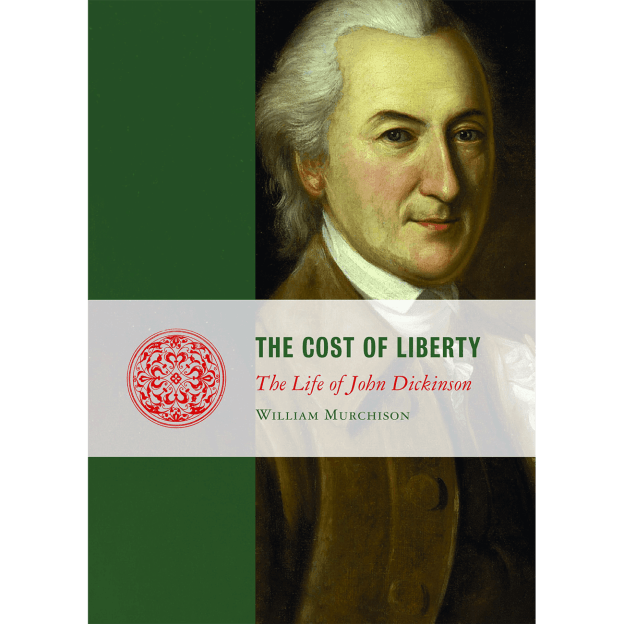
Review: The Cost of Liberty: The Life of John Dickinson, William Murchison ⭐⭐⭐

Christopher Rush

As much of a fan as I am of 1776, I was glad to learn somewhat recently that John Dickinson was a much better person in real life than he is portrayed in the movie, so when I also recently learned a new biography about him had come out, I finagled a copy (as well as the rest in this set from our friends at ISI Books).  I would have been glad to give this another star or two, but ofttimes Murchison gets in the way of one’s enjoyment of the work.  It’s not that his vocabulary is too erudite for us monolingual public school graduates, it’s more often his tone of amused-at-the-entire-goings-on.  Clearly Murchison is lauding Dickinson, as well he should, but far too frequently Murchison detracts from the important work of explicating an unjustly forgotten Founding Father with a demeanor of blasé chuckling (as contradictory as that sounds, it’s the best I’ve been able to conjure for this strange component of an otherwise fine work).  For me another slight deterrent is Murchison’s attitude to 1776 — true, the movie is inaccurate with some things, but Murchison is also somewhat unfair.  By his accounts, the attitude of Dickinson and the Southern Colonies are more akin to their 1775 attitudes, so not the wholly inaccurate perspective Murchison accuses the movie of portraying.  There is more truth to the movie as a representation of the attitudes and conflicts of the Continental Congress of its duration simply compacted into the span of the film than Murchison is willing to credit it, which is disappointing.

I have nothing with which to compare Murchison’s presentation of the other parts of Dickinson’s life beyond a public school education (and, thus, a total absence of knowledge of Dickinson outside of a lifetime of watching 1776), so I did appreciate reading and learning about his pre- and post-Declaration abstinence life, especially his oft ignored Articles of Confederation life (a period of time glossed over if not wholly ignored in most “U.S. History” courses).  That Adams and Jefferson and others came to a calm “reconciliation” with Dickinson was good to learn.  That he was welcome by most and befriended by others (Meade, Rodney, Rush) and useful to Delaware and Pennsylvania for the rest of his days was likewise a reassuring experience to read.

I recommend this book with only the slight misgivings of Murchison’s sometimes failed attempt at what he supposes to be humor — it is, on the whole, a worthwhile read, especially to repair our misunderstanding if not absent-understanding of a truly important historical figure and, more importantly, especially if the final chapter is to be believed, a humble God-fearing man who lived his life in the pursuit of liberty, justice, and truth for all.  Read this book, flaws and all: you will gain for yourself a new hero.

Review: Follow Me: A Call to Die. A Call to Live, David Platt ⭐

Christopher Rush

Ugh.  I promise you I was hoping this was good.  The first chapter wasn’t too shabby … but it continued.  And continued.  And continued.  The longer it goes on, the worse it gets.  Somewhere in there Mr. Platt recites a letter he wrote to his now-wife from “back in the day,” and he complains about his diction, tone, and content.  Guess what, Mr. Platt: it’s just as bad today.  Once again Mr. Platt gives us his version of Christianity, an insular, eisegetical Christianity.  Apparently the only way to be a true, authentic Christian is a) adopt a child from overseas and b) go overseas as a missionary (maybe for a short time, maybe for a long time).  Anyone, especially an American, who tries to be a Christian without going overseas as a missionary is a failure (at best).

But before Mr. Platt gets there, he spends an inordinate amount of time deconstructing the lingo of contemporary American Christianity for no other reason than to pad out this pseudo-book.  According to Mr. Platt, a “church” is a group of Christians, not a building.  I was shattered when I read that.  Also, “accepting Jesus into your heart” is not actually what happens when you “get saved.”  Heavens.  The revelations keep coming.  I don’t know any Christians who don’t know that, but then again I don’t pastor a mega-church.  One suspects if Platt is aware of a lot of misunderstanding concerning these pressing issues, perhaps mega-church pastors should do a better job teaching truth.  Just a suggestion.  Though one wonders when Mr. Platt has any time to actually do any pastoring.

This book is replete with travelogue escapades.  One moment Platt is in Karachi, another he is in Jakarta.  Now he is in Beijing, now Tunisia.  Okay, those may not be the actual places he mentions, but he does have too many stories of his missions trips to several places in Asia, Africa, and probably other continents as well — though certainly no stories of missionary work in America.  That is not genuine Christianity.  When is he actually being a pastor?  Maybe these stories are rare experiences over several years.  Fine.  That does not eliminate the fact he gives us no real substance on how to “Follow Jesus.”  It can’t just be going on overseas missions trips.  Platt derides religion, as if Christianity is not a religion.  Newsflash: Christianity is a religion — unashamedly so!  It’s not “just a relationship.”  If it were, what would be wrong about making Jesus “your personal Lord and Savior” (another pet peeve of Platt’s he spends too much time vainly attempting to refute)?

Toward the end of the book, Platt realizes he needs to start telling his audience what Christianity is after spending a hundred-some pages about what he doesn’t want it to be.  Church life does not seem all that important to Platt, which probably wouldn’t resonate too well with his mega-congregation (though since they are his congregation, they’ll likely lap up whatever he says anyway).  Apparently the church is a docking station for refreshment, a time for palling around for a bit on the way back out to the mission field.  Realizing it might sound like the church isn’t important, Platt tosses out more meaningless ideas such as “do life together as you grow.”  As usual, Platt offers no meaningful explanations for anything he says.  He wants us simultaneously to abhor Christian jargon and passively accept it as if it is beyond explanation.  Platt gives us example after example of “true” Christians who go overseas (the only mark of authenticity) and transform their businesses and lives … but then he says “not every Christian is supposed to be like this.”  Except all his examples are like this!

This book is a mess.  Platt even goes so far as to say the Disciples were not the ones who spread the gospel to other lands: generic no-name Christians were!  The support he gives for this is … well, none.  Likely because there is none.  He doesn’t even stop to consider the implications of his declaration: if we are to “follow Jesus” like the Disciples did, we would be failures since the Disciples, according to Platt, didn’t do what they were supposed to do!  Plus, he totally gets the “witnesses” thing wrong.  Christians today are not “witnesses” the way the Disciples were — we didn’t see Jesus do what He did.  Platt doesn’t understand this.  He assumes there is no difference between what the Disciples did and what we should do (other than their apparent failure at spreading the gospel).

Platt is in love with extraneous endnotes — next time, just put the Bible verse in parentheses in-text, please.  Though, most of the time Platt feels like his paraphrases are more worth reading than the actual Bible verses.  Perhaps that’s why so few Christians know how to do Christianity “the right way.”  He even cites verses that refute what he is trying to prove, but he wheedles out of it with more blather.  Surprising no one (but the author), Platt also complains about how he has received questions from readers of Schmadical (a better title of his last output) asking him about how to “do” Christianity correctly!  Platt seems to have forgotten he prescribed a 5-part checklist on how to “do” Christianity correctly.  Now we are to add “go overseas as a missionary” to the list.

Correct me if I’m wrong, but I don’t think Platt ever says anything about personal Bible study, committed prayer life, financial generosity, and other things.  I could be wrong, though.  Are we to plant churches, train leaders, disciple, translate languages?  (Platt never says one word about spending time learning foreign languages or cultures — apparently we are only to go overseas where we can be understood from moment one.)  Apparently not.  Just go.  Rub shoulders.  Tell people about Jesus being Lord and Savior (certainly not their “personal” Lord and Savior) and make sure they don’t pray a prayer — that would be wholly unscriptural if they pray a prayer.  Just entrust them to God and go back home.  Then go out to another missions trip.  Tell people about what you witnessed … of Jesus saving you, apparently.

I’m sorry, America.  David Platt will not accept anyone being a missionary to you.  You don’t count, apparently.  If only David Platt had written a book about what it means to follow Jesus.  That might be worth reading.

Review: The Christian, the Arts, and Truth: Regaining the Vision of Greatness, Frank E. Gabelein ⭐⭐⭐⭐

Christopher Rush

I wanted to give this 5 stars, since I agree with so much of it, but some structural deficiencies and thinness in some of the later essays warrants this at least a strong 4 stars.  Bruce Lockerbie is partly to blame: after a fine biographical sketch of Frank Gaebelein, he lets us know his disappointment this is not the book Gaebelein wanted to write.  Gaebelein wanted to write a cohesive, extensive book about Christianity and the Arts (apparently), but the twilight of his life prevented it.  Instead, we have a collection of essays apparently gathered from throughout Gaebelein’s life.  That wouldn’t have been so bad if 1) Lockerbie hadn’t made such a big deal about how this book wasn’t what Gaebelein wanted (setting us up for concomitant disappointment) and 2) Lockerbie had bothered to indicate where, when, and why these essays originally sprang into existence.  He mentions the origin of two or three of them but not all, which seems a bit of a failure on his editorial part.  These are small irritants; the content of what Gaebelein has written is mostly impressive and refreshing work.

It has been sitting on my shelf for some time (as many thousands of works have been doing), but the time arrived when I needed to read it, mainly because I am soon speaking about this very topic (Christians and the Arts) [see the address included earlier in this issue] and because I needed to read something I knew would be good, as my literary diet has been mostly disappointing New 52 releases [see next issue] and even-more-so disappointing “Christian” works [some of which are in this very collection of reviews].  Gaebelein delivers trenchant, timeless (mostly — one gets the feeling he is writing some of his disparaging remarks about the plight of “contemporary” Christian music in Keith Green’s direction) thoughts about Arts, Beauty, Truth — the usual worthwhile material.  He does a pretty good job of defining these “controversial” themes and defending his positions, all the while reminding us how thoroughly facile living a Bible-centric life is (including, as it does, a life of hard work).

Some may scoff at his upbringing and “breaks” he had in life as if they preclude one from attempting to raise one’s family to believe what is true the way he did: delighting and immersing oneself and one’s loved ones in the “things that matter” and not time-wasting nonsense.  Gaebelein gives us no room for excuses for not living an Art-focused, Beauty-driven, Truth-immersed, Bible-centered life.  Don’t waste time lamenting “Oh, what might have been had Gaebelein been able to write something better than this!”  This collection is quite stupendous.  In the collection it remains (for me to read again, perhaps, but definitely for my children to read someday soonish).