The following article is an analysis of selections from The Liberal Imagination by Lionel Trilling, a collection of critical essays ranging from literature to psychology. The numbers indicate a separation between the different essays being analyzed.
1. “The Function of the Little Magazine” is an essay explaining how little magazines are the things in modern day culture which preserve our literature. This is because these magazines write for a small audience. This allows these magazines not to have to worry about offending people as much because their audience is more targeted. “…There exists a great gulf between our educated class and the best of our literature.” The reason Trilling makes this statement is because he believes the literature of his time has no energy or imagination. This leads to bad political ideals, and these ideals should be blamed on the education system.
The literature of today has picked up a bit more energy and imagination than before. One of the main reasons Trilling says literature is declining is because it has no political drive; it no longer inspires people. There have been people since Trilling’s time who have inspired people with literature. Glen Beck managed to basically start a whole new political party (The Tea Party) based off his writings. It is true there aren’t as many great authors to move people as there used to be, but society today does have more access to great literature than people of Trilling’s time. Society today has more conflict within modern day literature, which is a good thing: it inspires people to think more.
2. In the “Huckleberry Finn” essay, Trilling discusses how a boy views truth. “No one, as he (Mark Twain) well knew, sets a higher value on truth than a boy.” Trilling then goes on to explain truth to a young boy is the most important thing. This is because truth is always affiliated with fairness. A young boy will therefore not trust adults; a young boy believes adults lie all the time. Because they believe this, it makes it okay to lie to adults because they are liars.
This is a true statement; this is why Mark Twain chose to write Huckleberry Finn through the perspective of a young boy. It is how Mark Twain is able to make political statements. A boy will not hold back the truth because he wishes to express all of it. The truth is so important all of the truth must be expressed in the novel from the view of a boy. This means nothing should be held back, because truth must be fully understood.
3. In “The Sense of the Past,” Trilling states Shakespeare “is contemporaneous only if we know how much a man of his own age he was….” This statement is saying Shakespeare must be taken in context. No literary work can be understood out of context. One must understand times in which a literary work was written in order to understand its importance.
Context truly does shape a literary work. What might be considered daring or cutting edge today might be mediocre and mundane tomorrow. In order to understand how great something is one must understand the circumstances and times in which it was written. Any literary work, even the Bible for example, taken out of context can be misused and misinterpreted. For full understanding of a work, context is extremely important.
4. In “F. Scott Fitzgerald,” Trilling states Fitzgerald uses the ideal voice of the novelist in The Great Gatsby. Trilling believes the reason Fitzgerald’s use of language is so perfect is because of the emotion you feel with the characters. The language he uses adds a deepness and tone to each character. Fitzgerald has just the right amount of fact telling with emotional connection.
This truly is the ideal novelist voice. It is what grabs one in and makes one connected with the characters. If one does not connect with the characters, then the novel has no point, but if there is only the emotion of the characters then plot becomes rather dull. There must be a perfect mix; Fitzgerald masters this mix. It is often the subtlety of the language he uses that creates that mix. He uses soft words enough to make one connected but not overbearing with long dramatic description.
5. In “The Immortality Ode,” Trilling states “Criticism … must be concerned with the poem itself.” What he is saying is a poem should not be judged on details it may have left out. A poem should be judged only for the content in the poem, not the factuality behind it. With the first statement he rejects the view of criticizing poems based on the belief they in some way must be rooted in fact.
When Trilling then analyzes the poem, he contradicts himself and uses that same view. He brings in the idea a poem creates its own reality, therefore a poem cannot just be judged upon words but it must also be judged upon the world it creates. A poem may be based in reality, but it doesn’t need to be. A poem creates its own world with its own meaning. This world a poem creates can be criticized though, and should be for it is a part of the poem.
6. “Manners, Morals, and the Novel” is another Trilling essay that deals with context. Just as with “The Sense of the Past,”when one analyzes a literary work one must know the culture from which it came. Culture is extremely important in how one must interpret the work. A novel follows characters from a culture; in order to understand how characters interact with each, one must understand the culture. “The novel is a perpetual quest for reality, the field of its research being always the social world, the material of its analysis being always manners as the indication of a man’s soul.” Every literary work creates its own reality.
In the novel that reality is drawn from real culture. This is why a novel is a “perpetual quest for reality,” because a novel seeks to show some reality through the culture it represents. Novelists, even when writing science-fiction, will always bring aspects of their reality or their idea of reality in their novels. Novels must always convey the culture the novel takes place in, which is why it is a quest. The novelist must find the reality in which he wishes to set his novel and the reality he wishes to convey.
Twenty years now … where’d they go? Twenty years … I don’t know. I sit and I wonder sometimes where they’ve gone. Regardless, twenty years ago, the House of Ideas gave us one of the last truly great crossovers in the Avengers universe: Operation: Galactic Storm. A 19-part maxi-series (not counting the prologue and epilogue issues), Operation: Galactic Storm is an interstellar masterpiece of storytelling precision, daring yet consistent characterization, and climax and dénouement rarely surpassed in what the denizens of Highbrow Street call “literature.” Best of all, perhaps: it’s a great story. I don’t know how 20 years have passed since I first delighted and dismayed through its greatness, but I could tell even then it was truly something rare and wonderful. Even though it is longer than X-Cutioner’s Song, the X-Men crossover we reflected upon last season, it is better paced, has no filler parts, has a larger cast, and tells perhaps a better story on an even larger scale. Let us travel back now to a simpler time and delight ourselves once again (or for most of you, for the first time — a journey you won’t regret, especially if you go out and get the two volume TPB collection to read for yourself) in the magnificence that was, is, and always will be Operation: Galactic Storm.
By “Interlude” we mean “Prologue”
The unofficial prologue to Operation: Galactic Storm begins (for me, if no one else since it’s not in the first TPB) in Avengers 344, “Echoes of the Past.” The majority of the issue is the continuation of a confrontation between the Avengers (which had recently had a roster change as it so often has during its 50-some year existence…where has that time gone?) and an old teammate thought dead now returned (not as uncommon in the Marvel Universe as one might suppose).
Perhaps the most intriguing aspect of this issue is its position in Avengers history and future, augmented by its own self-awareness of its position in that spectrum. The old Swordsman is back, apparently, though he is unstable and antagonistic to his former team, just as old friends are back (also unstable but not quite as antagonistic): Crystal the Immortal has joined recently, Sersi the Eternal is back, and Thor has recently been born anew in Eric Masterson, soon to be called Thunderstrike, bridging past and future. As Dane Whitman, the current Black Knight, is confronted with part of his past, so too Sersi suffers from an identity crisis. Even in the Avengers’ kitchen, past and present collide as Jarvis’s cooking and authority is questioned for the first time by Marilla in an amusing (if not familiar) comic relief break during the danger and uncertainty the other Avengers are experiencing elsewhere at that moment. The issue presages the storyline of Proctor and the Gatherers, though we aren’t sure of their connection to Sersi until several issues later — a conflict that affects the Avengers for some time, making it a fitting beginning for such a transforming crossover.
The self-awareness of the issue is most overtly seen in the three interludes (though one of the interludes is at the end of the issue, and should probably be an “epilogue” or “postlude”) sprinkled throughout, hinting at terrible and catastrophic things closer than we think: aboard intergalactic solar observatory Starcore, Dr. Peter Corbeau — Marvel’s go-to interstellar genius, roommate to Bruce Banner, friend to Charles Xavier — discovers the sun is close to going nova. You know you are in trouble when Uatu shows up all worried. What worries him, we now know, is the arrival of one of the greatest crossovers of all time: Operation: Galactic Storm. These three “interludes” are the only connection in the issue to the crossover, so it is understandable most people don’t consider this issue essential to the story. Though the intergalactic winds of the storm are not fully swirling, they are starting to gather on the horizon.
Part One — Captain America 398, “It Came from Outer Space”
The storm begins with a disastrous premonition: the Kree Empire is going to explode and only Captain America is going to survive … but it’s not Captain America — it’s the deposed leader of the Kree, the Supreme Intelligence. It’s all a dream, of course, but it’s a startlingly disconcerting way for the crossover to begin. Rick Jones, former friend and ally of Steve Rogers, is the sufferer of this portent, hundreds of miles away from Captain America in Arizona (and hundreds of light years away from the Kree Empire). The crossover element begins already, since Rick is back with his original pal Bruce Banner (the Hulk), guesting among the secret Pantheon of near-immortals. In an effort to understand his dream, Rick is counseled to speak directly to Cap about it, despite the fact they still aren’t close friends having never fully recovered from their fallout almost 300 issues ago (which was only a few years, Marvel reckoning, according to Rick). The narrative focus shifts to Captain America once Rick contacts him, and he is only too eager to meet him and discuss the issue, since Cap is that kind of guy (at least he was, back in the ’90s).
Cap is also having his own problems at the time, including his girlfriend having just gone missing and his personal pilot John Jameson getting snippy and mildly insubordinate. These problems (which become the main thrust of the rest of the year in Cap’s series after the crossover ends) soon are forgotten as Cap joins Rick for a spot of breakfast. As is so often the case in the Marvel Universe, our heroes’ breakfast is interrupted by the arrival of an alien: this time, Warstar of the Shi’ar Imperial Guard arrives to kidnap Rick Jones for some inexplicable reason. Despite his lingering antagonism, Rick is somewhat grateful Cap is there to fight off Warstar and help him get away, though his escape is short-lived, since the rest of the Imperial Guard soon arrive to finish what Warstar started. Considering how much time Rick Jones spends getting caught up in the squabbles of intergalactic empires, his growing antagonism toward most superheroes is understandable.
The main story ends with more questions than answers, which is where the first part of a 19-part giant crossover should end: Cap is stranded in Arizona wondering what is going on and why the Shi’ar came after Rick (and what happened to his girlfriend and his pilot); Rick is prisoner of the Shi’ar, who somewhat hardheartedly consider abandoning Warstar after his failure to secure Rick; and suddenly the issue comes full circle, as the Kree Supreme Intelligence awakens after a long dormancy his android receptacle for a portion of his mighty intellect, Supremor, ready to create something called the Starforce. Perhaps the being in Rick’s dream at the beginning was Supremor and not the Supreme Intelligence … only time (and the next issues) will tell. The winds of intergalactic war are starting to swirl indeed. (The issue concludes with a continuing sub-plot of some of Captain America’s other foes, as many issues do. We shall try to limit our focus solely on the main crossover-related aspects of these issues.)
Part Two — Avengers West Coast 80, “Turn of the Sentry”
Picking up directly after part one, AWC 80 is an incredibly packed issue a decade before 24 made the time-conscious narrative popular (but over a decade after the M*A*S*H episode “Life Time”). Rick Jones’s assumption the Kree are kidnapping him is understandable, considering they are inquiring after the Kree Captain Mar-Vell, and he just had the dream about the Kree homeworld. The rapid backstory review might be confusing to readers who weren’t around to read comics in the late ’60s and ’70s like I wasn’t, but the mind of a youth reading it accepts it as a nice rapid summary of a story without even realizing it refers to earlier comics. The letters page at the close of the issue explains whence the stories came, which wasn’t too helpful back in the day, but now with the benefits of various websites and classic TPB reprints, they are much more easily attainable. After the backstory, we return to the Avengers West Coast, training and recovering from their recent run-in with the Night Shift (though no sweet sounds came down other than the sweet sound of silent victory). Their temperamental differences contrasted with the East Coast Avengers is displayed rather well, with the high tensions between exes Hawkeye and Mockingbird, Living Lightning’s hesitation and acclimation, and Iron Man’s perpetual antagonism with Captain America. The writing, especially in subtle ways (such as the “yes” connections between both narrative foci) is quite good, even for an issue still preliminary to the main conflict featuring a second extended fight scene. Avengers West Coast always strikes me as a much better series than its recognition status, which is ironically appropriate considering it chronicled a team who felt the same way (since never were the New York-based Avengers called “East Coast,” as Spider-Woman points out in this very issue).
We still do not know why the Shi’ar are interested in Kree technology and information, especially since Oracle has such a hostile reaction to being called a Kree, but that only further piques our interest in what is really going on in this crossover. X-Men fans are quite familiar with the Shi’ar and may be surprised at the Avengers’ ignorance, but it is an impressive point in favor of the realistic quality of the Marvel Universe (if such a consideration may be allowed) that not everyone has heard of everyone else, just because they all have the same publishing imprint. Cap’s concern for rescuing Rick is rewarded with a brief but good panel, which is impressively balanced with the AWC’s general discontent Cap is around giving them orders as if everyone is always automatically under his authority (as Living Lightning is quick to point out) — though he is, since he’s the Avengers CEO. The mêlée ends with mixed results: the Kree sentry and outpost are destroyed, but the Shi’ar get away with the Psyche-Magnetron (a matter-reshaping device), no one knows what their plan is, and Rick Jones’s fate is unclear (though we soon find he has been rescued). To prevent their escape, Cap contacts Quasar in outer space and the narrative shifts to him at the close of the issue, demonstrating how well-plotted this crossover is. Quasar fails to capture the Shi’ar because a black solar flare interferes, tying in nicely to one of the “prologue interludes” from Avengers 344. The final panels bring the issue full-circle, as we return to the tomb of Captain Mar-Vell and the ominous revelation someone else is there, too. “Are we in for a Kree/Shi’ar War this time?” Cap asks, not wanting to know the answer. Hold on, Cap — you ain’t seen nothing, yet. This storm is just getting started.
Part Three — Quasar 32, “The Tomb of Mar-Vell”
Continuing the impressive narrative concision of this crossover, Quasar quickly shifts from failing to stop the Shi’ar from departing to connecting with the Starcore crew, learning from them what the readers found out back in Avengers 344: the sun is suffering egregious deleterious effects from the warping of space, an example of which Quasar has just seen for himself. It is mildly bemusing Dr. Corbeau is not in this issue, but the information is transferred in any event.
Quasar travels to Mar-Vell’s tomb (having been sent there by the Avengers after learning of the disturbance at the tomb hinted at the end of AWC 80). There, he rendezvous with another interstellar Marvel denizen, Starfox the Eternal, resident of Titan. Someone is breaking into Mar-vell’s tomb. The “someone” is actually two people: Captain Atlas and Dr. Minerva, the Kree’s go-to scientists and troublemakers (and love interests). Captain Atlas admits to Quasar and Starfox the Kree are indeed at war with the Shi’ar, and they are there to retrieve Mar-vell’s Nega-Bands, essentially to keep them out of Shi’ar hands (somehow they already know the Shi’ar have the Psyche-Magnetron).
During all this, Quasar and Starfox engage in another massive battle, the third in as many issues, each bigger than its predecessor — yet, somehow, each battle is well-scripted, well-paced, and well-received. Never does one get the feeling of “oh yes, another ‘epic’ battle — must be a crossover.” Each battle features different combatants, though all have been against the Shi’ar Imperial Guard, which makes the trio even more impressive. The surprise twist to this battle (I shan’t spoil it for you) is especially clever, abetted by its discovery not by our hero but by Dr. Minerva, an antagonist. The battle also showcases the first of this crossover’s many two-page “splashes” (as they are called in the business), each one an extraordinary display of artistry and emotional impact.
Meanwhile, in the Kree Galaxy, another seemingly-unconnected event occurs. A brilliant scientist, more aware of the decay and decadence growing in the Empire (in part because of the recent accession to power by the current rulers of the Kree, whom the scientist considers usurpers of the former ruler, the Supreme Intelligence we’ve heard so much about lately), unofficially exiled to a backwater planet, has not stood idly by but has instead continued his pursuit of cyber-genetic engineering. He tries out his work on himself, transforming into Korath the Pursuer, a mighty power intent on shaking the Kree Empire “to its foundations!” The plots and sub-plots start to ravel.
The narrative concision and precision of this series, as we have and shall continue to iterate, continues unobtrusively, as demonstrated during the major mid-issue battle scene: the action breaks to return our attention back to the Avengers West Coast at their Compound, where Captain America and the AWC discuss with Rick Jones (somewhat one-sidedly) what to do with him (ending the confusion of his whereabouts somewhat glossed over in AWC 80). Unwilling to return Rick to the Hulk just yet, Cap entrusts him to the 24-hour care of Simon Williams, a.k.a. Wonder Man. Meanwhile, as Quasar and Starfox bring the mighty battle to a conclusion (aided indirectly by Dr. Minerva, who virtually finishes the fight single-handedly), Captain Atlas recovers Mar-Vell’s Nega-Bands and makes Wonder Man’s job a whole lot more difficult: with a simple clang, Captain Atlas escapes Quasar and Rick Jones appears in his place — about to suffocate and explode in the vacuum of space! (Talk about your intense endings!) It’s a great issue, with humor (Quasar: “So where are the tomb-raiders?” Starfox: “In the tomb, I’d imagine.”), philosophy (Captain Atlas: “It is the mind that matters, not its house of flesh.”), a great fight scene, vulnerable heroes, dangerous villains, intriguing movement in all plot strands while adding more, an impressive two-page splash, and an intense ending demanding the reader dive into the next part of the series.
Part Four — Wonder Man 7, “Shared Space”
Picking up immediately where Quasar 32 left off, fortunately for Rick Jones, Captain Atlas begins his barrage against Simon Williams, demanding to know where he is. Wonder Man responds in kind, demanding to know where Rick Jones is. Neither is happy with the answers: Atlas is disgusted with being on “this backwater planet,” and Simon is disgusted with his immediate failure in his bodyguard role (as well as disgusted by the stupid Kree names).
Again the smooth flowing nature of the crossover is demonstrated well here in the language connections of the narrative shift oscillations: Wonder Man asks about “Nega-Bands” in one panel and the next shows Quasar, still at Mar-Vell’s tomb, responding to Rick with “What do you mean, ‘Nega-Bands’?” For a time, Rick is the only person who knows what is going on and explains to Quasar how the Nega-Bands allow the wearer to trade places with him (see AWC 80).
The title of the issue, “Shared Space,” is rather intelligent, considering all the layers of narrative to which it applies: immediately, Captain Atlas and Rick Jones “share space” thanks to the powers of the Nega-Bands; likewise, the primary reason the series occurs (other than a kairotic metaphoric treatment of the first Iraq War) is because the “shared space” of the Terran solar system between the Kree Empire and Shi’ar Imperium is in danger thanks to their stargate usage. In smaller, subtler ways, the title also relates to the continuing Wanda/Vision/Wonder Man conflict, as the personality/identity of Simon Williams is still a matter of “shared space” between the Vision and Wonder Man, and Wanda herself is a kind of “shared space” (in no demeaning way). Similarly, both the East and West Coast Avengers conflict over the “shared space” of Avenger name and identity. Simon’s inability to “share space” with his girlfriend adds to the genuine pathos of the conclusion of the issue, as Simon can’t ever find a way to live a “normal” life. This is an impressive, tightly constructed issue from title to conclusion.
The majority of the issue is another battle scene, yet once again the creative forces behind the series have come up with another interesting variation. Here, it is an extended duel between Wonder Man and Captain Atlas, which may seem dull in a prose summary, until one knows the particular twist on what could have been a conventional comic book trope in lesser creative hands: once Atlas figures out the transposition side-effects of the Nega-Bands, he utilizes them in an unusual hit-and-run strategy until Wonder Man figures out a successful countermeasure. It takes Simon some time, considering every time he winds up to smash Atlas in the face, before his hand connects Rick appears where Atlas just stood. Simon’s countermeasure, essentially aligning his windup with Atlas’s timing, results in the second great two-page splash of the series: one of the biggest, most memorable knockout punches in the history of comicdom. It’s mighty impressive.
In the lengthy conclusion to the issue, Wonder Man 7 continues the integration of multiple plot strands: Rick is finally returned to the Hulk (after a nice resolution to his conflict with Wonder Man, if not entirely sincere), Simon spends some time with his personal life, Scarlet Witch’s continual friction with Simon is given a few nice lines of dialogue, and Cap sets up the next issue by arranging for all Avengers (even reservists) to join him in New York. Additionally, the next in the series of Kree warriors is called by the Supreme Intelligence: this time it is Ultimus, the Demon Druid who has been hanging around in the misty back alleys of the Marvel Universe since 1973. Playing on familiar elements of the series, the issue does so in different and engaging ways. Even the time spent with Wonder Man’s supporting characters is fresh, in that we see Simon experience some of the psychological trials of being a superhero, wondering if he will ever return from the latest intergalactic mission, wondering if he will ever have the chance to enjoy a “normal” life, as mentioned above — an enjoyably refreshing close to the issue, considering Simon spends so much of the time hiding behind a façade of bravura, especially among his fellow superheroes. This pathos is made especially poignant when the narrative focus shifts to Simon’s landlady, who supposes he is flying off to some incredible adventure giving her a vicarious thrill she would be only too glad to know a posteriori. That she doesn’t understand his own hesitancy and despondency only adds to our own empathy with Simon: how could a superhero be embarking upon anything other than a grand adventure?
With the Avengers finally making some positive progress (capturing Captain Atlas and Dr. Minerva, gaining some intel on what is going on), the pieces are in place for the next major developments of the story … and suddenly the scene oscillates again to Starcore, where Dr. Corbeau is leading an emergency evacuation of the entire crew — a solar flare is about to destroy Starcore! The storm winds are turning into a mighty gale.
Part Five — Avengers 345, “Storm Gatherings”
Some time passes: Rick Jones’s time on stage is complete (much to his relief), and Captain America returns him (behind the scenes) to the Hulk, presumably on his way back to Avengers Headquarters in New York (ahead of the West Coast Avengers who are still preparing to rally later). Additionally, enough time has passed for the Avengers to rendezvous with Quasar (leaving Starfox and the captive Kree tomb-raiding twosome at HQ) and send an away team to respond to the emergency broadcast from Starcore. This brief reconnaissance trip produces an important secondary effect: Eric Masterson, the newly-made Thor, gets to test his powers and succeed at something — though he still needs more practice both in wielding his powers and coalescing with the Avengers (an already testy bunch at this point, considering everything going on lately). The moment the Avengers ascertain the Starcore crew is safe, the Shi’ar create another space rift, this time with an entire armada of warships on their way to the Kree Empire. The main Shi’ar vessel identifies the Avengers and, after some intriguing philosophical and ethical debate, opens fire. Quasar sends the Starcore crew to safety, and we never hear from them (or this armada, strangely enough) again.
Meanwhile, the impending conjunction of both coasts of Avengers fills everyone with discomfort. Crystal is uncertain which worries her more: intergalactic war or “being reunited with [her] estranged husband’s sister,” to which the Black Knight responds for us all: “It’s nice to know you can keep things in perspective. Then again, choosing between an angry Scarlet Witch and a space battle with little green men, I think I’d vote for the battle.” Understated mistrust and dissension runs through the team before they even leave home. Cap, too, is unsettled at the thought of so many Avengers together, lamenting the long-gone days of a small team and simpler problems.
The latest battle is again unique: this time, the four Avengers in outer space combat a Shi’ar warship, an unusual pairing for a fight. The commander of the warship, who advocated attacking the Avengers, turns out to be the shape-shifting Hobgoblin of the Shi’ar Imperial Guard, complicating the issue even further. Soon, Dane’s remark about Wanda is frighteningly applicable to Sersi: she has every intention of moving in “for the kill,” disturbing Quasar with her sheer brutality.
As can be expected, Captain America’s response learning of Sersi’s threat is not one of delight. Before the war commences, Avenger is pitted against Avenger, morality pitted against pragmatism. “It’s a slippery, muddy road once you being making death threats and incarcerating people … and I don’t want to see the Avengers … despite the best of intentions … get caught in the muck,” he says. Hank Pym has shrunk Dr. Minerva, Captain Atlas, and the crew of the Shi’ar warship (after the praetor surrendered) down to portable size. (Presumably, the crew of Starcore has also been rescued by now. The armada, apparently, went to wait out the war, not directly assault the Kree.)
Once the tempers cool, the Avengers get down to business: getting the Shi’ar and the Kree to stop their war. Mockingbird raises the good point: what right do the Avengers have to tell those races how to live (the parallel to the first Iraq War becomes clear, though it wasn’t clear to me reading it for the first time when I was 11). The Avengers, though, have an impeccable reason for urging the cessation of the conflict: the sun will go nova if the war continues. Instead of just acting like the police officers of the galaxy, the Avengers are compelled by pragmatism more than a personalized version of morality (this makes it easier for the creative team to prevent philosophical or religious backlash, though it would have been interesting had they sent the Avengers to do it simply “because it was the right thing to do”).
After much behind-the-scenes deliberation (most likely while the space quartet brought the Shi’ar warship back to Avengers headquarters), Cap separates the Avengers into three teams: one envoy to the Kree, one to the Shi’ar, and a reserve team to guard the home front. After an odd side scene of part humor and part antagonism, Hawkeye finds a way, thanks to Hank Pym, to switch from the home guard to the Kree team, much to the chagrin of U.S. Agent, who now has to stay behind, adding to the dissention in the ranks. Quasar stays behind to send the two teams to their destinations and resume his main rôle as Protector of the Universe (keeping an eye on the stargates).
Continuing the pattern of ending with a shocking epilogue, we oscillate for the first time to the Shi’ar homeworld. Fans of the X-Men are certainly familiar with Lilandra, Empress-Majestrix of the Shi’ar Imperium, and the burden of rule she constantly bears. Though she, too, expresses dissatisfaction with having to go to war, she, as most rulers seem to do, can find no alternative. We still don’t know what particular issue is driving this conflict, considering the Kree and Shi’ar more often travel different orbits in the Marvel Universe, or to what act of vengeance Lilandra refers, but the weight of the no-longer-impending conflict is about to reach its tipping point. The shocking epilogue this time is the arrival of Deathbird, Lilandra’s older sister, hinting at mysterious failsafe devices Lilandra not-so-covertly has up her long, metallic sleeves and offering a more palatable conclusion to the conflict in ways only the conscience-unencumbered Deathbird can provide. The winds of war just got quite a bit chillier. It’s a pragmatic sort of issue, featuring arguments about pragmatism and fulfilling the function of an intermediary issue, drawing the exposition to a close, setting the stage for the main conflicts ahead. Considering all the tensions among all the combatants, we know it is going to be a powerful ride.
Part Six — Iron Man 278, “Decisions in a Vacuum”
With the extended exposition complete and the instigating event of the teams splitting up for the Kree and Shi’ar galaxies recently occurring, the rising action begins. As Len Kaminski (writer of this issue) declares: “Now’s when things really get interesting.” With three main groups of characters to balance in mind, the planners of the series intelligently split up the teams to match the series in which the story occurs: in Iron Man 278, here, we focus on the Kree Empire away team of Iron Man, Captain America, Sersi, Hawkeye (as Goliath), Black Knight, Hercules, and Crystal. The team arrives in the Kree Empire and encounters a giant space station (it’s no moon). The lack of like-mindedness evident in Avengers 345 continues to rile the team from the beginning, as not everyone agrees they should land and investigate. Even as they work their way into the station, the Avengers can’t stop verbally sniping at each other, despite the gravity of the situation. Since it is Iron Man’s issue, much of the focus is on him; we even see from his computerized perspective in his spacesuit-version of his armor. Despite Captain America being the leader of the team, Iron Man takes the initiative to tear his way into the Kree communications network, using his computer technology to reconnoiter their situation and investigate the best way to get where they need to go next.
Meanwhile, the Supreme Intelligence, aware the Avengers have entered Kree space, orders the completion of the last member of his hand-picked Starforce: Shatterax, the Borg-like combination of Kree person and computer exoskeleton weapon. Everything is falling into place, says the Supreme Intelligence — which can’t be good for the Avengers.
While Iron Man spends precious time hacking his way through the Kree protocol network (keeping in mind this story was written in 1991, only months after the inauguration of the World Wide Web and four years before the commercialization of the Internet), the Avengers lollop about until suddenly attacked, surprisingly, by Shi’ar Commandos. What is even more confusing is the Shi’ar disintegrate when defeated, adding much mystery to the situation. While the Avengers hold off their improbable foes, Iron Man works through the Kree network to discover Shatterax is on his way to either arrest or execute them. Instead of explaining this to the Avengers, Iron Man takes off to intercept him on his own, irritating Cap to no end (not for the first time, and certainly not for the last — Cap’s frustration is one of the few humorous moments of the issue, as we totally empathize with Cap when he says “I hate it when he does that!” as Iron Man flies away). The interesting thing is, even though Iron Man may be violating protocol and ignoring his leader, he is doing the right thing for the needs of the situation. He truly does not have time to explain it to Captain America.
Shatterax arrives and joins Iron Man in combat, the latest battle with a twist. It’s a duel, like Wonder Man versus Captain Atlas, but this time it is a fully airborne assault, with long-range computerized weaponry. Despite his bravado, Iron Man can’t do very much in combat in his spacesuit. Despite his trickery and tactics, Iron Man is no match for Shatterax, a living weapon. It’s an intense battle, despite its brevity, made more thrilling by the perspective of seeing out of Tony Stark’s eyes inside his armor: we assess his status and the situation with him during the battle.
As Iron Man assesses his options, we learn why the issue is called “Decisions in a Vacuum,” though there really is only one decision to be made. In a clever narrative oscillation, we return to the rest of the Avengers who have defeated their foe and await whatever is next. We share their surprise as the next thing they see is Iron Man a manacled captive of Shatterax. Iron Man has surrendered the Avengers to the Kree Empire. The bickering between Cap and Iron Man heats up again under their breaths, but despite Cap’s irritation, Iron Man is right again: if he hadn’t done what he did, they may not have survived. At least now they have that slim chance….
It’s a fast-paced issue with little narrative depth, but it gets the job done well of moving the characters to where they want to be, sprinkling enough brief character moments and tensions to keep the multiple conflicts alive and enjoyable. Things are not going well for the Avengers, but they are going extremely well for the reader of this magnum opus.
Part Seven — The Mighty Thor 445, “The War and the Warrior”
Concurrent with Iron Man 278, Thor 445 shows us the Shi’ar away team: Thor (Eric Masterson), Wonder Man, Vision, Scarlet Witch, Captain Marvel (Monica Rambeau), Starfox, and the Living Lightning, young recent recruit of AWC — certainly an odd group for such an important mission, but as all recent issues have shown, the Avengers are currently experiencing as much stress and instability as the sun is. After a brief comical moment of the Scarlet Witch landing on Thor’s arm, the issue gets serious. The Avengers stumble on a Shi’ar world under attack by a Kree starfighter. Before its destruction, the world sends a distress signal to the homeworld, intercepted by Gladiator, the nearly invulnerable leader of the Imperial Guard, who assumes the Avengers are guilty and starts to attack them. Before he arrives, Captain Marvel and Living Lightning investigate the remains of the Kree starfighter, only to find a Skrull — hated enemy of the Kree — onboard. The mysteries increase. The pair of flyers evacuates the ship just before the Skrull destructs it.
In contrast to the big splashes of previous installments, this issue does some of its finest work in small 3”x3” panels. One of the best is on page 6, as Starfox and Scarlet Witch simply turn to Thor in response to his query “Who’d be dumb enough to try such a crazy stunt [like intercept Gladiator]?” The minimalist approach works brilliantly. Wonder Man volunteers for the job, brusquely dismissing the young replacement Thor who is “obviously out of his depth,” though he soon regrets being so harsh to the guy. Despite his attempts at diplomacy, Wonder Man has already done his duel in the series, and Gladiator quickly disposes of him while Thor broods over his own cowardice and insufficiencies. In another series of minimal yet rich panels, Thor stops Vision from taking his place a second time. Letterer Michael Heisler does a tremendous job sizing Tom DeFalco’s great writing, matching the intensity of Thor’s resolve with the quietness of his utterance. With a powerful kamikaze dive and ¾-page splash into Gladiator’s back, Thor joins the fray and regains the central narrative focus of his own issue.
The third quarter of the issue is dominated by the duel between Thor and Gladiator. In contrast to the short-lived outer space battle between Shatterax and Iron Man which approached Iron Man’s deficiencies in an almost ascetic, computerized manner, this present duel is a philosophical treatise on the morality of war and the role of the warrior (hence the title of the issue). Thor is powerful yet inexperienced; Gladiator is powerful and thoroughly experienced. Thor jokes and attempts to distract with sarcasms; Gladiator waxes on the horrors of war and the duty of warriors (in contrast to the poets who glorify war without having experienced it). Both are defending their homeworlds; neither is motivated to care for the other’s. Thor is driven by a need to prove himself; Gladiator is driven by his responsibility to his people and his duty to his Empress. It’s an impressive conflict, again forcing the reader to think through the ideas being contested, as we start to realize Gladiator is right, but his unwillingness to care for Earth as well as his own people taints his moral superiority. The inexperienced Thor has no chance against Gladiator, until he sees Living Lightning escaping from the Kree starship. Using the Asgardian power of Mjolnir, Thor summons Living Lightning to crash into Gladiator, stunning them both. With one mighty full-page splash, Thor drives his Uru hammer into Gladiator, knocking him out.
Unfortunately for young Eric Masterson, in order to beat “the monster,” he starts to become “the monster.” Borrowing Gladiator’s own language, he starts railing on about his own duty to his own people, including his own loved ones, and how they are more important than Gladiator’s Shi’ar people, and how he will come after every single terrorizing bully who claims to be superior or endanger others with war — all the while pummeling the unconscious Gladiator with his hammer.
Fortunately for young Eric Masterson, Wonder Man recovers and prevents him, with Vision’s help, from killing Gladiator. While Captain Marvel learns how to reach the Shi’ar homeworld, Living Lightning forces Thor to ponder the morality of using his teammate without respect, even for what appears to be “a good reason.” If they have to resort to the tactics and moral stance of their enemy, are they truly any better? Thor isn’t quite ready to listen, though, and impulsively sends Gladiator through the Shi’ar stargate, using Mjolnir to seal it closed forever, imploding their only path home, yet enabling them perhaps to complete their mission.
While using the information Captain Marvel gathered to get to the Shi’ar homeworld, the Avengers debate briefly the morality of choices made in “total war,” and whether “no sacrifice is too great.” Captain Marvel is not for it, holding to the stance the Avengers are “supposed to be the good guys,” and thus should be above the “all’s fair in love and war” mentality. Living Lightning, one of the new recruits in the new generation, is starting to come around to Thor’s side, though. The chasm between Avengers is ever widening. The debate is curtailed suddenly as their starship is suddenly surrounded by an entire Shi’ar fleet. Things are just not going well for them in any galaxy. It’s a thought-provoking issue, despite the assumptions the reader immediately makes about it being a simple “muscle-bound blockheads engaging in senseless battle” story from the cover. Serving to progress the story along and move the characters where they need to be, the issue asks more questions than it answers, while forcing us to examine the Avengers and their motivations and morality not just for this mission but for their very existence.
Part Eight — Captain America 399, “Twenty Million Light Years from Earth”
The Kree Avengers team arrives at Hala, the Kree homeworld — prisoners. The bickering between Cap and Iron Man hasn’t stopped, and Cap won’t concede Iron Man got them to their destination in one piece, since it wasn’t the way he wanted. Since it’s his issue, Cap’s internal monologue drives most of the narration. Almost immediately, Shatterax is forced to hand the Avengers over to Ronan the Accuser, equivalent to the chief of police for the entire empire, once Ronan is finished dressing him down in front of everyone. The Avengers take the opportunity in the embarrassing confusion to make a break for it, propelled by Sersi’s matter-transformation magic, disguising them in Accuser uniforms. Shortly into their getaway, Iron Man pulls rank on Cap again (being a founding member of the Avengers, regardless of whoever is field leader) and splits away again to fly reconnaissance. Hawkeye joins him, and the team is effectively split up again. Nothing seems to be going right for them during this critical mission.
Meanwhile, the Supreme Intelligence’s diverse team of warriors finally gathers in another corner of Hala for the first time. Like the Avengers, this team is disunified, though with much better reason, having been mysterious called individually by a disembodied voice, not a long-term team of superheroes willingly banded together to fight injustice. Supremor, the host for the Supreme Intelligence, joins the disparate band (Ultimus, Shatterax, and Korath) and provides them with purpose: help the Supreme Intelligence regain the throne — exactly what the Avengers didn’t need.
The rest of the Avengers wander through the main city of the Kree homeworld, observing the squalid conditions of the oppressed underclasses. Iron Man checks in to direct them where they need to go next, and the Avengers naturally hijack their own flying wanted billboard/zeppelin to do it. The only thing standing in their way now is Korath, who finally gets some action. The duel in this issue is brief and reminiscent of the fight between Shatterax and Iron Man, but it is distinct in that Captain America is not a naturally airborne combatant. Instead, he uses his acrobatic skills to defeat him in midair through quick energy and using Korath’s weapons against him. With a little assistance from Dane Whitman, Cap shakes Korath off (for now), and the Avengers head to their rendezvous with Iron Man. It’s a short, mostly fast-paced issue, since the final five pages of the issue are given to a supporting story. The fast pace helps keep it interesting, along with the progress of the Starforce finally gathering together. The continuing antagonism between Cap and Iron Man is potentially leading to something disastrous, which even Hercules can sense. At least they have managed to escape captivity, so something is going right.
Part Nine — Avengers West Coast 81, “They Also Serve…”
Back at the ranch (the “ranch” being Project Pegasus in New York and not either Avengers Headquarters), U.S. Agent is still irate Hawkeye usurped his place and is taking it out on, of all people, She-Hulk. That tells you everything you need to know about John Walker, U.S. Agent (and why he’s not Steve Rogers, Captain America). Most of the home guard aren’t happy about being left behind (especially the active Avengers East and West) except for Gilgamesh, who is pretty relaxed most of the time. Prevented from coming to blows (barely), Agent is reminded he and Mockingbird are supposed to be guarding the miniaturized prisoners. Agent proves he really isn’t pretending to be a jerk when he tells Mockingbird the reason he wanted her on the AWC: “even if you can’t really do all that much, you’d sure improve the scenery” (emphasis in original). Yes, ladies, that’s John Walker, superhero, circa 1992. Mockingbird does the right thing and flips him over onto his backside. Before their discussion can go further, Nightside of the Shi’ar Imperial Guard shows up, stuns them, and proceeds to release the captives with the help of her miniaturized teammate Scintilla. We knew it was going to be one of those days, Miltonian allusion in the title notwithstanding.
The Shi’ar Imperial Guard rarely get the chance to demonstrate their (for lack of a better word) humanity, especially in their distinct personalities, since they are usually shown in a combative sense, but these few panels showing some of their interaction (just like in the previous AWC issue) are impressive and enjoyable character moments, making it more difficult to think of them as “the bad guys.” Before they can fully rescue their comrades, She-Hulk stumbles onto them while attempting to apologize to U.S. Agent and manages to peal the classic rallying cry “Avengers Assemble!” before getting knocked out. It’s not really a battle this time, since the Avengers overpower the Shi’ar fairly quickly. While this rapid action ensues, Dr. Minerva and Captain Atlas escape from their imprisonment and miniaturization and make good their escape. Or do they….
Once the Avengers realize the Kree have escaped, they chase them to no avail. U.S. Agent takes the opportunity to cement his impulsiveness by jumping on their getaway spaceship, under the delusion he is Indiana Jones, but the Kree shake him off quickly. Spider-Woman and She-Hulk break his fall, saving his life, to which he responds with an antagonist barb at the East Coast Avengers. That’s the spirit, John.
Onboard the escaping Kree vessel, Captain Atlas is confused why Dr. Minerva is taking them to rendezvous with a Shi’ar starcruiser. Atlas is further confused by the presence of the Imperial Guard. Confronting her, Atlas is shocked to find Dr. Minerva is actually the Shi’ar Hobgoblin, whom last we saw causing a to-do on the Shi’ar craft in Avengers 345. With Captain Atlas in their power, the Shi’ar finally get Mar-Vell’s Nega-Bands. This cannot be good.
Back in New York, Mockingbird discovers the real Dr. Minerva, who tells them what just happened. She helps the Avengers solely out of revenge against her enemies. She-Hulk contacts Quasar to intercept the Shi’ar vessel before it’s too late … and he fails a second time, though it’s not a solar flare that prevents him this time: it’s Starbolt and Neutron, who stay behind to allow the starship to get the Nega-Bands to Lilandra, propelling the action straight into Quasar 33. It’s a good “home front” issue that manages to propel the main story along as well, a rare, impressive feat.
Part Ten — Quasar 33, “Spatial Deliveries”
Half-way through the epic crossover, Quasar is given another transitional episode. His repeated failure at preventing anyone from using the stargates makes wonder why exactly he was left behind, since he isn’t doing much good — not that we blame him or doubt his efficacy as Protector of the Universe: one being against two interstellar fleets is a bit much to ask. With help, he effectively defeats Starbolt and Neutron, though too late, using what is becoming standard Avenger tactics: hit-and-run maneuvers combined with warping his enemy away from home. Quasar manages to track down the Shi’ar vessel, but not before they drain Atlas of information and beam the Nega-Bands back to the homeworld (hence the title “spatial deliveries”). Page 9 of the issue clarifies what appeared to be a dropped plot thread in AWC 81: the Shi’ar rescue team did escape the Avengers, most likely while they ran out to see U.S. Agent prove he’s not Indiana Jones (or even Encyclopedia Brown). It’s tough to outmaneuver alien empires with interstellar transportation capabilities.
The middle of the issue is a bit awkward, though it matches Quasar’s awkwardness in a way: barging straight into the Shi’ar vessel, Quasar demands the return of Atlas and the Nega-Bands, threatening (as he learned from Sersi in Avengers 345) to take them all on. Unfortunately for Quasar, he is dealing with the Imperial Guard this time, not a crew of mortal Shi’ar soldiers. As mentioned above, he is already too late to do anything meaningful, so he takes Atlas and heads to the heart of the Shi’ar Imperium in an attempt to regain the Nega-Bands.
The scene oscillates to Chandilar, throneworld of the Shi’ar, picking up the trail from Thor 445. Thor gratefully lets Captain Marvel do the negotiating with Prime Minister Araki, until his newfound impudence rears its head again. Continuing his descent into Gladiator-mode, Thor threatens to bring the planet down around their ears, infuriating everyone. Thor defends himself with the “it got the job done” reasoning, sliding further into pragmatism and away from the moral high ground the Avengers are quickly abandoning.
Just outside, Quasar has made his way to Chandilar with Captain Atlas in tow. Continuing the unusual nature of the issue, Binary (the former Ms. Marvel, Carol Danvers) shows up to confront Quasar; though she is a Starjammer (enemies of the Imperial Guard), she is working with the Imperial Guard in the effort to delay Quasar’s interference. The Imperial Guard captures Atlas again, though Shatterax rescues him at the close of the issue. Soon Quasar gets hoisted on his own petard, as the Imperial Guard do to him what he just did to Neutron. With Quasar out of the way (for now), Lilandra learns the secret experiment with the Nega-Bands is now a success: billions of Kree are in serious trouble. The odd, unexplained elements mar the issue somewhat, but the story moves along and increases in menace. The Avengers continue their descent into misrule and can’t manage to do anything successfully, but the readers are still treated well with a high-quality story.
Part Eleven — Wonder Man 8, “Death Adrift”
Staying in the Shi’ar Imperium, the focus returns to the Avengers. Some brief time has passed, since the Avengers have finally been allowed to meet Lilandra, who is overseeing the departure of the tool designed to end the war: the Nega-Bomb, though she is telling everyone it’s just a portal. The question of morality is raised again throughout the issue: first, Corsair refuses to be a part of it. Lilandra’s response is reminiscent of Gladiator’s: is the safety of one planet more important than an empire’s security? The rest of the Starjammers agree with Lilandra and accept the commission to tow the Nega-Portal into the Kree Empire, though they worry about losing so many crewmates (explaining the confusion in the previous episode why Binary was with the Imperial Guard and not the Starjammers). Simon Williams, Wonder Man, though, will have none of it: he knows what it truly is. Grabbing Vision, he leaps onto the departing Nega-Bomb, ignoring the pleas of the remaining Avengers. Nothing good seems to happen when the Avengers act impulsively.
The rest of the issue is a marvelous two-fold philosophical treatise on the nature of humanity and the morality of war from the soldier’s perspective. Vision, ever the unemotional rationalist, cautions him against trying to disrupt the bomb: it would be more efficient to let the Shi’ar win this way. “I won’t let people die in the name of efficiency!” is Wonder Man’s response. Compounding his frustration is his continued battle with the loss of his humanity. Vision used to be based on Simon’s personality, giving Simon a tenuous hold on his humanity (it’s complicated, but their discussion throughout the issue makes it far more lucid than a brief summary could here) which is increasingly dissipating. Dying and being reborn as an ionic entity does that to people.
The Starjammers realize they have stowaways, and the second philosophical discussion begins (after a brief brouhaha and another two-page splash). Wonder Man soon calms the Starjammers down long enough to explain the situation to them: they aren’t ferrying technology to aid the war effort; they are ferrying a bomb big enough to wipe out the entire Kree Empire, destroying billions of lives — can they live with that? will it be enough to say “I was just following orders”? Wonder Man does not tell them what to do; he does not foist his definition of war morality on them. Instead, he does what no general ever does for his troops: he gives them an accurate understanding of what they are being asked to do and then gives them a choice. The entire discussion is worth reading and debating, especially during an age of modern warfare.
The Starjammers choose not to taxi the bomb to its destination, willing to risk Lilandra’s wrath over their own seared consciences. Hastily, they sever the ties between their ship and the bomb, leaving Wonder Man and the Vision trapped in Shi’ar space adrift on the universe’s most dangerous weapon. Though lesser readers will see this as a political diatribe against war-happy/-hungry presidents (the same dull-witted folk who thought M*A*S*H was merely a mockery of the Vietnam War), better readers will recognize this as a philosophical inquiry into the connection between morality and war. If there isn’t one, there’s no hope for war (and those who love it). If there is (and this issue acknowledges there is), war must be waged morally — the best way to do that, perhaps, is to give the soldiers the same information the leaders/generals have. Deception, even in the name of “efficiency,” is unacceptable. As if that weren’t enough to make a rare, great comic, Simon’s continuing quest to understand and regain his humanity makes this truly a challenging, enjoyable read even by itself — which is not something often said about a part 11 of a 19-part series.
Part Twelve — Avengers 346, “Assassination”
Though the cover and title of this issue give away the ending rather boldly, by the time we get to it, we are still surprised and shocked by what happens. Back in the Kree Empire, the Avengers (minus Iron Man and Hawkeye) are poised to enter the capitol citadel of Kree-Lar on Hala. The narrator, again, is the Supreme Intelligence, and the reader is reminded from the beginning of the issue he is the grand designer of these events, or at least he thinks he is. He is the master weaver tightening all the threads, preparing to trim the loose frays, finishing his tapestry in which all the players are merely pawns deceiving themselves they have the freedom to act willfully. It’s an unnerving issue from beginning to end, even 20 years later.
The Avengers feel the disquiet and can’t help but comment on it: how could they have so easily gotten so far into the heart of the Kree Empire? Sersi, in her discordant way, likens their journey to storming the Bastille: an appropriately ironic allusion, since they are escaped prisoners about to storm the stronghold of government. For the first time in the series, we see the co-rulers of the Kree: Ael-Dan and Dar-Benn. Again, the Supreme Intelligence tells us (on page 3!) they will be dead before the day is over. The bluntness of the issue adds to its unnerving atmosphere.
Two-thirds into the series, the Supreme Intelligence tells us the “endgame” begins with the arrival of Deathbird on Hala. He has no respect for the Avengers (or any Earthers), and he has no respect for Deathbird as a person, but he does admit to some mild impressiveness with her abilities to bring death (her name is fitting) — yet we are chilled again when he intimates even though this is the “endgame” of one plan, it is only the prelude to the true “nightmare” to come.
One page later we finally see the culmination of the Supreme Intelligence’s gathering of disparate Kree warriors: Starforce is together! At least, version one. By the end of this issue, the roster will be modified already. Even with such a finely-paced crossover, once or twice a plot thread is moved inexplicably from one location to another (that it only happens a couple of times in a 19-part crossover is a testament to the fine crafting and skill of the creative teams involved, abilities seemingly lost — if not temporarily misplaced — by the end of the decade). Case in point: Dr. Minerva. When last we saw her in AWC 81, she was still a prisoner of the Avengers home guard. The partially inattentive reader will think this is a mistake: though we can guess she, too, was rescued by Shatterax, her real “escape” will be clarified in AWC 82. As with all the teams in this crossover, Starforce is disunified from their onset. Oddly enough, Ultimus is the one who urges unity based on remembering “what it means to be Kree,” which he hadn’t known he was until just recently. Though, as always when dealing with the Supreme Intelligence, we are dubious as to what he says and why. Immediately after Ultimus’s brief laud, the Supreme Intelligence tells Starforce the Avengers are here to assassinate Ael-Dann and Dar-Benn, which some readily believe, though Minerva is skeptical the Avengers are in league with the Shi’ar. They all tow the company line soon enough and head out for the latest battle in the crossover. Hercules is more right than he knows: the Supreme Intelligence does not overlook the passions of free men in his empire.
The battle is the most typical of the battles to date, and thus unique that way, but it does include one important scene. Recognizing they are outnumbered and outgunned (without Iron Man and Hawkeye), Dane Whitman makes the declaration: “It’s time for drastic measures.” That’s always the sign something horribly bad and morally bankrupt is about to happen. Dane says he’s switching his neural-sword setting to kill. Cap, naturally, is having none of it: “No! The day I countenance a move like that is the day I leave the Avengers! Understood?” Dane understands. This time. It’s a brief moment and thus easy to overlook — but don’t.
Somehow the battle leads into the Imperial Citadel, and Deathbird is already there watching from the rafters. The battle ends abruptly, though the Avengers don’t know why: Ael-Dan and Dar-Benn have arrived. Full of pompous recriminations, the pair castigate the Avengers and the members of Starforce, condemning them all to death for not operating the way they want. Cue: Deathbird. As is their wont, a force field springs up around the Avengers and Starforce, forestalling their interference. Deathbird swoops down, puts Ael-Dan and Dar-Benn in their places and sends them to their maker. We knew it was coming, but it is still starting in its swiftness and her brutality. Her exit speech is equally startling: she is willing to consider the Kree and Shi’ar even, but if they continue their assault, all the Kree will pay. It’s an issue bursting with irony and foreshadowing.
The Supreme Intelligence wastes no time in resuming his throne (metaphorically, considering he is a disembodied projection of eons’ worth of Kree leaders, thinkers, and scientists). Dane is right: now they are in real trouble. The Supreme Intelligence links in to the Kree network: instantly he blames the death of the leaders on the Shi’ar and the Avengers, declaring the Shi’ar will pay in total war and the Avengers will be put to death publically the next day. Ronan the Accuser takes over as the head of Starforce on a new mission to bring back the head of Lilandra; Minerva and Atlas stay behind to watch the Avengers. With all the pieces in place, and his master plan of resuming the throne successful, the Supreme Intelligence concludes the issue like he began it, ruminating on the life and death of billions. Despite the superiority and contentment he has instilled in his people, the Supreme Intelligence knows it is all a façade: the real conclusion is yet to come — the death of the Kree Empire. It’s a haunting issue, made more so by the distance the reader feels to the events. With the narration driven by the passively observant Supreme Intelligence, we feel even more distanced from the action than usual, like we are watching some horrible series of car crashes and explosions, knowing the worst is about to happen but we can’t look away. This sense of stasis is oddly set off by the rapid pace of the issue. It’s a chilling issue that’s tough to enjoy but impossible not to be astounded by. The winds of war are at full blast.
Part Thirteen — Iron Man 279, “Bad Judgment”
Picking up moments after the last installment, we find Iron Man and Hawkeye wondering what to do, oblivious to the Supreme Intelligence’s loudspeaker declarations the Avengers face imminent execution. More concerned with how Iron Man’s cloaking field makes him itchy, Hawkeye does not notice the propaganda film blaring in front of his face until halfway through the story. Once they realize what is going on, their reactions to the accusations are unsurprising: Hawkeye is irate at the notion Avengers could commit murder (“That’s not how we operate!”); Iron Man is quietly embittered (“Hardly surprising, though. I would’ve expected authentic justice to be in short supply here. We’ll just have to make some of our own.”). Oh dear. We’ve seen throughout the series the sharp differences among the Avengers, particularly in their philosophies to war, justice, and morality. Iron Man clearly represents situational morality and justice, as if that somehow will prove more just than the Kree’s situational justice. After more bickering (Hawkeye truly does complain a lot, even though he thinks he’s being funny), the final two free Avengers split up.
With Iron Man as the central focus again, we return to his computerized perspective. He’s still in bad shape after his encounter with Shatterax, and assaulting the Kree Citadel of Justice singlehandedly is not going to help matters much. Even though the panels showing Tony Stark’s mental state are scarce, we still get a good, meaningful grasp of his increasing sense of desperation. The “bad judgment” of the title again cleverly relates to multiple narrative elements: not only was the Supreme Intelligence’s vindictive judgment against the Avengers bad (as in “thoroughly unjust”), but also Tony Stark is losing his ability to make sound decisions (leading to “bad judgment”).
The narration shifts again inside the Citadel. Captain America is being taken away for individual trial, stoically claiming “[t]he innocent have nothing to fear from true justice.” Either he’s not paying attention or he’s quickly proving himself an ossified relic no longer fit for the contemporary world of situational justice. (Or perhaps the creative teams are telling us he’s the only one with a grasp on true justice, and he alone should be heeded, despite majority or pragmatic popularity.) Another brief moment of “bad judgment” comes as Hercules charges against his captors, unheeding the laser-beam bars until they zzrrap him into docility. Higher up in the Citadel, the Supreme Intelligence has his final revenge on Ael-Dan and Dar-Benn, assimilating them into himself.
Iron Man begins his one-man assault on the Kree, only to stumble immediately upon Ronan the Accuser (as the cover indicates would happen), who is himself desperate to prove his worth to his disembodied leader. It’s an interesting issue as far as location oscillation, shifting from the uppermost reaches of the Citadel where the Avengers are captive, to the street level where Iron Man and Ronan battle, and down to the sewers where Hawkeye stumbles upon Deathbird — in the manner of loudly sneaking up on her from the front using Iron Man’s tracking device, which she shoots with her laser pistol getting the drop on Hawkeye in the process. Hawkeye is certainly the comic relief, though much more respectable and likable than U.S. Agent (bolstered by his moral strength and long-lasting career with the Avengers). Ever cool under pressure (most of the time, anyway), Hawkeye turns the tables on Deathbird and convinces her to help him clear the Avengers’ names.
Iron Man’s duel with Ronan is short and intense, and though it doesn’t quite stick out in uniqueness like so many battles in the series, it is remarkable for Iron Man’s rapid acceptance of what he considers his inevitable demise. Most poignant is Tony’s acceptance of his culpability as well: he may have been right to surrender to Shatterax and thus get the Avengers arrested in the first place, but he is still responsible for where they are now, and he is in some way responsible for getting them out. His willingness to sacrifice himself (and take out Ronan in the process) strikes the right emotional chord, even if the reader is not a fan of Tony Stark and/or Iron Man.
The rapid slam-bang finish of the issue is intense, to say the least. It has a 24-like finish, a decade before 24. Hawkeye and Deathbird rescue the Avengers in time for them to save Iron Man from Ronan and self-slaughter — the appearance of the rallying cry “Avengers Assemble” in the rescue reminds us how rarely we have heard it during this crossover, when few moments of enthusiasm have been appropriate for Earth’s Mightiest Beleaguered Heroes. Deathbird stealthily disappears as is her wont, and Hawkeye (in his Goliath persona) brings down the roof to allow the Avengers to disappear much more conspicuously, motivated with the knowledge from Deathbird the Shi’ar are prepared to launch the Nega-Bomb against the Kree. With this literal ticking time bomb added to the equation, Iron Man makes the tough decision as only a leader can do: the Avengers have to abandon Captain America and go after the Nega-Bomb (more “bad judgment”). Most agree, but, bringing this and the last Iron Man issue full circle, Hawkeye dissents and rebels, heading out to rescue Cap. Even though he did the same thing last time, Iron Man will not tolerate it in another Avenger here: he stuns Hawkeye and carries him back to the Quinjet. The Avengers, stunned metaphorically, tacitly follow. As if that was not enough of a dramatic conclusion, the epilogue takes us quickly back to the Nega-Bomb still floating in space. Who should stumble across it but the mysterious race sporadically appearing at the most inexplicable times throughout this crossover — the Skrulls! “Very interesting,” says the Skrull captain. Very interesting, indeed!
Part Fourteen — The Mighty Thor 446, “Now Strikes the Starforce!”
The Shi’ar Avengers have finally arrived at the Palace Regal on Chandilar, throneworld of the Shi’ar Imperium. The Imperial Guard, what remains of it, is unhappy about escorting them to Lilandra, for various reasons. Lilandra, in full regalia, is likewise irritated with them — perhaps if they were the X-Men, she would have been a bit happier to see them. The tensions are ratcheted up by Prime Minister Araki, who mimics Guardian’s argument the needs of “a single, insignificant, little backwater planet” pale in comparison to the needs of “the entire Shi’ar Empire!” He still believes they are in league with the Kree who assaulted their outpost. That Thor trounced Gladiator and closed their stargate and Wonder Man highjiacked their Nega-Portal doesn’t make their claims for peace all that palpable. Thor’s hotheadedness rears its hot head again, infuriating Lilandra (and making Captain Marvel none too happy, as well). The meeting is adjourned.
The Kree Starforce arrives at that moment, splitting up to track down Lilandra as quickly as possible. In a nice nod to the series’ continuity, the reader is privy to Korath’s thoughts they would have been their sooner had Ronan not taken the time to fight Iron Man in the previous installment. While Captain Marvel upbraids Thor and his continuing lack of impulsiveness, Araki and Lilandra discuss the progress of the war. In the solitude of her chambers, we finally see Lilandra’s softer side as she begins to lament the damage the war is doing to the Shi’ar, Earth, and even the Kree. Araki, displeased with Lilandra’s weakening, secretly prepares to assassinate her himself, saving Starforce the trouble, but he is prevented by the Imperial Guardsman Earthquake and his report. Suddenly, none of it matters as the Starforce and Imperial Guard finally join in combat throughout the palace.
This latest battle is unique mainly because the Avengers are mostly ancillary components for so much of it. The cover is quite accurate: it is a battle between the Kree Starforce and Shi’ar Imperial Guard, with the Avengers caught in the middle. Since they are there to enlist Shi’ar assistance, the Avengers soon join in with the Imperial Guard, which likewise helps heal the wounds and irritations noted earlier in the issue (though it’s not as simple and sappy as this last sentence made it out to be — fast, perhaps; neat, sure; but it works well, since the conflicts come more to an uneasy truce than genuine camaraderie). Living Lightning’s appreciation for Thor increases throughout the issue, and Thor gets some narrative focus, since it’s his series, but not as much as in the previous issue. The brief duel between Ronan with his Universal Weapon and Thor with Mjolnir is a good couple of panels, but the needs of the star-studded issue prevent it from getting enough elaboration. While this mega brouhaha rages, the scene briefly shifts to Wonder Man and Vision, who feel the effects of the Skrull’s discovery of the Nega-Bomb. Now they, too, know the Skrulls are playing some inscrutable role in this perplexing conflict between the Shi’ar and Kree.
The real highlight of the issue is Starfox’s encounter with Ultimus. Already shown to be the most conscience-affected member of Starforce, Ultimus struggles not just to overcome Starfox but also understand him, though in the end he is too limited by the biases of his recent “education” from the Supreme Intelligence to heed the higher call of mercy, since it “is not the way of the Kree” — a telling declaration in a war riven by the seeming incompatibility of morality and justice.
Though he’s there to save her, Starfox is saved by Lilandra, but she gets to the heart of the issue — Starfox’s willingness to die for her, choosing “honor above expediency” (the other key motif in the series), inspires and shames her. For the first time she calls the Nega-Portal by its proper name, the Nega-Bomb. She declares it will be recalled and the war will end by negotiations not attrition. Unfortunately for her conscience (and the lives of the Kree), we know it is essentially too late: the Skrulls are going to detonate the Nega-Bomb in Kree space. Wonder Man was right: if one waits too long for morality to rule out, stopping the war machines in time may become impossible.
Part Fifteen — Captain America 400, “Murder by Decree!”
On Hala, Captain America is about to be engulfed in a giant explosion — is it the Nega-Bomb? No, though the reader is not certain for a few pages just what is going on, an impressive tension this late into the crossover. When we last saw Cap, he was being led away from the rest of the Avengers to face individual judgment. We know the Avengers have just left him behind to try to prevent the Nega-Bomb from entering Kree space, and a brief look into the Quinjet reveals everyone is still stunned by the turn of events. Iron Man maintains his stoic leadership position on the outside, but inside he fears he will be responsible for the death of one of America’s greatest heroes — an interesting position considering their constant antagonism over the years.
Cap awakes alone in the dark, far from the rubble and human debris under which he was just smothered. In a brief flashback, Cap recounts for us what just happened: the guards led him to the Supreme Intelligence, who was about to execute him when the building exploded around him. Now he is alone in an empty room, until he is suddenly attacked from behind.
To honor 400 issues of Captain America (perhaps more than to continue the actual crossover story, which takes a little breather here), Captain America is attacked by six of his most deadly enemies: King Cobra, Batroc, Flag-Smasher, Viper, Crossbones, and the Red Skull. We aren’t certain how the Supreme Intelligence managed to transport them here just to destroy Cap, but it does provide an interesting twist in the long series of battles (a 6-on-1 handicap match). Captain America does his best to overcome the odds, and for a long time he succeeds. Eventually, though, as can be expected, they overpower him. Moments before the Red Skull finally destroys his adversary, Batroc helps Cap break free and take out the other five, preferring to be a gentleman and not let Cap be defeated in such an unfair war. Cap soon figures out they aren’t really real, just projections from his own memory. The Supreme Intelligence reappears to congratulate Cap for being so resourceful and clinging so desperately to life. Unfortunately this means he won’t have the “honor” of being integrated into the Supreme Intelligence’s collective mind. The Supreme Intelligence flings him back into the darkness telling him he only has moments to live anyway. Cap’s not sure what that means, but we are reminded in the final panel of the Skrull ship towing the Nega-Bomb slowly toward Kree space. The end is imminent.
Like most “anniversary” issues, Captain America 400 is a giant-sized issue packed with supporting stories and the obligatory “famous story reprint.” The famous reprint is Avengers 4, Cap’s resurrection in the modern world (of 1964), having spent the last two decades in suspended animation on an ice floe. The second of two new supporting stories is a continuing look at what is going on with Rachel Leighton, Cap’s villainous girlfriend, Diamondback, who is a prisoner of Crossbones. The first supporting story briefly ties in to Operation: Galactic Storm. An old friend and teammate of Cap’s, Dennis Dunphy (D-Man), thought killed several years ago in the Marvel-wide Inferno epic story (though only a year has passed in the Marvel sense of time), has reappeared alive in the Arctic. Flag-Smasher tells the Avengers to come get him (as part of a plot to lure Cap to his doom). The home front Avengers get the message, and Falcon and U.S. Agent (an unlikely pairing) head off to rescue D-Man. It’s a brief little action-adventure story, supported by amusing character moments (U.S. Agent isn’t quite as jerky as he usually is, though he wouldn’t have gotten the job done without the Falcon). The unlikely team gets the job done and return D-Man to his friends, though he isn’t in much of a condition to celebrate. Though Cap is apparently about to die in the heart of the Kree Empire, at least his friends are okay (sort of).
Part Sixteen — Avengers West Coast 82, “Shi’ar Hatred”
Though we have postulated throughout this reflection the crossover is an impressively-plotted story, we have admitted a couple of places seem not to fit. This issue clears up one such point but replaces it with another. Still, only a couple of niggling points in a 19-part crossover (with a prelude and multiple epilogues) is an impressive feat. The cover, likewise, is a smidge misleading, but it is better understood not as an indicator of what happens inside but directly after it.
The issue begins with the confusing part: when last we saw Lilandra, she was expressing her shame for attacking the Kree with little apparent provocation and clamoring for the recall of the Nega-Bomb. However, apparently her magnanimity does not apply to the Starforce: clearly she wants them dead. Likewise, despite all the mutuality of the Avengers and Imperial Guard during their recent duel with the Starforce, the amity is short-lived as tensions boil over rapidly. Again, unfortunately, it is mainly Thor’s fault: he clobbers one of the Guardsmen, again infuriating Captain Marvel, again setting the rest of the Imperial Guardsmen off — battle ensues, this time without the Starforce. As confusing as it appears to be, if one remembers the result of the recent battle was not genuine camaraderie but an uneasy truce, it’s not all that surprising, especially if Thor refuses to be mature. It does provide the next enjoyable two-page splash while we are treated to a variation on the Avengers’ battle cry: this time it’s “Avengers Attack!” — a telling difference, considering the diminishing morality involved on every side of this galactic storm. The winds of war are swirling in all directions, debilitating everyone, including allies.
The impetuousness of this new generation of Avengers finally brings one positive result: Living Lightning, fed up with Prime Minister Araki, blasts him with a bolt of lightning. Instead of knocking him out, it reveals Araki is actually a Skrull! Clearly the Skrulls have played a much more active role in this war than all have suspected. The revelation brings an immediate cessation to the conflict and helps restore Lilandra’s previous desire for peace. She awakens Ultimus from stasis (in which the Starforce have been kept) and asks him to be her messenger back to the Kree. Ultimus, shown to be more introspective and honorable than the rest of the Starforce, displays his philosophically mature side again here. Despite the positive turn things seem to be taking, Lilandra informs everyone the Nega-Bomb is missing (though we know the Skrulls have it).
Meanwhile, the narrative oscillates back to the home guard, and our confusion over Dr. Minerva is cleared up. The AWC have returned home, since the East Coast Avengers don’t have many prisoners left to watch. We are told the AWC actually let Dr. Minerva go in exchange for her brief assistance in tracking the escaping Shi’ar. It’s a small point, and many may consider it not worth belaboring, but the fact the creative teams did such a good job keeping track of all the little plot/characters strands is a major aspect to the impressiveness of this crossover.
The scene shifts again to the Nega-Bomb. Vision relates to Wonder Man their present status: the Skrulls have hijacked the bomb and are taking it through the stargate into Earth space, reminding us it was this very behavior that brought the Avengers into this dispute in the first place. Returning to the impressive issue connection style that began this crossover, the issue ends with the Shi’ar Avengers preparing to seek out the Nega-Bomb (as most likely indicated on the cover). Quasar calls to tell them he knows where it is, sending us directly to the next installment in Quasar’s own series. Despite the at-first confusing elements of the issue and the initially flimsy excuse for another battle scene, AWC 82 is a great example of characterization utilized well to tell an interesting story, balancing several plot threads and diverse character conflicts in one full issue.
Part Seventeen — Quasar 34, “The Scorched Sun”
Throughout the crossover, various characters have asked whether the needs of one little planet such as Earth outweigh the needs of an entire galaxy. Quasar finally has to answer that question as the Skrull ship attempts to enter Kree space. The Super-Skrull makes a cameo appearance, but Quasar is able to dispose of him quickly. The Skrulls make it a clear choice: either let them tow the Nega-Bomb through the gate or they will blow it up next to Earth. Quasar, thinking he will be able to stop them later, lets them through the gate (essentially failing for the third time to prevent people from using the stargate — the main reason he was left behind in the first place). With this final stargate activity, the sun is in dire straits: things are not looking good for any galaxy.
The sun is about to go nova. The solution comes in an intriguing fashion: Binary — Carol Danvers, former Ms. Marvel, current Shi’ar Starjammer (and apparent moonlighter, so to speak, for the Imperial Guard). As a bridge between the aggressors and the “innocent bystander victims” from Earth, Binary is a fitting and thoroughly clever way to bring a successful conclusion to the impetus for the Avengers’ involvement in the war. Quasar, as Protector of the Universe, does his best to contain and eliminate the deleterious anti-matter sunspots, but he is not powerful enough to do it, even with his Quantum Bands (which, as their name indicates, are only good for interacting with positive matter). In some stunning panels, Binary takes the entirety of the sun’s destruction into herself, saving the solar system through as heroic a sacrifice as the entire crossover has seen. Everyone has talked about sacrifice and heroism and morality and justice — but Binary, one of the most ill-treated characters in the Marvel Universe (by her fellow characters, not the creative teams responsible), has actually done it.
Quasar finally does something successful and rescues Binary before she is completely consumed by the anti-matter. With the sun finally healed, and at least one galaxy saved, Quasar returns Binary to Avengers Headquarters, with Earth none the wiser how close to destruction it had been. At HQ Quasar learns Binary used to be the Avenger Ms. Marvel, so someone has learned something through all this, at least. Grabbing a quick bite for lunch, Quasar heads out to intercept the Nega-Bomb. With everyone racing to intercept the Nega-Bomb, we know it’s going to be an intense conclusion in the penultimate installment. The winds of war are at full blast. The issue feels a little cramped, which is odd, considering it has the fewest characters (other than Wonder Man). The cramped feeling comes, I think, from the rapid conclusion to the Super-Skrull fight and the panels with Her and Epoch seeming almost obligatory more than central to the story. Perhaps had they focused more on Binary’s internal debate it would have been more successful — but it’s still a very good installment of the series, even this late into it. The crossover has lost no momentum even with the several narrative shifts and is only picking up speed heading into the completely predicted but wholly startling conclusion.
Part Eighteen — Wonder Man 9, “Big Decisions”
With time running out, Wonder Man makes the big decision to deactivate the Nega-Bomb (somehow). Vision, however, has other plans. All the intelligent philosophical discussion in the previous issue was lost on Vision: “Logic must prevail over emotion, Wonder Man,” he says. He still is in favor of efficiency. What makes this battle unique in the long series of battles throughout the crossover is it is Avenger vs. Avenger. Vision, driven by his program to protect the Earth, can’t allow Wonder Man to endanger humans even if it means sacrificing the Kree. Wonder Man, having already escape death once, despite not quite being human anymore, will not tolerate such a xenophobic perspective. The concept of death convinces Vision he is not qualified to make this big decision after all, since he cannot die. “Death does seem to be the defining element of human existence. It might be argued that I can never understand the decisions life poses, if I do not know death.” The Homeric spirit is alive and well — maybe that’s why this is such a good crossover.
While Wonder Man and Vision fight through their discussion, the Kree Avengers (minus Captain America) finally track down the Nega-Bomb and assault the Skrull ship towing it. While Hercules and Iron Man lead the assault, the Shi’ar Avengers heave into range. While one group of Skrulls defend their ship from the Avengers, another assault team attacks Vision and Wonder Man inside the heart of the Nega-Bomb, right in front of the Negative Zone core. Their discovery of it is another impressive two-page splash. Vision, going along with Simon’s plan to defuse the bomb, must ward off the Skrull attackers first. Just when it seems as if they are about to succeed … we are treated to one of the most arresting penultimate pages of a comic ever. It is brilliant in its simplicity. (I’m not saying it’s Beethoven’s Fifth Symphony brilliant, but it’s an impressive page in a long crossover filled with impressive pages.)
The final page is likewise stunning. We knew it was coming from the first page of part one, way back in Captain America 398, but when it finally comes … no one is ready for it. No one.
Part Nineteen — Avengers 347, “Empire’s End”
Avengers 347 is an incredible issue, to be sure, but it’s hard to “like” it, if you know what I mean. It’s all about the destruction of the Kree Empire, and the deterioration of Captain America’s faith in the Avengers, himself, and everything for which he has fought his entire life. It’s a devastating issue from beginning to end, and though we have gone perhaps a little overboard on the plot synopses throughout this reflection, we won’t do that here. It’s too powerful an issue to be summarized here. It has almost everything: loss, sacrifice, heroism, vengeance, betrayal, and failure. What it doesn’t have, though, is hope. That comes in the epilogue, Captain America 401.
At the close of the issue, Empress Lilandra arrives, claiming the Kree Empire as her own. Lilandra dismisses Captain America and the Avengers, claiming the stargates by the sun will not be used again and the Shi’ar must pick up the pieces of the war alone. “Return to Earth and leave us to our destiny,” she says.
Fittingly, Captain America is given the final words of the story. It is a lengthy but appropriate response to Lilandra and the incomprehensible events of this final installment:
We wish you luck, Lilandra. You’ve assumed an awesome responsibility. Today you’ve become one of the most powerful beings in the universe. A day in which we witnessed the expression of authority so absolute that the sanctity of life meant nothing before the destiny of empires and the cause of self-righteousness. It’s a story as old and sad as time and one that must end now before there are more Nega-Bombs, more dead. You have a great opportunity to do that … to be powerful enough to cherish life … not destroy it. But you were right about one point, Majestrix…. Things will never be the same.
This penultimate panel as Cap walks away alone while uttering his final sentence is as gut-wrenching a panel you will ever find in comic history (which says a lot more than most of you think it does).
The terse finale brings a variety of responses: the Supreme Intelligence prepares to wait “the fruits of this day. My plan went perfectly … and I can afford to be patient.” It was all part of his plan. Some antagonistic to religion may see it as a vengeful perspective of God, allowing and even orchestrating catastrophic events for some inscrutably selfish master plan, but I see none of those implications here. The Supreme Intelligence is clearly in the wrong, regardless of whether his plan was “successful” or not. Captain America is right, just as Wonder Man was in his own issues earlier: mercy is not subordinate to efficiency. The needs of the many do not outweigh the needs of the few (or the one). It’s a remarkable issue from beginning to end, concluding one of the last of the great crossovers. The final dénouement issues guide us gently through our emotional and intellectual responses to this mighty experience, but Avengers 347 is a fitting conclusion all its own.
Aftermath — Quasar 35-36, “Empire of Dust” and “Soul Cage”
(Admittedly, I did not read these two issues until I began writing this reflection: I did not own them until just recently, thanks in part to the wonders of modern technology and delightful Web sites such as www.newkadia.com and www.comicvine.com. Though both sites have their flaws, I recommend them to anyone who enjoys living and wants to do it correctly.)
Though the first few pages of Captain America 401 take place before this issue, it is probably best to read these first. Quasar 35 picks up from Quasar’s perspective after page six of CA 401, as Quasar, having just resigned from the Avengers (doing what Cap can’t quite do), heads off to begin anew his role as Protector of the Universe. Taking on himself some responsibility for not knowing about the Shi’ar-Kree War in time to do any good, Quasar plans to perform his interstellar role much better by first returning to the Kree and seeing what good he can do for the survivors.
Again instead of a lengthy plot summary, let us say simply, while the two issues are flawed by poor pacing and occasional discordant dialogue from Quasar (who inexplicably finds difficulty dealing with the supernatural), it is an interesting wrap-up to the series. The main focus of these two issues, eventually, is the fate of the billions of Kree who were destroyed by the Nega-Bomb at the climax of the crossover. Quasar fulfills his role as Protector in a most unusual way, bringing peace not to the survivors but to the fallen, finally doing some good (through encouragement, not activity). Inexplicably, Quasar 36, part two of the two-part aftermath, isn’t in the TPB, but it is worth reading.
Epilogue — Captain America 401, “After the Storm”
Back on Earth, all the Avengers (minus the Falcon and U.S. Agent still returning from their side-mission in the previous issue) have gathered again for a somber, heavy-hearted debriefing. In a two-page splash reminiscent of Avengers 345 (when they were dividing up who was going to go where), the Avengers, worn out from both the mission and the debriefing, react with astonishment to Cap’s request for a vote to have him stand down as commander of the Avengers. No one will vote for that. They have just voted against punishing the Avengers for what they did in Avengers 347 (I can’t spoil it), and apparently everyone just wants to forget the whole thing except for Cap. Urging everyone to attend a seminar on “superhuman ethics” that night, Cap dismisses everyone. Quasar catches him on his way out to resign (leading straight into Quasar 35-36), and though Quasar tries to encourage Cap by reminding him of his greatness, Steve Rogers is in no mood for flattery.
Things continue to get worse as Cap learns not only is his girlfriend Rachel is still missing after three weeks, his pilot John Jameson now missing. Even the news his old friend D-Man might still be alive after presumably being killed a year ago can’t cheer him up. After an aside showing some movement in the Crossbones and Diamondback subplot, we see Cap still unable to function effectively in his office. His interior conflict continues to rage: is he a fit leader for the Avengers in this modern world? With heroes like Cable, Wolverine, and the Punisher fighting for good, are his 1940s tactics and values still relevant to the world today? Cap’s faith in himself continues to wane.
As the time for Cap’s seminar approaches, we see a roomful of empty chairs and only the Black Widow, Hawkeye, and the Scarlet Witch ready to listen to Steve. As soon as he walks into the empty hall, we are treated with one of the most telling 3”x1½” panels in comic history: Steve’s stunned eye and face say it all. The three Avengers try to cheer him up with reasons why the others couldn’t make it, but as is always the case, the people who need to be at the meetings are the ones who skip them. Cap walks away again in bitter disappointment, apologizing for wasting their time. Thor barges in hoping he isn’t late (he certainly is one of the group who needed to hear what Cap had to say on ethics), making it worse. The others decide Hawkeye, as one of Steve’s oldest friends, needs to take him out on the town and cheer him up for his own good.
In a humorous scene, Hawkeye convinces Cap to join him, since he won’t take no for an answer. Adding a bit of pathos to the scene, Diamondback calls to say she is fine (though we know she is not), but the Black Widow won’t let Cap be interrupted even to investigate her disappearance, since taking a break from all his worries sure would help a lot. Hawkeye takes him to the Laughing Horse Bar, which somehow happens to be inhabited by a panoply of famous characters as not-so-covert Easter eggs for the attentive reader: Popeye, Groucho, the Addams Family, the real Avengers (John Steed and Emma Peel), Dick Tracy, and quite a few others most of us would need footnotes to understand. Cap unloads his burdens onto Hawkeye, who does his best to rally his spirits using everything from reverse psychology to outright blandishments. It almost seems to be going well until who should show up (in a bar!) but Tony Stark.
Tony and Steve rehash some of their recent conflicts, going back to the Armor Wars and up through the recent decisions in Operation: Galactic Storm. Despite his gruff exterior, Tony admits his desire to regain his friendship with Steve, admitting he’s not as perfect as Steve, which Steve quickly rejects. The two finally come to an amicable end to their rivalry (though we know it will be broken several times over the years, not the least of which during the disassembly of Avengers West Coast and the Marvel Universe Civil War). After this surprisingly positive turn, Cap and Hawkeye return to Avengers headquarters to find Falcon and U.S. Agent have returned with Cap’s old friend Dennis Dunphy. He is so elated he even calls U.S. Agent his pal, much to the Agent’s surprise. Knowing his friends still care for him, despite their professional differences, and they all still respect him, his methods, and his values, Steve Rogers realizes he will get by “with a little help from his friends.” The winds of war, both interstellar and interpersonal, have (for now) come to rest.
Winds of Change
Cap was right: it’s not the same after this. Sure, there were some rather enjoyable crossovers and events (I’m much more a fan of the Infinity Trilogy than most people seem to be) after this, especially the Age of Apocalypse, but by the time we get to the Onslaught era and all the series reboots, things just aren’t what they used to be. The creative teams started to treat the old Avengers and X-Men and Fantastic Four (and the gang) like Iron Man treats Captain America here: yesterday’s news, no longer viable or interesting for a “modern” world. Unfortunately, they don’t seem to treat Steve Rogers the way Tony Stark does, realizing the need not for change but for growth; reconciliation, not rejection/rebooting. The good news is that we can still read the great works themselves, and they are still as meaningful and powerful as they were when they first came out. Read Operation: Galactic Storm. It’s one of the last of the great crossovers. Sometimes late at night, when I’m bathed in the firelight, the moon comes callin’ in a ghostly white, and I recall. I recall where the twenty years went, and, like Steve Rogers (and Ringo) says, it’s gone by just fine with a little help from my friends.
Since the beginning of man, war has existed. With each passing time period, the weapons, armor, and overall technology improve, become more sophisticated and deadly. Open declared war between country and country has been non-existent for the past thirty years. Taking its place is irregular warfare: warfare adapted to specifically combat terrorism. This has been adopted by America as well as many other prominent countries. Developing military technology, such as weaponry, armor, and defensive machinery has better paved the way for better executing irregular warfare as well as reduced military and civilian casualties.
In Afghanistan, the military situation has remained constant, constant meaning fragile and dire. American soldiers’ lives are still being lost, and efforts to instill democracy in the region are being fought every step of the way politically and forcefully. Since 2001, over 1,000 military fatalities have occurred. Currently we have 33,000 American soldiers deployed in Afghanistan (Dwyer and Martinez).
Open, drawn out warfare between countries not an option for terrorists. Their military strength is absolutely no match for open combat, case in point being the Persian Gulf War, which lasted only several hours and resulted in the near annihilation of Saddam Hussein’s military. Terrorism is essentially extremely brutal guerilla warfare that tries to shock its enemies into either submission or giving in to the requested demands. Terrorists in the Middle Eastern countries are no exception. Their methods of opposing military forces are very simplistic, yet if directed properly, devastating to American forces. When the Soviet Union occupied Afghanistan, they introduced their weaponry as well. After the dramatic fall of the Soviet Empire, the struggling Communists sold much of their military equipment to the rebel Afghanis. Of that equipment, two weapons are so readily used by terrorists they have become nearly synonymous with them: the AK-47 and the RPG (Rocket Propelled Grenade). The AK-47 was developed by a Soviet national named Kalashnikov, who desired to design a standard Soviet assault rifle that was durable and powerful. The only drawback for this weapon is it isn’t very accurate. The RPG was used by the Soviets as an anti-tank weapon. This lethal projectile weapon is commonly used against American convoys, helicopters, etc. Upon impact and detonation of the target, the warhead will fragment into hundreds of metal shards and tear through the target. The most detrimental weapon that has killed most American soldiers, however, is the IED (Improvised Explosive Device). These home-made bombs come in various forms such as a standard package, a suicide bomber, or disguised in a vehicle. Protection and effective retaliation against these three threats is vital to effectively combat terrorism (Terrorism Team).
As a counter to the IED, vehicles such as the ILAV, the “Bull,” and the EM Tronic have been created to repel such attacks. The ILAV (Iraqi Light Armored Vehicle) is a troop transport that so effectively handles IED detonations, reports show more deaths in ILAVs are contributed to the vehicle rolling over than the IED itself. The ILAV is eight feet tall and weighs a total of 33,000 lbs. (Brown). A second vehicle called “The Bull” also repels such attacks as effectively as the ILAV. As well as withstanding IEDs, “The Bull” also resists EFPs (Explosively Formed Penetrators). This armored vehicle is being evaluated by the Marine Corps currently (Brook). Finally, the EM Tronic is a light reconnaissance vehicle used for detection of chemical, biological, radiological, and nuclear materials (CBRN). The Tronic can also be set up via a standalone system (a Tronic controlled through a computer on an onsite location) or a deployable chemical and biological laboratory (EM Tronic).
Although vehicles provide exceptional defense against insurgent threats, the human body itself needs individual protection as well. Body armor has been the subject of many military experiments. What type of body armor can the standard American soldier wear that will completely protect him yet give him freedom of movement? This technology will not be seen for years down the road, but increased torso protection has been made available. Dragon Skin Armor, made by Pinnacle Armor, can withstand nearly any small arms fire. The vest is composed of ceramic composite discs overlapping each other to spread the shock of impacting bullets and prevent penetration. After a grueling 120-round test with mp5, m4, and AK-47 rounds, absolutely no penetration showed through on the other side of the vest or damage to the dummy wearing the Dragon Skin. This is especially exciting, because rounds from the AK-47 usually pierce standard body armor (Discovery Channel). Enhanced Kevlar vests will soon be made ready to the military known now as Liquid Body Armor. Essentially, Liquid Body Armor is Kevlar treated with a polyethylene glycol embedded with millions of nanoparticles. This covers the Kevlar in a relaxed state, but when aggravated, instantly becomes rigid. This causes the bullets to bounce off the soldier wearing the armor, not penetrating the Kevlar. This technology is not perfected but is very close to completion (Scien Central Inc.). Not quite body armor but just as helpful is the Lockheed and Martin HULC exoskeleton. The HULC exoskeleton consists of robotics applied to the wearer’s body that conforms to it, sensing and reacting appropriately to its movements. Such technology greatly enhances a soldier’s ability to carry more equipment, possibly heavier. The HULC exoskeleton takes the strain of carrying equipment and transfers it to the ground a soldier walks (Lockheed Martin).
For the average American soldier, ease of access is a valuable thing, especially in a firefight on the battlefield when every second is crucial. Technology has improved enough to reveal the SDR, the fuel cell, and the Dräger rebreather system. The SDR (Software defined Radio) will greatly improve combat communication. The SDR is viable for nearly any type of radio frequency. This is vital, because for joint-forces operations, meaning missions where Marines, Army, Air Force, and Navy all are coordinating together constantly, instead of normally communicating on radio wavelengths unique to each branch of the service, information can be passed directly between services increasing the mission’s potential for success (Thane). Another less complicated yet efficient machine is the fuel cell that may eventually replace the battery. A fuel cell is like a battery, performing the same functions except with superior durability and easier access. A fuel cell can last much longer than the typical battery. Fuel cells come in cartridge form and are far lighter than batteries, allowing soldiers to carry more fuel cells and making swapping expended fuel cell cartridges for fresh ones quicker and easier, giving that soldier the extra few precious seconds he needs. As a bonus, fuel cells are biodegradable and can assimilate into the environment, unlike batteries (Hawkes). In some Special Forces missions, it is required for the infiltrating Special Forces team to be submerged and scuba dive to a point to complete the mission. A scuba system leaves a trail of bubbles on the surface of the water, which may alert hostiles to the soldier’s presence. The Dräger rebreather (LAR 5000) allows for a soldier to be completely submerged and leave absolutely no bubble trail. This occurs because the rebreather mixes gases in the system to filter oxygen out of the water alone and not from an oxygen tank (Dräger).
Protection is nothing without great offensive measure. Since World War II, the technology surrounding guns has quickly ascended to produce more deadly, powerful, and accurate guns. One particular gun that marked a new era of guns was the Trench gun, first used in Vietnam (Creveld 265). The 1950s brought on the development of laser-guided weapons and missiles and rockets powered by a small computer chip or electronic signal (268). The M249 SAW Light Machine Gun (LMG) is the United States variant of the Belgian FN Minimi. Currently, the SAW is the standard light machinegun for the U.S. Army and Marine Corps. This gun is used as a suppressive firing rifle. While engaged in a firefight, American soldiers need to move to take up strategic positions to outmaneuver the enemy and neutralize them. The SAW lays down a wall of protection as it strafes the enemy position, causing the hostiles to take cover. During this time, American soldiers move to their desired location of attack and resume fighting (Willbanks 248).
Many of these firefights take place in urban settings. A perfect assault rifle for urban warfare has recently been developed by the Israeli government. The Cornershot gun is a shorter gun with a hinge in the middle that can collapse and allow the user to put the end around the corner of a building and neutralize the targets behind it without revealing his own body. This is made possible due to the small screen on the gun near the handgrip. A small camera is near the tip of the gun, and images are transferred to the screen in real time so the user can react accordingly. This Cornershot gun, although small and hinged, comes equipped with night vision. One of the main worries about this gun was the power behind it and if it would stop an enemy in no more than two shots. Also, the use of a smaller caliber to accommodate the Cornershot gun’s radical design came into question. The developers took all this into consideration and designed the gun to have the same power as an M16 assault rifle: the American standard assault rifle (Strategy Page).
As efficient as the SAW is, Heckler and Koch, a German weapons manufacturer, has developed a replacement for the SAW. The HK IAR is seriously being considered by the American Army to replace the SAW. Both weapons take the same ammunition; however, the advantage lies with the IAR. The SAW is box fed ammunition. This holds a great quantity, but the reload time is very long. The IAR is magazine fed, like the M4 or the M16. The IAR still holds 100-150 rounds, which is plenty for a suppressive firing weapon. In fact, the IAR can even interchange magazines with the M4 assault rifle. The IAR is gas operated and has a closed bolt system, which is unique to a gun of such purpose. A closed bolt system allows for rapid cooling to occur inside the gun, which makes firing the weapon repeatedly not a problem for overheating, unlike the SAW (Lamothe).
As critical as good infantry weaponry is needed, the first step to winning a war is to control the skies. The F117A Nighthawk is a stealth bomber nearly invisible to radar. This is because the plane was constructed to have no curves anywhere on the craft, only flat planes. The flat planes as well as the flat black paint with which the craft is painted bounce radar waves off to avoid detection entirely (Berliner 13-14). The Nighthawk was instrumental in the Persian Gulf War. The F-117A was used by the United States Military to destroy the Iraqi Army’s anti-aircraft guns before the main attack (6, 9). On January 17, 1991 during Operation Desert Storm, the F-117A Nighthawk attack became the world’s first mass attack of stealth bombers (10). The B2 Stealth Bomber is literally a flying wing. It has no body or tail but has all of the necessary components inside (26). The B2 is composed of a graphite-epoxy as opposed to steel. This composition is stronger than aircraft aluminum and absorbs radar waves instead of reflecting them. The B2 can fly for over 5,000 miles without having to refuel. For reference points, that’s the length of Missouri to Kosovo, Eastern Europe. The total cost for a B2 Bomber is one billion dollars (27).
Different from the Nighthawk or the B2 is the F22 Raptor. The Raptor is the world’s first stealth fighter jet as well as supersonic. Supersonic is the ability to travel faster than the speed of sound. Not much has been released about this craft because of its secrecy and new development (28).
A UAV is an Unmanned Aerial Vehicle and comes in several forms. The American Military uses theses UAVs or “drones” as a way to penetrate enemy airspace in a smaller craft with no danger to the pilot. The Predator RQ-1 is the most prominent UAV and is equipped with warheads and satellite imaging. The RQ-1 locates a possible target, analyzes it, and destroys it if the target is indeed hostile. The Predator RQ-1 can be controlled by a pilot or set on an autopilot (Air Force Technology).
A brand new way to keep convoys safe while en route to a point is through the CHK program (Cooperative Hunter Killer). The Hunters are small hand-thrown planes that continually circle the progressing convoy monitoring the surroundings searching for potential hostiles. If located, the Hunter sends a message to the Killer (probably a Predator or a fighter jet) giving it the location of the potential hostile. The Killer locates the target and neutralizes it before it can affect the convoy. The Hunters also have the capability to locate IEDs and direct the convoy along a safer route or to take a detour before the IED detonates. This program uses Air Force/Army/Navy cooperation. This program is still in its experimental stage, and not all details have been released to the public (JFEX Journal).
Terrorists use their brutal and bent ways to exploit humanity’s fears and leave none of us alive. Military technology is being developed overall to keep Americans safe, be they civilian or military. With deadlier, more effective weaponry, the United States Military can bring swift hard justice to those who threaten American livelihood. Protecting those who risk their lives to keep Americans safe is not easy, but with the application of science, such revelations like the Dragon Skin by Pinnacle Armor can be greatly utilized by our troops. With America’s superior technology and strategies, Americans can rest assured this great nation will resist terrorism everywhere, and that the United States will win.
Works Cited
Airforce Technology. “Predator RQ-1/MQ-1/MQ-9 Reaper — Unmanned Aerial Vehicle (UAV).” Air Force Technology. 2010. Web. 14 Oct. 2010.
Berliner, Don. Stealth Fighters and Bombers. Berkeley Heights: Enslow, 2001.
Brook, Tom Vanden. “Military Tests New Armored Vehicle.” USATODAY.com. 28 June 2007. Web. 18 Oct. 2010.
Brown, Crystal Lewis. “New Vehicles Used in Anti-IED Training.” The United States Army Homepage. Web. 14 Oct. 2010.
Creveld, Martin Van. Technology and War: from 2000 B.C. to the Present. New York: Free, 1989.
Dräger. “Dräger LAR 5000.” Dräger USA. 2010. Web. 14 Oct. 2010.
Dwyer, Devin, and Luis Martinez. “Afghanistan War: U.S. Military Exceed 1,000 Deaths in Afghanistan, Pakistan, Uzbekistan.” ABCNews.com. 28 May 2010. Web. 13 Oct. 2010.
EM Tronic. “Chemical, Biological, Radiological and Nuclear Detection for Light Armoured Vehicles and Stand-Alone Protection.” Army Technology. 2010. Web. 14 Oct. 2010.
Hawkes, Alex. “Batteries Not Included: The Implementation of Fuel Cells.” Army Technology. 1 Sept. 2010. Web. 14 Oct. 2010.
Lamothe, Dan. “H&K Is Frontrunner in IAR Competition.” Marine Corps Times. 4 Dec. 2009. Web. 14 Oct. 2010.
The following questions and answers came from a semester-long interchange primarily during 12th Grade Bible class during the first semester of the 2011-2012 school year. Caitlin Montgomery wrote her questions on index cards and gave them to me (Mr. Rush) after class, and I typed my answers to them throughout the term. Most of the questions relate to topics addressed in the curriculum, though some (usually the more interesting ones) stray somewhat afield. They are presented here in their original order for your edification and joy. Note: the beliefs, ideas, and opinions expressed herein solely belong to Redeeming Pandora and do not necessarily reflect the beliefs, ideas, and opinions of either Summit Christian Academy or Peninsula Community Church.
Q1. Christians believe that all parents should raise their own kids & that the gov. should not have a part. What about kids from secular humanist parents (who believe it’s the gov’s job to raise their kids, so they don’t)? If the Christians got their way then those kids would be “reared” neither by their parents NOR by the government…so would they just have to get thrown into life and learn on their own?
A1. Despite the comparative volume of those who advocate governmental rearing of children, few people (even atheists) truly want the government to raise their own children — I suspect most of the talk is from people who don’t actually have children. (Percentages, even in 2011, are rather small on the side of those who truly embrace socialistic tendencies in the home and education — though, unfortunately, most of that percentage consists of high and influential decision makers.) Similarly, if Christians truly “got their way,” the parents would be Christians themselves; I’m not too certain too many Christians really are motivated to take children away from atheistic parents simply because they aren’t Christians (certainly direct physical/emotional abuse is another issue). Christians would more likely prefer the parents raise their children over the government in virtually every case (for a variety of reasons, tax dollars not the least), since Christians in the sphere of influence of that home would be able to lovingly and respectfully influence the home for Godly outcomes. I truly doubt Christians would really want kids to be “thrown into life” without any actual parenting or rearing — even if giving them a library card would do more for them than a contemporary public school education. (Depending on the teachers, once in a great while a public school education can be all right, though certainly a Christian education is, hopefully, going to be more accurate.)
Q2. Is it right to say that the original meaning of separation of church & state or 1st amendment is that there would be no one religion established? If so, then isn’t the teaching of the “secular humanist” religion in classroom contradictory to the idea of separation of church and state because it does establish a (de facto) religion?
A2. Mostly and yes. Mostly: the “separation of church and state,” though not a legal aspect in the Constitution per se, element of the 1st Amendment was designed (keeping in mind I’m no expert on the Constitution) to prevent governmental intrusion in the religious lives of the country’s citizens — that was, in part, why the Pilgrims (some of them) left Great Britain in the first place. The Pilgrims/Separatists of the 17th century inherited the religious turmoil of Henry VIII’s schism from Rome (as you recall from Michael Wood); the Founding Fathers (to an extent) desired to prevent the same thing from happening again by preventing the government from declaring what religion the people could/could not embrace. Yes: those who inaccurately demand the “separation of church and state” today, i.e., secular humanists, want “church” out of “state,” not “state” out of “church” (they do want the secular state to muck around with the church, that’s for sure). This means they want the Christians out of the way so they can teach atheism in public schools as a fact, promulgating the religion of atheism, indeed. Of course, with most hypocrisy, they feel they are doing the right thing and thus not really being hypocritical. Good use of “de facto,” as well.
Q3. Do you think the standards for good government can be derived from Natural Law alone?
A3. You should read Frédéric Bastiat’s The Law (we are reading it now for Intro. to Humanities). It’s a good question. Augustine linked Natural Law with man’s pre-fallen condition, so Man can’t really uphold Natural Law anymore with his sin nature (plus the fallen condition of Nature itself). I’d hesitate to disagree with St. Augustine. Paul seems to imply in Romans Natural Law is somewhat akin to conscience, which would also make sense, since God created the rest of reality and thus everything we conceive of as “natural” is/was made by God. As far as “good government,” though, I would hesitate to say Natural Law is sufficient, especially because of the fallen condition of Nature now as well as man’s fallen condition (or even the war of natures going on in Christians). Because Nature itself is fallen and needs restoration, it is not a sufficient model of legality or corporate behavior. Even Adam and Eve needed divine law (or at least guidance) to most benefit from their unfallen state. Fallen man can still create beautiful and true things (because of their imago dei), but it’s not a sufficient standard for law (likewise, as much as I enjoy Romantic poetry, I know it is flawed because Nature, no matter how beautiful, is never superior to the Creator). Certainly the basic laws of nature (or God’s created pattern) of life, subordinated to Divine Law would be the way to go.
Q4. Do you think Hitler had a different standard of morality (like he really believed Aryans were superior) than everyone else, or did he know what he was doing was wrong?
A4. This question will be asked and somewhat answered in our final video journey toward the end of 4th quarter, The Question of God. I think Hitler, like most dictators and despots, embraced a thoroughly atheistic view of life and morality — without trying to sound insensitive, we shouldn’t be surprised when natural man is allowed to live out what sin is truly about or when we see its effects. We sometimes think the Holocaust is some sort of aberration, but any honest appraisal of the late 20th century around the world (Darfur, Somalia, Rwanda, et al. — not to mention the US government’s “Indian Removal Act” a century earlier) should remind us sinful man truly does not pursue good in any substantial way. I would not be surprised if Hitler truly believed Aryans were superior (or at least was so antagonistic to his enemies, begun, in part, by the Allies’ treatment of Germany at the end of WW1, he felt the need to eradicate them). Did he know what he was doing was wrong? I doubt it. The Bible does tell us people can harden their hearts (like Pharoah did at times) and so damage their consciences they no longer can suspect the difference between basic right and basic wrong. Hate and anger can easily lead to hardened hearts, which is most likely why Paul says in Ephesians not to let the sun go down on one’s anger. We should all do well to remember, though, every person outside of the kingdom of light has a “different standard of morality,” one totally depraved (imago dei not withstanding). We are all born into a state of rebellion against God — the fact people can transcend their sinful state at times to make beautiful music or a humorous movie or something along those lines (and aren’t necessarily taking up arms against fellow human beings or promulgating genocide or hate speech en masse)should not make us forget fundamentally their souls are against God.
Q5. Is it bad for Christians to believe in separation of church and state since we believe the state should enforce God’s laws?
A5. Christians should not accept and embrace the secular misunderstanding of either the 1st Amendment or Thomas Jefferson’s letter to the Danbury Baptist Association. Christians should be more aware of the genuine nature of the issues and vote/be active more accurately. Of course, Christians should not confuse the need for symptom reform (politics) with a more fundamentally important “disease” reform (salvation/evangelism). Though we should understand we are in “enemy occupied territory,” as C.S. Lewis calls Earth, we shouldn’t let that mean we continue to cede territory over to him, even if his minions are seemingly-decent atheist chaps who want everyone to get along and be nice to one another. If only one Reality exists, and it operates only one “right” way, we shouldn’t just sit back and keep our fingers crossed hoping Jesus will come back any day now and believe whatever the secular majority (especially if it’s in actually a minority, percentage-wise) says we should accept/believe. Paul refutes that lackadaisical attitude pretty thoroughly in 2 Thessalonians 3. If the state is not enforcing God’s laws, it is not truly operating in accordance with reality, genuine law, or authentic justice. (This is not to say I think the church should be running the government — I’m not in favor of a theocracy this side of the millennial kingdom — as we said in class, the state has its role, the family has its role, and the church has its role. Thus, Christians should be individually operating in these roles and levels of society, without fear their “religious” views are affecting their job performances, in much the same way secular humanists do the very same thing today but with tacit governmental approval.)
Q6. How can we expect courts to apply “God’s justice” if the justices aren’t Christian? Is that really practical?
A6. There’s nothing more practical than truth. However, we can’t really expect non-Christians to apply “God’s justice,” no — which is why America desperately needs authentic Christians in every area of civil/government life! America needs Christian lawyers, auto mechanics, politicians, court judges, fry cooks, homemakers, novelists, school teachers, musicians, actors. Remember what Dr. Noebel says in UTT: “Christians should be involved in every area of society: in education as teachers, administrators, board members, and textbook selection committees; in government as leaders at the local, state, and federal levels; as artists, developing the best art, recording the most inspiring music, and writing books and producing cutting edge movies with compelling storylines that capture the imagination of every reader or viewer; in families, as loving parents and role models; in communities, as business leaders and civic club members; in the media, as reporters and writers who are seen and read by millions. In the midst of these endeavors, we should share God’s wonderful love story with those who will listen. When we participate in the Great Commission conjoined with the Cultural Commission, we are fulfilling God’s purpose for us during our earthly sojourn” (281). If we continue to allow residents of the kingdom of darkness make and interpret laws and morality for us, we shouldn’t complain when they take prayer out of schools, replace “Merry Christmas” with “Happy Holidays,” and legalize same-sex marriage. Remember: power is never taken; it is always given.
Q7. Why is communion so important?
A7. Considering communion was one of two ordinances Jesus gave us to do (the other being the one-time event of baptism), it’s a very significant element of the Christian life. Paul’s elaboration in 1 Corinthians 11 indicates it is a continual and regular aspect of corporate church life: essentially, whenever we get together in a corporate church setting, we are to “do this in remembrance of [Him].” Acts 2:42, as I mentioned in class before, makes it pretty clear the New Testament church did four things: apostles’ teaching, fellowship, breaking of bread, and prayer. That seems pretty clear how important and regular it was (and should be). Those groups of Christians who celebrate communion or “the Lord’s Supper” (or the Eucharist) every week, often with a special service dedicated primarily for it, such as the Plymouth Brethren (though not all agree that’s what their name is) are the Christians who really have it right. Why Virginia churches think getting together every week for an hour for the sole purpose of singing hymns, praying, and discussing the Bible culminating in doing exactly what Jesus said to do could ever get dull or boring (or that we could ever run out of things to say about Jesus) is preposterous and borderline heretical. I suspect the church leaders who advocate “doing communion” only on special occasions do so because, frankly, they aren’t really good at being church leaders. Perhaps they didn’t go to a good Bible college or majored in “Youth Ministries” or something (not that there’s truly anything wrong with majoring in “Youth Ministries” — some of my best friends were Youth Ministries majors). Such is the danger, though, of having paid leaders and one “head pastor” instead of following the New Testament’s directions on plurality of elders and deacons (who don’t “get paid” for doing it). Of course, I could be wrong — and I know, dimly, how difficult being a church leader is, so I’m not trying to defame anyone. My main point is the Bible makes the regular (not quarterly) celebration of the Lord’s Supper a main, foundational element of corporate church life. Those who don’t do so are not doing what the Bible says.
Q8. Why should the church not be the main method of evangelism? Are you saying that the church should equip individuals and then evangelism is the individual’s job?
A8. To answer your second question first, yes — rephrase your question as a statement and you’ve pretty much got it. As indicated above, the four-fold function of the church is enumerated overtly in Acts 2:42. All the missiology work done throughout Acts was done by small groups (sometimes pairs or even individuals) sent out by the church, fully supported by the church, but not directly the purview of the church, per se. Paul makes it clear throughout his epistles Christians have different spiritual gifts for the growth and betterment of the entire whole. The church corporate is primarily an inward-looking body, designed for the strengthening and developing of itself to enable its members, and thus itself, toward Christlikeness through the four-fold functions of Acts 2:42. This is, then, why the church should not be the main method of evangelism in that sense as a corporate body. It should be fully invested in evangelistic and missionary efforts, of course. I’m not saying church meetings should never talk about missions work, since Paul makes the cooperation of the church and missionaries clear in Romans 10. Certainly the church should train up and send out missionaries, as mentioned above in your second question. These should be long-term, mainly, though. The recent fad of short-term missions trips is not good (perhaps mainly, as I’ve said before, in its presentation — since moving to Virginia, the only things I’ve heard about short-terms missions trips is they benefit the people who go, not that they are intrinsically important or beneficial to those who need to hear the gospel; a very selfish sort of enterprise, really, especially since the “Great Commission” indicates the process of making disciples is a long-term investment, not a two-week “go help people for a couple of weeks without much strain on your life and then you’ll feel really good about yourself” thing missions work is often conceived of as being today, sadly. A close reading of Acts tells us most of Paul’s missionary work was longer than two week little jaunts to places; he stayed quite a while, developed leaders to replace him, and then went back regularly (when the Spirit allowed) to follow up (and then he wrote letters to them, too). Paul and his little team went together, with support from various local churches, to places that hadn’t heard the gospel yet — but he made it clear in several epistles that wasn’t necessarily the pattern others were to follow, so those who look at his short trips to various places as a model to follow for short-term trips today are not really accurate. Churches are to raise, train, educate, send, and support missionaries, but the church is designed to corporately “do” Acts 2:42.
Q9. Why is gambling bad?
A9. Primarily gambling is “bad” for two reasons: 1) it believes in a made-up thing called “luck,” instead of believing in the sovereignty of God over all situations in life; and 2) it is horrible stewardship of the money God has given people. It doesn’t matter at all how much money the dog track donates to the fine arts of the community or how many textbooks they purchase for the schools. God has given us resources to use wisely and responsibly for His service: spending money in the blind hope more will be gotten from it, even if with the delusion “I’ll give a whole lot of it to the church if I win,” is essentially a rejection of both the skills and abilities God has given us to use to earn sustenance and pursue genuine leisure (again see 2 Thessalonians 3), while simultaneously wasting money that could itself be given to the church or other Godly organizations for furthering His kingdom. Saying “maybe it’s God’s will I win the lottery” is outright nonsense. Certainly God can (and does) use the effects of badness to work His will as Romans 8 makes clear, but Romans 6 also reminds us we shouldn’t pursue sin or other detrimental things so God can shine His mercy or grace through even more.
Q10. Isn’t it wrong to mandate Christian values (like no gay marriage or abortion) to a gov’t who is not expected to obey them since it’s “living in the dark”? At least on the sole basis that those things are against our worldview. Shouldn’t we try to outlaw them from a secular point of view? (P.S.: I know that is probably wrong but I don’t know why!)
A10. Since reality is the way God made it, it is not wrong to mandate Christian values in the public sphere (provided they are truly biblical in authenticity and not just preferential — e.g., hymns vs. “praise and worship”). What is truly wrong has been Christianity’s relinquishing of public well-being to atheistic values and relativistic morality. As above, the genuine solution, though, is not through politics — fundamentally, the solution is through regeneration: proclamation of the gospel to the effect of people being born again, putting off the old self and putting on the new self, transferring them from “living in the dark” to “living in the light” (done by the power of the Spirit, not our wise words and rhetorical eloquence solely). That is the only effective way to bring about social reform or governmental effectiveness. Of course, electing Christian politicians and governmental officials (in every area of the government) would be a wise and efficacious policy, as well (the response, I believe, from, as you said, a “secular point of view,” using the system as it is designed in a democratic republic) — giving the people what they need instead of what they want (akin to the way a parent must raise and discipline a child, giving the child veggies and fruit instead of marshmallows and M&M™s for dinner). As you indicated above, secular humanism is doing exactly what it claims Christianity should not be doing: foisting its religious (atheistic) views on society, claiming it is for the good of all (particularly those who have been oppressed and suppressed in the past). Thus, it’s not just changing political or legal policy simply because “it is the Christian worldview” as opposed to a “secular worldview” (though it would in part be doing it according to the “secular worldview,” in that it is the same comparable argument, just accurately phrased and supported) — it is because the Biblical Christian worldview is the only view of private and public life that conforms to actual reality.
Q11. What is so bad about John Piper?
A11. This would take a lot more time and effort to create an adequate response, so I shall begin the discussion by quoting an edited (for mistakes in the original, only) brief book review I wrote last year (2010) after reading Desiring God. Admittedly, some might find the tone juvenile and petulant, but such was my honest reaction when reading a book that poses as an asset to genuine Christianity. In the rating system for which this review was written, I gave the book 1½ stars out of 5.
Finally I’ve read Desiring God by John Piper. I am experiencing great joy now that I’ve read it, only because it’s finally over and done with — done over with — and I can move on to books that actually bear some resemblance to reality. I gave this book one star for its quotations of Bible verses and half a star for its sporadic quotations of other sources worth reading. What Piper does with these quotations, though, is ridiculous. I know (since I’ve now read the book) that he tries to defend calling his pet project “Christian Hedonism,” and his companion dictionaries apparently give him permission to use “hedonism” in that liberal sense, but for the rest of us who live in this actual reality, when we hear “hedonism,” we don’t think of “pursuing God’s pleasure on the missionary field sacrificing immediate sinful pleasures for the joy of enjoying God’s joy,” even when he slaps “Christian” on it. Piper makes it clear he doesn’t really know what “hedonism,” “Epicureanism,” or, frankly, “Christian” means. This book has great contradictory tensions throughout it: are we to pursue “our” joy or God’s glory? which is it? If they are the same, why call it different things? Why, after almost 300 pages of licking Jonathan Edwards’s boots, does Piper suddenly say “sacrifice on the missionary field is the key point of life as a Christian,” as if the only way to honor God is by becoming a missionary in the 10-40 window? He certainly does not make missionary work appealing with all the stories of missionaries who went to the field and had all their children die. Piper never adequately deals with the objections to his ideas (and I would say they are his — and Edwards’s — ideas, not St. Paul’s or St. Peter’s). Like high school students trying their hand at refutation for the first time, Piper basically says “yes, you say that, but let me repeat my fabricated proofs for my points without addressing the substance of your counterargument, thus restating my own points again as if that substantiates what I claim.” Even with the verses he quotes that directly contradict what he is trying to preach (Jesus talking about not expecting anything in return!), Piper ignores the aspects he apparently feels he can’t honestly make fit his program. Another poor tactic Piper uses is his lack of interaction with his quotations, as if stepping back, slapping a lengthy quotation down, and walking away is somehow self-evident and earthshattering. Not everyone is called to the mission field, which the Bible itself makes clear. What Piper forgets is that discipling and instructing Christians into growing Christlikeness (sanctification) is just as important as “spreading the gospel” (justification). For those of us given as teachers and preachers, we know our roles are just as important to the health of Christ’s body. Piper’s section on 1 Corinthians 15, about how Christians are the most to be lamented if they are wrong, is probably the most embarrassingly eisegetical section in the work — as if Roman hedonists thought “eat and drink for tomorrow we die” meant “enjoy casual, decent life-affirming portions of food and drink without going overboard”! As I said above, Piper does not display any understanding of the differences between hedonism and Epicureanism. When I finished this book, I had no clear idea of what “desiring God” meant, and how it was supposedly different from pursuing my own joy. Perhaps that’s why Piper wrote so many other books about this subject. I think I will pursue my joy, though, by eschewing them.
Now that about a year has passed since reading Desiring God, though, I think I may contradict the final sentence and read others of his books (I currently own two others by him, given to me as gifts, which I will get to soon) to see if his lack of expositional accuracy continues throughout his oeuvre. Having recently read Radical by David Platt (and seeing many of the same flaws and glaring inaccuracies) [Editor’s note — see the review later in this very issue], I am increasingly saddened by the state of Christian writing today (such a sorrowful heritage in “popular Christian works” in recent years — Prayer of Jabez, Purpose Driven Life, Desiring God, Radical) and am wondering if God is perhaps calling me to write more (accurate) books for better, biblical, sanctification of His people. I don’t say this to sound hubristic, merely to voice my concern for the genuine well-being of the body of Christ in the 21st century. I don’t think I have all the answers, or that I’m better than C.S. Lewis or the best writer of all time, or that Piper, Platt, Warren, and the gang should be excommunicated (or executed), but I do know a great majority of what they claim to be biblical Christianity is not, in fact, actual biblical Christianity.
Q12. Is rap bad even if it’s Christian rap?
A12. In one way, I addressed that above, with John Piper’s misappropriation of “hedonism” and attaching “Christian” to it. As with most Christian reactions and responses to movements in the, for lack of a better word, secular world, suspicion and skepticism naturally (perhaps justifiably) follow. Certainly a great deal of disagreement exists (in all cultures and sub-cultures of the world) about the origins, natures, purposes, and expediencies of rap and hip-hop (and all the other offshoots in recent decades), and I certainly am no expert on the subject. My limited experience with it has been one of disappointment in that most “Christian rappers” “back in the day” were merely copying the sounds, styles, and forms of their not-as-Christian peers in the industry, most likely to reach the kids while missing out completely on what the real message and mode of the movements were truly about. This only made being a Christian more embarrassing (especially while many high schoolers around the country were wearing “Austin 3:16” t-shirts). Perhaps the authenticity and skills of Christian rappers today are more in touch with not only musical/lyrical skill but also reaching the people with what they need (not what they want), and if that is the case, perhaps I would be more accepting of Christian rap as an, if you’ll allow the expression, art form. But, much like “gym nights” at most youth groups around the country (perhaps), giving the kids 98% contemporary culture and 2% “Jesus loves you” is neither evangelism nor what Christianity is about. There is still great truth (and caution) in the expression “what you win them with is what you win them to,” and that’s true not only for Christian rap but everything else as well. True, many rappers and hip-hop artists (if you’ll allow the expression) are quite adept at rhyme, rhythm, and ingenuity (though I still am too much wrapped up in traditionalism to liken it to a Shakespearean sonnet, and I’m not yet at the point of considering the Sistine Chapel as a forerunner of graffiti, no matter how skillfully the graffiti is done), and, provided the lyrical content and musical background conform to Truth and Beauty, could, no doubt, be truly enjoyed. (I think, as a personal aside, most of us can agree that dc Talk became a much more skillful and enjoyable band when they put aside their early musical styling in favor of more melodic and musical sound at the end of their career on Jesus Freak and Supernatural, but perhaps they are an exception.) The issue, really, as indicated above, is what the movement is fundamentally about, and whether or not it aligns with Christianity. If so, and if genuine Christian rappers/hip-hop artists can reach a population of the fallen world for Christ that most likely couldn’t be reached in other avenues, certainly the world needs Christian rappers to bring the truth of the gospel there (just as the world needs Christian lawyers, Christian athletes, Christian judges, etc.). But, if it is just parroting the forms with shoddy craftsmanship (Facing the Giants) just because it is the “in thing” the kids enjoy or misappropriating terms and showing how ignorant Christians are about their world (Desiring God), it needs to stop at once. Certainly we would never embrace a “Christian Adult Film Industry” in the hopes of winning pornography-addicted people to the gospel (would we?). If the cultures/ontologies of “rap”/“hip hop” and “Christianity” are fundamentally incompatible, then they should not mix (which is different from “associate,” mind you). If, though, it is possible for Christian rap to be truly both “Christian” and “rap,” go for it.
Q13. Is secular humanist natural law transcendent? I think it couldn’t be if it’s found in nature, so then wouldn’t morality change with culture? Then it wouldn’t be objective!
A13. Secular humanists differ in law, remember: some still cling to a form of Natural Law outside of man but separate from God — as you indicate, this is a contradiction most no longer embrace with positivist law. Natural Law is somewhat transcendent, being outside of man but still subject to evolution, as you said and thus not absolute or immutable. Positivist law ignores this conflict by fully embracing a materialistic evolutionary approach to law, claiming laws do in fact change with the culture that makes them, adapting to the needs of the moment. Positivist law denies objectivity anyway, claiming everything is evolutionary, ephemeral, and subjective (except for “the needs of humanity” in general).
Q14. Does the fact that slavery used to be considered moral in 19th-century America (was it?) support the idea that morality evolves over culture/time?
A14. “Right” and “wrong” never change, considering they are grounded in and originate from the immutable character of God. Just because people get things wrong (for a time) does not validate evolutionary moral theory. There was a time in which at least 50% of the human race thought God said “don’t touch the fruit” when, in fact, He hadn’t. Certainly a section of America (even before and after the 19th century) believed slavery was moral (or, at least, justifiably expedient), but that didn’t make it so: majority ≠ right “just because.” People have been misinterpreting and misapplying the Bible for a few thousand years (America’s constant use of slavery and the Holocaust as the only examples of morality shows its ignorance in the history of ideas and is rather disheartening — though I understand your question is a reaction to things we discussed in class), but that doesn’t mean morality is depending upon custom or consensus.
Q15. You said that according to secular humanism, humans couldn’t have moral responsibility since they don’t have free will. But we as Christians see that humans are free agents and how that makes us special. But if it’s true that animals have moral responsibility, aren’t they free agents, too? If animals are free agents, is that somehow bad for Christianity?
A15. Actually, I said if secular humanism would be consistent with its own claims, they would have to claim no free will (since we are products of environment and behaviorists, they claim) and thus they aren’t “responsible” for anything they do since they have no choice to do otherwise (which is why secularism spends so much time blaming society and social systems instead of culpable individuals). All systems of thought devalue mankind and the importance of individuals except Christianity. I’m not sure animals have moral responsibility, since they act according to instinct and were not created as culpable free moral agents in the image of God (like mankind was). Since animals are not free agents, Christianity is not negatively affected in any way.
Q16. Do Postmodernists believe that science is real only to the scientific community?
A16. Since Postmodernism primarily deals with the Humanities (sorry to say), it and its adherents have little to do with science, certainly the Natural/Formal Sciences. One of the basic inconsistencies within Postmodernism is it claims nothing is true or absolute for everyone, everywhere, always — except their declaration truth, morality, legality, et. al. are decided by the community. Thus, claims to truth to which all must adhere (be they Christian or atheist) must be rejected. With no credence in the existence of a metaphysical, objective reality to be fully understood in any way (that would be true for all, be it through science or intuition or revelation), Postmodernism considers “science” to be, in effect, “scientism,” just one more faulty view of reality ignorant people are trying to foist on other communities. Because the scientific community is trying to impose its findings on everyone, Postmodernists may go so far as to deny even the scientific community’s right to claim it for themselves — but I don’t know of anyone who has actually done it so blatantly or totally. Less stringent Postmodernists might, indeed, claim “science” is only true for the “scientific community,” since it works for them as one “little narrative” among others, and thus they are free to live by it so long as they keep it to themselves (though, not-so-deep down, they would deny its validity since it claims absolute truth for all).
Q17. If Postmodernism comes after Modernism, what’s next?
A17. Some consider “Postmodern” a misnomer, in that much of what loosely constitutes “Postmodernism” is actually, they say, the natural outgrowth of Modernism; thus it should be called “Late Modernism.” Others, such as CNU’s own Dr. Silverman, claim outright Pragmatism is the next cultural step and that, in fact, we are pretty much there already. Rejecting the need to be bound and/or driven by the declarations of the community, people will be (and are) driven solely by what works: what works for them, what works best (for them), what works fastest (for them). Only time will tell, and that’s about all I can accurately say about the foreseeable future (sorry if that sounds like a “cop-out”). I can say, though, soon enough what is coming is the rapture, the seven-year tribulation culminating in the return of Jesus and the inauguration of His millennial kingdom, the judgment of the living and the dead, the destruction of the present heavens and earth and creation of the New Heavens, New Earth, and the descent of New Jerusalem, followed by the rest of eternity. If the Word of God is anything to go by.
Q18. Should the Bible be interpreted figuratively or literally? If some parts can be taken figuratively, isn’t that a step toward Postmodernism?
A18. The Bible should be taken literally, unashamedly so, including the parts that are figurative. Understanding the Bible as accurately as possible depends, in part, on understanding and knowing the different genres and intents of its various parts: some parts are history, some law, some poetry, some prophecy, some hortatory, some proverbial wisdom. It should be understood according to itself, and what its different sections ontologically are. When Jesus tells parables, those sections should be understood and exegeted as such. The proverbs do not contradict each other, since they are different (inspired) bits of proverbial wisdom that apply at different times/situations in our lives (without being “relativistic”). When the prophetic sections of the Bible use figurative language, symbols, and types, those elements should be understood and interpreted (as accurately as possible) as figures and symbols and types. Interpreting the Bible based on what it actually is/says is good hermeneutics, not Postmodernism. Postmodernism claims no intrinsic meaning to a text exists: all is cultural, relative interpretation. That’s a far cry from interpreting a work based on its actual, innate content/genre/theme/meaning. The same hermeneutical principles apply to virtually every other writing in the history of mankind. The Bible, though, just happens to be fully inspired by God Himself, too. Dr. David Reid’s Web site “Growing Christians Ministries” located at (www.growingchwristians.org) is a great resource for hermeneutical treasures. Check out the heading on the left-side panel. [Editor’s note: it is with a heavy heart I must report since this answer was first created, Dr. Reid passed away suddenly on January 31. 2012. We take great comfort knowing he is much better off than we are at home with the Lord, and take further comfort and pleasure from the lifetime’s worth of insights, materials, and resources Dr. Reid left behind for us to continue to worship God accurately by rightly dividing the Word of Truth through good hermeneutics. “More we could say….”]
Q19. How is the church giving in to Postmodernism? As in what do they believe/do differently than a Bible-believing church?
A19. With all the different possibilities of Postmodernism, it’s hard to say “the church” is doing “such-and-such.” Churches that value contemporary interpretation/applications over accurate/innate/traditional meanings most likely are on that slippery slope. (Certainly churches that encourage their constituents to go out and read only the latest works — or even singing only the recent songs — instead of familiarizing themselves with church history, the Church Fathers, and the great works of the past are in great danger of trending toward postmodern tendencies.) The church has been fighting various heresies since its inception; Postmodernism is not really anything new. Those that focus on the love of God over His other attributes are in danger of “tickling the ears of its hearers” instead of giving them the entire truth of the Bible. Those that don’t follow Acts 2:42 as the basis for what they are about are misrepresenting what a New Testament biblical church is — that may not be “Postmodern,” per se, but it certainly isn’t good. Churches that feel compelled to enlarge their buildings instead of planting new churches with new leaders may be dabbling in contemporary, community-driven elements of Postmodernism. Churches that don’t have time for regular communion celebrations but have plenty of time for emotive sermons devoid of Biblical exegesis may be more postmodern than biblical. Some may argue churches with female pastors are more postmodern than biblical. Certainly churches with homosexual pastors are more postmodern than biblical. As with the “gym night” sort of practices discussed above, anything a church does that is more like the world than it is biblical principle is, in some form, postmodern. Some may even argue “trunk or treat” nights as a “safe alternative” to regular “trick or treating” could be essentially a thin church-patina over an essentially secular-world practice or culture. True, it may be more generically secular than postmodern, but it is still a good example of the basic idea behind your question. Certainly any church that considers Biblical texts open to contemporary interpretations based on the needs of the time regardless of what they meant when initially written (the essence of deconstruction) are abhorrently postmodern. Any time a Bible story or verse is taken out of context to placate or groundlessly hearten an audience, postmodern eisegesis is taking place. Certainly Jeremiah 29:11 and Philippians 4:13 are the most abused verses in this respect: most Christians who “claim” either of these verses as “their favorite” do so only because the words make them feel good, not because they understand what the verses actually mean in context (in other words, what they actually mean). Any time a speaker (especially a guest speaker) offers a “new interpretation” on a passage, or calls for a “new understanding” or appraisal, or wants to “redefine Christianity for the 21st century,” we should be alert and prepared to refute what may very well be nothing but a postmodern manipulation of the past for the exigency of the moment. Thus we must be like the Bereans (Acts 17:11), always weighing what our churches, friends, family members, teachers, co-workers, social network associates, employers, media personalities, and anyone else we encounter against what the Bible actually says and means. If you aren’t sure what the Bible says/means, enroll at Emmaus Bible College (www.emmaus.edu).
Q20. Which worldview do most Americans have?
A20. As indicated above, America is such an unwieldy, diverse place, it’s difficult to accurately estimate (even by voting results) what most Americans believe. Statistically, most Americans claim to be Christians, but I think it’s safe to say most Americans don’t actually know (let alone believe or follow) what the Bible even says. I wouldn’t be surprised if Dr. Silverman is correct, in that most Americans embrace (whether they can cogently voice or acknowledge such a belief) a kind of pragmatism: they value what works, what works now, what works fast (if the course of technology in America is any signifier of what its citizenry delights in and values). Thus, it’s a most likely a syncretism of a modified Secular Humanism/Modernism and Postmodernism, trending toward outright Pragmatism.
The following essay is an unexpurgated analytical response to Frédéric Bastiat’s The Law, an assignment for Honors Introduction to Humanities: Things That Matter.
The concepts of the law and government are those that can easily go unquestioned by the citizens that abide by them. Both the purpose of the law and the role of government, however, are very important concepts that should not be overlooked or ignored by society. Understanding them allows for an enlightened society that is in-tune to their own natural rights and liberties that should be protected by the government.
Bastiat defines the law as being “the collective organization of the individual right to lawful defense.” God endows all humans with natural rights, including the rights to defend their persons, liberties, and property. Law is a necessary part of society, guaranteeing every man’s right to personal protection and safety. Not only this, but the law is also justice. The law, at its best state, is an obstacle to injustice, ensuring the protection of man’s natural rights.
If the law is abused or neglected, straying from its original goal and purpose, then society will eventually find itself in an unintelligent, rebellious, and unresolved state. One of the main ideas that Bastiat discusses extensively is the popular idea of socialism. He believes that socialism is the result of an abused legislative branch of government. In a socialist society, the government attempts to lawfully enforce the collection of wages in order to provide for the “common good.” Bastiat refers to this practice as plunder, despite the seemingly philanthropic nature behind the deed. He states that, “the law has been perverted by the influence of two entirely different causes: stupid greed and false philanthropy.” Plunder is a result of a corrupt view on the nature of law in government. Legislators, being aware of this, have disguised this as legal plunder — that which is legally acceptable in a society.
One of the key ideas that the French government prides itself on is the concept of fraternity, or helping the needs of one’s fellow neighbor. Although this seems like a noble idea to be upheld, the question can be asked: Is forced fraternity even authentic fraternity at all? This refers back to one of Bastiat’s original reasons for the perversion of law — false philanthropy.
Socialists often argue that there needs to be some type of morality, outside of justice, that government should be imposing on the people, as mankind as a whole is driven be greed, vice, and the desire to follow evil. Therefore, they believe that legislators should act as God, and prevent the people from harming themselves and each other. The problem with this mindset, however, is that by forcing people to abide by the will of seemingly “wise” legislators, they will inevitably lose the desire to formulate their own opinions and attempt to acquire intelligence. If a government controls more and more rights of the people than necessary, then people will undoubtedly begin to lose a desire to seek truth, use reasoning and logic, and think for themselves. Although happiness, peace, and morality are abstract concepts, these traits are often observed in countries where the government interferes the least with private affairs. Happiness and protection of rights are certainly noble goals for a government to abide by.
The other cause of the perversion of law is stupid greed, not just by the legislators and government officials, but also by the governed people themselves. It is true that those who attempt to derive new laws usually put their own needs ahead of the needs of the people. For instance, back in 1849, when The Law was written, the French legislative system was largely self-seeking, ignoring the desires of the citizens stricken by poverty and even those of women. The response of the poor citizens would be to rebel against the laws that the legislators would make, and attempt to tweak them to suit their own needs and wants. Mankind is by nature, imperfect and sinful, but if the law is confined to only protecting the natural rights of the people, and nothing more, then this prevents the greed and selfishness of men from twisting the purpose of government to suit their own sinful desires.
Law is not only the lawful protector of natural rights, but it is also the protector of liberty. Bastiat writes that liberty is the union of all liberties, including the liberty of conscience, education, press, and trade. Not only this, but liberty is also the destruction of all despotism, absolute power and authority, and the restricting of the law to only its rational sphere of organizing the right of the individual to lawful self-defense of punishing injustice. Since liberty seeks to keep the power of the government in check, the law cannot possibly attempt to widen the scope of government to obtain more power over the people’s personal rights. This would be a contradiction of both the law and liberty, as the law is a result of liberty and liberty is a result of the law.
Bastiat claims that socialism limits the liberties of the people and socialists fear all liberties. In an ideal socialist society, citizens would rely on each other and become unified by everyone working together to provide for his neighbor’s well-being. By doing this, society begins to limit its scope of world-wide awareness. Society becomes blind to the positive or negative examples of how other countries are run, and the people become so narrow-minded that they forsake the opportunity to grow from the observance of other societies.
If liberties such as education, labor, and trade were taken over by the government, then the quality of all these liberties would in turn decrease as well, since one government cannot possibly expect to effectively regulate personal liberties that could be much better maintained by the individual. The quality of education, for example, would most assuredly become more focused on the indoctrinating of the government’s agenda than the studies that could allow a student to think for himself. The problem of having government-run “liberties” is that these liberties become depreciated, and the sense of liberty is lost altogether.
Bastiat’s ideas on the subjects of law and liberty were not just appropriate for the society and time period that they were originally intended for, but they also can and should be considered in today’s society as well. In modern American society, the majority of political problems arise from the debate over the extent of the government’s power. Like in Bastiat’s day, socialism is a very popular form of government today. Already in America, the education system is government-run, and socialized health care is a definite possibility as well. Although on the surface, these examples of nationally-enforced systems seem like the best way to keep Americans educated and healthy, the problem is that these accumulating powers of the government can eventually lead to an abuse of power.
The socialists’ idea of government is one that would follow the same cycle of taxation and limitation of people’s personal rights, no matter the time period. This does not take into account, however, that society cannot be suppressed in the same fashion for too long — society evolves with the changing times. What may seem to suit the needs of Americans today may not suit them in twenty or fifty years. Once a nation adopts a socialized form of government, it is very difficult to return to a capitalistic form of society.
Bastiat used America as the best example of a government that had its powers limited by the people and the use of government at a state level. As these powers that were originally granted to the states are being given over to the national government, it is only logical to begin to question how much longer America can be seen as a model country for a society that protects the liberties of the people.
The best way to implement Bastiat’s ideas in today’s society would be to restore more national powers back to the states, allowing for a more efficient system of education and other liberties. Granted, liberties concerning national defense should still be regulated by the national government, as the American constitution specifically references a national military. For the most part, however, Americans would be wise to appeal to their respective statesmen and national representatives, making their desire for a national government with strictly limited powers known.
Once society begins to have a grasp on the roles of both law and government, society will have more of an opportunity to freely exercise liberties that are protected by the state. This will allow Americans of all ages to feel more confident in their governing powers, knowing that their best interests are being kept in mind. Eventually, this will lead to national unity, not by forcing the will of one on another, but by the understanding and knowledge that comes from being a well-informed citizen who is bold enough to question the role of the law.
People are the worst. People today actually ask if U2 is still relevant. Based on their three most recent albums alone, it’s quite possible they are more relevant today than ever! Nothing in their output has become outmoded — nothing is dated (other than their hairstyles from the ’80s — but whose hasn’t?). Aung San Suu Kyi has been released from prison, but that doesn’t mean their campaign is yesterday’s news and tomorrow’s discount bin. U2 is one of the few bands with both real staying power and their original lineup still intact after over 30 years of work. Even though it’s possible they may actually be underrated as a whole, and all of their albums deserve continual presence before us, and even though we have just declared their most recent albums as key proof they are still relevant (more so than the question deserves), we should return to their second album, October, for a great example of how they have been relevant since the beginning, in part as well since it foreshadows many of the religious themes and concepts they have maintained throughout their career yet emphasized more overtly in their recent work.
“Gloria”
Few songs since the Enlightenment open an album with a more exultant, joyous mood than “Gloria” opens October. Some perhaps decry October because of the brevity and apparent simplicity of its lyrics. This is in part more understandable than most give the band credit, considering the adverse conditions under which the album was created (documentation of which is widely available and need not be rehashed here). As we have mentioned throughout the musical analytical career of Redeeming Pandora, “brevity and simplicity” are never deterrents to quality. More often, they are assets (if not integral components) to quality. Often the lyrics that seem “simple” are stylistically unadorned because they communicate the powerful passion the lyricist is laying bare for all to experience. (Admittedly, an overwhelming number of songs that look simple and sound simple are, in fact, simple, especially if accompanied by synthesized sounds, but this does not apply to “Gloria” or October … or ever in U2, really.)
“Gloria” is a straightforward mild lamentation of a man admitting before God and us despite his best efforts under his own mortal power he cannot succeed in life in any substantial way apart from God. Nothing he says apart from God is worth uttering or hearing, nothing he owns is worth owning unless it is used for the glory of God. Can anyone find anything wrong with these lyrics? Neither can I. I’m sure we know the Latin portion of the song, Gloria in te Domine / Gloria exultate” roughly translates into English as “Glory in you, Lord / Glory, exalt Him,” such that we are commanded to exalt God. Can one disagree? After the Adam Clayton slap bass solo, the rousing outro is among the best conclusions of any song anyone has ever done. The joyous mood and musical zeal combined with the command to exalt God is certainly rare, especially in what some call Christian musical circles. More often today one is given the impression the only time we are to be joyous is when thinking about what God has done or what we are allowed to enjoy or receive (either now or later), but hardly ever when singing about one’s responsibility or command to exalt God. U2 certainly sets a far more encouraging, positive tone than popular music provides today.
“I Fall Down”
As this article no doubt already intimates, I am incredulous when people cast (erroneous) aspersions upon U2 (an inanely “in” thing to do these days). Some of the unwarranted backlash against October, especially, appears to come in response to this second song, primarily because such people never take the appropriate time and energy to actually understand not only the actual content of the lyrics but actually also the actual meaning of said lyrics. These are the people who assume “faster is better,” and if something cannot be grasped in fifteen-second intervals (or even more tersely), such a concept is not worth grasping at all. History will of a certain categorize these people properly, but we should be observant, intelligent, and courageous enough presently to categorize them in our own day for who and what they are as well: people to whom no serious attention need ever be paid (the 21st-century equivalent of Alexander Pope’s “dunces”).
“I Fall Down” is a much more complex and relevant song than most people, as just indicated, credit it — and its relevance is unfortunately only increasing in potency, as the new Dunces continue to have their way in social, intellectual, political, academic, and aesthetic life. It is not just a raucous lament of one’s inability to actually ambulate to any specific or otherwise location without inevitably and unintentionally plunging into a prostrate position. Indeed, it is a plaintive appeal for solidity of identity and purpose. The parallels to Paul Simon’s “Diamonds on the Soles of Her Shoes” are uncanny (even more so since again no conscious awareness of them was present at the time both albums were selected for this investigation). Julie, the female protagonist of the song, expresses her dissatisfaction with life and her lack of enjoyable progress, pictured well by her acknowledged lack of connection with the natural world. This acknowledgement is made evident in a sort of flashback from her love John, who has apparently found her in some sort of stupor (it is unclear whether Julie has committed suicide or is just unresponsive — even in the nascence of their career, it is highly doubtful U2 would write about a suicide, especially on such an optimistic and otherwise joyful album). John comes to realize through the stark confrontation with Julie’s condition and self-assessment he, too, is not living a life worth living and is making no significant progress — not because life itself is intrinsically meaningless, but because he has heretofore attempted to live life solely in selfish terms, even while in a relationship with Julie. John, too, realizes life must be lived in community and for the benefit of others: when we live life for ourselves, we “fall down” and break ourselves in the attempt to live selfishly. We should be others minded: waking up when others wake up, falling down when others fall down, and living co-mutually. When seen accurately, the lyrics and musical progression of the song cannot be seriously faulted.
“I Threw a Brick Through a Window”
Continuing the theme of the importance of human connectivity and interactivity, “I Threw a Brick Through a Window” is far from what many consider the typical late ’70s-early ’80s Irish music scene dominated by punk rock such as from Bob Geldof’s The Boomtown Rats. It is not about rioting (though Larry Mullen Jr.’s drumming can evoke that somewhat), it is not about civil unrest or destruction of private property – it is about the need to escape isolation, escape individualism, and escape self-centeredness. The narrator has come to a self-realization all he has been doing (most likely for his entire life to this point) is talking to himself, and thus has not heard a word anyone else has said. This metaphorical representation of self-centeredness is just as appropriate today as it was when first offered at the onset of the Big ’80s. Similarly, all his effort, all his walking, has been for naught — his movement he mistook for progress, as so many do; he was so absorbed by self he walked into a window, mistaking it for a mirror (as we sometimes do, preferring to use it to see what we want to see, ourselves, instead of what we should be seeing — God’s creation). When he realizes the mirror is actually a window, he realizes, too, he has been “going nowhere.”
The sparse music of this song adds to its ethereal qualities — the whole thing is mildly reminiscent of Plato’s allegory of the cave in its evocation of sparseness. This sparseness is most evident in the lyrical bridge paralleling Jesus’s words to His disciples so often: “No one is blinder than he who will not see.” Now that he has eyes, he can see his predicament and his need for escape from his isolation and for community. This is a lesson we all need to learn, and the sooner we realize we are responsibility for not being able to “see” the truth of ourselves and our station, the sooner we can begin to live and rejoice.
“Rejoice”
Tempering the possible interpretation individuality is insignificant and only likeminded community is the path to salvation, Bono reminds us sometimes we all serve by standing and waiting. In a world that is tumbling down, and would-be heroes have delusions of grandeur (and some may have divine callings for worldwide significance and change, we should not doubt), the task for universal suffrage or world peace or cessation of hunger is too much for most of us to handle. Likewise, in the abundance of community, the individual and his responsibility to worship God and be who God has called him or her to be can easily be subsumed in the “good intentions” of collectivism. What is our response when the weight of the times confounds our activity and speech, when we don’t know what to do or say? The proper response comes from three of the best lines in the album: “I can’t change the world / But I can change the world in me / If I rejoice.” Sometimes it’s not about changing the external world but rather properly aligning our experience of it (not to indulge in too much subjectivity, mind you) — and the best way to do this is, of course, to rejoice. We don’t rejoice in the state of the world, obviously, and certainly not in our inability to solve its problems as if embracing chaos and diabolical anarchy were an underappreciated value. No, we rejoice in who God is, what He has done, what He will do, that He is in control, and who we are in Him. Authentic leisure indeed.
“Fire”
Continuing the lyrical motif of “falling” (the blending of ideas and lyrics on this album is remarkably insistent — I wonder sometimes if October would have been a lesser album had Bono’s lyrics not been stolen … not to imply God orchestrated a theft or anything … sheer speculation on my part), Bono brings the ideas of accurate self-awareness, inward conversion, and worship to a climax with the seemingly ambiguous “Fire.” The pervasive “fire” is an internal yearning, an irrepressible drive pursue this new life of worship and community while all around him the once-familiar universe tumbles into temporary disorder (while actually realigning properly for the first time in his experience of it). It truly is an unforgettable fire, which U2 elaborates on later in the album of that name (though it is supplemented with the band’s mid-’80s infatuation with American music and experience). I suspect if we took the time and energy to remember that fire we first experienced at our conversions Christianity and life would not seem so dull so frequently. It is a stunning end to the first half of the album, supported again by a sparse musical accompaniment appropriate for the intellectual engagement with the words but jarring to our complacent standards of what pop music should be. October as a whole is an unrelenting rejection of soulless musical and lyrical contrivances without descending into the inanities and banalities of the avant-garde (understood accurately in its derogatory sense).
“Tomorrow”
What was originally side two of the album begins with a much more somber mood. Bono has recounted several times without being aware of it at the time he was composing a song about his mother’s funeral. Melancholy and uncertainty dominate much of the song, both lyrically and musically. The Irish Uilleann pipes add a pathos to the song’s opening, setting the mood brilliantly. Eventually the uncertainty and unfamiliarity with the sorrow, the events of the funeral, the acclimation to loss are replaced by a growing dependency on God and a renewed strength and certainty. Ironically, this comes through questions not answers. “Who broke the window” (perhaps an indirect reference to “I Threw a Brick”?), “who broke down the door? / Who tore the curtain and who was He for?” The sudden transfer from seemingly mundane earthly concerns to the allusive-laden tearing of the curtain grabs the singer’s attention as it does ours. He knows who tore the curtain and how that act of destruction was the greatest act of restoration. It was the same God-Man who “healed the wounds” and “heals the scars.”
The asking of these questions leads not to vocalized answers, as intimated above, but a renewed comprehension of pre-existing understanding, leading to a growing enthusiastic expression of faith in God (a rekindling of the fire of conversion) coupled with a need for personal volitional action: opening the door (since Jesus stands outside knocking) “To the Lamb of God / To the love of He who made / The light to see / He’s coming back, He’s coming back / I believe it / Jesus coming.” If anyone doubted the intent of the album, or U2’s ontology as a “Christian band,” surely this song ends all doubt. Bono knows his mother is not coming back, but he knows Jesus is coming back — and he will be there with his mother again in some imminent tomorrow. Amen.
“October”
The eponymous track is, seemingly, the least representative of the album’s theme and temperament. Even so, it is a fitting transition from “Tomorrow” to “With a Shout,” though it’s possible it would have worked even better before “Tomorrow,” keeping the slower, somber music sections together (but it still works well here, as I said, once the feel of the second half of the album becomes more apparent). The song allows Dave Evans to take a break from his guitar and play the piano in what is certainly an atypical rock song. The piano solo is evocative of the barrenness of October, especially one experienced in Ireland or Iowa or other adjacent lots in the celestial neighborhood. As such, it is hard to describe in plainer terms: it is beautiful in a haunting way, but it does not try to be too beautiful, since it attempts (and attains) a sterility and timelessness reflecting the almost pessimistic lyrics. Initial listenings most likely lead one to suppose the “you” in the final line of the song is addressed to October itself, but taking the album as a whole (supplemented by knowledge of live performances), most likely the “you” is not an autumnal apostrophe but a worshipful address to God. True, October goes on while kingdoms rise and kingdoms fall, but so does God — it is not “Dover Beach,” and though the singer is apathetic toward the bareness of the trees, it is not out of pessimism and a lament about the absence of love in the world: Bono knows the trees will be reclothed in multifarious leaves again. Thus the song is actually quite representative of the album, predominantly in its sparse yet entrancing musical accompaniment and its atmosphere of despair and disillusionment redeemed at the close to one of worship and stability and the promise of future restoration.
“With a Shout (Jerusalem)”
“With a Shout (Jerusalem)” is an energetic complement to the interrogatory methods of renewed worship in “Tomorrow.” The second half of the album shows us to be a call-and-response mode, abetted by the disputatio-like lyrical elements of many of its songs. Having already found sufficient answers to the previous questions, Bono turns to the future with “where do we go from here?” with the only reasonable response considering the direction of the album: “To the side of a hill” where “blood was spilt” for the salvation of mankind — Jerusalem. The fire of worship has been rekindled to the point where not only is he now shouting about it, but also he wants to “go to the foot of the Messiah / To the foot of He who made me see / To the side of a hill where we were still / We were filled with our love.” Do we yearn for that?
“Stranger in a Strange Land”
Having made it to Jerusalem, the complementary tone and mood diminishes to contemporary disappointment combined with an odd disquiet. The title is likewise ambiguous: is the man to whom Bono is referring and singing the stranger? most likely not, since Bono is the one taking pictures, getting on a bus, sleeping on a floor, and writing a letter to a missed loved one — usually not the sort of activities one does in one’s own town or community, especially when joined with the plaintive “I wish you were here” chorus. The presence of the soldier likewise gives us the impression we are in a territory used to hostilities — most likely the Holy Land. It’s not the place now he thought it would be: it’s a strange land full of strangers and streets that are longer than they appear, alluding to the atmosphere of insecurity; even the natives appear to be strangers in a strange land. Most likely the guy about whom Bono is singing is correct: Bono is the one who should run — he doesn’t quite belong here, even with his rekindled fire of worship. It’s not the time, yet. Perhaps it could be applied to us a wayfaring Christians, but I’m not sure that would do credit to the song, even if the sentiment is similar. It’s a mysterious song, indeed.
“Scarlet”
One’s first impression of the song is it should be called “rejoice,” since that is the total of its lyrical output. On further reflection, however, such over-simplicity is beneath U2 even at this early stage in their career. Calling it “Scarlet” adds a momentous weight to the song: we rejoice because our scarlet sins are now turned white as snow. The music helps make this possibly the best song on the album, up there with “Horizons” and “Pretty Donna” — surpassing them, in fact. Delight in it forever.
“Is That All?”
The Edge wakes us from our reverie with a borrowing of the guitar riff from “Cry” (the original composer of the song is allowed to do that). Setting the stage thematically for War, U2 starts the transformation from their languorous worship album to their discontented social awareness album. Bono is not angry at God, but he’s not happy with Him either. What else is there? The questioning album finds time for one more question (repeated several times): “Is that all?” The real intent of the song and the question comes in the single time Bono elaborates: “Is that all You want from me?” Since he is angry, but not angry with God, Bono relates his growing discontent with the world: having seen the dilapidated condition of the Holy Land, he is still rejoicing in who God is, but the fire inside is now vivifying his social awareness — this can’t be all God wants from him. He must be here to do more.
No, It’s Not All
So is U2. 10 albums later (and counting), U2 has continued to be relevant and pertinent and a Christian band for better than most who have claimed those descriptions. Perhaps the lyrics and music of October are not as mature and rich as All That You Can’t Leave Behind, How to Dismantle an Atomic Bomb, or No Line on the Horizon (or even The Joshua Tree), but U2 made their second, most pressure-filled album a worship album, willing to alienate their new audience at the nascence of their career, overcoming difficulties few other artists have had to endure deserves far more attention and respect than it has received. Even in their perhaps unpolished state, the songs of October are as truly worshipful as any others in the history of music and Christianity. October is a forgotten gem and deserves our musical and spiritual attention.
A couple years ago if you would have asked me about Japan, I would have probably said something about sushi, samurai, and crazy anime. Japan is one of the most industrialized and technologically advanced nations in the world. They have one of the largest cities in the world, some of the coolest cars in the world, and it appears as though they manufacture a good 25% of America’s gadgets. So before actually traveling to Japan, I thought they were doing pretty well for themselves. Why would they need us? Behind the big buildings, the advanced technology, and the innovative mindset of the Japanese exists a culture of hopelessness. The Japanese culture and traditions have trapped the people in a cage of shame and fear. The people of Japan are hungry for hope and longing for a Savior but are clueless a way out, besides death, actually exists. A need for missions in Japan exists that can unleash them from the binds their culture has on them. Unfortunately, because of their culture, they are one of the hardest groups of people to minister to. Thousands of missionaries have given up in Japan and left feeling like nothing can be accomplished. It is for this reason Christians must evangelize Japan strategically.
Animism is the root of the problem in Japan. It teaches everything is connected to the spiritual, and our duties as humans are to direct, manipulate, and reign over the spiritual realm. Animism has combined with Shinto and Buddhism to construct one, sort of, ultimate religious practice.
Shinto is the belief rocks, trees, the sun, wind, etc. are all gods. I visited a shrine in Japan and at this shrine were hundreds of stands lining the streets at which you could purchase any sort of souvenir or gift. The thing that struck me the most was you could literally buy gods. They were about one dollar and a multitude of designs you could purchase, and each design was actually a god. People would buy these for good luck, out of respect, or even out of a sense of duty. Shinto is a religion practiced because of tradition. The Japanese people partake in the religion purely out of routine. They go to the temples, pay a couple hundred yen, and then go get drunk. It is a routine so engrained in their minds they do not even consider an alternative. A lot of Japanese people do not even believe in a god at all, but they still practice religious routines out of respect for their ancestors.
Buddhism is the belief one should do no evil, should pursue good, and should cleanse one’s mind. This, of course, can be taken in many different ways as people define for themselves what doing good means and what cleansing the mind takes. Japan’s religion is, at its deepest level, a tradition with no outside commitment to faith or any sort of adherence to a universal law.
Another practice Japan is known for is the veneration of the dead. Japan does in fact put a huge emphasis on respecting the dead, because they believe at death one enters into a spiritual realm. The dead need to be respected on earth because if they are not, then they will be uncomfortable and not blessed in their new life. They believe respecting your ancestors is incredibly important, because you are in a sense providing for their well-being. If you go to Japan, you will undoubtedly see some gravesites that look almost like little, extremely expensive castles. Japanese people believe putting the body in a comfortable and nice condition is important to the success of the ancestor in the next life. In fact, the Japanese put such a focus on respecting the dead, during the recent tsunami, when there were still live people trapped under debris, the rescue workers were prioritizing dead bodies over live people. It is imperative to them their family’s bodies be respectfully buried.
Family has a huge impact on the Japanese. One of the worst things you can do in Japan is to bring shame or dishonor to your family because your ancestral line is so important it runs your life. The Japanese people are motivated by fear. They fear something they could do would bring shame to their family, so they work in order to prevent that. This is also why the Japanese culture is so reserved, and they are not as individualistic as Americans. For example, while taking the bus or train in Japan no one will talk at all, and if they do, it is an extremely quiet whisper. The Japanese do not want to set themselves apart from each other at all. They want to fit in so they can prevent even the slightest chance of shame. Japan has one of the highest suicide rates in the world because teenagers are put under so much pressure by this code of honor. Students have to pass one test in high school that, if passed, allows them to go to college and get a good job, or if failed, dooms them to farming or some job lacking in prosperity. Every year students commit suicide because there is so much pressure on them to pass one test. I was on a train while in Japan, and it stopped in the middle of nowhere. There was no train station near where we were, so I asked my friend Rob, a missionary in Japan, what was going on. He said we stopped most likely because someone had jumped in front of the train to commit suicide and that it was not an unusual thing. The shame that engulfs the students and people of Japan is overbearing, and they search for a way out.
The Japanese family is generally different from the typical American family. Usually in America, we find someone we love and want to have a relationship with, and we marry them. In Japan, marriage is more of a tradition/obligation. I am not saying all Japanese couples are not happy and do not love each other, but rather there is a multitude of Japanese families who marry for reasons other than love. Family life in Japan is different all around. The father of the household in no way acts as the leader. He is detached from the rest of the family and usually spends all his time working or getting drunk. The mother runs the household, and the kids study all the time. Families in Japan work only because it would be dishonorable for them not to work.
Japan’s religious and cultural cages inhibit their ability to understand and react to the gospel. The idea of one God who rules over us is not only completely absurd to them, but also is unattractive. Their belief in Animism allows them to manipulate the spiritual world. The Japanese do not understand the concept of one God being the ruler over us. To them it does not make sense we would not control the gods. Animism, Shinto, and Buddhism have completely brainwashed them, and they are unaware a different truth exists. Shame and fear drive their culture, so it is nearly impossible to get them to stand out from the crowd and accept a new way of life. They are so possessed and entangled by their culture they fear any sort of change because of the possibility it could bring shame to their family. Family life in Japan is another key aspect that makes Christianity so hard to spread. With the father, usually, wanting nothing to do with the rest of the family, a lack of leadership and drive exists. Leadership does not exist, so they become complacent with their current status or merely don’t know their current status is not the way things should be. For these reasons, Japan has become one of the hardest places to be a missionary to. Japan has the highest rate of failed missionaries (missionaries who give up after only a couple years of being there) in the world. The Japanese feel pain: they feel suffering, and they feel hopeless. They need a way out but simply do not know one exists and are too fearful to really listen to an alternative. That is why missions in Japan must be centered around building relationships.
If there is one major thing I have learned over my two trips to Japan, it is missions is a strategy. You have to know the people group and the culture and figure out how you can engage them in a way meaningful to them. For example, in Japan a large majority of the people have a desire to learn English, because it will help them with their future in business and American relations. Seeing this desire, Rob Taylor started an English camp for kids in elementary school. The Japanese are also very interested in American culture, and they love it when Americans visit. For this reason, Rob invites us over to help with the English camp as an incentive to come. For Japanese kids to actually get to talk and interact with Americans is a big deal, so they are more inclined to show up and become engaged in the material. This allows for us to begin building relationships with the kids, whose parents then become interested in why a group of twelve Americans would come all the way to Japan just to teach English. So the English camp is step one of the strategy; then comes step two: Awana Camp. The goal of the English camp is to grab the attention of the kids and parents and show them the environment in which their kids are is healthy, fun, and meaningful. Once they see this we invite them to Awana Camp at which the Bible is taught and the gospel is shared. This strategy then allows Rob to build relationships from his new “crop” of Japanese people, and he then begins to invite them to his church and different events he plans centered around the gospel. The key to all of these strategies is building relationships. Everything Rob does focuses on building a relationship and establishing credibility with the Japanese. He brings us to Japan in order to plant a seed he can then water and turn into something more. Relational ministry is the only way to reach the Japanese people. In America, a large amount of people get saved at altar calls, from hearing a motivational and emotional speaker, or even simply growing up in a Christian family. None of these can work in Japan. To a 15-year-old kid in Japan, an altar call would be like standing up for execution, that is if there were any way you could get a Christian speaker to speak in front of Japanese people in the first place. When ministering to a culture in which shame is the worst of all things, how can you get them to stand out from the crowd completely and essentially change their ideology and mindset as a whole? It is imperative to build relationships. It is the only way you can affectively reach the Japanese people groups and should be the only way to minister to anyone in the world.
Japan, just like thousands of other places in the world, is desperate for hope. They have a desire to break away from the sad and limited culture they live in, but they are so bound by the chains of shame and fear they are blind to the truth. A way out does exist, and God is working in Japan, but it requires more than just prayer and sending them Bibles, although those are extremely important. It requires the church to engage in strategic missions and to build relationships just as Christ built relationships with His disciples.
Without a doubt, Facebook has impacted the lives of thousands upon thousands of people throughout the world. Through Facebook we are able to connect with family members we haven’t seen for a while, meet long distant family members, share photographs with each other, create and organize events, and share what we are thinking with our friends. All of those things have changed society; being able to communicate with people has never been easier. However, people have found a way to make Facebook an unpleasant experience, and this article’s purpose is not to rant but to logically explain and dissect the purposes of people who do such things and offer a way for the people to fix the issues.
1.) Let’s start with the most annoying (in my personal opinion) example of one of Facebook’s annoyances: TBH, LBR. For those who don’t have a Facebook account, TBH stands for “To be Honest” and LBR stands for “Let’s be Real.” The essential purpose of this is for people to “like” a person’s status who has posted “TBH” or “LBR” and the person will write on the liker’s wall about what he/she thinks about that person. It may seem like a fun idea, but it is never used the way it should be. On average on my newsfeed (I did the math), 1 out of every 9 statuses is TBH or LBR, mostly from the same people, over and over again. And every response to the TBH post can be summed up as this: “TBH (or LBR), you are really pretty. We don’t talk that much but I wish we did, we should hang out some time, hit me up.” This is annoying for numerous reasons. One reason is because the writers do not really mean what they say. If they truly missed that person, they would catch up with them, send them a message, text/call the person. They would not write on their Facebook wall because the person liked their status. Secondly, as mentioned earlier, these statuses are written by the same people almost every single time, and in response the same people like the status every time. This harbinger could very well be because of a low self-esteem issue and should not be taken lightly. Your self worth is not found through how many people like your status and how many people value your opinion. The people who like your status only want to be told they are pretty and are missed. Those people should not have to seek out attention through a social media website. They should put more effort into their friends and family. If you are a “TBH” liker, please know you do not have to be told constantly you are pretty and likeable. Focus on other positive areas of your life. Go out and help other people, because blessing other people will truly fill that void where you feel you are worthless. You are God’s child; you are by no means worthless, but if you are constantly searching for affection through other people who do not truly care about you, you will continue to feel empty and will never reach the satisfaction you desire. Your continual liking of TBH statuses proves this point; if it’s the third time you have liked the status and you still do not feel good about yourself, then you must know something is wrong.
2.) Another annoyance found on Facebook are those who upload pictures of themselves every day, and also those who change their profile picture at minimum once a week. We all do in fact know what you look like. I am not saying this out of acrimony, out of jealousy, or out of anything negative. It is just a simple annoying factor of Facebook. It not only gives off the aura of vanity, but also it seems as if the person is seeking attention. Every person is unique and beautiful; if you believe you are more beautiful than someone else, you should check your heart, because that is not the humble heart Jesus teaches and calls us to have. If the person is changing his profile picture constantly because he feels he is not beautiful and cannot find a good picture of himself, that is also wrong. You should love how God created you, because you were made in His image. And a Facebook profile picture or a new photo album does not determine your popularity status, and if it does I would suggest you change your group of friends. Nobody should feel there is a standard to live up to in order to keep his or her friends. Friends should love you for who you are, not what you look like. In addition to that, “Charm is deceitful and beauty is passing, but a woman who fears the Lord, she shall be praised” (Proverbs 31:30). That is the character trait all people, not just women, should seek out, fearing God and honoring Him through your life — not seeking acceptance from other people and “likes” on a profile picture or status.
3.) Additionally, Facebook is not a showcase for when you are having relational problems. It is already hard to accept when someone dates another person for two days and professes his or her love for the other on Facebook posts … daily. There is nothing wrong with public displays of affection; they are in a sense sweet. However, when the pair has only been dating for two days and throw around the word “love,” it honestly should upset people. The modern idea of love is already corrupted, so when it is consistently abused further, it is disappointing, especially when the couple breaks up every three weeks. You can always tell a couple is dysfunctional when it is obvious they are fighting because their Facebook status states, “ugh, I’m so upset. I honestly can’t do this anymore.” Nobody needs to know you and your significant other are fighting. If you feel you are mature enough to handle a relationship — a true relationship — you need to act like it. Relationships should not consist of constant public fights, and you should certainly not break up biweekly. If that is the state of your relationship, you need to get out. Relationships should be based on purity, friendship, and love. God should always be first in your relationships, through prayer and accountability of one another. In this day and age relationships have been transformed into two people who like each other, and consist of impure morals and unrealistic feelings. Love is not a feeling; it is not butterflies in your stomachs: it’s a day-to-day choice the person you tell “I love you” to is your treasure. Biblically, you are called to encourage and stay committed to that person regardless if he/she drives you insane. “Love is patient; love is kind. It does not envy, it does not boast, it is not proud. It does not dishonor others, it is not self-seeking, it is not easily angered, it keeps no record of wrongs. Love does not delight in evil but rejoices with the truth. It always protects, always trusts, always hopes, and always perseveres” (1 Corinthians 13:4-7). Therefore, switching your relationship status on Facebook to “in a relationship” to “it’s complicated” to “single” religiously is completely and utterly immature. You should not be in a relationship. Instead, strengthen your relationship with God. Too often people have this preconception they need a significant other. Yes, God calls us to have relationships with other people. Men and women do in fact complete each other. But that does not mean you always need to be in a relationship. Nine times out of ten, you have something more important to be focusing on (such as deepening your relationship with Christ). When God is the center of your life and after much prayer, if you feel God has called you to be in a relationship, then go about it in a righteous manner. Respect your partner, encourage, love, and help him/her keep his/her eyes on God as well. If you cannot commit to those things, you should not be in a relationship.
4.) Joining Facebook groups and liking a page will not cure world hunger, cancer, make a guy/girl like you, make you seem more interesting, give you more friends, or help you find a missing child. Though all of those things might sound good, none will happen. If you would truly like to help world hunger causes or other troubling issues, plenty of websites exists for you to donate to. Get educated on the topic and go out and make a difference in this world. I promise you hands-on experience is better and far more rewarding than liking a Facebook page or group.
5.) Let’s get one thing straight: no person cares if your turnips on Farmville are ready to be harvested. And no, I do not want to be your neighbor on Farmville, either. There is NO purpose to Farmville. My news feed should not subsist of the thousands of notifications of your accomplishments on Farmville, Café World, or Mafia Worlds. Maybe they are a way for you to relax and unwind, and maybe you think it is fun, but I do understand why people get caught up in them. Please know there is an option for you not to publish everything onto your Facebook.
6.) Dear Mr. Ushman A’shd Umaya: I do not know you; I do not know how you found me, and though your profile picture of a Disney character is tantalizing, no, I do not want to be your friend. That situation should suffice enough to annoy anyone.
7.) If you have updated your status more than three times within the past hour, please stop. Facebook statuses are meant to share your thoughts (particularly interesting, funny, or encouraging ones). I do not want to know if you are currently reading a book or are standing in line at Food Lion. Pertaining to this subject, Facebook should not be used as a personal journal. The world should not know if you are in a fight with your mom, if you just kissed a guy/girl; it should not be used for you to brag about how amazing you think you are, and it should not be used for you to write depressing statuses all the time. There are so many good things in life, why should you waste time being depressed and sharing your depressed thoughts with others? Talk to your friends in private if you are having issues, but try to spend your time encouraging other people rather than bringing them down. When you bless other people, it is like instantaneous medicine for your soul. “If you have a problem face it, do not Facebook it.” Gossiping on the Web also should not occur (gossiping at all should not occur). As of November 3rd, Google expanded its searching realm, and your comments can be found on the Web if someone looks up your name now. Arguing on Facebook should not occur, either. It is juvenile and annoying to those who read the dispute (albeit it can be quite entertaining). Your life issues should, once again, not clash on-line. Confront the other person in an appropriate and private manner about the offense and move on with life.
In conclusion, your personal life should not be displayed for all to see through Facebook. Most of these annoyances are based on that issue. Confront your issues in mature manners and develop and establish social skills from the Bible. God’s Word contains all the resources and wisdom you need to know to get through life, along with the people He has put in your life. Facebook is not a journal, nor is it a healthy way for a person to seek attention. A Facebook “like” should not and will not be as fulfilling as developing a genuine relationship with Christ and other people.
The times in which we live are becoming more and more unpredictable and uncertain. The world in which we live is changing rapidly, every day events are taking place around the world we don’t even know about. These events are changing the world in which we live. Recently there’s been a very strange thing happening in the Middle East; it has been popularly called the “Arab Spring.” The Arab Spring refers to the recent increase in protest and civil disputes throughout the Middle East. The Arabs are now trying to overthrow the oppressive regimes. In many countries this would seem to be a good thing for the church and for Christians. In some counties where these protests are occurring, the regimes have been oppressive to the Christian community. In many cases, though, once the government is overthrown the chaos the protest and riots had will often be continued on to the Church. This is why the Arab Spring is something the United States should be watching very closely.
The first country to start this Arab spring was started in Tunisia, on December 18, 2010; protest began in Tunisia to show public disapproval of government corruption. The protests at first were going peacefully, but then various uprisings throughout the country resulted in over 1,000 deaths. The protests only grew after that, though, and president and prime minister of Tunisia both stepped down from office. The protests are still on going; the protesters still want to see major government reform. Tunisia was the start of the Arab Spring, but it is definitely not the most well-known country with current civil unrest. The country most noted for really being the start of the Arab Spring is Egypt.
On January 25, 2011, Egypt took after Tunisia’s example and started its protests and demonstrations. Egyptians were sick of their government and their president Hosni Mubarak. The protests in Egypt often grew violent; in one protest in Cairo, 846 people were killed and 6,000 were injured. One seemingly good thing coming out of the protests though was Christians and Muslims were uniting to have their voices heard. A sight seen very often during the protests was Christians forming protective barriers around Muslims during their 5 o’clock prayers. Likewise, Muslim violence against Christians subsided for a time. On February 11, Mubarak stepped down from office. It was taken as a great moral victory for the protesters. The success of the protest was not just felt in Egypt but in other Arab nations as they decided to follow Egypt and Tunisia. Protest started to break out all over the Middle East; four days after Mubarak stepped down, Libyan rebel forces began a Civil War.
The aftermath in Egypt, though, was not all freedom and equality. The government was now gone, and political chaos was taking over. Violent protests were still going on, and at night people described Cairo as a war zone. Much of the violence, however, was directed toward Christians. Prior to the protests, the Christians in Egypt were already being persecuted, partially helped by the government, but the government did keep some peace. Now that police can no longer enforce curfew, mobs of Muslim extremists are burning down churches and killing civilians.
Now many accounts of massacres of Christians throughout the Middle East exist. Countries like Syria, Lebanon, and Algeria are having massive protests against the government, but because the police are so distracted by these protests they can’t protect the Christians. The Christians are being overwhelmed; at first many thought this Arab spring would be a good thing for the unification of Muslim and Christian communities. The Arab Spring has just sparked more anti-Christian violence. Many believe the rise in violence is only reserved to some parts of the protest. They believe as a whole, though, the Arab Spring will still be good for the unification of Christian and Muslim communities; they believe over all the Arab Spring is very good thing.
Many members of the media portray the Arab Spring as a good change. The Arab Spring shows the Middle East is becoming more democratic. The media on the left see it as the Middle East somewhat conforming to our way through wanting the common people to have a say in political matters. There is a very dark side behind the Arab Spring, however: the rise in persecution. Christians know behind these protests are people wanting to overthrow a regime not because it is not democratic but because the regime isn’t Muslim enough.
The problem now brewing in the Middle East is two types of protesters being seen; one type is the kind the leftist media love. These protesters are the genuine young who want the right to vote and who want to put an end to their tyrannical government. Then there is the other type, usually the older ones, who look to overthrow their government because their government has been too friendly to the West. These protesters are angry their government is trying to impress America. It is now a proven fact these protest leaders are members of terrorist organizations. It taints the whole idea these protests are just all about freedom, and all this political unrest has become the perfect time for terrorists to try to get as much power as possible.
The Arab Spring, which at first looked to be a positive step forward, is now a dangerous threat to America. The terrorists we are fighting every day are looking to take advantage of the political unrest. The uncertainty of the outcome of the Arab Spring is endless; America could manage to gain many allies out of this. For example, Libya (at least for a short time) should be on our side given we supported the rebels’ side. Still, even Libya could turn on us, and now because of all the recent uprisings more weapons are in the Middle East than any agency can keep track of. Most of these guns are just floating around the region with no one to keep track or regulate distribution of them. Many of these weapons have already ended up in the hands of mobs that persecute Christians; those same people are the ones who will support the terrorists.
In conclusion, America must keep a very watchful eye on all this civil unrest. If America uses the Arab Spring to its advantage, it could help stabilize the Middle East for years to come, but if America is not watchful, the wrong people may take control, and America could have a growing list of enemies.
Islam is one of the fastest growing religions worldwide. Muslims are settling in every country of the world, some of these countries actively enforcing Muslim customs and laws. This is unsettling. Islam is a destructive religion passionately fueled by messages of hate against non-Muslims. America is fighting wars against terrorism that believes in Islam. Islam is dangerous, but even more importantly, it is completely wrong.
Islam is an adapted and corrupt version of Christianity. Let’s examine the facts: Muhammad was born at 570AD. This was during a period when Christianity was spreading like wildfire. Evangelists spreading the Gospel witnessed to areas where Muhammad lived. Muhammad even acknowledged hearing Christian missionaries in his youth. The Gospel begins with an angel appearing to the Virgin Mary telling her she will have a son. The angel’s name was Gabriel. No other angels are associated with the Gospel. When Muhammad heard the Gospel, he liked many qualities of it. He incorporated those qualities into his own religion, like alms to the poor, loving each other, etc. The angel who appeared to Muhammad in the cave was the angel Gabriel. Could it be Muhammad heard the account of Christ and took elements of it, such as the appearing of the angel Gabriel, and used them to create his own religion that best suited his needs? Absolutely.
The concept of Allah has been around since ancient Sumerian days. Muhammad did not create Allah. He, again, took ideas from other religions and forged them into Islam. The symbol of Islam is the crescent moon. The moon has actually been the primary belief of all Arab peoples forever. The title of the moon god for the ancient Arabs was “the deity,” or in Arabic Al-Ilah. The epicenter of the worship of the pagan moon god was in Mecca. The shrine in Mecca was actually a home to 360 other gods but was completely dedicated to Al-Ilah. Al-Ilah was the beginning of the myth of Islam. Muhammad took a well known and practiced religion of the Middle East and borrowed the pagan moon god Al-Ilah, or now Allah, and substituted him as the one and only true god. Conveniently for all new converts to Islam, their pilgrimage was to Mecca, a holy site already well-known to all Arabs thanks to the moon god. It would be easier for a population to place their beliefs in something they were already familiar with (a moon god) and have easier access to (Mecca). It’s really just a religious game of mix and match. Muhammad declaring Allah was the only god is laughable, since the moon god had brothers and daughters in Arab tradition, all of which were deities.
Islam is famous for Muhammad being the last of the prophets sent to complete Allah’s work (again, convenient). Muslims also teach Jesus Christ was a prophet sent by Muhammad, yet nothing more. Muslims believe Christ to be a great man and wise. If they truly believe in the teachings of Christ as the words of Allah, then they must also believe Christ’s claim He is the Son of God. Here is where Muslims refuse to acknowledge the facts. Jesus Christ came and fulfilled prophecies. Here Islam takes part of Christianity again and accepts only the parts they think are worthy or fit their standards better.
Islam teaches abstinence from any alcoholic beverages. Wine or beer or any other fermented drink is to not be consumed by any good Muslim. Muhammad even says drinking and drunkenness is an abomination, Satan’s handiwork. If one were to read through the Qur’an further, though, he would find verses describing the Islamic Paradise. Paradise for the Muslim is reserved for the righteous, and the rivers are overflowing with wine. These rivers are described by Muhammad as “a joy to those who drink.” Other verses state “their (the righteous) thirst will be slaked with Pure Wine sealed.” For the good Muslim to live a life shunning alcohol, why would he engorge himself with the brew in Paradise? Muhammad is basically saying abstain from drinking so you may drink in Paradise.
One of the biggest debates raging between the world and Muslims, even among Muslims themselves, is the issue of the Jihad, or holy war. The Qur’an specifically states several times in order to be a good Muslim and true follower of Allah, one must take up the sword and slay all infidels who will not convert to Islam. The majority of Muslims agree with the Qur’an on this topic, although most do not actively participate in Jihads against infidels. The other group of Muslims believes the jihad is a spiritual warfare against the world and within oneself. Their interpretation of the Qur’an is wrong, strictly speaking. Muhammad clearly meant for his followers to kill all those who were not of the Muslim faith. They are fitting religion to meet their needs. This group of Islamists tries to live civilly with the rest of the world in order to avoid further bloodshed. Their non-willingness to follow their Muslim brethren drives the orthodox Muslim group to anger. This issue results many times over in conflicts and civil wars between Muslim countries. This whole issue is counter-productive to the attractiveness of their own religion. One side continues to uphold the Qur’an and murder infidels while the other side twists the Qur’an to fit their needs and only angers the true believers of Islam to kill them as well. This is absurd.
One obvious issue with Islam is it was completely made up by Muhammad so he could order others around. This is a bold statement, but I believe it’s completely valid. Muhammad was a nobody. Then the next day, he is the “chosen prophet” of Allah, appeared to by the angel Gabriel. Muhammad’s special revelation occurred in a cave secluded from his home town. Gabriel appeared to Muhammad and gave him his divine purpose from Allah. Muhammad claimed to have consistent contact with angels and Allah; none of these encounters can be verified by any other sources. An entire religion based upon the passionate appeals by one man is enough to persuade an entire region of people toward Islam. Muhammad never had any witnesses to verify his claims of divine interventions. There was never any proof. In short, an entire race of people including the millions of others they have deceived follow the teachings of a man who lied about his revelations.
After the birth of Islam, all believing Muslims immediately conquered the surrounding lands under the orders of Muhammad. Muhammad now had an entire people subjugated by holding the key to Allah. They had to do his bidding or risk the wrath of Allah. Muhammad’s home of Medina was under the control of pagan idolaters who had ostracized Muhammad, and he wanted revenge. Muhammad rousted his new disciples and told them all who do not believe in Allah and worship idols are enemies of Islam and must die under the sword. His first conquest was his hometown, Medina. Muhammad continued to use his armies to conquer most of the Middle East until he died and his campaign was continued by other prominent Muslim leaders. Islam was a get rich quick scheme and a useful tool for brainwashing populations into doing his will.
What can we as countries do against such reckless hate? Better yet, how should we as Christians respond to their attacks? Through our faith, our first response should always be out of love. They need salvation just as much as we needed it. However, God did say there are times for war and times for peace. Many of these Muslims do not listen to reason or even listen period. It is against these types of people our physical struggle is against. Diplomacy can only take one so far when a guy with an AK-47 is trying to murder him. This is where the government steps in, and we are required to use force against the Muslims. Force is acceptable to use when all other options are exhausted.
Islam is riddled with gaps of reasoning and inconsistencies. The only reason why so many believe it is because the first Muslims already worshipped the same thing as Allah. Muhammad simply organized them all and pointed them in the direction he wanted. Muhammad’s religion of Islam was conceived by a greedy man who took parts of religions he liked and combined them all to make his own cocktail of deceit. There were no witnesses for his revelations. All he ever said about his divine appearances were lies. If you examine the pure facts and look at the evidence through an unbiased eye, you can obviously see the flaws of Islam and the ill intentions behind its creation.

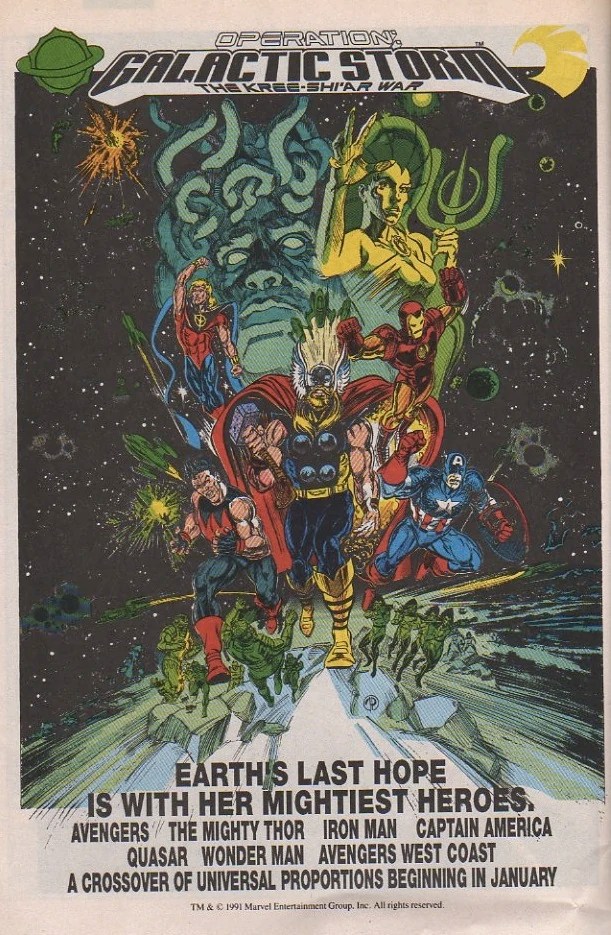


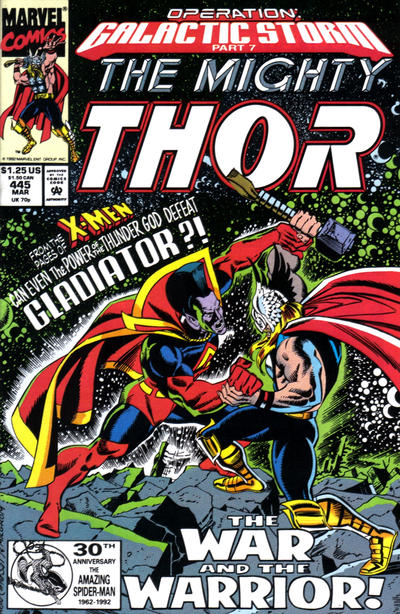
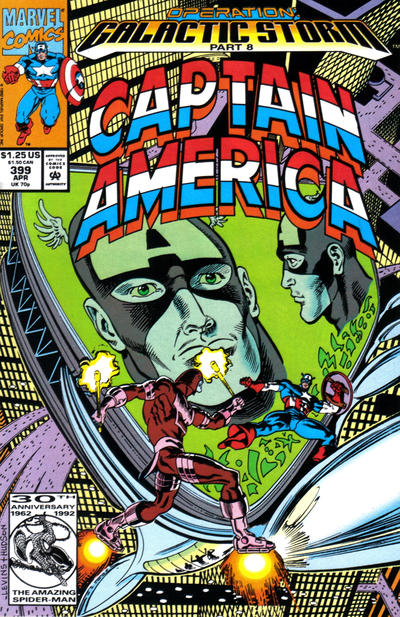
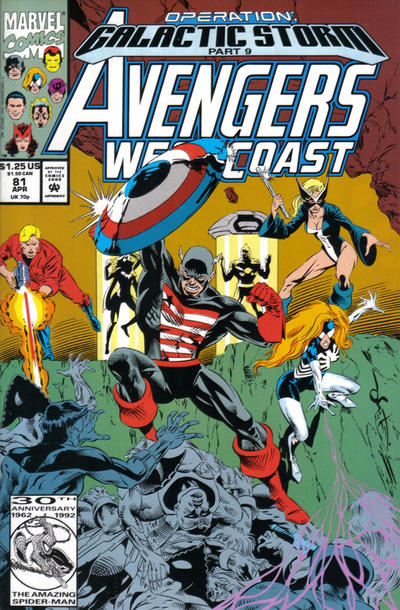
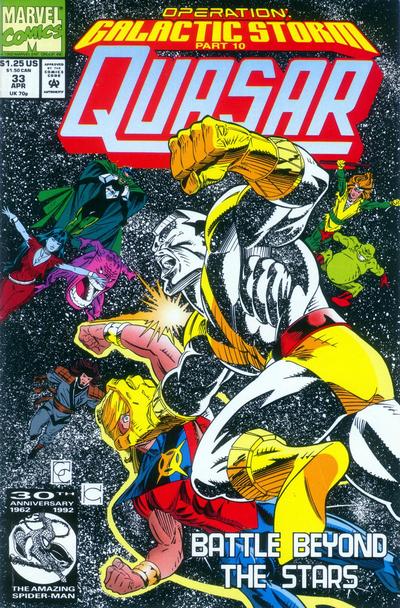


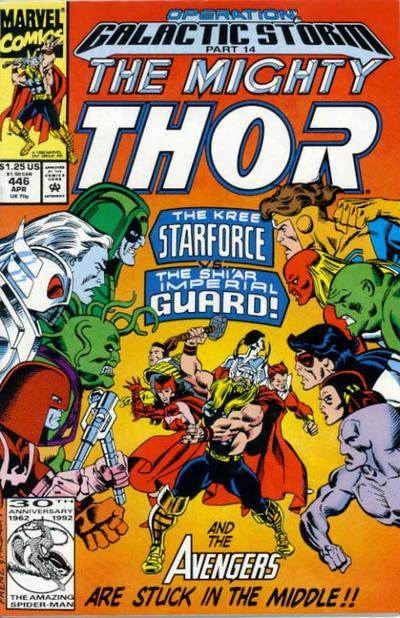
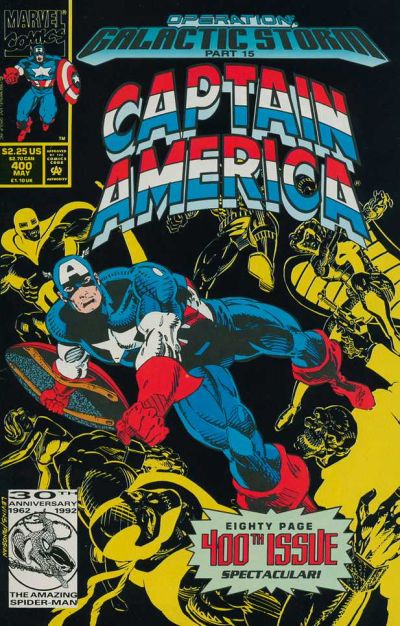

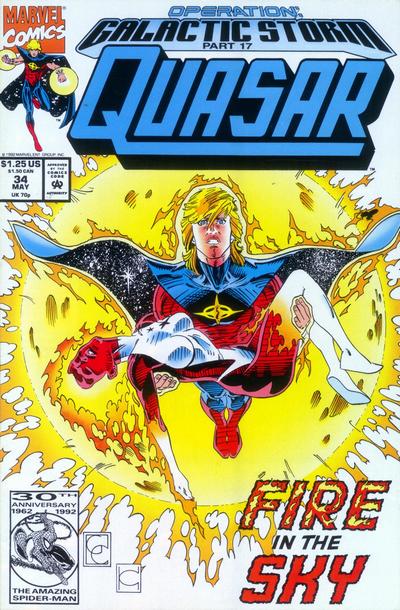


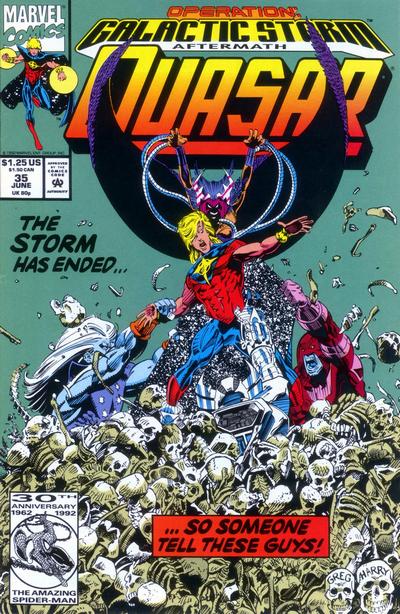


 Redeeming Pandora