
Christopher Rush
When I was young, every time I walked through the mud room on the way out the backdoor to do some outdoor activity (basketball, tennis, or some epic war involving all the “guys” — what are apparently today called “action figures”), I noticed stacks on stacks of thin, black boxes piled on top of the filing cabinets. I never knew what was in them growing up, but I did notice the one standing upright in the corner in front of the window had some strange German words on it: “Wacht am Rhein.” I had a vague notion they were games in there, somehow, but they didn’t look like any games we were used to playing, certainly not from the side. We did play a few of those games once in a while, particularly War of the Ring, and I did play some sports games, but most of them never got to the table.
Don’t get the misunderstanding we did not play board games when I was young. It wasn’t all video games, you know. We had regular game nights throughout my youth. We regularly played Careers, Trivial Pursuit, Hail to the Chief, Scrabble, Pit, Clue, Pick-It, card games, and a whole lot of other games. I even got them to play Dungeons & Dragons … once. There was a Risk session … once. That caused more frustration than happiness, perhaps because of our impatient youthfulness (and the imminence of MacGyver). Perhaps that was a main factor none of those thin black games from the mud room ever made it to the table.
As you probably haven’t guessed by now, those stacks upon stacks of thin, black plastic games were my dad’s extensive SPI wargames collection (though our friends over at Simulations Publications, Inc. would prefer we call them “conflict simulations”). This is probably the point of this reflection when I should say “if only I’d known then what I know now …” or words to that effect about regret, perhaps in a wistful voice. But I’m not going to do that. I have enough things I have done to regret without adding things I haven’t done to the list. Besides, I don’t know if I would have been all that ready for them. It wasn’t like I was totally ignorant of military history: I had seen 1776 and Gettysburg several times … but that was about it, so no real chance of recreating anything remotely historical existed. (I’m still rather skeptical I’m all that ready for them now, as far as having a good grasp of the historical situations upon which the games/simulations are based.) Additionally, looking back upon that time, sure there are some things here and there I would change if I were Sam Beckett, as most of us probably have, but it’s not like there is a big gaping hole of “missing family time” it would replace. As I said, we had regular family game nights my entire life, so in that sense it would have been more of a lateral movement.
I grew up listening to and watching Jack Benny, Fibber McGee & Molly, Abbott and Costello, the Marx Brothers, Danny Kaye, Martin and Lewis, M*A*S*H, Star Trek, MST3K, Red Dwarf, and countless others (see our forthcoming final issue), playing board games with my family, basketball, baseball, soccer, tennis, golf, flag football (usually only for one season, true, but it still happened), youth symphony, Awana, and a lot more things that would shame any of today’s “I’m too busy” youth. They have no idea what it’s truly like to be busy. And I still had time for comic books and video games, somehow. When CCGs came out, my brother and I got in on that, emphasizing the first “c” more than the “g,” but we did manage to play sometimes. So I don’t have a lot of things to regret from back then in this way; I’d have difficulty choosing what to replace with wargames. True, more time with Dad would have been nice, but he was never too busy when I wanted him to go out and play catch or take me to Comic World. As I said, I probably wasn’t ready for wargames too much, so I don’t know if that would have helped.
The good news, really, is we are in a second golden age of boardgaming, and wargames are benefitting from that as well. Many of the first generation of giants upon whose shoulders the rest of us stand are gone (H.G. Wells, obviously, Charles S. Roberts, Redmond A. Simonsen) or out of the biz (Jim Dunnigan), but many of that early generation are still churning out games (Mark Herman, Richard H. Berg, Don Greenwood, etc.) and not only are they still making quality manual war boardgames, they are continuing to expand and improve their game depth, designs, and mechanics (beyond the traditional hex-and-counter, we are seeing the surgence of card-driven games, point-to-point movement, impulse movement, “fog of war,” and more variations). Instead of only Avalon Hill and SPI vying for the market, we have GMT Games, MMP, Victory Point Games, Worthington Games, Columbia Games, Clash of Arms Games, and more. Also, just as we saw a few issues ago with comic books, modern shifts in marketplaces (such as eBay) are allowing a great deal of used products to get from unwanted homes to new homes, so the older games and companies (Victory Games, 3W, The Gamers, Game Research/Design, etc.) long out of print can reach new generations of fans. Yard sales, too, provide hope and possibilities for rescuing old treasures.
Interest in military history is as high as ever, if not even increasing, as recent trends in actual military combat have triggered (if you’ll allow the expression) interest in COIN (counterinsurgency) and guerilla tactics and conflicts. The Vietnam War (and its combatants) is finally becoming socially acceptable discussion material (thanks, in no small part, to Tim O’Brien). Moviemakers and television studios will never tire of recreating historical conflicts, and the demands for accuracy are perhaps higher than ever (which, admittedly, tends to lend itself to graphic content more often than not). This has also led to waves of revisionism as well, no doubt, but if Jared’s articles are even remotely true (and I suspect he is far more accurate than most want him to be), it would be better for all of us to appraise history more circumspectly, especially if we are driven by a desire to know the truth and not just postmodernly critique/lambaste former heroes for the sake of critique: truth can surely stand the scrutiny.
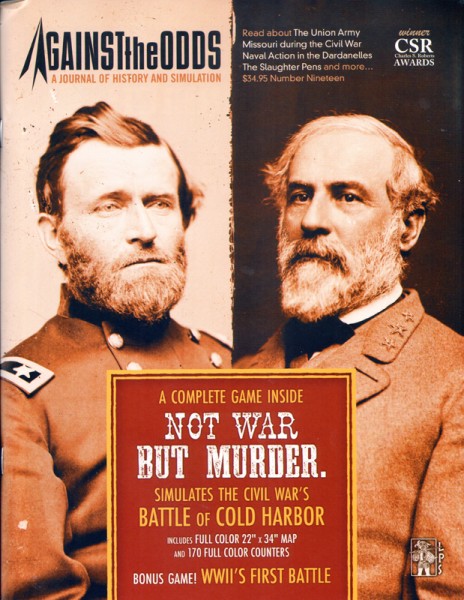
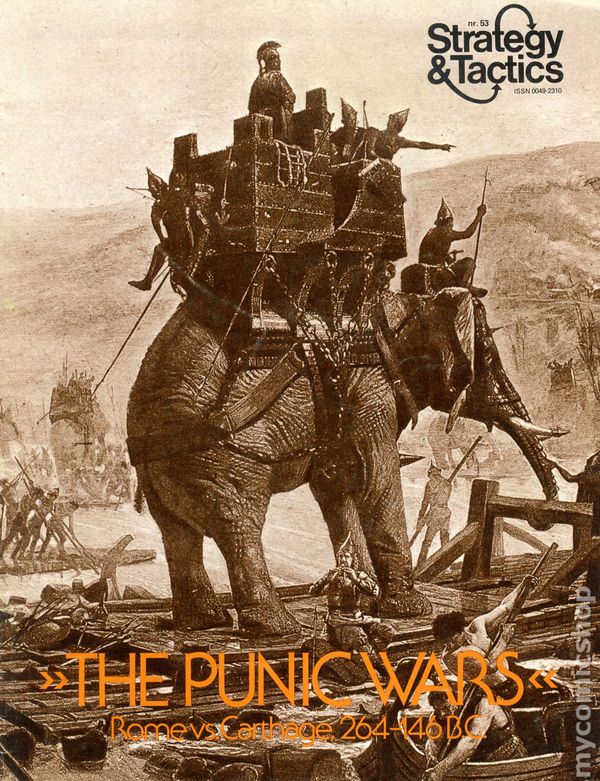
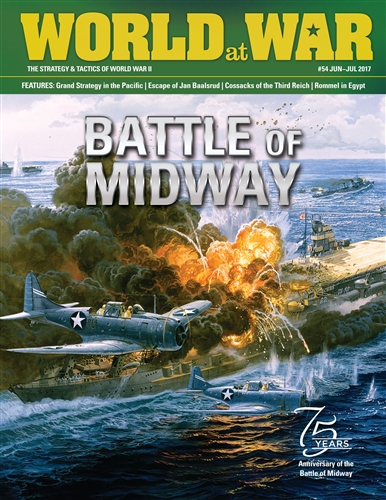
And few things are undergoing more scrutiny by intelligent people (actually intelligent people, not just self-serving degree holders) than military history. Strategy & Tactics is still going strong. Despite the doomsayers who prognosticate the end of the printed word, the wargaming tribe is recalcitrantly ignoring such trends, as several printed war history magazines (with or without accompanying games) are being published each year (World at War, Modern War, Against the Odds, etc.). Concurrently, the wargaming tribe is also embracing modern technology — it’s not wholly constituted by sexagenarians who refuse to role anything not cube-shaped. Check out BoardGameGeek.com. That, along with ConSimWorld.com, is a major gathering point for wargamers to discuss (we can call it that), share videos, critique, assist, and further the hobby. Most “grognards” (old-time “hardcore” wargamers, taken from the complaining Old Guard of Napoleon’s army) are generous enough to offer advice or strategy — or at least keep the hobby alive. Additionally, Mark Herman, one of the near-original gang at SPI back in the day, recently published a Battle of the Bulge game for the iPad. The company that put it out, Shenandoah Studios, was co-founded by another of the early SPI gang, Eric Lee Smith. We should not be surprised wargamers are also on or around the cutting edge of technology. Wells, Roberts, and Dunnigan were innovators, not followers. I recently heard it said of Jim Dunnigan he has always been so far ahead of the curve it’s flat where he is (or words to that effect). That was from, I believe, Ed Wimble, designer of several Napoleonic games. I heard it on a podcast, one of the more respected podcast series about wargames, Guns, Dice, & Butter (if it wasn’t Ed Wimble, I apologize, but it was someone on an early podcast of GDB). I’m not big into podcasts, but the wargaming tribe moves with the times — or, perhaps as more likely, the times move with the wargaming tribe.
They are a knowledgeable bunch. Most of them are into wargames because they know about history, intimately, and are interested in working it out for themselves, checking out possible scenarios, historical what-ifs, and the like. They are not into wargames because they want to pretend to be Adolf Hitler and wipe out non-Aryan Europe. That sort of piffle can be left where it originated. Just listen to a few early podcasts of Guns, Dice, & Butter. Listen to Mark Herman or Ed Wimble or Nick Karp talk about history. You’ll think you never heard anything about history before. I’ve started to understand why my history-major librarian father has been into wargames for so long: they combine knowing things with fun. That’s what the kids call a “no-lose situation.”
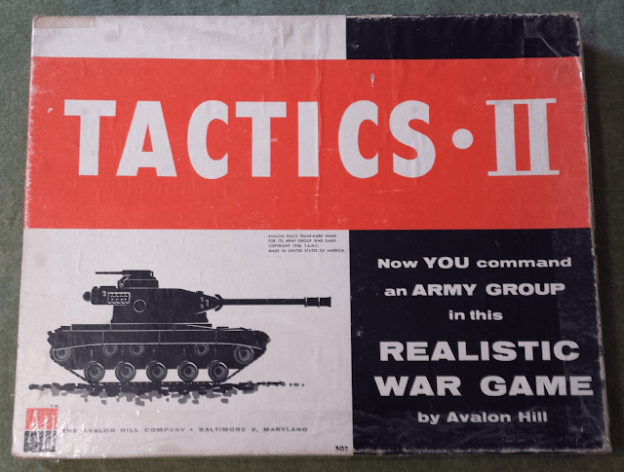
My dad no longer has his mighty collection. He gave me the War of the Ring game and sold most of the rest of the collection years ago to help pay for my brother’s college education. Again, let’s not lament anything — life’s too short. The good news is somehow we have both returned to wargaming. Not surprisingly, it was instigated by my dad a few years ago. I can’t quite remember the order of events, but somewhere along the line on some visit back home we played, fittingly enough, Tactics II, the revised version of Tactics, the first board wargame. It has a square grid, but all the basic components of wargaming are right there. Shortly after that he ordered me a few other classic Avalon Hill games: Waterloo, D-Day, Battle of the Bulge, Gettysburg, and Midway. We have even played Waterloo together. Then, he gave me his remaining copies of Blue & Gray I and II, two classic SPI-quadrigames, four smaller games in one package all from one war or general idea (like four modern battles, four battles of the middle ages, things like that). He recently got another copy of B&G I, and we have been playing them by e-mail for the last few months (part of the benefit of these earlier, simpler games is they are driven by what some disparagingly call “IGO-UGO” systems, but they lend themselves brilliantly to long-distance play). Since we trust each other, we can be honest with what combat results happened, and then we can retreat each other’s pieces when necessary to the other person’s best advantage, just as if it was happening in person. Now that he has gotten back into playing, and I have enjoyed getting into it as well, our collections are both increasing once again. They will never match what once was, but in a way they will be even better, since now these collections will have been played. So there is no need to lament what “might have been” – it’s happening now, probably better than it would have been. I’m also getting my daughter started on wargaming as well. True, we don’t play according to the written rules, but she is getting really good at punching out counters and shuffling cards. It’s never too late or too soon to start wargaming.

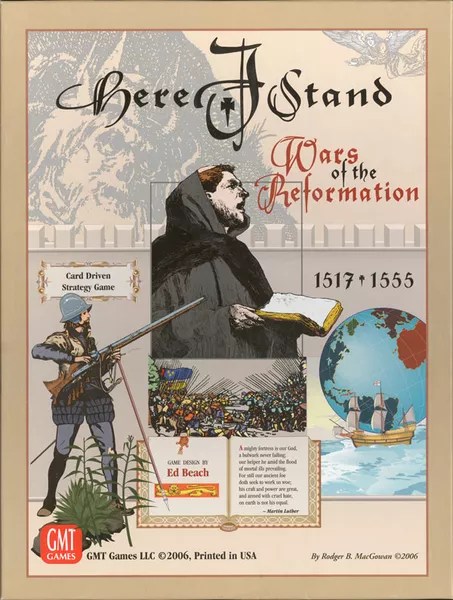
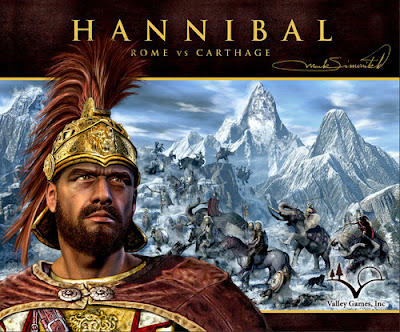
As with most things I do at Summit, I founded the Strategic Gaming Club a few years ago primarily so I could play my games and have a good time. Once in a while I do things for the benefit of the students, but usually it’s primarily for me. The good part about that is, as a generous giver, I share and let whoever is willing to join me on these journeys come along for the ride. Though we haven’t quite played as many of the classic wargames as I would have liked, I certainly have had a good time playing Diplomacy, Civilization (in the Michael Wood elective — I mean “Intro. to Archaeology”), and Settlers of Catan (I am not calling Settlers a wargame, so please don’t tell the BGG people I did) with the kids over the years. I’m hoping, though, that next year’s Intro. to Historical Gaming (aka “Intro. to Wargaming”) elective will allow me the opportunity to play a lot more of these games, especially some of the new ones I have gotten recently (thanks, mainly, to my dad, who helped increase my gaming collection tremendously in 2012: Here I Stand, For the People, Fall of Rome, Hannibal: Rome vs. Carthage, Through the Ages, among others. These are the games Julia and I have been “playing” together. She’s also good at making up rules.). EBay has also been helpful to me in the last few months, as I have been able to get many old and classic OOP games (not to forget my gracious wife’s willingness to let me get them as well). I’m definitely planning on playing them (even more than I’m definitely planning on reading all the books in my house). Having a class will make that plan come to fruition even sooner, I hope. Of course, I’ll also need to be familiar with them before class starts so I can teach them and provide enjoyable learning/gaming experiences to the students as well.
I suppose this means I’ll need to spend much of the summer playing wargames and studying military history. Shucks.
 Redeeming Pandora