
Christopher Rush
How Does One Follow a Masterpiece?
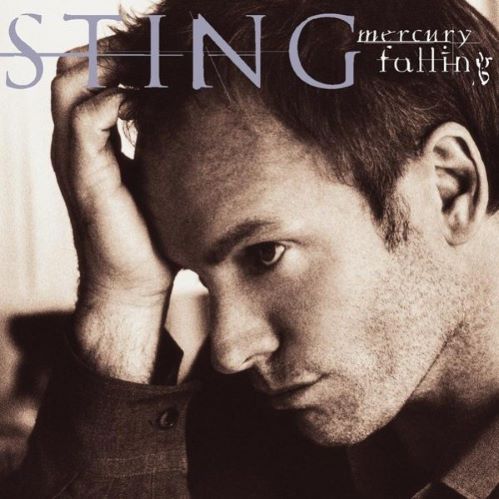
Many of you out there probably think Sting’s 1993 album Ten Summoner’s Tales is his best album. It’s hard to argue against that, really. I thoroughly enjoy it myself. Sting as a solo artist is an egregiously underrated purveyor of musical delights and haunting melodies and lyrics. Sure, everyone likes The Police (and rightly so), but for some reason Sting has become a bit of a punching bag — this is especially odd, considering the recent tidal shift in public sentiment for singers like Norah Jones and Tony Bennett (who knew he’d make a comeback?), as well as his own willingness to make fun of himself (he’s far less pretentious than most musicians and movie-star dilettantes). Ten Summoner’s Tales, driven by “If I Ever Lose My Faith in You” and “Fields of Gold,” is understandably Sting’s most memorable album around what most consider the apex of his popularity (which is the key word for that sort of people), and I have already acknowledged it is great, and since people still think it is good, it is a gem but not a “forgotten” gem. The album preceding it, The Soul Cages, is a marvelous piece worth examining (perhaps in a later “concept album” series), but the album after it was the big challenge: how does one follow a musical (and commercial) success? With Mercury Falling.
In order to “keep it fresh,” as the kids say, this time through this “forgotten gem,” instead of a lengthy lyrical analysis complemented by intricate musical annotations, we shall highlight some of the interesting bits about each song as an aid to entice you to rediscover the album in all its delight.
“The Hounds of Winter”
It begins with the title of the album, which is pretty neat, especially since that’s where the album ends as well. It’s a bit of a sad song, lyrically, dealing with a break up between the narrator and his girl. Sting’s vocal variety is in full range right from the start, complemented well with the almost jarring musical beat, which feels like it is starting and stopping throughout the song (but done rather well). I like the metaphor of the “hounds of winter,” working on a variety of levels, showing Sting’s intelligent lyrical skill.
“I Hung My Head”
Another sad song, this time about a man about to be executed for thoughtlessly killing a traveler, Sting plays around with the vocals and musical lines quite a bit to make this song worth multiple listenings, despite its gallows atmosphere. The lyrics again demonstrate Sting’s ironical wit (though the “gallows humor” might repel some, even though it is only evidenced briefly). The song is reminiscent of the ballads motif pervasive throughout Ten Summoner’s Tales, but Sting adds enough other elements to distance the song from being considered an add-on. The ending especially makes it a good song, as Sting’s vocal variety in the descant rescues the narrative song from being too melodramatic.
“Let Your Soul Be Your Pilot”
Mixing a gospel feel with the pervasive wintery mood dominant on the entire album, Sting creates one of the more upbeat songs on the album. It’s definitely a sing-along kind of song, especially at the choruses. Even though it’s already the longest song on the album, usually the listener desires the song to be longer, even before Sting gets to the modified ending (a popular device on the album). At the outro, the beat and melodic line changes into an entirely different song, but somehow it is entirely consistent with the rest of the song (and the album as a whole).
“I Was Brought to My Senses”
“I Was Brought to My Senses” is another good example of Sting’s impressive ability to mix an eclectic array of influences into a universal song with universal appeal. Combining Romanticism, more gospel-related ideas (especially from the heavy “Amazing Grace” motifs throughout), and Latin American rhythms, Sting keeps the album moving along in unexpected yet thoroughly familiar patterns. The words are a great outpouring of the efficacy of “general revelation” when infused with a proper bent toward “special revelation,” and should not be missed, especially when one realizes it is actually an authentic musical version of Dante’s Comedy. It somehow ends up being more of a gospel song than the previous overt gospel number and is another positive song (certainly one of the most uplifting songs) on the album.
“You Still Touch Me”
As if the uplifted mood is to continue here, “You Still Touch Me” feels like a companion piece to “I Was Brought to My Senses.” The beat is more emphatic and jaunty, the lyrics are even more thoroughly positive, and the energy level persists at possibly the highest level for the album (not including “Lithium Sunset,” which is more of an epilogue to the album). Sting’s vocal range is in full force again, perhaps driven by the continuing gospel-infused ideas of which he sings. Though it also deals with love and loss, it’s by far the happiest song on the album, since the singer of the song is clearly at a good place of acceptance and rebirth and renewal, having just been brought back to his senses and understanding life from a whole-universe perspective, not just the confines of a solitude experience of disappointment and despair.
“I’m So Happy I Can’t Stop Crying”
Though this is a sort of concept album, I don’t think all the songs are as interconnected as they are on, say, Sting’s earlier work The Soul Cages, a thoroughly-unified album. Melancholy certainly is a pervasive mood on this present album, and that dominates this present song. The narrator relates the daily sorrows and trials of living a life recently separated from his wife and children — nothing good ever comes from that situation. Though the song does return to the bittersweet chorus at its conclusion, the best part of the song comes in the upturn of mood in the final verse (supported by its melodic modulation), with the narrator’s great declaration “Everybody’s got to leave the darkness sometime.” Even in the worst situations of life, we cannot allow melancholy to turn into utter despair. We all walk through the valley of the shadow of death, but we all have to leave the darkness sometime.
“All Four Seasons”
Sting lightens the mood quite a bit with what is an enjoyable song that could have been a holdover from Ten Summoner’s Tales, in that “All Four Seasons” uses a clever trope to guide its lyrical ideas, similar to “Seven Days” and “Shape of My Heart” on the previous album. Whether that is the case, it is still a good song on this album belying its lyrical treatment of the narrator’s love for a mutable woman with a pervasively positive musical accompaniment. Despite the temperamental relationship, the song embraces a commitment to love, which is a key aspect of why this is a good song on a very good album.
“Twenty Five to Midnight” and “La Belle Dame Sans Regret”
Having access to the album released in the United States, being a United States citizen and whatnot, I have only listened to the album without the European/Asian market release including the track “Twenty Five to Midnight” (I don’t even know if it’s hyphenated). Similarly, being mainly monolingual (not directly an effect of being a United States citizen, though many internationalists will claim so), I do not precisely understand the lyrical content of “La Belle Dame Sans Regret,” which I’m fairly certain translates roughly to “The Not-too-shabby-looking Lady who has no Mercy” (as most of them are). It’s a nice bopping-along song, and fits very well on the album, since it’s mainly about the incompatibility of these two people. Je ne comprends pas bien, but it’s still nice.
“Valparaiso”
I like this song for its melodic distinction from the rest of the album. It is reminiscent of an Irish coastal lament, which is appropriate, considering the lyrics are about that very sort of thing (even though it is about sailing around the Cape of Good Hope to some town named Valparaiso — which one, we’re not really sure, though I am sure it’s not the one in Ireland, since there isn’t one). It is a sea shanty, basically, and Sting does a good job of attempting that genre here.
“Lithium Sunset”
So the album comes full close and full circle. With a final jaunty little outro of a tune, Sting wraps up a sometimes positive, mainly melancholy, always enjoyable album. Having begun the album Mercury Falling with the words “Mercury falling” in the opening song “The Hounds of Winter,” Sting concludes “Lithium Sunset” with a sort of country-and-western stylized uplifting number ending with the words “mercury falling.” The sunset eases the pain and relieves the heartache of the day. He’s been scattered, shattered, and knocked out of the race, but with the light of the sun (Son?), he will get better and his soul will be healed. I take the pharmacological aspect to the song to be more ironic than literal, since nothing on the album suggests otherwise (in fact, quite the opposite). It’s an organic ending to an organic album. Enjoy it, again and again.
 Redeeming Pandora