
Connor Shanley
A pilgrimage: it sounds old and like something only people in the Middle Ages did. Many people these days still go on pilgrimage, but why would they decide to do such a thing? Are all these people Catholic or Muslims? Where can one go on a pilgrimage? All important questions to consider, but first pilgrimage must be defined. A “pilgrimage” as defined by the Catholic Catechism is “any journey in which one desires to grow closer to God.” So is a pilgrim just someone who takes one of these journeys? The word “pilgrim” comes from the Latin peregeniusi which means “foreigner.” The Orthodox Church teaches all Christians at heart are pilgrims, because all our life is a spiritual journey, and also because this is not our true world. As C.S. Lewis puts it, “We must always remember that we are like spies in enemy territory; we’re here but this is not our home.” Is pilgrimage something for just Catholics and the Orthodox? No. There are many reasons why a pilgrimage is good for everyone’s spiritual walk.
Now when most people hear the word “pilgrim” they think about Thanksgiving. The first thing that comes to mind is the Puritan pilgrims who landed on Plymouth Rock and who spread peace and love to the Natives (at first), but why are they called pilgrims? Because they were foreign to England, they needed to escape in order to get closer to Jesus. This was the Puritans’ quest: they were after religious freedom; in their old world they were persecuted and put down. They decided to leave; it seemed to be the most sensible option, so they separated from their world to grow closer to God. Now whether or not that was all of their purpose is a question for another time. For now, we should ask what does one need to do to earn this title? A pilgrim is anyone who looks to get closer contact with God, and that is just one demonstration of a protestant pilgrimage, but where and how did pilgrimages start, and why did people start doing them?
The first pilgrimages can be dated back to the Old Testament in Deuteronomy 16:16-17: “Three times in a year shall all thy males appear before the Lord thy God in the place which he shall choose: in the feast of unleavened bread, in the feast of weeks, and in the feast of tabernacles. No one shall appear with his hands empty before the Lord: but every one shall offer according to what he hath, according to the blessing of the Lord his God, which He shall give him.” This is the first pilgrimage shown in the Bible; God commands all men to go to a point that He appointed in order that they may receive blessing. When Jews would go on this pilgrimage, they would sing the “pilgrims song,” Psalms 119-133. This pilgrimage lasted until Jesus’ day: when He got separated from Mary and Joseph in the temple, He was on this same pilgrimage. This pilgrimage would continue until the temple was destroyed in the 1st century ad.
The New Testament also gives us an example of pilgrimage; Jesus Himself gives us the example. In Mathew, Mark, and Luke, Jesus ventures into the desert and is confronted by the Devil. This is a great example of what a modern day pilgrimage should be; the destination doesn’t matter as much as the journey. It should be something done to help deal with temptations and spiritually cleanse one’s self. Jesus also gives us a command in Mathew 16:24: “If any man come after Me, let him deny himself, and take up his cross and follow Me.”
There are a few places in history to which major pilgrimages happened and are still happening. In the early church most pilgrimages were made to Jerusalem; the spiritual meaning of this city can never be understated. Another popular route was to Rome. For those who lived in the western part of Europe, (later to become the Roman Catholic part) Rome was far more accessible than Jerusalem, and in the early days of the church considered almost as important. It was known as “The City of Martyrs” because there the two great fathers of the early church, Peter and Paul, were martyred and buried.
Another route that became very popular and is still popular today is the pilgrimage of “Santiago de Compostela.” This pilgrimage started in the fourth century and begins in Saint Jean, France and ends in Santiago de Compostela, Spain. What’s so great about Santiago de Compostela? It is where St. James the Apostle is buried. Unlike some other former sites of Catholic pilgrimages where apostles were said to be buried and weren’t, it is proved with historical documentation Santiago de Compostela is where his remains are. This route is still one of the most traveled routes in the world.
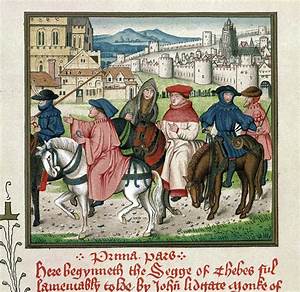
Geoffrey Chaucer immortalized the fourth-most used pilgrimage route, which is, of course, to Canterbury. Pilgrims really started to flock to Canterbury after the death of Thomas Becket in 1170. Becket was considered a martyr for the faith because of how he stood up for the rights of the Church over the rights of his king. This is still one of the most popular pilgrimages in the world, especially to the English.
To the Orthodox one of the most traveled pilgrimages is to Mount Athos in Greece; this mountain is the sight of many miracles. There are 13 monasteries on the mountain. Access to the mountain is very limited: they only allow 100 visitors on it per day. To the Orthodox, especially the Greek Orthodox, it is a very important place.
A pilgrimage, however, is not really about the destination; it is about the journey. Jesus’ “pilgrimage” was into the desert: there was no temple to visit, no remains of saints to see. Jesus shows that the pilgrimage is all about humbling oneself. One is to go on a pilgrimage like Jesus did with no earthly goods or riches to slow oneself down. The focus should always be on God. In the old days, pilgrims were supposed to rely on God and the kindness of others to make it through their journeys. This is so all the thanks for making it through the journey goes to God. Jesus gives the command to all pilgrims in Mathew 16:24, “…let him deny himself, and take up his cross and follow Me.”
The main point of a pilgrimage is to deny ourselves. A pilgrimage forces one to rely on God. We walk away from society in order that we may grow closer to God; it is like a retreat, but the main thing is the journey not the destination. A pilgrimage gives us the chance to put away the world for a bit and just be in God’s presence. On a pilgrimage, God will provide; it is our chance to be reminded of that. A pilgrimage also reminds us this earth is not our home; we are foreigners wandering with a God who is looking out for us. A pilgrimage should not be a chore but a deep and meaningful vacation away from all the worries of the world and into God’s peace.
 Redeeming Pandora