
Christopher Rush
Forgotten Gems
After delighting ourselves so long last year in our trek through the Gabriel years of Genesis, the time has come to survey a more diverse field by recalling to mind the merits of many worthwhile and enjoyable albums that have, for no good or explicable reason, fallen out of contemporary consciousness and appreciation. Perhaps it is because of the current fascination with whatever is (pretending to be) new and now, though that argument is used with every generation as its tastes and fads begin to override the tastes and fads of the previous generation. Whatever the cause, these albums are not as appreciated and enjoyed as much as they should be, so we shall attempt to rectify that here. I make no promises the format you see depicted here will be followed throughout the entirety of the series: let’s just enjoy.
Graceland
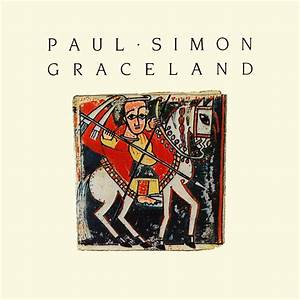
Paul Simon’s 1986 release is his most successful album since his post-Garfunkel, post-’70s initial solo success. Not to disparage the successes of Rhythm of the Saints and So Beautiful or So What, Graceland is the apex of Simon’s late career. Utilizing several musical styles, Graceland is also noted for bringing to mainstream American popularity the musical stylings of Ladysmith Black Mambazo known as isicathamiya, despite the tensions of South African apartheid at the time.
An inexplicable backlash against the album has arisen recently, though none of the sources for it are credible or worth any investment of our time. Admittedly, some call that a “blanket statement,” but it is accurate enough for our purposes. Others may consider the album too atypical to qualify as “real” Paul Simon, but considering Paul Simon is such a talented, diverse artist who continually reinvents himself and his style(s), calling Graceland a commercial sell-out or other such nonsense demonstrates a misunderstanding both of Simon as an artist and what the album intrinsically is: a successful amalgam of diverse world music and attitudes. In light of the 25th anniversary of the album (and a special tour upon which Simon soon plans to embark, recently announced during the writing of this article), let us reminisce (or experience for the first time) about that somewhat-forgotten gem.
“These Are the Days of Miracle and Wonder”
“The Boy in the Bubble” sets the tone for the world music kaleidoscope of Graceland. The mixture of instruments and meter is unlike most mainstream albums of the time, quite unlike the popular synthesizer strains dominating the scene. The despondent lyrics, though, betray the bouncy, up-tempo rhythms. The comforting message of the chorus (“And don’t cry baby, don’t cry / Don’t cry”) is not substantiated by any true source of hope. We are not certain where the miracles and wonders come from, especially in contrast to the pervasive militaristic and technological destructions abounding. Even the celestial natural world, the signs of the stars, is just a series of constellations “dying in the corner of the sky.” Perhaps the most frightening aspect of the song is the prognostication of the digital revolution: “Staccato signals of constant information,” ten years before the mainstream popularization of the Internet, fifteen-some years before “Information Technology” majors, and the downloading overload of today. Even so, Simon insists we be comforted during these uncertain times. Miracles and wonders exist — don’t cry. It’s easy to listen to him, especially since it is good advice; of course, coupled with a Christian understanding of hope, faith, and reality, it becomes great advice.
“We all will be received / In Graceland”
The eponymous second track continues the up-tempo movement of the album paradoxically supporting lyrics of loss, heartache, and discontentment. The most noted element of the song is Simon’s obvious dual-layering of the lyrics: Graceland is, of course, at once the final resting place of Elvis Presley and a kind of kenning for Heaven (the propinquity of the poor and pilgrims also on a journey to Graceland makes this dualism self-evident). Various sources remind us Simon’s short-lived marriage to Carrie Fisher is the main primary inspiration for the lyrics of this song, the most heartrending lines being “losing love / Is like a window in your heart / Everybody sees you’re blown apart / Everybody sees (later, feels) the wind blow.” Divorce, no matter how amicable, is an irreparable rending of hearts and lives, and it’s never just about the two people most directly involved. And no matter how jaunty the musical accompaniment, it’s always “ghosts and empty sockets.” Unlike the first track, though, Simon has a substantial locus for possible restoration (if not mild amelioration): not only will he and his son be received in Graceland, but all of us (Christians) will be received in Graceland (the one not in Tennessee). His uncertainty whether he’ll have to “defend / Every love, every ending” or if he can leave the past where it is because “there’s no obligations now,” the most ambiguous lines in the song, come too late to be too central to the thought. The point is restoration and resolution are attainable (but not in the Mississippi delta).
“Who am I / To blow against the wind”
After the first two serious numbers covertly couched under sprightly melodies, Simon changes the lyrical pace drastically in “I Know What I Know” to what could best be described as the “sherry party” mentality and dialogue Harry Blamires excoriates in The Christian Mind. The main conflict of individuality struggling against inane conformity and social scene status is self-explanatory throughout the three verses and chorus. The whooping-call (and other vocal sounds) outro is confusingly appropriate for the song. The flowing lyrical content, especially the style and ease with which Simon sings this number, makes it, in an odd way, almost quintessential Paul Simon: there is nothing there, but he makes it something deep and casual and impressive (in his innate vocal way as only he can).
“Breakdowns come / And breakdowns go”
Simon continues the transition away from profundity in the human condition with a song more in the declamation mode (à la Rex Harrison) than actual singing throughout “Gumboots.” This is appropriate, though, since the song is another series of brief dialogue interchanges supplemented by near-philosophical introspective self-assessments by the narrator of the song. The musical accompaniment is supported by the actual gumboot style of dancing (isicathulo) from South Africa, similarly appropriate considering the song itself as well as the overall purposes of the album. This, then, makes one pause: considering the gumboots dance itself is in part a subversive rebellion against colonial suppression in South Africa, Simon, then, may be meaning more than he lets on with the seemingly-simple lyrics. “You don’t feel you could love me but I feel you could” must be some secret insight into the phenomenological substructure of metaphysical reality. Though, considering how intelligent Simon is, he probably knows we would assume he meant something of that nature with this song, and thus would counter with actually unassuming and genuinely unpretentious lyrics. But, knowing that we would know that he knows that we know that he knows….
“Ta na na na / Ta na na na na”
“Diamonds on the Soles of Her Shoes” is a bit tricky, at least for anyone not thoroughly familiar with the Zulu language and local customs of South African life, which describes me well. Cursory research indicates possibly the opening Zulu preface is a lighthearted introduction (matching the musical beat correctly this time) about love (or something like it, perhaps) approaching along with the approaching girls. We see how it happens, they say, too. Simon continues the thought in English, focusing on one rich girl who “don’t try to hide it,” prominently displaying her diamonds on the soles of her shoes (one of the key tensions of the song, since if she were flaunting her wealth it makes little sense it would be on the part of her attire no one would really ever see unless briefly while she is in motion).
Her travelling companion is, in contrast, a poor boy “[e]mpty as a pocket,” a great line, “Empty as a pocket with nothing to lose.” Despite her apparent and flaunted wealth, she is suffering from some sort of depression (“Walking blues”) and loneliness (her poor boyfriend has been “taken [her] for granted” because of her wealth). Some interpreters believe she is actually the intellectually honest member of the pair, since she is not really flaunting her wealth in a braggadocious way, just as a simple expression of who she is and her financial status. He, however, is the superficial one only with her because she has wealth and merely wants to be seen with a wealthy companion. He is the one who feels compelled “To compensate for his ordinary shoes” with after-shave and a new shirt. Their internal sentiments and soul-dispositions are fundamentally misaligned, as evidenced by the most ambiguous English lines of the song “She makes the sign of a teaspoon / He makes the sign of a wave.” Many theories exist behind the meaning of these strange symbols; the most sensible is the “sign of a teaspoon” is a taxi direction indicating one wants to go downtown; the “sign of the wave” is the opposite direction toward the coast — thus, the couple are headed in two different directions in life.
Somehow, though, they get together and both end up with diamonds on the soles of their shoes (even though she wanted to go dancing but they ended up “sleeping / In a doorway / By the bodegas and the lights on / Upper Broadway”). Most likely she came down to his level, like all Shakespearean heroines eventually must in the end. Simon’s/the narrator’s response to this indicates the progression of love in a positive way, at least. Before, no one really knew what he was talking about, but now everybody here knows what he is talking about: he’s talking about diamonds. Now, he, too, has diamonds on the soles of his shoes. Apparently, we should all embrace this sort of carefree life of love and acquiesce — be who you are, not who you ought to be (there is some Shakespearean truth in that, too, but it must also be tempered with a Christian perspective — and, if done accurately that way, it also becomes genuinely excellent advice).
“I want a shot at redemption”
Perhaps best known for the Chevy Chase-driven music video, “You Can Call Me Al” is the most big-band sounding song on the album. The beat and palindromic slap bass solo especially always reminds me of Seinfeld (which is appropriate, since the show was, like the album, superficially about nothing yet always doing more than just being mindless entertainment). The suspicious nature of Simon’s lyrical self-effacing pseudo-inanity reaches the album’s high-water mark here as well. Combining a mid-life crisis of introspection with more “sherry party” misidentifications (though, considering it is Los Angeles, probably something a bit stronger than sherry), the song is mostly self-explanatory despite the repetitious attempts at confusing banality (though these are also for musical emphasis).
The most intriguing part is the final verse:
A man walks down the street,
It’s a street in a strange world.
Maybe it’s the Third World.
Maybe it’s his first time around.
He doesn’t speak the language,
He holds no currency.
He is a foreign man,
He is surrounded by the sound, sound …
Cattle in the marketplace.
Scatterlings and orphanages.
He looks around, around …
He sees angels in the architecture,
Spinning in infinity,
He says, “Amen!” and “Hallelujah!”
The verse is a microcosm of the album as a whole, as it mixes in seemingly uncertain yet successful (almost miraculous) ways the cultural mainstream and ethnically diverse. In the Third World, we, who are acculturated to, well, Western Culture, are the foreigners who don’t speak the language and have no currency and easily get lost walking down the streets (most likely because they have no names). This is to our detriment, though; we should be more familiar with isicathamiya and isicathulo; we should realize as this stranger in a strange land soon does God operates in other parts of the world as well — there are “angels in the architecture” outside of D.C. and the Vatican, and the sooner we realize that we, too, will be saying “Amen!” and “Hallelujah!” I do not read any satire in this final verse. Even if it is the same man in all verses, who is clearly going through a mid-life existential crisis and, like Odysseus during his wanderings, is engaging in morally suspect activities, the fact he comes to some genuinely true revelations at the end and, perhaps, a more sincere realization of the need for and source of the “shot at redemption” is not diminished by that (nor am I encouraging it as an acceptable road to travel, of course, but if the destination is correct, that should be hurrahed).
“This is the story of how we begin to remember”
“Under African Skies” was probably my least favorite track growing up, but now that I am older and, hopefully, somewhat more mature, I realize now this track is likely the most important song on the album. Some may disagree, in part since it is somewhat buried halfway through the second side (or second half of the cd) of the album. I used to think the Joseph of the song was the Joseph, i.e., Mary’s husband who went to Bethlehem for Augustus’ census, but that is probably inaccurate. The essential truths of the song, that we are connected and all, in fact, sons of Abraham, are incontrovertible and need no further comment. The mythic emphasis on rhythm and memory and love and community make this a much better song than I used to think it was, since it is one of the few songs to take itself seriously throughout its almost too-short duration.
“Somebody cry, ‘why, why, why?’”
Again, my ignorance of the linguistic intricacies of the Zulu language bows to various sources: the introduction denotes something to the effect of “On the cliffs — hey mister, we sleep on the cliffs.” This explains why the first English section of the song repeats the eponymous notion of the singers being “homeless” — and even the moon is without a home, since it sleeps on the midnight lake. The second Zulu section of the number reads, effectively, “My heart, my heart, my heart — the cold has already killed me.” The second English passage, “Strong wind destroy our home / Many dead, tonight it could be you,” is, too, self-explanatory. The next Zulu section (after the likewise self-explanatory “somebody say/sing/cry” interlude) shifts the tone and mood quite a bit (for those who understand Zulu) — no longer is the lyric a melancholy lament but now is a joyful triumph: “We are the champions/winners/victors. We defeated the whole nation. We were victorious in England.” One gets the sense of “he who always wins” in this section, not just a past victory but now a present state of success, supremacy, and, perhaps, freedom (depending on how political the song is). The final epilogue is a similar expression of newfound success that must be shared and celebrated: Kuluman / Kulumani, kulumani sizwei ≈ “Talk, talk (plural indicating more than two people) so we can hear.” Singenze njani ≈ “What can we do?” Bayajabula abasithandayo / Ho ≈ “They are happy/rejoicing, those that love us.” No doubt this barely captures the essence of what this song is about, and certainly a dry, faulty translation of the language comes nowhere close to capturing the exquisite experience of this song. Musically, it is a great song, even if one does not know what the words mean. This little paragraph does not do the number any version of justice, so go listen to this song yourself, especially if you haven’t yet heard any of this album. You will be glad you did.
“I don’t want no part of this crazy love”
The album starts to return to its beginnings with “Crazy Love, Vol. II,” the bitterest song on the album (again mismatched with the positive music). The characters exemplify the lack of gravitas in this one immediately. The song may be working on multiple levels like so many of the other selections on this album, but the pervasive apathy and rejection of discourse, relationship, love, and affection throughout the song make any attempt at finding another level or subtext for the lyrics daunting and ultimately fruitless. If the lyrics are about contemporary society (and I see no reason why they shouldn’t be), the overt contempt for listless culture and its unwillingness to commit to anything (marriage, love, personal health, even communication and opinion-holding at all) come through essentially from the downbeat, hover around for four cumbersome minutes, and finally fade away. The music of the chorus attempts to vitalize the song/society, but all momentum is drained by the verses. I realize this sounds like I think it’s a bad song — I don’t mean to imply that, so please don’t infer that. Clearly Simon is making divorce, apathy, and the pervasive melancholy of the evening news out to be bad things, and the song as a whole as a clarion call for us to change our own existences is a true message and worth heeding — but it’s almost too lethargic a clarion call to fully reach its potential. Simon’s musical diversity and ability shine through, though, despite this being the weakest link on the album (the overriding tone is perhaps its deepest flaw; this, and not the dominance of techno beats, is also why Pop is U2’s weakest album — a story for another time), and it really shouldn’t be skipped over during any listen-through of the album as a whole.
“If that’s my prayer book / Lord let us pray”
“That Was Your Mother” is the successful version of what “Crazy Love, Vol. II” failed to be: a peppy, satirical commentary on contemporary mores, seasoned with just enough homage to regional American music to avoid the (unfounded and erroneous) accusations of tendentious pretention Rattle and Hum suffered two years later.
Keeping the narrator straight in this one is likewise a bit tricky, since the opening verses intimate the speaker/singer (again Simon is declaiming more than singing here) is a father talking to his son in a slightly repulsively antagonistic way (“You are the burden of my generation / I sure do love you / But let’s get that straight” — is that really love?). He tells the boy about the good times back before he was married and a father (“When life was great”) — not the nicest thing for a father to tell his son. The father, a travelling salesman proving all the limericks and folktales about them true, prowls the street, eyeing the Louisiana “Cajun girls / Dancing to zydeco.”
Continuing the world music panoply of the album, the musical accompaniment of this song indeed utilizes a zydeco-like sound. For those who don’t know, zydeco is a French Creole sound driven by accordion and washboard, often up-tempo (like this number), with a smattering of blues and rhythm & blues. Simon even namedrops the “King of the Bayou,” Clifton Chenier, whose shadow dominated the scene (and still may, as far as I know, even though Chenier died about a year after Graceland was released).
The man gets what he wants: a beautiful young dancing girl comes up to him, they go out for some red wine and dancing, and eventually they get married and have the son. The tricky part comes in the final stanza: I take it the new narrator is the boy, now grown up — and he is doing exactly what his father did years before: “standing on the corner of Lafayette / Across the street from The Public / Heading down to the Lone Star Café / Maybe get a little conversation / Drink a little red wine / Standing in the shadow of Clifton Chenier / Dancing the night away.” Either the father’s antagonism has not meant much to him and he is off living his own life, or the antagonism has stuck with him and he has become a mirror image of his father — but again, the musical accompaniment is too celebratory for the song to truly indulge in excessive negativity and unbreakable filial patterns of despondency. Simon is not that hypocritical. The joyous zydeco beats bring the song and the album to an enjoyable and satisfactory finish. Until …
“That’s why we must learn to live alone”
Graceland is one of those odd double-ending albums, like Līve’s Throwing Copper and The Black Crowes’ Shake Your Money Maker. “All Around the World or The Myth of Fingerprints” is somewhat anti-climactic lyrically, since it returns to more of the pessimism that flawed “Crazy Love, Vol. II.,” but the music returns the sounds to the more “world music” focus dominating the whole album. The pessimism is not as strong here, but the message is one of subtle indirection: the former talk-show host (emphasis on “former”) has made a critical error and declared fingerprints are some sort of myth (they are all the same). This is an utterly bemusing way to end the album, since the album seems to be showcasing and highlighting various acts and genres from all around the world (from the Everly Brothers to Linda Ronstadt to Ladysmith Black Mambazo) with the intent of showing us that though we are all superficially different, we should embrace our differences and see the unity and importance of all of us as significant human beings with similar concerns, hopes, and dreams (though it never gets as sappy as this line makes it sound). Why Simon ends with the (insincere) line “that’s why we must learn to live alone” from the perspective of the washed-up former talk-show host who mistakenly thought fingerprints are myths is typical mature Simon: inscrutability. (From a Christian perspective, though, there is some truth in it — though we are made for community, genuine leisure, as we know, is about our individual, solitary, intellectual pursuit of God and truth, worshipping Him alone. We must learn to worship God by ourselves before we can accurately worship Him corporately.)
The slightly more comprehensible middle verse, about the former army post long-since abandoned in the Indian Ocean, adds a covert cynicism to this closing number: wars are fought because people refuse to understand we are more alike than different, and if we realize and accept this, we can spend our energies celebrating mankind and its diversities instead of slaughtering each other over them. Like Mark Antony saying “Brutus is an honorable man,” we know clearly when Simon sings “there’s no doubt about it,” we should believe the opposite of what comes next. We should not learn to live alone: we should learn to live together (though, as just mentioned above, we must learn how to live both ways as Christians). It’s an odd way to end the album, with more misdirection than is present in the rest of the songs, but it is musically and thematically a fitting conclusion to a great album, one of the forgotten gems of recent musical history.
Listen to it and enjoy it. Trust me: you’ll like it.
 Redeeming Pandora