
Caitlin Montgomery Hubler
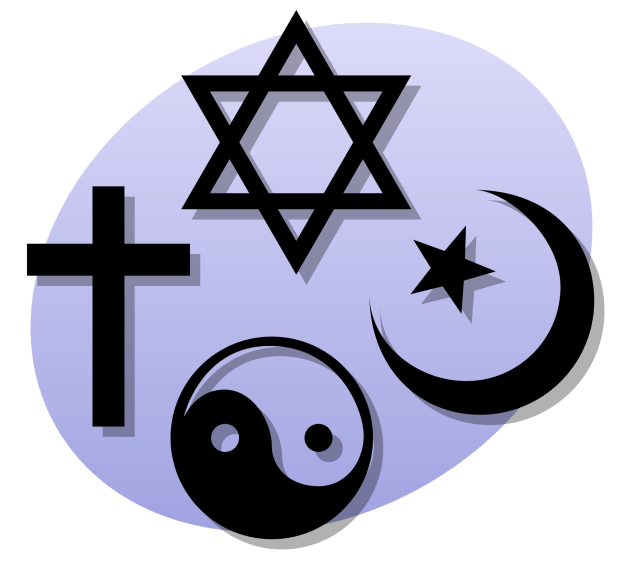
Ever since 9/11 this has become a more and more important question. A couple days after the event, George Bush called for a National Day of Prayer at the National Cathedral. At the service, there were members of many different religions present — Hindus, Muslims, Christians, Judaists, Buddhists, etc. They had prayers that addressed God collectively — as “The God of Abraham, the God of Muhammad, and the father of Jesus Christ.” On Oprah a couple weeks later, the statement was made that “We all worship the same God.” This raises the question. Aren’t all religions basically the same? Don’t they all lead to the same God, just through different ways? It’s a question worth examining.
I think the objection that all religions are the same assumes little knowledge of religions in general. If this idea is really researched, we find all religions are fundamentally different. The main disputed idea between religions is also the most central — WHAT is God? Does a being called God exist? Is there one God, or many? Many African religions believe there are many gods; some Buddhists believe there is no God. The three main monotheistic religions — Judaism, Christianity, and Islam — agree that there is one God. BUT they disagree on who He is and what He’s like. Jews and Muslims believe God is personal — Christians believe that and more — that He is triune, three persons and one God. Neither Muslims nor Jews agree that Jesus is God incarnate — and reject the crucifixion and therefore resurrection (the cornerstone of the Christian faith). Most Buddhists and Hindus agree that God is not personal. So not only can the world’s religions not agree on what God is, but who He is and what He is like, as well.
We could try to reduce these religions to commonality, even just for the three monotheistic religions. They all believe in one God, and that we should be good to our fellow man. That’s the basis of religion, right? The fatal problem comes in that when we reduce religions to their “least common denominator,” we are robbing them of the distinctions that makes them what they are. The reason Muslims do good is so they will be accepted by God — this is fundamentally different from Christians, who do good because they are already accepted and loved by God. What is real and true is the foundation for what is good and right. The fact that both religions attempt to follow the golden rule cannot be separated from the fact of WHY they follow it! The difference there reveals the bigger difference of who they think God is (purely judgmental vs. loving and judgmental). We cannot take those characteristics of God away in order to make the religions agree with each other for the simple reason that we are taking away core beliefs of each religion. They are irreconcilable differences.
Now that we see how all religions cannot be the same, we face the objection that “even if they all contradict each other, they can all be equally true.” This is simply not true. A common objection to Christianity is that it is hateful to claim one religion to be true and all the others false. Isn’t that unfair and judgmental? The very nature of truth HAS to be exclusive. For example, either God exists or He does not. Both cannot be true at the same time. If it is true my pencil is red, then it is false it is blue, green, purple, pink, yellow, or any other color other than red. That’s not judgmental; it’s simply the nature of truth. All religions claim they have the truth that leads to God and by that must reject all other claims of truth.
Of course, some people hold to the objection that truth really IS relative, meaning it is definable for each person — in that case it really would be judgmental to say that one person’s religion is right and everyone else’s is wrong. First of all, the statement “All truth is relative” is itself absolute and therefore contradictory. Secondly, if I decide my own truth then I decide my own morals. Then there should be no laws against murder, rape, or child abuse. After all … isn’t it my right to choose it is moral for me to murder someone? In that case laws against such things would be unjust … and that’s obviously not the case! We can’t create our own morals, and we can’t create our own truth. The nature of truth is exclusive, so either Christianity is true and Islam is false, or Islam is true and Christianity is false — same with every religion.
Of course that does not mean tolerance is not important — there is a difference between arguing your position and killing someone for not accepting it. Everyone has the right to his own opinion, and if you’re going to argue you’re right, I think you’d better have a good reason for it, while showing respect to the other position. “It is the mark of an educated mind to be able to entertain an idea without accepting it.” — Aristotle.
To examine this all from a Christian perspective, we can see though all religions are fundamentally different, it is undeniable some religions do have things in common — like believing there is one God. From my perspective, it is evidence for Christianity that we see some bits of truth in other religions — because I believe that man is made in the image of God and reflects Him necessarily, even if only to a small degree.
 Redeeming Pandora