
Emily Grant Privett
Twelfth Night is an example of Shakespearean “Saturnalian/Satyric” love comedy. This play is a love comedy. Comedies usually have aspects of love. Often in these plays, two lovers must overcome some sort of obstacle; in the end, they often end happily with a marriage or two. Saturnalia is when characters are released from inhibitions. It is often based around a holiday. Satyr is involved in a story that has darkness to it. It often includes a theme of doomsday. Also, it may involve foolery or folly. Characters are often abused, physically or verbally.
Above all, Twelfth Night is an example of a love comedy. One obvious reason for this is because it ends with marriages and an announcement of love to one another. Olivia and Sebastian get married, even though Olivia is marrying someone she didn’t intend to. Sebastian promises to love her and be true to her, and they marry, whether Olivia knows who Sebastian really is or not. It also ends with Viola and Orsino realizing and expressing their true love for one another. After this is done, they agree to get married. These two marriages are followed by a third when Sir Toby Belch and Maria also decide to “tie the knot.”
It is also a comedy because Shakespeare involves several aspects in the play. He uses twins to have mistaken identities. Both Sebastian and Viola are mistaken to be someone else. When Viola dresses up as Cesario, she has a very similar likeness to her twin brother Sebastian, later to be mistaken for Cesario. Sebastian is confused with his twin sister, dressed as Cesario, when Olivia finds him and confesses her love for Cesario/Viola. Shakespeare also uses Viola dressed as Cesario to serve as a go-between with the duke and Olivia causing a love triangle to erupt. It includes romance in the fact that several marriages occur. Shakespeare also involves several characters such as Sir Toby Belch, Sir Andrew Aguecheek, and Feste the Fool to provide slight comical interludes in the play.
Twelfth Night is an example of a Saturnalian love comedy because of the cross-dressing aspect. Viola disguises herself as a man, Cesario. The Saturnalian aspect comes into play here because she doesn’t act like herself. She is free from inhibitions. She doesn’t feel self-conscious about the way she acts. She felt free to do as she wished with no hatred or distaste toward her. Viola finds herself dressing up as a man after washing ashore after a shipwreck. It is necessary that she makes a name for herself in this new strange land of Illyria, so she dresses up in men’s clothing to make her way in a man’s world.
This play is also an example of a Saturnalian love comedy because it is based around a holiday. Saturnalia often is based around a holiday. In this case it is based around Christmas. The twelfth night is the last day of Christmas. This is the day in which everything is revealed. It is on the twelfth night of the Christmas holiday that Sebastian is recognized as Viola’s brother. It is also the day that the true identity of Viola/Cesario is revealed. The true feelings of both the duke and Viola are expressed, causing them to get married, alongside other characters in the play.
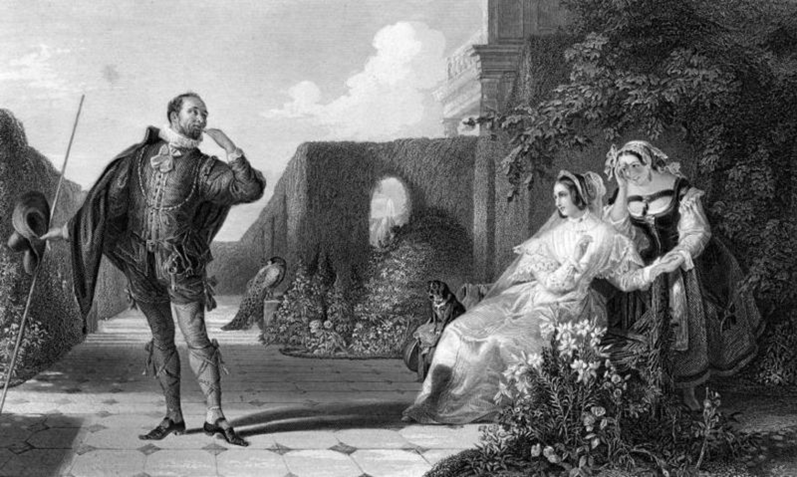
In addition to being a Saturnalian love comedy, Twelfth Night is also a Satyric love comedy. This play involves several aspects of Satyr. One example of this is the use of death. The entire story begins when Sebastian and Viola are shipwrecked. Both believe the other to be dead. Viola, being the first to arrive on land safely, and thinking that her brother is dead, strives to make a new name for herself and dresses herself in men’s clothing. Sebastian isn’t found for a number of days and eventually finds himself in Illyria, the same place his sister resides. The entire play is centered on death in the way that both siblings thought that their sibling was dead. There is an obvious sense of mortality throughout the play.
Twelfth Night is also considered a Satyric love comedy because it involves trickery, foolishness, and folly. Malvolio is the sort of character that lives to spoil the fun of other people. He enjoys revealing plans that were meant to be a secret. Sir Toby and Maria then strive to take the joy Malvolio gets from this away from him. They concoct a plan to write a false letter from “Olivia” expressing her love for Malvolio. Malvolio’s character completely changes. He does anything in his power that will attract Olivia and draw her attention, thinking that she loves him. He is in pursuit of something that he believes is true but everyone else knows is false. He acted as a fool, as Maria and Sir Toby acted in ways of folly.
Finally the play is a Satyric love comedy because it ends with the warning of doomsday. Twelfth Night ends with a song by Feste. This song discusses life. He sings about how life progresses. It talks about how things in life change and don’t make sense. It is a reflection on the play that precedes it. It discusses the wind and the rain and how some things matter but others will always remain the same. It talks about the mortality of man and how everyone is going to grow up, and therefore, everyone will die. Once again, the theme of coming death has weaved its way into the play.
Twelfth Night not only possesses the characteristics to be a love comedy, but it also involves the aspects of Saturnalia and Satyr. The Saturnalian aspects come into play when Shakespeare weaves in the idea of the holiday and the ending of the Christmas celebration. The Saturnalian aspects also include Viola’s dressing up as a man and being free from inhibitions and contempt. Satyr is involved because Shakespeare uses many dark elements in his comedy. The theme of death and doomsday is recurring. There is also a use of foolery and trickery. Because of these different aspects, Twelfth Night is considered a “Saturnalian/ Satyric” love comedy.
 Redeeming Pandora