
Monthly Archives: March 2022

“I am a part of all that I have met…”

Christopher Rush

All times I have enjoyed / Greatly

I have known for some time I wanted to end this journey with a reflection on where I have been and how I have gotten here.  That others have done this same thing for this final issue is the last in a satisfying series of co-incidents this journal has enjoyed throughout the years.  For instance, I knew going into the second year I wanted the fifth cover to be an homage to The Beatles’ White Album, and then Connor Shanley wrote an article about The Beatles.  Last issue, without consulting each other, Thorny and The Nighthawk both wrote about troubled youths.  It’s been an interesting journey these last three years, that’s for certain.  One can tell what I have been most pressingly interested in at the time — it’s almost been a kind of journal of my pastimes … in all that free time I have.  It’s time now, though, to go back even further, to see what influences have been strongest over the years.  These lists will not include family and friends, as that would be both unnecessary (as their influence has been far greater and more significant) and dangerous (for fear of leaving out someone important due to the vagaries of the memory).  Instead, to mine own self shall I be true and look at what else really matters: the games, music, movies, and shows that have helped shape the man I have become.  (By the way, if you are still waiting for that in-depth analysis of The Lamb Lies Down on Broadway, check out the frighteningly-impressive work of Jason Finegan, Scott McMahan, and other members of Paperlate on “The Annotated Lamb Lies Down on Broadway” at http://www.bloovis.com/music/lamb.html.)

The Games

The point of this, if one exists, is to mention and possibly briefly discuss the early, formative events, so the more recent games (Uncharted, Assassin’s Creed) will be left on the backburner.  Other games have already been lauded and mentioned in other articles, so consider new entries here as additions to earlier lists, not a supersession (I am in no way a supersessionist, as you should know by now).

Our first video game experiences predated the Nintendo Entertainment System.  We spent great hours learning and playing on the old Texas Instruments TI-99/4A system with cartridges that slid into the main front slot.  I got fairly good at TI Invaders, as well as a few other games not too many people still alive have heard of.  We didn’t have too many of the “classic” games, such as Frogger or Donkey Kong or BurgerTime, but we had great games that challenged our mathematic skills as well as hand-eye coordination, and we learned and played and had a good time doing it.  I wish we still had that machine and those games — they are more enjoyable and worthwhile than many of the games the kids play today.  Those days ended around Christmas of 1988, with the arrival of our Nintendo Entertainment System.

Super Mario Bros. 1-3, Super Mario World, Super Mario 64)

Our first game was Super Mario Bros./Duck Hunt, which was a great change, obviously.  Again, I wish we still had a working system (though I think my brother has a new console and still is playing the old games).  The first three Super Mario Bros. games were all different, which still impresses me, even though I know more about how they were made, how they were copies of this and that, and other ins and outs of the business.  That the creative team would do such drastic things with each new iteration of the series is far more creative and, if I may, courageous than most of the designers out there today, who simply cash in one golden goose without trying to invent or create beyond “improving CGI,” which is an oxymoron for another time.  I’ll never forget the first time I got to the last level of Super Mario Bros.  It was a Sunday afternoon, and Andy was hanging out, and I was so excited I ran upstairs to tell my mom I made it to the last level.  I ran back down, tripped over the controller cord, pulling the NES power cord out from the wall, shutting off the game.  That was rough.  I eventually got back and won some later time.  For many of us, though, the words “but our princess is in another castle” still brings an edge of frustration.  SMB2 was so different it was like a new kind of thing — not just a new game, but a new kind of gaming experience.  I remember Adam calling me when he got to the last level; I ran up the street to go to his house and watch him beat the game.  I have since beaten it as well, but the “it was all a dream” thing never sat too well.  The potions, the coins, the power-ups, riding the eggs … great stuff.  I usually play as Peach, which just makes sense, since you often want her flying/hovering ability far more than Luigi’s reckless jumping or Toad’s rapid uprooting skills or Mario’s averageness.  My first experience with SMB3, as for most, was the classic movie The Wizard, ridiculously underrated.  It looked so different: new power-ups, overworld maps, whistles … what was all this?  I first played the arcade version at Skate Country.  Goombas on wheels?  Flying capes?  This was intense.  The best part was not that it was easier (going from a cape, to big Mario, to small Mario, to dying) but that you could do more: the easier play allowed for more actual playing of the game, more things to do, more challenges and fun to be experienced.  When the SNES came a few Christmases later, naturally we played World quite a bit.  The added complexities, saved games, Yoshi, each addition made it worth playing and enjoyable.  The same can be said of 64 when that arrived a few more Christmases later.

A Link to the Past, Ocarina of Time

I certainly played Legend of Zelda, and even beat it a few times, but I never got too far into Zelda 2 — this is especially interesting considering my already-discussed penchant for RPGs.  I never really got into it, in part because I never owned 1 or 2, they were always borrowed or rented, and RPGs are tough to get into when not personally owned.  When A Link to the Past came along a few years later, I was deeply affected.  That may sound silly, but considering the game’s vast scope, its great story and characters, the driving themes of heroism and self-sacrifice and growing up, the overt contrast of light/good and dark/evil, it came at just the right time.  Let’s not forget the music.  I would definitely play Link to the Past right now if I could.  I’m sure I will set up the SNES and play it within the next two years, once we can get Ethan to stop pulling every cord he sees.  Likewise, Ocarina of Time is just about everyone’s all-time favorite if not all-time top 3, and deservedly so.  It’s such a rich game; it completely stands up to multiple playings — it is everything you could want in a video game.  It was the reason I wanted a Nintendo 64.  It came out when we were in college, but it was still in that early time when the ol’ high school gang still hung out together, and being at home to play N64 wasn’t too childish a thing to do, especially when you were playing Ocarina of Time.  I will certainly get this out and play it again and pass it on to my kids, if the Lord tarries.

  • Dragon Warrior 1, 4
  • Final Fantasy 1-3
  • ChronoTrigger

I don’t know if more needs be said about these classic RPGs.  I have discussed their influence and greatness other places, and to do them justice would require far more time than we have here.  I never owned Dragon Warrior 2 or 3, so I didn’t get too far in them when I rented them, but Dragon Warrior and 4 were enjoyed immensely.  We have discussed the Final Fantasy games already.  ChronoTrigger is another near-perfect game.  With multiple optional storylines, multiple ways to play and finish the game, the marvelous New Game+ option, not to mention the layers and layers of gaming and characters involved, ChronoTrigger is another all-time favorite.  If I could only play ChronoTrigger, FF3, Dragon Warrior 4, Ocarina of Time (or Link to the Past), and Super Mario Bros. 64 (or World), for the rest of my life, I could be thoroughly satisfied with them.  Of course, I enjoy the other games on this list, and everything else (and more), but those would quite possibly satisfy me.

  • Super Metroid
  • GoldenEye
  • Bases Loaded II
  • Déjà Vu
  • StarTropics
  • Stanley Cup
  • Super Mario Kart
  • Super Off Road
  • Breath of Fire II
  • Earthbound
  • Secret of Mana
  • Illusion of Gaia

These are both twelve representative games of that time long ago, as well as the dozen other games that probably took up the most of my time.  With TMNT 1 and 2, and, and, and….  Obviously GoldenEye came later than the rest, and that was a whirlwind of a success.  It was required for all college campuses, apparently, even those that didn’t allow tvs, and perhaps it still is.  Super Off Road was another Skate Country favorite, unless the bullies were around to make it not fun in any way.  I spent a great deal of time playing many seasons of Bases Loaded II and Stanley Cup.  I never got as far as I felt I should in Earthbound, especially considering its comical and slanted take on typical RPG aspects (hiding its thoroughly uncomical aspects).  Considering I prefer ketchup only on my cheeseburgers or cheese only on my pizza, I never got very good at using the condiments with my food.  I should break that out again (though RPG time is a rarer than a Future Enterprise).  Illusion of Gaia, despite being fundamentally unbiblical (in its “origin of life on Earth” message), was an annual favorite — so much so, for several years I required myself to complete it before going to bed every Christmas Eve.

Secret of Mana and Breath of Fire II were other non-FF or DW RPGs that had their quirks and distinctions that seemed worth my time, but I never had the dedication to follow them all the way to the end, but they are still worth mentioning as influential games here.  Super Mario Kart was one of those games I enjoyed without enjoying it, if that makes sense.  I played it, despite not being a fan of racing games.  I don’t like the tension or the timing … plus I’m not a fan of driving, so that is part of it.  But I still enjoyed it, in a way.  Maybe I just like winning.

I would certainly be eager to pick up and play Déjà Vu or StarTropics right this moment, if the opportunity presented itself.  I believe StarTropics is available for Wii download, but I refuse to play it on the Wii controller (and I’m not too keen on spending so much money for a “classic” controller).  Déjà Vu was different — I liked the challenge, I liked the detective aspect, I even liked the computer-like point-and-click mechanisms driving the game.  Maybe I wouldn’t like that as much now, though … perhaps I would play it again on the computer, or it does seem like it would be great Wii controller material.  I’ve been ridiculed for playing StarTropics, but I never minded that.  It was one of the first games I actually bought, and I was so excited about it — and it did not let me down.  I have been let down by games before (Kabuki Quantum Fighter, I’m talking to you), but this did not let me down, even with the totally far-out ending I did not see coming at all.  I never played the sequel, but I didn’t have to.  This was sufficient for a great experience.  And Super Metroid is … Super Metroid.  What else needs be said?

  • Ultima: Underworld
  • Wing Commander II: Vengeance of the Kilrathi
  • Indiana Jones and the Fate of Atlantis
  • Return to Zork
  • King’s Quest V: Absence Makes the Heart Go Yonder!
  • TIE Fighter
  • Robin Hood: Conquests of the Longbow
  • SimTower
  • Maniac Mansion II: Day of the Tentacle

Between the NES and SNES days were the computer days (which did actually continue beyond the SNES days).  These 9 games represent that period of time, though not too many else could be added here (beyond what was mentioned in earlier articles).  I would be willing to play any of these games right now, especially Ultima: Underworld or Fate of Atlantis.  Those are excellent games.  The rest, too, are great, but if I had to pick only two (for whatever reason), I’d pick those.  I’d have a difficult time picking between them, so please don’t make me do that.  I wasn’t very good with a mouse or joystick, though … bad peripheral vision, I suppose.

Obviously these are not the only games I played growing up.  Let’s not forget the many family game nights of Trivial Pursuit, Careers, Pit, Hail to the Chief, cards (and many more).  I could not list all the games I/we played, since many of them have been forgotten.  I played my share of Double Dragon, Battletoads, Marble Madness (I marvel sometimes how deep the anticipation for that game was), DuckTales, Jordan vs. Bird, Captain America and the Avengers, Double Dribble, NES Golf, a whole lot of Mega Man, Goof Troop, Chip ’n Dale Rescue Rangers, Adventure Island, Ogre Battle, Perfect Dark, et cetera, et cetera, et cetera.  I have written previously about many of the computer games of my youth, which need not be mentioned again here.  These are the most influential, really, as far as games that captured and expanded my imagination (though I’m possibly being a bit generous for Secret of Mana and Breath of Fire II).  I’m not sure Bases Loaded II really captured or expanded my imagination, but it was fun to play — though filling up pages and pages of password codes to remember my season progress wasn’t too much fun.  And yet somehow I still had time to study the Bible, spend time with family and friends, play sports, be outside, watch tv, read books … maybe there were more hours in the day back then.

The Music

I got “into” music rather late, in the sense in which you probably think of being into music — though I was surrounded by music almost continuously.  I spent more time listening to classic comedy than music (Jack Benny, Fibber McGee and Molly, Great Gildersleeve, Abbott and Costello, Martin and Lewis, Red Skelton, among others).  Thus, some of these influences have been more recent in their fuller maturity, but they are included here for the benefit of posterity.  As always, this is not an exhaustive list of my collection or influences, but these are the immediate “name the bands who’ve influenced you/you take great delight in” selections.

  • U2
  • Collective Soul
  • The Beach Boys
  • The Beatles
  • AC/DC
  • The Police
  • Sting
  • Rush
  • Genesis
  • Pink Floyd
  • Peter Gabriel
  • Phil Collins
  • Led Zeppelin
  • Moody Blues
  • Queen
  • Līve
  • Steve Winwood
  • Doobie Brothers
  • Dave Matthews Band
  • Journey
  • Def Leppard
  • Jethro Tull
  • Deep Purple

These fellows don’t need explaining, do they?  I’m not doubting we live in an age of contemporary musicians who have merit or skill or beauty in their souls.  I just don’t know who they are or listen to them, and I’m not going to start (unless you buy me one of their albums).  And no offense to the Rolling Stones or Aerosmith or Bryan Adams or Credence Clearwater Revival or The Kinks or the rest of the gang … you know I have many of your albums.  Yet these are the most immediate 22 groups/artists that I could easily rattle off if you asked me to.  Of course, if you asked me to, I just might change my mind and … never mind.  Deep Purple is still not in the HOF as of this writing.  Rush has only been in for a couple of months.  I don’t understand some people.  If you have created one of the top 3 most recognizable guitar riffs in the history of Rock and Roll, that alone warrants entry into the Rock and Roll Hall of Fame (and Museum).  Someday I might get into Fleetwood Mac, or The Grateful Dead, or The Eagles, but that may have to wait for less hectic season of life.  Let me know what that approaches, please.

The Movies

  • The Court Jester
  • Animal Crackers
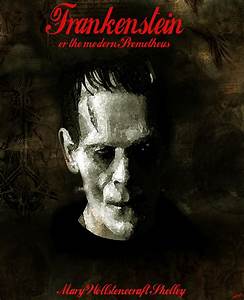
  • Abbott and Costello Meet Frankenstein

That’s the list.  You ask me what my favorite movies are I will tell you those three.  I could watch The Court Jester probably every day.  I don’t because I don’t want to wear it out (among other reasons), though I’m starting to suspect I couldn’t do that.  It’s not perfect, but it is about as perfect as movie as one can get.  Just when you think it has finished with great scenes and great moments … then the final swordfight scene occurs.  It is quite likely the best movie of all time — it is what movies are for.  I need to bring back, at least, the annual tradition of watching this on my birthday with my family and McDonald’s.  I will forever treasure that day with, well, the Class of 2010, let’s say.  That was a good day.  Animal Crackers, likewise, has its flaws, and I can easily go without the first few minutes and the last few minutes, but the parts in the middle, the parts with the Marx Brothers, are movie magic.  It’s intellectuality that surpasses almost all of the “academic excellence” of the past half century or so (I’m looking at you, Ivy League).  It is also very funny, just as The Court Jester is very funny.  They don’t make actual funny movies like these any more.  Meet Frankenstein is also superb, with some of the best Abbott and Costello moments in their career.  You can’t go wrong with these three movies.

Then there’s an ever-increasing tie for fourth place (not including movies we watch at school), some of which regularly receive a good deal of love from me:

  • The Good, the Bad, and the Ugly
  • It’s a Mad, Mad, Mad, Mad World
  • Star Wars IV-VI
  • Casablanca
  • The Adventures of Buckaroo Banzai
  • Indiana Jones 1-4
  • The Muppet Movie
  • The Great Muppet Caper
  • The Chipmunk Adventure
  • Fierce Creatures
  • How to Steal a Million
  • McClintock!
  • Dr. Strangelove
  • The Lion in Winter

This, too, could go on indefinitely, but this is the immediate group that springs to mind (somewhat) immediately.  Clearly just about any movie starring the Golden Age (or so) of film stars is worth knowing: William Powell, Cary Grant, Carole Lombard, Richard Burton, Peter O’Toole, Gregory Peck, Humphrey Bogart, Katharine Hepburn, Audrey Hepburn, Myrna Loy, Clark Gable, David Niven, Steve McQueen, John Wayne, Maureen O’Hara, The Marx Bros., Abbott and Costello, Martin and Lewis, Bob Hope, Bing Crosby, Peter Sellers, Rex Harrison, Jimmy Stewart, Doris Day, Julie Andrews, James Garner (and so on).

The Shows

  • Babylon 5
  • M*A*S*H
  • MST3K
  • Red Dwarf

That is most likely my top four all-time.  It will take something mighty impressive to break into those.  I have extolled their merits enough over the years, if not in writing then certainly in person, so nothing more needs be said here.  Don’t get me wrong — I’m one of the biggest Star Trek fans you’ll ever meet, so those are definitely lifetime favorites as well.  These are, as before, the best of the best, the shows that have given me the most happiness in a lifetime that has been mostly happy (which is said to inform not to brag).  The rest of this list is pretty impressive, too, I think.  You couldn’t go too wrong dedicating yourself to this list (give or take a few additions here and there).  This group has more recent works, but that happens sometimes.  You’ll notice the bias is far more heavily in favor of long-gone shows — which makes sense, remember, considering the whole purpose of this article is to revisit the things of the past that have helped shape my present and will continue to direct my future.

Science Fiction

  • Star Trek (all, but DS9 is my favorite)
  • Battlestar Galactica (recent)
  • Stargate SG-1
  • Lost
  • Farscape
  • Highlander: The Series

I grew up on Star Trek, pretty much.  That’s not a bad way to live one’s youth.  It took a while before we owned any: the beginning experiences were renting VHS tapes from the library.  Somewhere around the 25th anniversary, channels started broadcasting them, so we started recording them.  One particularly enjoyable summer I was allowed to stay up at night and pause through the commercials, enabling us to get 8 episodes on a tape instead of the 6 from programming it to record.  I have programmed quite a number of VCR recordings over the years, let me tell you.  Shortly thereafter, we started watching TNG, which was a good experience as well, again with me usually staying up to pause through the commercials then everyone watching it together the next night during/after dinner.  The only TNG episode I saw as a first-run show was “All Good Things….”  Better late than never, I always say.  We got in on DS9 from the beginning, which was a good idea, though we missed a few season 1 episodes here and there.  It seemed to be a Sunday night staple, so I stayed up and recorded it, and then we watched it usually the next day together.  I liked it from the beginning, though it took me some time to get as into it as I still am today, just as it took the show a season or so to find its own identity.  By the last season, I was in college, but I still was able to come home and tape it Sunday nights, since that was free laundry night, so I’d record it then drive quickly back to Emmaus before curfew.  I couldn’t make it all the way to the end of the season, though, so it was a few years before I finally saw the end, when my wife organized the whole family to get the set for me for Christmas.  That was a memorably Christmas break.  The Star Trek universe always seems to go well with school breaks.

Highlander is a good show that became a regular part of my early high school after school life, just as Adam West’s Batman had was a few years earlier.  I don’t think I had seen the movies yet, but I was into the show for some reason.  I even spent a fair amount of time programming my TI-82 to broadcast the theme song.  I probably should have paid more attention in Algebra II class; I admit that now.

Obviously Battlestar Galactica and Lost (another hard-to-quantify show) are more recent episodic experiences.  I didn’t get in on them from the beginning: I’m a bit of a late starter now, having been burned a few times on shows that should have gone on longer (see Brisco County, Jr. below, or Earth 2, or Space Rangers or Covington Cross or The Good Guys or Push, Nevada), but I’m glad they had the loyal fan base from the beginning to allow them to tell their entire stories from beginning to end.  Of course, if I had known Ron Moore was in charge of BSG, I may have noticed it earlier, but I’m here now, so it’s a success as far as I’m concerned.  Lost is better than many people give it credit for, and the last episode is not a disappointment (except for maybe the window and a few lines here and there): the last episode simply iterates more clearly what the entire series had been saying from the beginning, more or less.  Anyone who disagrees has wholly missed the point of the show, pure and simple.  B5 is better, but BSG and Lost are experiences worth having.

SG-1 is another show that became a fairly regular family experience but not until I was in college, so I didn’t get to see it too often.  I have them all on dvd, but for some reason every time I try to watch it through, I get stopped somewhere in season 4.  I promise I will do my best to get through the whole story.  And someday I’ll watch FireflyFarscape is certainly the most grown-up science fiction show I’ve ever seen to date, and it’s probably not for everyone, and it certainly did build upon the foundations of earlier sci-fi shows and would never have existed in a society less … well, the word “profligate” comes to mind, but it’s not that saucy (well, not every episode — it’s not for kids, really — but it’s a good show).  It definitely deserved its final season … it’s hard to forgive the Sci-Fi channel for prolonging SG-1 and cancelling Farscape, especially when it only needed one more season.  That may be a subconscious part of the reason I can’t push through SG-1.

Mystery/Action

  • MacGyver
  • I Spy
  • Adventures of Brisco County, Jr. (tough to categorize)
  • Nero Wolfe
  • Monk
  • Psych
  • A-Team
  • 24
  • Alias

Clearly this is a broad category.  24 and Alias are more recent shows, obviously (I was in on 24 from the beginning, though I haven’t seen every season; and I didn’t start watching Alias until after it was over), but they are still “good,” in their way.  It’s hard to wholeheartedly advocate for them, certainly not as easily as more family-friendly (most of the time) ’80s shows such as Remington Steele; Scarecrow and Mrs. King; Magnum, PI; Murder, She Wrote and the like, but they are enjoyable in their way.  I can wholeheartedly advocate I Spy and MacGyver, though — that’s easy.  I don’t know if you can find much of anything wrong with either of these shows, though I wouldn’t necessary let small children watch them (as can be said for everything on this list).  Top-notch shows, both.  The A-Team is another good ol’ show that makes you realize when you watch it again “oh, that’s a fair amount of stern language, and though no one really ever dies or gets shot, that’s a fair amount of violence.”  It’s not for legalists.  It’s hard to find much fault with the Maury Chaykin/Timothy Hutton Nero Wolfe mysteries, other than the fault of the show being cancelled three or four seasons too soon.  It will make you want to read the books and imagine them as the characters.  Surely you don’t need me to extol the merits of Monk or Psych (though clearly the earlier seasons of Psych were better on the whole than these last couple — it may have peaked in season 2).  Brisco County, Jr. was way ahead of its time.  If I told you the creative team who brought you most of Lost was responsible for BCJr., would that encourage you to watch it?  It is a part sci-fi, part western, part romance, all fun sort of show.  How often do time travel and westerns mix?  That’s right.  But Brisco County did it superbly.  The show tells a fairly complete story in its one season, but it certainly could have given us a couple more seasons worth watching, if only to resolve Dixie and Brisco’s romance.

Comedy

  • Barney Miller (somewhat difficult to categorize as well)
  • Cosby Show
  • Newsradio
  • Perfect Strangers

If you haven’t seen Barney Miller, go get the whole set.  It’s worth it.  The outfits will clue you in to ’70s fashion, and so will the theme song, but the show and its characters stand the test of time.  In an era that celebrates cops being above the law or just as dirty as the criminals they arrest (too many shows to mention), this is one show that values integrity, compassion, and justice.  You don’t need me to tell you about The Cosby Show, do you?  Like M*A*S*H, Psych, and Newsradio, season 2 of Cosby is a season I could watch pretty much every day and never get tired of it.  Newsradio is a modern classic ’90s sitcom with a who’s who of future stars and Kids in the Hall veteran Dave Foley and SNL veteran Phil Hartman (who sadly was killed between seasons four and five).  It’s one of those rare shows that is mostly clean and almost always family-friendly (provided your kids are not under 12), except for a couple of episodes here and there.  And it’s usually really funny.  Perfect Strangers needs to come out on dvd (beyond seasons 1 and 2).  This is an embarrassment to the entire industry.  It may have lasted a little too long, as some shows are wont to do, but it was a solid, enjoyable show from beginning to end, pretty much, with great moments, great lines, and, of course, the shower remodeling episode.  Get this out on dvd, people!

“Kids Shows” (Superior to most Grown-Ups Shows today, I warrant you)

  • Fraggle Rock
  • Muppet Babies
  • The Muppet Show
  • Thundercats
  • M.A.S.K.
  • Mysterious Cities of Gold
  • Pirates of Dark Water
  • SuperFriends
  • G.I. Joe
  • Transformers
  • X-Men
  • Batman (Adam West and The Animated Series)
  • Scooby-Doo (you could add most of the Hanna-Barbera family as well: Space Ghost, Birdman and the Galaxy Trio, Herculoids, Wacky Races, Laugh-a-Lympics, Thundarr the Barbarian, Josie and the Pussycats, Hair Bear Bunch, Hong Kong Phooey, Jabberjaw, Smurfs, Shirt Tales, Galtar, Pound Puppies, and a few more.  I could really go for some Shirt Tales right about now.)
  • Chipmunks, Heathcliff, Garfield, you know, the gang.

Have anything to say against these?  I didn’t think so.

British Invasion

  • As Time Goes By
  • Blackadder
  • Sherlock Holmes (Jeremy Brett, natch)
  • Doctor Who (original)
  • Cracker (Robbie Coltrane)
  • Prime Suspect (Helen Mirren)
  • A Bit of Fry and Laurie
  • Jeeves and Wooster
  • Whose Line is it Anyway? (UK edition, especially)

If you think American crime shows are intense, give the original Prime Suspect and Cracker a try.  If you want a decent, laid back, calm and quiet and thoroughly enjoyable show, watch As Time Goes By.  If you want intelligent, occasionally saucy humor (of a British flavor), watch Blackadder, WLIiA?, and A Bit of Fry and Laurie (I assume you don’t need me to tell you about Monty Python, though you should check out Beyond the Fringe or The Goon Show).  If you have never read P.G. Wodehouse, or at least can’t get enough Steven Fry or Hugh Laurie (and who can?), watch Jeeves and Wooster.  And Doctor Who is Doctor Who.  I haven’t seen too much of the reboot, and I’m sure it’s great, but until I see it, I can only speak about the original.  Jeremy Brett’s Sherlock Holmes is unmatched, no question there.  I’m not saying everything British is better than everything American, but they certainly are good at making and exporting culture.

Misc.

  • Pardon the Interruption
  • Centennial

Enough said.

You could easily add a few shows that I really was into for a time that we come back to once in a while: Cheers, Wings, Remington Steele, Scarecrow and Mrs. King, Dick Van Dyke Show, Mary Tyler Moore Show, Bob Newhart Show.  Recently we’ve been getting (back) into some older classics: Murder, She Wrote; Magnum, P.I.; Father Dowling; Andy Griffith Show; Little House on the Prairie; and others of that ilk.  I’m sure Bones and NCIS will remain family staples for a while, at least.  It sure would be nice to see ProStars and Hammerman again someday, too.

The Books, The Poems, The Plays

Come on, son.  Haven’t I given you enough book lists already?  Oh, you want the works that shaped me?  Child, please.  “If you don’t know me by now, you will never never never know me.  Oooooo….”  Break out a summer reading list.

That which we are, we are

Well, that was fun, huh?  There you have it: the pop culture side of me, give or take.  “More we could say.”  It has been a good ride, Faithful Readers.  I appreciate you spending some time with us over the years.  As the song goes, “Somehow I know we’ll meet again / Not sure quite where, and I don’t know just when / You’re in my heart, so until then … / It’s time for saying goodbye.”  Probably my least favorite song of all-time.  I’ve never been one for long goodbyes, so we should wrap this up before it gets too maudlin.

This journey is ending, but another one is beginning.  Such is the way of things.  “Come, my friends, / ’Tis not too late to seek another world.”  Hopefully this journey has helped temper our heroic hearts.  With God’s grace, we are being made strong by time and fate, not weak, “strong in will / To strive, to seek, to find, and not to yield” … strong to pursue faith, hope, and love.

Though we have said this journal was mainly about hope, it was also about faith and, most importantly, love.  I trust we have made that clear.

Now get out of here, and go pursue Truth, Beauty, Faith, Hope, and Love.

As always, we’ll be here for you when you get back.

We have always been here.

The Road We Leave Behind: Some Reflections

Nicole Moore Sanborn

It’s that time of year again … the time when the seniors are about to graduate, the juniors probably can’t wait for them to leave, moments are bittersweet, and this chapter we call “high school” is about to come to a close.  It is hard to believe I’m finishing up my last few writing assignments from Mr. Rush, taking my last high school math tests, rehearsing to perform my last high school play, and playing my last high school soccer season.  That being said, I wanted to take some time to look back on the past few years called “high school,” make some sense of them, and reveal what I have learned.  This is my farewell article.  Graduation is the ending of one chapter and the beginning of another.  It would be silly to say I didn’t learn anything in high school.  I learned a lot.  Between athletics, drama, schoolwork, and personal life, I’ve learned a few lessons.  But, what have I learned?

First, I would like to include some “poems” I have written in past years.  I say “poems” because many of them have no structure.  I suppose they would be free verse poems, in which case they are real poems.

I wrote this one during my sophomore year.  It is titled “Her Fight Inside.”  The goal was to resemble spiritual warfare as well as truth overcoming lies.  It is a rather depressing poem.  Whether or not we experience this particular fight inside our hearts, we will all end up, at some point in our lives, with some fight inside of us.  Truth vs. lies.  Granted, I did steal the title from the song “Fight Inside” by RED, one of my favorite bands.  Here it is:

I wrote this next one after a short-term mission trip to Philadelphia with five other people in my class.  We helped the homeless by working in a soup kitchen and bringing food to them on the street.  I wrote this one in 10th grade as well.  Before writing this piece, I had reached a point of slight brokenness in my life, because I was beating myself up about every little thing.  This one is called “Healing the Broken.”

Brokenness.  It’s everywhere.  All you have to do is turn around a corner and it almost suffocates you.  This is the sad epidemic that Philadelphia and many other places face. Brokenness.  You can find it all around you, everywhere.  You see someone smiling, yet if you look deep into their eyes you can see it.  A girl cracks a smile while inside she is dying.  She turns a corner and the tears flow.  Only when she’s isolated and alone does she let the brokenness show.  Most of us put up a façade of what we want people to perceive us as, when beneath that lies brokenness and scars.  People don’t realize how deep hurt can be, or how prevalent it is in a person’s life.  The only way we can heal the brokenness is first to detect it.  Take the song “Eleanor Rigby” by The Beatles, for instance… “all the lonely people, where do they all come from?”  Frankly, they’re everywhere.  Most of us are just too blind to see it.  If we weren’t so wrapped up in ourselves then maybe we could actually see it, and could then heal it.  Most of us put up that façade of happiness and fake laughter, while truthfully the night before we cried ourselves to sleep or our hearts just ache.  We tell ourselves that we don’t want others to see us broken, that we want them to see us strong.  Yet, if we are truly honest with ourselves, we do want people to know.  Not for pity, but for help and comfort.  We do indeed want somebody to know that we are hurting, so that they can help.  Most people are afraid to let someone in.  They fear transparency and vulnerability.  Yet, deep in their mind, they know that they need someone.  Brokenness is not hidden as easily as some believe.  In reality, if you just look deep into someone’s eyes you can see it.  So, why don’t we?  Why are we so wrapped up in ourselves and getting where we need to go that we can’t help someone else?  What if we looked into someone’s eyes, and asked how they’re really doing?  What if we extended the hand and told them we were there if they ever wanted to talk?  Would it have an impact?  I believe it would.

This next gem was written in 11th grade, during a period of happiness.  It was one of those days where I had inspiration to write, so I wrote.  I wanted to highlight attributes of God while crying out from the perspective of one who wants to heal the broken.  I also desired to reveal struggles some adolescents endure, struggles which aren’t always brought to light.  I entitled it “Help Us.”

The final piece I would like to share was written October of this school year.  I am actually very proud of this one, because it actually has a rhyme scheme.  I did not divide it into stanzas.  Some of the rhymes are rather silly, but bear with me.  It is called “A Reminder for when you Feel Weak.”

Now you’ve seen some of my previous writings and the intentions behind them.  But, what have I learned?  I have learned to solidify what I believe.  I have learned to persevere even through tough times.  I have learned God is sovereign.  He has taken every tough situation I have been through and used it to His glory and for His purposes.  My sophomore year was rough.  I was told many of my close friends were moving away.  Some of them did, but not as many as originally said they may have to move.  I attempted to accomplish everything without God.  I tried to rely on myself, because who else was going to get the work done?  Who else was going to do perfect, yes perfect, in everything?  My mindset became one of striving for perfection continually, without seeking God’s direction and help.  I did not see I could not be perfect and I could not accomplish life on my own.  My mindset toward myself was negative.  I was striving for a perfection that could not be obtained and made myself miserable for not obtaining it.  Every little mistake would trigger a string of negative phrases in my mind.  Why?  Because I stopped seeking God and trusting He would get me through the situation.  I took matters into my own hands, thinking that would fix it.  I stayed away from God because He was taking my friends away.  He was taking the people I cared about away from me, and because of that, I was mad at Him.  So I stopped seeking and decided to take everything on alone.  It took many strained relationships, mental breakdowns, and almost bad decisions before I realized what I had done and why.  Then, I turned around.  I started seeking God’s direction again.  Life got a little bit easier.  I stopped beating myself up every time I made a little mistake.  Strained relationships were gradually healed.  While in those situations, I did not see the good in them.  Looking back, I realize what I learned.  I learned it’s okay not to have all the answers.  It’s okay not to be perfect.  Vulnerability is okay.  Hiding my brokenness will not fix it.  Suppressing the hurt and not allowing others to help does no good.  Even when things get tough (not extremely tough, because I hadn’t gone through a traumatic or life-altering, painful event), God still has a plan.  My brokenness showed me the sovereignty of God.  I remember a phrase a Summit graduate once told me: “Sometimes God has to put you so far down, the only way you can look is up.”

Fast-forward to junior year.  I learned how to trust God even more with my stress.  Junior year was stressful, yes, but with God, it can be handled.  God definitely helped me out with my stress issues.  I learned to trust that He would stretch my time and heal my anxiety.  I continued to learn the unattainability of perfection.  I learned how to challenge myself without stretching myself too thin.  God really blessed me junior year with great relationships, new friends, as well as academic success.  My soccer season was really awesome as well.  I began to love myself for who I was, for who God made me to be, instead of striving for what I could not attain.

What did I learn senior year?  I learned how to trust God even more.  I learned it’s okay not to be the absolute best.  I learned I would not be accepted into every college I applied to.  I learned to cherish those special moments with friends, because time is short.  I learned to revel in the sweet moments, learn from painful moments, and to always keep going.  I learned how LOUD Americans are, and how many people we can fit into one overnight train car.  I learned more than I ever thought I would in a whirlwind European adventure.  I saw exciting and famous artworks and buildings.  I discovered different cultures and realized America has more good things to offer than I previously believed (free bathrooms and water, anyone?).  I learned I could successfully write a senior thesis, the daunting graduation requirement which connotes a much scarier image than is necessary.  I learned everyone’s futures are different, and realized I may never see some of my classmates again.  I realized my class will say “We’ll keep in touch!  Friends forever!” when I know it will not be true.  I learned to be secure in my faith.  I strengthened my faith through 12th grade Bible.  Learning about other worldviews and realizing how devoid of hope and inconsistent they are really solidified what I believe about Christ.  Senior year was amazing, and I learned so much.  I guess this is farewell…

Farewell to you, the future leaders of Summit.  Farewell to morning classes in the youth room (couches!), farewell to cramming three people into a table during class, farewell to the café, to high school drama programs.  Farewell to explaining to people exactly what protocol training and soirée are, and why we have predetermined escorts.  Farewell to our soccer team’s beloved “Clunker,” and to the bus which seemingly breaks down on every Freshman Trip, a trend my class started.  Farewell to discussing Bigfoot in history class, to watching theological debate videos, to walking across a tiny school to get to class.  Farewell to Predestination vs. Free Will debates at any time of the day in a private Christian school.  Farewell to high school athletics, to Ministry Teams, to watching funny and odd videos in the café.  Farewell to the babies crying during Mom2Mom while we are in class.  Farewell to explaining exactly how Summit works to outsiders, farewell to being called “Summiteers.”  Farewell to playing outside during English class in the middle school years.  Farewell to our beloved retreat and Triple R Ranch.  Farewell to school hosted service projects, to days of literally scrubbing the school walls.

The Class of 2013 is leaving a lot behind.  Yet, we look forward to what is ahead.  But, what is ahead?  Uncertainty, new friendships, independence, tested faith, and transformation are what lay ahead.  Meeting new people, without the labels we received in our elementary, middle, and high school days (Oh! You’re the girl who ________ in ___ grade!).  I plan to remember a few wise words of advice given to the Class of 2013.  We will be tempted, and our faith will most likely be challenged.  We will be thrust into the unknown, will be challenged, and life will change.  Decisions will have to be made.  People will change.  Our futures will begin to be shaped.  I believe high school is not only about learning facts and figures but also about discovering independence, learning life lessons, and implementing the facts and figures into our experiences (though you may think you don’t use what you learn in school, you do).  I look forward to what is ahead.

Farewell, readers….

“I’ll Have the 8-Count Nugget, Please”

Amelia Sych Achée

Well, here it is.  We survived another year together.  We have persevered through the blood, sweat, and tears (literally) this school year has brought and fought to the end.  The end; I have dreamed of it for so long, countless years at the upper school.  Among the scents of Clorox, Windex, and Goo Gone, one smell overpowers good ol’ PCC that last day of school.  That, my comrades, is the smell of victory.

Even more pungent is the odor of that sentimental day of which every summit student dreams.  It’s a day full of speeches, farewells, and heels clicking across the gym stage.  No silly, not the ring ceremony … Graduation!  Two weeks before this grand day, I sit sipping my country peach tea, breathing in its glorious peachy scent.  And I wonder, what scent am I leaving behind as I dash off to my future?  When Summit remembers the Class of 2013, will we be known for the pleasant scent trail toward success we left for rising school leaders?  With this in mind, it only seems fitting I leave behind some bits of wisdom for posterity.  Take a deep breath: 8 nuggets of wisdom coming your way!

Swallow That Word Vomit! 

It comes in many forms.  It can be a “can you believe what she’s wearing?” or a “did you hear what he did last weekend?” or even “he’s such a ….”  We all know how it goes.  At some point we have all gossiped and been talked about behind our backs.  And it hurts … everyone.  I’m keeping this one short and sweet: don’t gossip, and when you do, make it right.  Take responsibility and apologize to the person you talked about.  And if you are the victim, do not “backfire gossip.”  It only tangles the web of jealousy, anger, and confusion even further.  Approach the person.  Furthermore, do not start a “gossip war” like we did in seventh grade.  No one escapes unwounded, and everyone crawls out with their own bag of regrets.  Here’s a tip I use: before you speak about someone, ask yourself, “Would I feel comfortable saying this in said person’s presence?  Would they?”  If the answer is “no” or even an “eh…,” just do not say it.  It is for the best.

Negativity: The Virus That Kills

For some it is a grand mountain to scale, for others a pebble to kick out of their path.  Nevertheless, negativity is a necessary parasite everyone must kill.  It is a pesky little virus, negativity is.  One minute you entertain a negative thought, the next “the trees are bare and everywhere the streets are full of strangers.”  Negativity is easiest to kill when it is small.  You see, negative circumstances (and negative people) will inevitably walk into our lives.  There is nothing we can do to avoid negativity around us.  However, we all have the power to be positive.  Rule of thumb: when you have a negative thought (about yourself, another, or a circumstance) speak the opposite.  If you do not, that little monster will gain ground faster than Bigfoot in the Boreal Forest.  Use scripture, use your friends, but just don’t give in!

Lauren Conrad Does Not Know Everything

Okay girls, we have all been guilty of this one.  While beauty magazines can be tempting and often offer some good advice, they are not the ultimate source of wisdom they may appear to be.  Not too long ago, I discovered an amazing designer named Lauren Conrad.  Her clothes were a perfect match for me, and her jewelry was unbeatably cute.  Even greater was my excitement when, one day while wandering through Target’s book department, I came across an LC style book.  An entire book filled with LC’s favorite beauty secrets.  For months, I pranced around dribbling LC beauty tips on all victims, willing and unwilling.  Then there came the day: one of her beauty tips did not work.  INCROYABLE.  How could I have been so wrong?  Listen, here’s the point: people like LC and the writers of your favorite magazine (Sports Illustrated, guys???  My apologies, I don’t know what you guys read) can offer some great tips in certain arenas.  However, do not put all your eggs in one basket.  Other people (like your parents) can offer even more valuable advice about life and beauty (and…uh…manliness???).  Be open to what they have to say.

Mom and Dad Are Not Stupid

“It’s a phase,” everyone says.  “Everyone thinks their parents are stupid at one point or another.”  While this is a phase most teenagers go through, let’s at least go about it with the right attitude.  Maybe you have a great relationship with your parents, maybe not so good.  No matter, at some point in everyone’s adolescence it will feel like mom or dad just doesn’t get it.  At these times it can be easy to discount their authority, rebel, and “vent” to your friends over Facebook.  Believe me: none of the listed options will help the said situation.  In fact, they will make things worse.  Take a deep breath.  Calmly and respectfully try to explain your side of things to them.  And if they just are not “seeing the light,” obey them.  It is hard to imagine sometimes, but our parents have been around a lot longer than we have.  They have much more experience than us newbies.  Think about it, they may actually be (duh duh DUH) right.  Even more, let’s not forget God calls us to honor our parents.  Exodus 20:12 says, “Honor your father and your mother, that your days may be prolonged in the land which the Lord your God gives you.”  And it’s not because mom was in labor with you for 32 hours, or because dad was up holding a crying baby countless nights, although our parents do often remind us of their sacrifice.  It is, like all God’s other laws, good for us.  He reminds us of this not because He likes seeing us struggle, but because He loves us.  When we honor our parents, God sees it, it pleases Him, and we reap the harvest of our self-control.  So, let’s honor our parents by obeying them, forgiving them, and speaking well of them with our friends.  It’s well worth it.

The Best Two Weeks of Your Life

Ahhh…the senior trip.  So many fresh memories flood my mind at the mention of our great international adventure.  If it is an option for you financially, GO!  Now many in the past have not gone by choice, and I respect that.  The senior trip may not be for everyone, so no judgment by any means.  However, in my opinion, if you go with the right attitude (you are there to learn. You are not on vacation), you will walk away with great experiences you will cherish for a lifetime.  I highly encourage you to go!

Respond to God

One of the greatest lessons I have learned is all my actions toward God should be, in their rawest form, reactions to what He has done for me.  It can be easy to fall into the “routine” of Christianity: attend church, go to school, read the Bible, sing, pray, repeat.  Just let me share with you, doing these things out of solely religious tradition will leave you feeling empty, lost in the cycle of “dos and don’ts.”  This, my friends, is not the place God ever intended us to be.

At this moment, God is pursuing you (Hosea 2:14-17, Luke 15:3-7).  Respond to God because His love chases after you (Psalm 23:6, 1 John 4:19).  All that to say, pray and read your Bible.  Discover God’s continual pursuit of you (Yes, He still pursues you after you are saved).  He wants you to feel and experience Him, so give God a chance to reveal Himself.  It helps to take time out of each day (like 15 minutes) to read your Bible and pray.  Ask God to reveal Himself to you in a more real way, and He will.  So much could be said about this, but I must move on….

When Sweet Friendships Go Sour

Unfortunately, I am well versed in the art of “friendship reconstruction.”  Don’t get me wrong, it is an important art to be versed in.  However in this case, no matter how beautiful the end, the means are made no less painful.  Most fights come down do this question, “do I value being right more than I value this friendship?”  If the answer is “yes,”  let the relationship go.  If the answer is “no,” talk to the person immediately (in person).  Explain how you feel, agree to disagree, and move on with the friendship.  Oh, and one more thing: Do not give up on a friendship too quickly.  I fought for a couple years with the girl who is now my closest friend.  Restoration is worth it!

Take Time to Smell the Roses

Finally, we all look forward to graduation, but do not forget to cherish your time in high school.  Okay, I am not telling you to enjoy homework, but Summit is an incredibly unique environment and high school has its perks.  Enjoy being with friends every day.  Enjoy the field trips and freedoms that come with growing up.  Hold dearly the good times you have, and do not focus on the bad (especially if you go on the Europe Trip).  You only go through high school once, so make some awesome memories.

Also (this relates back to the negativity section), it is easiest to find fault, but takes character to see good.  Spending all day, every day in a small Christian school, one can get easily caught in what I call the “web of complaints”: “But why uniforms?  Why all this homework?  What??  My skirt was not even that short!  If that wasn’t memorized, I don’t know what is!  THAT’S NOT FAIR!!”  Yes, indeed, I believe we all know what the “web of complaints” feels like.  Pointing out flaws is easy.  Anyone can do it, and many do.  However, you will find the roses way more pleasant to smell, if I may, if you focus on the good.  We go to a Christian school where we are not ridiculed for our faith.  We have teachers who actually care about our well-being.  We get a killer education with opportunities we often take for granted.  If you need to, make a list.  Just smell those roses!

Well folks, there you go: an eight-count nugget, fried in the oils of experience.  In all seriousness, though, these eight things have helped me in my time here at Summit, and I believe they will help you as well.  Do with them what you wish, just leave some for everyone else, feel me?

Yours truly,

Emmy Sych

Terror from the Skies … and the Table! The Nighthawk’s Top 1,000 Picks for the Discerning Palate

Audrey Livingstone

Ask, and you shall receive.”  You asked for it, and here it is: by popular demand, Audball’s fav foods!  For years now, I have been a self-proclaimed “foodie,” as the kids say.  So, I figured in order to go out with a bang from the good ol’ schol journ, I would grace you all with a list of all the best restaurants, and my favorite meals from each.  Here goes nothing!

Carrabba’s

For any of you who may be unaware, Carrabba’s is a lovely Italian restaurant located in Newport News near Patrick Henry Mall.  I don’t believe they serve authentic Italian food (having spent a week in Italy a month ago, I am qualified to make this distinction), but it’s all quite yummy nonetheless.  The atmosphere is relaxed and classy, and the service is great.  I often start off with an order of fried zucchini, which I absolutely love.  If you like zucchini, it’s perfect; it adds a bit of crunch with the fried breading and a bit of tang with the dipping sauce.  Then I take a plate of Pasta Weesie, a creamy seafood pasta dish.  I don’t normally order dessert, mostly because of the bread they serve before the meal, which is always fresh out of the oven and comes with a variety of herbs and olive oil.  Next time you’re near Carrabba’s, give these babies a go!

Outback Steakhouse

Ah, Outback: an escape to the land of the Aussies.  This is definitely one of my all-time favorites.  It’s the perfect place to go for a celebratory steak.  Now, we all know the ages-old debate over whether Outback Steakhouse or Texas Roadhouse is better; my opinion (the only one which matters, really) is clear.  So, once I sidle into a comfortable booth with my family or friends, the first order of business is getting some good old cheese fries.  Who cares that they’re one of the most calorie-filled meals in America?  Live a little!  They’re much too delicious to pass up.  These cheese fries, are, in my opinion, the best variation of fries; they’re topped with both cheese and bacon and served with a spicy ranch.  After the cheese fries are gone, I usually go with a nice sirloin, garlic mashed potatoes, and steamed vegetables, though I have also been known to order the steak focaccia sandwich and fries.  Then the big guns come out.  My friends, if you’ve never had “Thunder from Down Under,” hop in your car and head on over to Outback right this moment.  Thunder from Down Under is a hot, homemade brownie topped with ice cream, whipped cream, and hot fudge sauce.  This is no ordinary brownie sundae; it has a certain … je ne sais pas.  I really can’t explain why it’s so good.  You have to do yourselves a favor and try it.

Bonefish Grill

I gotta say, there’s really only one thing that keeps me coming back to Bonefish.  First is the Bang Bang Shrimp (!!!).  Just a little tip: go on a Wednesday if you’re going to get Bang Bang Shrimp, because you can get it for just $5!  Anyways … this dish is something I crave at least once a week.  It’s small shrimp that’s breaded and fried, so it’s nice and crispy.  Then, it’s tossed in a nice spicy sauce.  As the fine print at the beginning of this article says, these suggestions are for the discerning palette; this dish is not for the weak.  It’s not overly spicy for myself, but it may be for some of you.  Have a glass of water handy.  To complete the experience, eat your Bang Bang Shrimp with chopsticks.  That’s really the only way to do it.

Panera Bread

Panera Bread really is a classic.  This place is perfect especially for young people, I’d say high school and college students, because there’s free wi-fi, and it’s got a nice calm, café feeling to it.  It’s perfect for working on homework by yourself or meeting up with a group to get some studying done.  But enough of that, let’s get on to the good stuff!  I suggest the “You Pick 2” deal, where you can pick two from their menu of soup, salads, and sandwiches.  I normally go for the chicken frontega sandwich and French onion soup.  The chicken frontega has juicy chicken, melted cheese, and the perfect amount of onion and tomato, all slammed onto some bread and thrown onto their well-seasoned Panini press.  The French onion soup is quite classic: just salty enough, with the perfect amount of bread and cheese.  Studying’s not so bad at Panera!

Plaza Azteca

You’re not really a part of the Summit community unless you’ve been to Plaza Azteca.  I personally have a craving for Mexican food that runs through my veins at all times; I’m not quite sure if that’s just me, or if any of you experience it as well.  Either way, let’s give this a go.

I always get one of two things at Plaza: the steak fried rice or the chimichanga dinner.  These are the two best things on the menu; I promise you.  Now, what you choose from these two is completely dependent upon how hungry you are.  If you’re ready to seriously chow down, go for the chimichanga dinner.  There are two chimichangas, which you can order either fried or soft and with either chicken or steak (I personally get them fried and with steak), and they’re then drizzled with a delicious queso sauce.  Then they throw rice and beans in the mix  Whoa!  That’s just a bonus, really.

If you’re thinking that’s too much food, that’s okay.  There’s always the steak fried rice, which hits the spot every single time.  It’s their signature rice and queso mixed with steak, which is pan fried like they do for the fajitas.  Order one of these two babies, and you’ll be a changed man/woman.

Five Guys

Five Guys is the best burger joint in town; it’s my not-so-guilty pleasure.  Sure, it’s greasy, but that’s more than fine every once in a while!  Just a little nugget of info before you head in: a regular burger has two patties and a little burger has one.  I obviously get the regular burger most of the time, and I suggest you do the same.

One of my favorite things in the world to eat is a nice bacon cheeseburger, and Five Guys just gets it right.  The burgers are perfectly juicy; the cheese is perfectly melted; the bacon is perfectly crispy.  Not to mention the Cajun fries are a perfect complement if you’re looking to really round out the meal as a whole.  I’ve gotten this nearly every time, but as a nice graduation pressie (to me, from me) I’m going to be adventurous and try something new; à la Macy Eskew, I’ll get a bacon cheese dog (yes, you read that correctly: a hot dog with bacon and cheese) with jalapenos!

Hayashi

Two words: sushi boat.

Oh no, the sushi boat is no myth.  It’s literally a boat filled with sushi.  What more could you ask for?  Not only is sushi healthy, it’s just really delicious.  Once you get past the idea you’re biting into a little fish, it makes for quite a lovely meal!  The texture of the sashimi is smooth, the beds of rice are perfectly cooked, the crab and shrimp rolls perfectly proportioned … mmm, I’m getting hungry just thinking about it.

Can Can Brasserie

Can Can Brasserie is the loveliest French restaurant in the area.  If you’re ever near Richmond, I insist you stop there.  It’s right in the middle of the hustle and bustle of the city and on the corner of a cute street with antique shops and old cinemas.  I’ve only been twice, but it was so good both times I went I consider it one of my favorites (that, and I just really love all things French).  The atmosphere really is quite European; it’s not too noisy, and people really take their time during their meals to enjoy what they’re eating.  The only thing about this restaurant that’s American is the portion size (I’m not complaining)!

When I made my first appearance at Can Can Brasserie, I ordered a steak with a red wine sauce and glazed onions, which came with shoestring fries (I can’t remember the exact name of the meal — oops).  The steak was cooked perfectly, and I love red wine*; it was the perfect meal.  I really don’t know what else to tell you; the Can Can Brasserie is not just a restaurant … it’s an experience.

Well, there you have it.  Of course, this only really scratches the surface of my top picks, but I didn’t want to overwhelm any of you.  Have a grand time making a proper culinary tour of Hampton Roads!

*Editor’s Note: Redeeming Pandora does not condone the consumption of alcoholic beverages, especially red wine, unless one is having hash for dinner or eating corn on the cob with one’s feet.

The Christian Response to Abortion

Kaitlyn Thornton Abbott

As many of you are quite aware, as made evident by my thesis, I am extremely pro-life: in every scenario.  I think life deserves to be valued at every cost, seeing as it is a direct gift from God.  My conviction goes beyond emotional belief, and to the point I will have Micah 6:8 tattooed on my body.  As a Christian, my beliefs are obviously founded in God’s word and proven true by science.  But as a Christian, one has to wonder what the Christ-like response is to abortion, those who perform and have them, and those who advocate the idea.

There are many viewpoints one could take up, and frankly, the viewpoint each one chooses is going to be a direct reflection of what is in his or her heart.  For example, if one chooses to see all those who have committed abortions or who have had abortions are murderers, then his viewpoint is one founded in hate, not in love.  On the other hand, a viewpoint founded in love will react with grace and understanding and forgiveness; just as Christ has already forgiven all of our debts.

The Church has one main job, with many other jobs and missions branching out from that.  Our main job, as the body of Christ, is to “Go and make disciples of all nations.”  But one of the main jobs the church has to do is look after the orphans and widows (James 1:27).  But another job we have is seen in Micah 6:8: “What does the Lord require of you?  To seek justice, to love mercy, and to walk humbly with your God.”  As we can see, we are expected to seek justice.  We are to seek justice for everyone — whether they are slave, free, black, white, young, old, rich, or poor.  As the Church, it is our duty to find true justice — Biblical justice for every man, woman, and child.

Proverbs 31:8-9 says, “Speak up for those who cannot speak for themselves, for the rights of all who are destitute.  Speak up and judge fairly; defend the rights of the poor and needy.”  As the Church, it is our job to speak up for the unborn, seeing as they cannot speak up for themselves.  They are young, just as much as they are poor and needy.  They have become victims — ostracized for being too little, too helpless, not the “perfect” child.  The Church’s mission in our world of hate and glorification of perfection is, and needs to continue to be, to speak up for them but in love.

In love.  Isn’t that the key?  When you hear of a pro-life protest, many conceive the notion of people outside, marching along, with pictures of aborted fetuses on them.  And that is a very accurate picture.  Many radical pro-life believers will go to that extreme (funnily enough, studies have been done that show this method is less effective in reaching the target people group instead of building a meaningful relationship with whom you’re trying to minister).  The Church, as a whole, and the individuals of the church, have the duty to protest, but respectfully, and still hold our Savior high.  People in today’s society tend to respond with hate and act repulsed by a woman who has had an abortion.  This is not the way to act!  Yes, we as the Church hold the belief life is a sacred, good blessing from God.  But we also believe we have been cleansed from our sins.  What does it say of the church if we, as the body, refuse to act as the church ought to?

A woman who has had the trauma of having an abortion goes through a turmoil of emotions.  She is alone, she feels violated, she feels as if she has no support, she feels disgusted with herself; she feels guilty, she believes, if even for a time, that she has killed her baby.  As the Church, why do we continue to make women feel this way?  Now, I am in no way advocating the acts they have done — I see them as morally wrong; I do believe a life was being taken.  But we are called to forgive!  Jesus said in his parable:

Then Peter came to Jesus and asked, “Lord, how many times shall I forgive my brother or sister who sins against me? Up to seven times?”  Jesus answered, “I tell you, not seven times, but seventy-seven times.  Therefore, the kingdom of heaven is like a king who wanted to settle accounts with his servants.  As he began the settlement, a man who owed him ten thousand bags of gold was brought to him.  Since he was not able to pay, the master ordered that he and his wife and his children and all that he had be sold to repay the debt.  At this the servant fell on his knees before him.  ‘Be patient with me,’ he begged, ‘and I will pay back everything.’  The servant’s master took pity on him, canceled the debt and let him go.  But when that servant went out, he found one of his fellow servants who owed him a hundred silver coins.  He grabbed him and began to choke him.  ‘Pay back what you owe me!’ he demanded.  His fellow servant fell to his knees and begged him, ‘Be patient with me, and I will pay it back.’  But he refused.  Instead, he went off and had the man thrown into prison until he could pay the debt.  When the other servants saw what had happened, they were outraged and went and told their master everything that had happened.  Then the master called the servant in.  ‘You wicked servant,’ he said, ‘I canceled all that debt of yours because you begged me to.  Shouldn’t you have had mercy on your fellow servant just as I had on you?’  In anger his master handed him over to the jailers to be tortured, until he should pay back all he owed.  This is how my heavenly Father will treat each of you unless you forgive your brother or sister from your heart.”

(Matthew 18:21-35)

Here we stand — we are liars, we are thieves, we have hate in our hearts (so essentially, we are murderers), we have looked at the opposite gender with lust; we are sinners.  What is just for our sins?  If justice were to be served, I know I’d be burning in Hell.  Our sins are NO better than the woman who has suffered from an abortion, and it is time the Church stands up and welcomes those women into the body with open arms and open hearts.  Our job is to cherish and forgive — just as we have been cherished and forgiven.

People tend to forget about the doctors performing the abortions; instead, our fixations tends to be on those who want the crime being done, not necessarily on the one committing the actual crime (because, technically, the woman is drugged and has no control of what happens).  However, we are not to deem them unworthy, either.  Even the most holy man, the most Godly pastor, is unworthy to stand before God — the Church needs to stop condemning people to Hell because of their sins.  Yes, they have sinned; but so has everyone else on this planet.  Until the church steps up, and opens its arms, and its doors, we can have no hope for the ending of abortion.  Our job is to pray, without ceasing, for God’s justice to be done on this topic.  Our response needs to be in love.  We are a Grace-centered community — not because of us, but because of what’s be done for us.  It’s time the church emulated that response.

Indie Game Development

Jared Emry

Independent video games, or indie games, have started to receive more attention since about 2005.  Indie Gaming and Development has become a popular hobby for many people.  Some popular indie games include Uplink, Minecraft, and Amnesia.  Indie games are created by individuals or small teams and are therefore different from the typical game created by the larger companies.  Instead of hundreds or thousands of people working on a single project, there could only be a handful of people working on a game.  These individuals may work alone or gather a small team to build a game.  This is a guide to developing such a game.  There are three parts to a good game that must be observed: concept, aesthetic, and gameplay.  Indie games are partially unique by the fact anyone can create one, which creates a demand for guides such as this.  The concepts of this guide could very well guide the creation of any game and therefore the indies as well.

Indie games are often conceptually unique in the industry.  Uplink, for example, mimics a new operating system on your computer as you play the part of a freelance hacker.  PC Format called it, “A true original, paranoia has never been so much fun….”  In the game you have to upgrade your computer, get new software, and try to become an elite hacker.  The player roams the Internet (a fake in-game Internet) and hacks corporate and government systems in an effort to fulfill anonymous contracts for money.  The player can choose which side to be on as the story begins; will he help ARC create the virus known as Revelation, or will he help Arunmor make the counter-virus, Faith.  The player can even work for both corporations at the same time.  The game is done in the style of hacking seen in Hollywood and is truly unique.  Indie games must be conceptually unique.  This does not mean the game needs to be experimental, like Slave of God; the game merely needs to be original.  For example, Slave of God is an experimental game that relies on psychedelic textures and flashing lights to provide a unique gameplay and maybe a seizure.  Experimental games are usually radical departures from orthodox gaming.  Another example of an experimental game would be a game known as Roulette.  Roulette is a video game that consists of video segments of actors acting out a game of Russian Roulette.  The player takes part in the game of Russian Roulette against an actual video.  This game relies on the dark suspense of Russian Roulette, but without anyone being harmed in the process.  Vesper.5 is another experimental indie game that has become popular.  It tries to portray the concept of ritual.  The game is designed in such a way the player can only take one step a day through the game’s world.  The game takes a minimum of 100 days to complete, so it requires the game to be treated ritualistically to be completed.  What David Reimer once said is still true, “Reinventing the wheel is a trap.”  Trying to make the next Polybius may be a high and mighty goal, but changing the basis of something is no easy task.  Certainly experimental games can be successful and earn a cult following, however the wheel does not have to be reinvented for a good indie game to be created.  Being innovative is good, but don’t strain yourself trying to make something entirely new.  The concept is the broad view of the game: it contains the game’s world, mythologies, and the characters that inhabit it.  Don’t let the effort of forever trying to come up with something new under the sun stop you from creating a concept at all.  Work with what you know and then expand.  The indie game must be conceptually unique or original.  Start with the orthodox form of a typical game in the genre you want to work with.  If you are making a first-person shooter, then you might want to play Doom, Wolfenstien3D, or Quake; those games are the basis of the modern first-person shooter.  Use the form (but not necessarily using the same engine) used for those games.  The form is really just the basic flow of the game’s plot and how its story is typically told.  From this basis the story is woven.  The concept contains additions to the form and its originality.  The concept can range to just about anything.  Once you have started working with more orthodox concepts, the unorthodox will probably be easier.  The concept is just an idea that can be manifested into the game.  The better a developer is, the better concept he can use to symbolically portray the concept in the video game.

The second part is the aesthetic component of the game.  Some indie games like Amnesia have AAA-quality graphics, however this is not necessary.  The graphics need to match the game.  Amnesia’s AAA graphics were suited to the game, which is part of what made it so good.  Amnesia used light effects and foggy aesthetic touches to maximize the game’s suspense and horror.  The music it used fit the old castle with its creepy undertones and sound effects.  Amnesia could not have been done in 8-bit or 16-bit; it had to be done with a certain level of graphical (and audio quality) sophistication or else it would have lost the elements that made it so good.  Uplink’s menu-based system similarly relied mostly on just pictures that popped up when a button was clicked.  These graphics were equally stunning and fitting to the game, and the music made you feel like a hacker.  Uplink also relied on these aesthetic qualities for the game, but they were not the same graphics that Amnesia used.  Uplink’s concept would simply have not worked in an Amnesia aesthetic.  Similarly, all game concepts must be linked to an appropriate aesthetic.  If you want to make a sci-fi, you need sci-fi-looking stuff and sci-fi-sounding stuff because belief cannot be totally dismissed from the game.  The aesthetics must capture the belief of the player.  Capturing belief does not rely on the realism of the graphics but on consistencies.  An 8-bit sci-fi game would be unbelievable if the graphic for a sword was used instead of a ray gun; the same holds true for all types of graphics.  A sword simply is not a ray gun.  The belief can be captured by trading out the sword for a graphic of a gun.  It needs to be understood the graphics are a symbolic representation of the world of the game.  The game does not need to be as realistic as possible because the graphics are merely symbolic.  The game is not in the graphics; it is in the concept.  The aesthetics are the symbols used to portray the concept.  The game must use the aesthetics that best portray the concept.  The graphics should not be understood as simply one texture (or group of pixels) moving across another because a computer script simply moves it, but as a representation of a life with its own background and mythology.  The story told is real.  The aesthetic links the concept to the player.  The indie game, Space Funeral, uses a 16-bit graphic and a similarly situated soundtrack to create a disturbing yet comic aesthetic.  If Space Funeral had been in Amnesia’s or Uplink’s aesthetics, the game would be terrible.  Even though the story would be told, the concept would be lost.  The aesthetic qualities of the game must match the concept.  The aesthetics must always be polished and excellently done, but the quality (referring to resolution and type, not to the excellence of the graphics themselves) must match the game.  This area is also where the difference between indie games and typical games is most pronounced.  The major game publishers only cater to newer graphics.  8-bit, 16-bit, and other outdated graphics are not to be found on the popular new consoles (except in packaged classic games).  This methodology wrongly closes the door to different kinds of game play, however indie games provide a solution by providing new games with older graphics styles.

The third part is gameplay.  Gameplay needs to be good, or the game will be too frustrating, too repetitive, or too easy for anyone to care about.  If you want the concept of the game to be remembered by the players, then you need to make the gameplay suitable and memorable.  There are three kinds of players: players with skill, players with money, and players with time.  Each section of players can obviously overlap.  A good gameplay needs to target at least one of those groups, and a better gameplay maximizes the target range.  If the gameplay fails to reach any of those groups, then the game might still be able to get a cult following (which is pretty cool).  The gameplay must stay true to the concept and is always subservient to the concept in a good game.

There are two ways gameplay must be good.  First, the controls must be working at a very high standard.  If a player cannot control the avatar (the player’s representation in the game’s world), then the player cannot interact with the world properly and therefore cannot be immersed into the world; a disconnect is created.  A game is always a mental contest, either against another player or against a computer.  If the game does not provide a method for the mind of the player to effectively control the avatar, then the game does not provide a fair ground for the mental contest.  The player must compensate for the computer’s shortcomings in order to play against the computer.  It is possible to successfully compensate, but it detracts from the gameplay.  This kind of mistake in gameplay will rarely produce a cult following.  Another mistake in this first way gameplay must be good is grammar and spelling.  Spelling and grammar errors separate the player from the game because language is the gateway to reality (a topic for another time).  A game with bad grammar and spelling is at the very least unprofessional and shows bad quality or lack of interest between the developer and his game.  Luckily, this grammar rule is sometimes waved by the players for translations, especially hacked translations.  Glitches and bugs can often lead to a bad gameplay.  If the glitches or bugs are harmful to the players’ interactions in the world, these glitches and bugs negatively affect the gameplay.  However, there is an occasional glitch or bug that can actually help the game by providing something interesting for the players to examine and play with.  These glitches and bugs tend to be rare and cannot be purposefully programmed into the game.  Along with the glitches and bugs are the Easter Eggs  Easter Eggs are small details programmed into the game that reference something else iconic to pop-culture or to specific cult favorites; they are typically meant to be hard to find and are kind of like purposeful bugs in my opinion.  A few well-placed Easter Eggs are always nice.

The second half of the gameplay equation is more abstract and far more relative.  It is best described in examples because a set definition would be nearly impossible.  The best gameplay always temporarily absorbs the player into the game and immerses him in the events of the virtual world.  The way it is done is extremely hard to define.  The gameplay must here balance the flow of the game.  The pace of the game must be suited to the concept.  The leveling, upgrading, available currency, costs, monster difficulties, skills, and everything else in the game must be balanced.  This gives the game consistency, which allows the player to stay immersed by not providing anything too easy as to bore the player or too difficult for the player to complete.  Challenge must be in the game, but the game cannot be extremely frustrating or impossible as to keep the players away.  Goldilocks likes everything to be just right.  The game must entice the player with the wonder of what might lie behind the next corner or the next hill and urge the player onward through the game.  Without challenge, the secret behind the next corner is diminished of its potential wonder and sentimental worth.  The harder the challenge and the greater the risks, the greater the payoff is to the player.  The reward should always be suitable to the task.  What the gameplay looks like is extremely varied, from Unmanned (a game meant to follow the average day of the average person in the U.S. Army, from waking to sleeping) to Diablo (where the player runs around hacking and slashing stuff with a weapon).  Gameplay is also damaged by repetition. Final Fantasy would be stupid if the only enemies ever fought were slimes.  New elements throughout the game help make a game continue to be interesting and immersive.  The Elder Scrolls IV: Oblivion is a good example of great gameplay.  Oblivion is not an indie game, but the gameplay rules still apply.  The player controls the avatar through a vast world, making decisions and fighting monsters.  The gameplay is good in Oblivion because the controls are suitable, easy to learn, and effective.  The game is immersive and allows its aesthetics to be enjoyed through the gameplay.  As the player progresses through the game and levels up, the monsters also level up.  The strengthening of the monsters alongside the player makes sure battles don’t become boringly easy.  The battles are maintained at a challenge and risk is continually present.  On top of that, the game also adds more monsters as the player progresses allowing for new and more interesting battles.

The Legend of Zelda: Skyward Sword, another non-indie game, is a great example of a game with a skewed gameplay.  In Skyward Sword, the controls of the Nintendo Wii stopped the avatar from being fully controllable, which is bad because the avatar is supposed to be the player incarnate in the virtual world.  The avatar should be responsive just like someone’s real body.  On top of that unfortunate mistake, the game also featured a character that acted as a guide.  Unfortunately, the character appeared constantly and bluntly told the player what to do next. This forced break for help not only makes the pace of the game choppy, it destroys most of the challenge of having to figure the game out by itself.  As Sid Meier says, “A game is a series of interesting choices.”  If the player is told what to do, the challenge and joy of interacting with the world and learning its unique physics and laws become null.  The sense of adventure, exploration, and discovery are instantly killed.  The game kills the reason for playing the game.  The game also fails on adding more interesting developments throughout the game.  The tools are often tedious to use and can’t be easily used to influence the battles, which leaves the battles almost unchanging and dull.  The player’s avatar does not go through any significant changes to stimulate new and exciting gameplay.  Many of the items and their upgrades are cheap compared to the available currency, causing the game’s economy to be boring and allowing the character to upgrade fully early in the game, which leaves the player with less interest later in the game.  Even the unlockables sidequest common in Zelda games lacked good gameplay: Ocarina of Time had the golden skulltullas to collect, Twilight Princess had the Poe’s spirits, and Link’s Awakening had the secret seashells.  In those three games, the player had to struggle throughout the entirety of the game and look in unconventional places through the entire world for the unlockables sidequest.  This style of the sidequest promoted good gameplay by encouraging the players to think out of the box and look for them in unconventional spots.  The player would have to search for the entire length of the game, adding an extra layer of gameplay goodness for the entirety of the game.  It is also extremely difficult to achieve finishing those three sidequests because of the vast number and diversity of the items.  In addition, as the player found more of the items, a better reward would be unlocked.  Each reward was extremely valuable and very helpful to the player, promoting the player to want to try to get more of the items and thus promoting good gameplay.  Skyward Sword on the other hand fails in its unlockables quest.  The items are not scattered throughout the world but localized in a small portion of the map.  The only thing preventing the player from getting them all at once is the game only lets them appear once parts of the story are completed.  The collection of the items becomes more of a chore because the player must return to the area and look around for more.  Another way the unlockables quest became a chore is the player is forced to do chores to receive the item.  Yes, the hero must clean up a house, move pumpkins, and cheer some people up.  Instead of exploring the world, the player is forced through painful and often boring little tasks irrelevant to the game as a whole.  A few of the items are collected in the exploration way, but these few are insignificant in comparison.  The unlockables are also just as unimpressive and worthless, especially the final one.  Most of the rewards are simply more money, which is unnecessary because the world is already overflowing with it.  The final unlockable was a greatly increased wallet size, but by that time in the game the player has already bought everything he needs and the wallet can do nothing more than hold all of that extra money that is unneeded.  In Ocarina of Time, the few players who strive to get all the skulltullas are rewarded with an infinite source of money, something the player can at least put to use in the many minigames.  The difference in the excellence of the gameplay is often determined by things people might consider to be small details.  It is the details that determine the gameplay.  The gameplay ensures the aesthetics can be properly observed, experienced, and known.

The gameplay allows for the aesthetic to be properly known and the aesthetic allows for the concept to be known.  The video game is a link to the conscious.  It is a medium of ideas, just like reading a book.  It links the minds of the players to the developers, just like reading a book links the mind of the reader to the mind of the writer.  Indie games are different from the typical game made by one of the larger companies, though.  Indie games are made by one person or a handful of people.  Non-indie, typical, games can be made by up to a few thousand people.  Whereas the player of the typical game can only know the general worldview of the mass of developers, the indie gamer has a much more personal encounter.  The indie gamer is more likely to be able to see the art of the game because there is a more direct link between the artist and the gamer.  The video games aren’t worthless, as postulated by many parents who believe their child is wasting his life over video games.  Because the games are symbols of ideas, the games are real.  A game developer is just as much an artist as a painter or musician is.  He often has to work with other artists including painters (game art) and musicians (soundtrack), just as a playwright has to work with his crew.  The indie game developer will often have to both do the game art and soundtrack by himself or enlist help from others, but nevertheless he retains control over his game and shapes it in the form he desires.  The indie game developer is an artist.

The Misconceptions of Disney & Its Negative Effects on Society

Kaitlyn Thornton Abbott

Everyone’s seen the classics: Cinderella, Beauty and the Beast, The Lion King, Peter Pan, The Little Mermaid, and so on and so forth.  I myself have grown up watching these beloved tales — and still do, for that matter.  But the question that needs to be asked is: what subconscious messages are we actually sending our children?  In today’s society, we are so concerned with what our children hear at school, what they read on the Internet, and what they put into their mouths; shouldn’t we be just as concerned with what they are watching, too, even if it just seems to be harmless cartoons?

Let’s address some of the most loved classics — the princesses: Cinderella, Beauty, The Little Mermaid, Snow White, and Jasmine.  Are these princesses really the heroines they appear to be?  Most would say yes — however, as we delve into these plotlines, you will soon see they are not as “princessy” as they appear to be.

Cinderella — the most acclaimed Disney princess, the one everyone wants to be — has some interesting messages she sends along in her story; more than happiness does come to those who wait for it.  She, most particularly of all the princesses, embodies the notion of “love at first sight.”  She meets Prince Charming at a ball, and suddenly, they both are madly in love with each other after dancing one minute dance together and her running off into the moonlight before he sees her for what she truly is — a servant.  This teaches young girls a variety of things: one, never show your man what you’re truly like until you’ve got him hooked; and two, you’re only pretty when you’re all dressed up.  She teaches them finding love is easy — which we all know is very far from the truth.  A key theme noticed in this movie is deception.  Yep, that’s right.  I’m sure you’re reading this with a bit of apprehension — and it’s understandable.  Who wants to think their childhood hero emulated lying to one’s parents and getting away with it as a good thing?  Well, I’m sorry to crush your dreams, but that’s exactly what she does.  Cinderella lies to her stepmother, sneaks out of the house, and then lies to the Prince about who she is; and yet, she still gets her happy ending.  Aren’t we proud of what our daughters are learning?

Beauty and the Beast — ah, a tale as old as time, right?  WRONG.  Sorry, but no.  On the surface we see Belle looking past the Beast’s hairy, monster-like exterior, at his heart and who he is as a person, or, er, Beast.  And while not judging a book by its cover is a fantastic lesson for children, let’s examine the underlying messages.  Belle is strong-willed and defiant when it comes to the expectations of French society, and that is fantastic — don’t conform!  But, on the other hand, what actually happens in the film?  She gets the Beast to change his ways.  Now, in reality, the Beast had bipolar disorder, was a manic depressive, with anger management issues.  He abused Belle, verbally, emotionally, and even physically at times.  He keeps her locked up and refuses to feed her at times, and yet, her sweet, compliant demeanor changes him and turns him into a gentle, handsome, loving man.  SIKE.  Let’s be real — no woman can change a man from abusive to gentle.  That is not something we need to be teaching young girls; and don’t even get me started on the bestiality aspect.

Snow White and the Seven Dwarfs was the first animated movie released by Disney.  As the first heroine on the scene, Snow White sends the strongest message about gender roles.  After being thrown out of her kingdom, she stumbles upon a dirty cottage with seven little men living in it.  Without being asked, the young woman cleans the whole house from top to bottom and begins to take on the motherly role the dwarfs expect of her by cooking meals and continuing to clean up after the men.  In 1937, when the movie was released, this domestic image of women was commonplace and accepted.  But now, more than 80 years later, little girls continue to watch Snow White and assume her submissive role with a smile.

She’s one of the few princesses who is actually born an actual princess, but unlike the other princesses on this list, Princess Jasmine is a supporting character, not the lead.  The movie, as you may be able to guess by the title, is about Aladdin, not her.  Although her existence as a woman who wants to live her life her way rather than according to the laws of men or her palace is an important turning point in the history of the Disney Princess, she is still very much a pawn in the film.  But this really isn’t the worst of it….

Her whole story arc in the film is about whether or not she’ll be married by her next birthday, so the next ruler of Agrabah may be chosen.  She doesn’t get to be the ruler of the kingdom when she becomes queen, even though she is the sole heir.  The Sultan, her father, spends the bulk of the film trying to find a suitable suitor for her.  Additionally, this plot point is integral to the villain Jafar’s master plan as he desires her hand in marriage, not because he loves or cares about her, but for the title and power that would give him if they got married.  But it is important to note she is the only female character in the entire movie.  While Disney improved the message they sent to their viewers, Jasmine was still portrayed as a lonely girl whose only option was to marry in order to not be alone anymore.  She had no friends to help her, besides her pet tiger.

Now that we’ve addressed a few of the prominent Disney Princesses, let’s talk about the messages of some the movies directed to a gender-neutral audience.  For example, when The Lion King, a fan favorite and Disney’s hugely successful animated movie first roared onto the big screen, some astute scribblers on the arts, entertainment, politics and social psychology weighed in with thought-provoking reflections on the underlying messages of the ostensibly simple story.  Some found strong elements of sexism in it.  Some discerned homophobia.  Others found racial stereotypes.  Then there were those who found anarchistic monarchism and the psychology of victimization.  Most of the children for whom the movie was made, however, simply enjoyed its visual beauty, its delightful music, its whimsy and its good, old-fashioned, bloodless combat, where the good guys win in the end.  Of course, there really is more to The Lion King than the surface story.  It’s just that the previous dissectors couldn’t see it anymore than the people who put it together.  Now that the movie has leaped onto the small screen, it’s a good time to set the record straight and explain the real hidden meaning of The Lion King: it’s a political fable of contemporary America.  The first crucial scene in the movie is Scar’s murder of King Mufasa by tossing him off a hill into the path of thousands of stampeding wildebeests.  What is not explained at that point is what started the wildebeests on their stomp: something had panicked them.

Obviously the hyenas did it by yapping such scary warnings as “Health-care reform gonna take away your mama’s choice!  Welfare mothers gonna eat your baby’s peanut butter!  Affirmative action gonna lay off your daddy!  Sex education gonna rape your daughter’s mind!”  Well, once the wildebeests started running, nothing was going to stand in their way.  They trampled Mufasa just like the alarmed voters of this country ran amok and wiped out the dominance of the Democratic Party in Congress last November.

Rather than monarchy, Mufasa obviously represents the New Deal ideal of the free, tolerant, egalitarian, compassionate society that had been evolving in this country since the midpoint of the century.  Scar is a throwback to the days when social conscience was not very much in fashion, and the interests of the rich and the greedy were all that mattered.

The usurper’s natural allies are the hyenas.  It wouldn’t take much stretching of the imagination to identify Scar and his pals with some of the politicians whose stars have ascended of late.  Suffice it to say there are some rapacious lions and scavenging hyenas on the loose in Washington.  And they are easy to spot.

Scar conning Simba into believing he is responsible for his father’s death is analogous to current efforts to convince people who are victims of systemic discrimination, cultural and educational deprivation, and opportunity curtailment that their plight is their own fault.

Simba is fatherless and homeless, but he blames himself, accepts his fate, and consigns himself to a life of purposeless hedonism in the company of a Falstaffian warthog and a foppish meerkat.  Meanwhile Scar and the hyenas turn the Pride Lands into a fascist dictatorship run strictly for the benefit of the strong and the greedy.  Before long the Pride Lands become a wasteland, and the government is a prisoner of the scavengers it used to gain power.  Faith, however, does not die.  It is personified by the mystical old baboon, Rafiki.  It is he who sniffs the wind, realizes that Simba (the hope of the future) is still alive, seeks out the rightful ruler and persuades him to return and restore the kind of rule where the “Circle of Life” is maintained for the benefit of all.

There is, of course, a love story, but it needs no exegesis.  Real love never does.  On a very superficial level, one could sum up the whole movie as Simba’s and Nala’s love story with some political intrigue, humor, and action padded into it.  That’s probably what the people who wrote and produced the political fable intended.  But what do they know?

As a child, I loved the Disney film The Little Mermaid.  For me, the attraction to the film was based on my love of the competitive sport of swimming and Ariel’s abilities as a mermaid.  When I used to obsessively watch The Little Mermaid, I was not aware of the subliminal gender messages the film directs toward young girls and boys.  Personally, I believe most (if not all) girls watch the film to feel the traditional Disney love that accompanies their fairy tales and the Disney Princess films.

After watching the movie again, I was hyperaware of the cultural messages it reinforces in relation to the hegemonic description of what it means to be female.  To some extent, Ariel illustrates individualism and a challenge to patriarchal values by rejecting her role as a princess on her birthday and exploring the unknowns of a shipwreck.  Eventually, Ariel is still dominated by patriarchy and is subservient to her powerful father.  It is not until she witnesses the leadership and kindness of Eric that she decides to sacrifice her aspirations to be with him.

I found issue in the film with the portrayal of Ursula as an angry sinister spinster.  It seems that in Disney films when women are unmarried, have no children, and have powerful tendencies they are portrayed as evil and angry spinsters.  Instead of having a powerful moral female role model, powerful female characters are cast as immoral and wicked and looking to destroy the lives of young girls like Ariel.  It is as if she is competing with Ariel and must use her power to prevent success in the life of a young girl instead of helping her to be successful.  This theme is relevant in many of the Disney Princess films and could be a reflection of patriarchal values: marriage is the ultimate goal of a woman and if you do not follow this you become an unhappy evil woman who has no reason to lead a kind lifestyle.

The character Ariel also presents an interesting reflection of patriarchy.  She is first portrayed as a young active girl who shows interest in knowledge and adventure (generally male characteristics) but the sight of a man causes her to forget about all previous interests to find a way to be with him.  I found it interesting she has no mother or mention of a female role model (even though she has six older sisters).

Because she has no guidance, she gives into the guise of Ursula and makes a major sacrifice.  She loses her voice (literally and figuratively) and submits to dominant society by becoming an object.  She relies solely on her body to prove to Eric that she is worthy of his love.  The issue with this idea is pretty blatant when you think about it from a gendered perspective.

Ariel loses all control and power.  The loss of her voice signals the loss of power and her subordination to men.  She must rely solely on the sexualization of her body, at the age of 16, to seduce Eric into kissing her within the three days they have known each other.  Until then, she is powerless and if her seduction fails then she becomes a pawn to the powerful sinister Ursula.

By supporting the patriarchal perspective on what it is to be an ideal woman, Disney’s The Little Mermaid teaches young girls that a man does not want a vocal, powerful, intelligent woman.  In order to get married and be happy (because that is all that matters in life), a woman must sacrifice her voice, all of her dreams, and she has to rely solely on her oversexualized youthful body.

Although this is what the film portrays, I do not think young girls are aware of The Little Mermaid’s meaning.  Disney films are so successful because of their cutesy characters and fairy tale endings.  When children are young, they are not looking for real life endings to love stories — they want happily ever after.  My issues with these films have to do with Disney’s cross marketing strategies and how these young children are parented.

This article incorporates ideas and sentences from Molly Mahan’s article “7 Disney Princesses That Make the Worst Role Models” from http://www.ranker.com.

A Contrast Between Frankenstein’s Creation and God’s Creation

Elsa Lang Lively

Mary Shelley’s novel Frankenstein brings to attention several thought-provoking concepts such as the nature of mankind, humans as created beings, and humans’ desire for spouses.  While Shelley provides one viewpoint of how these concepts can influence humans’ decisions, the Bible also provides a different application of these concepts according to God’s purpose for creation.

Frankenstein’s monster was created for the sole purpose of scientific advancement.  Victor Frankenstein spent years studying the origins of life and ways in which it could be replicated using science.  During his years at university in Geneva, he poured over books and research, soaking up the knowledge that his professors passed on to him about modern science.  His ability to bring another being into existence was a result of study and toils over the course of several years.  Since his goal of creating another living being had captivated him entirely, Frankenstein’s communication with his family back home suffered tremendously.  He was unable to both devote time to caring for his already living family and his scientific achievement that was not yet alive.

Frankenstein did want to prove his childhood curiosities about the nature of life to be true through the fulfillment of his experiment to replicate life; however, he might have been also motivated by the desire to contribute to the betterment of mankind through his findings.  If he was able to create life from the remains of living people, he could have applied his knowledge to extending life for those who had ailing health.

In contrast, the Creator of the Universe was already fully aware of his power as Creator.  He did not need to develop His knowledge base in order to bring life as we know it into being because He himself created the ability to possess knowledge.  God did not create the universe and mankind in order to prove anything to Himself.  Instead, He created the world and mankind in order to be glorified by His creation and to demonstrate His love.  He knew exactly what He was doing when He created the universe.  His creation was by no means an experiment.  “God saw all that He had made, and it was very good” (Genesis 1:31).

Victor Frankenstein as a creator was very driven by his scientific pursuits.  It could be said that his ambitions to apply his knowledge completely overtook him and caused him to become a different person who was estranged from his family.  As some people lust after power and wealth, Frankenstein chased after knowledge and the application of science.  Even though his childhood was greatly influenced by the beauty of the Swiss outdoors, he traded in his experiences among the natural, existing world for experimentation indoors that left him feeling troubled and drained of energy.

Victor always had goals of some sort throughout the entire story.  As a young student, he applied himself through scientific experimentation.  After his monster began to murder those who he loved back home, his attentions turned towards pacifying the monster by creating a spouse for him.  Once he abandoned those plans, however, he devoted himself to protecting his love Elizabeth and awaiting his own death.  Once Elizabeth was killed by the monster, Frankenstein spent the rest of his life committed to avenging the deaths of William, Justine, Clerval, and ultimately, Elizabeth.  Throughout the entire story, he was never a passive character, but instead was very driven by his goals.

Frankenstein’s monster had the same nature as that of an ordinary human being, as far as emotions and rationale are concerned.  He learned very quickly from his surroundings, becoming very observant of language and human behavior in only several years.  He did not resemble any human physically, and was therefore rejected and abhorred by society.  When the monster first came into existence, he first experienced rejection by his own creator, who wanted nothing to do with him after his experiment proved successful.  Faced with rejection and hate from everyone that the monster came in contact with, he turned against mankind as a whole.  This caused his once innocent nature to be spoiled with the infectious idea of revenge, and his hate resulted in the deaths of Frankenstein’s loved ones.  The monster was very much a product of his environment, basing his actions and thought process on what society subjected him to.

God as Creator is perfect in nature and therefore, never the source of blame for sin on earth.  Because God is caring and the only source of unconditional love, He never leaves His children in time of trouble.  He even sent Jesus to die for all of humanity because He wanted to be able to spend an eternity with those who choose to live for Him.  He designs all of His creations with the utmost care, and not one of His creations is a mistake or unworthy of love in God’s sight.  Psalm 139:13-16 says, “For you created my inmost being; you knit me together in my mother’s womb.  I praise you because I am fearfully and wonderfully made; your works are wonderful, I know that full well.  My frame was not hidden from you when I was made in the secret place.  When I was woven together in the depths of the earth, your eyes saw my unformed body.  All the days ordained for me were written in your book before one of them came to be.”

Humans, as creations of God, were designed to live in paradise and enjoy God’s presence.  As a result of sin entering into the world, every human is born with a sin nature that seeks to please self rather than God.  Because of the magnitude of man’s sin, humans are not righteous enough to enter the kingdom of God based on merit alone.  This is why humans as creations of God still depend upon His grace and mercy in order to be able to have eternal life with Him in Heaven and live life on earth with the goal of serving the Creator.

When Victor Frankenstein finally succeeded in bringing the monster to life, he was terrified and haunted by the capabilities that the monster possessed and by his gruesome appearance.  Therefore, he fled from his creation, leaving the monster to learn to adapt to life on his own and rejecting that which he had brought into the world.  Even though the monster pursued Frankenstein and attempted to reason with him and have a connection with his maker, Frankenstein still continued to shun his creation out of fear and disgust.  Ultimately, Frankenstein sought to kill the monster after he murdered Elizabeth and stole away his very last source of joy in the world.  He vowed not to rest until he had taken vengeance upon the monster.

The monster began his life wanting to have a relationship with his master in some shape or form.  When he was spurned by Frankenstein, however, he sought to experience a human relationship by observing a French family living in the mountains.  Once they reacted violently against him, the monster began to hate his creator for creating him in such a way that he was forced to be rejected by society for the rest of his life.  This is why he turned upon Frankenstein and began to murder those who were closest to him, including his family, friends, and wife.  When the monster could not have a relationship with his creator or any other living being, he vowed to inflict the same kind of pain and loss upon his creator himself.

When God created mankind, His goal was to be able to live in close intimacy with His creation without the separation caused by sin and disobedience.  He wanted His creation to be able to fully experience His love and for them to worship Him.  After the fall of man, God still did not abandon His creation, although they fully deserved to be damned because of their disobedience and failing to follow God’s plan for their lives.  Instead, He revealed Himself through other humans, presenting His commands and providing a way for humans to follow Him.  Above all, Jesus took upon Himself the sins of the world, allowing those who choose to believe in God to experience salvation.  Although mankind turned away from God, He never turned His back on His creation.

Humans broke trust between God and man in the Garden of Eden, which was the start of years of man-made barriers between the Creator and His creation.  Humans as a whole do not always strive to please God and serve Him through their actions.  Some humans shun God completely, despite all that He has done to provide love and salvation for them.  Others decide to follow God and obey His commands.  Yet even those who believe in God and seek a relationship with Him cannot have a perfect, righteous relationship with Him here on earth.  Due to the sin nature of humans, perfection and complete understanding with God can only be achieved in Heaven.  This means that humans must learn to obey God to the best of their abilities while on earth, but wait until eternal life in Heaven to have the perfect relationship with Him that they desire.

Both Frankenstein and his monster feel the need to have a spouse throughout the course of the story.  Frankenstein’s need for a spouse is largely a result of his upbringing.  He grew up with his “cousin” Elizabeth and was given the idea from his parents early on in life that he should marry her in order to unite the family and bring happiness to the parents.  Many of Frankenstein’s fondest memories included times spent with Elizabeth.  When things started to go awry with the monster, Frankenstein longed even more than before to be married to Elizabeth despite the current circumstances.  Near the end, Frankenstein realized that since everything in his life has gone completely wrong, he wanted to be able to experience joy with Elizabeth and bring her comfort before the monster took his life.

The monster sought a spouse because he was rejected by all other forms of humanity.  Like other humans, the monster craved relationships with other humans.  When these relationships and human contact were denied to him, he demanded to be given a spouse who matched him in physical grotesqueness.  He was not as concerned with his physical attraction to a spouse as he just wanted someone to fill a void in his life.  Unlike Frankenstein, however, he was not as fortunate to find a spouse and be married.  Instead, he was forced to live out the rest of his days in solitude.

When God created mankind, he recognized the need for man to have a helper or mate in his life.  “The Lord God said, ‘It is not good for the man to be alone.  I will make a helper suitable for him’” (Genesis 2:18).  God did not create humans to live lonely lives but instead wired them to pursue relationships and have human contact.  Not only this, but He also put the desire for finding a spouse within the hearts of both men and women.  Earthly marriage is a representation of the unity between Christ and His church.

Shelley’s account of Frankenstein and his monster demonstrate the need for humans to fulfill their role as creations.  God is the only true Creator who is capable of bringing new life into the world.  Humans are called to obey and serve Him as Lord, abiding in His steadfast love for His creation, as He is the Author of Life.

Music Education

Nicole Moore Sanborn

Imagine a world without music … awkward silences in the elevator, no radio in the car, no “pump-up” workout music or concerts, a lack of movie scores, and silent cartoons would be a few noticeable changes.  Imagine Tom and Jerry without music.  Without music, the education system would change.  Music education, worship electives in Christian schools, and music classes would cease to exist.  Musicals would not be performed.  The absence of music changes one’s perception of the world.  The world would be less enjoyable, and everything would change.  Music is direly important to our culture; music education cannot exist without music.  Music is a central aspect of being human.  Music education is very important, as it explores a central aspect of culture and humanity; music education improves human thought processes.  Should we not make an effort to understand something so central to our culture?

The following definitions are paraphrased or quoted from Webster’s New World Dictionary of the American Language.  Music education is the process of training and developing the knowledge, mind, and character of a person in the art and science of music.  By music, I mean the combination of vocal or instrumental sounds or tones that form structurally complete and emotionally expressive compositions.  The scope of music education is through public and private schooling, as well as using music in the home or taking private lessons.  By thought processes, I mean “the power of reasoning, or of conceiving ideas; intellect.”

The history of music education varies by country.  For the purpose of narrowing my scope, only the history of music education in the United States will be discussed.  Music education in the United States began in the Colonial Era (1740s-1780s), especially in New England.  At the time, music education was acquired through singing psalmodies orally, as songs were passed from generation to generation.  The other primary method of music education was called “lining out.”  In this method, a “cantor” speaks or sings a line, and the congregation repeats.  This method was not favored due to its redundant nature and assumed waste of time.  “Lining out” was assumed a waste of time due to its redundancy and ineffectiveness.  The congregation gained familiarity with musical compositions, but not necessarily understanding.  The first music teachers taught singing by individual note, one at a time, and traveled from town to town to teach.  They taught in homes, meeting houses, and saloons.  The skill of reading music was rare.  Those who could read music attended Harvard for further study.  Reformers advocated singing songs note by note, and singing schools were established to teach people how to read music (Keene 10-12).

The development of music education was partially facilitated by John Tufts, who compiled a book of psalm tunes, the first book of music instruction in America.  Notes appeared on the staff with punctuation symbols to indicate length (a period was a half note, colon a whole note, and lack of punctuation represented a quarter note).  His book was used until 1881 and eased the transition from learning each note individually to understanding and seeing the rhythmic pattern of psalms in their entirety.  Thomas Walter wrote Grounds and Rules of Music Explained.  In this work, Walter encouraged singing by note and explained music would be preserved more accurately (as to how the composer intended) through this method.  He also emphasized listening to music as an aid to music education (13-15).  In the 1800s, the previously-established singing schools were further developed.  Singing schools increased in number and popularity, taught a stronger curriculum due to published music education works, and had a particular purpose.  The aim of this development was to supply the church choir with trained musicians.  In addition to voice production and vowel formation, the students learned about clefs, syllables, keys, and note values.  Singing schools became the primary means of music education (19).

From the 1720s-mid 1800s, the tune book was the only readily available text for music education; these were meant for intellectual consideration rather than practice (33).  In performance practices, tempo markings and metronomes were used.  In rhythm, different meters were explored.  Lessons were taught about pitch and key notes, but few books were written on the subject at the time (36-39).

Due to improvement (curricula was further developed and music teachers were more available) in school systems and instruments being manufactured in America, the desire for singing schools decreased.  Serious music students went to study in Europe.  Despite improvement of curricula in America, music education curricula in Europe was further developed (more works had been published and music education was more widespread than in America); the serious music students left America to study under European composers.  European teachers moved to America.  Since America was still a young country, employment opportunities for music teachers were more widespread, enticing European teachers to move.  Music education was moving forward (55-56).

Music education varied by region.  The north consisted of towns who favored education, while the south consisted of counties who viewed education as a luxury (59).  In Virginia, people supported the arts, and musicians made money through playing and singing.  By the late 1780s, patronage stopped in Virginia and musicians found other employment (63-65).  In South Carolina, music education was considered a requirement.  The church had little influence and secular music was popular.  Music instruction was aimed at the sons and daughters of the wealthy.  South Carolina was like a European music capital at this time (65).  By 1780, Philadelphia was one of the top music cities in the country, competing with South Carolina.  Teaching instruments to young ladies was prevalent (69).

In the 18th and 19th centuries, an education reform occurred in America, focusing on reason and nature.  This was in the period of the Enlightenment (78).  William C. Woodbridge changed the teaching system in America, making vocal music a regular part of the school curriculum (89).  Elam Ives set up musical seminars and taught key music concepts.  He was the first to use Pestalozzian concepts in music education (90-91).  Pestalozzianism stressed instruction should proceed from familiar to new, incorporating performance of concrete arts and the experience of emotional responses, paced to follow the gradual unfolding of a child’s development (81-82).  Ives taught Pestalozzianism in his seminars and was a key figure in developing music education in America.

In the 19th century, Lowell Mason, a music teacher who set up singing schools and harmonized psalms and hymns, promoted music education throughout the country.  Earlier in his life, Mason attended singing schools and played multiple instruments.  He believed students must be led to the information by the teacher and did not promote teacher dictation (107).  Mason established singing schools primarily in Boston.  Later, the public school music program was expanded.  However, an enriched curriculum was not developed until the tax-supported school system was enforced.  By 1838, music was an accepted subject in Boston public schools, but it could not exceed two hours per week (114).

Music was added to the curriculum of private academies and select schools, where teachers were paid directly through the students.  Music courses were popular in these schools.  Each school competed with the depth and breadth of music courses offered.  Some schools began to offer so many music courses they resembled conservatories (149-52).  A conservatory is a school specifically designed to focus on music and the arts, with a small focus on subjects such as math, science, and history (outside of music and art history).

As public schools improved and their curriculum was expanded, the pressure for art and music education increased.  While the public schools were being improved, the need for music education was realized on a larger scale than it had been before.

In the midst of the aforementioned history, published books regarding music education emerged.  In 1861, Joseph Bird was the first to attempt and complete the Vocal Music Reader, essentially a song book where the singer reads music.  In 1864, Lowell Mason wrote the first actual music series with Song Garden.  The music series was to be used for more universal music education.  In 1870-1875, Luther Whiting Mason wrote a national music course used in the United States and Germany for over 50 years (189).  In 1883, John Tufts and Hosea Edson Holt wrote Normal Music Course, an attempt at an even more universal curriculum (196).

In the 1870s, some schools began specialized programs for the education of music teachers.  Schools for music teachers evolved from conventions lasting a few weeks.  At this time, there was a growing concern for musicianship and skills necessary to teach vocal music successfully in schools (206-07).  The National Normal Music School was established, using Luther Mason’s National Music Course (212).  Julia Crane wrote a teachers manual in 1887 to influence the training of musical teachers.  She focused on the most beneficial progression of music education for children.  In 1907, the Music Supervisors National Conference met and discussed standard curricula.  Those that did offered detailed courses.  In 1921, the education council of this conference developed a four year plan consisting of ¾ music education and ¼ general studies, specifically designed for music schools.  Course work included piano, voice, theory, ear training, music history, music appreciation, orchestration and methods, and music electives (215-19).

In the 1900s, music performance classes (learning how to play and perform an instrument) began to dominate over music appreciation classes (listening to music and learning its importance).  Instrumental instruction became more widespread in 1900.  In the 19th century, instruction as to how to play instruments was less prevalent (270-72).  The 20th century saw technology advances in music instruction methods and the rise of instrumental music (225).  The conservatory system was developed in the 20th century.  The conservatory system taught music intensively, with the goal to produce excellent performers with broad musical backgrounds.  Conservatories accepted musicians of all aptitudes and declined as public school instruction rose (278-79).

Later in the 20th century, newer approaches to music education came from abroad.  Carl Orff promoted creativity and encouraged memory (343).  Zoltán Kodály’s approach was to learn rhythm and melodic ideas.  He focused on folk music, theory, reading, writing notation, and singing as a basic mode of instruction (347).  The Suzuki method, still popular today, focused on teaching basic principles such as listening and proper playing techniques, as well as motivating and reinforcing the students.  Suzuki taught young children through repetition (350-51).  Now that some history has been given, the relevancy of the issue will be discussed.

Music education is important for all because it is widespread and prevalent in society.  Humans encounter music almost daily whether it is through the radio, in the shopping mall, at work, the television, listening for pleasure, or playing an instrument.  Since music is encountered almost daily, music education is helpful in explaining how something daily encountered works.  Music education is readily available through public schools, private schools, colleges and universities, and private lessons.  Since it is readily available, it has the potential to affect everybody, increasing its importance.  My thesis is relevant because it will help people understand the benefits of music education and why it should be kept in schools.

In order to prove music education improves human thought processes, I will explain first, music education aids the development of language; second, music education aids the development of proper emotional and physiological (bodily) responses; and third, music education improves logic.  I will then refute first, music education hinders learning for those not musically inclined; and second, science and math education are more important and should receive more funding than music education.

My first argument is music education aids the development of language.  The world is understood and described through language.  Though language is not the only way the world is described and understood, it is a primary way.  If one does not have a good basis for understanding language and, as a result, does not understand language, their perception of the world will be different.  Admittedly, everyone’s perception of the world is different before language comes into effect.  However, perception of language alters perception of events and issues.  An example of how language changes one’s perception of the world is reading contracts.  Failure to understand language in contracts can lead to signing something not previously discussed or agreed to.  Understanding how language is used cannot take place until language is acquired, as in understanding phonics and word structure.  Music education aids in the acquisition of phonics and word structure, thereby paving the way for understanding language use (aiding the understanding of everyday conversations and encounters).  A study taken at the Arts Based Elementary School (ABES, a charter school) in North Carolina (the town was not specified) in 2002 divided students in kindergarten through third grade into test and control groups.  At the beginning of the school year, each student was evaluated by three tests.  One was the Broad Reading sections of the Woodcock-Johnson III Tests of Achievement, which tests letter-word identification, reading fluency, and passage comprehension.  The second was the Predictive Assessment of Reading, which measures how well one understands phonetics (phonemic awareness) as well as fluency and name recall.  Phonetics is “the branch of language study dealing with speech sounds, their production and combination, and their representation by written symbols” (“Phonetics”).  The third test was the Auditory-Visual Integration test, a computerized test measuring spatial-temporal tasks.  Spatial-temporal tasks are temporary, short-term tasks completed in a space or area.  The children were evaluated by the same tests at the end of the term, just before Christmas break.  During the study, the test group participated in 18 half-hour lessons with four musicians over a four-month period.  The control group participated in chess lessons during the same period.  Both phonemic awareness and spatial-temporal abilities improved in all grade levels in the test groups.  Overall, the study indicates children in early elementary grades develop stronger bases of understanding phonetics and develop a better understanding of how to read when nine hours of special music instruction are added to their lives (Fox 114-115).  Though other methods can be used in teaching students how to read, such as tutoring and completing reading assignments, the study proves adding music instruction to a child’s life improves reading ability.  Adding nine hours of special music instruction in one, four-month time period (rather than all year) improved students’ ability to read; providing music instruction each year will continue to improve the ability to read.

Results of a brain scan study indicate the brain processes music and language with overlapping ways of thinking, in overlapping structures/parts of the brain.  This evidence corresponds to the assumption music and speech is intimately connected in early life.  Musical elements pave the way to linguistic capacities (the mental ability to understand language) earlier than phonetic elements (phonics, the basics of learning how to speak and read a language) (Koelsch 151).

Music and speech share characteristics such as sound waves, perception through the ear, and conversion to neural impulses.  Processing music and language takes place in the same general brain regions.  Music and language both rely on the perception and processing of “assembled units” combined with tonal features and associated with unique symbols.  These symbols are letters in the case of language and notes in the case of music.  Therefore, music and language are multisensory (Fox 120).  Since music and language share these characteristics, understanding how to listen to music can aid the understanding of language.  The argument which follows is music education can aid the understanding of language.  Music is concerned with the communication of musical ideas.  Speech deals with words and the expression of thought.  Speech and music are both types of communication.  Speech and music are also similar as they entail a degree of precision, but neither more so than the other (Henson 252).

Musical abilities are important in language perception and understanding.  In tonal languages, such as Chinese, changes in pitch lead to changes in word meaning.  In both tonal and non-tonal languages, prosody (the musical features of language, including melody, timbre, rhythm, and meter) is of vast importance for understanding structure and meaning in speech.  Music education improves musical abilities in this regard.  EEG (electroencephalography) studies (brain scanning) revealed similarities in the processing of tonal phase boundaries in language and music.  The studies also showed musical training can make the processing of pitch contour in spoken non-tonal language easier.  The findings of other studies (ERAN and ELAN) indicate an overlap of brain (or neural) resources engaged for the processing of syntax in music and language (Koelsch 145-147).  The musical features of language are important for the structure and meaning of speech.  For example, the rhythm at which a statement is said or the emphasis put on certain words changes the meaning of a sentence.  Likewise in music, dynamics play an important part in the tone and mood of the piece.  Studying musical features of language (such as rhythm and accented notes) aids understanding how music relates to language.  Not understanding the use of language in a sentence (in regards to meaning and intonation) makes one feel as though he does not understand the world around him.  Intonation is “the manner of applying final pitch to a spoken sentence or phrase; significant levels and variations in pitch sequences within an utterance” (“Intonation”).  Music education aids the understanding of language in meaning and intonation.  Since this is the case, one would not as frequently feel as though he does not understand the world due to music education.

Additionally, music lessons expand children’s vocabulary.  Musicians and teachers provide information about their instruments and musical concepts through new language, thereby improving students’ vocabulary (Fox 123).  Knowing and understanding musical words such as “tuba” and “allegro,” as well as other instrument names and terms indicating how a piece of music should be played are meaningful to a vocabulary.  Terms indicating how a piece should be played are predominately Italian.  For example, “allegro” is Italian.  Italian is Latin-based (as are Spanish and French).  Many English words are based on Latin, Italian, Spanish, and French words.  Understanding Italian words as they refer to music will, with the assistance of other studies, aid the understanding of literature and language.  Music terminology facilitates the development of the ability to understand and observe similarities between languages.  As humans, it is in our best interest to understand language and how to communicate with others more effectively, since language and communication skills are necessary in each facet of life (primarily when talking to others).  Music education aids the understanding of vocabulary and thereby aids more effective communication, making music education useful even in talking to fellow human beings.

Grasping language aids our understanding of the world around us, as the world is described through and people communicate through language.  Understanding music through music education aids the comprehension of language because new language is taught to students, which develops their understanding of the world.  As proven above, reading and understanding music through music education helps one know words better.  Knowing words better helps one communicate more effectively on a daily basis, read contracts more effectively, and understand politics, culture, and events better.  Thus, language acquisition and a more developed (better) understanding of language aid the understanding of the world.  As a whole, music education aids the development of language processes in the brain due to the intimate connection between music and language and the applications understanding language through music has on one’s life.

My second argument is music education aids the development of proper emotional and physiological (bodily) responses to reality.  When proper emotional responses are developed, so is a proper understanding of reality.  Learning what emotion the composer was seeking to evoke and how the composer viewed the piece helps the student learn proper emotional responses to music.  What emotion the composer was seeking to evoke can be discovered by observing the description of how the piece is to be played regarding dynamics, or through listening to the song.  Through music education, students will be taught how to react to certain pieces of music.  The teacher explains to the students what emotion the composer was trying to evoke, and points students to this reaction.  Or, the teacher may tell the students how different people react to the piece, and tell them if it is correct.  The accuracy of a reaction is based on the description of how the piece is to be played and listening to it played properly (according to the composer’s description).  A piece played quickly (allegro) with a melodic tone and disparity in loudness and softness (dynamics) would most likely result in excitement in the listener.  The composer determined how the piece should be played to the above specifications.  In music education, the students are taught how pieces are played (loudness and softness, speed, tone).  Students are also taught why they respond to specific pieces with specific emotions.  For example, the teacher explains the quick-moving nature of a piece excites students because of how the human body naturally reacts.  If a student understands why he reacts to certain pieces of music the way he does, he can carry that over to other facets of life.  For example, if a student knows why a piece made him feel excited, he can use the same process previously used to understand why he feels upset in a different situation, not related to music.  Music education provides the student with tools to figure out his emotions because music education uses and teaches the aforementioned tools of observing the source and emotional reaction.  He will analyze said emotion and use the same process in various stages of life.

Music is a means of getting out of a bad mood and reducing tension and anxiety.  The ability to manage moods is extremely important for psychological functioning.  This is because mood influences memory, decision-making, and evaluative judgments (Clarke 89-90).  Better memory, decision-making, and evaluative judgments aid the development of a proper understanding of reality.  Memory influences perception of the world as facts are remembered and applied in daily life.  Decisions and evaluative judgments are made each day regarding little things (what to wear, eat, etc.) and larger issues (where to attend college, how to discipline if in a situation of authority, etc.).  Managing moods (which can be helped through music education), influences decisions and therefore one’s life.  Music can also be used to keep brain cells alive during periods of stress.  Excessive stress destroys brain cells, according to the latest brain research.  Unfortunately, the author I learned this from was not specific and no explanation of the brain research was provided (Leviton 283).

Gilliland and Moore, two researchers studying the immediate and long-term effects of classical and popular music selections, completed an extensive study on how music influences mood and emotion.  One aspect of the study involved taking a picture of a participant before and after listening to a piece of music, in order to illustrate and make a conclusion on how music influences reactions, mood, and emotions.  They concluded from those photographs the appreciation of good music tends to result in improved morale (221).  Good morale is important for a person’s well-being.  Morale is “moral or mental condition with respect to courage, discipline, confidence, enthusiasm, willingness to endure hardship, etc. within a group, in relation to a group, or within an individual” (“Morale”).  A positive mental outlook on hardship, courage, discipline, etc. improves well-being.  Embodying discipline and courage and enduring hardship make one’s life better as a whole.  This is because discipline produces strong work ethic, courage defeats fear, and enduring hardship improves mental and emotional strength.  Music education teaches the appreciation of good music, thereby improving morale and overall lifestyle.

Emotions not only guide our actions, but they also enable expression of how we feel to others and allow for the interpretation of other people (meaning how one reacts to something he is told or how someone else’s emotions are perceived).  Emotional responses for everyday events are part of what make us human (Clarke 82).  If one can understand the world around him better and understand proper emotional responses, interactions with others will also be improved.  Schoen and Gatewood, researchers studying the mood effects of music, performed two studies.  For the purpose of this essay, only the first study will be discussed.  The collection of data indicated musical pieces and compositions produce a change in the emotional state of the listener.  Each composition showed a noticeable uniformity in how it changed listeners’ emotions and responses.  The first study tested 17 men and women, some of them students of the music and drama departments of the Carnegie Institute of Technology, and others of faculty members from the Division of Co-operative Research.  Each participant filled out a mood change chart indicating where they were located, time of day, weather, what music selection they desired to hear, their mood preceding the test, any serious mood changes the music brought about, the selection causing the mood change, and how the mood changed.  Rather than presenting the participants with a selection of moods to choose from, the sheet required participants to record their mood, with the aim of observing accurate mood changes (this, of course, assumes the honesty of the participant).  Preceding the study, each participant was interviewed to determine their musicality and attitude toward music.  The 15 selections used were all instrumental.  The pieces were organized into two overall classes, joyful and serious.  After listening to the selections in a predetermined order, each participant completed a questionnaire indicating the participant’s mood before and after listening to the selection, rating the music (how they liked it, if it was good), and the familiarity of the selection.  A summary of the data was collected, and Schoen concluded the large variety of selections used not only produced a change of mood in practically all listeners, but also the moods induced by each selection or class of selections were strikingly similar in type.  Under the classification of joyful pieces, the moods recorded beforehand were disparate, but afterward, the majority felt joyful.  For example, after listening to “William Tell Overture,” 10 of the 13 listeners felt joyful.  After “Light Cavalry Overture,” 12 of 13 listeners were joyful; after “Shepherd’s Dance,” eight of nine felt joyful.  “Anitra’s Dance” caused seven of eight listeners to feel joyful.  “Pastel-Minuet” caused 13 of 17 to feel joyful, and, finally, “Liebesfreud” caused eight of 12 to feel joy.  Only four of eight listeners of “Aida March” were joyful, however the tabulation of the other data significantly compensates for the 50% feeling joyful after “Aida March” (Gatewood 131-142).  Their study demonstrates not only music has a strong impact on emotion, but also each musical piece tends to have the same impact on a significant percentage of listeners.  In music education, students are taught how to react emotionally to pieces.  Since reactions are uniform to a striking degree for each composition, students can be taught how to emote about a piece.  Emoting about music is the first step.  Emoting properly about music can lead to emoting properly about family situations, because the tools will be developed.  In turn, as learning to emote properly develops, students will learn how to develop proper emotional responses to other, larger issues in the world, such as water crises, debt, politics, wars, etc.  The skill starts small but ends in emoting properly about world issues.  Music education will aid the initial development of the ability to emote properly.

Not only do emotions respond to music, but also the body responds to music (physiological responses).  The brain signals the body to react certain ways to certain pieces of music.  For example, a person might want to begin dancing after listening to a lively piece of music, or sit down and relax after listening to soothing music.  “It has been known for many years that perceptual and emotional musical experiences lead to changes in blood pressure, pulse rate, respiration … and other autonomic (automatic, functions the brain controls sub-consciously) functions” (Harrer 202).  Music, then, not only changes our emotions, but also our body signals.  Studying music helps develop proper emotional responses and proper emotional responses aid a better understanding of reality.  This ultimately helps decision-making for the rest of one’s life.  Improving understanding of reality improves thought processes since the brain also processes reality as it understands reality (as well as when proper emotional responses are developed, as stated previously).  Therefore, since music education improves human thought processes in this regard, it would be foolish to deny any student music education.  Imagine a loved one making poor decisions because he was never taught how to develop proper emotional responses.  While other means to teach the development of proper emotional responses exist (such as parents explaining proper reactions in the home), music education enhances these skills.  Appreciating good music (and learning how to do so through music education) helps students develop more accurate emotional responses than without such music education.

My third argument is music education improves logic.  Music is best taught in an orderly sequence.  Granted, teaching in an orderly sequence works for any subject; like Mathematics, Science, or English, however, it should be experienced through music education due to the other connections music (and music education) has to order and logical thought processes.  New information is best and most easily learned when it builds on what has previously been presented (Fox 136).  Though no “right order” exists for music education universally, the very nature of music (rhythms, theory, scales, etc.) is cumulative, and therefore should be taught as such.  When music is taught in an orderly sequence, students will learn how to see the world in an orderly fashion, as they mimic the order demonstrated in the classroom.  Music is everywhere; thus, seeing music in an orderly fashion will cause students to see this one reoccurring aspect of life and culture in an orderly manner.  Seeing music, an important aspect of culture, in an orderly fashion will later aid a student’s ability to understand other aspects of culture and the world in an orderly fashion.  Since other subjects in school are taught in an orderly fashion, students will see those topics in sequence and all of the subjects will come together in an orderly sequence in their brain through constant exposure to the subjects in an orderly fashion.  Though it may seem this magically happens, the argument is tangible.  Music has an inherent order.  Musical works contain specific rhythms specified in the very beginning.  Though the rhythm may change, a new rhythm is always indicated in the piece.  Scales have a proper order.  Scales (of one octave) consist of eight notes played in ascending order and in descending order.  In music education, students are taught the basic components of musical rhythm and scales, the orderliness of music.  The teacher should explain how to identify order in other areas of life.  The teacher may say something like “Now we see the rhythmic order of the piece, as you identified it.”  You can use this same process, of observing, contemplating, and finding relationships in other areas of life.  For example, analyze the logical sequence of events in this class.”  The student will do so, thereby practicing the ability to recognize order and sequence.  This will aid the development of logical and rational thought processes.

Webster’s New World Dictionary of the American Language defines logic as a “science which describes relationships among propositions in terms of implication, contradiction, contrariety, conversion, etc.; necessary connection or outcome, as through the working of cause and effect” and order as “the sequence or arrangement of things or events.”  Logic does not equal order, but order is a component of logic.  In logic, the sequence of things and events are observed through cause and effect.  The cause leads to the effect through some sequence of events, thus logic has order.  The description of relationships among propositions requires some order, as the description will have an order to it.  Thus logic and order are correlated.  Since logic and order are correlated, viewing a subject in an orderly sequence will aid the development of logical thought processes.

Music and mathematics are also related.  Mathematics is associated with logic.  Music relates very well to mathematics regarding sound frequencies and waves.  Sound waves can be represented in a curved, repeating graph (a sinusoidal graph), commonly used in mathematics.  Music is very math based, as rhythms have an order and sequence and use a counting method.  The production of sound waves in musical notes can best be explained through mathematics.  Tones can be analyzed through bar graphs, once again, relating music to mathematics.  To analyze tones through a bar graph, write the names of the notes in one octave (a series of eight notes in a certain interval on an instrument) on the horizontal axis (F, G, A, etc.) and how loud or soft the note was (either in precise decibel measurements or in common language-loud or soft) on the vertical axis.  Then create a second graph comparing loudness and softness between notes in a different octave, and compare the two graphs.  While simply analyzing information through a graph does not intimately connect a subject matter to mathematics, music and mathematics have a stronger correlation, as shown through the other examples above.  “Acoustics (the physics of sound) has well-developed and sophisticated methods to describe and observe the physical characteristics of the amplitude (power) and frequency (speed of oscillation) duration, and superimposition of wave forms, but this is very different from describing how they are perceived by human beings” (Clarke 68).  Acoustics is directly related to mathematics and physics, as acoustics has methods to describe and observe wave forms produced in music through mathematics, relating music to mathematics more intimately.  Psychoacoustics is also studied in music education.  Psychoacoustics is the study of relationships between acoustical events (such as frequencies, duration, and intensity of notes and sound waves) and their physiological and psychological counterparts (such as pitches, timbres, rhythms, and loudness in music) (170).  Studying acoustics and psychoacoustics in music education gives students a better understanding of how amplitude, frequency, duration, rhythms, pitches, and wave forms relate to mathematics and logicality.  One “real world” benefit of understanding how music relates to mathematics is the career field.  Physicists use wave amplitude, frequency, and duration in their field when studying light and sound waves.  Engineers developing instruments use mathematics skills to evaluate how sound waves will exit the instrument.  Musicians should understand the relation of music and mathematics to help evaluate how to play a piece louder or softer, as well as increase their general understanding of sound waves and their instrument.

If not interested in the aforementioned career fields, understanding music mechanics better through mathematics, acoustics, and psychoacoustics relates to logical faculties for non-musical aspects of life and thought.  Pattern recognition is beneficial for thought processing outside of music.  Noticing patterns in behavior of children can aid the correction of wrong behavior.  Pattern recognition is beneficial for the student in other classes, such as patterns in style of literature, historical patterns, and scientific patterns.  Pattern recognition is also the focus of the science section of the American College Testing (ACT), a standardized test colleges examine the results of to determine a student’s preparedness for college.  The ACT utilizes pattern recognition in each section; however pattern recognition analysis is the primary aim of the science section.  Understanding patterns based on rhythms is taught in music education.  Patterns are presented throughout logic; understanding patterns aids the understanding of logic.  Music education then, in its explanation of rhythms, increases pattern recognition, thereby increasing the understanding of logic, relating music mechanics to logical faculties for non-musical aspects of life and thought.

As explained in the first main argument (relating music to language acquisition), there is no one center in the brain which houses all the neurological correlates (or thought processes and brain functions) of the varied skills understanding music requires.  As someone listens to music, he becomes more critical of music, partially transferring music perception to the left hemisphere of the brain (Storr 37-38).  The left hemisphere primarily controls logical decision-making and critical thinking faculties.  Music education gives students more experience in exercising logical faculties.  As logical faculties are developed, a student will gradually learn how to make rational decisions outside of musical experiences.

David, an autistic boy, suffered from anxiety and poor visual-motor coordination.  He had been trying to learn how to tie his shoe laces for nine months, unsuccessfully.  His audio-motor coordination was discovered to be very good.  He could drum very well and was musically gifted.  His therapist successfully taught him how to tie his shoe laces through a song.  “A song is a form in time.  David had a special relationship to this element and could comprehend the shoe-tying process when it was organized in time through a song” (Storr 33).  Conventional methods failed to teach him to tie his shoes, but teaching him through music was successful.  His logical faculties were advanced in the music realm.  Teaching him how to tie his shoe laces through music was successful because music aided his logical understanding of how to tie his shoes.  The author does not specify whether music helped David’s non-shoe-tying processes.  However, since this has worked once, it has the potential to work again.  Memorizing facts through music has proved successful as well.  The logicality of rhythms helps the brain process facts and commit them to memory.  For example, Kaitlyn Thornton, Elsa Lang, and I still remember the Presidents of the United States song learned six years ago.  The song lyrics were a list of each president’s names in chronological order.  The logical rhythm of music and the order which music is composed of helps the brain understand and remember facts.

Kenneth Wendrich wrote many essays on music education and society.  Langer, who Wendrich refers to, defines music as a logical expression of sentient life.  This is because of music’s characteristics of rhythm and temporal organization.  In music education, students are acquainted with how tones are organized in time and “study those (musical) works which have, by virtue of their position in the culture, engendered the strongest resonance with man’s sentient life” (Wendrich 107).  Wendrich and Langer agree music education resonates and aids man’s sentient, or conscious, thought life.  Because this is true, music education, by its very nature, improves logical thought processes and thereby improves human thought processes as a whole.  Logical thought processes are an aspect of human thought processes as a whole, improving one aspect of thought makes the entirety better, as the whole is composed of parts.  While logic does not equal sentience/consciousness, much analytical and logical thought occurs in the conscious mind.  While some logic occurs subconsciously, humans also think through situations and make decisions consciously.  For example, if one is trying to decide where the most logical place to buy dinner would be, he will (or should) consciously and logically think through how much money he has, gasoline costs, type of food desired, traffic, and location.  This is a sentient act.  Langer and Wendrich argue music education improves man’s sentient (conscious) thought life, logic and sentience are interrelated, thereby correlating sentient acts of reasoning (such as which restaurant to support) to music education.

Music education improves students’ thought processes because it provides them with valuable reasoning processes and a logical brain that will aid them in decision-making for the rest of their lives.  Music education provides students with a logical brain due to the teaching of music in an orderly fashion, music’s relation to mathematics and patterns, the analysis of music in the left hemisphere of the brain, and because music helps the brain learn facts and complete functions.  Music education aids man’s conscious, rational, and logical thought life.

The first argument I will refute is music education hinders learning for those not musically inclined.  This argument says due to the fact music is not the way every individual understands the world, attempting to understand the world through music would ultimately harm some peoples’ way of understanding and cause confusion.  This argument pertains to the manipulation of Gardner’s theory of multiple intelligences.  Manipulators of Gardner’s theory (those who oppose my thesis) argue if an individual is not musically inclined and his musical thinking intelligence is weak or undeveloped, music education would not improve his thought processes.  Howard Gardner of Harvard developed a theory suggesting seven distinct intelligences exist.  His theory attempts to document the extent of the different ways in which students learn, remember, perform, and understand, according to the type of mind each student possesses.  According to Gardner’s theory, everyone is able to know the world through language, logical-mathematical analysis, visual-spatial representation (those who think in terms of physical space and 3-D imaging), musical thinking, physically solving problems and creating items, an understanding of others, and an understanding of ourselves.  However, each individual differs in the strength of each intelligence (Lane).

The aforementioned argument is incorrect for a number of reasons.  First, proponents of the view do not fully understand Gardner’s theory.  Gardner stated everyone is indeed able to know the world through music.  Even if one’s grasp on music is weak and one is not musically inclined, maybe even musically ignorant, he can still understand the world through music.  Although attempting to understand through music may seem challenging at first, as musical ability is strengthened through music education, understanding the world through music will be developed and therefore useful.  Similarly, learning how to read takes time, though it may be challenging at first.  Once grasped, the ability to understand and learn through reading is developed and useful.  One may understand the world better through a different avenue than music; however music education will still improve his thought processes.

Gardner proposed the musically inclined show sensitivity to rhythm and sound, may study better with music in the background, and can be taught by turning lessons into lyrics, speaking rhythmically, and tapping out time.  The musically inclined, therefore, would benefit greatly from music education.  However, the other side of the issue must be addressed here.

Music education aids in the development of logical faculties.  Those who understand best through logical-mathematical analysis benefit from music education because of the logicality of rhythms.  Also, those who understand best through language benefit from music education.  Because the relation of logical-mathematical faculties and language’s relation to music were previously explained in the confirmation, no more will be said here.

Music education also helps those who understand best through visual-spatial representation.  The primary tool visual-spatial representation thinkers use to understand is a model of what is being taught (Lane).  Music education not only uses models (sheet music represented in time and space), but the instruments themselves aid visual-spatial representation thinkers’ understanding.  As the instruments are physical objects (visual-spatial thinkers’ way of understanding), music education aids the development of visual-spatial thinkers’ minds.  Music education also elaborates on the spatial representation of notes on sheet music, thus one’s spatial representation faculties are developed.  Ultimately, if one learns best through spatial representation, they can do so with a better process due to music education.  The use of the body is prevalent in music education because of how one plays a musical instrument.  Thus, proponents of Gardner’s theory who oppose the idea music education improves human thought processes fall short.  Everyone can understand through music to a degree; other intelligences are developed and used in music education.

The second argument I will refute is science and math education are more important and should receive more funding than music education.  Thus, more federal funding (or, in the case of private schools, a greater portion of the budget) should go toward science and math education, and little funding for music education.  Proponents of this view downplay the role and importance of music education in students’ lives.  They say math and science are more prevalent because math is used every day through counting money, math class, science class, computers (as the technology behind computers is math based), and the way the universe is created (angles, geometry, symmetry, etc.).  They argue math and science aid the student more as a whole because it helps him understand subjects so prevalent in the world around him.

While this argument seems valid, it is not totally correct.  Math and science education are very important to a students’ education, true, but the purpose of the argument against it is not to downplay their importance.  Rather, this argument seeks to reveal the importance of music education.  Ample funding and budgeting should be provided for science, mathematics, and music.

Kenneth Wendrich, a writer of essays on the importance of music education, supports the view funding ought to be provided toward music and the fine arts because of their prevalence in society.  Music is played in many public places and the arts reflect culture.  Studying art and music from previous eras reflects on the ideologies of said eras and will aid the student in the understanding of culture before their time.  Due to this, music education should be competing with math and science in budgets and schedules.  Wendrich argues “[t]here must be correlated educational programs, particularly at the secondary school level designed to develop an understanding of art works and the artists who produced them in their contemporary societies. Current curricula in the secondary schools have been something less than effective in developing the desired level of understanding in the arts” (72).  Wendrich is not arguing only for music education but fine art education as a whole.  Fine arts education is “any of the art forms that include drawing, painting, sculpture, and ceramics, or, occasionally, architecture, literature, music, dramatic art, or dancing” (“Fine Art”).  Wendrich argues there must be educational programs to develop an understanding of art and the ones in existence have failed.  Funding should indeed go toward music, with the intention of developing better programs.

A seminar held at Yale in 1963 discussed ways to improve high school music programs.  The programs required improvement due to lack of teachers and materials.  With more funding, programs can hire more teachers and acquire ample materials.  One of the seminar’s recommendations was a music literature course for all high school and middle school students should be designed.  This music literature course would develop musical understanding through listening, analysis, and discussion of a limited number of representative compositions.  The project assumed the development of musicality is the primary aim of music education, musicality has a lot to do with the ability to accurately express a musical idea (specifically through rhythm and pitch), and musicality has a lot to do with the ability to understand a musical statement by ear (Wendrich 74).  The seminar saw music education so important each middle school and high school should offer a music literature course.

Admittedly, the world has changed momentously in the 50 years since the seminar at Yale.  But even in a technology-driven world, music is still worth time away from math and science.  Science and mathematics are not more prevalent in society than music, nor should they be.  Though society is technology-driven, music is still a central aspect of culture.  Music is played in many public places such as elevators, the grocery store, radio, waiting rooms in doctors’ offices, and countless others, as expressed in the introduction.  Music scores are still developed in movies.  Take the recent film Les Misérables, for example.  The actors sang from the beginning to end of the film.  Understanding music’s powerful effect on emotions, as well as understanding music mechanics better, may increase one’s enjoyment of the film (the effort put forth and the beauty of the music).  Though the film was also technology-driven, as the graphics, filming, and lighting were brought about by technology, music still played an important role.  While math and science contribute greatly to the creation and development of technology, music is still worth time off of math and science.

Funding should be provided for music for more reason than its prevalence in society.  First, a disparity of subjects increases the diversity of education.  Rather than only teaching the subjects considered as “core” subjects (Math, Science, English, and History), students should be offered more opportunities and outlets.  Music is a means of getting out of a bad mood and reducing tension and anxiety (Clarke 89-90).  Second, the Bible emphasizes singing and worship.  In the book of Psalms, David sings songs of worship to the Lord.  After crossing the Red Sea, the Israelites praise God through song and worship.  Those are two of many Biblical examples where music is used to worship God.  Since music is a means of worshipping God, funding should be provided for music education, as musical worship will be enhanced when those worshipping are musically educated.  Science and math education are not more important than music education, and more funding should be provided for music education.

Imagine, again, a world without music.  The nature of entertainment would change.  Background music would be absent everywhere.  The education system would change.  Music education and music are central parts of being human.  Do you desire to aid the development of language, proper emotional responses, and the ability to think clearly and logically in your children and other loved ones?  If so, providing them with music education can and will aid your endeavors, ultimately increasing their well-being.  Music education improves human thought processes; denying loved ones of this would be a poor decision.  Due to the benefits of music education, it should be kept in schools.  I challenge you to enroll in a music course, learn how to play an instrument, or buy a basic music theory course from the local music store, and seek and support music education.

Works Cited

Clarke, Eric, Nicola Dibben, and Stephanie Pitts. Music and Mind in Everyday Life. Oxford University Press: Oxford, England, 2010. Print.

Fox, Janet and Peter Perret. A Well-Tempered Mind: Using Music to Help Children Listen and Learn. Dana Press: New York, New York, 2004. Print.

Gatewood, Esther and Max Schoen. “The Mood Effects of Music.” The Effects of Music: A Series of Essays. Ed. Max Schoen. Kegan Paul, Trench, Trubner & Co.: 1927. Routledge: London, England, 2001. 131-151. Print.

Gilliland, A.R. and H.T. Moore. “The Immediate and Long-Time Effects of Classical and Popular Phonograph Selections.” The Effects of Music: A Series of Essays. 211-222.

Guralnik, David B., ed. Webster’s New World Dictionary of the American Language. 2nd ed. 1976. Print. “Fine Art,” “Intonation,” “Morale,” and “Phonetics.”

Harrer, G. and H. Harrer. “Music, Emotion and Autonomic Function.” Music and the Brain: Studies in the Neurology of Music. Eds. MacDonald Critchley and R.A. Henson. Charles C. Thomas: Springfield, Illinois, 1977. 202-216. Print.

Henson, R.A. “The Language of Music.” Music and the Brain: Studies in the Neurology of Music. 233-254.

Keene, James A. A History of Music Education in the United States. University Press of New England: Hanover, New Hampshire, 1982. Print.

Koelsch, Stefan. “Neural Substrates of Processing Syntax and Semantics in Music.” Music that Works: Contributions of Biology, Neurophysiology, Psychology, Sociology, Medicine, and Musicology. Eds. Vera Brandes and Roland Haas. Springer-Verlag/Wien: Vienna, Austria, 2009. 143-153. Print.

Lane, Carla. “Multiple Intelligences.” “The Distance Learning Technology Resource Guide.” N.p. n.d. Web. 28 January 2013.

Leviton, Richard. Brain Builders! A Lifelong Guide to Sharper Thinking, Better Memory, and an Age-Proof Mind. Parker Publishing Company: West Nyack, New York, 1995. Print.

Storr, Anthony. Music and the Mind. Macmillan, Inc.,The Free Press: New York, New York, 1992. Print.

Wendrich, Kenneth. Essays on Music in American Education and Society. University Press of America: Washington D.C., 1982. Print.

The Illegitimization of the American Government

Jared Emry

All natural and technological processes proceed in such a way that the availability of the remaining energy decreases.  In all energy exchanges, if no energy enters or leaves an isolated system, the entropy of that system increases.  An economy based on endless growth is unsustainable.  There are no exceptions to the second law of thermodynamics.  The Federal Reserve tries to sustain the unsustainable.  The Federal Reserve depends on several economic illusions in order to operate the monetary system.  These illusions are unsustainable.  Today we live in a country separated from its roots.  We live in a country that has denied even the most basic human rights and liberties for a false national security.  There are many manifestations of this denial: from the ignorance bred in the schools to the suspension of the writ of habeas corpus, trial by jury, the incarceration of the Japanese citizens during the Second World War, and the many illegal wars.  However, the root of many of these problems lies directly at the feet of the monetary policy and the closely related direct taxes.  All other issues are paid for from the currency handled by the Federal Reserve, they supply the money.  The U.S. Federal Government is illegitimized by its immoral, impractical, and technically illegal practices concerning its illusory monetary policies.

Several terms must be defined and will be defined through Ludwig von Mises’s book Omnipotent Government: The Rise of the Total State and Total War.  Etatism or statism is a system of sociopolitical ideas which holds no counterpart in older history and is not linked up with older ways of thinking with regards to the technical policies it recommends; a national policy in which the nation strives for autarky for the betterment of the nation without any considerations for the wellbeing of foreigners or other nations and is incompatible with the ideals of free trade; may with some justification be called “neo-mercantilism;” appears in two forms, interventionalism and socialism (27, 53-57, 77, 95-96).  Interventionalism is a national policy of getting involved in other nation’s politics or economics (53).  Socialism is a national policy of denying individual rights to property (70-71).  Etatism is the antonym of (classical) liberalism or libertarianism.  Liberalism is the philosophy of liberty, free markets, limited government, democracy, and parliamentarianism (xii, 37-38, 131-35).  Parliamentarianism is a method of dividing the power in the government to create a balance of oversight and redress.  Chauvinism is a presumption of the superior qualities or achievement of one’s own nation (2).  Patriotism is the desire for good for one’s nation (2-3).  Nationalism is a doctrine recommending a certain type of action and the policy by which the action is consummated with the action being an infliction of harm on another country for promoting the welfare of the nation (2-3, 137-140).  A nation is a soul or moral principle that daily confirms its existence by manifesting its will to political cooperation within the same state.  A monetary policy is the method employed by the state to control the currency.  A monetary system is the currency’s natural habitat, the economic sphere the currency has influence over.  Inflation is the artificial increase in the supply money and credit.  A free market is an economic system that is unregulated or minimally regulated.

First, the illegitimization of the Government through its monetary policies will be shown through the fact America’s currency is not backed by anything substantial.  Second, the illegitimate income tax will be shown as criminal with its relation to the monetary policy.  Third, the American government will be shown to have been illegitimized by dividing the laws against themselves.  Fourth, the idea America requires its military hegemony to be funded by the current monetary policies will be disproven.  Fifth, the proposal economic growth, and the economic hegemony be maintained, can only result from the current monetary policies.

The illegetimization of the Federal Government has only existed since the creation of the Federal Reserve, in 1913, and ends when the Federal Reserve is ended.  After the Federal Reserve is unchartered and abolished, the American government will begin regaining is legitimacy.  The history of the Federal Reserve started with its founding in the progressive era (1900-1940s), but its cause really started just after the American Civil War.  After the War Between the States, the presidents tried to maintain a gold standard for the currency.  The populists desired a more elastic monetary base, silver.  The banks wanted even greater elasticity so they could increase their profits.  They also wanted to socialize their risks.  Their solution was the Federal Reserve.  It was popularized by Jacob Shiff in 1907.  In 1910, a  J.P. Morgan senior partner Henry Davison, John D. Rockefeller’s man in the senate Nelson Aldrich, central banking advocate Paul Warburg, National City Bank vice president Frank Vanderlip, and the Assistant Secretary of the Treasury A. Piatt Andrew came together and conceived the Federal Reserve.  By 1913 their plan had become a reality.  The entire monetary system of the United States was put into the hands of a few major bankers.  From then on, the United States monetary system has done nothing more than serve their interests.  Hans Sennholz called that fateful day “the most tragic blunder ever committed by congress.  The day it passed, old America died and a new era began” (21).  The private banks gained the power to change the monetary base which allows them to cause inflation to give themselves financial liquidity in times of need while insulating themselves from the consequences of their over extension of credit and bad loans.  The status quo of bankers becoming rich at the expense of the nation has remained the same since the Federal Reserve was founded.  The issues surrounding the United States monetary policy is important for every citizen to know because it is ineffective to discuss the American economy without understanding and considering fundamental issues about the money itself (Paul, End the Fed 1).

The first argument is the currency itself is not backed by anything substantial.  The currency is based on the United State Federal Government’s ability to pay off its debt.  In essence it is backed by the GDP or gross domestic product.  The currency is based off the income the Government makes from taxing its people.  The indirect result of this is the U.S. Dollar is backed by the future income of its citizens.  The people have their futures held as collateral by the Fed.  Secondly, the monetary policies are constructed over bogus wealth multipliers through fractional-reserve banking in which $1,000 suddenly becomes an illusory $10,000.  The magic multiplier works by taking money from a depositor and loaning it out.  For example, if a depositor deposited $10 in a bank, the bank would use that money to loan $1 to ten investors who all will hopefully make a profit and add more money to the system.  But who has the money at that point?  The bank has essentially pretended to double the money when the money doesn’t really exist.  If the depositor took back their $10, then the ten investors fail because they never had money in the first place.  These fractional-reserve tactics were the main cause of the Great Depression (12-32).  Fractional-reserve banking is normally too risky for the average bank to practice.  However, the Federal Reserve creates a scenario that allows for the fractional reserve banking by making it profitable regardless of risk.  The Federal Reserve is a central bank that socializes the losses that would typically be placed on the member banks.  The member banks are able to make a large profit by loaning out money.  The risk is gone because more money will be printed by the Federal Reserve if the bank begins to fail.  In an economic boom the member banks are able to loan as much as they want.  In an economic bust the member banks are sustained by the Federal Reserve at the expense of nonmembers.  Ludwig Von Mises explains how it affects the individual,

The clients of the expanding bank receive additional credits, they expand their business activities, they appear on the market with an additional demand for goods and services, they bid up prices.  Those people who are not clients of the expanding bank are not in a position to afford those higher prices; they are forced to restrict their purchases.  Thus there prevails on the market a shifting of goods from the nonclients to the clients of the expanding bank.

(Human Action 437)

The system is designed in such a way that the banks take money from the poor and give it to the rich.  The Federal Reserve allows the member banks to expand and profit on the backs of American workers.

Second, the income tax is essentially an indirect violation of the right to life.  The income tax by nature is the government putting a claim on everything a person has.  In a nation where the government has instituted an income tax the individual’s right to the freedom of disposition disappears.  This form of direct taxation has been part of socialist and communist planning since Karl Marx first observed an income tax is the greatest weapon in the fight for communism (Paul, End the Fed 172).  The tax redistributes the wealth and places collective rights over individual rights.  When a nation institutes such a task, it is literally saying what you own doesn’t belong to you but to the government.  The income tax denies the concept of private property.

The right to private property is just an extension of the right to life.  The right to life is an empty title if the materials needed to sustain life are unavailable.  The materials to sustain life come through labor.  The energy put into the labor is part of the life-force of the laborer.  The title of life is passed on to the materials needed to sustain life.  Therefore, the laborer has a right to the materials he created because he has a right to life.  He also maintains the right to dispose of the materials as he sees fit because he owns them.  This concept also applies beyond mere sustenance.  Whatever work someone puts into something is part of their life and is theirs.  Viewed this way, all rights are offshoots of the original right to life at their fundamental levels.  For example, stealing is a sin because it violates a person’s right to property.  Essentially the act of stealing is taking all of the time and effort, or lifeforce, the person used to obtain an object.  The thief has not only stolen an object but also has caused time the victim could have spent in a better way to be wasted.  The victim only has a set amount of time on earth and must either go without the object of his desires or attempt to get another.  Either way the thief has done irreparable damage by causing the victim to lose a portion of his life to receive nothing.  In a similar fashion all sins man can do to another man all someway relate back to harming someone’s right to life.  Another great example is of this theory comes from the sacrament of marriage.  When two people are married, their bodies become the property of their spouse.  In this way adultery is fundamentally using property without the permission of the owner.  Also by the same logic, since God owns everyone and everything, everything is His property.  He gets to determine how we can use that property.  Violating His holy Word is misusing His property and so He is entirely justified in punishing the trespassers how He might see fit.  In God’s case He has an infinite lifeforce that can never be exhausted.  This theory also highlights virtues.  The virtue of true generosity becomes an act of willingly giving part of one’s life away.  Obedience becomes an act of willingly giving a portion of one’s life to another.  Thrift becomes the act of not wasting one’s life over expensive material possessions.  Selflessness becomes the act of putting other people’s lives above oneself.  The description of the virtues does not change much with the new perspective, highlighting how the theory syncs with traditional views on virtue.

The income tax violates the right to life because it violates the right to property by denying the freedom of disposition.  Property rights are nothing without the freedom of disposition.  If you can’t do anything with something you own, it can’t really be yours.  The income tax specifically targets the freedom of disposition.  Taxpayers may receive compensation in the form of “free” healthcare or “free education,” which certainly may be valued at the same price as the tax, but the taxpayers lose their right to decide what they wanted to spend that money on.  No government can establish a valid claim to the citizens’ lives because the title to one’s life comes from a transcendent authority beyond this world, whether the authority is merely a natural law based on one’s evolutionary desire to live or a deity.  Unfortunately, the United States government decided for itself it had a valid claim on the American people’s lives when the Sixteenth Amendment passed.  Now the government does not respect your right to property; it merely recognizes you have need of some of the products of your labor.  If you take a look at your income tax report you will see the government gives you set allowances to fit what it sees as your needs.  Since the government does not recognize your rights to the products of your labors, there is nothing stopping the government from taking all but what is needed to survive.  The only thing that stops them from taking everything is the fact you don’t produce anything once you are dead.  This can clearly be seen by taking a quick look at some statistics.  In 1913, a person who had no dependents would pay on average $20 for every $5,000 he made.  By 1950, a person in the same situation would have to pay an average of $964 for every $5,000 made.  Unfortunately, the buying power of the dollar also decreased over that span of time and so that $5,000 wouldn’t go as far.  This same trend in the income tax has continued since its beginning and every step has been down the road to serfdom.  Slavery is nothing more than a total income tax.  If one forces another to work with a threat of harm and takes all the person labored for, then that person is being taxed of what they labored for.  The owner of the slaves gives the slaves enough to live on, not because the owner believes the slave has a right to it, but because he needs to make sure the slave can continue another day.  The same principle is the basis behind the income tax (Chodorov 7-14).

Third, any system where the law is divided against itself is illegitimized.  The highest laws are based on a single concept: the right to life.  Murder is a crime because it directly violates someone’s right to life.  Stealing is wrong because it deprives someone of the extension of their life, which is known as property.  All essential, unalienable, natural, human rights are based on the right to life.  Any law, Constitutional amendment, policy, or regulation that conflicts with these basic fundamentals of the law is divided against the law.  This is why any evil the government does in America is said to be “unconstitutional,” even if the evil legally exists within the Constitution.  The United States Constitution enshrines the primary concepts of the natural right and so when people say something is “unconstitutional” they mean it violates those fundamental rights and is therefore evil.  The income tax is a perfect example of this concept.  The income tax has been added to the Constitution in the form of an amendment, but it is still often rejected as being robbery.  The income tax is robbery.  It plunders from one group and gives it freely to the next.  A people who are intent on getting something-for-nothing from government cannot cavil over the infringement of their rights by that government.  If the price demanded for getting something-for-nothing is their rights, the people will gladly accept.  The income tax takes directly from the laborer’s paychecks to create the illusion they received something free from the government when in fact they themselves and their fellow citizens paid for it already.  They may get something of value in return for sacrificing their incomes to the government, but they lose their rights in the process.  In this way, the people are desensitized to the evils around them (Bastiat 1-8).

Fourth, the opponents to my theory that the government is illegitimized by its monetary policy say the government requires the revenue from the Federal Reserve and the income tax.  They say the government requires the money to retain its hegemony and without the hegemony more things like 9/11 will happen (Paul, End the Fed 80-95).  There are several flaws in that line of thinking.  The invalidity of those theories can best be seen when their imperialistic ideologies are contrasted to the ideology behind the American Republic.  “The Framers did not design the American republic for imperial greatness, but when it functions as intended, it produces something even greater than empire: a free society with limited government and the rule of law” (Federici 6).  Empire is defined by one attribute: conquest.  Conquest does not necessarily refer to taking land but could also be the spreading of an ideology through force.  David Gelenter argues for continued American imperialism saying, “America’s participation in World War I was her attempt to act like the new chosen people, to set forth on a chivalrous quest to perfect the world; to spread liberty, equality, and democracy to all mankind” (147).  He continues saying the U.S. “must use the evil of war to spread the good of liberty, equality, democracy” (156).  The central reason behind this claim is nothing more than nationalistic hubris.  It is essentially a claim it is better to be dead than not living in an America-like environment.  This American imperialism, or Americanism, is vastly different from the republic the Framers created.  An America-styled republic, as created by the Framers, focuses on local, modest goals: the family, the soul, the church, the neighborhood, other communities.  It emphasizes the greatness of the common man, the individual, and how he interacts with his society.  Michael Federici sums up this idea succinctly,

What is at issue is the meaning of greatness.  According to one view, of which the Framers were representative, personal moral character is an essential attribute of a certain kind of greatness….  Using power to promote the common good and lead men to virtue makes it consistent with true greatness.  George Washington is a great man because he, unlike most rulers, did not lust for power as an end in itself and was willing to share it and use it for the common good.  George III is said to have called Washington “the greatest man in the world” because he put down the Newburgh Conspiracy; he refused great power because he knew it would be destructive to republicanism in America.  He chose the modest path, a different kind of greatness, the greatness of Cicero and Cato and other men who risked their lives in efforts to save the republic from empire (9).

Imperial greatness is fundamentally contradictory to Republican greatness.  Imperialists measure greatness by how far the ideology spreads, regardless of casualties.  The imperialist version of greatness coincides with power monopolies or hegemonies.  These monopolies can be based off races (the Aryans of Nazi Germany), epochs (the atomic age), or nations (imperial Rome).  The group with hegemony can use their newfound power to deter and coerce other groups with credible threats or promises.  Hegemonies naturally exist in all areas of life and or normally harmless and short-lived.  The problem occurs when the cards are stacked to create a perpetual hegemony for the sake of power; this problem is a central problem to imperialism.  Essentially, power for power’s sake is the measure of imperial greatness.  The greatness of the republic and the greatness of the empire are mutually exclusive.  “To argue for American empire is to argue against the American constitutional heritage; it is to import a pedigree of thinking, politics, and government that is alien to and destructive of America’s constitutional order….  The emergence of the American constitutional order cannot be understood apart from its growing out of opposition to empire” (Federici 10).  America cannot both be the Republic it claims to be and still have the attributes of an empire; they are fundamentally incompatible.

If the Federal Reserve is taken out of the picture, then the government would have to fall back toward its constitutional limitations.  American imperialism would have to decline significantly.  The system of illusory money from policies, such as the fractional-reserve banking, the excessive printing of more currency, and the income tax, has sustained the military hegemony long enough.  The United States has managed to stay at war for roughly seventy-five consecutive years and the wars need to stop for three reasons.  First, imperialism is the cause and effect of the war.  “Empire means conquest, and conquest means tensions, violence, and war” (Federici 10).  The wars are often used as an excuse for imperialistic pursuit of more wars, i.e. the war on terrorism and the war on drugs.  It is a cycle.  America conquered Iraq based on a presupposition Iraq might possibly be infringing on American nuclear hegemony, an entirely imperialistic cause.  The Iraqi invasion greatly increased tensions in the neighboring countries, which lead to an invasion of Afghanistan, droning over Pakistan, Iran, and other countries, and several civil wars throughout the region.  There will probably be a war with Iran soon.  Second, the current wars in the Middle East help cause terrorism and do not solve for terrorism.  By going to war in the Middle East, the military causes collateral damage that can provoke otherwise peaceful people to take arms against the United States.  A peaceful Muslim may turn violent against the United States if a drone accidentally kills his family.  The wars are likely to increase the number of people who want revenge on the United States.  If those few people decide to get their revenge and carry out an act of terrorism, the U.S. Military will respond and kill more people.  A cycle of bloodshed is created that makes the war endless until the entire country is strictly subjugated.  There will always be terrorists in the world because men will continue to do evil things.  Third, the spending required maintaining the military can’t be sustained on a collapsing economy.  The change in the monetary policies will necessarily put a stop to the wars and solve for the harms more efficiently by not causing a hate cycle.  Thus, the end of American imperialism is a good thing not a bad thing.

Fifth, the opponents to my theory also propose without the current monetary policies America cannot maintain its economic hegemony.  Unfortunately America’s economic hegemony is probably already doomed.  “There should be no means of avoiding the final collapse of a boom brought about by credit expansion” (Mises, Human Action 570).  The only two possible outcomes now are based on whether we collapse the economy or wait for it to collapse itself.  If we collapse it now by correcting our illusory system now, we reap the consequences of our actions before the consequences become worse.  If we wait for the economy to have a total collapse later, we will face the full force of an economy being destroyed.  Either option would cause something that would look like a Great Depression, however that is an illusion.  In reality, the illusion of wealth would be destroyed, and America would be left as its true self; the nation would have to go through a kind of withdrawal from the economic high it has been experiencing.  The first option would not be nearly as bad as the second, and maybe the system could be gradually released to try to allow some economic healing on the way down to the economic base, but the current policies will force a cold turkey style of change and cause massive withdrawal.  Ben Bernanke, the man running the Federal Reserve, believes he can avoid this depression through continuing his policies, but the law of entropy shows the futility of such actions (Paul, End the Fed 95-113).  Essentially, America may lose its economic hegemony temporarily, but that is entirely necessary to prevent a worse collapse and to allow the economy to heal naturally.  If it isn’t done, America’s economy won’t be able to heal.  The Congress’s and the Federal Reserve’s illusory money and inflationary policies are destroying the system and will continue to destroy the system.  Historically, every time any nation has tried to use fiat money to grow, it falls shortly thereafter.  For example, the Byzantine Empire had a gold standard for about 600 years.  The currency remained stable the entire time, and their economy thrived.  Emperor Nicephorus III grabbed control over the monetary system and devalued it in order to wage a war with the Turks.  In turn the war with the Turks was his justification for devaluing the currency.  Ironically, the devaluation of their currency created economic chaos which allowed the Turks to win the war (143).  As long as the Federal Reserve remains in control with its magic money, America’s economy will not be improving.  Rest assured, the banking elite will alter the numbers the best they can to make everything appear fine while the economy will be dying.  The longer the Federal Reserve is in charge, the longer the balance will be shifted.

The Federal Government is illegitimized by its monetary policies.  The citizens of any country run by an illegitimized government should protest against the flagrant miscarriage of justice caused by the policies.  In 1 Kings 12, the people of Israel were in a similar situation and protested.  However, one should not stone the Internal Revenue Service Agents like they did to Rehoboam’s Tax Collector (Chodorov 1-2).  There is a better way to change the system.  The Framers left an emergency escape.  Although the balance has shifted in favor of the Federal Government, the balance between the states and the Federal Government still exists.  Although States’ Rights have been diminishing since the Civil War, the states can still repeal the Sixteenth Amendment, the Federal Reserve can be abolished, and a gold standard can be reinstituted.  Unless the states, as we know them, are abolished, the revolution will happen eventually because it is in the self-interest of the fifty political institutions.  The will for change merely needs to be generated.  The individual citizen can contribute to this will by becoming politically active at either the state or the local levels of politics.  Spreading awareness may also be helpful to the cause.  Action should be taken soon before the window of opportunity closes, but the American people must make their tradition for freedom a priority; the American people must want to be free (Chodorov 75-81).

Works Cited

Bastiat, Frédéric. The Law. Irvington-on-Hudson, NY: Foundation for Economic Education, 1950. Print.

Bernanke, Ben S. National Economics Club, Washington D.C. 21 Nov. 2002. Speech.

Chodorov, Frank. The Income Tax, Root of All Evil. New York: Devin-Adair, 1954. Print.

Federici, Michael P. “Imperialism Destroys the Constitutional Republic.” Thesis.

Mercyhurst College, 2007. Imperialism Destroys the Constitutional Republic. National Humanities Institute’s Center for Constitutional Studies. Web. 27 Feb. 2013. <http://www.nhinet.org/federici20-1.pdf&gt;.

Frum, David, and Richard Norman Perle. An End to Evil: How to Win the War on Terror. New York: Random House, 2003. 239.

Gelernter, David Hillel. Americanism: The Fourth Great Western Religion. New York: Doubleday, 2007.

Paul, Ron. End the Fed. New York: Grand Central Pub., 2009. Print.

—. The Revolution: A Manifesto. New York: Grand Central Pub., 2008. Print.

Sennholz, Hans F. Money and Freedom. Spring Mills, PA: Libertarian, 1985. Print.

Von Mises, Ludwig. Human Action: A Treatise On Economics. Chicago: H. Regnery, 1966. Print.

—. Omnipotent Government. New Haven: Yale UP, 1944. Print.